Mountain View, CA – Google I/O 2026 has officially confirmed a seismic shift in the digital landscape: AI Mode is no longer a nascent feature but has rapidly ascended to become the dominant search experience, now engaging over a billion monthly users with increasingly complex queries. This pivotal development signals a profound departure from the traditional "blue-link" search results, fundamentally altering how businesses and consumers alike discover information and make decisions. For B2B marketers, particularly those still adhering to outdated SEO tactics, the window for adaptation is rapidly closing.
The implications of Google’s latest announcements, revealed at its annual developer conference, are far-reaching. The search giant has provided compelling behavioral data illustrating how users are engaging with its AI-powered search capabilities. Average search queries have tripled in length compared to traditional searches, indicating a move towards more nuanced and conversational interactions. Furthermore, follow-up queries have surged by an astonishing 40% month-over-month, underscoring a deepening user engagement with AI-driven information discovery. The data also highlights that one in six searches are now multimodal, integrating text, images, and other formats, pointing towards a richer, more interactive search experience.
This evolution is not merely about user preference; it’s about a fundamental redefinition of how information is sought, processed, and utilized. Buyers are now leveraging AI search for a comprehensive journey encompassing exploration, decision-making, learning, planning, and even creation. The content that surfaces and gains prominence within these AI-driven interactions is increasingly characterized by its authority, expert backing, and structured format, making it readily citable by AI systems.
Crucially, Google’s own guidance for AI search optimization, released in conjunction with the I/O announcements, directly addresses the evolving best practices. The company has explicitly stated that many of the tactics that proliferated in the market – such as content chunking, the creation of LLMS.txt files, and the manufacturing of mentions – are ineffective in the new AI-centric search paradigm. Instead, Google emphasizes the enduring value of unique, non-commodity content, underpinned by original research, genuine thought leadership, and robust credibility signals that AI systems are designed to recognize and reward. This approach aligns precisely with strategies focused on delivering "Best Answers," a philosophy that prioritizes in-depth expertise and verifiable information.
The Genesis of a Search Revolution: A Chronology
The shift towards an AI-integrated search experience has been a gradual but accelerating trend. Google I/O 2025 marked a significant inflection point, with the introduction of AI Mode and the early exploration of agentic capabilities. At the time, TopRank Marketing, a firm specializing in AI-powered search optimization, recognized this as a fundamental departure from traditional SEO, anticipating a complete overhaul of how customers discover and interact with information. The initial rollout of AI Mode, while nascent, laid the groundwork for the comprehensive integration seen today.
In the year following the 2025 announcements, Google has evidently accelerated its development and deployment of AI-powered search features. The confirmation at Google I/O 2026 that AI Mode has surpassed one billion monthly users and that AI Overviews now reach 2.5 billion monthly users underscores the rapid adoption and integration of these new technologies. This sustained innovation has transformed the search engine from a discovery tool into a powerful engine for fueling decisions across the entire buyer journey.
Google I/O 2026: Unveiling the Transformed Search Experience
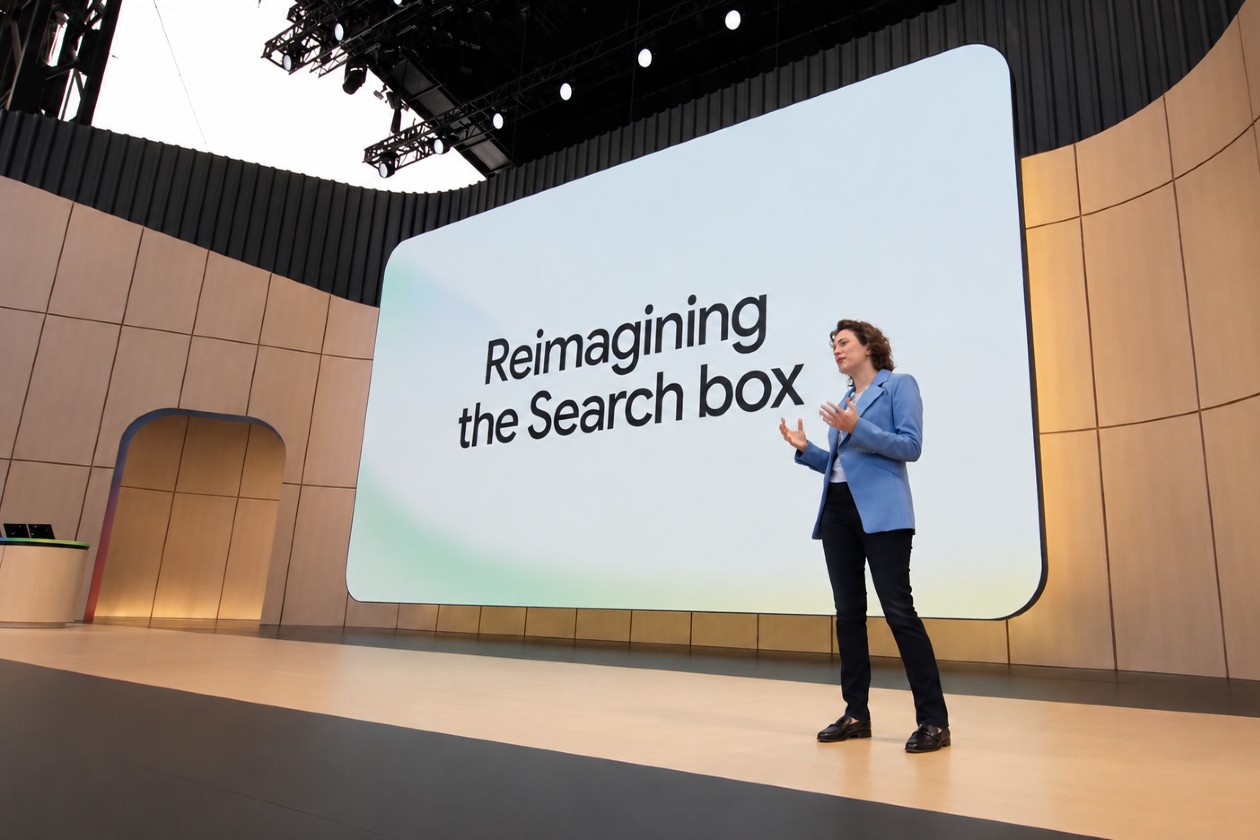
The keynote presentations at Google I/O 2026 were replete with announcements that signal the end of the era of the "10 blue links." The search experience has been fundamentally rebuilt, emphasizing synthesized answers, autonomous information agents, and generative user interfaces that can be created dynamically. Elizabeth Reid, Google’s VP of Search, described these changes as "the next step in bringing together the best of a search engine with the best of AI."
Key announcements from Google I/O 2026 include:
-
A Reimagined Search Interface: The search box itself has undergone a significant redesign for the first time in 25 years. It now dynamically expands to accommodate longer, more conversational queries and can accept multimodal inputs, including text, images, files, and video. AI-powered query suggestions have also been enhanced, moving beyond simple autocomplete to offer more contextually relevant prompts. This expanded functionality aims to empower users with more sophisticated research capabilities, enabling them to more effectively identify solutions and resources for informed decision-making.
-
AI Mode at Unprecedented Scale: The rapid adoption of AI Mode, with over a billion monthly users and queries doubling quarterly, signifies its entrenchment as the primary search interaction. AI Overviews, a key component of this new experience, are now reaching an even broader audience of 2.5 billion monthly users. This means that the traditional search results page is no longer the primary destination for the majority of Google searches.
-
The Rise of Search Agents: Google is empowering users to create, customize, and manage AI agents that operate autonomously. These agents can continuously monitor the web for specific topics, synthesize information, and deliver concise updates and recommended actions. This development introduces a new paradigm where search agents become a significant audience for content, functioning on behalf of users to gather and process information.
-
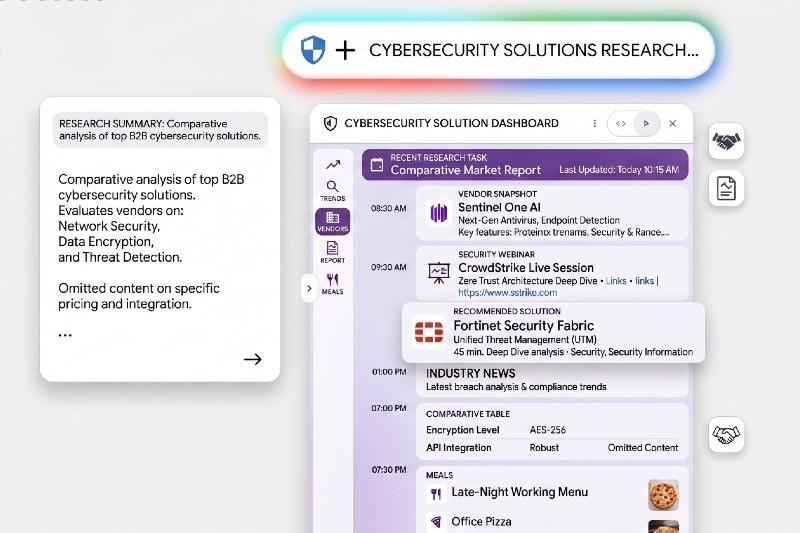
Generative UI Capabilities: The search experience is evolving to enable users to construct custom interactive interfaces on the fly. This could include visual explainers or stateful mini-applications that users can revisit. For B2B buyers, this could manifest as the ability to generate comparison tables of vendor features directly within the search interface, streamlining the evaluation process.
The concept of "query fan-out," where AI Mode simultaneously executes multiple related searches and synthesizes the results, has now evolved into a fully agentic system capable of autonomous operation. Google’s AI optimization guide explicitly confirms that both query fan-out and retrieval-augmented generation (RAG) remain critical components of its core search ranking systems, reinforcing the importance of foundational content authority in AI-generated answers. As Sarah Perez of TechCrunch observed, "searching the web" will increasingly be performed by AI agents, with human users focusing on acting upon the information provided. This trend has led to new marketing concepts like "agent-based marketing" (ABM) and "business-to-agent" (B2A) strategies.
Behavioral Data Reveals User Engagement Patterns
The behavioral data released by Google offers critical insights into how users are interacting with AI Mode, providing a roadmap for B2B marketers. Key findings include:
-
Extended Query Lengths: The average AI Mode search query is now triple the length of traditional queries. This indicates that users are moving beyond single keywords to articulate their needs and questions in full, natural sentences. This shift renders keyword-centric content strategies obsolete, emphasizing the need for content that directly addresses user questions with comprehensive answers.
-
Increased Follow-Up Conversations: The 40% month-over-month increase in follow-up queries signifies that users are not satisfied with single answers. They are engaging in deeper exploration, seeking related information, and continuing their informational journey. B2B brands that possess only superficial coverage of a topic risk losing consideration at these subsequent stages.
-
Dominance of Question-Based Queries: The top initial words in AI Mode queries are "What," "How," "I," "Is," and "Can," while the leading keywords are "Information," "Identify," "Find," "Explain," and "Summarize." This pattern clearly illustrates a search experience built around questions and explanations, moving away from purely keyword-driven intent. Content that provides clear definitions, frameworks, and expert perspectives to answer "what" and "how" questions is precisely what AI Mode is designed to surface.
-
Growth of Multimodal Search: Over one in six AI Mode searches are now non-textual, with image input alone increasing by over 40% month-over-month. This surge in multimodal engagement underscores the necessity of incorporating visual and multimedia content into B2B content strategies. Furthermore, image creation queries within AI Mode have more than tripled since the beginning of the year, indicating its growing use as a creative tool.
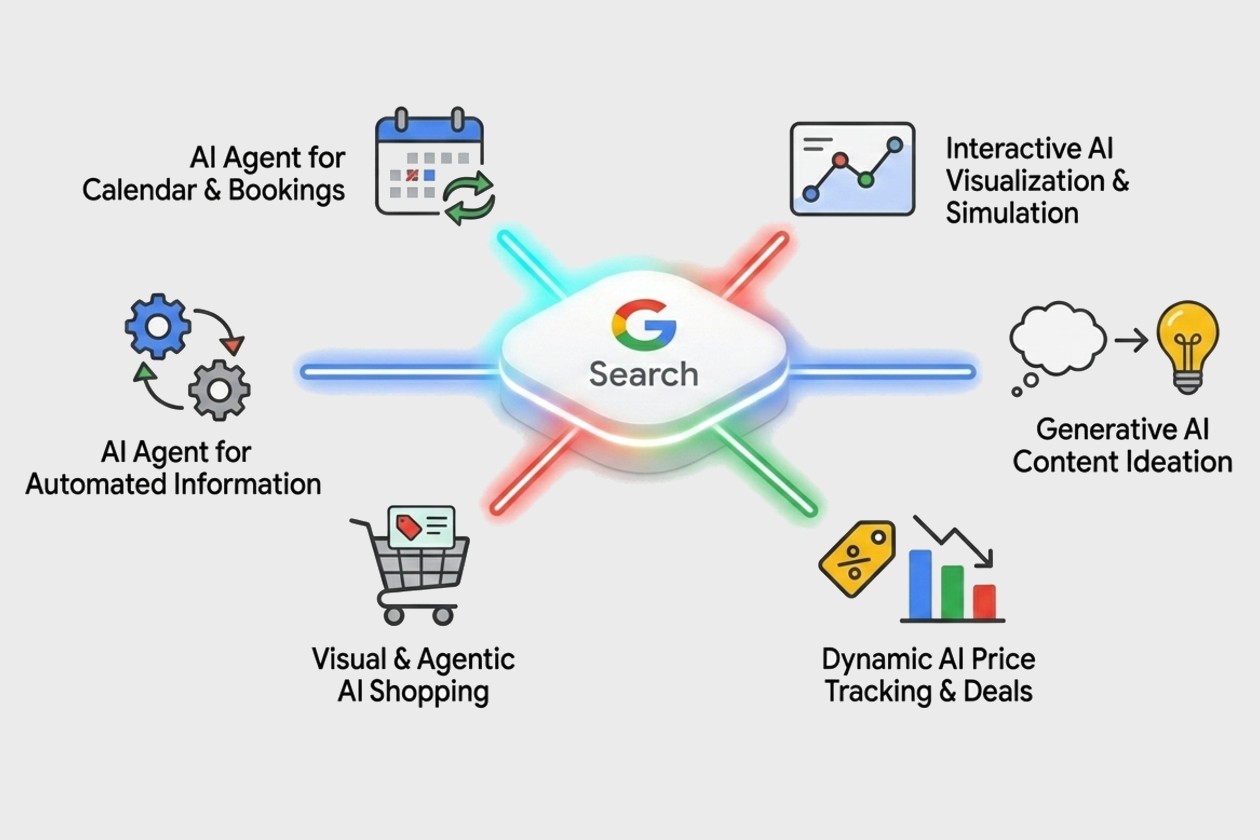
Google has categorized user engagement in AI Mode into five distinct behavioral modes: Explore, Decide, Learn, Do, and Create. Each of these modes offers valuable insights for B2B marketers:
-
Explore: Brainstorming-related queries are growing 30% faster than overall AI Mode queries. Users are leveraging AI Mode for open-ended discovery and idea generation, mirroring the early stages of B2B problem identification. Top-of-funnel content must cater to this exploratory, open-ended mindset, moving beyond basic keyword intent.
-
Decide: Queries beginning with "which" have increased 40% faster than overall AI Mode queries. In B2B contexts, this translates to evaluation-stage searches such as "which platform," "which provider," or "which approach." Visibility in these crucial moments hinges on trust signals, comparative content, and credible third-party validation.
-
Learn: AI Mode is extensively used for professional development and in-depth learning. B2B buyers often engage in similar deep dives to build category competency before evaluating vendors. Brands producing educational content, from original research to expert-led explainers, can become the authoritative sources that AI Mode draws upon.
-
Do: Planning-related queries have grown 80% faster than overall AI Mode queries, with Google’s Canvas tool facilitating complex, multi-step planning tasks. B2B brands offering structured, actionable content like step-by-step guides and templates can serve as the definitive resources for these planning sessions.
-
Create: Image creation queries in AI Mode have more than tripled, highlighting its increasing use as a productivity tool. B2B buyers are leveraging AI for creative workflows, and modular, repurposable content can unlock new visibility opportunities.
The "Best Answer Marketing" Framework: Adapting to the AI Paradigm
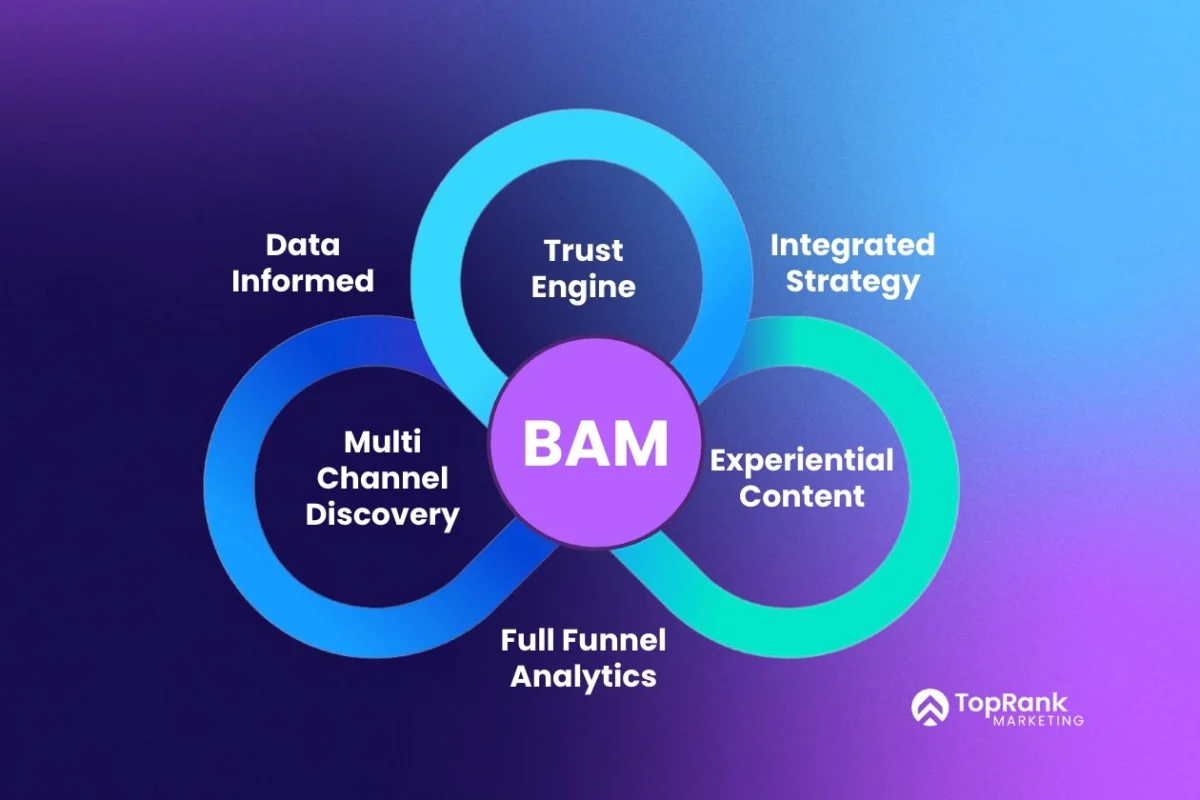
TopRank Marketing’s "Best Answer Marketing" (BAM) framework was developed with the explicit understanding that buyer behavior and the technologies used to access information are constantly evolving, driven significantly by AI. This framework directly addresses the challenges and opportunities presented by the new AI-centric search environment.
Research from TopRank Marketing’s "Answer Engine: The State of B2B Thought Leadership in 2026" report indicates that 35% of marketing leaders acknowledge AI and GenAI platforms are reshaping content discovery and trust. Furthermore, 32% of B2B professionals report discovering thought leadership through GenAI tools, a figure likely to be even higher now.
Google’s own AI search optimization guide reinforces the BAM approach. It explicitly dismisses tactics like LLMS.txt files, content chunking, and inauthentic mentions, while championing unique, expert-driven content. This validation aligns perfectly with BAM’s core pillars:
-
Data Informed: This pillar focuses on answering the precise questions buyers are asking, leveraging customer surveys, CRM data, and original research to create content architecture that AI Mode can readily utilize. The emphasis is on credible content that influences both AI systems and human buyers.
-
Integrated Strategy: With the 40% growth in follow-up queries, the depth and coherence of topic coverage are paramount. BAM’s Integrated Strategy pillar ensures that brand, demand, and lead generation content are unified across channels and formats, creating consistent narratives that maintain buyer consideration throughout their journey.
-
Trust System: In the "Decide" stage, where "which" queries dominate, credibility is the deciding factor. BAM’s Trust System builds this credibility through original research, expert authorship, and verifiable experience, aligning with Google’s E-E-A-T principles. The framework emphasizes producing "non-commodity content" that offers unique insights beyond general knowledge.
-
Experiential Content: The increasing prevalence of multimodal search and AI’s generative UI capabilities demand rich, multi-format content. BAM’s Experiential Content pillar focuses on creating content that is not only visually engaging but also structured for AI citation and repurposing, catering to the "Do" and "Create" behavioral modes.
-
MultiChannel Visibility: Buyers are interacting with information across an average of 10.2 channels. BAM’s MultiChannel Visibility pillar ensures that brands are discoverable across the diverse formats and channels relevant to each of the five behavioral modes, mitigating the impact of declining direct search referrals.
-
Unified Analytics: As AI search diminishes the reliance on direct clicks, metrics must shift towards AI citation rates, brand mention share, topic authority, and pipeline influence. BAM’s Unified Analytics pillar provides an AI-powered data warehouse to track these crucial metrics across the entire funnel, offering a holistic view of content program effectiveness in an agent-driven world.
The Imperative for B2B Brands to Adapt
Google has confirmed that the new search interface is rolling out immediately, with generative UI capabilities to follow shortly. Information agents and mini-app building will become available to subscribers first, with broader access later. The urgency for B2B brands to adapt is palpable. The behavioral data from Google unequivocally demonstrates that triple-length queries, follow-up conversations, and multimodal search are no longer future trends but present realities.
Brands that proactively build content strategies around these evolving user behaviors are positioning themselves to establish authority and preference among both AI systems and human decision-makers. The era of simply being "found" is over; the future belongs to brands that can consistently provide the indispensable "Best Answer" customers are seeking, regardless of how or where they search. The convergence of advanced AI capabilities and evolving user behavior necessitates a strategic pivot for B2B marketers. Those who embrace this shift and align their content strategies with the principles of authority, expertise, and comprehensive answers will be best positioned to thrive in the new AI-dominated search landscape.