Your list is powerful. In the rapidly evolving digital landscape of 2026, the venerable email list remains a cornerstone of effective audience engagement and business growth, serving as a direct conduit to interested individuals. Envision it as a dedicated forum, a room teeming with individuals who have actively chosen to engage with your message. Their continued presence signifies interest; their questions reflect curiosity; their purchases indicate trust. Crucially, a select few will transcend mere customers, evolving into ardent advocates who actively draw new participants into this invaluable digital space. Historically, the gateway to building such an audience invariably involved a dedicated website, where visitors would encounter a signup form prompting them to subscribe. However, a significant paradigm shift has occurred, challenging the notion that a website is an absolute prerequisite for cultivating a robust subscriber base. In an era increasingly defined by accessibility and diversified digital presence, the question "But what happens if you don’t have a website?" is no longer a barrier, but an invitation to explore innovative, streamlined solutions.
The answer lies in the strategic deployment of hosted signup forms, a sophisticated yet remarkably straightforward tool that liberates businesses and creators from the traditional constraints of website ownership. This development marks a pivotal moment, democratizing access to powerful email marketing capabilities for a broader spectrum of entrepreneurs, solopreneurs, and small businesses who may not possess the resources, technical expertise, or immediate necessity for a comprehensive website. These forms ensure that the fundamental act of audience building—the collection of email addresses—remains firmly within reach, regardless of one’s existing digital infrastructure.
The Evolving Digital Landscape: From Web-Centric to Ecosystem-Driven
For decades, a website served as the undisputed digital headquarters for any serious business or brand. It was the central hub for information, transactions, and, critically, lead generation. However, the digital ecosystem has undergone a profound transformation. The rise of social media platforms, the proliferation of specialized content hubs, and the burgeoning creator economy have diversified how individuals and businesses establish an online presence. Many successful ventures now thrive primarily on platforms like Instagram, TikTok, YouTube, or niche communities, leveraging these spaces for content distribution and community building without the overhead of maintaining a standalone website.
This shift is not merely technological but cultural. Audiences are increasingly platform-agnostic, interacting with brands wherever they find relevant content. For emerging businesses, freelancers, and artists, the initial investment in a full website can be daunting in terms of time, cost, and ongoing maintenance. This is where hosted signup forms emerge as a strategic imperative. They bridge the gap, allowing nascent ventures to immediately begin building a direct line of communication with their audience, fostering loyalty and driving conversions, all while operating within a lean digital footprint. The focus has moved from a singular web-centric approach to a more distributed, ecosystem-driven strategy where various digital touchpoints contribute to a cohesive brand experience.
Demystifying the Hosted Signup Form: A Standalone Powerhouse
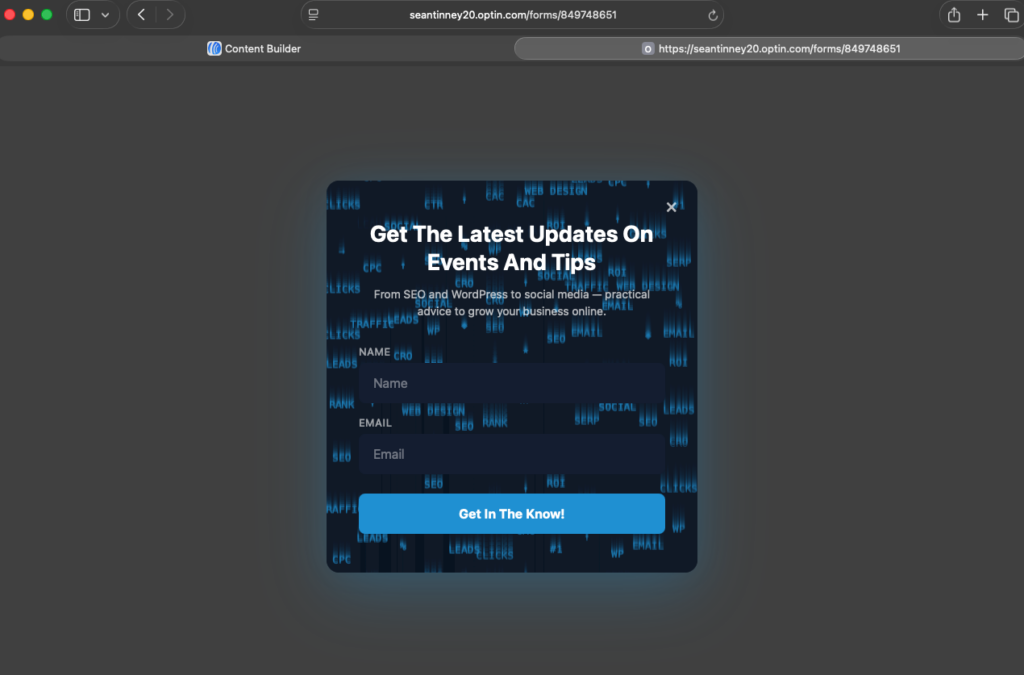
At its core, a hosted signup form is a self-contained digital page, existing independently of a traditional website. It is characterized by a unique, shareable URL that acts as its direct address on the internet. Unlike embedded forms that reside within a larger website framework, a hosted form lives on its own dedicated server, typically provided by an email marketing service provider. Its design is singularly focused: to capture email addresses and seamlessly add new subscribers to a designated email list.
The utility of a hosted signup form extends beyond merely catering to those without a website. Even established businesses with robust websites find immense value in these standalone solutions. Consider scenarios such as website downtime, where a hosted form can serve as a critical backup, ensuring continuous lead capture during technical interruptions. Furthermore, when the objective is to share a direct, unambiguous link for subscription—devoid of navigation menus, distracting content, or other website elements—the hosted form becomes the ideal tool. It presents a clean, focused call to action, minimizing friction and maximizing conversion potential. This directness is particularly effective in advertising campaigns or social media promotions where immediate, clear action is desired.
Leveraging AI for Seamless Implementation: The AWeber Case Study
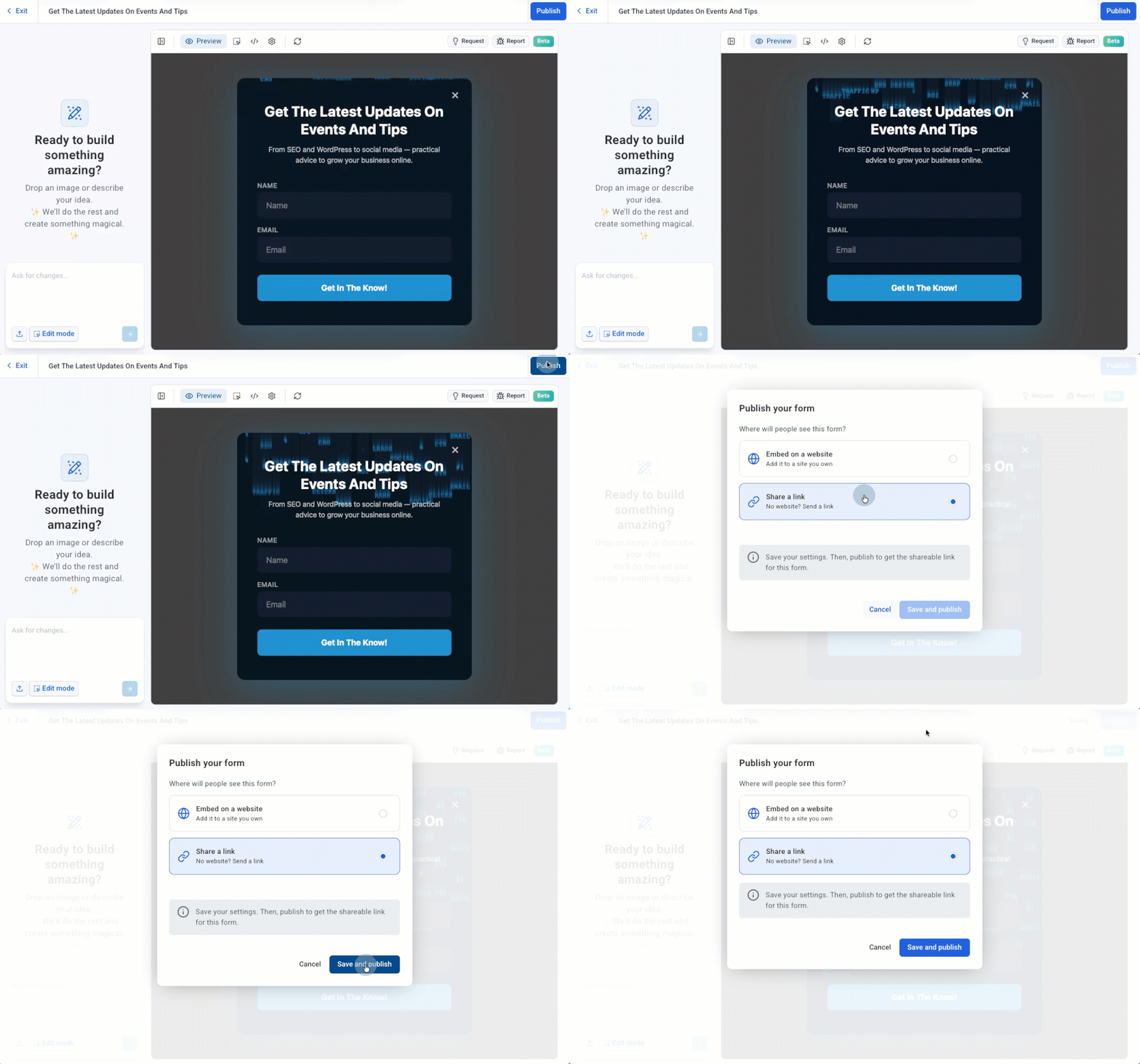
The process of creating a hosted signup form has been dramatically simplified by advancements in artificial intelligence. What once required design expertise or template customization can now be generated with remarkable efficiency and precision. Platforms like AWeber have pioneered AI-powered signup form builders, transforming a potentially complex task into a matter of minutes.
The AI Signup Form Builder within AWeber exemplifies this innovation. Users are guided through a streamlined process:
- Accessing the Builder: Navigating to the "Pages & Forms" section and selecting "AI Signup Forms" initiates the process.
- Describing the Business: The user provides a simple prompt, describing their business, its offerings, or the purpose of the email list. This natural language input is the foundation for the AI’s creative output.
- Review and Customization: The AI then processes this information, generating a complete, hosted signup form. This includes a compelling headline, a concise description, and a design aesthetic that aligns with inferred brand attributes. Users retain full control, with options to adjust colors, fonts, layout, and copy to perfectly match their brand identity. Alternatively, for those seeking speed, the AI-generated form can be published as-is.
- Securing the Hosted URL: Upon publication, the platform automatically generates a unique URL for the hosted form. This link becomes the primary asset, ready to be shared across any digital or physical channel where an audience can click or scan.
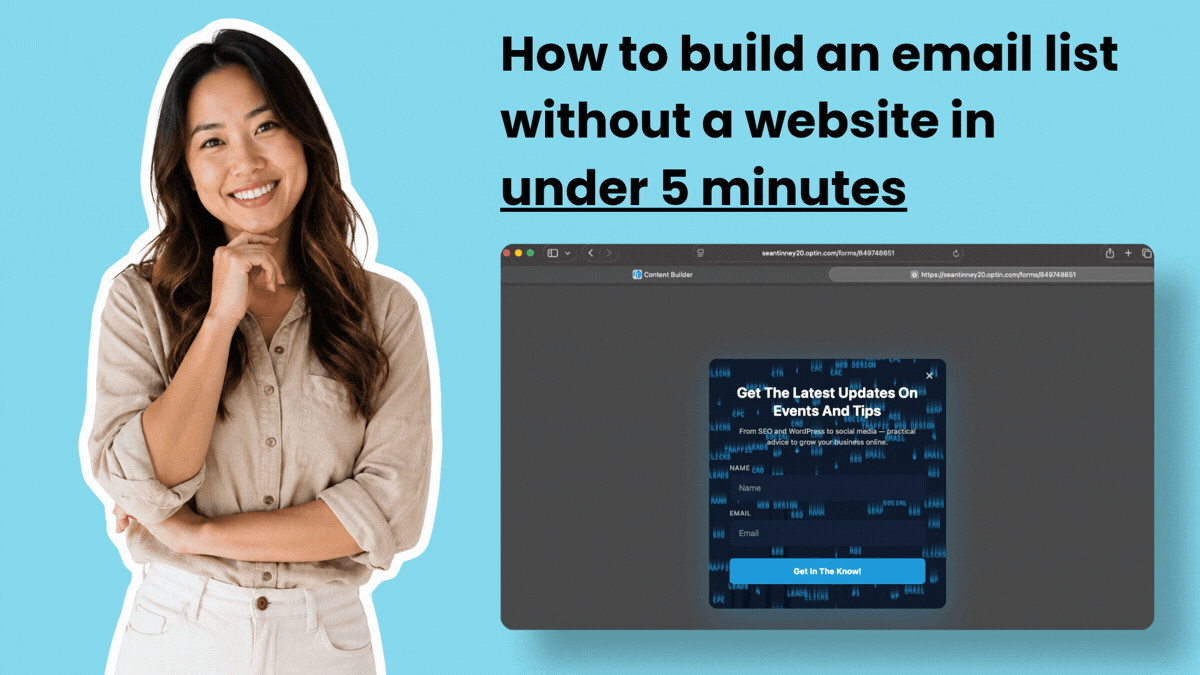
This entire process typically takes less than five minutes, marking a significant leap in accessibility. It eliminates the need for coding knowledge, extensive design decisions, or a deep understanding of web development. The AI handles the foundational draft, allowing users to focus on refining the message and brand representation. This efficiency empowers individuals and small teams to rapidly deploy professional-grade lead capture mechanisms, accelerating their audience growth strategies.
Strategic Deployment: Maximizing Reach Without a Website
Possessing a hosted signup form is merely the first step; its true power is unleashed through strategic deployment. The objective is to place this link where the target audience already congregates, making the subscription process as effortless as possible.
-
Social Media Dominance:
- Direct Link Sharing: Platforms like Facebook, Instagram, X (formerly Twitter), LinkedIn, and TikTok are prime territories for sharing the hosted form URL. The key is to accompany the link with compelling value propositions. Instead of a bare link, articulate the benefits: "I send one email every Tuesday with a new recipe and a grocery list. No spam, no fluff. Sign up here:" This proactive communication sets expectations and incentivizes action.
- Profile Integration: The "link in bio" feature on Instagram and TikTok is an indispensable tool. Pinning a post about the email list, mentioning it in Stories, or even integrating it into video content significantly increases visibility. The more touchpoints where the link appears, the higher the probability of conversion. When shared on platforms like Facebook, the form’s name often appears as preview text, emphasizing the importance of a clear and inviting title for the form itself. This omnipresence ensures that interested followers have a clear, immediate pathway to subscribe.
-
Guest Posts and Collaborations: Expanding Influence:
- Leveraging External Audiences: Guest blogging and collaborations with other content creators or businesses offer an excellent avenue for audience expansion. When contributing articles to another blog or participating in joint ventures, embedding the hosted form link within the content or prominently featuring it in the author’s signature is highly effective. A simple call to action like, "If you enjoyed this content and wish to receive more insights from me, subscribe to my exclusive newsletter here," can drive significant traffic to the form. This strategy capitalizes on the trust and established audience of the collaborating party, providing a warm lead channel.
-
In-Person Engagement: Bridging Digital and Physical:
- QR Codes for Instant Access: The ubiquitous QR code has revolutionized in-person lead capture. By converting the hosted signup form’s URL into a QR code, businesses can integrate digital subscription seamlessly into physical interactions. Printing these QR codes on business cards, flyers, product packaging, event signage, or even display stands at markets or conferences provides an instant, mobile-friendly subscription method. Imagine a craft vendor at a farmer’s market: a customer interested in future product updates simply scans the QR code with their smartphone, fills out the brief form on their device, and is added to the list before leaving the stall. This eliminates manual data entry, reduces errors, and offers immediate gratification, all without requiring a website.
The Indispensable Value of First-Party Data
In an increasingly privacy-centric digital world, where third-party cookies are facing deprecation and platform algorithms constantly shift, the value of an email list, representing first-party data, cannot be overstated. An email list offers unparalleled control and direct access to an audience, unmediated by external platforms or their ever-changing rules.
- Direct Communication: Email provides a direct line of communication, ensuring that messages reach the intended recipient without being filtered by social media algorithms that dictate visibility.
- Enhanced Personalization: With explicit consent, businesses can collect valuable demographic and preference data, enabling highly personalized communication and targeted offers, leading to higher engagement and conversion rates.
- Stronger Relationships: Email marketing fosters deeper relationships with subscribers over time, building loyalty and trust through consistent, valuable content.
- Superior ROI: Industry data consistently highlights email marketing’s exceptional return on investment (ROI). Studies often report an average ROI upwards of $36 for every $1 spent, significantly outperforming many other digital marketing channels. This efficiency makes it an attractive channel for businesses of all sizes.
- Data Ownership: Unlike followers on social media platforms, subscribers on an email list are a business’s owned audience. This data remains under the business’s control, insulating it from platform policy changes or potential account suspensions.
Navigating the Digital Ecosystem: When a Website Becomes Essential
While hosted signup forms and dedicated landing pages can remarkably sustain a business’s online presence and audience growth for a significant period, there comes a point when a full-fledged website becomes a strategic necessity. Recognizing this inflection point is crucial for scalable growth.
A full website typically becomes indispensable when:
- Long-Form Content Production: The business intends to publish extensive blog posts, comprehensive guides, in-depth articles, or multi-page resources that require a structured, navigable environment.
- Direct E-commerce Transactions: Selling multiple products or services directly online, managing inventory, processing payments, and offering a robust shopping cart experience necessitates a dedicated e-commerce platform integrated within a website.
- Complex Information Architecture: The need for multiple static pages such as "About Us," "Services," "Testimonials," "Contact Us," or a detailed portfolio requires the organizational structure of a website.
- Brand Authority and Searchability: As a brand grows, customers and prospects increasingly search for it by name. A dedicated website provides a central, authoritative hub that enhances credibility, professional appearance, and search engine visibility. It serves as a comprehensive digital storefront and information repository.
Until these advanced requirements materialize, the hosted signup form, often complemented by simple landing pages for specific campaigns or lead magnets, serves as an incredibly potent "home base." These tools are perfectly capable of efficiently collecting emails, delivering valuable lead magnets (e.g., e-books, checklists, free courses), and triggering automated email workflows that nurture leads and drive engagement. This lean yet powerful setup provides everything needed to initiate and sustain significant audience building.
Future Outlook: AI and the Democratization of Digital Presence
The trajectory of digital marketing points towards continued innovation in tools that simplify and democratize online presence. Artificial intelligence, as demonstrated by platforms like AWeber, will play an increasingly central role in abstracting away technical complexities, allowing even the most non-technical individuals to build sophisticated digital assets. The ease of generating tailored signup forms, coupled with the inherent power of direct audience communication, ensures that email marketing will remain a foundational strategy.
The shift towards hosted solutions signifies a broader trend: the emphasis is moving from how you build your digital infrastructure to what value you deliver to your audience. By providing accessible, efficient, and powerful tools like hosted signup forms, the digital landscape empowers a new generation of entrepreneurs and creators to connect, engage, and convert their audiences, fostering a more inclusive and dynamic online economy. The ability to build a robust email list without the traditional gatekeeper of a website is not just a convenience; it’s a strategic advantage that is reshaping how businesses approach audience development in the 21st century.
What are you waiting for? The pathway to a powerful, direct connection with your audience is clearer than ever. Embrace the future of audience building.