The global workforce is currently navigating a significant shift in operational efficiency as generative artificial intelligence moves from a novelty to a fundamental business requirement. As companies seek to integrate large language models (LLMs) into their daily operations, the demand for "AI Automation Specialists"—professionals capable of bridging the gap between raw AI power and practical business workflows—has reached an all-time high. To address this growing skills gap, several leading technology platforms and educational institutions have released comprehensive, free curriculum designed to take learners from zero knowledge to the proficient construction of autonomous AI agents.
The Rise of Agentic Workflows and the Democratization of Automation
In the previous decade, automation was largely synonymous with "if-this-then-that" logic, where a single trigger led to a predictable, linear action. However, the advent of LLMs like GPT-4 and Claude 3.5 has introduced the era of "agentic" automation. In this new paradigm, AI agents can make decisions, reason through complex tasks, and use external tools to achieve a goal. This technological leap has created a massive opportunity for non-technical professionals to build sophisticated systems that were once the exclusive domain of software engineers.
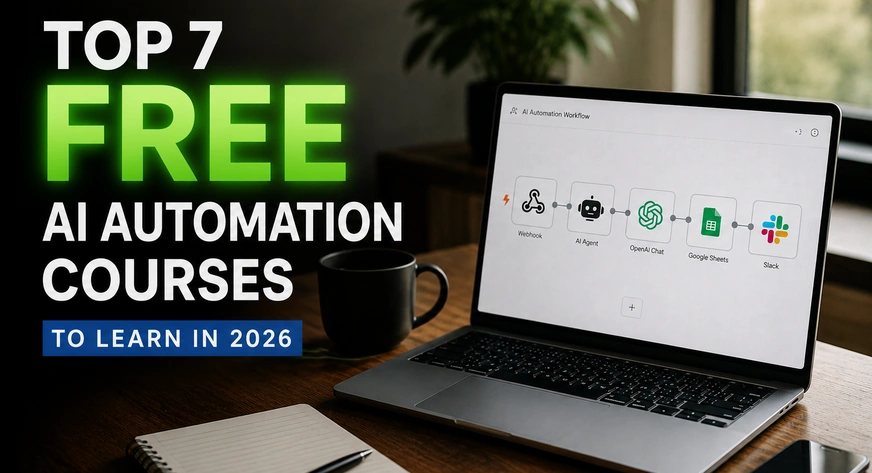
The democratization of these tools is facilitated by low-code and no-code platforms such as n8n, Make, and Zapier. By removing the barrier of syntax-heavy programming, these platforms allow business analysts, marketers, and operations managers to architect "digital employees." The following educational pathways represent the most robust and accessible entries into this field, categorized by their technical depth and platform focus.
1. Foundational Workflow Engineering with n8n
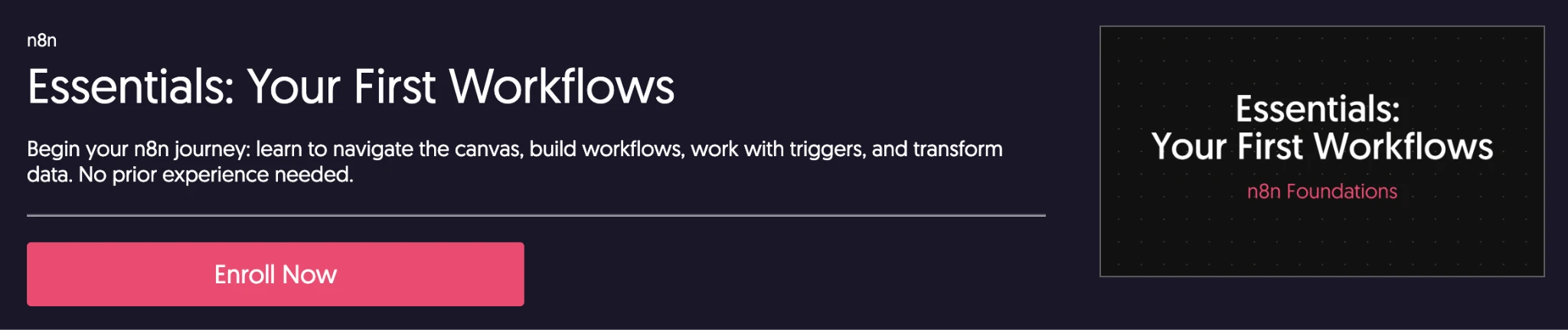
For those seeking a balance between ease of use and technical flexibility, n8n has emerged as a premier choice. Unlike many of its competitors, n8n offers an open-source core, making it a favorite for developers and privacy-conscious enterprises. The "Essentials: Your First Workflows" course is designed specifically for those with no prior experience in automation.
This curriculum focuses on the structural pillars of automation: triggers, credentials, and data structures. Learners are guided through the process of handling JSON data—the universal language of the web—without needing to write code manually. By mastering expressions and data transformations, students learn how to manipulate information as it moves between different software applications. This course is particularly valuable for its focus on "self-hosting" and the technical fundamentals that underpin all automation, regardless of the platform used.
2. The Transition to Agentic Automation via Make.com
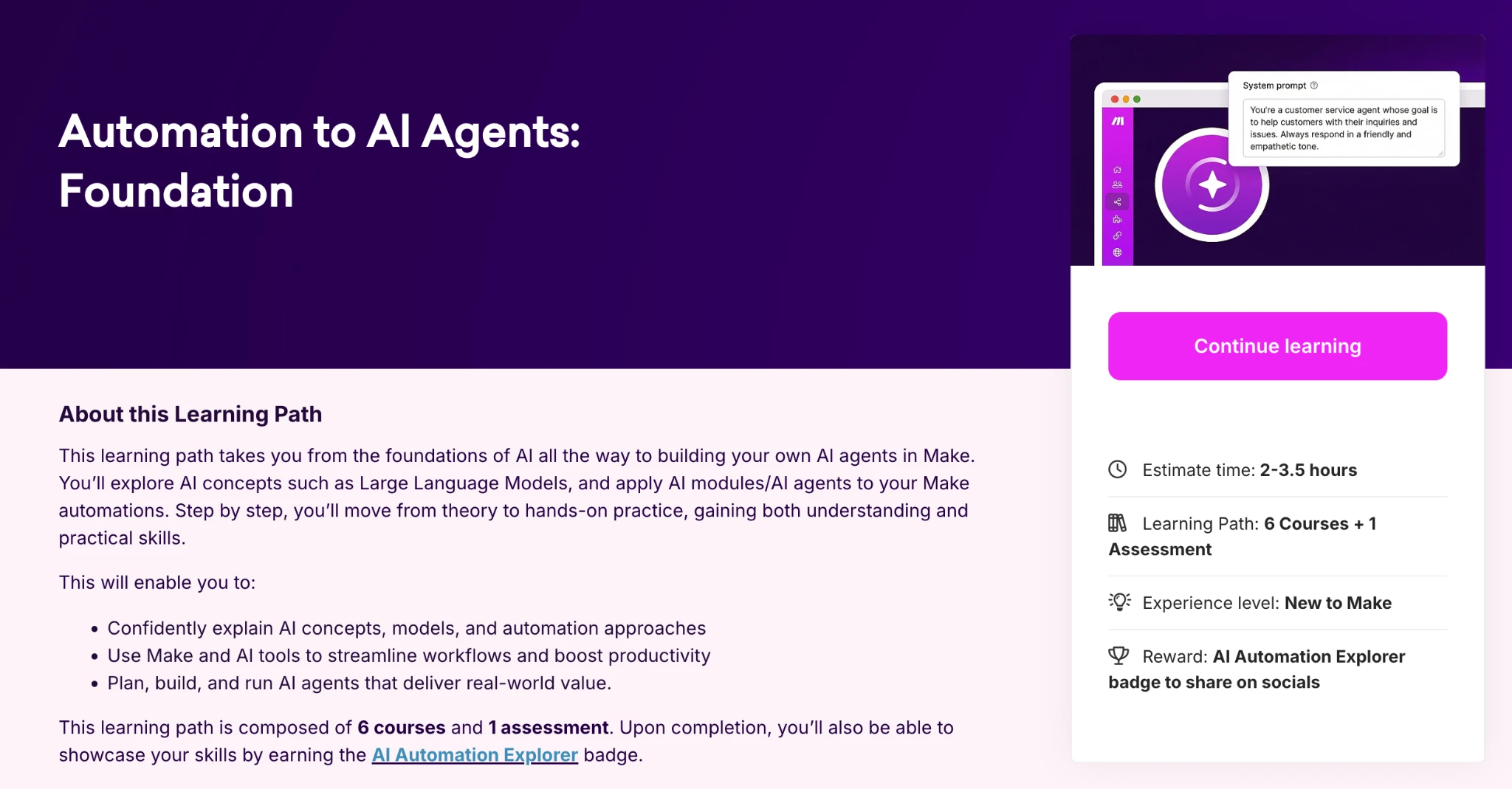
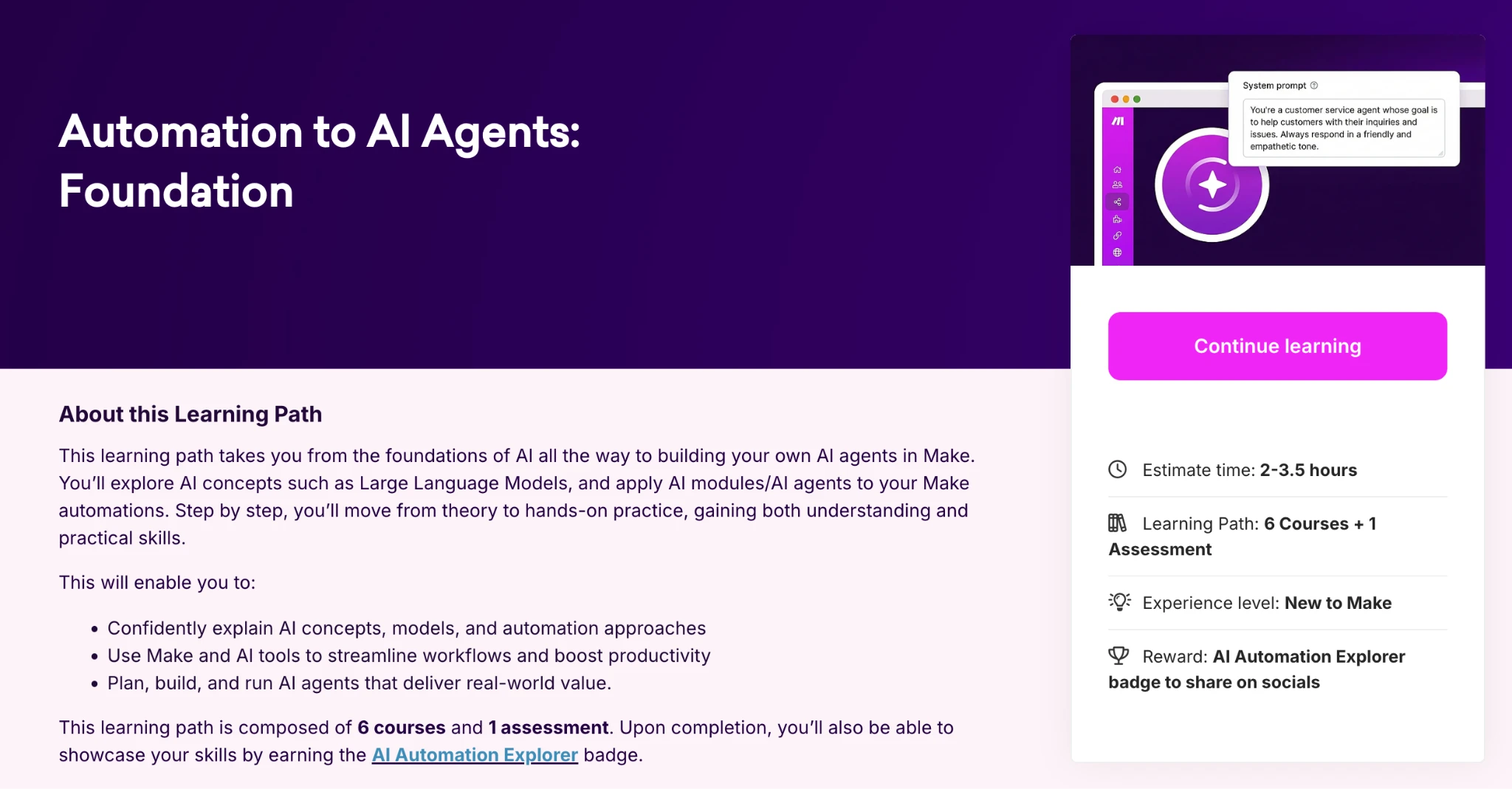
Make (formerly Integromat) is widely recognized for its highly visual "canvas" approach to building scenarios. Their "Automation to AI Agents: Foundation" learning path is a strategic response to the shift from simple task-linking to complex agentic reasoning. This program, which spans approximately three and a half hours, moves beyond the basics of the Make interface to explore how LLMs can be embedded directly into business logic.
The course is structured into six modules, culminating in an assessment that awards the "AI Automation Explorer" badge. The significance of this curriculum lies in its focus on "Agentic Automation," where the AI is not just a recipient of data but a decision-maker within the workflow. For professionals looking to build systems that can autonomously handle customer support inquiries or complex data analysis, this structured path provides the necessary theoretical and practical framework.
3. Practical Implementation and Rapid Prototyping with Analytics Vidhya
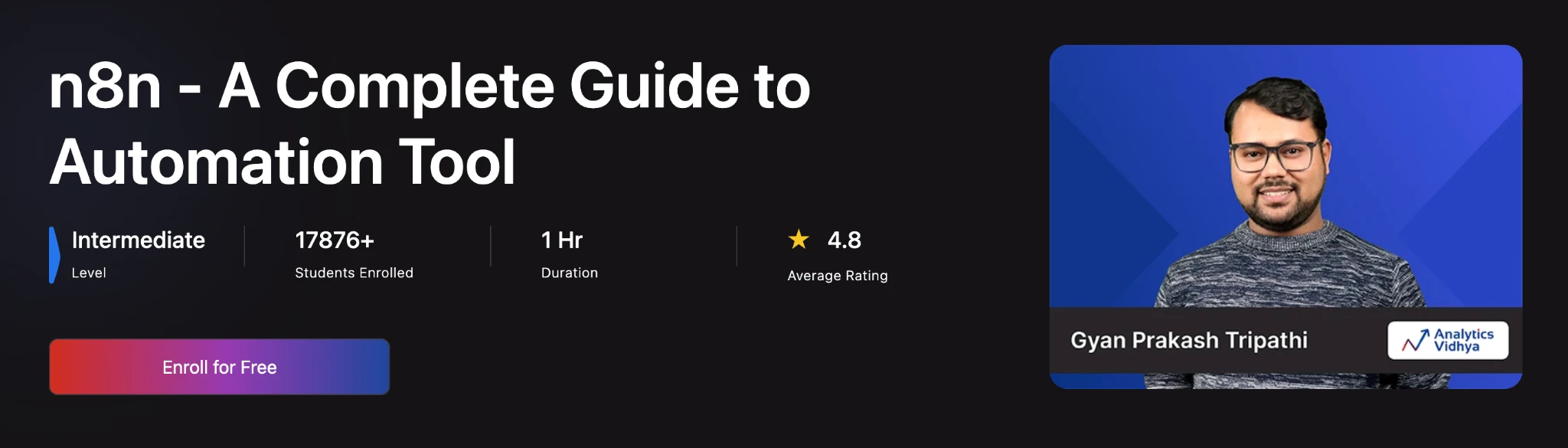
While official platform courses are excellent for learning specific interfaces, third-party educators like Analytics Vidhya (AV) provide a more project-centric approach. Their "n8n – A Complete Guide to Automation Tool" is an intermediate-level course that prioritizes "building by doing."
In just one hour, the course covers the visual editor, API integrations, and multi-step workflows. What distinguishes this program is its focus on high-impact projects, such as creating an AI-driven content creator agent and a chat-based assistant. This approach mirrors the current industry trend where businesses are looking for "Proof of Concept" (PoC) builds that can be deployed rapidly to show immediate ROI.
4. Enterprise-Scale Simplicity with Zapier’s AI Builder Path
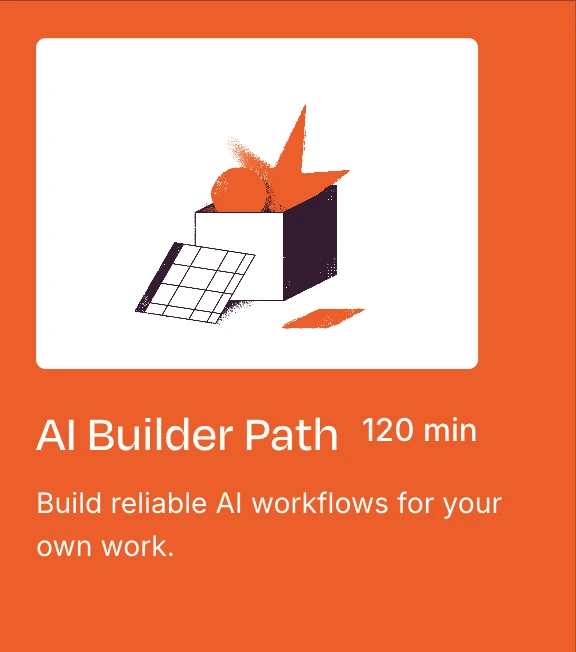
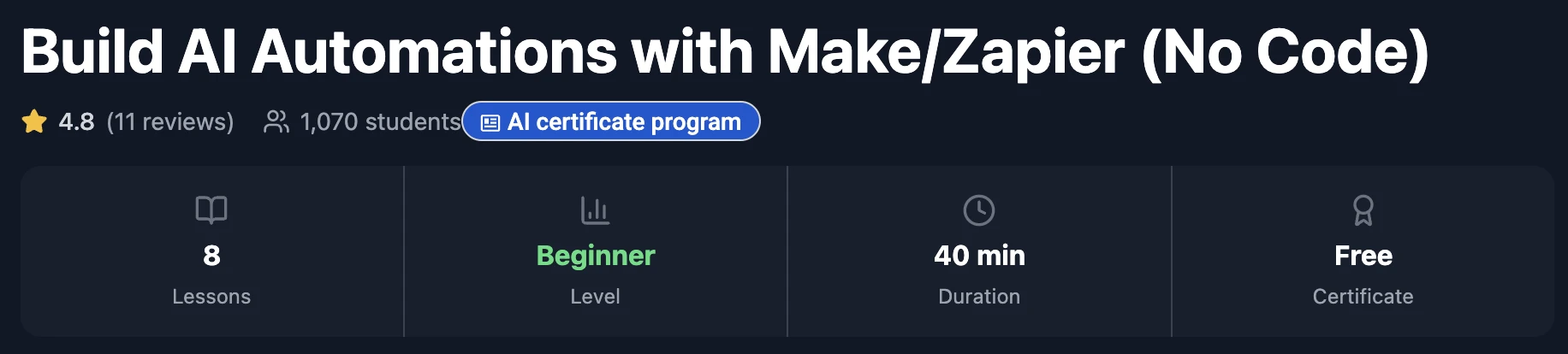
Zapier remains the most recognizable name in the automation space, boasting integrations with over 6,000 applications. Their "AI Builder Path" is optimized for the "solopreneur" or the corporate employee who needs to automate tasks quickly without a steep learning curve.
The four-course path takes users from basic "Zaps" to the creation of custom AI agents. It covers the crucial "decision logic" required to make automations smart—teaching the system when to proceed and when to halt based on AI-evaluated criteria. Given Zapier’s massive market share, this course is an essential starting point for anyone working in a standard SaaS-heavy business environment.
5. Specialized Multi-Agent Systems with crewAI and DeepLearning.AI
As the field matures, the focus is shifting from single AI agents to "teams" of agents working in concert. This is the focus of the "Multi AI Agent Systems with crewAI" course, hosted by DeepLearning.AI and taught by industry experts like João Moura.
This course is significantly more technical than the no-code options. It explores how to orchestrate multiple agents, each with a specific "role" (e.g., a researcher, a writer, and a fact-checker), to complete a complex objective. This represents the cutting edge of AI automation, moving toward "autonomous departments" rather than just autonomous tasks. It is ideal for those who have mastered the basics and wish to understand the architectural complexities of multi-agent collaboration.
Chronology of the Automation Revolution
To understand the importance of these courses, one must look at the timeline of the automation industry:
- 2011–2018: The era of "Linear Automation." Tools like Zapier and IFTTT gained popularity by connecting APIs for simple data transfer.
- 2019–2022: The "Low-Code Expansion." Platforms like n8n and Make allowed for complex branching logic and data manipulation, but still required human-defined rules for every step.
- 2023 (The GPT Inflection Point): Generative AI integrated into automation platforms. The "AI step" allowed workflows to summarize text, categorize sentiment, and generate content.
- 2024–Present: The "Agentic Era." Automation shifts from "doing" to "thinking." Courses now focus on "Agents" that can browse the web, use tools, and self-correct.
Market Data and Industry Implications
The surge in interest for AI automation education is backed by compelling economic data. According to a 2023 report by McKinsey & Company, generative AI could add the equivalent of $2.6 trillion to $4.4 trillion annually across various use cases. However, the report also notes that the realization of this value depends entirely on the workforce’s ability to implement these technologies.
Furthermore, data from LinkedIn’s 2024 "Future of Work" report indicates that "AI Literacy" and "Workflow Automation" are among the top five fastest-growing skill sets demanded by employers globally. For the individual professional, mastering these free courses isn’t just about efficiency; it is about career longevity in an increasingly automated economy.
Analysis of the Broader Impact
The availability of these free resources signals a shift in how technology companies view their user bases. By providing high-quality education for free, companies like Microsoft, Make, and Zapier are not just teaching a tool; they are building an ecosystem.
For the enterprise, the impact is profound. Small and medium-sized enterprises (SMEs) can now access the same level of operational sophistication that was previously reserved for Fortune 500 companies with dedicated DevOps teams. A single marketing manager who has completed the n8n or Make foundation courses can build a lead generation and qualification engine that performs the work of an entire department.
However, this transition also brings challenges. As automation becomes easier to deploy, issues of "Shadow AI"—where employees deploy unvetted automations without IT oversight—become more prevalent. This highlights the need for the structured learning paths provided by Microsoft and Zapier, which often include modules on security, credentials, and governance.
Official Responses and Expert Perspectives
Industry leaders have been vocal about the necessity of this educational shift. Satya Nadella, CEO of Microsoft, has frequently stated that AI is the "UI for the world," suggesting that every professional will eventually need to be a "prompt engineer" or "workflow architect."

Similarly, the creators of crewAI have emphasized that the future of work is not "AI vs. Human," but "Human + AI Agents." Their collaboration with DeepLearning.AI is a deliberate attempt to standardize the way developers and business leaders think about agentic orchestration.
Conclusion and Strategic Recommendations
There is no "one-size-fits-all" approach to learning AI automation. The choice of course should be dictated by the learner’s specific goals:
- For the Enterprise Professional: Microsoft’s Power Automate path offers the best integration with existing corporate tools.
- For the Creative/Marketer: Zapier and Make provide the fastest path to building functional content and lead-gen tools.
- For the Technical Architect: n8n and crewAI offer the depth required to build complex, scalable, and private systems.
The most effective strategy for mastering this field is a "Build-First" approach. Professionals are encouraged to identify a single, repetitive task in their daily routine—such as sorting emails, summarizing meeting notes, or updating a CRM—and use one of these free courses to automate it. In the current technological landscape, the ability to architect a workflow is becoming as fundamental as the ability to write or use a spreadsheet. These free courses represent the entry point into that future.