Readers may be surprised to learn I have two birthdays (just like the King of England!). One is my real birth date. The other is my email birthday—the one I provide (if asked) whenever I sign up with new email programs. I recently “celebrated” the latter and received over fifty happy birthday emails from brands around the world. Some made me genuinely happy; others left me wondering why they even bothered. Together they’re a great case study in what makes a birthday email work—and why it deserves a starring role in your customer journey. This phenomenon highlights a critical juncture in modern marketing: the strategic power of personalized customer engagement versus the widespread underutilization of valuable data.
The Strategic Value of Birthday Data: Beyond a Simple Date
A customer’s date of birth is not merely a data point; it is a powerful piece of personal information that, when used judiciously, offers mutual benefits for both brands and consumers. For brands, collecting and leveraging birthday data extends far beyond sending a simple celebratory message. It significantly improves life-stage segmentation and personalization, allowing marketers to tailor communications and offers with greater precision. Understanding a customer’s age can inform product recommendations, content relevance, and even predict future purchasing behavior. Moreover, birthday messages consistently outperform generic promotional campaigns in key metrics such as open rates and click-through rates, signaling higher customer engagement and a greater propensity for conversion.
For consumers, the allure of birthday rewards is undeniable. These can range from exclusive discounts and complimentary products to bonus customer loyalty points or even access to age-restricted benefits. These aren’t just transactional incentives; they represent a genuine opportunity for delight and a feeling of being valued. There’s a simple, yet profound, pleasure in feeling known and being seen by a brand. Birthday marketing, at its core, is a deeply personal gesture that, when executed well, deepens the emotional connection between a customer and a brand, fostering loyalty and advocacy.
Underutilization: A Startling Gap in Customer Engagement
Despite the clear advantages, many brands are failing to capitalize on this rich data. The prevailing sentiment is that collecting customer data is paramount, yet the follow-through in utilizing it remains alarmingly low. According to Validity data, this gap is significant: whenever a consumer signs up with a new brand, they often provide their date of birth if requested. However, the subsequent execution of birthday campaigns is severely lacking. In one recent study, out of 124 birthday emails that should have been triggered for a single individual in a year, only 43 actually arrived, representing a dismal 35% delivery rate. This stark discrepancy underscores a fundamental problem: the collection of valuable personal data without a corresponding strategy for its effective deployment. This isn’t just a missed opportunity; it’s a potential breach of trust. Consumers expect that if they share personal information, it will be used to enhance their experience. Failing to do so can lead to customer disillusionment and a perception of impersonal marketing, ultimately eroding brand loyalty. The mantra "don’t collect data you won’t use" has never been more pertinent in the age of data privacy and customer-centric marketing.
Anatomy of a Birthday Campaign: Tactics That Resonate
Birthday email campaigns generally fall into several distinct categories, each with varying degrees of effectiveness and customer appeal. Understanding these tactics is crucial for brands aiming to create truly impactful celebratory messages.
- The Art of the Thoughtful Gesture (Without a Direct Gift): More common among premium brands, this approach relies on the principle that "it’s the thought that counts." High-net-worth clientele, for instance, may not be expecting freebies but appreciate a personalized message acknowledging their special day. In some instances, the "gift" might even be a subtle suggestion to purchase more products to celebrate, framing the brand’s offerings as part of the birthday experience. While this tactic can work for luxury segments, it carries the risk of appearing disingenuous if not perfectly aligned with brand image and customer expectations. A simple "Happy Birthday" with no tangible benefit can feel empty if the brand has previously indicated a more transactional relationship.
- The Power of the Discount: A Quantitative Look: By far the most common tactic is the birthday discount. These typically come with a minimum spend requirement but often lack an upper limit, encouraging larger purchases. The key to success here lies in the generosity of the offer. A token discount, such as 5% off, can feel like a superficial gesture and fail to motivate a purchase. Industry best practices suggest discounts of 15-25% are often more effective, striking a balance between brand generosity and commercial viability. For example, Anthropologie’s offer of 15% off with free shipping for birthdays is often well-received, as it combines a meaningful discount with an added convenience, enhancing the perceived value. Dell’s 20% off also stands out as a substantial offer, likely driving higher conversion rates for larger-ticket items.
- Conditional Gifts: Balancing Value and Engagement: Many restaurant brands, for instance, offer a free birthday dessert, often with the condition that a main entrée must be purchased first. While seemingly conditional, a closer look at the economics reveals significant value for the customer. A comparative analysis of average entrée and dessert prices across popular restaurant chains shows a healthy effective discount:
- Seasons 52: Average Entrée $28, Average Dessert $4–$9, Effective Discount 12–24%
- Olive Garden: Average Entrée $18.50, Average Dessert $12, Effective Discount ~39%
- Yard House: Average Entrée $21, Average Dessert $10, Effective Discount ~32%
- Cheddar’s: Average Entrée $18, Average Dessert $7.50, Effective Discount ~29%
- LongHorn Steakhouse: Average Entrée $26, Average Dessert $11, Effective Discount ~30%
- Applebee’s: Average Entrée $17, Average Dessert $6, Effective Discount ~26%
Viewed this way, the average discount works out to a healthy 30%, with Olive Garden (39%) emerging as one of the most generous places to celebrate. These conditional gifts are successful because they provide clear value while subtly encouraging additional spending, making them a win-win for both consumer and brand.
- Optimizing Delivery: Timing and Sequencing: The effectiveness of a birthday offer can be significantly enhanced by strategic timing and a well-planned email sequence. Most brands provide customers with a redemption window, typically 30 days, to utilize their gift. However, leading brands go a step further by orchestrating a multi-touch campaign. Calvin Klein, for example, excels in this by sending an advance warning email, followed by an on-the-day message, and finally a reminder. This sequence maximizes the odds that the gift is actually seen, remembered, and used, reducing the chance of the offer being overlooked in a crowded inbox. A pre-birthday email builds anticipation, the on-the-day message creates immediate relevance, and a reminder serves as a gentle nudge before the offer expires.
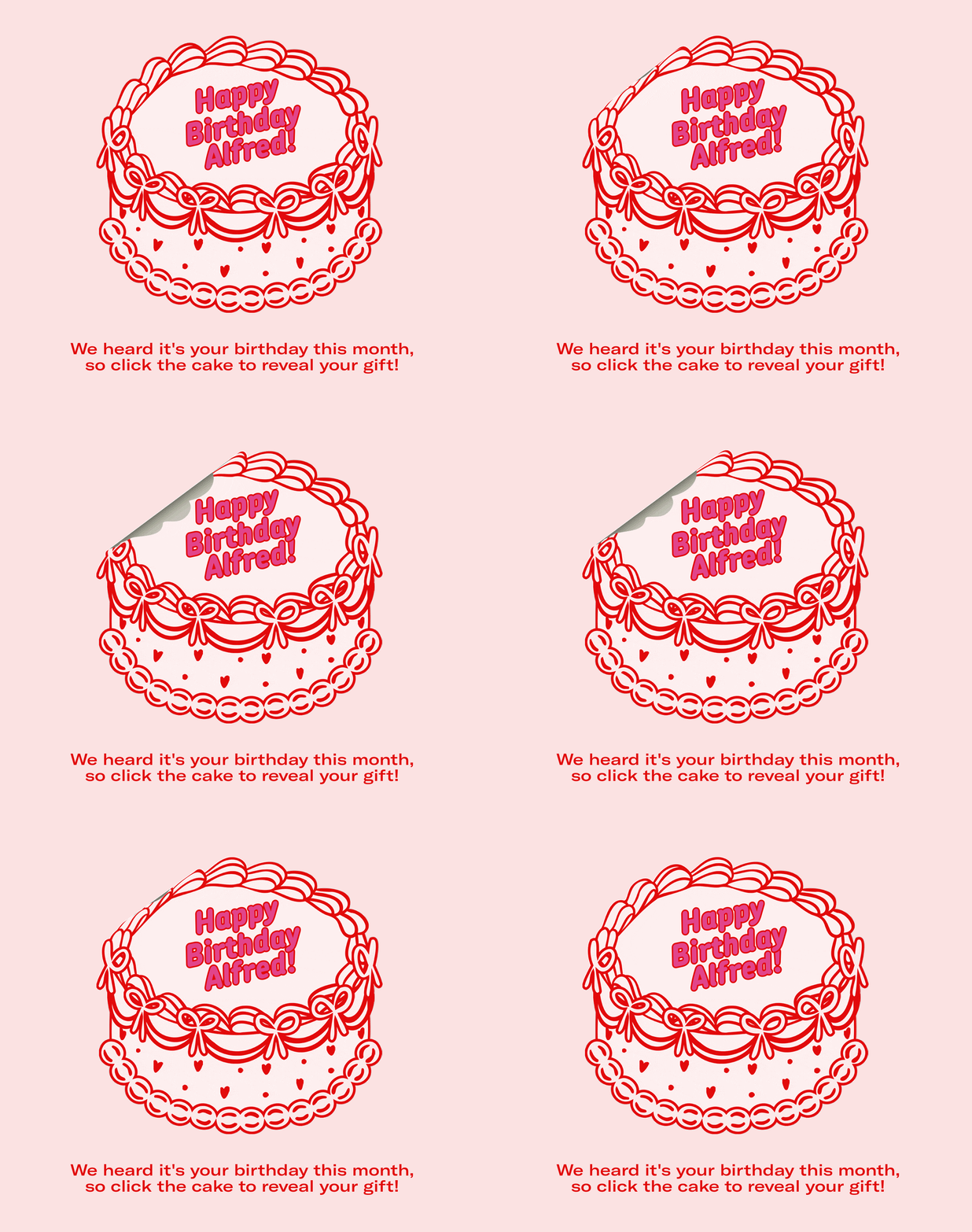
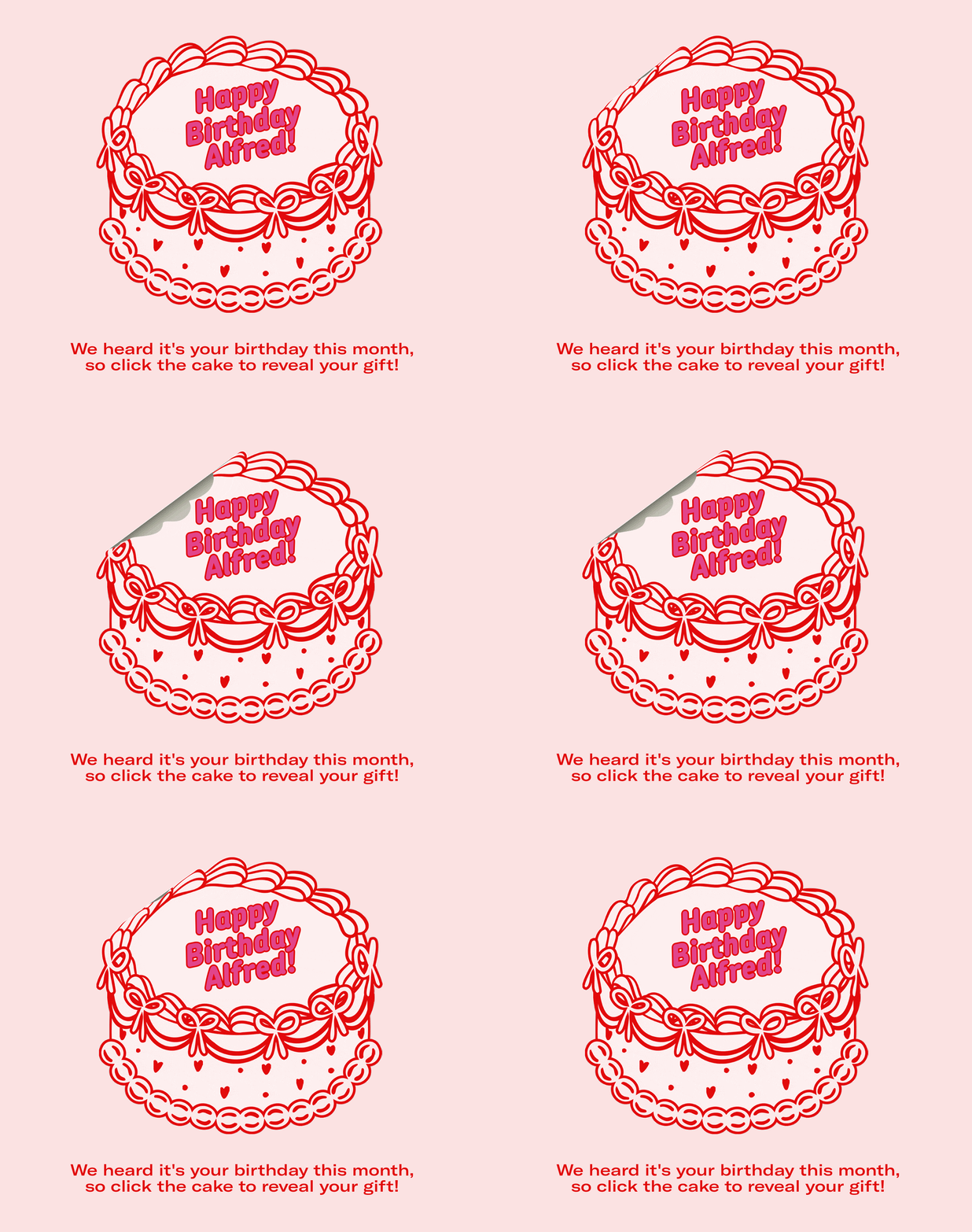
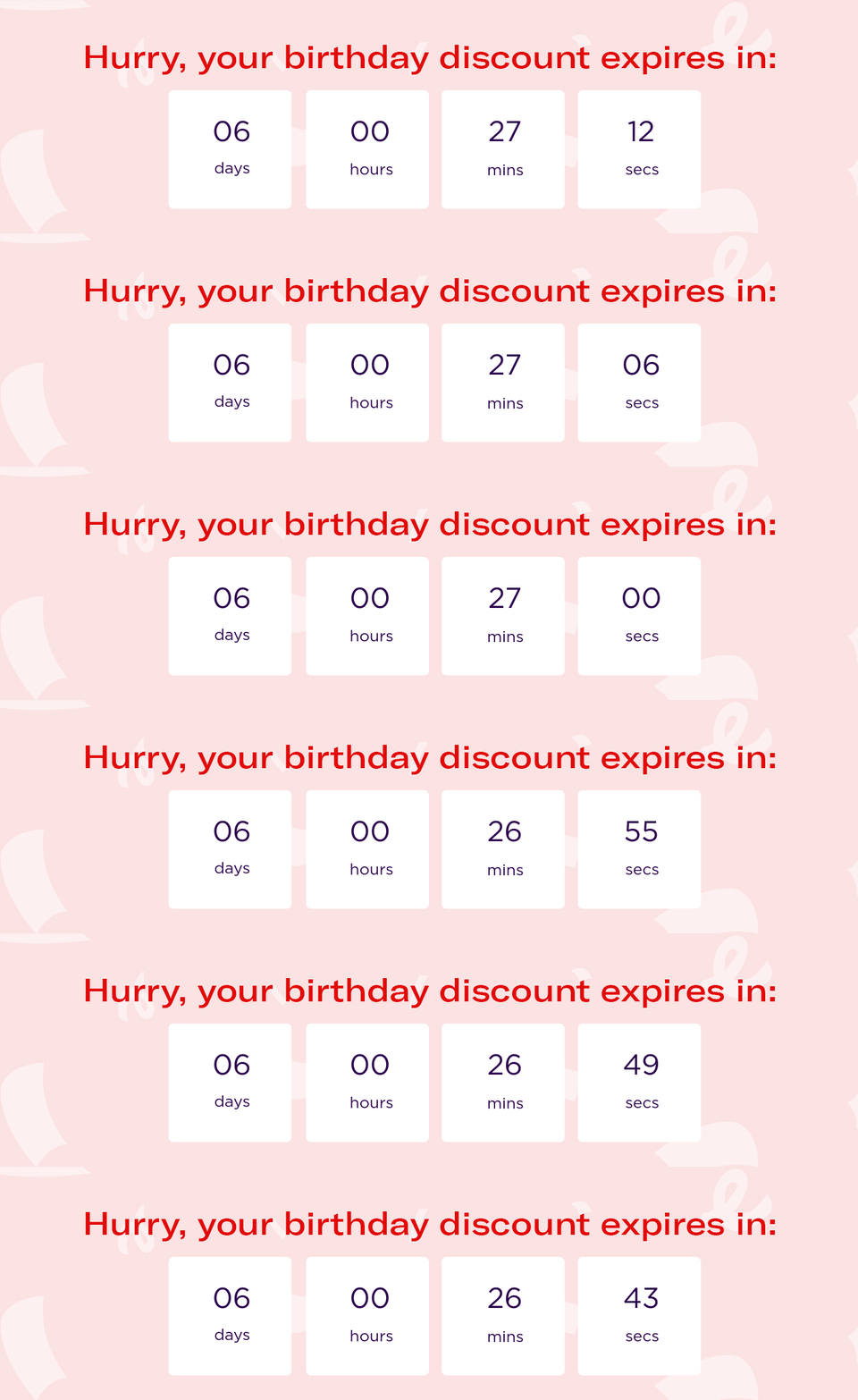
- Embracing Interactivity: Dynamic Content in Action: Surprisingly, few senders fully leverage animation or dynamic content in their birthday emails, despite the inherent festive nature of birthdays. This is a missed opportunity for enhanced engagement. Imagine flickering candles, confetti animations, or "open your present" interactive elements that add a layer of delight. Virgin Australia provides an excellent example of this: their on-the-day email features an animated cake that reveals the discount, creating a moment of surprise and delight. Their follow-up email cleverly uses a countdown timer, adding a sense of urgency and encouraging prompt action before the offer expires. Such interactive elements not only capture attention but also make the email feel more special and memorable, reinforcing the celebratory theme.
Case Studies in Excellence: What Works Best
Amidst the deluge of "here’s your birthday discount" emails, certain brands manage to stand out by delivering genuine value and making customers feel truly appreciated. Burger King, for instance, was lauded for its straightforward offer: "Enjoy a free bday Whopper." The absence of a minimum spend or complex conditions made this offer exceptionally appealing and demonstrated a clear commitment to customer delight. It was a pure, unadulterated gift on a special day.
Honorable mentions in the birthday email landscape often share similar characteristics of clear value and thoughtful execution:
- Anthropologie: Offering 15% off plus free shipping for birthdays. This combines a meaningful discount with a practical benefit, making the offer highly attractive.
- Sephora: Providing a free product (often a mini beauty item) as a birthday gift. This allows customers to try new products or enjoy a favorite, fostering goodwill without a direct purchase requirement.
- Dell: Delivering a substantial 20% discount on purchases. For a brand with higher price points, this discount represents significant savings and a strong incentive to buy.
These examples underscore that the most effective birthday campaigns are those that prioritize the customer experience, offering clear, valuable, and easily redeemable rewards that genuinely enhance the celebratory feeling.
The Economic Imperative: Quantifying the ROI of Birthday Marketing
The commercial impact of personalized birthday discounts extends far beyond the immediate transaction. Across the surveyed emails, the average discount (or discount equivalent) was 18%. While this might seem reasonable from a brand’s perspective—a restaurant operating at a 4% net margin can only give away so much—viewing it purely as a cost overlooks its strategic investment in customer relationships.
- Customer Acquisition vs. Retention: The business case for investing in active customers is well-established and compelling. Harvard Business Review famously found that acquiring a new customer can cost five times more than retaining an existing one. Further research by Bain & Company revealed that a mere 5% boost in customer retention can lift profits by an astonishing 25% to 75%. This data unequivocally positions customer retention as a cornerstone of sustainable business growth.
- Birthday Emails: A High-Performing Touchpoint: When it comes to specific marketing channels, birthday emails shine. Experian’s Birthday Emails report highlighted that birthday emails generate an impressive 481% more transactions and 342% more revenue per email than standard promotional campaigns. This makes birthdays one of the highest-performing touchpoints in the entire customer lifecycle. By comparison, Dotdigital research found that even with an offer, win-back emails aimed at re-engaging dormant customers redeem at just over 2%, illustrating the immense difference in engagement and conversion rates.
- The Preventative Investment: Avoiding Costly Win-Backs: Given these statistics, the argument for upgrading the "token birthday gesture" becomes an economic imperative. Brands routinely offer substantial 25-40% discounts to win back disengaged customers, often with limited success and at a higher cost per conversion. It makes sound economic sense to invest earlier in the customer journey, specifically at the birthday milestone, when customer engagement is naturally higher, the emotional connection with the brand is stronger, and the cost of a meaningful offer is a fraction of the expense involved in a last-ditch win-back campaign. The case for prevention, in this context, effectively makes itself. Proactive engagement through thoughtful birthday marketing can significantly reduce the need for costly reactive strategies.
Crafting an Effective Birthday Email Strategy: Key Principles
While the business case for birthday emails is robust, their inherently personal nature demands meticulous execution. Errors in data, irrelevant offers, or poorly timed messages can do more harm than good, eroding trust and diminishing brand perception. Here are ten principles for crafting a truly effective birthday email marketing strategy:
- Accurate Data Collection and Management: The foundation of any successful birthday campaign is clean, accurate customer data. Implement robust data validation processes during sign-up and periodically encourage customers to update their profiles. Bad data leads to missed opportunities and can even cause embarrassment if a message is sent on the wrong date.
- Strategic Segmentation and Personalization: Beyond just knowing the birthday, leverage other customer data points (purchase history, preferences, demographics) to segment your audience. This allows for hyper-personalized offers that resonate more deeply than a generic discount. For example, a beauty brand might offer a free product relevant to a customer’s known skin type.
- Clear, Valuable, and Easily Redeemable Offers: The offer itself must be appealing and straightforward. Avoid overly complex conditions or small, insignificant discounts. The best offers are those that require minimal effort from the customer to redeem, like Burger King’s free Whopper or Sephora’s free product.
- Multi-Channel Integration: Don’t limit the celebration to email. Consider integrating birthday messages across other channels like SMS, in-app notifications, or even direct mail for high-value customers. This multi-touch approach enhances visibility and reinforces the celebratory message.
- Strategic Timing and Sequencing: Develop a multi-stage campaign:
- Pre-Birthday (7-14 days out): Build anticipation and remind customers that something special is coming.
- On the Day: Deliver the core offer, perhaps with an interactive element.
- Post-Birthday (7-14 days after, before expiry): Send a gentle reminder to redeem the offer, possibly with a countdown timer.
- Interactive and Engaging Content: Leverage dynamic content, GIFs, and animations to make the email visually appealing and memorable. A simple animated cake or confetti can elevate the experience and make the message feel truly special.
- Brand Alignment and Tone: Ensure the birthday message and offer are consistent with your brand’s overall voice and values. A luxury brand’s birthday message will differ significantly from a fast-food chain’s, but both should feel authentic.
- Testing and Optimization: Continuously test different elements of your birthday campaigns—subject lines, offers, visual content, timing, and calls to action. A/B testing can reveal what resonates most with your audience and lead to incremental improvements in performance.
- Respecting Privacy and Building Trust: Be transparent about how customer data is collected and used. Ensure compliance with data protection regulations (e.g., GDPR, CCPA). A personalized offer feels less intrusive when customers understand and trust the brand’s data practices.
- Measuring Performance and ROI: Track key metrics such as open rates, click-through rates, conversion rates, average order value, and customer lifetime value. This data will demonstrate the tangible return on investment for your birthday marketing efforts and justify continued investment.
The Future of Personalized Celebrations: AI and Hyper-Personalization
As marketing technology continues to evolve, the future of birthday email marketing will undoubtedly be shaped by advancements in artificial intelligence and hyper-personalization. AI-powered analytics can process vast amounts of customer data to predict not just what offers will convert, but which specific products or services would genuinely delight an individual customer on their birthday. This could lead to dynamic offers that change based on real-time behavior, or even personalized content generated to reflect individual preferences and life stages. Imagine an email that not only offers a discount but curates a personalized wish list based on past browsing history and demographic data. The integration of AI will move birthday marketing from a segmented approach to a truly individualized celebration, further strengthening emotional connections and driving unprecedented levels of engagement.
Conclusion: Elevating the Customer Relationship Through Thoughtful Engagement
In an increasingly competitive digital landscape, where customer loyalty is hard-won and easily lost, birthday emails represent a powerful yet often underutilized tool. By moving beyond perfunctory gestures and embracing a strategic, data-driven approach, brands can transform a simple date into a meaningful, positive interaction that significantly strengthens the customer relationship. Customers may not always buy immediately, but a well-executed birthday campaign fosters goodwill, enhances brand perception, increases the likelihood of future purchases, and cultivates stronger advocates along the way. Investing in thoughtful, personalized birthday marketing is not just a nicety; it is a critical component of a robust customer lifecycle strategy, yielding substantial commercial returns and building lasting brand affinity. The lesson is clear: celebrate your customers’ special days with the attention they deserve, and they will, in turn, celebrate your brand. Learn how Validity’s Intelligence Network can help you create, manage, and protect accurate segments from January 1st to December 31st every year, ensuring every customer feels uniquely valued.