The allure of selling vibrant, custom-designed stickers through print-on-demand (POD) services on platforms like Shopify is undeniable, especially for aspiring entrepreneurs. With its low startup costs, minimal inventory risk, and impulse-buy appeal, stickers present a seemingly accessible entry point into e-commerce. However, a significant pitfall, often overlooked in introductory guides, can quickly turn a promising venture into a financial drain: the hidden costs associated with shipping and processing single sticker orders. This article delves into the intricate financial landscape of selling POD stickers on Shopify, offering a comprehensive, step-by-step approach to building a profitable business by addressing these critical, yet frequently unmentioned, cost factors.
The Sticker Math: Unpacking the Profit Killer
The core of the problem lies in the economics of fulfilling individual sticker orders. Consider a common scenario: a single kiss-cut sticker priced at $4.99, offered with free shipping. While the retail price appears attractive, a closer examination of the cost breakdown reveals a stark reality. The base cost from a POD provider like Printful for a 3×3 inch kiss-cut sticker might be $1.95. The first-item shipping cost within the U.S. can be as high as $4.29. Add to this Shopify’s payment processing fee, typically around 2.9% plus $0.30, which amounts to approximately $0.44 for a $4.99 item. The cumulative cost of fulfilling this single order ($1.95 + $4.29 + $0.44) totals $6.68. When subtracting this from the retail price of $4.99, the seller is left with a loss of $1.69 per order. This fundamental calculation underscores a critical truth: selling single stickers with free shipping at typical price points is not a sustainable business model without significant adjustments.
This stark financial reality highlights why many aspiring sellers fail within their first 90 days, with over 80% reportedly generating zero revenue. The issue is not necessarily a lack of viable products or designs, but rather an insufficient understanding of the operational costs that erode profit margins. The global print-on-demand market, projected to reach between $13 billion and $15 billion by 2026, according to Grand View Research and Mordor Intelligence, signifies a burgeoning industry. However, within this vast market, sticker sellers on platforms like Shopify face unique challenges that require strategic planning to overcome.
The Foundation of Profitability: Rethinking the Unit of Sale
The key to circumventing the single-sticker loss lies in fundamentally altering the "unit of sale." The article emphasizes that shipping costs are per-order, not per-sticker. This distinction is paramount. When a customer orders multiple items within a single transaction, the higher first-item shipping fee is only applied once, significantly reducing the per-item fulfillment cost. This insight leads to the crucial strategy of bundling products.
Step 1: Run the Sticker Math Before You Design Anything
Before even opening a design program, sellers must meticulously calculate the true cost of fulfilling an order. The example of the $4.99 sticker illustrates the danger of neglecting shipping and processing fees. The base cost of a product is only one piece of the puzzle. The cost of delivering that product to the customer, along with platform transaction fees, forms the true cost of sale. This initial financial assessment dictates every subsequent decision, from design choices to pricing strategies.
Step 2: Fix Your Offer with Sticker Sheets, Packs, and a Free Shipping Threshold
The article proposes a transformative solution: shifting from selling individual stickers to offering sticker sheets or multi-sticker packs. The illustration of five $4.99 stickers demonstrates the dramatic impact of this strategy. If purchased individually across five separate orders, the total loss could amount to $8.45. However, if these same five stickers are presented as a single sticker sheet or a pack, and fulfilled as one order, the financial outcome shifts dramatically. A 5-sticker pack, fulfilled as five loose stickers, still results in a loss of $3.74. The true financial savior, however, is the sticker sheet. A printed sticker sheet, measuring 5.83 x 8.25 inches, can be retailed at $14.99 and yield a profit of approximately $4.92, representing a 33% gross margin. This is achieved because the sheet is treated as a single item, incurring the $4.29 first-item shipping charge only once, rather than five times.
This strategic shift allows for the implementation of a free shipping threshold. Instead of offering free shipping on every order, which is financially unsustainable for single items, a threshold can be set at a price point that encourages multiple purchases, such as $15 or $20. This approach captures the marketing benefit of "free shipping" while ensuring that the order value sufficiently covers the fulfillment costs.
The article identifies three primary levers to fix the offer:
- Sticker Sheets: These are a single item, leveraging the per-order shipping structure effectively. They are ideal for niches where buyers are attracted to curated sets or cohesive aesthetics.
- Multi-Sticker Packs: While better than selling singles, these still require careful calculation to ensure the cost of fulfilling multiple individual stickers within the pack doesn’t negate profits.
- Free Shipping Threshold: This incentivizes customers to add more items to their cart, effectively turning a per-order shipping cost into a profitable revenue driver.
Step 3: Identify Niches Where Buyers Purchase in Multiples
The success of sticker sheets and multi-item offers hinges on understanding customer purchasing behavior. The article stresses that "trending sticker niches" are less important than identifying niches where buyers are predisposed to purchasing multiple stickers. Instead of focusing on what’s popular, the critical question is: "Do buyers in this niche buy four at a time?"
The article suggests using free tools like Google Trends, Etsy search trends, and competitor analysis to identify such niches. For instance, planner, journal, nurse, and aesthetic-focused niches are strong precisely because their patrons often buy multiple stickers to personalize their items. In contrast, niches centered around large, statement stickers might struggle with the per-order shipping costs associated with single-item purchases.
A crucial legal caveat is also highlighted: avoid fan art, brand logos, and copyrighted characters due to intellectual property infringement risks. The recommendation for beginners is to focus on one aesthetic niche and one occupational niche, creating 8-12 designs packaged as both single items and sticker sheets.
Step 4: Choose Your Print-on-Demand Sticker Supplier Wisely
When selecting a POD supplier, the article advises moving beyond generic adjectives and focusing on concrete pricing and service reliability. Printful and Printify are presented as leading options, with Sticker Mule highlighted for bulk pre-orders but not as a traditional POD supplier.
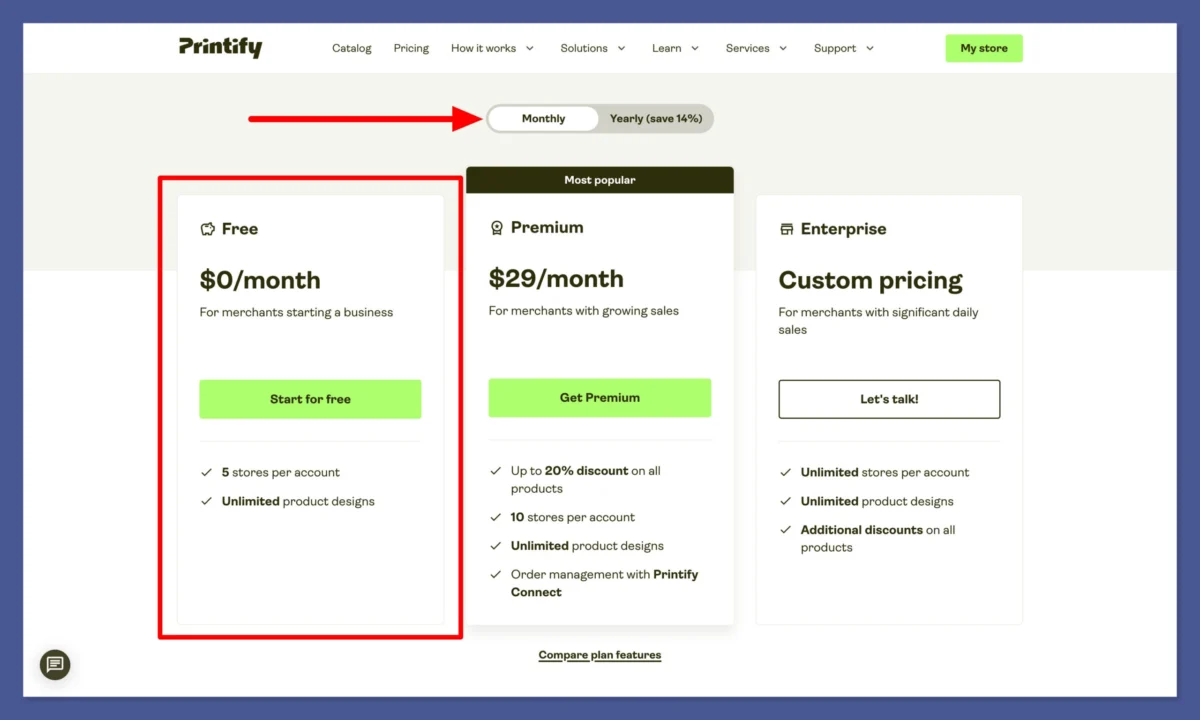
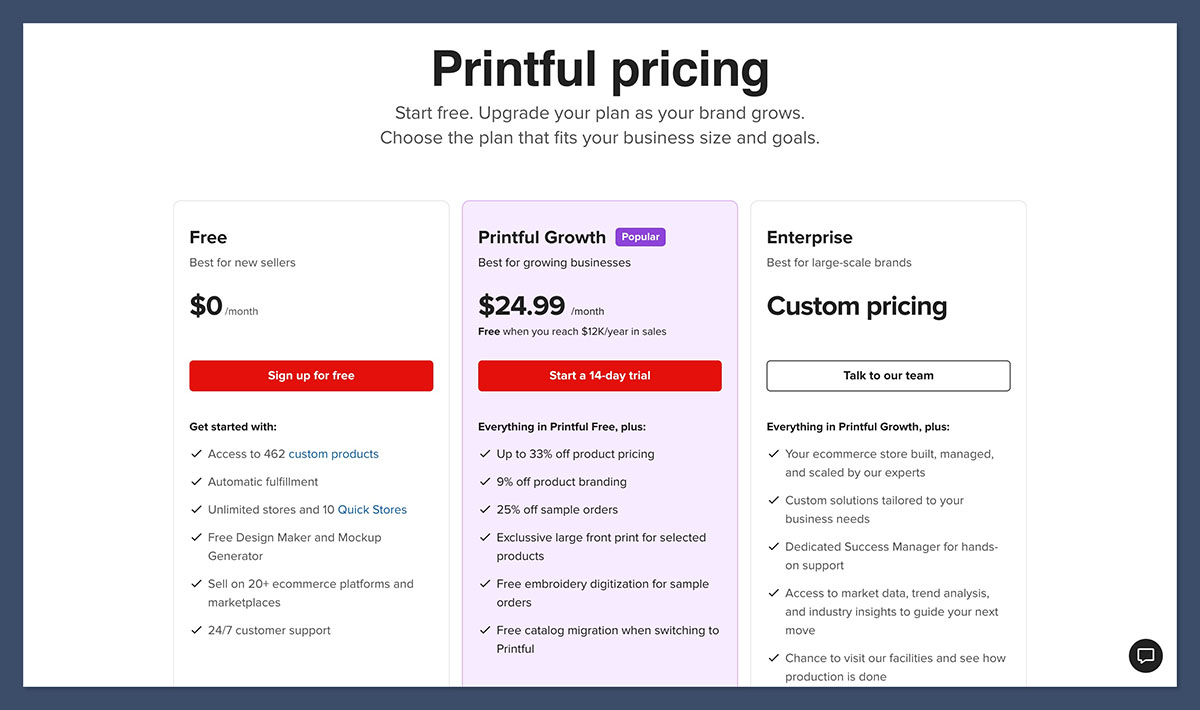
- Printful: Offers a free plan and consistent quality due to its in-house printing. While its base costs are higher (e.g., $1.95 for a 3×3 inch kiss-cut), the reliability can be worth the premium for new sellers. Their growth plan offers benefits that become free after significant sales volume.
- Printify: Features lower base costs (around $1.02-$1.39 for a kiss-cut on their Premium plan) by utilizing a network of third-party print providers. This variability in providers can lead to inconsistencies in quality, making it crucial to vet individual providers with sample orders. Their Premium plan offers discounts and can be cost-effective at higher volumes.
- Gelato: Operates on a local production network, potentially reducing international shipping costs and transit times. Pricing is not publicly available on their sticker product page.
- Sticker Mule: Excels in bulk orders, offering significantly lower per-unit costs at scale ($0.12 per unit at 10,000 units). However, this requires upfront inventory investment, which is contrary to the POD model’s core advantage.
For a new store, starting with Printful’s free plan is recommended for its print consistency, while Printify can be considered as sales volume increases and the cost savings become more significant.
Step 5: Create Print-Ready Sticker Files: DPI, Bleed, and Cut Lines
Technical specifications for sticker files are critical for ensuring high-quality prints. The article outlines six essential checks, with a particular emphasis on color profiles.
- DPI (Dots Per Inch): Aim for 300 DPI for sharp, detailed prints.
- Bleed: A 3mm bleed ensures that colors extend beyond the cut line, preventing white edges.
- Safe Zone: A 3mm safe zone within the cut line prevents important design elements from being cropped.
- Color Profile: Using sRGB is crucial, as many printers use this profile, and using CMYK can lead to duller colors.
- File Format: Transparent PNG is generally preferred for stickers.
- Cut Lines: Understanding the difference between kiss-cut (partial cut) and die-cut (full outline cut) is essential for preparing files correctly.
Free design tools like Canva and Photopea can be utilized to create these print-ready files. The distinction between kiss-cut and die-cut files is important: die-cut designs require a clean silhouette with ample breathing room, while kiss-cut designs are more forgiving with busy edges due to the backing border.
Step 6: Set Up Your Shopify Store From Scratch
A functional Shopify store is the bedrock of the e-commerce operation. The article advises against getting bogged down in extensive theme customization early on. Six core elements must be in place before connecting a POD supplier:
- A clear business name and domain.
- Essential legal pages: Privacy Policy, Terms of Service, Refund Policy.
- Contact information.
- A basic theme that functions adequately.
- A chosen Shopify plan (Starter or Basic).
- A payment gateway (Shopify Payments is recommended).
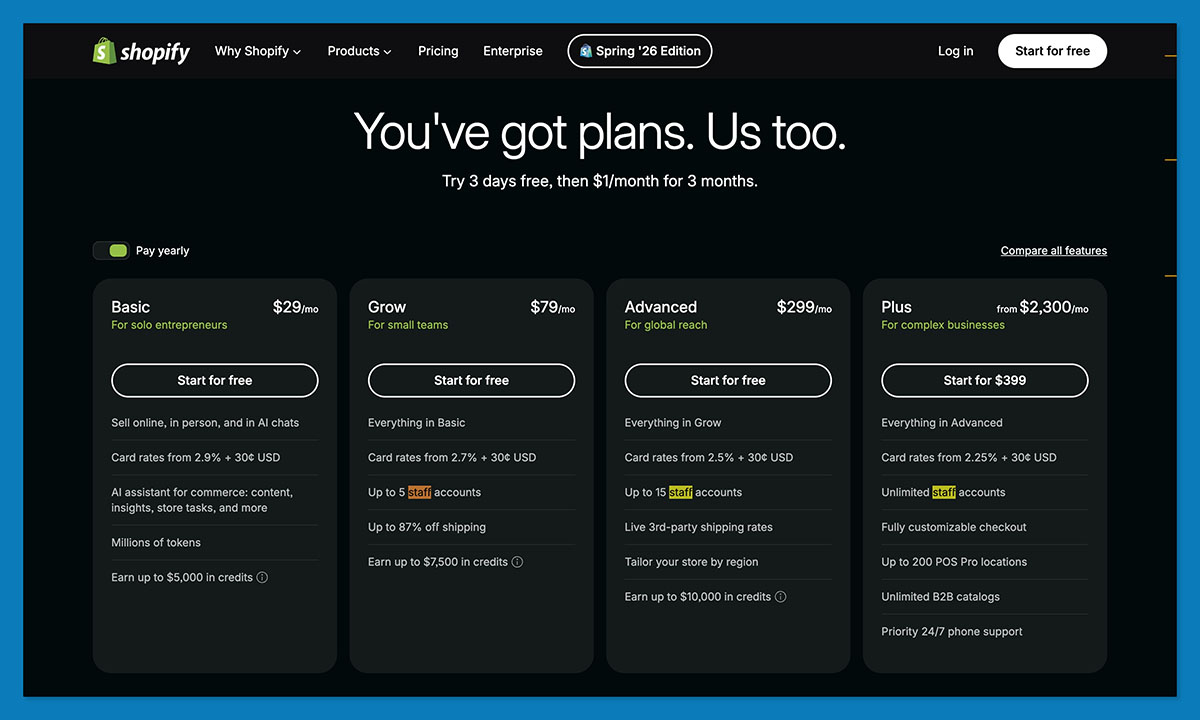
The choice between Shopify Starter ($5/month with a 5% transaction fee) and Shopify Basic ($39/month with 2.9% + $0.30 processing) depends on sales volume. Starter is cheaper for very low sales, while Basic becomes more cost-effective as order numbers grow. The article emphasizes skipping theme customization, upsell apps, and analytics dashboards until after the first sale.
Step 7: Connect Your POD App to Shopify and Publish Your First Sticker
Connecting a POD app, such as Printful or Printify, to Shopify is a relatively quick process. However, careful verification afterward is crucial to prevent customer service issues. The article outlines two methods for connecting: starting within the POD app or starting within Shopify.
Once connected, the process of building and publishing a product involves:
- Selecting the product type (e.g., sticker sheet).
- Uploading the print-ready design.
- Choosing mockups (real photos of the sample are preferred over generic mockups).
- Setting product titles and descriptions.
- Syncing the product to the Shopify store.
Crucially, sellers must verify that the product appears in the correct collection on Shopify and that the pricing, shipping options, and variant selections are accurate. The article also points out that the seller’s card funds fulfillment, not the payout, creating a cash flow gap that needs to be managed.
Step 8: Set Your Retail Prices and Add Up What Shopify Really Costs
Accurate pricing is paramount for profitability. The article reiterates that prices should be determined by the fulfilled cost, not merely a multiple of the base cost. The formula should be: Retail Price = Base Cost + Shipping + Processing + Packaging + Margin.
The monthly cost of running a sticker store on Shopify can range from approximately $5 on the cheapest path (Shopify Starter + free POD plan) to $45-$80/month on a more comfortable path (Shopify Basic + Printify Premium). This fixed cost needs to be offset by the profit generated from sales. For example, with a $4.92 gross margin per sticker sheet, approximately 16 sheet orders per month are needed to break even on the comfortable path. The article provides a detailed breakdown of how to calculate this break-even point based on different plan choices.
Step 9: Order a Sample and Check Quality Before You Spend on Traffic
Before investing in marketing, ordering a physical sample of every product format is non-negotiable. This $7-$15 investment is the cheapest form of insurance in print-on-demand. The sample should be meticulously inspected for print quality, color accuracy, cut precision, and overall material quality. If the sample is unsatisfactory, the issue needs to be diagnosed before redesigning or blaming the printer. For Printify, this might involve switching print providers; for Printful, it could be related to carrier issues or support.
Crucially, the sample should be photographed to create authentic product images for the store, which are far more effective at converting customers than generic mockups.
Step 10: Drive Traffic Strategically and Validate Your Store
The article acknowledges that over 80% of Shopify stores fail to generate revenue in their first 90 days because they are invisible. Shopify is a platform, not a marketplace like Etsy, which already has a massive, actively searching customer base. Therefore, driving traffic requires a deliberate strategy.
Recommended tactics include:
- Leveraging Social Media: Building a presence on platforms like Instagram, TikTok, and Pinterest with engaging visual content.
- SEO Optimization: Using relevant keywords in product titles, descriptions, and tags.
- Email Marketing: Building an email list from day one to nurture leads and promote new products.
- Paid Advertising: Starting with small, targeted ad campaigns after validating organic traffic.
The article strongly suggests a phased approach: starting on Etsy for 1-3 months to gain initial sales and validate designs on existing traffic, then transitioning to Shopify once an audience has been built. This approach leverages Etsy’s inherent discoverability while building a dedicated brand presence on Shopify. The initial 90 days on Shopify should be treated as a validation period, not a revenue-generating phase.
Conclusion
Selling print-on-demand stickers on Shopify can be a lucrative endeavor, but only if the foundational financial pitfalls are addressed. By meticulously calculating costs, strategically structuring product offers to include sticker sheets and multi-item packs, identifying customer niches that favor bulk purchases, and prioritizing quality control through sample orders, aspiring entrepreneurs can build a sustainable and profitable sticker business. The journey requires a shift in perspective from selling individual items to creating value through curated offerings and understanding the true cost of every transaction. The sticker math, when correctly applied, is not a barrier to entry but a roadmap to success in the competitive e-commerce landscape.