The digital landscape witnessed a pivotal month in April 2026, marked by significant advancements in artificial intelligence, intensified search engine enforcement, and a re-emphasis on content quality, as highlighted in the latest SEO update by Yoast experts Carolyn Shelby and Alex Moss. This period underscored a fundamental transformation in how search engines, particularly Google, interact with and interpret the web, moving beyond simple indexing towards an era dominated by AI agents and sophisticated content evaluation. The core message resonated clearly: merely publishing more content is no longer a viable strategy; in many cases, it actively hinders visibility and performance. The developments signal a future where digital presence is defined by strategic interaction with AI, adherence to evolving quality standards, and a deep understanding of shifting user expectations.
The Rise of Agentic AI and Google’s Strategic Shift
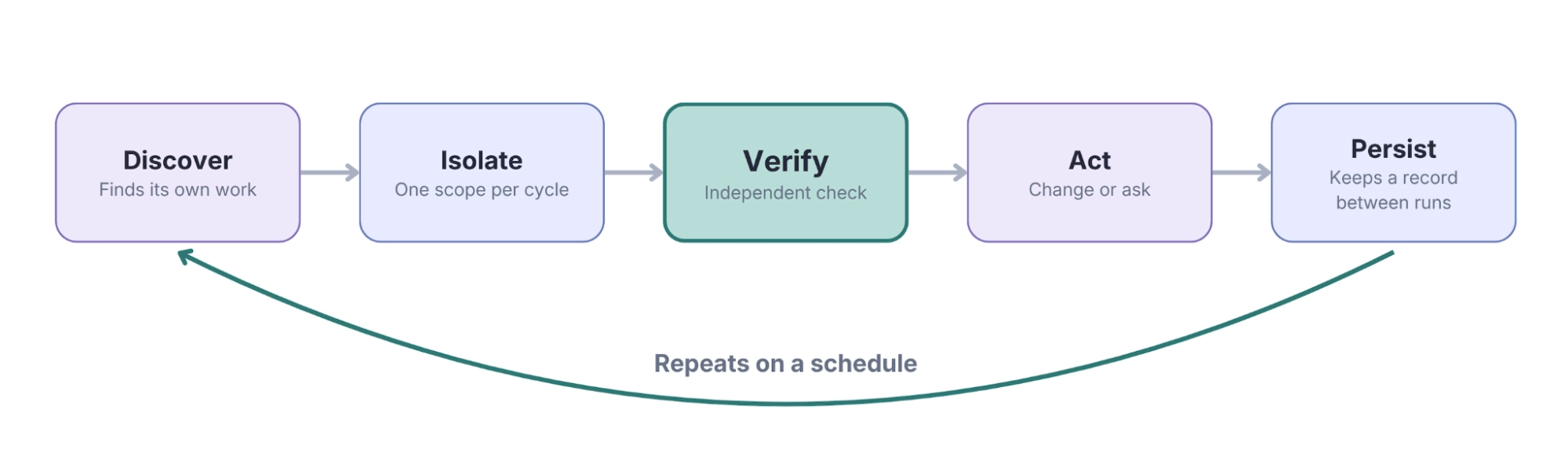
A defining theme of April 2026 was Google’s explicit embrace of "agentic AI" and its implications for web interaction. Google introduced a new Google-agent user agent, a clear signal of its intent to support and deploy AI-driven crawling and interaction on a more explicit and structured basis. This move is not merely a technical adjustment but a strategic pivot, aligning with earlier predictions from Google leadership, including CEO Sundar Pichai, who has suggested that search is evolving into an "AI agent manager." This vision portrays a future where search engines don’t just provide links to information but actively manage and deploy AI agents to perform tasks, synthesize answers, and interact with web content on behalf of users.
The emergence of proposals like WebMCP (Web Machine Comprehension Protocol) further underscores this shift, aiming to standardize how AI agents interact with websites. This initiative reflects a broader industry recognition that AI agents require a more structured and transparent protocol for accessing and utilizing web resources than traditional web crawlers. The implications are profound: the web is being fundamentally restructured around agent access, moving beyond human browsing to accommodate autonomous AI systems performing complex operations. For website owners, this necessitates a re-evaluation of how content is presented and how interactions are managed, anticipating AI agents that "understand" and "act" rather than just "read." This evolution is driven by the increasing demand for instant, contextualized answers and task completion, pushing search engines to become more proactive and intelligent intermediaries. The global investment in AI, projected to reach hundreds of billions of dollars by the end of the decade, highlights the economic imperative behind these technological advancements, with search at the forefront of AI application.
Google’s AI Capabilities and Efficiency: TurboQuant and Task-Based Search
Google’s continued expansion of AI capabilities and efficiency further illustrated its commitment to an AI-first future. A notable innovation was the introduction of TurboQuant, a novel approach to AI model compression designed to significantly improve efficiency. This technology allows for the deployment of more complex and powerful AI models on a wider range of hardware, including mobile devices and edge computing environments, without sacrificing performance. The practical upshot is faster, more responsive AI-driven experiences for users, leading to more immediate and nuanced search results.
Concurrently, Google continued to expand "task-based features in AI Mode," refining how users interact with AI-driven search experiences. This enhancement moves beyond simple information retrieval, enabling users to accomplish specific tasks directly within the search interface, such as booking appointments, comparing products with specific criteria, or generating content. These advancements are critical as AI becomes faster and more deeply integrated into daily digital interactions, continually shifting user expectations. As users become accustomed to AI-powered efficiency, their patience for traditional, link-based search results diminishes. The actionable takeaway for webmasters and content creators is clear: content must not only be informative but also structured and optimized for direct consumption and task completion by AI, anticipating queries that seek immediate utility rather than just information. This signals a transition from "what is X?" to "help me do Y with X."
Structured Data’s Evolution in an AI-First World
The growing prevalence of AI has necessitated significant adaptations in how search engines interpret and label web content, particularly through structured data. April 2026 saw Google introduce "AI bot labels to forum and Q&A structured data." This update is crucial for distinguishing between human-generated and AI-generated contributions in dynamic content environments. In an era where AI can produce highly convincing text, maintaining transparency and verifying content origin is paramount for trust and data integrity. This move helps search engines and, by extension, users, discern the authenticity and potential biases of information, especially in contexts where peer-to-peer insights are valued.
Furthermore, Google updated its documentation with "read more deep link best practices." These guidelines are designed to help web developers optimize content for AI systems, enabling them to better understand the contextual relationships between different sections of a webpage and navigate to relevant information more efficiently. This is not merely about improving human navigation but about empowering AI agents to delve deeper into content, grasp nuances, and extract precise answers. The "why it matters" here is fundamental: search engines are actively adapting their systems to better interpret and label AI-generated content, and websites that provide clear, machine-readable signals through structured data will gain a significant advantage. This underscores the enduring importance of technical SEO fundamentals, which now extend to facilitating seamless AI comprehension.
Google’s Intensified Enforcement: Core Updates and Spam Policies
April 2026 also reinforced Google’s ongoing commitment to combating low-quality content and manipulative tactics through its core algorithm and spam policies. The month saw the completion of the March 2026 spam update and core update, both of which had significant ripple effects across the digital ecosystem. The core update, a broad set of changes designed to improve the overall relevance and quality of search results, typically impacts a wide array of websites, often leading to shifts in rankings for many. The accompanying spam update specifically targeted manipulative practices, demonstrating Google’s continuous refinement of its anti-spam algorithms.
In addition to these broad updates, Google introduced specific updates to its spam policies, addressing tactics like "back button hijacking." This deceptive practice involves redirecting users to an unwanted page when they attempt to use their browser’s back button, a frustrating and user-hostile experience. By explicitly targeting such tactics, Google further signals its intolerance for any practice that degrades user experience or attempts to manipulate search rankings unfairly. Improvements to spam reporting tools were also rolled out, empowering users and webmasters to contribute to a cleaner search environment. The implication is clear: enforcement is becoming more granular and sophisticated, targeting both overt technical manipulation and the proliferation of low-value, unhelpful content. This continuous tightening of policies means that content creators and SEO professionals must prioritize ethical practices and genuine value creation above all else, as shortcuts and manipulative tactics are increasingly met with severe penalties. The cumulative effect of these updates over recent years has been a noticeable shift in search results, rewarding genuine expertise and user-centric content.

Industry Response: AI Integration in Platforms and Tools
The pervasive influence of AI was also evident in the development of various platforms and tools during April 2026, demonstrating how AI is being embedded directly into content creation, workflows, and monetization systems. Elementor, a popular WordPress website builder, launched "Angie," an agentic AI specifically designed for WordPress users. Angie aims to streamline website design, content generation, and optimization tasks, empowering users to create and manage their sites with greater efficiency through AI assistance. Similarly, Cloudflare introduced "EmDash" as a potential WordPress alternative, focusing on speed, security, and AI-driven content delivery, while continuing its work on "agent readiness standards" to ensure websites are optimally configured for AI interaction.
Beyond website platforms, major AI developers continued their rapid innovation. Anthropic released "Claude Design," a tool likely geared towards AI-assisted creative processes, and previewed "Mythos," suggesting advancements in their foundational AI models. OpenAI, a key player in the generative AI space, was observed testing an "AdsBot" and introduced a ChatGPT ad manager interface. These developments indicate a clear trajectory: AI is not just a tool for search engines but is becoming an integral part of the entire digital ecosystem, from content creation and website management to advertising and monetization. For businesses, this means new opportunities for automation and efficiency, but also a heightened need to understand and adapt to AI-driven workflows and competitive landscapes. The rapid pace of innovation from companies like OpenAI and Anthropic underscores the competitive pressures driving these advancements, with each striving to offer more sophisticated and integrated AI solutions.
The Enduring Primacy of Authority, Trust, and Content Quality
Amidst all the technological advancements, Google consistently reinforced a timeless principle: the paramount importance of authority, trust, and content quality. Statements from Google reiterated that "commodity content does not perform well," a direct challenge to strategies focused on mass production of generic, undifferentiated information. This aligns perfectly with Google’s broader "Helpful Content System" updates, which have been incrementally rolled out over the past year, penalizing content created primarily for search engines rather than human users.
Broader industry analysis further highlighted the critical importance of "authority, freshness, and first-party signals." Authority refers to the credibility and expertise of the content creator and website, often built over time through consistent, high-quality contributions. Freshness, while not always meaning "new," often refers to content that is up-to-date and relevant to current information needs. First-party signals, such as direct user engagement data, brand mentions, and direct website traffic, increasingly contribute to how search engines perceive a site’s value. The "why it matters" here is fundamental: as AI systems synthesize answers and provide direct responses, they rely even more heavily on trusted, differentiated sources. Content that merely rehashes existing information or lacks unique insights will struggle to gain visibility, regardless of technical SEO prowess. This means that investing in genuine expertise, original research, and a strong brand reputation is not just good business practice but an essential SEO strategy in the age of AI. The long-standing E-E-A-T (Experience, Expertise, Authoritativeness, Trustworthiness) framework has never been more relevant, serving as the bedrock for content that will thrive in this evolving environment.
Shifting Paradigms in Measurement and Reporting
The profound changes discussed above inevitably lead to a re-evaluation of how digital success is measured and reported. With the rise of AI agents, direct answers in search, and task-based interactions, the traditional focus solely on keyword rankings is becoming increasingly insufficient. April 2026 underscored the beginning of a significant shift towards "AI visibility."
The "why it matters" is transformative: visibility is moving beyond rankings into citation, inclusion, and influence within AI-generated responses. This means SEO professionals and marketers need to broaden their metrics to include:
- Direct Answers and Featured Snippets: Measuring how often content contributes to direct answers or appears in prominent features.
- AI Agent Citations: Tracking instances where content is cited or referenced by AI agents in their responses or task completions.
- Brand Mentions in AI Summaries: Monitoring if a brand or its content is highlighted in AI-generated summaries or conversational AI interactions.
- Task Completion Rates: For task-based content, measuring how effectively users complete actions initiated through AI search interfaces.
- Influence Scores: Developing methodologies to assess the overall impact and authority of a brand within the AI-driven information ecosystem.
This paradigm shift demands new tools and analytical approaches to accurately gauge performance. The focus will move from "where do I rank?" to "how is my content being used and referenced by AI to inform and assist users?" This redefines the scope of SEO, demanding a more holistic view of digital presence and influence.
Broader Impact and Implications
The cumulative developments of April 2026 painted a clear picture of an accelerated transition in the digital realm. Google’s explicit move towards AI agent management, coupled with its relentless pursuit of content quality and efficiency, signals a more intelligent, proactive, and discerning search environment. For businesses and content creators, the implications are far-reaching:
- Strategic AI Integration: Understanding and preparing for AI agents to interact with websites is no longer optional. This includes optimizing for machine comprehension, task completion, and transparent AI-generated content labeling.
- Uncompromising Content Quality: The era of "commodity content" is definitively over. Investment in unique, authoritative, expert-driven, and truly helpful content is paramount. Generic content will increasingly be overlooked or penalized.
- Evolving SEO Skillset: SEO professionals must expand their expertise beyond traditional keyword optimization to include AI prompt engineering, structured data for AI, new measurement methodologies, and a deeper understanding of user intent in an AI-driven world.
- Technological Adaptation: Platforms and tools are rapidly integrating AI, offering both opportunities for efficiency and challenges in staying current with best practices for AI-driven workflows.
- Ethical Considerations: The rise of AI also brings heightened scrutiny on content authenticity, data privacy, and ethical AI deployment, requiring careful navigation by all stakeholders.
The April 2026 SEO Update by Yoast underscores a critical juncture. The digital future is intrinsically linked to AI, and success hinges on a proactive, adaptive, and quality-focused approach to content creation and web presence. Those who embrace these changes and align their strategies with the evolving demands of AI-first search engines will be best positioned to thrive in the years to come.
The next SEO Update by Yoast is scheduled for May 21, 2026, at 4:00 PM CET (10:00 AM EST), promising further insights into this rapidly evolving landscape.


 Ali Ikhwan
 Neng Nana