

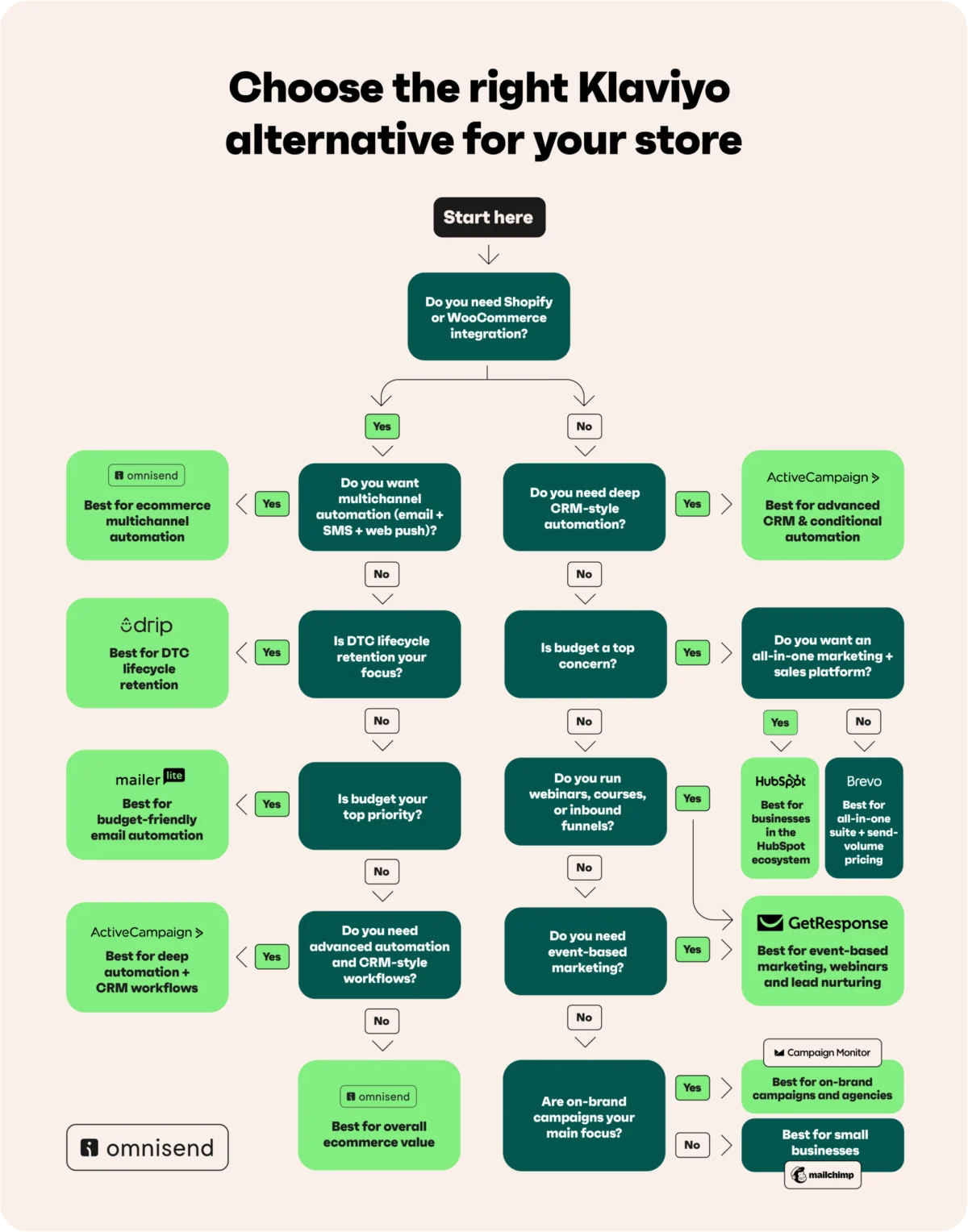
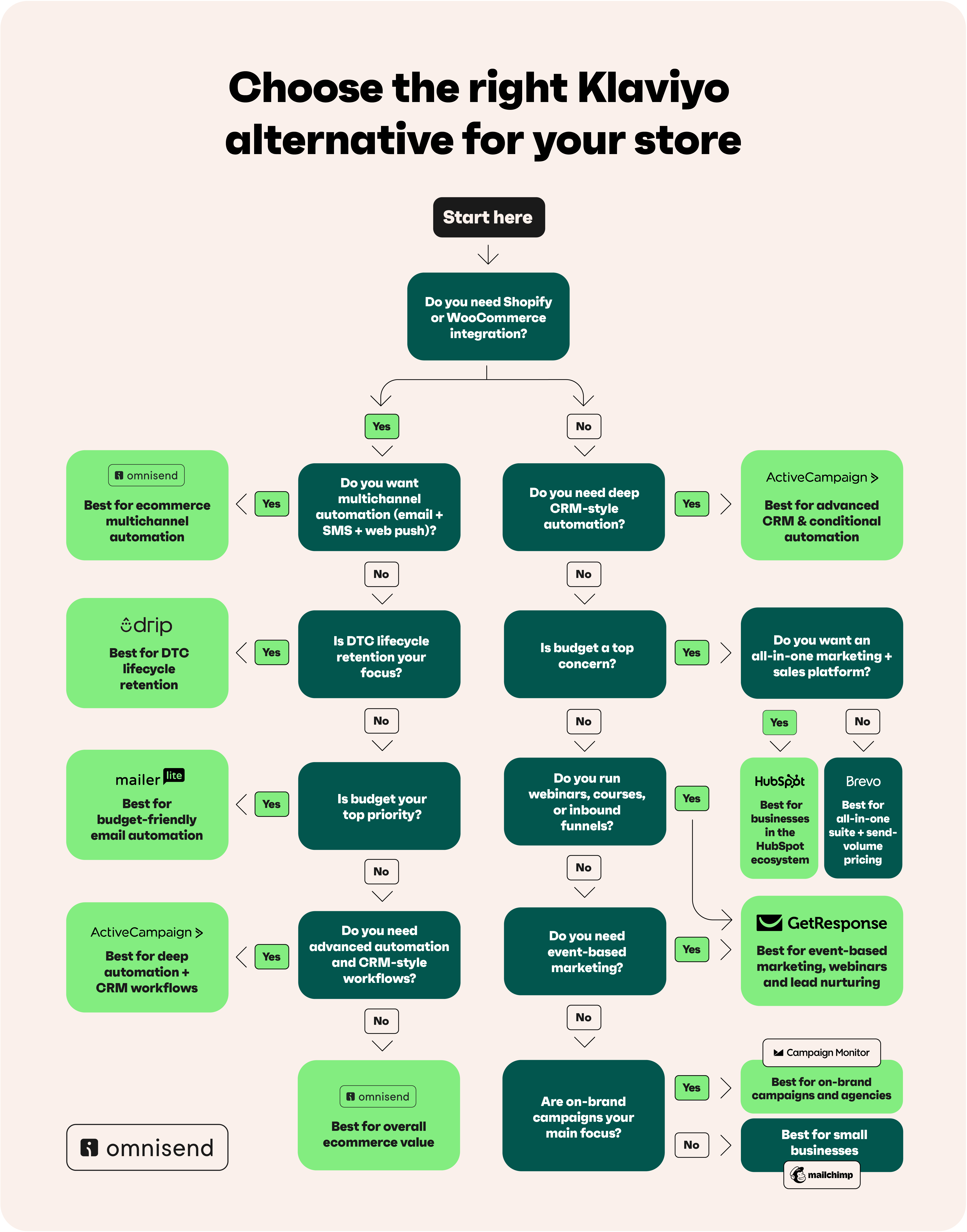
The e-commerce marketing landscape is witnessing a significant shift, prompting many brands to seek alternatives to established platforms like Klaviyo. A comprehensive analysis points to Omnisend as the leading choice for overall e-commerce value, Drip for subscription-based businesses, Brevo for its pay-per-email pricing model, and ActiveCampaign for those requiring advanced automation capabilities. Additional strong contenders catering to specific needs include MailerLite, Campaign Monitor, HubSpot, Privy, GetResponse, and Mailchimp. This re-evaluation by e-commerce businesses stems from evolving platform pricing structures, the demand for more responsive customer support, and the necessity for feature sets that align precisely with diverse business models.
Our in-depth research encompassed ten prominent marketing tools, scrutinizing their use cases, inherent strengths and weaknesses, feature sets, and pricing models. The objective was to provide e-commerce operators with a definitive guide to finding the optimal fit for their marketing strategies. This rigorous review process is publicly documented, ensuring transparency, even when evaluating tools that compete directly with our own offerings.

Klaviyo Alternatives: A Comparative Overview
The market for e-commerce marketing automation tools is dynamic, with platforms constantly refining their offerings. For businesses previously reliant on Klaviyo, or those considering it, a comparative look at key alternatives based on common e-commerce priorities reveals distinct advantages:
| Tool | Best for | Free plan? | Starting price | Migration difficulty |
|---|---|---|---|---|
| Omnisend | Multichannel ecommerce brands of all sizes looking for enterprise features without the learning curve | Yes | $16/month (500 contacts) | Very low (1/5) |
| Drip | Subscription businesses that want simpler visual workflows | No | $39/month (2,500 contacts) | Moderate (3/5) |
| Brevo | Budget-conscious marketers who prefer send-based pricing over contact-based | Yes | $9/month (500 contacts) | Low (2/5) |
| ActiveCampaign | Deep ecommerce automation with advanced CRM functionality | No | $19/month (1,000 contacts) | Low (2/5) |
| MailerLite | Beginners, creators, and micro-brands needing large send limits | Yes | $12/month (500 contacts) | Moderate (3/5) |
| Campaign Monitor | On-brand campaigns and basic automations, with strong agency and team features | No | $13/month (500 contacts) | Moderate (3/5) |
| HubSpot | Businesses already in the HubSpot sales and marketing ecosystem | Yes | $20/month per seat (1,000 contacts) | Moderate to high (4/5) |
| Privy | Small Shopify stores focused on lead capture and list-building | No | $30/month (1,500 contacts) | Moderate (3/5) |
| GetResponse | Webinars, lead nurturing, and content monetization | Yes (limited) | $19/month (1,000 contacts) | Low (2/5) |
| Mailchimp | Small businesses and stores with basic customer journeys | Yes | $13/month (500 contacts) | Low (2/5) |
| Klaviyo (for reference) | Data-rich ecommerce stores with complex customer journeys | Yes | $20/month (500 contacts) | N/A |
The Driving Force Behind the Shift: Why Brands Are Leaving Klaviyo

The impetus for e-commerce brands seeking Klaviyo alternatives in 2026 is multi-faceted, but a primary catalyst has been its evolving pricing structure and user experiences. An analysis of 300 Klaviyo reviews across G2, Trustpilot, and Capterra illuminates the prevailing sentiment among users.
-
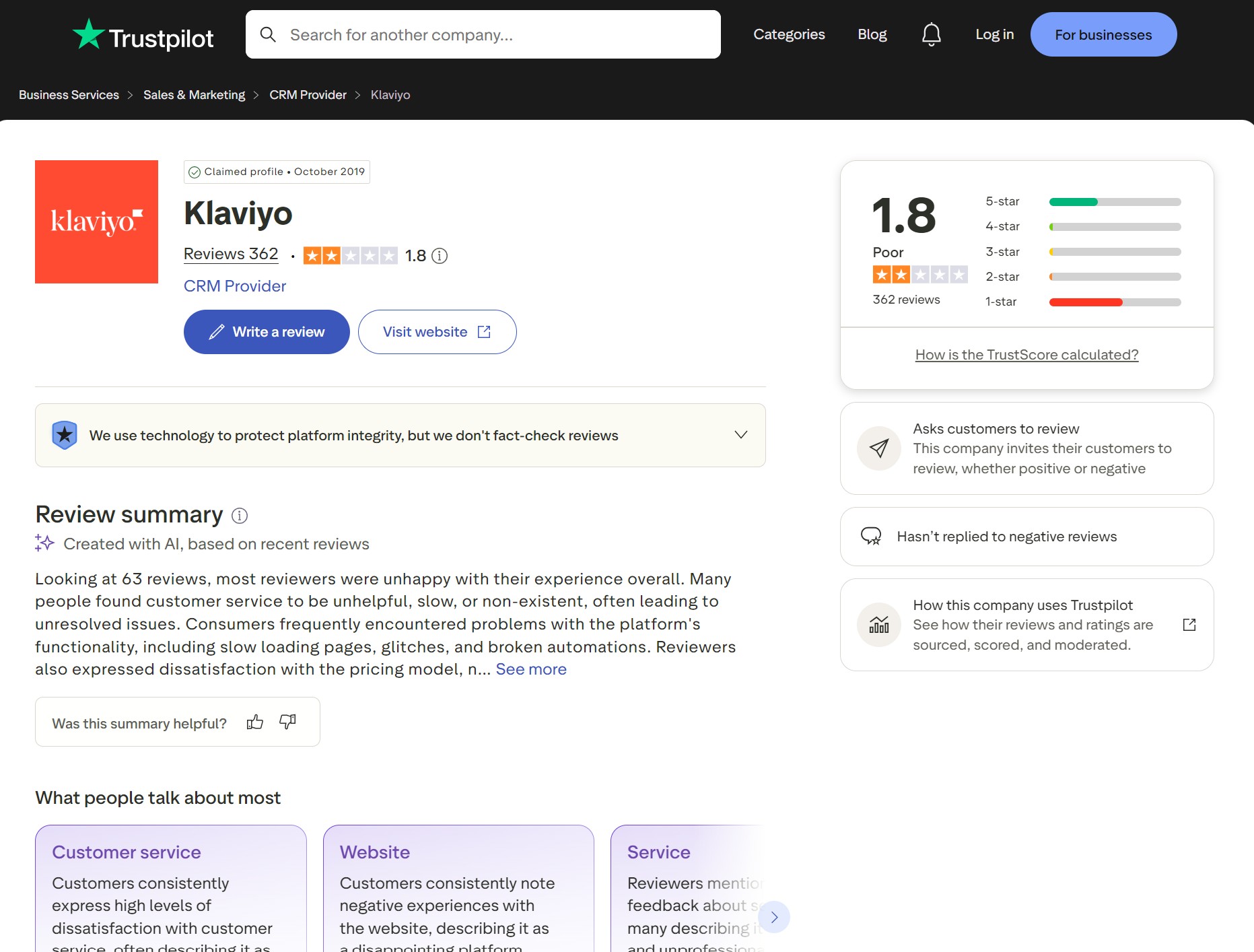
Pricing (39% of mentions): The most significant pain point, cited in 118 of 300 reviews, revolves around Klaviyo’s pricing model. The core concern isn’t necessarily the cost per tier, but rather how pricing is calculated based on "active profiles." This model, which saw a significant change in February 2025, now requires plans to match or exceed active profile counts. Previously, users could maintain lower tiers even with inactive profiles, a flexibility that no longer exists. This has led to unexpected cost escalations for businesses with large, but not always highly engaged, contact lists. A user on r/ecommerce, u/Frequent_Funny_6632, publicly shared an instance of being overcharged and refused a refund, ultimately opting for Omnisend to save $50 a month while gaining SMS functionality. Trustpilot reviews also frequently mention "Klaviyo keeps changing its pricing policies" and express dissatisfaction with paying for inactive profiles, contributing to Klaviyo’s notably low 1.8/5 overall rating on the platform.
-
Customer Support (19% of mentions): The second most common complaint, appearing in 58 reviews, highlights issues with customer support. Users often report slow response times, generic advice, or a perceived lack of understanding of their specific e-commerce challenges, leading to frustration and operational delays.
-
Reporting and Attribution (13% of mentions): While Klaviyo is known for its robust data capabilities, 38 mentions indicate that its reporting and attribution features can be complex, difficult to customize, or sometimes fall short of users’ specific analytical needs, especially for businesses seeking simpler, actionable insights without a steep learning curve.
-
Integrations (12% of mentions): Thirty-six reviews pointed to challenges or limitations with integrations, suggesting that while Klaviyo offers many, some users encounter difficulties in seamless data flow or wish for broader, more flexible connections with their existing tech stacks.
-
Billing and Account Trust (11% of mentions): Closely related to pricing, 34 mentions reflect concerns about billing accuracy, unexpected charges, or a general erosion of trust regarding account management and transparency.
-
Learning Curve (10% of mentions): Despite its powerful features, 30 reviews indicated that Klaviyo’s extensive capabilities come with a considerable learning curve, which can be a barrier for smaller teams or those new to advanced marketing automation.
-
Technical Bugs and Reliability (7% of mentions): The least cited pain point, with 22 mentions, still indicates occasional technical glitches or reliability concerns that can disrupt marketing efforts.
These pain points collectively illustrate a growing demand for platforms that offer a more predictable cost structure, superior customer service, and a balance between advanced functionality and ease of use, without compromising on core e-commerce marketing necessities.

Navigating the E-commerce Marketing Ecosystem: How to Choose Wisely
Selecting the ideal Klaviyo alternative requires a strategic approach, moving beyond a simple feature checklist. As MarTech consultant and email specialist Jordie van Rijn advises, "When comparing e-commerce email tools, try starting with data and workflows. Understand how each platform handles your welcome series, abandoned cart flow, post-purchase emails, customer winback campaigns, and the segments generating meaningful revenue. Can you quickly build them? Can you integrate and use the data? Can your team make changes independently? Now you’ve already narrowed down 80% of your shortlist, and the other questions matter a lot less."
This expert guidance underscores the importance of prioritizing workflows that directly impact revenue. Businesses should evaluate how intuitively a platform allows for the creation, customization, and management of these critical customer journeys. Factors such as the ease of data integration from e-commerce platforms (like Shopify, WooCommerce, BigCommerce), the granularity of segmentation, and the autonomy it grants marketing teams are paramount.
A decision tree approach, based on primary business needs, can further streamline this selection process. Considerations include:
- Platform type: Is your business primarily e-commerce, subscription-based, or a blend of B2C/B2B?
- Automation needs: Do you require highly complex, data-driven automations or simpler, pre-built workflows?
- Budget constraints: Is cost-effectiveness a top priority, or are you willing to invest more for specific advanced features?
- Team expertise: How steep is the learning curve your team can realistically manage?
- Multichannel requirements: Do you need integrated email, SMS, push notifications, or even WhatsApp?
When to Consider Staying with Klaviyo
Despite the growing trend of brands exploring alternatives, it’s crucial to acknowledge that switching isn’t always the optimal solution. For businesses deeply embedded in Klaviyo’s ecosystem, particularly those leveraging its predictive analytics and peer benchmarks on a weekly basis, or those with extensive custom integrations built on its API, a full replacement may not be cost-effective. The investment in rebuilding these intricate setups on a new platform could easily outweigh the perceived savings from a lower-priced plan. Similarly, if the core issue lies with an unmanaged contact list or neglected automation flows, these fundamental problems will persist regardless of the platform.

In-Depth Review of the Top 10 Klaviyo Alternatives
Our hands-on testing and analysis focused on pricing, e-commerce features, automation capabilities, support quality, and ease of use, identifying the ideal use cases for each.
1. Omnisend – Best Overall for E-commerce
- G2 Rating: 4.6/5 (1,230+ reviews)
- Overview: Omnisend stands out as a robust Klaviyo alternative for e-commerce brands prioritizing advanced retention marketing with a user-friendly setup and competitive pricing. It’s designed for seamless integration with major e-commerce platforms like Shopify, WooCommerce, and BigCommerce, making it a strong choice for stores seeking a direct, more affordable replacement.
- Best for: E-commerce stores of all sizes focused on maximizing email marketing ROI, particularly those on Shopify, WooCommerce, and BigCommerce, thanks to its native sync. Customers in 2025 reported an impressive 79:1 ROI across all channels with Omnisend.
- Key Features: Pre-built automation workflows (abandoned cart, welcome series, post-purchase), advanced customer lifecycle segmentation, integrated email, SMS, and web push notifications, intuitive drag-and-drop editor, A/B testing, and comprehensive reporting.
- Pricing: Free plan available. Standard plan starts at $16/month (500 contacts). Compared to Klaviyo, Omnisend’s Standard plan offers significant savings: $20 vs. $30 for 1,000 contacts, $132 vs. $150 for 10,000 contacts, and $282 vs. $400 for 25,000 contacts.
- Pros: Cost-effective (up to 35% cheaper than Klaviyo), highly intuitive interface, excellent customer support, comprehensive multichannel capabilities, free migration service for 250+ contacts.
- Limitations: Lacks some of Klaviyo’s deeper custom report building and highly specialized predictive analytics.
- Comparison to Klaviyo: Omnisend provides a very similar, if not identical, depth of e-commerce features, combining email, SMS, and web push in one platform, but at a more attractive price point. It’s generally easier to master, though it may not match Klaviyo’s most granular custom reporting tools. The success story of Vagari Bags, a UK fashion brand, highlights a switch from Klaviyo to Omnisend, resulting in 40-50% email open rates, 6-7% SMS click rates, and a £121.38 return for every £1 spent across both channels.
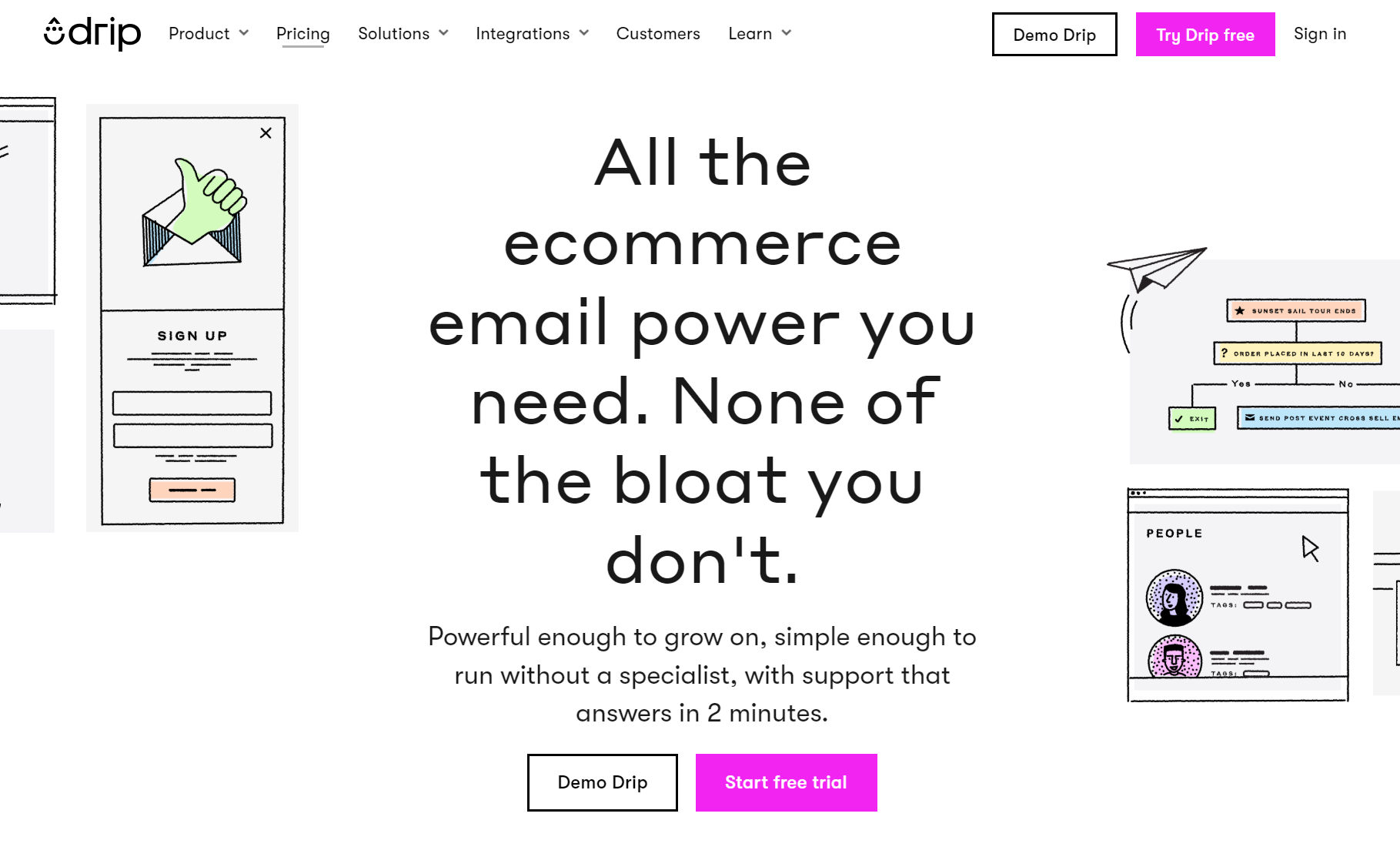
2. Drip – Best for Subscription-Based Brands
- G2 Rating: 4.4/5 (1,110+ reviews)
- Overview: Drip is a strong Klaviyo alternative for subscription services and direct-to-consumer (DTC) wellness brands. It excels in list growth, email communication, and enhancing customer experience through behavior-adaptive flows.
- Best for: Growing DTC and subscription model brands seeking to consolidate automation for list-building and communication within a single tool.
- Key Features: Visual automation builder, robust segmentation, email and SMS marketing, one-off campaign sending, and advanced e-commerce integrations.
- Pricing: No free plan. Starts at $39/month (2,500 contacts).
- Pros: Powerful automations, excellent segmentation, user-friendly interface, strong e-commerce integrations.
- Limitations: No free plan, potentially higher starting price for smaller lists, less emphasis on web push notifications.
- Comparison to Klaviyo: Drip’s automation and segmentation capabilities are quite granular, mirroring many of Klaviyo’s scenarios. It offers a simpler learning curve and is more cost-effective at its starting point ($21/month cheaper for 2,500 contacts).
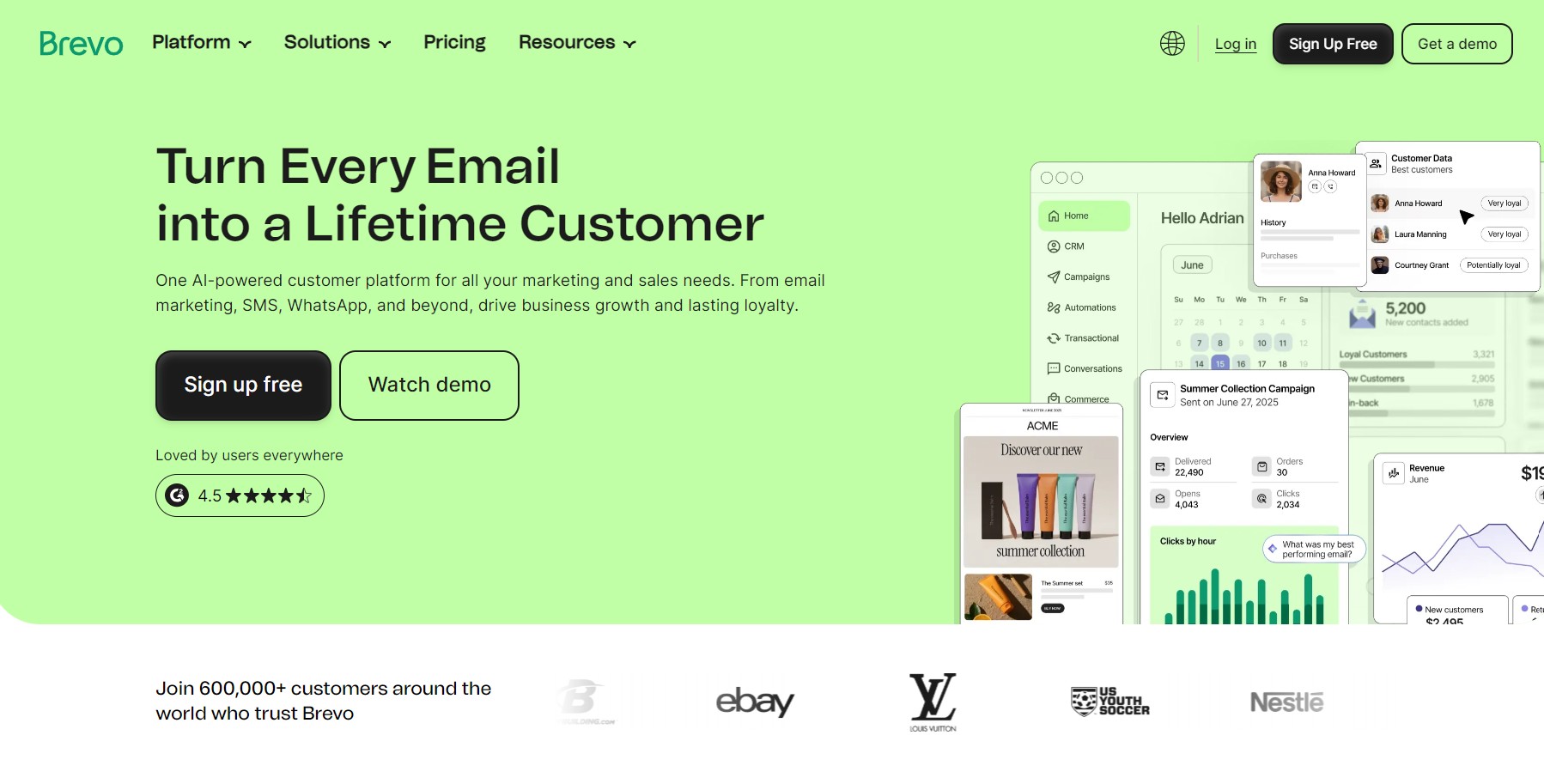
3. Brevo (formerly Sendinblue) – Best for Pay-Per-Email Pricing
- G2 Rating: 4.5/5 (2,600+ reviews)
- Overview: Brevo is an attractive Klaviyo alternative for teams desiring a broader marketing suite beyond just e-commerce email automation. It integrates email, SMS, WhatsApp, and transactional messaging with a basic CRM.
- Best for: Small to mid-sized businesses requiring email + CRM + multichannel messaging, including specific e-commerce use cases, especially those on a budget who prefer send-based pricing.
- Key Features: Email, SMS, WhatsApp campaigns, transactional email, CRM, marketing automation, landing page builder, and live chat.
- Pricing: Free plan available. Paid plans start at $9/month (500 contacts). Its send-based pricing model can be highly advantageous for large lists with infrequent sends.
- Pros: Highly affordable, comprehensive multichannel options, user-friendly, good for B2B features, pay-per-email pricing.
- Limitations: Less depth in e-commerce automation and segmentation compared to Klaviyo or Omnisend, limited e-commerce reporting.
- Comparison to Klaviyo: Brevo offers less granular automation and segmentation but provides a more affordable entry point and send-based pricing, which can be more economical for large, less active lists. Its B2B capabilities also extend its utility beyond pure e-commerce.
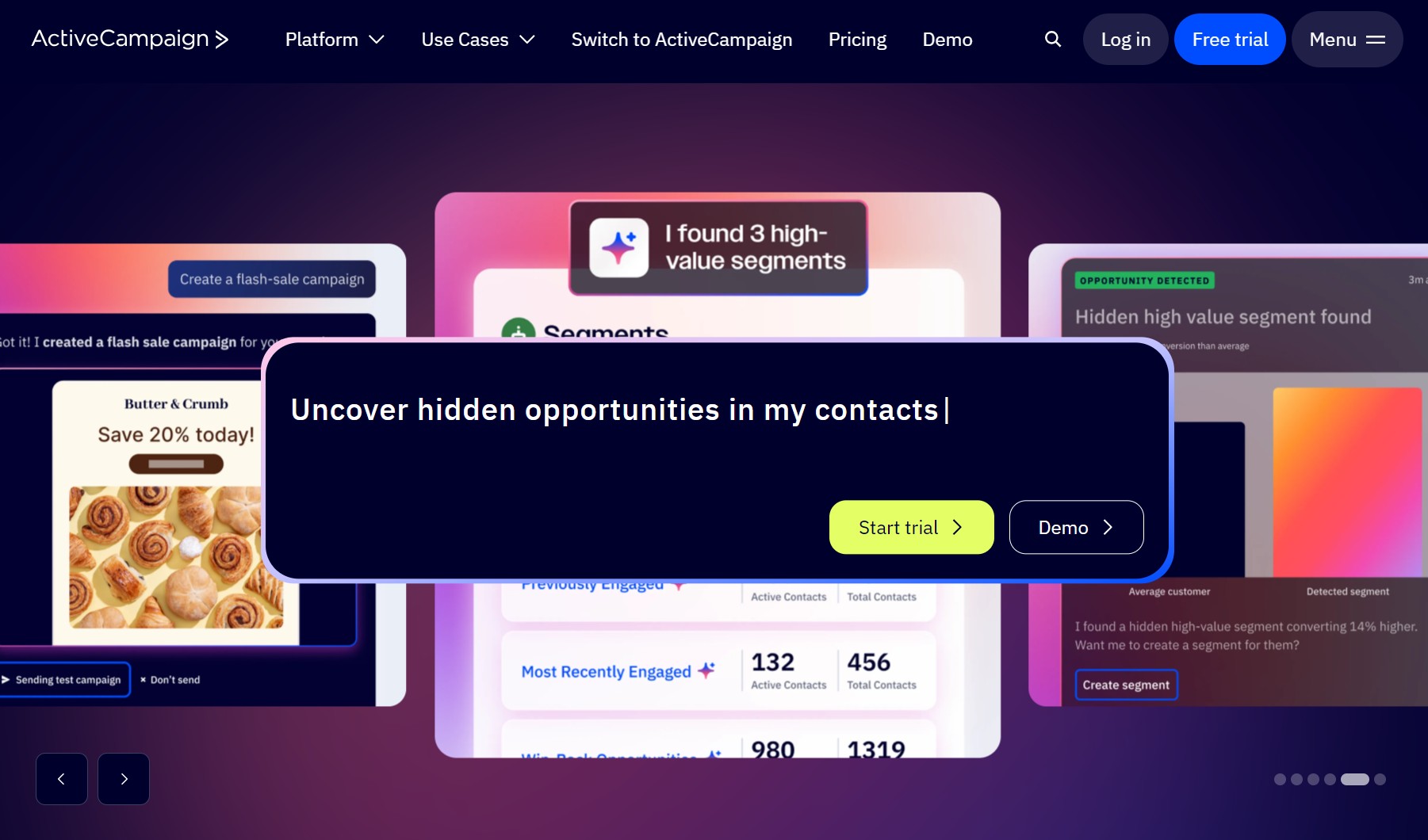
4. ActiveCampaign – Best for Advanced Automation and CRM
- G2 Rating: 4.4/5 (14,700+ reviews)
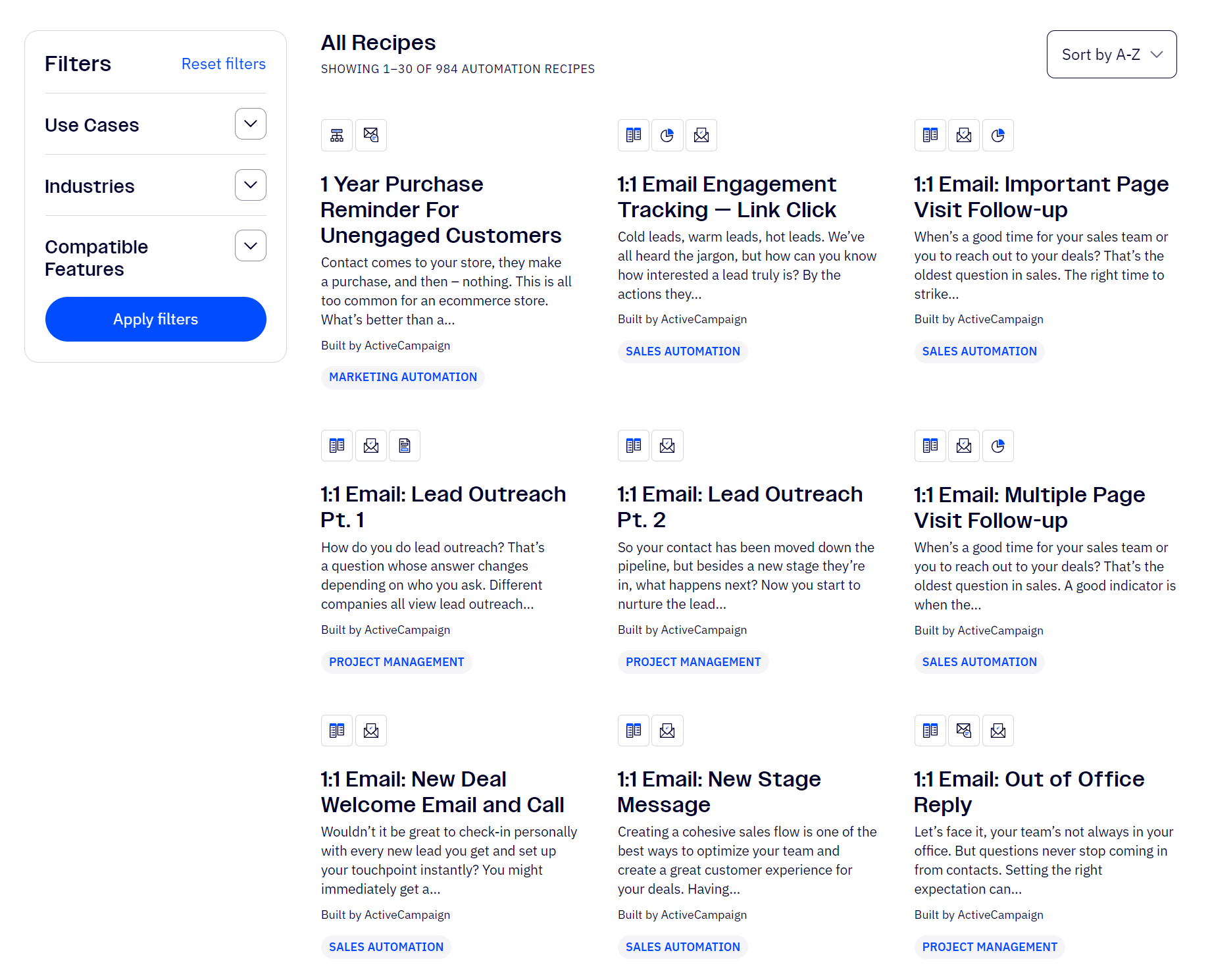
- Overview: ActiveCampaign offers comparable customer lifecycle visibility to Klaviyo, enhanced by additional CRM and sales automation features. It boasts over 950 automation recipes.
- Best for: SMBs, e-commerce brands, and marketing agencies seeking a scalable email marketing alternative with deep automation and robust CRM functionalities.
- Key Features: Advanced marketing automation, sales CRM, email marketing, SMS marketing, site tracking, lead scoring, and pipeline management.
- Pricing: No free plan. Starts at $19/month (1,000 contacts).
- Pros: Extremely powerful and flexible automation, integrated CRM, vast app integration ecosystem, extensive automation recipes, AI tools.
- Limitations: Can have a steeper learning curve than simpler tools, not as e-commerce-centric out-of-the-box as Klaviyo or Omnisend, higher pricing for full feature sets.
- Comparison to Klaviyo: ActiveCampaign’s flows are highly granular and data-rich, akin to Klaviyo’s, but it provides additional B2B features like pipeline management. Pricing is comparable at scale, but ActiveCampaign is often perceived as easier to grasp and offers more AI tools.
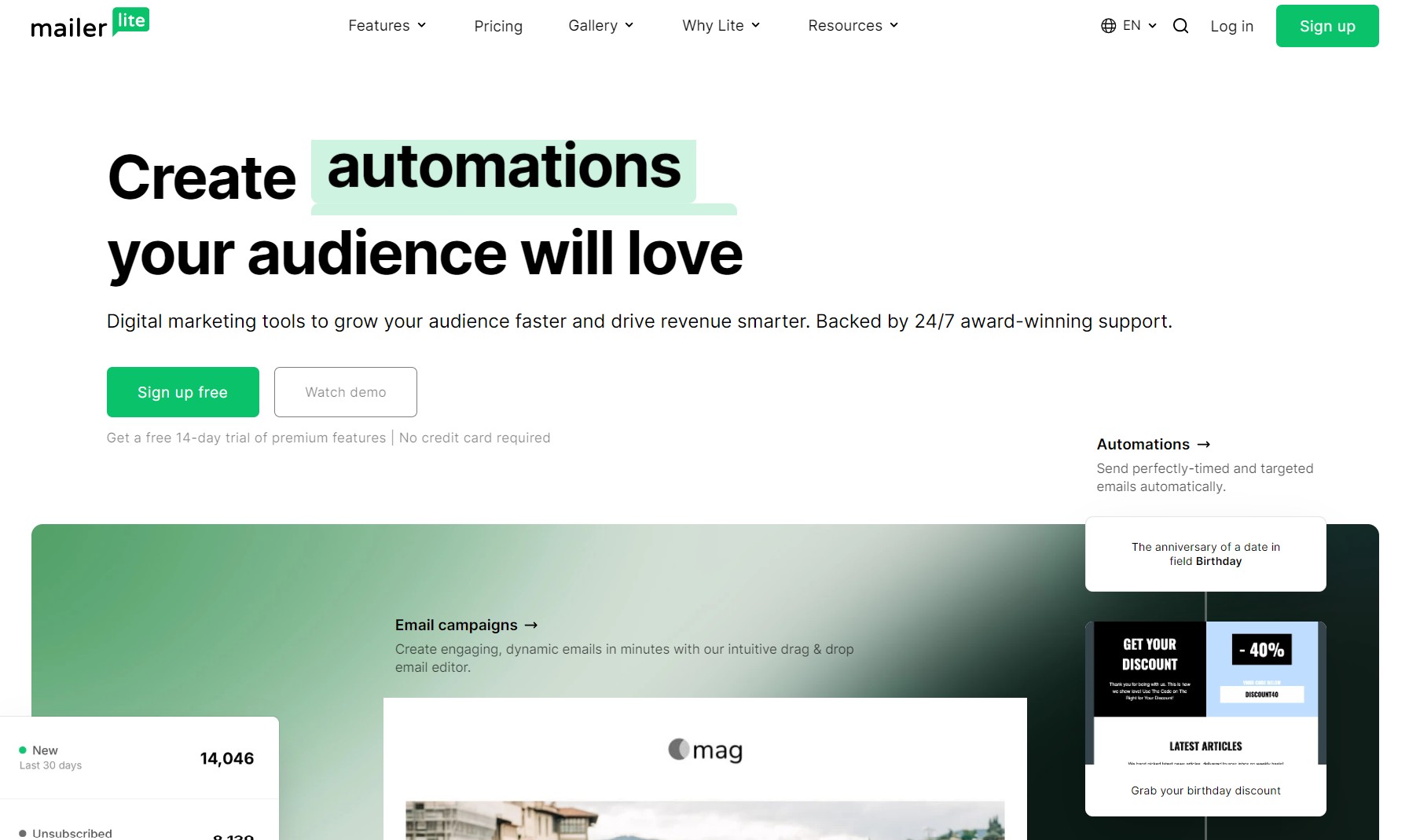
5. MailerLite – Best for Beginners and Small Stores
- G2 Rating: 4.6/5 (1,100+ reviews)
- Overview: MailerLite offers a distinct value proposition from Klaviyo, prioritizing simplicity and ease of use over deep data analytics. Its pre-built automations, segments, and templates cater well to small e-commerce stores, micro-businesses, and creators.
- Best for: First-time email marketers, small e-commerce stores, bloggers, and startups running campaigns and basic flows on a smaller list.
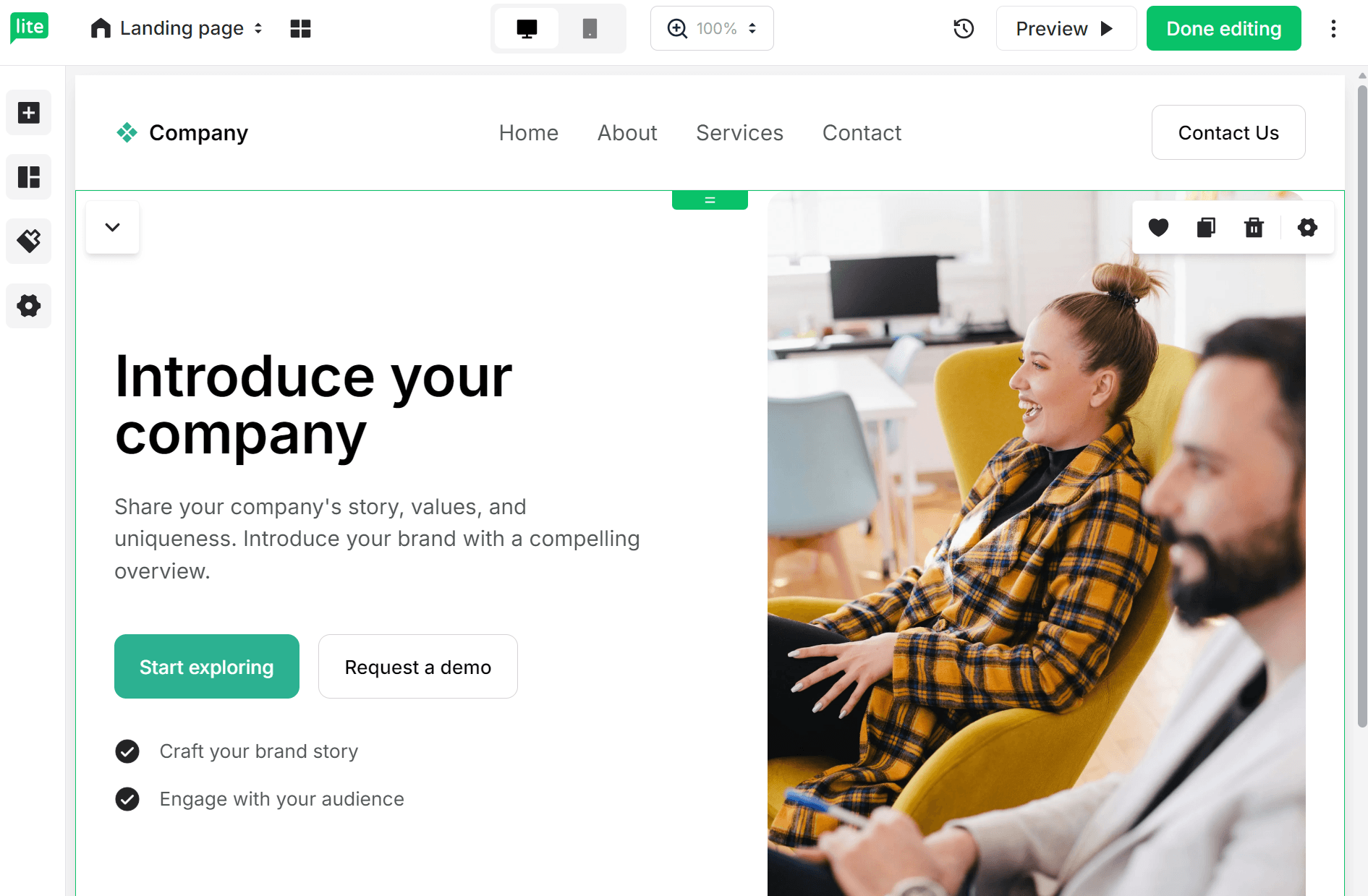
- Key Features: Drag-and-drop email editor, landing page builder, website builder with e-commerce features, automation workflows, signup forms, and pop-ups.
- Pricing: Free plan available. Paid plans start at $12/month (500 contacts). Offers generous send limits.
- Pros: User-friendly, affordable, good deliverability, excellent customer support, generous free plan.
- Limitations: Lacks advanced e-commerce-specific segmentation and predictive analytics found in Klaviyo, limited CRM functionality, less robust reporting.
- Comparison to Klaviyo: MailerLite is a top choice if your priority is sending a high volume of emails with a more generous send limit and a simpler platform. Klaviyo’s flows and segments are more capable but come at a higher cost and complexity.
6. Campaign Monitor – Best for Agencies
- G2 Rating: 4.1/5 (730+ reviews)
- Overview: Campaign Monitor emphasizes on-brand campaigns and design-led email marketing. It handles core automation with pre-built journeys and offers unlimited email sends in its Essentials plan.
- Best for: Marketers who prioritize aesthetic campaigns and basic automations without excessive complexity, particularly agencies with white-label requirements.
- Key Features: Visual journey designer, professional email templates, A/B testing, segmentation, comprehensive analytics, and client management features for agencies.
- Pricing: No free plan. Starts at $13/month (500 contacts).
- Pros: Strong design tools, unlimited sends in some plans, robust agency features, user-friendly for campaign creation.
- Limitations: Lacks advanced e-commerce behavioral triggers and deep segmentation, less focus on sales and CRM.
- Comparison to Klaviyo: Campaign Monitor is more suitable if campaigns and newsletters are your primary marketing focus. It doesn’t offer the advanced workflow logic and behavioral triggers crucial for complex e-commerce automation found in Klaviyo.
7. HubSpot – Best for CRM-Led Marketing and Sales
- G2 Rating: 4.4/5 (14,860+ reviews)
- Overview: HubSpot is a CRM-first platform providing email, SMS, and inbound marketing capabilities that integrate with data-rich customer profiles across the entire business funnel.
- Best for: Businesses already invested in the HubSpot ecosystem or those seeking an all-in-one tool for marketing, sales, service, and CRM, suitable for both B2C and B2B.
- Key Features: Marketing automation, sales CRM, service hub, email marketing, landing pages, website builder, live chat, and comprehensive analytics.
- Pricing: Free plan available. Starter plans begin at $20/month per seat (1,000 contacts). Higher-tier plans unlock advanced automation and reporting.
- Pros: Integrated CRM, extensive suite of tools, scalable for business growth, strong analytics, reliable support.
- Limitations: Can be expensive, particularly for full feature sets, e-commerce features are less specialized than Klaviyo’s, steep learning curve for the entire ecosystem.
- Comparison to Klaviyo: HubSpot’s email marketing and automation are generally more lightweight for pure e-commerce but offer a more complete CRM for deal stages, pipelines, and support history, making it better for full-funnel business growth and B2B.
8. Privy – Best for Small Shopify Stores
- G2 Rating: 4.6/5 (120+ reviews)
- Overview: Privy is tailored for small Shopify stores requiring a unified tool to automate email and SMS for predictable customer journeys. It excels in list-building and lead capture.
- Best for: Early-stage Shopify stores prioritizing lead capture and basic email + SMS automations for straightforward customer journeys.
- Key Features: Pop-ups, banners, spin-to-win wheels, email marketing, SMS marketing, basic automation flows, and native Shopify integration (4.5/5 rating).
- Pricing: No free plan. Starts at $30/month (1,500 contacts).
- Pros: Excellent for list growth, user-friendly, strong Shopify integration, all-in-one for lead capture and basic marketing.
- Limitations: Less advanced segmentation and automation compared to Klaviyo, limited reporting capabilities, primarily focused on Shopify.
- Comparison to Klaviyo: Privy emphasizes list-building and lead capture more heavily and is more affordable ($15/month less for 1,500 contacts). It’s best suited for smaller e-commerce stores with simpler customer journey needs.
9. GetResponse – Best for Webinars and Courses
- G2 Rating: 4.3/5 (1,130+ reviews)
- Overview: GetResponse offers a comprehensive marketing toolkit, including e-commerce automation, web-triggered campaigns, and unique features like webinars and courses. While its e-commerce data features are not as advanced as Klaviyo’s, it serves as a robust alternative, particularly for content creators.
- Best for: Online stores, enterprises, and creators who need a marketing toolkit for customer retention, repurchases, and re-engagement, combined with content monetization options like webinars.
- Key Features: Email marketing, marketing automation, landing page builder, website builder, webinars, paid newsletters, revenue attribution, and basic CRM.
- Pricing: Limited free plan. Paid plans start at $19/month (1,000 contacts).
- Pros: Integrated webinar and course functionality, solid marketing automation, affordable pricing, good for content monetization.
- Limitations: E-commerce features and deep segmentation are not as robust as Klaviyo, user interface can be less intuitive for beginners.
- Comparison to Klaviyo: GetResponse is a better fit for teams focused on retention automation and e-commerce reporting at a lower entry point, while also providing content monetization tools. Klaviyo remains stronger for larger DTC brands needing more profound e-commerce segmentation and predictive analytics.
10. Mailchimp – Best for the Shortest Learning Curve
- G2 Rating: 4.4/5 (12,980+ reviews)
- Overview: Mailchimp appeals as a Klaviyo alternative due to its broad functionality without deep specialization. It allows for email campaigns, basic flows, and optional SMS integration, with separate pricing for transactional emails.
- Best for: Small businesses, startups, or service businesses with basic customer journeys and a primary focus on campaigns, seeking a platform with a minimal learning curve.
- Key Features: Email campaigns, basic automation, contact profiles, pop-ups, surveys, subject line helper, and a user-friendly interface.
- Pricing: Free plan available. Paid plans start at $13/month (500 contacts).
- Pros: Very easy to learn, generous free plan, good for beginners, wide range of basic features.
- Limitations: Lacks advanced e-commerce automation and segmentation, less robust reporting for e-commerce, contact-based pricing can become expensive for larger lists.
- Comparison to Klaviyo: Mailchimp is an excellent Klaviyo alternative for small businesses that primarily run campaigns and require only basic automation. It prioritizes ease of use and campaign management over the in-depth automation and segmentation offered by Klaviyo.
Our Verdict: The Premier Klaviyo Alternative for E-commerce in 2026
For the majority of e-commerce stores, particularly those operating on Shopify and WooCommerce, Omnisend emerges as the most comprehensive and value-driven email marketing platform among the alternatives to Klaviyo. The optimal choice ultimately hinges on the complexity of a business’s customer journey and the specific requirements for segmentation, automation flows, and reporting to maximize revenue.
While some brands may necessitate custom report builders or highly specialized analytics, many others seek a balance of robust functionality, ease of use, and predictable pricing. Omnisend consistently offers a more cost-effective solution, running up to 35% less than Klaviyo at comparable contact tiers. Furthermore, for businesses considering a switch, Omnisend provides a complementary migration service, rebuilding existing workflows, segments, forms, and email templates within five business days for customers with 250+ contacts.
For Shopify or WooCommerce stores looking to enhance their e-commerce marketing with a powerful, intuitive, and affordable platform, Omnisend presents a compelling choice.
A Note on Authorship: This guide is written by an Omnisend team member. As a Klaviyo alternative, we’ve strived to maintain fairness and objectivity throughout this comparison. Every price, feature, and rating has been thoroughly reviewed and verified. We have also transparently highlighted areas where Klaviyo genuinely outperforms its alternatives, including Omnisend itself.
Frequently Asked Questions About Klaviyo Alternatives
What’s cheaper than Klaviyo?
Omnisend, MailerLite, Brevo, and Mailchimp generally offer more competitive pricing than Klaviyo. Among these, Omnisend provides better overall value with comparable e-commerce features across various tiers, while MailerLite and Brevo are excellent for pure sending limits within a tight budget.
Can I migrate from Klaviyo to another platform without losing my data?
Yes. You can typically migrate by exporting your contact data from Klaviyo and importing it into your new email tool. Many platforms also offer direct import tools that connect to Klaviyo. However, assets like complex automation flows, forms, and email templates usually need to be rebuilt in the new platform’s editor.
Which Klaviyo alternative is best for Shopify?
Omnisend is widely considered the best








