The dynamic realm of social media management continues to expand, with businesses increasingly relying on sophisticated tools to orchestrate their digital presence, engage audiences, and drive strategic outcomes. As the global social media management software market is projected to reach an impressive $33.46 billion, and social media ad budgets are anticipated to hit $338.75 billion globally in 2026, the demand for robust, cost-effective, and feature-rich platforms is at an all-time high. For many organizations, while platforms like Sprout Social have served as a benchmark, persistent challenges related to per-seat pricing models, premium add-ons for essential features like social listening, and perceived gaps in enterprise-grade governance often trigger a search for viable alternatives. This comprehensive analysis delves into 12 leading contenders, examining their core offerings, pricing structures, and suitability for diverse business needs in the competitive landscape of 2026.
The Evolving Demands of Social Media Management
The journey of social media tools has evolved dramatically from simple scheduling applications to intricate social operating systems. Early platforms primarily focused on content distribution, allowing users to schedule posts across various networks. However, as social media matured into a critical business function—spanning marketing, customer service, sales, and public relations—the need for more integrated and intelligent solutions became paramount. Today’s social media management platforms are expected to deliver much more than just publishing capabilities. They must offer deep analytics, advanced social listening, robust customer care functionalities, comprehensive compliance controls, and increasingly, AI-powered automation and insights.

Organizations, particularly those scaling their digital operations, frequently encounter "friction points" with existing solutions. These often include rapidly escalating costs due to per-seat pricing models, which become unsustainable as teams grow; the hidden expense of crucial features like social listening being locked behind premium tiers; and insufficient governance or approval workflows, which are non-negotiable for regulated industries or large enterprises managing multiple brands and regions. The market’s response to these evolving needs has been a proliferation of specialized and comprehensive platforms, each attempting to carve out a niche by addressing specific pain points or offering a distinct value proposition.
Key Criteria for Evaluating Social Media Platforms
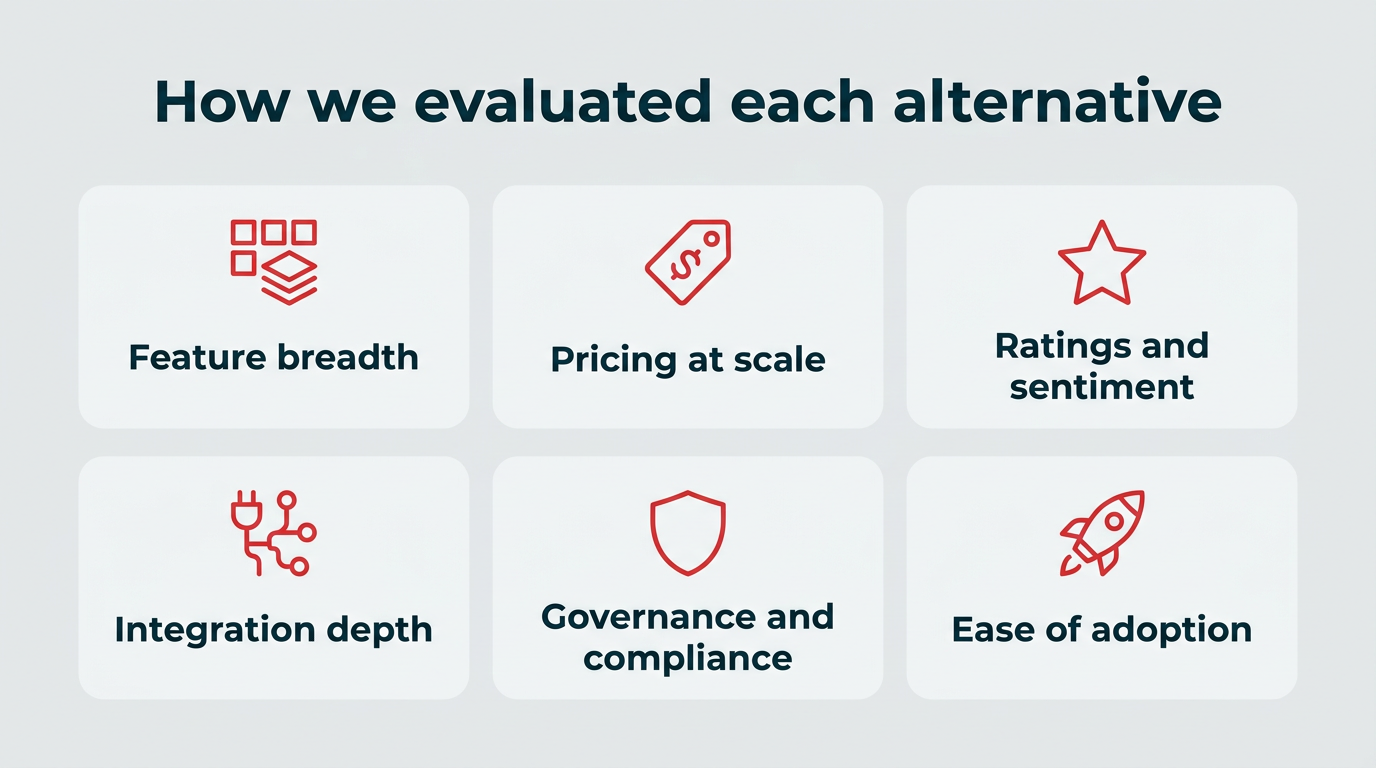
To provide a consistent and objective comparison, each alternative was assessed against a set of critical criteria relevant to modern marketing leaders and social media professionals:

- Enterprise-Grade Features: The ability to support large teams, complex workflows, and multiple brands or regions.
- AI Integration: The extent to which artificial intelligence enhances insights, automation, and content creation.
- Compliance and Governance: Robust tools for approval workflows, audit trails, and adherence to industry regulations.
- Social Listening Depth: The breadth and accuracy of monitoring brand mentions, industry trends, and sentiment across vast data sources.
- Integrations: Compatibility with other critical business systems like CRM, marketing automation, and analytics tools.
- User Experience (UX) and Support: The intuitiveness of the interface and the quality of customer assistance.
- Pricing Model: Transparency, scalability, and overall value for money.
The following alternatives are presented, generally moving from the most robust enterprise solutions to options better suited for mid-market and smaller teams.
A Deep Dive into Leading Sprout Social Alternatives (2026)
1. Hootsuite: The AI-First Social Operating System for Enterprise
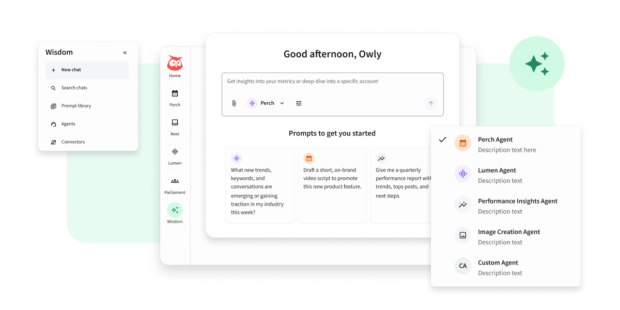
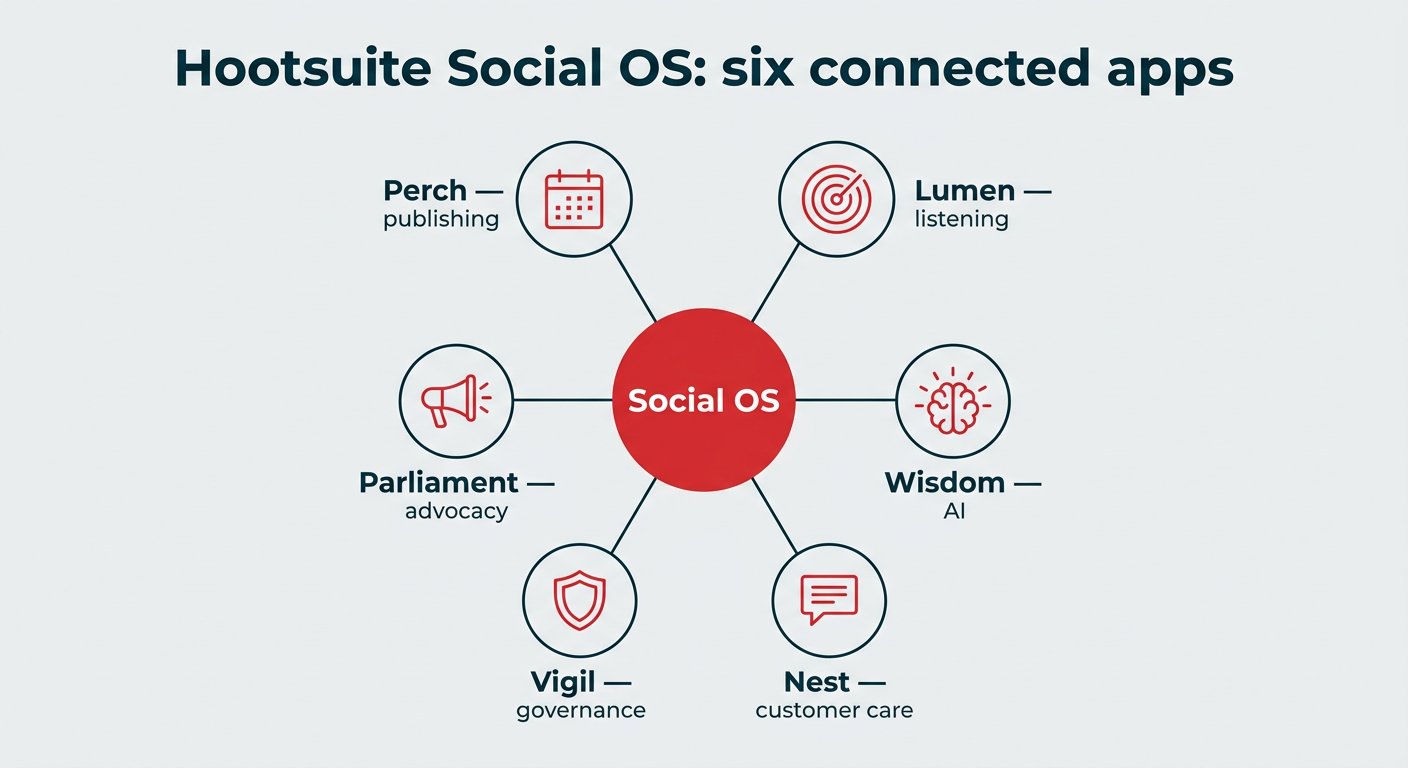
Hootsuite Social OS emerges as a powerful contender, particularly for enterprise teams and regulated industries seeking a comprehensive, connected system. It supports major platforms including Facebook, Instagram, X (formerly Twitter), LinkedIn, TikTok, Pinterest, and YouTube. Hootsuite distinguishes itself by offering a suite of connected applications—Perch for publishing, Lumen for listening and insights (boasting over 150 million sources and 187 languages), Nest for customer care, Wisdom AI for orchestration, and Vigil for governance. This integrated approach ensures that insights derived from listening directly inform content creation and customer responses, streamlining workflows.
Hootsuite’s strong emphasis on security and compliance makes it a preferred choice for sectors like financial services and healthcare, where integrating with existing compliance and auditing tools is crucial. Its goal-specific "Best Time to Post" recommendations, in contrast to generic suggestions from some competitors, offer a data-driven advantage. While its starting price of $99/user/month (Standard) is significantly lower than Sprout Social’s $199/seat/month, its enterprise plan offers advanced features like Talkwalker listening and SSO for custom pricing. Hootsuite holds a G2 rating of 4.3/5, making it an excellent fit for multinational corporations and agencies managing diverse client portfolios.
2. Sprinklr: Unified CXM for Large Enterprises
Sprinklr presents a formidable unified customer experience management (CXM) platform designed for large enterprises managing customer interactions across more than 30 channels. Its robust, AI-powered analytics and automation capabilities allow for managing inquiries, gleaning actionable insights, and creating personalized experiences. Sprinklr’s strength lies in its ability to consolidate a vast array of customer touchpoints, making it ideal for global brands seeking a holistic view of their customer journey. However, its comprehensive nature often translates into significant implementation time and dedicated resources, potentially feeling like overkill for organizations not requiring that level of scale. Sprinklr starts at $299/month for its Social Self-Serve tier, with custom pricing for enterprise solutions. It boasts a G2 rating of 4.1/5.
3. Brandwatch: Unparalleled Consumer Intelligence
For teams whose primary frustration with Sprout Social lies in the depth of social listening rather than day-to-day publishing, Brandwatch stands out. As an enterprise consumer intelligence platform, it excels in market research, trend analysis, and brand health monitoring. Its features include extensive data coverage, advanced sentiment analysis, influencer identification, and crisis management tools. Brandwatch is built for generating deep insights, making it invaluable for strategic planning. However, its publishing and execution capabilities are less developed compared to dedicated social media management platforms. Hootsuite’s approach, integrating Lumen’s intelligence directly into publishing and care, offers a contrasting model where insights seamlessly transition into action. Brandwatch operates on custom pricing and holds a G2 rating of 4.4/5 for its Consumer Intelligence platform.
4. Emplifi: Social Commerce and Customer Experience
Emplifi offers a unified customer experience platform that integrates social media marketing, social commerce, and customer care. It particularly appeals to retail and consumer brands that view social media as a direct revenue channel. Key features include social commerce tools, influencer marketing management, and a robust content hub. While strong in commerce and customer engagement, Emplifi is noted to be lighter on governance and AI orchestration compared to Hootsuite Social OS. It operates on custom pricing and has a G2 rating of 4.3/5, making it suitable for e-commerce teams focused on driving sales through social channels.
5. Khoros: Community Management and Compliance for MNCs
Khoros combines social media management with robust content governance and community management features, making it ideal for multinational corporations with strict compliance requirements. It supports multi-channel content planning, scheduling, and tracking, alongside social listening and sentiment analysis. Khoros’s strength lies in its ability to enforce strict content guidelines, whether regulatory or brand-specific, and its integration with customer care functionalities. The primary drawback is its lack of public pricing transparency, which can complicate initial evaluations. Khoros has a G2 rating of 3.8/5 and offers custom pricing.
6. Agorapulse: Mid-Market Excellence with Unified Inbox
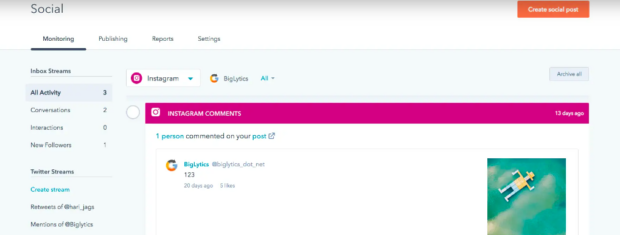
Agorapulse is a strong mid-market alternative, offering a clean, user-friendly unified social inbox and straightforward reporting. It caters to marketing teams that require capable social media management without the extensive complexity of enterprise platforms. Features include robust publishing tools, comprehensive reporting, and a CRM for managing audience interactions. While it may not match the listening depth or enterprise governance of higher-tier solutions, its balance of features and affordability makes it a solid choice for mid-size teams and small agencies. Agorapulse starts at $79/user/month (billed annually) and has a G2 rating of 4.5/5.
7. HubSpot: CRM-Integrated Social for Existing Users
HubSpot’s social media management tool is a module within its broader Marketing Hub, making it particularly valuable for teams already invested in the HubSpot CRM ecosystem. Its core strength lies in the seamless integration of social interactions with customer relationship data, providing a holistic view of customer engagement. Users can schedule content, monitor engagement, and track performance across major platforms, with analytics tied back to CRM data. However, as a standalone social media platform, its features are not as deep as dedicated solutions like Hootsuite. HubSpot’s Marketing Hub Professional plan, which includes social tools, starts at $890/month (including 3 seats). It holds a G2 rating of 4.4/5.
8. SocialBee: Content Categories for Small Teams
SocialBee is a scheduling-first platform centered around content categories, offering a practical solution for small and mid-size teams on a tight budget that publish a consistent mix of post types. Its features include evergreen content recycling, content categorization, and robust scheduling across multiple platforms. SocialBee’s value-per-dollar is significant for smaller operations, but its minimal listening and limited governance features mean it’s not designed for enterprise requirements. Plans start at $29/month, and it boasts an impressive G2 rating of 4.8/5.
9. Sendible: Agency-Focused Multi-Client Management
Sendible is explicitly designed for agencies managing social media for multiple clients. Its standout features include white-label reporting, a centralized dashboard for multi-client management, and integrated content curation tools. While it may not offer the enterprise depth of Hootsuite or Sprinklr, its efficient client management and affordable pricing make it a strong contender for digital marketing agencies and freelance social media managers. Plans start at $29/month (monthly billing) or $25/month (billed annually), with a G2 rating of 4.5/5.

10. Zoho Social: Deep Integration within the Zoho Ecosystem
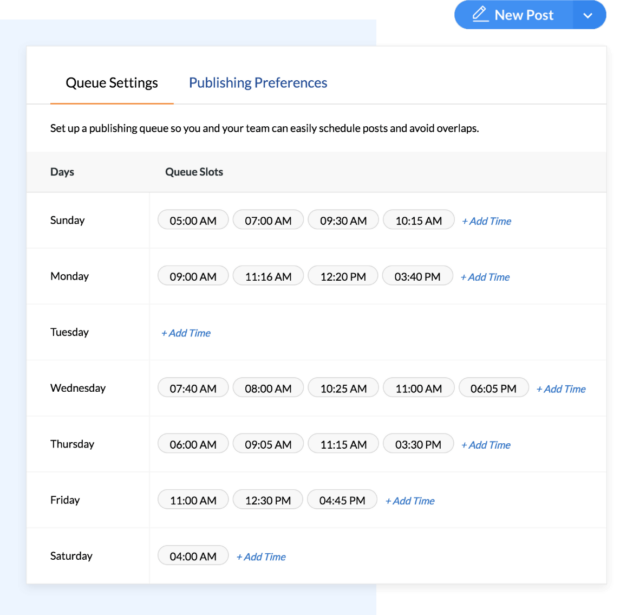
Zoho Social provides a centralized platform for managing multiple social media accounts, with its primary advantage being deep integration within the broader Zoho ecosystem. For existing Zoho CRM users, it offers a holistic view of customer engagement by directly connecting social interactions with CRM data. It includes scheduling, monitoring, engagement, and basic analytics. However, its feature set is more modest than enterprise-grade platforms concerning advanced analytics, listening depth, and governance. Entry-level plans start at $10/month, and it has a G2 rating of 4.6/5.
11. Buffer: Simple and Affordable Scheduling
Buffer is renowned for its straightforward interface and focus on simple post scheduling and basic analytics. It is a popular choice for small teams, startups, and individual content creators who prioritize ease of use and affordability over complex enterprise features. Buffer supports major platforms and includes tools for content curation. While lacking robust social listening, enterprise governance, and advanced reporting, it offers a free plan for up to 3 channels, with paid plans starting from $6/month per channel. It holds a G2 rating of 4.3/5.
12. Later: Visual Content Planning for Instagram-First Brands
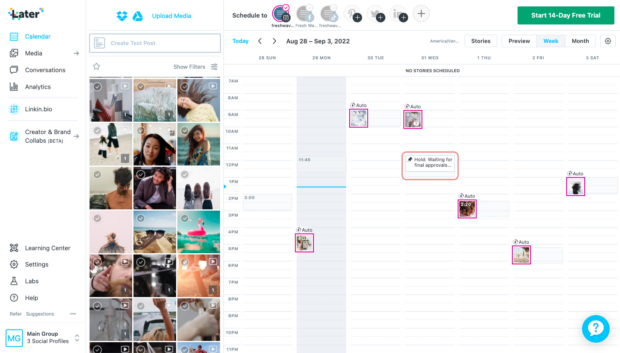
Later specializes in visual content scheduling and management, making it an ideal fit for brands and creators heavily reliant on Instagram and visual storytelling. Its user-friendly visual content calendar allows for previewing Instagram feeds and planning grid aesthetics. Later also offers a "link-in-bio" tool and has expanded support to TikTok, Facebook, Pinterest, LinkedIn, and X. While not suited for enterprise teams needing advanced analytics or compliance, it provides a focused, affordable option for visual-first brands. Plans start at $25/month, and it has a G2 rating of 4.5/5.

Comparative Analysis: Pricing and Value Proposition
One of the most significant motivators for seeking Sprout Social alternatives is often its per-seat pricing model, which can quickly escalate costs for growing teams. Sprout Social’s Standard plan begins at $199 per seat per month (billed annually), with the Professional tier at $299 per seat per month. In contrast, many alternatives offer considerably lower entry points.
| Tool | Entry-level Price (2026) | Pricing Model | Free Plan or Trial? |
|---|---|---|---|
| Hootsuite | $99/user/month | Per user | 30-day free trial |
| Agorapulse | $79/user/month | Per user | Limited free plan |
| Buffer | $6/month/channel | Per channel | Free plan (3 channels) |
| Later | $25/month | Flat rate | Free trial available |
| Zoho Social | $10/month | Flat rate | Free trial available |
| SocialBee | $29/month | Flat rate | 14-day free trial |
| Sendible | $29/month (monthly) | Flat rate | 14-day free trial |
| Sprinklr | $299/month | Per seat (Self-Serve) | Demo available |
| Brandwatch | Custom | Custom | Demo available |
| Emplifi | Custom | Custom | Demo available |
| Khoros | Custom | Custom | Demo available |
| HubSpot | $890/month (Marketing Hub) | Per seat (3 included) | Free tools available |
Pricing reflects publicly available information as of early 2026 and may vary based on plan tier, billing cycle, and team size. G2 ratings are approximate and subject to change.

The stark difference in entry-level pricing becomes even more pronounced when modeling costs for a realistic team size. For instance, a team of 10 users would incur approximately $1,990 per month on Sprout Social’s Standard plan. The same team could potentially operate on Hootsuite’s Standard plan for $990 per month, or Agorapulse for $790 per month. Even a 10-channel Buffer setup would cost closer to $60 per month, albeit without the advanced listening or governance features found in enterprise plans. This illustrates that most alternatives on this list offer a more budget-friendly entry point, with Hootsuite Social OS providing comparable enterprise-grade features at roughly half of Sprout Social’s starting price.
Navigating the Free vs. Paid Spectrum
While Sprout Social primarily offers a 30-day trial, several alternatives provide free plans or extended trials, catering to individuals or very small teams with minimal requirements. Buffer offers a free plan for up to three social channels, and Agorapulse also provides a limited free tier. Other platforms like Hootsuite (30-day trial), Later (free trial), Sendible (14-day trial), and SocialBee (14-day trial) allow users to test their features before committing financially.
However, free plans inherently come with limitations. They typically lack advanced features such as robust social listening, comprehensive approval workflows, detailed audit trails, or sophisticated reporting necessary for leadership teams. As organizations scale, the need for these functionalities quickly pushes them into paid tiers, regardless of the vendor. The decision to invest in a paid platform often aligns with the increasing complexity of social media strategy and the growing demand for measurable ROI.
Strategic Framework for Selecting Your Ideal Platform
Choosing the right social media management platform is a strategic decision that hinges on a clear understanding of your organization’s size, objectives, existing technology stack, and anticipated evolution of social media operations. A structured three-step approach can simplify this complex process:
1. Define Your Goals and "Must-Have" Features:
Before engaging with vendors, articulate your specific objectives. Are you focused on brand awareness, lead generation, customer support, or sales? This clarity will help differentiate between "must-have" and "nice-to-have" features. Key considerations include:
- Publishing Efficiency: Do you need advanced scheduling, content calendars, and multi-channel support?
- Engagement Management: Is a unified inbox for all interactions crucial?
- Social Listening & Analytics: What depth of insight do you require for market research, trend spotting, or sentiment analysis?
- Team Collaboration & Governance: Are approval workflows, role-based permissions, and audit trails essential for compliance?
- Customer Service: Do you need to integrate social interactions with your helpdesk?
- Advertising Management: Is the ability to manage paid social campaigns within the platform important?
- Reporting: What level of detail and customization is needed for executive reports?
- Integration with Existing Tools: Does the platform need to connect with your CRM, DAM, or other marketing software?
2. Evaluate Team Size, Accounts, and Budget:
The total cost of ownership is heavily influenced by your team size and the number of social accounts managed. A platform that appears affordable for a small team can become prohibitively expensive as your operations scale. Assess:
- Current Team Size: How many users will need access?
- Number of Social Accounts: How many profiles across different networks do you manage?
- Content Volume: How frequently do you publish?
- Budget Allocation: What is your realistic monthly or annual budget for social media tools?
- Growth Projections: How do you anticipate your team and content operations will grow over the next 12-18 months?
3. Conduct Thorough Due Diligence: Reviews, Demos, and Pilots:
Leverage the experiences of other teams by consulting independent review sites like G2 and TrustRadius, and analyst reports such as Gartner’s Market Guide. Pay attention to both positive feedback and reported pain points. For your top two or three contenders:

- Request Detailed Demos: Ask vendors to tailor demos to your specific use cases and team workflows.
- Engage Sales Teams: Clarify pricing models, feature inclusions, and support structures.
- Run a Pilot Program: If possible, utilize free trials or pilot programs with a small, representative group from your team. This hands-on experience provides invaluable insight into the platform’s usability and how it integrates with your existing processes.
- Verify Scalability: Ensure the platform can accommodate your future growth without requiring a complete overhaul.
Conclusion: Strategic Tool Selection in a Dynamic Market
The social media management landscape in 2026 is rich with diverse platforms, each offering unique strengths tailored to different organizational needs and budget constraints. While Sprout Social remains a prominent player, its per-seat pricing and feature segmentation have opened the door for numerous robust alternatives. From Hootsuite’s AI-first Social OS designed for enterprise and regulated industries, to specialized solutions like Brandwatch for deep insights or Later for visual content, and more budget-friendly options like Buffer for small teams, the market offers a solution for every requirement.
The strategic importance of selecting the right platform cannot be overstated. A well-chosen tool can optimize workflows, enhance audience engagement, provide critical business intelligence, ensure compliance, and ultimately drive measurable ROI from social media investments. As social media continues to evolve, embracing platforms that are not only powerful but also adaptable and scalable will be paramount for businesses aiming to maintain a competitive edge and thrive in the digital sphere.
By Stacey McLachlan