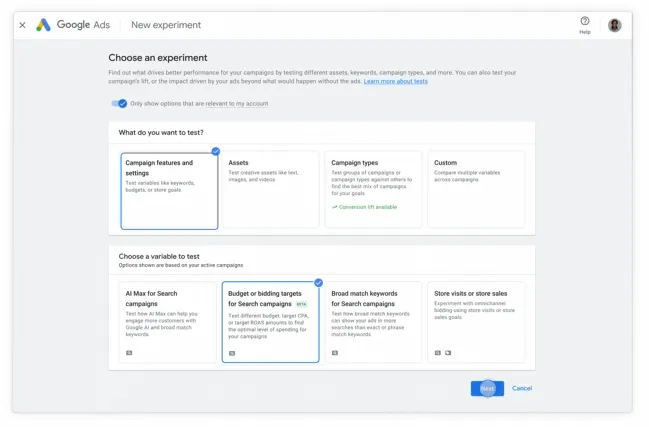
Google has announced the rollout of a significantly simplified A/B testing mechanism for Search campaigns, integrated directly within the Google Ads Manager. This pivotal update aims to democratize advanced ad performance experimentation, allowing advertisers of all scales to launch comprehensive tests with unprecedented ease. The new experiments creation flow streamlines the process, reducing what was once a complex, knowledge-intensive task into a series of intuitive clicks, ultimately empowering advertisers to make more informed decisions regarding their budget allocation and campaign strategies.
The core of this enhancement lies in a redesigned experiments dashboard, which presents advertisers with a range of clear options for their ad tests. This user-friendly interface guides users through a streamlined selection process, enabling them to implement chosen parameters without requiring in-depth technical expertise or a profound understanding of Google’s intricate ad system architecture. Advertisers can now readily select specific campaigns from their existing projects and apply testing conditions, fostering a more agile and responsive approach to ad optimization.
The Evolution of Ad Performance Testing on Google Ads
For years, digital advertisers have grappled with the inherent complexities of optimizing campaigns on platforms like Google Ads. The landscape of online advertising is dynamic, with consumer behaviors, market trends, and algorithmic changes constantly influencing campaign performance. In such an environment, A/B testing, also known as split testing, has emerged as an indispensable tool. It allows advertisers to compare two versions of an ad, a landing page, or a bidding strategy to determine which one performs better against specific key performance indicators (KPIs), such as click-through rates (CTR), conversion rates, or return on ad spend (ROAS).
Historically, setting up robust A/B tests within Google Ads often required a substantial level of technical proficiency. Advertisers needed to manually duplicate campaigns, meticulously segment audiences, manage budget splits, and track performance metrics across disparate datasets. This process was not only time-consuming but also prone to human error, often deterring smaller businesses or those with limited marketing resources from engaging in sophisticated experimentation. The barriers to entry for effective testing meant that many campaigns operated sub-optimally, leaving potential conversions and revenue untapped.
Google’s continuous drive to empower its advertisers has seen several iterations of testing tools, but none have promised the level of simplification now being introduced. This latest update represents a strategic move by Google to bridge the gap between advanced analytical capabilities and everyday usability, aligning with a broader industry trend towards intelligent automation and user-centric design in ad technology.
Simplifying the Complex: A Closer Look at the New Flow
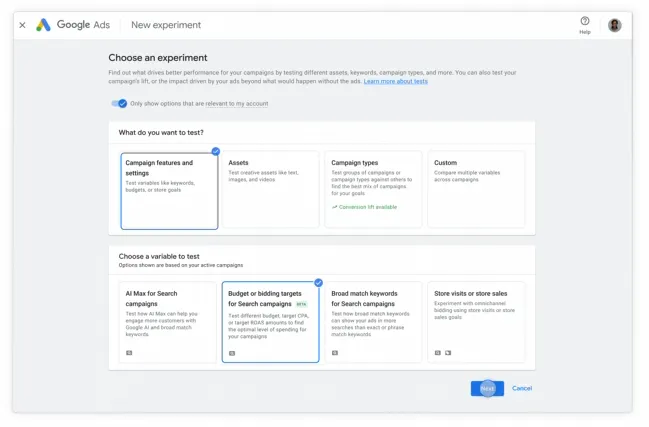
The newly launched experiments creation flow in Google Ads Manager is designed to abstract away the underlying technical intricacies, allowing advertisers to focus on strategic choices rather than operational hurdles. The process, as depicted in early previews, offers a visual and guided experience:
- Dashboard Access: Advertisers will navigate to a dedicated "Experiments" section within Google Ads Manager.
- Test Type Selection: A clear menu presents various options for ad tests, which could range from comparing different ad copy variations, bidding strategies, landing page experiences, or even the impact of new ad formats.
- Campaign Identification: Users can easily select the specific campaigns they wish to subject to the test from a populated list of their active projects. This ensures that tests are applied precisely where insights are most needed.
- Parameter Definition: Instead of requiring manual configuration of complex testing conditions, the system offers streamlined selections for implementing chosen parameters. This might include defining the test duration, the percentage of traffic allocated to each variation, and the primary metric for success.
- Launch and Monitoring: With a few clicks, the experiment can be launched, and its performance tracked through an integrated reporting interface that highlights key differences and statistically significant results.
This updated system fundamentally alters the advertiser’s experience by removing the need for a deep understanding of adequate test structure or the nuances of Google’s ad system. It translates complex statistical methodologies into actionable choices, enabling a wider array of advertisers to run comparison tests effectively and determine the most impactful allocation of their advertising budget.
The Indispensable Value of A/B Testing in Modern Advertising
In the highly competitive digital marketplace, even marginal improvements in ad performance can translate into significant gains in ROI. A/B testing is the scientific method applied to marketing, providing data-driven answers to critical questions: Which headline resonates most with the target audience? Does a specific call-to-action drive more conversions? Is a particular bidding strategy more cost-effective?
According to various industry reports, companies that consistently engage in A/B testing often see substantial improvements in their conversion rates, sometimes ranging from 10% to 30% or even higher. For businesses spending thousands or millions on Google Ads, such improvements can mean the difference between profitability and loss. Furthermore, A/B testing helps mitigate risk by allowing advertisers to validate changes on a small scale before rolling them out across entire campaigns, preventing potentially costly missteps.
The simplified A/B testing environment directly addresses this need for continuous optimization. By lowering the barrier to entry, Google is encouraging a culture of experimentation, pushing advertisers towards more data-informed decision-making rather than relying on intuition or anecdotal evidence. This not only benefits advertisers by improving their campaign efficacy but also strengthens Google’s ecosystem by fostering more successful, and thus more invested, advertising partners.
Integrating with AI Max Elements and Performance Planner
A significant aspect of this update is the ability for advertisers to run comparison tests that incorporate AI Max elements. This refers to Google’s increasingly sophisticated artificial intelligence (AI) powered advertising solutions, such as Performance Max campaigns, which leverage machine learning to optimize ad delivery across Google’s entire network (Search, Display, YouTube, Gmail, Discover).
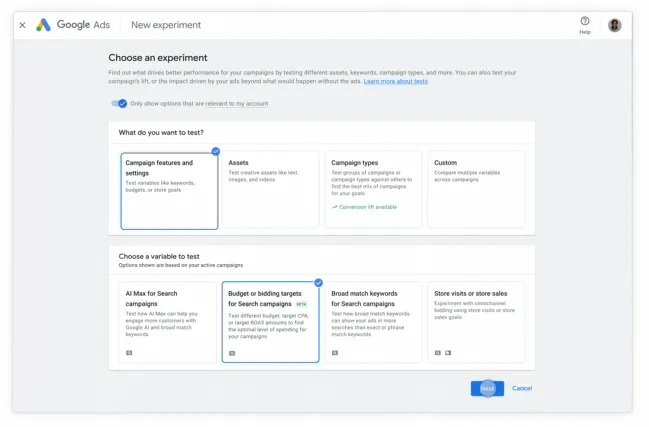
The integration allows advertisers to gain deeper insights into how Google’s AI-powered ads could drive response. For example, an advertiser might test a traditional Search campaign against a Performance Max campaign, or different configurations of AI-driven creative assets, to understand their respective impacts on performance. This capability is crucial as AI continues to play a more prominent role in ad creation, targeting, and optimization. It offers a tangible way for brands to experiment with potential ad refinements and changes, and then enact them with greater confidence about their likely performance impacts, backed by empirical data.
Furthermore, the announcement highlights an enhancement to Google’s Performance Planner. Previously, the Performance Planner allowed advertisers to forecast how changes in bidding or budget targets might impact existing campaign performance. With the latest update, advertisers can now apply those suggested changes directly to their campaigns with a single click. This creates a seamless loop: plan potential changes, test them through the new A/B testing framework, and then apply validated, impactful changes directly via the Performance Planner. This interconnected functionality significantly streamlines the entire campaign optimization workflow, from foresight to experimentation to implementation.
Implications for Diverse Advertiser Segments
This rollout carries significant implications for various segments within the advertising ecosystem:
- Small and Medium-sized Businesses (SMBs): For SMBs often operating with limited budgets and in-house expertise, the simplified A/B testing is a game-changer. It enables them to compete more effectively with larger brands by optimizing their ad spend, identifying high-performing ad variations, and ultimately maximizing their ROI without needing to invest heavily in specialized tools or personnel. This democratization of advanced features can help SMBs grow their online presence more efficiently.
- Digital Marketing Agencies: Agencies, while often possessing the expertise for complex testing, will benefit from the increased efficiency. The simplified flow frees up valuable time that was previously spent on manual setup and configuration, allowing agency professionals to dedicate more resources to strategic analysis, client communication, and exploring more creative solutions. It also enables them to offer more sophisticated testing services to a wider range of clients, enhancing their value proposition.
- Large Enterprises: Even large enterprises with dedicated analytics teams can benefit from accelerated testing cycles. The streamlined process allows for faster iteration and validation of hypotheses, which is crucial in fast-moving markets. It can support agile marketing methodologies and ensure that large-scale campaigns are continuously optimized based on real-time performance data.
- The Broader Ad Tech Landscape: This move by Google puts pressure on other ad platforms to enhance their own testing capabilities, driving innovation across the industry. It reinforces Google’s position as a leader in providing accessible, powerful tools for digital advertisers.
Official Rollout and Future Outlook
Google confirmed that its updated ads testing process is being rolled out to advertisers throughout September. This phased deployment ensures stability and allows for continuous feedback and refinement. The iterative nature of such platform enhancements is characteristic of Google’s product development cycle, often beginning with beta testing and gradually expanding to a global user base.
Looking ahead, this simplification of A/B testing, coupled with deeper integration of AI, signals Google’s continued commitment to making its advertising platform more intelligent, efficient, and user-friendly. The trend is clear: empower advertisers with sophisticated tools that are easy to use, thereby enabling them to achieve better results, increase their ad spend with confidence, and ultimately solidify Google Ads’ position as a dominant force in digital advertising. As AI capabilities evolve, it is reasonable to anticipate even more predictive testing, automated insights, and personalized recommendations, further transforming how brands connect with their audiences online. The future of Google Ads appears to be one where advanced optimization is not just for the experts, but for every advertiser.