For retailers navigating the intensely competitive landscape of the holiday shopping season, effective Cyber Monday advertising is not merely an option but a strategic imperative. This pivotal event, marking the culmination of the Black Friday weekend, represents a monumental opportunity for brands to capture significant consumer spending. While some businesses aggressively pursue deep discounts to entice bargain hunters, others strategically deploy bundles, exclusive early access, and loyalty programs. The most successful approaches often involve a multi-faceted strategy, leveraging a combination of these tactics to appeal to diverse customer segments and maximize sales potential. This article delves into the critical elements of a winning Cyber Monday advertising campaign, drawing on best practices, expert insights, and illustrative examples to provide a robust framework for success.
The Strategic Imperative of Cyber Monday Advertising
Cyber Monday, traditionally the Monday following Thanksgiving, has evolved from a single-day online sales event into a multi-day phenomenon, often blending seamlessly with Black Friday to form "Cyber Week." This shift underscores the growing dominance of e-commerce in holiday retail. In 2023, Cyber Monday sales alone reached a record-breaking $12.4 billion in the U.S., according to Adobe Analytics, an increase of 9.6% year-over-year. This staggering figure highlights the immense revenue potential at stake. Consumers, increasingly accustomed to online convenience and competitive pricing, actively seek out deals during this period. For brands, a well-executed Cyber Monday advertising strategy is crucial not only for immediate revenue generation but also for customer acquisition, brand visibility, and clearing inventory ahead of the new year.
The landscape is highly competitive, necessitating sophisticated and timely advertising efforts. Brands must cut through the noise with compelling offers and clear messaging. Research indicates that approximately 68% of U.S. consumers prioritize discounts as their top motivation during holiday sales events, with limited-time offers motivating an additional 33%. This consumer behavior dictates the need for transparent, high-value promotions presented with a sense of urgency.
![Cyber Monday Advertising: Examples and Best Practices [2026 ]](https://www.omnisend.com/blog/wp-content/uploads/2024/11/CM-planning.webp)
A Detailed Campaign Timeline: When to Launch Cyber Monday Ads
Successful Cyber Monday advertising is not a spontaneous endeavor but the result of meticulous planning and phased execution. Industry experts advocate for a structured timeline, beginning several weeks before the actual event, to ensure all elements are optimized for peak performance. The following chronology outlines key stages for launching Cyber Monday ads:
1. Four Weeks Out: The Planning Phase
This initial stage is foundational. Brands should conduct thorough market research to identify top-selling products, analyze historical sales data, and pinpoint peak shopping times from previous holiday seasons. Competitor analysis is vital to understand pricing strategies, promotional tactics, and unique selling propositions in the market. This phase also involves defining repeatable offers, such as specific discount tiers, bundle configurations, or loyalty incentives. A critical task is audience segmentation, categorizing potential customers into groups based on their past purchase behavior, engagement levels, and demographic data. This early planning allows for the development of tailored messaging and creative assets. As Evaldas Mockus, VP of Growth at Omnisend, emphasizes, "Cyber Monday is an impulse buyer’s dream. These include deal hunters on your list and customers who’ll discover your brand for the first time in ads. But it’s also prime time for window shoppers and recent purchasers. A four-week ramp-up gives you time to determine who your audiences are and refine the creatives and products that’ll generate sales."
2. Two to Three Weeks Out: The Building Phase
With a clear plan in place, this phase focuses on the creation and approval of all advertising assets. This includes drafting compelling ad copy, designing eye-catching visuals (static images, GIFs, short videos), and developing or optimizing dedicated landing pages. Landing pages must be fast-loading, mobile-responsive, and clearly communicate the Cyber Monday offers, guiding customers towards conversion. Technical setup, such as pixel installation for tracking and retargeting, ad platform configuration, and campaign scheduling, is also completed during this period. Ensuring brand consistency across all creative elements and channels is paramount.
3. One Week Out: The Warm-Up Phase
In the week leading up to Cyber Monday, a soft launch or "warm-up" period is highly recommended. This involves launching initial awareness campaigns to build anticipation, gather early audience data, and test tracking mechanisms. Early access offers to loyal customers or email subscribers can generate initial buzz and provide valuable insights into offer performance. This period is crucial for refining ad targeting and creative based on initial engagement metrics, ensuring that campaigns are finely tuned for the main event. It also helps in building custom audiences for retargeting, ensuring that those who show early interest are re-engaged when the main deals drop.
![Cyber Monday Advertising: Examples and Best Practices [2026 ]](https://www.omnisend.com/blog/wp-content/uploads/2024/11/1.-Make-the-sale-your-own-1.webp)
4. On the Day: The Scaling and Optimization Phase
Cyber Monday itself demands real-time monitoring and agile optimization. Advertisers should closely track campaign performance hourly, paying attention to key metrics such as click-through rates (CTR), conversion rates, and return on ad spend (ROAS). Budget allocation should be dynamic, shifting resources towards ads and channels that are delivering the best results. A/B testing of different headlines, visuals, and calls-to-action can provide immediate feedback for optimization. This phase requires a dedicated team ready to make rapid adjustments to capitalize on emerging trends and mitigate any underperforming elements.
Leveraging Proven Tactics: Key Advertising Examples
Effective Cyber Monday ads often employ specific tactics to maximize impact and resonate with target audiences. Analyzing successful campaigns provides valuable lessons for brands aiming to distinguish themselves in a crowded marketplace.
1. Brand Personalization and Differentiation:
Standing out often requires injecting brand personality directly into the sale. Chubbies, for instance, masterfully renames Cyber Monday to "Thighber Monday" in its TikTok ads. This playful, on-brand messaging, coupled with cycling videos explaining their value proposition, differentiates them from competitors. The key takeaway is to understand your audience’s humor and preferences, then craft ads that speak their language and reinforce your unique brand identity. Personality creates desirability and a memorable customer experience beyond just discounts.
2. Transparent Value Proposition:
Consumers are highly price-sensitive during Cyber Monday. Clearly showcasing tangible savings is crucial. Allbirds effectively demonstrates this by crossing out the original price next to the discounted Cyber Monday price for its Tree Runner shoes. This visual cue immediately communicates the value proposition and appeals to the majority of consumers who prioritize discounts. Similarly, MeUndies achieves clarity by prominently displaying "40% OFF SITEWIDE" multiple times in its ad copy and imagery. This direct approach leaves no room for confusion, making the percentage discount unmissable and attracting deal-focused shoppers.
![Cyber Monday Advertising: Examples and Best Practices [2026 ]](https://www.omnisend.com/blog/wp-content/uploads/2024/11/2.-Show-the-products-original-and-sale-price.webp)
3. Strategic Product Bundling and Value Creation:
Beyond simple discounts, product bundles can significantly enhance perceived value. Lancôme strategically promotes a luxurious Holiday Beauty Box at a special price for Cyber Monday. By highlighting that customers receive $542 worth of products for just $75, the brand creates an enticing offer. This tactic not only moves multiple products but also capitalizes on the festive gift-buying season. When creating bundles, emphasizing the total value against the discounted price is paramount, and explicitly stating it’s a "limited-time offer" can drive immediate action, given that 33% of consumers are motivated by such scarcity.
4. Cultivating Urgency and Scarcity:
A powerful psychological trigger in sales is urgency. Yolaness exemplifies this by immediately stating "Only 48 Hours left" in its Cyber Monday ad copy, reinforcing the message with phrases like "Don’t delay" and "while you still can." This direct and repetitive communication of time limits creates a fear of missing out (FOMO) that compels hesitant buyers and deal hunters to act quickly. Incorporating countdown timers or explicit expiry dates in ad creatives can further amplify this effect.
5. Comprehensive Information Delivery:
Customers appreciate transparency, especially regarding deals. Georgiemane’s Instagram ad addresses potential uncertainties by including all pertinent details within a single creative: the discount code (CYBER25), the percentage off, the time limitation, product benefits, and even a money-back guarantee. This comprehensive approach builds trust and reduces perceived risk, appealing to shoppers who seek clarity and reassurance before making a purchase. Brands should anticipate customer questions and proactively address them in their ad copy and visuals.
6. Post-Event Engagement and Recovery:
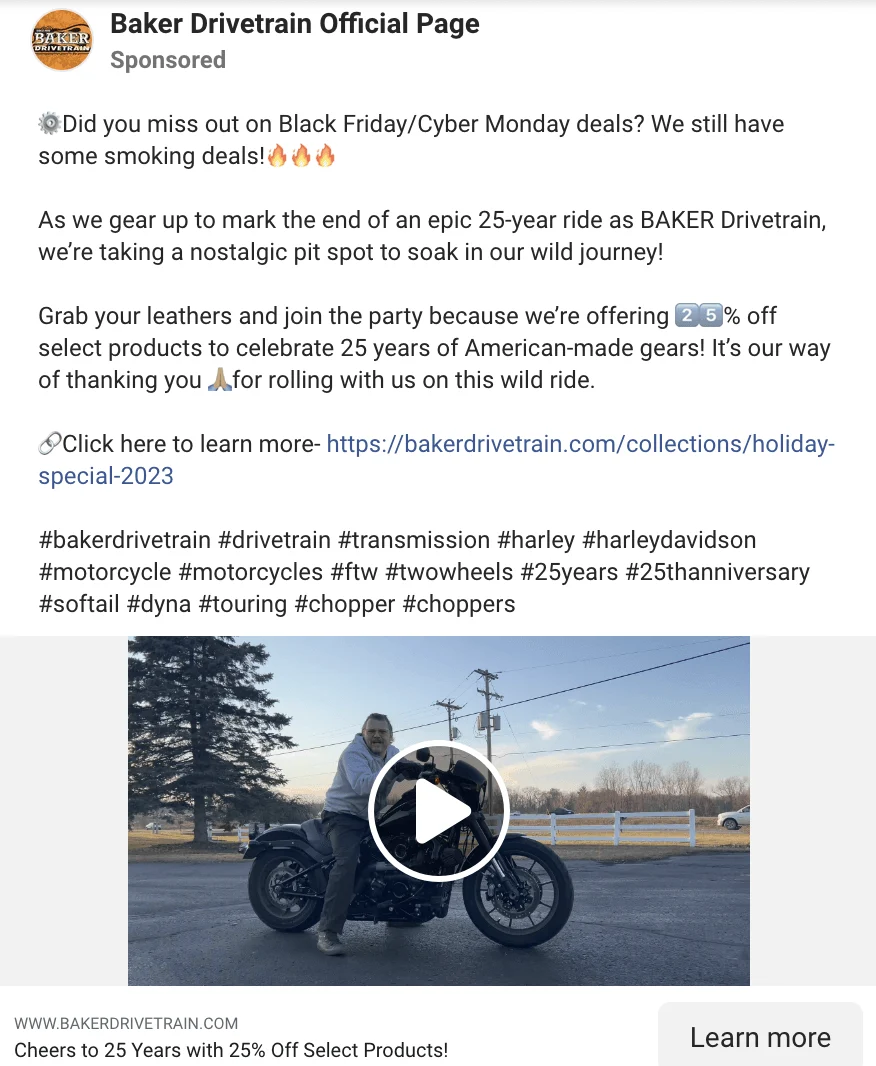
The sales opportunity doesn’t necessarily end on Cyber Monday. Baker Drivetrain effectively extends its sales window by targeting customers who may have missed the initial deals or were hesitant to purchase. Their ad, launched in the aftermath of Cyber Monday, offers 25% off selected products. This strategy allows brands to re-engage potential customers, capture additional revenue, and overcome any "spending fatigue" that might have set in during the main event. Retargeting segments of non-purchasers or those who viewed products but didn’t convert is particularly effective here.
Synergistic Marketing: Integrating Ads and Email
![Cyber Monday Advertising: Examples and Best Practices [2026 ]](https://www.omnisend.com/blog/wp-content/uploads/2024/11/3.-Focus-on-the-message.webp)
While individual ad campaigns are vital, their effectiveness is exponentially amplified when integrated with robust email marketing strategies. This synergy creates a powerful, multi-channel approach that addresses customers at various stages of the sales funnel.
Digital ads, particularly on social media and search engines, primarily serve as top-of-funnel tools, attracting new, "cold" audiences and re-engaging known customers. They drive initial traffic to your store. Email, conversely, acts as an owned channel, directly reaching marketing opt-ins who have demonstrated interest and are highly receptive to personalized offers. These two channels, though distinct, work in tandem to generate significant revenue.
For instance, a click on a Facebook ad can lead a new visitor to a landing page, where they might sign up for an email list in exchange for a further discount or early access. This immediately moves them into your owned channel. Conversely, subscribers who click links in your emails can be segmented and synced with advertising platforms like Facebook for retargeting, ensuring a consistent brand message and offer across platforms. Amundsen Sports, for example, achieved a 2x higher click-through rate by synchronizing customer segments from their email list with Facebook advertising, demonstrating the power of targeted cross-channel campaigns.
Consistency in content, offers, and timing between email sends and ad campaigns ensures that customers encounter a unified brand experience, reinforcing the Cyber Monday deals and increasing the likelihood of purchase. Furthermore, marketing automation plays a pivotal role. As ads drive traffic, automated email flows—such as cart abandonment reminders, browse abandonment emails, welcome series, and cross-sell campaigns—can recover potentially lost sales and capture additional revenue. Studies show that automated emails are exceptionally efficient, generating approximately 30% of revenue from just 2% of sends in 2025, according to the Omnisend Ecommerce Marketing Report.
Optimizing the Customer Journey: Beyond the Ad Creative
![Cyber Monday Advertising: Examples and Best Practices [2026 ]](https://www.omnisend.com/blog/wp-content/uploads/2024/11/4.-Promote-a-product-bundle.webp)
The success of Cyber Monday advertising extends beyond the initial ad click. A seamless and optimized customer journey from ad to purchase is critical.
1. Compelling Visual Storytelling:
In an attention-scarved digital environment, visuals are paramount. Ads, being interruption-based, rely heavily on their imagery and media to capture immediate attention. Whether it’s bold, high-quality product photography, engaging animated GIFs, or short, impactful videos, visuals must stand out. Consistency in brand aesthetics across all channels — ads, emails, landing pages — builds recognition and trust. Experimenting with different visual styles and A/B testing their performance can yield significant insights into what resonates most with your audience.
2. The Power of Video Content:
Video marketing has become indispensable. Short, engaging videos on platforms like TikTok and YouTube Shorts, or as embedded elements in social media ads, can convey complex messages quickly and emotionally. For Cyber Monday, videos can showcase product features, demonstrate usage, highlight bundles, or even create anticipation with behind-the-scenes glimpses of the deals. Optimizing videos for each platform (e.g., under 30 seconds for Shorts, vertical format for TikTok) and using compelling thumbnails and previews is essential for maximizing views and engagement.
3. Landing Page and Product Page Excellence:
The destination after an ad click – typically a product listing or a dedicated landing page – is where conversions happen. These pages must be meticulously optimized for maximum sales:
- High-Quality Imagery and Video: Showcase products from multiple angles, in use, and with lifestyle shots.
- Clear, Concise Product Descriptions: Highlight benefits, features, and how the product solves a customer problem.
- Prominent Pricing and Discounts: Display the original and discounted prices clearly, along with savings percentages or amounts.
- Customer Reviews and Testimonials: Social proof is a powerful motivator; display star ratings and positive reviews prominently.
- Mobile Responsiveness: Ensure pages load quickly and display perfectly on all devices, given the prevalence of mobile shopping.
- Clear Call-to-Action (CTA): Buttons like "Shop Now," "Add to Cart," or "Claim Offer" should be highly visible and persuasive.
- Inventory Status and Urgency: Indicate low stock levels or countdown timers to create a sense of urgency.
- Upselling and Cross-selling Opportunities: Suggest complementary products or higher-value alternatives at the point of decision.
- Seamless Checkout Process: Minimize steps, offer guest checkout, and display trusted payment badges to reduce cart abandonment.
Broader Implications and Future Outlook
![Cyber Monday Advertising: Examples and Best Practices [2026 ]](https://www.omnisend.com/blog/wp-content/uploads/2024/11/5.-Create-a-sense-of-urgency.webp)
Cyber Monday’s evolution into a multi-day "Cyber Week" reflects a broader trend in holiday shopping: an extended sales period and increased consumer sophistication. The intense competition during this period necessitates continuous innovation in advertising strategies. Brands must not only offer compelling deals but also provide exceptional customer experiences, from the first ad impression to post-purchase support.
The challenge for retailers lies in balancing aggressive promotional strategies with maintaining brand integrity and profitability. While deep discounts attract attention, they must be strategically managed to avoid devaluing the brand or eroding margins too severely. The integration of AI and machine learning in ad targeting and personalization is also becoming increasingly crucial, allowing brands to deliver hyper-relevant messages to individual consumers at the optimal moment.
In conclusion, Cyber Monday presents an unparalleled opportunity for revenue growth, but success hinges on rigorous planning, strategic execution, and continuous optimization. By embracing a phased timeline, leveraging diverse advertising tactics, integrating ads with email marketing, and meticulously optimizing the entire customer journey, brands can effectively navigate the digital gold rush and emerge victorious in the highly anticipated Cyber Monday sales event.
Join Omnisend to grow your Cyber Monday list and maximize sales with email marketing. Quick sign up | No credit card required.