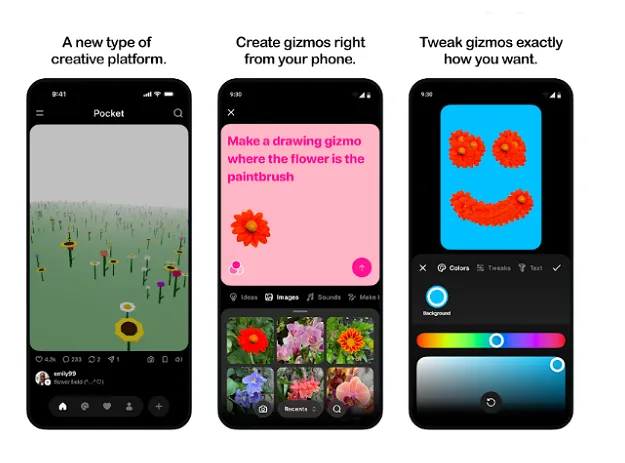
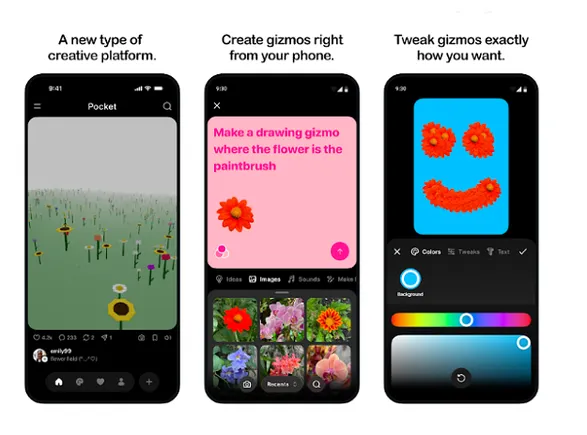
Meta Platforms Inc. has announced the expansion of its innovative "Pocket" application to all users in the United States, following a successful pilot launch in Brazil last month. This strategic move underscores Meta’s accelerated commitment to integrating artificial intelligence into its ecosystem, empowering a broader audience to design and share simple interactive projects, dubbed "gizmos," using intuitive AI prompts. The app represents a significant step in making interactive content creation more accessible, leveraging generative AI to transform conversational ideas into functional digital experiences.
The Rise of "Gizmos" and Vibe Coding
At its core, Pocket is a creative platform engineered to demystify app and game development. The concept of "gizmos" refers to small, interactive digital experiences that users can tap, touch, and engage with. What sets Pocket apart is its embrace of "vibe coding," a colloquial term for using natural language prompts to guide AI in generating the basic structure and functionality of an application or game. Instead of writing lines of complex code, users describe their desired interactive experience in plain language, and the AI interprets these prompts to build the gizmo.
For instance, a user could prompt Pocket to "create a simple quiz game about space exploration with three questions" or "design a small interactive story where the user chooses different paths." The AI then provides a foundational structure, which creators can further refine and personalize. This approach significantly lowers the barrier to entry for aspiring developers and casual creators alike, enabling individuals without traditional coding expertise to bring their digital ideas to life.
Once created, these gizmos are not confined to individual use. Pocket integrates social sharing functionalities, allowing users to publish their creations within the app’s feed. Other users can then discover, interact with, like, and comment on these projects. This fosters a community-driven environment where creativity is shared, celebrated, and iteratively improved upon, much like other user-generated content platforms. The ability to scroll through a feed of user-generated gizmos not only provides inspiration but also helps surface the most engaging and innovative creations, potentially leading to viral interactive content. This social layer is crucial for fostering engagement and validating Meta’s investment in user-generated AI content.
A Strategic Acquisition: The Genesis of Pocket
The development of Pocket is rooted in Meta’s strategic acquisition of Gizmo in March of this year. Gizmo, originally launched in 2024 by a team of ex-Snapchat engineers, had already established itself as a pioneer in the "vibe coding" space. Its initial platform allowed users to generate basic app and game structures through AI tools, which could then be tested and built upon by other users. This pre-existing technology and expertise provided Meta with a robust foundation upon which to build Pocket, accelerating its entry into the AI-powered no-code/low-code development arena.
The acquisition was a clear signal of Meta’s intent to diversify its AI offerings and capitalize on the growing trend of generative AI. By integrating Gizmo’s technology, Meta gained a competitive edge in providing accessible development tools, aligning with its broader vision of democratizing technology and fostering creativity across its platforms. The timeline of Gizmo’s independent launch in 2024, followed by Meta’s acquisition in early 2026, and the rapid rollout of Pocket, demonstrates an aggressive strategy by Meta to quickly bring cutting-edge AI tools to its vast user base.
Meta’s Broader AI Ambitions
Pocket’s launch and expansion are not isolated events but rather integral components of Meta’s expansive and ambitious artificial intelligence strategy. Under the leadership of CEO Mark Zuckerberg, Meta has been aggressively investing in AI research and development, positioning AI as the foundational technology for its future, including its metaverse vision. The company’s efforts span various domains, from large language models (LLMs) like Llama, which are open-sourced to foster innovation, to AI assistants designed to enhance productivity and creativity across its platforms (Facebook, Instagram, WhatsApp, Messenger).
Meta’s AI initiatives are multifaceted:
- Generative AI: Beyond Pocket, Meta has introduced various generative AI tools for text, image, and video creation, aiming to empower creators and enhance user experiences within its social media applications.
- AI Assistants: The company is integrating AI assistants into its messaging apps, providing users with tools for brainstorming, content creation, and information retrieval.
- Recommendation Systems: AI powers the sophisticated recommendation algorithms across Meta’s platforms, personalizing feeds and connecting users with relevant content and communities.
- Research & Development: Meta AI (formerly Facebook AI Research, FAIR) is a leading global AI research lab, pushing the boundaries of machine learning, computer vision, natural language processing, and robotics.
This broader context reveals Pocket as a strategic instrument to "raise hype" around Meta’s AI capabilities and, more importantly, to encourage widespread experimentation with AI app generation. By making complex AI tools accessible through simple interfaces, Meta aims to onboard millions of users into the AI development ecosystem, gathering valuable feedback and driving further innovation. This also positions Meta to compete directly with other tech giants like Google (with its AI Test Kitchen, Bard, and Gemini), OpenAI (ChatGPT, DALL-E), and Microsoft (Copilot), all of whom are vying for dominance in the rapidly evolving generative AI landscape. The long-term vision involves seamlessly embedding AI into everyday digital interactions, moving towards an era of "ambient computing" where AI proactively assists users across various devices and platforms.
Democratizing Creativity: Implications for the Creator Economy
The introduction of Pocket carries significant implications for the global creator economy. For years, the ability to develop interactive applications or games required specialized coding skills, extensive technical knowledge, and often significant financial investment. This created a high barrier to entry, limiting innovation to a select group of developers and studios. Pocket, through its "vibe coding" paradigm, shatters this barrier, democratizing access to app development.
Key implications include:

- Empowering Non-Technical Creators: Artists, writers, educators, small business owners, and hobbyists who lack coding skills can now translate their creative concepts into interactive digital experiences. This could lead to a proliferation of novel content forms, from interactive stories and educational modules to simple utility apps and mini-games.
- Fostering Innovation: By simplifying the creation process, Pocket encourages rapid prototyping and experimentation. Creators can quickly test ideas, iterate on designs, and gather community feedback, accelerating the pace of innovation in interactive content.
- Expanding User-Generated Content: Just as platforms like YouTube, TikTok, Roblox, and Minecraft have democratized video creation and game building, Pocket has the potential to do the same for interactive app development. This could lead to a surge in diverse, community-driven interactive experiences within Meta’s ecosystem.
- Educational Tool: Pocket could serve as an excellent introductory tool for computational thinking and basic programming concepts, making technology education more engaging and accessible for younger generations.
- Economic Opportunities: While specific monetization strategies for Pocket are yet to be fully detailed, the platform could eventually enable creators to monetize their gizmos, creating new revenue streams and fostering a vibrant creator-led economy within Meta’s digital realm. This aligns with broader trends of platforms empowering creators to earn from their content.
Market Trends and Supporting Data
Pocket’s launch aligns with several converging market trends that underscore its strategic importance:
- Generative AI Market Growth: The generative AI market is experiencing explosive growth. According to various industry reports, the global generative AI market size was valued at billions in 2023 and is projected to grow at a compound annual growth rate (CAGR) exceeding 30% or even 40% over the next decade, reaching hundreds of billions by 2032. Meta’s investment in Pocket positions it to capture a significant share of this expanding market by making generative AI accessible to a mass consumer audience.
- No-Code/Low-Code Adoption: The no-code/low-code development platform market has been rapidly expanding, driven by the need for faster application development and the democratization of software creation. This market was valued at tens of billions in 2023 and is expected to continue its robust growth. Pocket effectively leverages this trend by offering a "no-code" solution powered by advanced AI.
- User-Generated Content Dominance: Platforms heavily reliant on user-generated content (UGC) continue to dominate digital engagement. TikTok, Roblox, and YouTube exemplify the power of UGC in driving virality and community building. Pocket aims to tap into this phenomenon by enabling users to create and share interactive experiences, fostering a new dimension of UGC.
- Mobile App Engagement: Global mobile app usage remains exceptionally high, with users spending hours daily on their smartphones. By creating a mobile-first app for gizmo creation and consumption, Meta ensures Pocket is accessible where users already spend most of their digital time, leveraging its vast existing mobile user base which numbers in the billions across its family of apps.
- Meta’s Ecosystem Advantage: With billions of users across Facebook, Instagram, and WhatsApp, Meta possesses an unparalleled distribution network. The potential to integrate gizmos or Pocket’s capabilities into these existing platforms could provide a massive audience for creators and drive rapid adoption.
Challenges and Considerations
While Pocket presents exciting opportunities, its success will depend on how Meta addresses several inherent challenges associated with AI-powered user-generated content platforms:
- Quality Control and Content Moderation: As creation becomes easier, the sheer volume of content will increase. Ensuring the quality, relevance, and safety of user-generated gizmos will be a significant undertaking. Meta will need robust content moderation systems, potentially combining AI and human review, to prevent the spread of inappropriate, low-quality, or harmful content.
- Monetization Strategies: For Pocket to truly empower a creator economy, clear and sustainable monetization pathways will be essential. This could involve advertising, in-app purchases, subscriptions, or direct tipping mechanisms. Meta’s experience with creator monetization on Instagram and Facebook will be valuable here.
- Ethical Implications of AI-Generated Content: The use of generative AI raises ethical concerns, including potential biases embedded in AI models, issues of intellectual property and copyright for AI-generated assets, and the potential for misuse in creating deceptive or misleading interactive experiences. Meta must implement transparent AI policies and safeguards.
- User Adoption and Retention: In a crowded digital landscape, attracting and retaining users for a new app can be challenging. Pocket will need to offer a consistently engaging and valuable experience to stand out and build a loyal community. The initial novelty of AI creation must translate into sustained creative output and community interaction.
- The "Concept" Problem: As the original article astutely points out, while AI simplifies the act of creation, coming up with a truly compelling and original idea remains as difficult as ever. Pocket provides the tools, but human ingenuity and creativity will still be the driving force behind truly remarkable gizmos. Meta will need to cultivate an environment that inspires unique concepts, perhaps through challenges, templates, or educational resources.
Future Outlook
The launch of Pocket marks an important inflection point for Meta in its AI journey. It signifies a tangible step towards making generative AI tools more accessible and directly applicable for everyday users, extending beyond professional developers. The app’s future evolution could see deeper integration with Meta’s other platforms, allowing gizmos to be seamlessly shared or embedded within Facebook feeds, Instagram Stories, or even WhatsApp chats. Furthermore, as Meta continues to advance its metaverse ambitions, Pocket’s interactive capabilities could eventually extend into virtual and augmented reality environments, enabling users to create interactive elements within virtual worlds.
Meta’s strategy with Pocket is clear: to leverage its extensive AI research and user base to foster a new wave of digital creativity. By providing a low-friction entry point into interactive content creation, Pocket has the potential to reshape how users engage with digital experiences and contribute to the ever-expanding digital realm. It is an experiment in democratized innovation, allowing millions to "vibe code" their ideas into existence and witness firsthand the transformative power of artificial intelligence. The success of this experiment will not only shape the future of Meta’s AI offerings but also influence the broader landscape of user-generated content and accessible digital development.