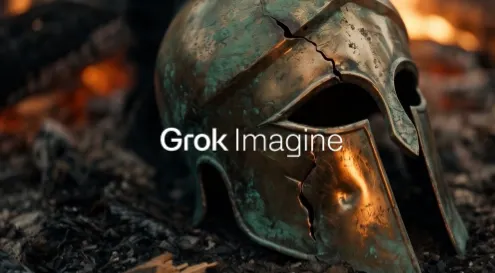
X, formerly Twitter, has announced a new artificial intelligence-powered competition, inviting creators to generate their own interpretations of Homer’s epic poem, The Odyssey, using its recently launched Grok Imagine tools. The initiative, dubbed "Grok Odyssey," offers substantial cash prizes, including a grand prize of $100,000, and appears to be directly influenced by X owner Elon Musk’s expressed dissatisfaction with contemporary cultural interpretations of classic works, specifically attributing his motivation to a perceived "desecration" of the story by what he referred to as Christopher Nolan’s recent interpretation—a claim that has drawn scrutiny given Nolan’s filmography does not include an adaptation of The Odyssey. This competition represents X’s latest strategy to incentivize content creation on its platform, showcase its evolving AI capabilities, and align its technological advancements with Musk’s personal and often controversial cultural commentary.
The "Grok Odyssey" Challenge: Details and Requirements
The core of X’s new program is a creative challenge designed to highlight the advanced video and voice generation capabilities of Grok Imagine, X’s proprietary artificial intelligence suite. Participants are tasked with creating a compelling scene from Homer’s The Odyssey that effectively demonstrates these AI tools. The competition structure is straightforward: X will award $100,000 to the first-place winner, $50,000 for second place, and $25,000 for third place. To enter, users must submit their video by quoting the official announcement post.
Specific guidelines have been set to ensure a consistent submission format and quality. Each winning video must have a duration of between three and five minutes and include at least one minute of dialogue in English. The judging process is two-tiered: initial ranking will be based on "Verified Premium Home Timeline impressions," indicating a significant emphasis on virality and engagement within the platform’s subscriber base. Following this initial metric, entries will be further evaluated on their overall quality and creativity by a panel. Eligibility for the competition is restricted to U.S. users who are 18 years of age or older. The submission window is open until August 31st, 2026, with winners slated to be announced shortly thereafter. This extended timeline suggests X anticipates a significant creative effort from participants and aims to sustain engagement over a prolonged period.
Musk’s Vision and Controversial Motivations
The genesis of the "Grok Odyssey" competition is deeply intertwined with Elon Musk’s outspoken views on culture, particularly regarding historical and literary adaptations. Musk has publicly stated his ambition to create an "alternate version" of The Odyssey, driven by his strong dislike of what he referred to as Christopher Nolan’s recent interpretation. It is important to clarify that acclaimed director Christopher Nolan has not, to public knowledge, directed a film adaptation of Homer’s The Odyssey. Musk’s criticism appears to stem from a broader frustration with modern cultural trends he perceives as undermining traditional narratives and artistic integrity.
Musk’s commentary escalated to include accusations of "desecrating" the story, specifically citing the casting of non-white actors in key roles in what he implied was Nolan’s adaptation. He further labeled Nolan an "anti-white racist" for these casting choices and asserted that Nolan "has shown total contempt for the Greek people." These statements have been met with significant controversy, sparking debates across social media platforms and beyond. Critics argue that The Odyssey, as a work of ancient Greek epic poetry, is a fictional narrative and not a historical document, thus allowing for creative interpretations and diverse casting without necessarily "desecrating" its essence. Nonetheless, Musk’s profound dissatisfaction with these perceived cultural shifts has evidently translated into a direct corporate initiative, leveraging X’s technological capabilities to generate alternative content that aligns with his personal aesthetic and ideological preferences. This particular emphasis on re-creating The Odyssey stands out among X’s incentive programs, as Musk has vowed that Grok AI tools will produce a superior version to the one he criticized before the end of the current year. This ambition highlights a unique intersection of personal conviction, technological showcase, and platform strategy.
Grok Imagine: X’s AI Ambitions
The "Grok Odyssey" competition serves as a high-profile demonstration for Grok Imagine, X’s latest iteration of generative artificial intelligence tools. Grok, initially launched as a conversational AI chatbot, has evolved to incorporate advanced multimodal capabilities, including video and voice generation. These tools are part of X’s broader strategy to position itself at the forefront of AI innovation, competing with established players and emerging startups in the rapidly expanding generative AI market. Grok Imagine leverages sophisticated large language models (LLMs) and diffusion models to process text prompts and translate them into visual and auditory content. Users can input descriptions of scenes, characters, dialogue, and even emotional tones, and the AI is designed to render these into coherent, stylized video sequences complete with synthesized voices.
The integration of video and voice generation marks a significant step for X, aiming to transform the platform from primarily text and image-based content sharing to a hub for rich, AI-generated multimedia. By inviting users to create complex narratives like The Odyssey, X is stress-testing Grok Imagine’s ability to maintain narrative consistency, character fidelity, and stylistic coherence over extended durations (3-5 minutes), which remains a considerable challenge for current AI models. The success of this competition, both in terms of quality of submissions and platform engagement, will be a crucial indicator of Grok Imagine’s maturity and its potential to democratize sophisticated content creation. Furthermore, it represents X’s commitment to investing heavily in AI as a core differentiator and a means to attract and empower a new generation of creators.
Precedent: X’s History of Incentive Programs
The "Grok Odyssey" competition is not an isolated initiative but rather the latest in a series of efforts by X to stimulate content creation and user engagement through financial incentives. In January, X launched a program awarding a $1 million prize for the most popular long-form article posted on the platform. This was part of a strategic push to encourage more in-depth content, moving beyond its traditional character-limited format and directly competing with platforms like Substack or Medium. Similarly, X offered another $1 million prize for the best Super Bowl advertisement generated by Grok, with the winning entries intended for use in X’s promotional campaigns. These contests underscore X’s intent to showcase its new features and attract high-quality, high-engagement content.
However, the efficacy and longevity of these incentive schemes have been subject to scrutiny. While initial prize announcements often generate significant buzz and a surge in submissions, sustained engagement beyond the contest period has proven challenging. For instance, in November 2025, X launched a "Certified Bangers" account, designed to highlight the platform’s best posts each month. While the account did publish "top bangers" for its inaugural month, it subsequently ceased posting, indicating a rapid loss of interest or a shift in strategic focus from the platform’s leadership. This pattern suggests that while large cash prizes can temporarily boost activity and demonstrate new features, they do not necessarily cultivate a self-sustaining ecosystem of consistently high-quality content or long-term creator loyalty without continuous support and integration into the platform’s core functionalities. The "Grok Odyssey" competition, with its specific focus and longer deadline, will test whether a more targeted and culturally resonant challenge can yield more enduring results.
The Enduring Legacy of Homer’s Odyssey
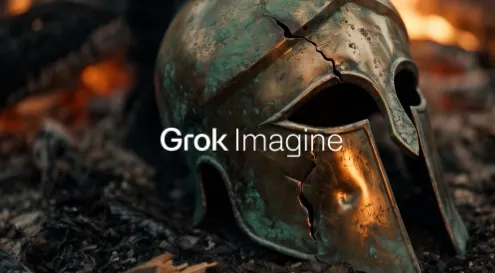
To fully appreciate the context of the "Grok Odyssey" competition, it is essential to revisit the original source material: Homer’s The Odyssey. Composed in ancient Greece, likely in the 8th century BCE, The Odyssey is one of the two major epic poems attributed to the legendary poet Homer, the other being The Iliad. It recounts the arduous ten-year journey of the Greek hero Odysseus (Latinized as Ulysses) back to his island kingdom of Ithaca following the Trojan War. His odyssey is fraught with mythical creatures, divine interventions, perilous encounters, and numerous temptations, including the cyclops Polyphemus, the Sirens, the sorceress Circe, and the whirlpool Charybdis, all while his loyal wife Penelope and son Telemachus struggle against conniving suitors in Ithaca.
The Odyssey is not merely an adventure story; it is a profound exploration of themes such as identity, homecoming, loyalty, cunning, perseverance, and the struggle against fate. It has profoundly influenced Western literature, art, and philosophy for nearly three millennia, shaping our understanding of heroism, narrative structure, and the human condition. Its characters and archetypes are universally recognized, and its narrative framework has been adapted, reinterpreted, and reimagined countless times across various mediums—from classical drama to modern novels, films, and video games. The poem’s enduring relevance lies in its ability to resonate with timeless human experiences and its capacity for diverse interpretations, making it a fertile ground for creative endeavors, including those facilitated by cutting-edge artificial intelligence.
Implications for AI in Creative Fields
The "Grok Odyssey" competition is more than just a marketing stunt for X; it is a significant foray into the broader, often contentious, debate surrounding artificial intelligence in creative fields. Generative AI’s rapid advancements have sparked both excitement and apprehension among artists, writers, filmmakers, and musicians. Proponents argue that AI tools like Grok Imagine can democratize content creation, allowing individuals with limited technical skills or resources to produce high-quality multimedia. It can serve as a powerful ideation partner, accelerate production workflows, and unlock new forms of artistic expression, potentially leading to an explosion of diverse content.
However, critics voice substantial concerns. There are ethical dilemmas regarding intellectual property, as AI models are often trained on vast datasets of existing copyrighted works without explicit consent or compensation for the original creators. The potential for "AI slop"—generic, algorithmically generated content lacking originality, depth, or human insight—is another worry. Furthermore, the economic impact on human artists is a serious consideration, with fears that AI could devalue human creativity, lead to job displacement, and shift the balance of power in creative industries. The "Grok Odyssey" competition, by explicitly inviting AI to reinterpret a foundational work of human culture, places X directly at the epicenter of these discussions. The quality and originality of the submissions, and how they are perceived by the wider creative community, will contribute to the ongoing narrative about AI’s role as a collaborator, competitor, or simply a tool in the human creative process.
Platform Strategy and User Engagement
From a business perspective, the "Grok Odyssey" competition is a multifaceted strategic move for X. First, it directly addresses the challenge of user engagement and retention. In a highly competitive social media landscape, platforms constantly seek innovative ways to keep users active and attract new ones. By offering significant cash prizes and a unique creative outlet, X aims to draw a specific segment of tech-savvy, creatively inclined users. This strategy aligns with the broader "creator economy" trend, where platforms empower and reward content producers.
Second, the competition serves as a potent marketing vehicle for Grok Imagine. Public demonstrations of AI capabilities, especially those involving creative output, generate significant media attention and showcase the platform’s technological prowess. This helps differentiate X from competitors and reinforces its image as an innovation-driven company. Third, by focusing on a classical work like The Odyssey, X taps into a universally recognized cultural touchstone, potentially broadening its appeal beyond typical tech enthusiasts. Finally, the emphasis on "Verified Premium Home Timeline impressions" in the judging criteria subtly promotes subscription to X’s premium services, linking deeper engagement with greater visibility and a better chance at winning. This dual approach—showcasing AI and boosting premium subscriptions—is central to X’s evolving business model under Elon Musk’s leadership.
Ethical Dimensions and Societal Impact
The "Grok Odyssey" competition, particularly given Elon Musk’s stated motivations, raises important ethical and societal questions. Musk’s criticisms of "desecrating" classical narratives through diverse casting and his labeling of a director as "anti-white racist" highlight a contentious intersection of technology, culture, and identity politics. By encouraging AI-generated interpretations as a perceived corrective to what he views as problematic modern renditions, X implicitly endorses a particular cultural stance. This raises concerns about the potential for AI tools to be weaponized or leveraged to promote specific ideological agendas, whether intentionally or unintentionally, especially if the AI models themselves harbor biases from their training data.
The debate over "cultural appropriation" versus "creative interpretation" becomes even more complex when AI is involved. While human artists have always reinterpreted classics, the rapid, large-scale generation of content by AI, guided by specific prompts and potentially biased algorithms, could lead to a homogenization or a partisan framing of cultural narratives. This could inadvertently diminish the richness of diverse human perspectives and interpretations that have historically enriched such works. The competition forces a critical examination of who controls the narrative in the age of AI, whose stories are amplified, and how technology can either foster inclusivity or reinforce narrow viewpoints. The long-term societal impact will depend on how X manages these ethical considerations and how the broader community responds to AI-generated cultural content in the context of these controversies.
Conclusion
The "Grok Odyssey" AI competition launched by X is a multifaceted initiative that intertwines technological advancement, platform strategy, and the personal cultural convictions of its owner, Elon Musk. Offering substantial prizes for AI-generated interpretations of Homer’s epic, it aims to showcase the advanced capabilities of Grok Imagine, drive user engagement, and solidify X’s position in the competitive generative AI landscape. However, the competition is also notably colored by Musk’s controversial criticisms of contemporary cultural adaptations, particularly his unfounded claims regarding Christopher Nolan’s involvement with The Odyssey.
While the initiative could democratize creative content generation and highlight the impressive potential of AI, it simultaneously reignites critical debates about AI’s role in the arts, intellectual property, potential for bias, and the influence of personal ideologies on corporate strategy. As the August 2026 deadline approaches, the quality and reception of the AI-generated "Odyssey" scenes will provide valuable insights into the evolving relationship between human creativity, artificial intelligence, and the dynamic landscape of social media platforms. Whether this will lead to a new era of AI-powered creative expression or simply be another short-lived incentive scheme remains to be seen, but its implications for the future of digital content and cultural discourse are undeniable.