rifanmuazin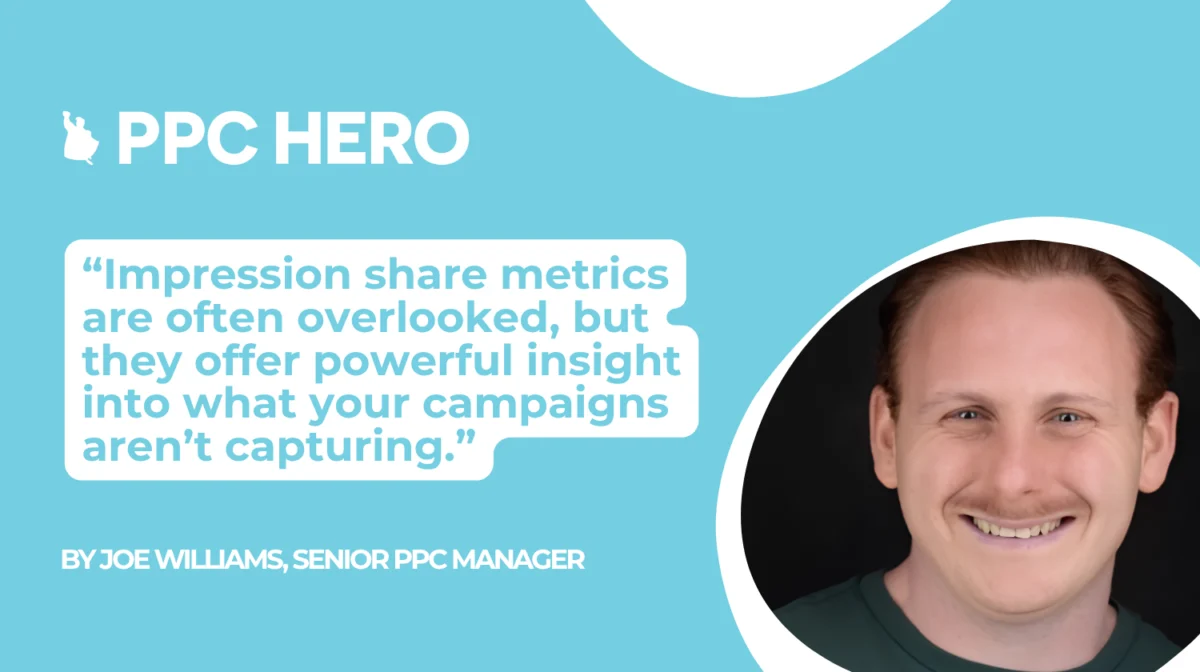
In the dynamic world of e-commerce, where every click and conversion counts, it’s easy for digital marketers to become fixated on the immediate results of their campaigns. Metrics like conversion rate, click-through rate, and return on ad spend (ROAS) are undeniably vital for gauging success. However, a sole focus on these surface-level indicators can inadvertently lead to a significant blind spot: the vast landscape of missed opportunities. This is precisely where the power of impression share metrics comes into play, offering a deeper, more strategic understanding of campaign performance and unlocking avenues for substantial growth. By diligently analyzing Search Impression Share, Search Lost Impression Share (Rank), and Search Lost Impression Share (Budget), e-commerce businesses can illuminate the paths to capturing a larger share of potential customer engagement and revenue.
The Strategic Imperative of Impression Share
The digital advertising ecosystem, particularly within e-commerce, is characterized by intense competition. Brands are vying for the attention of consumers actively searching for products and solutions. In this environment, simply appearing in search results is the foundational step toward securing a sale. Impression share metrics provide the crucial context to understand not just if ads are appearing, but how often they could be appearing, and why they might be missing out. This nuanced perspective is what differentiates highly successful campaigns from those that merely tread water.
For e-commerce brands, especially those operating in highly competitive niches or offering a wide array of products, understanding impression share is not merely an operational detail; it’s a strategic imperative. A low impression share directly translates to a reduced presence in front of potential customers at the precise moment they are expressing intent to purchase. This deficit can be particularly acute for searches with high commercial intent, such as branded terms (e.g., “Nike running shoes”) or specific product queries (e.g., “organic cotton baby onesie”). When ads fail to show for these searches, the opportunity to convert is effectively handed over to competitors.
Decoding Search Impression Share: The Foundation of Visibility
Search Impression Share (SIS) represents the percentage of times your ads were shown compared to the total number of times they were eligible to be shown. In essence, it answers the fundamental question: “How often are my ads appearing when a potential customer is looking for what I offer?”
A robust SIS indicates that your campaigns are effectively reaching a significant portion of your target audience. Conversely, a low SIS signals that your ads are not being displayed as frequently as they could be, suggesting a potential disconnect between your advertising efforts and market demand. For an e-commerce business, this is a critical alert. Imagine a scenario where thousands of potential customers are searching for a specific type of artisanal coffee maker, a product your online store specializes in. If your SIS for these keywords is low, it means a substantial number of these shoppers are seeing competitor ads or no ads at all, directly impacting your sales funnel.
Monitoring SIS allows for a rapid assessment of campaign reach. It provides an immediate overview of whether your advertising efforts are broad enough to capture the available market. A consistent upward trend in SIS, especially for high-value keywords, is a strong indicator of successful campaign scaling and improved market penetration.
Search Lost Impression Share (Rank): The Competitive Edge
While SIS tells you how often you’re showing, Search Lost Impression Share (Rank) delves into the reasons why you might be missing out. This metric specifically quantifies the percentage of impressions you’ve lost due to poor Ad Rank. Ad Rank is a complex algorithm that determines where your ad appears on the search results page and is influenced by two primary factors: your bid amount and your ad quality (which includes expected click-through rate, ad relevance, and landing page experience).
In the cutthroat arena of e-commerce, a low Ad Rank can be a direct barrier to entry for valuable customer traffic. If your competitors consistently achieve higher Ad Ranks, their ads will appear more prominently, or more frequently, for the same search queries. This means they are capturing the attention – and potentially the business – of shoppers who might otherwise have landed on your website.
To improve Search Lost Impression Share (Rank), e-commerce advertisers typically need to focus on several key areas:
- Optimizing Bid Strategies: This involves adjusting bids to be more competitive for high-performing keywords. It might mean increasing bids for terms that have a proven track record of driving profitable sales, or implementing automated bidding strategies that dynamically adjust bids based on performance data and competitive landscape.
- Enhancing Ad Quality and Relevance: This is a crucial, often underestimated, lever. It involves crafting compelling ad copy that directly addresses user intent, using relevant keywords in ad headlines and descriptions, and ensuring that the ad’s message aligns perfectly with the content of the landing page. Google’s Quality Score, for instance, directly impacts Ad Rank, rewarding advertisers who provide a superior user experience. For e-commerce, this translates to highly targeted ads that lead to product pages with clear calls to action, detailed product information, and a seamless checkout process.
- Improving Landing Page Experience: A high-quality landing page is not just about aesthetics; it’s about user-friendliness, relevance, and conversion optimization. For e-commerce, this means fast loading times, mobile responsiveness, clear product images, detailed descriptions, customer reviews, and an easy navigation to add to cart and checkout. A poor landing page experience can negatively impact Ad Rank, even if bids and ad copy are strong.
Even incremental improvements in Ad Rank can yield significant dividends, particularly during peak shopping seasons like Black Friday, Cyber Monday, or holiday sales. During these periods, competition intensifies, and maintaining a strong Ad Rank becomes paramount for capturing the surge in consumer demand.
The Budgetary Constraint: Understanding Search Lost Impression Share (Budget)
Search Lost Impression Share (Budget) addresses a different, yet equally critical, bottleneck: budget limitations. This metric indicates the percentage of times your ads were not shown because your daily budget was insufficient to serve them throughout the day. This is particularly relevant for e-commerce accounts that are already demonstrating strong performance and a healthy return on investment.
When an e-commerce campaign is consistently hitting its daily budget and subsequently losing impression share due to this limitation, it’s a clear signal that demand exists beyond the current spending cap. In such cases, the budget is not just a spending limit; it’s an active constraint on growth. The demand for your products is present, but your advertising budget is preventing you from capitalizing on it.
Consider an example: an online retailer selling specialized outdoor gear notices that one of their key campaigns, targeting “waterproof hiking boots,” consistently reaches its daily budget by mid-afternoon. The campaign is delivering an exceptional ROAS of 8:1, indicating that for every dollar spent on advertising, the business generates eight dollars in revenue. If this campaign has a high Search Lost Impression Share (Budget), it means that during the latter half of the day, potential customers searching for “waterproof hiking boots” are not seeing the retailer’s ads. Increasing the budget for this campaign, even significantly, could unlock substantial additional revenue without compromising its efficiency, as the underlying demand and campaign performance are already proven.
This metric is a powerful indicator for scaling successful campaigns. It moves the conversation from optimizing existing spend to strategically increasing investment to meet demonstrable market demand.
The Synergistic Power of Combined Analysis
While each impression share metric offers valuable insights individually, their true strategic power is unleashed when analyzed in conjunction. This holistic approach provides a comprehensive diagnosis of campaign performance and illuminates the most effective levers for improvement.
- High SIS, Low Lost Share (Rank & Budget): This is the ideal scenario, indicating that your campaigns are reaching a large portion of the available audience efficiently and competitively.
- Low SIS, High Lost Share (Rank): This suggests a fundamental issue with Ad Rank. Your bids might be too low, your ad quality needs improvement, or your landing page experience is suboptimal. The focus here should be on enhancing these elements to gain visibility.
- Low SIS, High Lost Share (Budget): This points to a successful campaign that is being held back by budget constraints. The clear path forward is to increase the budget to capture more of the available demand.
- Moderate SIS, High Lost Share (Rank) and Moderate Lost Share (Budget): This indicates a mixed situation. You might need to address both Ad Rank issues and consider a modest budget increase to capture more opportunities.
For e-commerce advertisers, this combined view is invaluable for prioritizing resource allocation. It enables a shift from a reactive stance, where campaigns are adjusted based on immediate performance fluctuations, to a proactive strategy, where investments are strategically directed towards areas with the greatest potential for growth and revenue capture. This integrated analysis allows for informed decisions about where to invest more budget, which ad creatives to refine, and which keywords to target more aggressively.
Conclusion: Leveraging Impression Share for E-commerce Dominance
In the fiercely competitive e-commerce landscape, overlooking impression share metrics is akin to leaving money on the table. These metrics are not mere technicalities; they are powerful diagnostic tools that reveal the hidden potential within your advertising campaigns. By consistently monitoring and acting upon insights derived from Search Impression Share, Search Lost Impression Share (Rank), and Search Lost Impression Share (Budget), e-commerce businesses can move beyond surface-level performance indicators. They can achieve a deeper understanding of market opportunities, identify and address competitive disadvantages, and strategically scale their advertising efforts to meet demonstrable demand.
Ultimately, mastering impression share is about ensuring that your brand is not just visible, but optimally visible to the right customers at the right time. It’s about moving from simply measuring success to actively engineering it, unlocking untapped growth, and ensuring that your e-commerce campaigns operate at their absolute peak potential in an ever-evolving digital marketplace. The insights provided by these metrics are crucial for any business aiming to not only compete but to lead in the online retail space.