

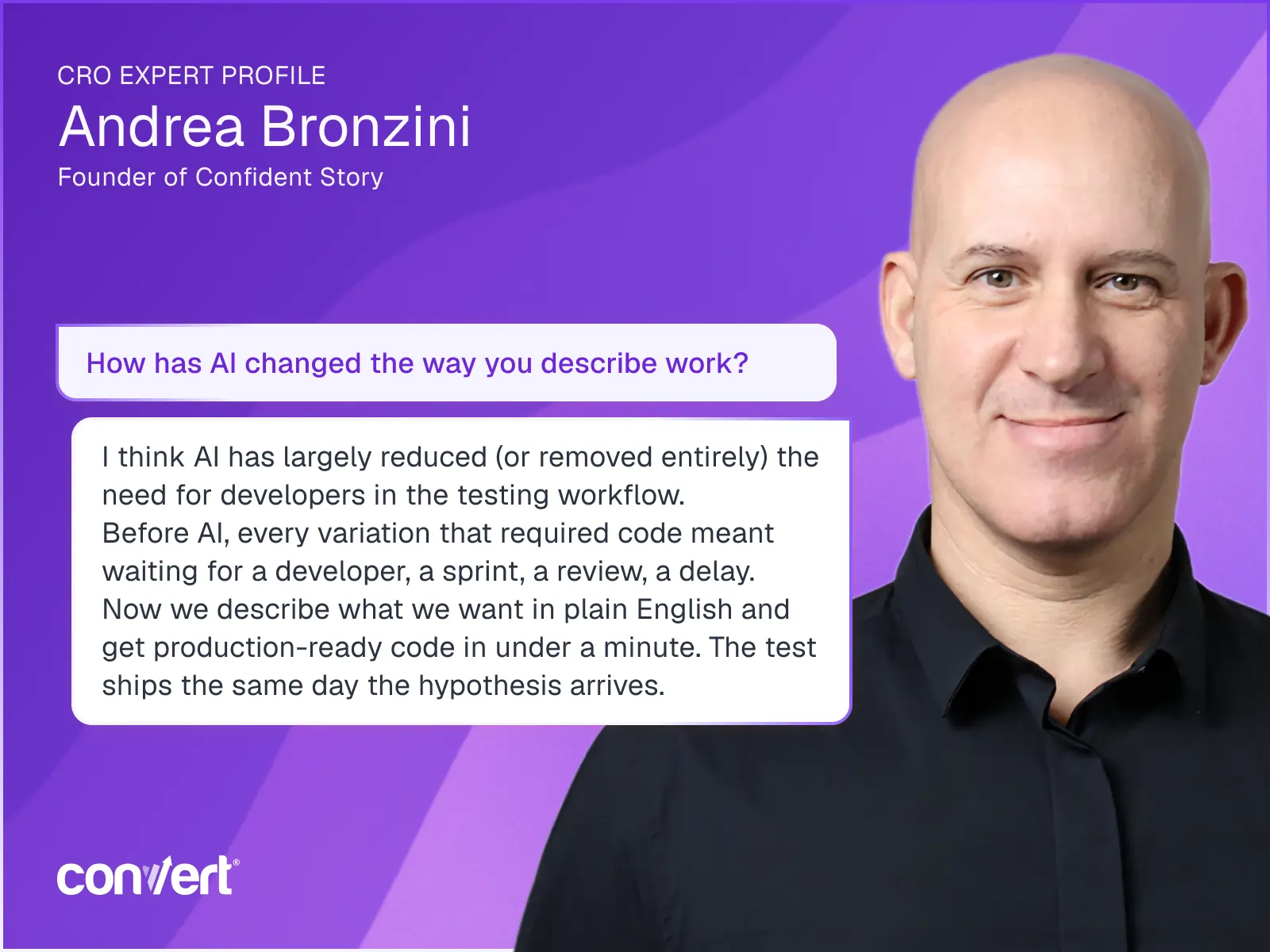
The landscape of Conversion Rate Optimization (CRO) and digital experimentation is undergoing a fundamental transformation, moving away from rigid academic frameworks toward a more nuanced, business-centric "decision-policy" model. Andrea Bronzini, the founder of Confident Story and a prominent figure in the data science and optimization community, recently provided a comprehensive look into the mechanics of this shift. His insights reveal a discipline that is less about finding a single "truth" in data and more about managing a complex balancing act between different types of statistical errors. As businesses grapple with increasing competition and the rapid integration of artificial intelligence, the methodology behind how they test, learn, and scale has become a critical differentiator for long-term growth.
The Subjectivity of Objective Data
For years, the promise of experimentation has been its perceived objectivity. The prevailing wisdom suggested that by running A/B tests, organizations could bypass human bias and let the data decide the best path forward. However, Bronzini challenges this notion, arguing that the very parameters used to define "objectivity" are themselves subjective judgment calls. Decisions regarding sample size, the duration of a test, and the chosen significance threshold are all human interventions that shape the final result before the first visitor even enters an experiment.

In this context, Bronzini posits that the real protagonist of any experiment is not the "signal" or the "winner," but rather the "stochastic noise." In statistics, stochastic noise refers to the random variability that exists in any data set. While the industry has historically obsessed over measuring lift and conversion rates, Bronzini argues that understanding noise is what separates high-performing teams from those that struggle with inconsistent results. Noise has the power to either obscure a genuine improvement or, more dangerously, create the illusion of a massive success where only a marginal gain exists.
The Chronology of Experimentation Methodologies
To understand the current state of CRO, one must look at the evolution of testing methodologies over the last two decades. Initially, digital testing was a rudimentary process often driven by "gut feel" and basic click-through rates. As the industry matured, it adopted the "Frequentist" statistical model used in academic and clinical research. This model relies heavily on p-values and a strict 95% confidence threshold to determine success.
By the mid-2010s, many organizations realized that this academic approach was often too slow for the fast-paced world of e-commerce and SaaS. This led to the rise of Bayesian statistics in testing platforms, which offered more flexibility and intuitive probability-based results. Today, the industry stands at what Bronzini calls an "inflection point." The focus is shifting from simply asking "is this result significant?" to asking "what is the most profitable decision rule for our specific business constraints?"

The Statistical Triple Threat: Three Modes of Experimental Failure
A central component of Bronzini’s philosophy is the identification of three distinct ways an experiment can fail an organization. Traditionally, the industry has focused almost exclusively on the first mode, often ignoring the costs associated with the other two.
1. The False Positive (Calling the Wrong Winner)
This occurs when an experiment shows a statistically significant "win," but the observed lift is actually the result of random noise rather than a genuine improvement. Shipping a "loser" based on a false positive can lead to stagnant or even declining performance over time. The standard industry defense against this is the 95% significance threshold, which is designed to limit false positives to 5% of all tests.
2. The Missed Real Winner (The Inconclusive Trap)
The second failure mode is perhaps the most common in companies with limited traffic. It occurs when a change produces a genuine, positive improvement, but because the lift did not cross the 95% threshold within the allotted time, it is labeled "inconclusive." Bronzini points out that while power analysis is the theoretical solution to this, most companies cannot reach the required sample sizes. Consequently, real winners are filed away and forgotten, representing a massive opportunity cost that is rarely accounted for in CRO budgets.
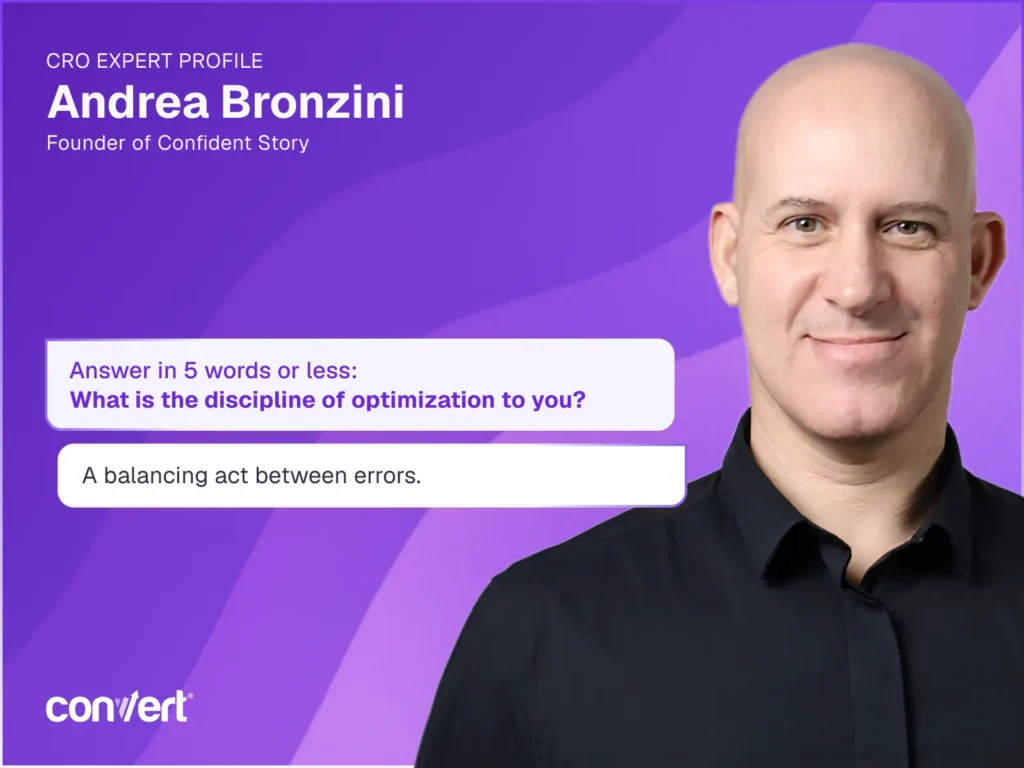
3. The Inflated Winner (The Winner’s Curse)
The third failure mode, and the one Bronzini highlights as the most misunderstood, is the "inflated winner." This happens when a test is correctly identified as a winner, but the measured lift is significantly higher than the true lift. For example, a test might show a 12% conversion boost during the experiment window, but the reality is only a 3% improvement. When the change is implemented permanently, the results "regress" to the mean. Bronzini clarifies that this is not a failure of implementation or a change in seasonality, but a mathematical certainty: strict thresholds tend to isolate only the most extreme, noise-amplified versions of the truth.
Supporting Data: The Meta-Experiment Simulation
To validate these theories, Bronzini conducted a "meta-experiment"—a simulation that replayed the same test 5,000 times under controlled conditions with a known "true lift" of 3.2%. The simulation used a standard sample size of 500 conversions over a four-week period.
The results were revealing:
- Significance Rate: Using a 95% confidence interval, only 12 out of every 100 runs were flagged as "significant." The remaining 88 were labeled inconclusive, despite the fact that a 3.2% lift was actually present in every single run.
- Lift Inflation: Among the 12 "winners," the measured lift ranged from 9% to 14%. None of the significant results accurately reflected the true 3.2% gain.
This data suggests that by adhering to overly strict significance rules, companies are systematically ignoring small but valuable improvements while over-investing in "outlier" results that will inevitably underperform post-launch.
The Role of Artificial Intelligence in Workflow Transformation
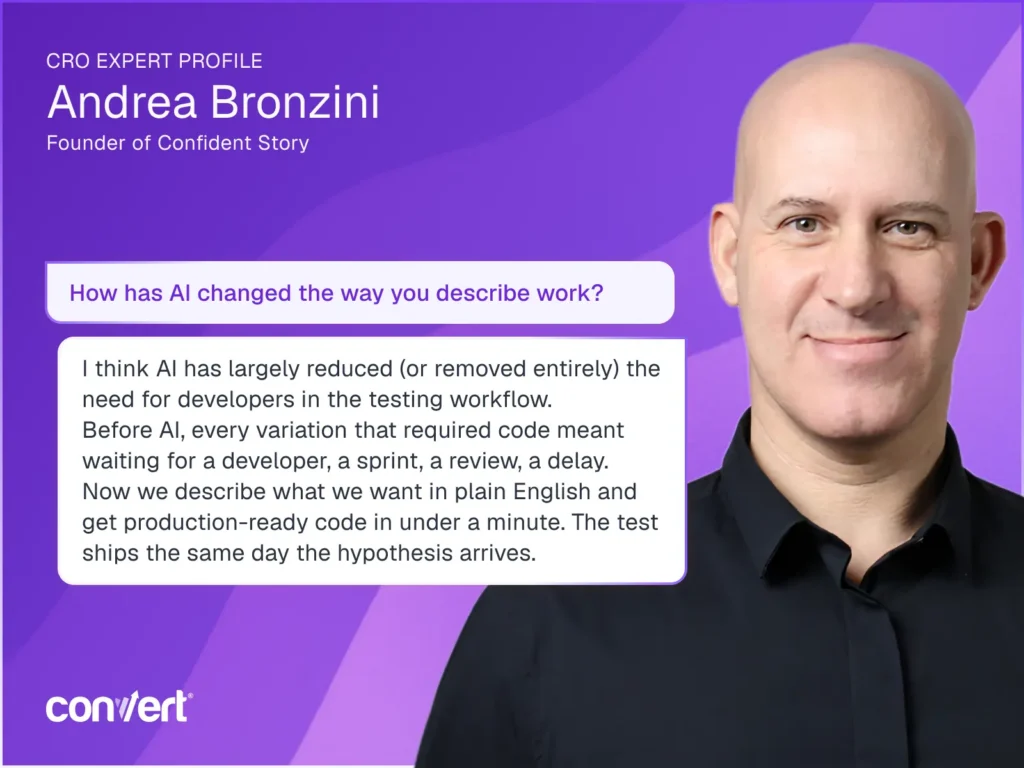
While statistical theory provides the foundation, technology provides the execution. Bronzini emphasizes that Artificial Intelligence (AI) is fundamentally altering the CRO workflow by removing implementation friction. Historically, every experimental variation required a developer, a sprint cycle, and a code review. This "dev bottleneck" often forced teams to test only safe, minor changes (like button colors) rather than bold, structural hypotheses.
With the advent of AI, practitioners can now describe a complex hypothesis in plain English and receive production-ready JavaScript code in seconds. This allows for:

- Bolder Hypotheses: Testing entire page restructures or urgency-based copy shifts that would have previously taken weeks to build.
- Same-Day Deployment: Reducing the time from "idea" to "live test" from weeks to hours.
- Insight Generation: Using AI to analyze user behavior data and prioritize hypotheses based on historical patterns.
Bronzini notes that internal workflows are already being tested where AI examines a page, generates insights, deploys the variation, and picks the winner autonomously. This automation allows human optimizers to focus on the higher-level work of understanding user psychology and asking better strategic questions.
Broader Impact and Industry Implications
The shift toward "decision-policy thinking" has profound implications for how businesses allocate resources. Bronzini argues that 95% confidence should no longer be viewed as a fixed requirement, but as a variable with associated costs. For a high-traffic enterprise, a 95% or 99% threshold may be appropriate. For a startup with limited traffic, a 80% or 85% threshold might be more rational, as it allows the company to capture more "real winners" even if it means accepting a slightly higher risk of false positives.
Practitioners are encouraged to adjust their approach by:

- Tracking "Winner Capture": Measuring not just how many tests were "correct," but how many potential improvements were missed due to strict thresholds.
- Tuning Policy Choices: Adjusting minimum runtimes and monitoring cadences based on specific business goals rather than industry defaults.
- Embracing the Balancing Act: Accepting that every experiment is a trade-off between different types of errors.
Conclusion: The Future of the Optimizer
As AI takes over the repetitive tasks of coding and data crunching, the role of the CRO professional is evolving. The most successful optimizers of the future will not be those who simply "run tests," but those who act as strategic architects of decision-making systems. By understanding the interplay between signal and noise and utilizing AI to accelerate execution, these professionals can move beyond the "inconclusive" pile and drive meaningful, sustainable growth.
Andrea Bronzini’s insights serve as a wake-up call for an industry that has long hidden behind the shield of "statistical significance." The message is clear: data is a tool for making decisions, not a substitute for judgment. In the world of experimentation, the teams that win are not the ones who avoid all errors, but the ones who understand how to balance them most effectively.







