

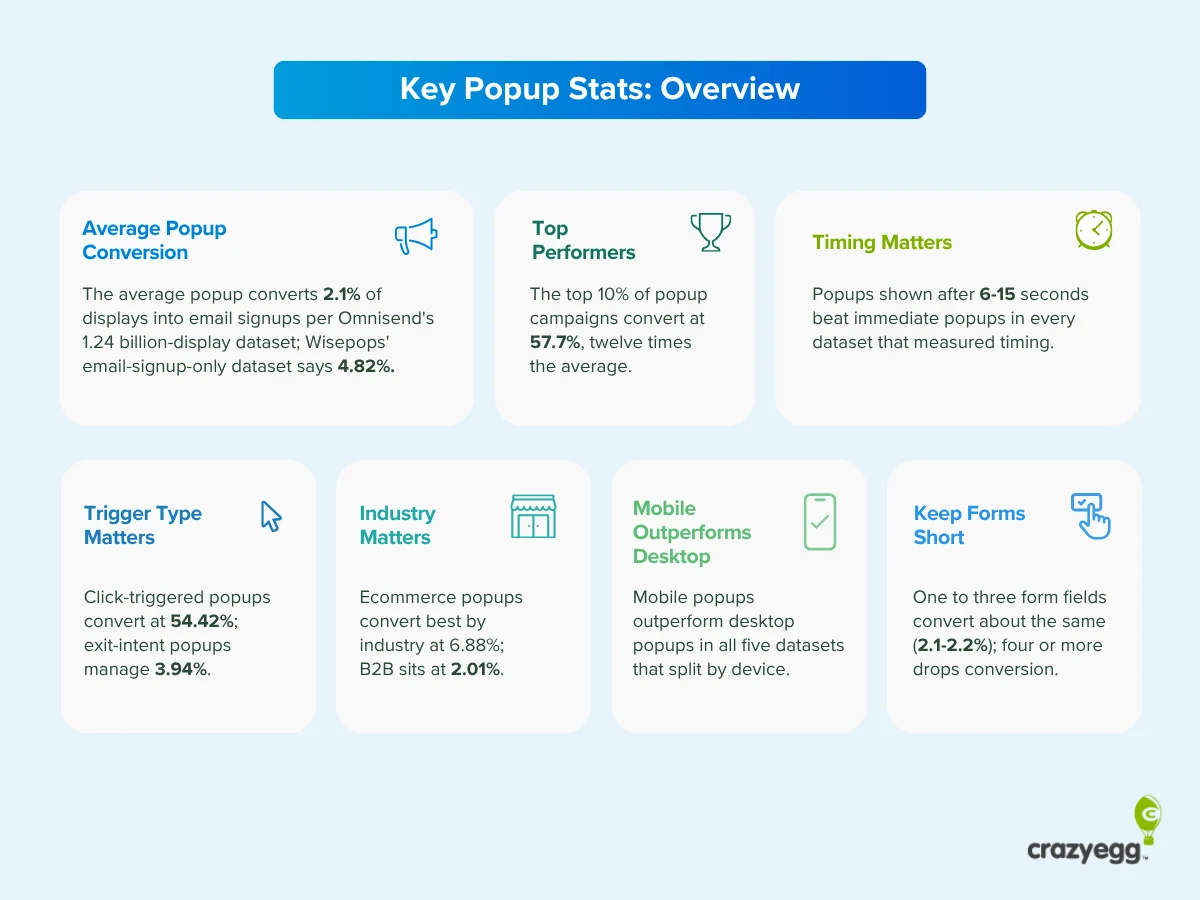
The digital marketing landscape has long been divided over the utility of website popups, a tool frequently maligned by users yet consistently utilized by brands for its measurable impact on lead generation. While the internet is saturated with recycled statistics regarding popup effectiveness, a rigorous cross-examination of primary data sources reveals a complex reality where conversion rates are dictated more by timing, relevance, and device optimization than by the mere presence of an overlay. As of 2024 and looking toward 2025, the average email popup conversion rate fluctuates between 0.25% and 5%, a figure that shifts dramatically depending on whether a "conversion" is measured against total site sessions or specifically against visitors who engaged with the element.
The efficacy of these tools is no longer a matter of debate, but their implementation has entered a new era of sophistication. Data indicates that while the "average" performance may seem modest, top-tier campaigns—those utilizing behavioral triggers and gamification—regularly see double-digit conversion rates. However, this success comes at a cost; the industry is currently navigating a tension between aggressive data collection and a heightened focus on user experience (UX), driven largely by updated search engine guidelines and shifting consumer sentiment toward intrusive digital advertising.
The Evolution of the Popup: A Chronology of Digital Interruption
The history of the website popup is a narrative of technical escalation and subsequent regulation. In the late 1990s and early 2000s, popups were largely unmanaged, often appearing as separate browser windows that bypassed user intent entirely. This era led to the development of native popup blockers in browsers like Firefox and Safari, forcing marketers to pivot toward "modals" or "interstitials"—elements that live within the same window but sit atop the primary content.
By 2010, the "exit-intent" technology emerged, allowing scripts to track mouse movements and trigger a message just as a user prepared to leave the page. This was hailed as a revolutionary way to capture lost leads without interrupting the active browsing experience. Between 2015 and 2020, the rise of mobile browsing necessitated another shift. Marketers found that desktop-centric popups were unreadable or impossible to close on smartphones, leading to a surge in "sticky bars" and "slide-ins."
In 2021, the Nielsen Norman Group published landmark research highlighting "overlay overload," warning that the compounding effect of cookie banners, newsletter signups, and chat bots was significantly degrading brand trust. Most recently, Google’s 2025 update to its Search Central guidelines has institutionalized these concerns, explicitly penalizing sites that use intrusive interstitials which obstruct a user’s view of the content upon landing, particularly on mobile devices.
Benchmarking Performance: Industry Standards and Discrepancies
To understand what constitutes a "good" conversion rate, one must first reconcile the discrepancies in how data is reported. Many marketing platforms report an average conversion rate of 3.09%, but this often represents their most successful cohorts. When looking at broader datasets, the median often hovers closer to 1.5% to 2%.
Industry-specific data reveals that the e-commerce sector remains the dominant beneficiary of popup technology. E-commerce popups convert at more than three times the rate of B2B or SaaS (Software as a Service) popups. This is largely attributed to the transactional nature of the visit; a 10% discount code offered via a popup provides immediate, tangible value to a shopper, whereas a whitepaper or newsletter signup in a B2B context requires a higher level of cognitive commitment from the visitor.
Within the e-commerce sphere, "cart abandonment" popups are the highest performers. By targeting users who have already expressed high intent by adding items to a basket, these popups act as a final nudge. Recent studies of Shopify-based stores indicate that the median recovered order value through such popups is approximately $98, demonstrating that even a low conversion rate in this specific segment can result in significant revenue recovery.
The Mechanics of Timing and Behavioral Triggers
The "when" of a popup is often more critical than the "what." Statistical analysis shows that popups appearing immediately upon page load are the most likely to be dismissed and have the highest correlation with increased bounce rates. Conversely, popups delayed by a window of 6 to 10 seconds consistently outperform those that fire instantly. This delay allows the user to gain a sense of the site’s value before being asked for a commitment.
Trigger types further differentiate the successful from the ignored:
- Click-Triggered Popups: These are the gold standard of performance, converting more than 13 times better than exit-intent popups. Because the user initiates the popup by clicking a link or button, the "interruption" is actually a requested interaction.
- Scroll-Triggered Popups: These appear after a user has consumed a certain percentage of the page (usually 50-70%). These are highly effective for blog posts and long-form content, as they target engaged readers.
- Exit-Intent: While less effective than click-triggers, they remain a staple for lead recovery. However, their utility is largely limited to desktop browsing, as tracking "exit intent" on mobile is technically fraught.
Design Variables and the Gamification Trend
The visual and functional design of a popup serves as the primary driver of engagement. Data from 2023-2024 suggests that multi-step popups—those that ask a simple question before requesting an email address—convert significantly better than single-step forms. This is rooted in the "Zeigarnik Effect," a psychological phenomenon where people feel a need to finish a process they have already started.
Furthermore, gamification has emerged as a high-growth sub-sector of popup design. "Spin-to-win" wheels and mystery discount buttons report conversion rates that are 2 to 10 times higher than standard static popups. These elements transform a data-collection hurdle into a brief moment of entertainment, though critics argue they can sometimes attract "low-quality" leads who are only interested in the discount and not the brand.
Images and countdown timers remain controversial in the data. While some datasets suggest that adding an image can boost conversions by up to 80%, others show negligible differences. The consensus among analysts is that images must be contextually relevant—such as a picture of the specific product being discounted—to be effective. Countdown timers, while effective at creating urgency, risk inducing "buyer’s anxiety" if used too aggressively.
The Mobile Paradox and SEO Implications
One of the most striking findings in recent popup analytics is the dominance of mobile performance. Across almost every dataset that splits by device, mobile popups outperform desktop versions. This is likely due to the focused nature of mobile browsing; a popup on a smartphone takes up a larger percentage of the visual field, demanding a binary choice: engage or close.
However, this high performance is shadowed by Google’s increasingly stringent stance on mobile usability. Google’s 2025 guidelines emphasize that intrusive interstitials can hurt search performance. To mitigate this risk, sophisticated marketers are moving away from full-screen takeovers on mobile, opting instead for:
- Engagement-Triggered Bars: Small banners at the top or bottom of the screen.
- Delayed Modals: Ensuring the user has interacted with the page before the popup appears.
- Legal Necessity Exemptions: Google typically does not penalize popups for age verification or cookie consent, provided they are designed within reasonable size parameters.
The Downstream Value: Beyond the Opt-In
A critical analysis of popup statistics must look beyond the initial conversion rate to the long-term business impact. An email address captured via a popup is only as valuable as the subsequent engagement it generates.
Industry benchmarks from platforms like Klaviyo suggest that the "placed-order rate" for one-off email campaigns sits at approximately 0.16%. When this is mapped against a standard popup conversion rate of 4.82%, the math reveals a sobering reality: a brand may need nearly 13,000 popup views to generate a single sale from that specific cohort. Similarly, to produce one engaged reader for a newsletter (defined by a click-through), more than 1,200 popup views are required.
This data underscores the importance of traffic volume and lead quality. High conversion rates on a popup are a vanity metric if the resulting subscribers immediately unsubscribe or never open an email. Consequently, the industry is seeing a shift toward "zero-party data" collection—using popups to ask users about their preferences (e.g., "Are you shopping for Men’s or Women’s clothing?") to ensure subsequent marketing is highly personalized.
Professional Analysis: The Future of On-Site Engagement
The trajectory of popup technology is moving toward hyper-personalization and "invisible" triggers. As artificial intelligence becomes more integrated into marketing stacks, we can expect popups that adjust their messaging in real-time based on the user’s predicted lifetime value or their specific referral source.
However, the "UX debt" created by decades of intrusive popups remains. Statements from usability experts at the Baymard Institute suggest that many users have developed "popup blindness," reflexively closing any overlay without reading the text. This "spam" perception is the greatest hurdle for the medium. The brands that will succeed in the coming years are those that treat the popup not as a trap to catch an email address, but as a contextual tool to enhance the user’s journey.
Optimization must therefore follow a rigorous scientific method:
- Baseline Measurement: Establishing a clear conversion rate segmented by device and trigger.
- Qualitative Diagnosis: Using heatmaps and session recordings to identify "friction points," such as "rage clicks" near the close button.
- Iterative A/B Testing: Testing one variable at a time—whether it be the headline, the incentive, or the delay—to find the optimal balance between conversion and user frustration.
In conclusion, while the average popup conversion rate of 0.25% to 5% provides a useful benchmark, it is the outliers—the campaigns that respect user intent and provide genuine value—that define the potential of the medium. As search engines and users become more discerning, the "one-size-fits-all" popup is effectively dead, replaced by a more nuanced, data-driven approach to on-site engagement.







