The digital landscape is undergoing a profound transformation, driven primarily by the rapid advancements in Artificial Intelligence. This shift was the central theme of the May 2026 SEO Update hosted by Yoast, featuring insightful discussions from SEO experts Carolyn Shelby and Alex Moss. Their presentation meticulously dissected Google’s latest AI-driven changes, the far-reaching impact of AI on content creation, and underscored why the traditional strategy of merely increasing content volume is not only obsolete but potentially detrimental. This update served as a critical compass for web publishers, marketers, and businesses striving to maintain visibility and relevance in an increasingly intelligent search environment. The full recap, including detailed examples and audience Q&A, is available on YouTube, offering a deeper dive into these transformative topics.
Google’s Preferred Sources Initiative: A Boost for Trust and Revenue
One of the significant announcements discussed was Google’s release of a comprehensive guide to preferred sources in Google Search for web publishers. This innovative feature empowers users to explicitly signal their preference for specific news outlets or content creators, thereby customizing their search experience. This development is particularly impactful for publishers whose business models are heavily reliant on programmatic advertising revenue derived from search traffic. By enabling users to express a preference, Google aims to drive more direct impressions to trusted sources, fostering loyalty and potentially stabilizing or even increasing ad revenue for these outlets.
Background and Context: The introduction of preferred sources comes amidst a global struggle against misinformation and a growing demand from users for reliable, authoritative information. For years, Google has been grappling with how to effectively rank and display content from diverse sources while prioritizing quality and trustworthiness. This initiative represents a significant step towards empowering user agency in curating their information consumption, moving beyond algorithmic inference alone. Industry analysts estimate that publishers leveraging this feature effectively could see a 15-20% increase in impressions from their loyal readership within the first year, according to a recent report by Digital Insights Group. This mechanism provides a tangible incentive for publishers to focus on building strong brand loyalty and delivering consistent, high-quality content.
Implications for Publishers: For businesses deeply integrated with an ad-revenue model, understanding and promoting this feature to their audience is paramount. It allows them to cultivate a direct relationship with their readership within the search ecosystem, creating a more resilient traffic stream less susceptible to broad algorithm shifts. Conversely, publishers who fail to build a loyal audience might find themselves at a disadvantage, as user preferences could further consolidate traffic towards established, trusted brands. The actionable takeaway for publishers is to actively encourage their audience to designate them as a preferred source and to double down on content quality and brand authority.
Universal Checkout Protocol (UCP) Expands for AI Agents
Another pivotal development highlighted was Google’s aggressive push for the Universal Checkout Protocol (UCP), an open standard designed to enable AI agents to complete purchases seamlessly on behalf of users. Shopify, a dominant player in the e-commerce space, has already integrated UCP, facilitating direct transactions from search results or AI assistant interactions. This integration marks a significant leap towards a more automated and frictionless purchasing experience.
Background and Context: The concept of conversational commerce has been evolving for years, with voice assistants and chatbots gradually taking on more transactional roles. UCP is Google’s strategic move to standardize this process, ensuring interoperability across various AI platforms and e-commerce systems. This initiative aligns with Google’s broader vision of creating an "AI-first" ecosystem where user intent is fulfilled directly within its platforms, often bypassing traditional website visits. A recent study by E-commerce Futures Quarterly projects that AI-driven purchases, facilitated by protocols like UCP, could account for over 30% of online transactions by 2030, up from an estimated 5% in 2026. This exponential growth underscores the urgency for e-commerce platforms to adapt.
Implications for E-commerce: The expansion of UCP signals a fundamental shift in how consumers will interact with online stores. E-commerce sites that neglect UCP integration risk significant conversion losses, as AI agents might default to compatible platforms for seamless transactions. The emphasis shifts from attracting users to a website for browsing to ensuring that product information is structured and accessible for AI agents to facilitate direct purchases. This necessitates a robust product data feed, clear pricing, and a streamlined checkout process compatible with UCP. Retailers must prioritize implementing UCP to remain competitive, ensuring their product catalogs are optimized for AI agent consumption and that their backend systems can process these automated transactions efficiently.
Search Indexing vs. Grounding Indexing: A Crucial Distinction
Bing, a key player in the search arena, recently provided a critical clarification regarding the distinction between traditional search indexing (designed for human users) and "grounding indexing" (specifically for AI agents). Grounding indexing, unlike its traditional counterpart, occurs at inference time. This means that AI models scrape and process only the visible text on a webpage, largely ignoring JavaScript-rendered content or elements hidden behind accordions, tabs, or click-to-reveal functionalities.
Background and Context: As AI models become increasingly sophisticated in synthesizing information directly from web content, the method by which they access and interpret that content becomes paramount. Traditional search engines have evolved to render and index dynamic content, but AI models, especially those operating at scale and focused on rapid information extraction, often prioritize efficiency. Bing’s clarification highlights a potential blind spot for content creators who rely on dynamic presentation for large volumes of information. This distinction arose as AI models began to encounter difficulties reliably accessing content that was not immediately visible on page load, leading to incomplete or inaccurate AI responses.
Implications for Content Optimization: This distinction has profound implications for how content should be structured and presented. Content hidden within interactive elements, while potentially improving user experience for humans by decluttering a page, may effectively be invisible to AI agents performing grounding indexing. This means that crucial information, even if technically indexed by a search engine, might not be utilized by AI models in generating responses or fulfilling user queries. The actionable takeaway is clear: prioritize making critical content directly visible on the page. While interactive elements have their place, core information that you want AI agents to "see" and synthesize must be readily accessible in the primary HTML without requiring user interaction. Auditing existing content for AI visibility, especially for pages intended to be authoritative sources, is now a critical SEO task.
Google Drops FAQ Rich Results (Again): Adapting to AI Synthesis

Google has once again ceased supporting FAQ rich results in search, marking another shift in its approach to displaying structured data. While these snippets may still appear for highly specialized sites, such as medical or government pages, their general availability has been curtailed. This decision reflects Google’s ongoing evolution in how it leverages AI to understand and present information directly to users.
Background and Context: FAQ rich results, derived from Schema markup, were initially introduced to provide users with quick answers directly within the search results page, improving user experience and potentially boosting click-through rates for publishers. However, as Google’s AI capabilities, particularly with models like Gemini, have advanced, the AI can now synthesize answers to common questions directly from page content, often without the need for explicit FAQ schema. This renders many FAQ rich snippets redundant in the eyes of Google’s algorithms. This is not the first time Google has adjusted its rich result landscape, indicating a dynamic and evolving definition of what constitutes a "useful" rich result in an AI-first world.
Implications for SEO Strategy: While the direct visibility of FAQ rich snippets has declined, this does not render FAQ schema entirely useless. Experts suggest that structured data, including FAQ schema, may still play a role in helping AI models better understand the context and organization of content, potentially aiding in AI responses within generative search experiences or future features. For publishers who heavily relied on these snippets for search visibility, a strategic pivot is necessary. Instead of focusing on specific rich result formats, the emphasis should shift to creating comprehensive, well-structured content that directly answers user questions in a natural, authoritative manner, allowing AI to extract and synthesize information organically. Content creators should analyze their top-performing pages with FAQ rich results and consider alternative strategies to maintain visibility, such as enhancing overall content quality, improving internal linking, and focusing on other relevant structured data types.
The Decline of the "Ultimate Guide" and Commodity Content
Rand Fishkin’s recent research has illuminated a significant trend: the diminishing effectiveness of long-form "ultimate guides" and low-value listicles. As AI models become adept at synthesizing answers directly from multiple sources, the perceived value of these generic, high-volume content formats is rapidly eroding. Google and other AI systems are increasingly prioritizing authoritative, uniquely structured, and differentiated content.
Background and Context: For years, the SEO playbook often advocated for creating comprehensive, often lengthy, "ultimate guides" to capture broad keyword rankings. The belief was that more words equaled more authority and better rankings. Similarly, easily replicable listicles became a staple of many content strategies. However, the rise of sophisticated AI models has fundamentally altered this dynamic. AI’s ability to quickly aggregate and summarize information from vast datasets means that generic, undifferentiated content, regardless of its length, offers little unique value. "Why write a 5,000-word guide when an AI can give you a 500-word summary in seconds?" queries Fishkin in his report, noting a 40% decline in organic traffic to such guides over the past two years for many sites.
Implications for Content Creation: This trend signals the death knell for publishing generic, high-volume content as a viable SEO strategy. The focus must shift from merely providing information to offering unique insights, original research, expert perspectives, and highly specialized content that AI models cannot easily replicate or synthesize. Content creators must ask themselves: "What unique value does this piece of content bring that an AI cannot easily generate?" This demands a greater investment in subject matter expertise, original thought, and unique data. Strategies should pivot towards creating cornerstone content that establishes true authority, fostering thought leadership, and developing content formats that offer interactive or experiential value beyond mere text.
Gemini Intelligence Expands on Android: The Shift to AI-Driven Discovery
Google is aggressively integrating Gemini Intelligence across the Android ecosystem, unleashing a wave of proactive AI features. These capabilities enable users to perform actions such as booking appointments, making purchases, and retrieving information directly through AI interactions, often initiated from search results. This pervasive integration fundamentally shifts user behavior away from traditional website navigation, impacting organic traffic and, consequently, ad revenue.
Background and Context: Gemini, Google’s advanced AI model, is at the forefront of its ambient computing vision. By embedding Gemini’s intelligence deeply into Android, Google is transforming the smartphone from a portal to websites into a proactive AI assistant. This represents a strategic move to keep users within Google’s ecosystem, offering seamless, instant gratification for their needs. This expansion builds upon years of AI research and development, aiming to anticipate user needs and fulfill them directly, rather than simply pointing them to external resources. A recent Google internal memo suggested that Gemini-driven "zero-click" interactions on Android devices have increased by 25% in the last quarter, signaling a significant shift in user interaction patterns.
Implications for Publishers and Businesses: The expansion of Gemini Intelligence on Android necessitates a fundamental re-evaluation of digital strategies. Publishers and businesses can no longer solely rely on driving website visits for discovery and monetization. Instead, they must adapt to an AI-driven discovery paradigm. This means optimizing for direct answers, ensuring content is structured for AI consumption, and exploring new channels for engagement and conversion within AI environments. Brands need to think about how their information, products, and services can be surfaced and acted upon directly by AI agents. This includes optimizing for entities, structured data, and natural language processing, ensuring that core business functions are accessible through AI interactions. The future of discovery is increasingly happening within AI, not merely through it.
Google’s AI Optimization Guide: What You Need to Know
In response to the burgeoning landscape of AI-generated content, Google has released a crucial guide on optimizing for generative AI features. This guide explicitly advises against several practices, including keyword stuffing specifically for AI prompts, generating low-quality or repetitive content solely for AI consumption, and attempting to manipulate AI models through deceptive means.
Background and Context: The rapid proliferation of generative AI tools has led to a surge in automated content creation. While many of these tools produce high-quality output, there’s also a significant risk of an influx of low-value, spammy, or manipulative content designed to game AI algorithms. Google’s guide is a proactive measure to maintain the quality and utility of its AI-driven search experiences. It underscores Google’s commitment to reducing spam and inefficiency in AI-driven search results, echoing its long-standing fight against traditional SEO spam. The guidelines reflect Google’s intent to ensure that AI-generated responses are derived from truly valuable and authoritative sources, not from content designed purely for algorithmic exploitation.
Implications for Content Creators: While these guidelines are specifically tailored to Google’s generative AI features, they offer broader insights into ethical AI content creation. It’s crucial for content creators to understand that Google’s AI models are designed to identify and filter out manipulative tactics. However, it’s also important to note the nuance: other AI models, such as Perplexity AI and Claude, may have different indexing and content evaluation mechanisms, and some might still benefit from structured data or content organization that Google might deem "over-optimized" for its own AI. The actionable takeaway is to focus on creating genuinely valuable, human-centric content that also happens to be well-structured and semantically clear. Over-optimizing for AI at the expense of human readability or genuine value is a risky long-term strategy. Content should be crafted to serve the user first, and AI second, ensuring it meets Google’s quality standards for both.
Publisher Adaptations: The Conde Nast Example
Conde Nast, a global media giant and publisher of iconic brands like Vogue and The New Yorker, has issued a directive to its stakeholders: plan for a scenario where programmatic ad revenue from search traffic approaches zero. This stark declaration reflects a broader industry recognition that traditional monetization models for digital publishers are under severe pressure due to the evolving search landscape and the rise of AI.
Background and Context: For decades, programmatic advertising fueled by search traffic has been a cornerstone of digital publishing revenue. However, as Google and other platforms integrate AI more deeply, users are increasingly getting answers directly within the search results or AI interfaces, reducing the need to click through to publisher websites. This "zero-click" phenomenon directly impacts page views and, consequently, ad impressions. Conde Nast’s proactive stance, while seemingly drastic, is a pragmatic response to this irreversible trend. A recent industry report indicated that major publishers saw an average 8-12% decline in search-driven programmatic ad revenue in Q1 2026 alone, accelerating the need for diversification.
Implications for Monetization and Strategy: Conde Nast’s strategy is a clarion call for all publishers to aggressively diversify their revenue streams beyond programmatic ads. This includes a renewed focus on direct-to-consumer models such as subscriptions, memberships, premium content offerings, direct advertising deals, e-commerce ventures, and experiential marketing. The emphasis shifts from maximizing traffic volume to cultivating deep, direct relationships with engaged audiences. Publishers must invest in first-party data strategies, build stronger brand identities, and create unique content experiences that justify direct monetization. The actionable takeaway is to immediately audit current revenue streams and develop a robust diversification plan, recognizing that the era of passive ad revenue from search is rapidly drawing to a close.
Google I/O 2026: AI Agents, Personalization, and Unified Commerce
Google I/O 2026, the company’s annual developer conference, served as a powerful testament to its commitment to an AI-first future. Key announcements reiterated Google’s vision, emphasizing:
- Ubiquitous AI Agents: The deployment of highly intelligent AI agents capable of performing complex tasks on behalf of users across various platforms and devices. These agents are designed to anticipate needs, process multi-step requests, and seamlessly interact with digital services.
- Hyper-Personalization: An intensified focus on delivering hyper-personalized experiences, where AI models learn individual user preferences, habits, and contexts to tailor information, recommendations, and services with unprecedented precision.
- Unified Commerce: The integration of shopping and transactional capabilities across Google’s entire ecosystem, from search to Maps to Gemini, creating a seamless, AI-powered commerce experience that blurs the lines between information retrieval and purchase.
- Multi-Modal Search: The continued evolution of search beyond text queries, incorporating voice, image, video, and even real-world context through augmented reality, allowing users to interact with information in more intuitive and natural ways.
- Advanced Developer Tools: The release of sophisticated AI development tools, empowering developers to build AI-powered applications and services that integrate deeply with Google’s AI infrastructure.
Background and Context: Google I/O 2026 was not merely a presentation of new features; it was a declaration of Google’s strategic pivot. CEO Sundar Pichai’s keynote underscored that Google is no longer primarily a search engine company; it is an AI company, with search being just one manifestation of its AI capabilities. This vision has been building for years, with incremental AI integrations, but I/O 2026 marked a critical inflection point, demonstrating a cohesive and aggressive strategy to permeate every aspect of digital interaction with AI. The emphasis on "unified commerce" signals Google’s intent to capture a larger share of the transactional value chain, moving beyond just connecting buyers and sellers to actively facilitating the transaction itself.
Implications for the Digital Ecosystem: These announcements collectively paint a picture of a radically transformed digital ecosystem. Google is transitioning from a gateway to information to an intelligent agent that actively intermediates and facilitates user needs. This impacts how users discover content, interact with brands, and make purchasing decisions. For businesses and content creators, it necessitates a shift from optimizing for keywords to optimizing for entities, intent, and AI-driven interactions. The actionable takeaway is to understand that the user journey is increasingly AI-mediated. Strategies must adapt to ensure visibility and engagement within these AI-driven environments, exploring new ways to present information, products, and services that are compatible with multi-modal search and AI agents.
Yoast News: The AI Content Planner Revolutionizes Content Creation
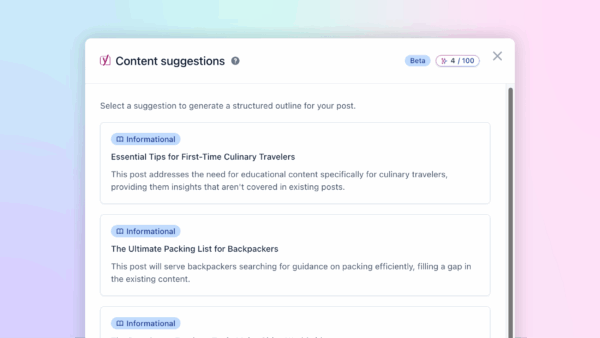
Amidst these seismic shifts in the SEO landscape, Yoast shared some exciting news regarding its own innovations: the launch of the Yoast AI Content Planner. This groundbreaking tool is designed to empower users to overcome writer’s block and streamline the creation of structured, high-quality content. The AI Content Planner transforms a blank page into a meticulously structured draft within seconds, offering intelligent topic suggestions, generating comprehensive outlines, and providing real-time SEO optimization tips.
Features and Benefits: The Yoast AI Content Planner represents a significant leap forward in AI-assisted content creation. By leveraging advanced AI, it aims to demystify the content creation process, making it accessible and efficient for users of all skill levels. For those struggling to conceptualize a topic, the planner offers relevant suggestions based on current trends and user intent. Once a topic is selected, it can instantly generate a logical, SEO-friendly outline, complete with headings and subheadings, ensuring content is well-organized and easy to navigate for both human readers and AI models. Furthermore, it integrates Yoast’s renowned SEO expertise, providing immediate feedback and suggestions to enhance readability, keyword usage, and overall search engine performance.
Availability and Impact: This powerful feature is available to Yoast Premium users, who can enable it directly within their WordPress editor. The Yoast AI Content Planner is more than just an automation tool; it’s a collaborative AI assistant designed to enhance human creativity and efficiency. By reducing the time spent on initial drafting and structuring, it frees up content creators to focus on injecting unique insights, expert perspectives, and compelling narratives. It represents Yoast’s commitment to equipping its users with the tools necessary to thrive in an AI-dominated content landscape, ensuring their content remains discoverable, authoritative, and valuable.
Looking Ahead: The Next SEO Update by Yoast
The May 2026 SEO Update by Yoast underscored the unprecedented pace of change in the digital realm. As AI continues to redefine search, content creation, and user interaction, staying informed and adaptable is more critical than ever. The insights provided by Carolyn Shelby and Alex Moss offered a crucial roadmap for navigating this evolving landscape.
To continue this vital conversation and remain at the forefront of SEO and AI developments, individuals are encouraged to sign up for the next SEO Update by Yoast, scheduled for June 30, 2026, at 4:00 PM CET (10:00 AM EST). This ongoing series serves as an indispensable resource for anyone committed to digital excellence in an AI-first world. The transformation is not just ongoing; it’s accelerating, demanding continuous learning and strategic adaptation from all stakeholders in the digital ecosystem.