Google has commenced the rollout of AI-generated images within its AI Overviews feature in Search, a development first announced approximately a month ago. This integration, designed to enrich the user experience by visually accompanying AI-summarized search results, has immediately ignited a strong negative reaction from content creators, who view it as a direct threat to their livelihoods and the integrity of their original work. Observations this week confirm the initial deployment of these AI visuals, particularly in recipe-related search queries, prompting a renewed debate on the evolving relationship between search engines and the creators whose content fuels them.
The Genesis of AI Overviews and Google’s Vision
The introduction of AI Overviews represents a significant shift in how Google presents search results. Launched as a core component of its Search Generative Experience (SGE), AI Overviews aim to provide users with direct, summarized answers to complex queries, often incorporating information from multiple web sources. Google’s stated intention behind this innovation is to offer more comprehensive and contextually rich information without requiring users to navigate through numerous links.
The idea of integrating AI-generated images into this framework was publicly articulated by Google about a month prior to the observed rollout. In a blog post celebrating the 25th anniversary of Google Images, the company announced its plans, stating, "To help bring those unique ideas to life, we’re bringing image generation directly into AI Overviews in Search." This statement underscored Google’s ambition to leverage generative AI not just for textual summaries but also for visual aids, thereby creating a more immersive and informative search experience. The vision presented was one of enhanced utility and creative expression, where AI could synthesize visual content to illustrate complex concepts or procedures.
This move aligns with Google’s broader strategic pivot towards integrating generative AI across its product ecosystem. From enhancing productivity tools to refining search capabilities, the tech giant has been aggressively investing in and deploying AI technologies. The expansion of AI Overviews to include visual elements is a natural progression of this strategy, aiming to solidify Google’s position at the forefront of AI innovation in the competitive landscape of digital information retrieval.
Observed Rollout and Immediate Creator Discontent
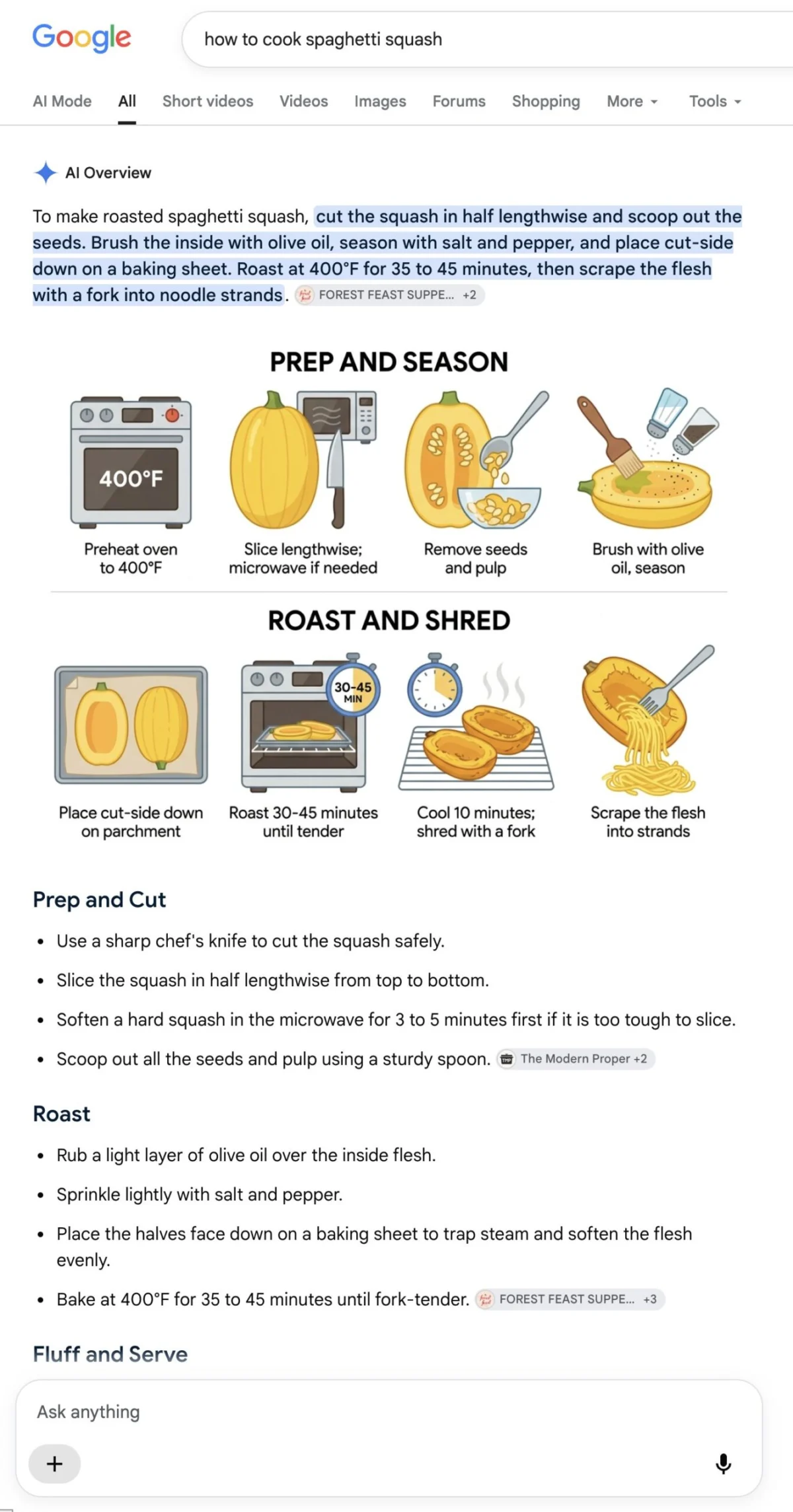
The practical manifestation of this policy began to surface this week, with various users reporting the appearance of AI-generated images in their AI Overviews. Among the first and most vocal critics was the popular food blog, Inspired Taste. The creators behind Inspired Taste took to X (formerly Twitter) to share their discovery, presenting screenshots of Google’s AI Overview for a "spaghetti squash recipe" query. The AI Overview included cartoon-style, AI-generated step-by-step illustrations for preparing the dish.

The reaction from Inspired Taste was unequivocally negative. They articulated profound concerns, stating that these AI Overviews, complete with their generated visuals, are "directly trying to replace creators who buy groceries for testing, photography, and filming recipe videos." The core of their argument revolves around the immense effort, financial investment, and specialized skills required to produce high-quality, original content—an effort they feel is undermined and devalued by Google’s AI aggregation and generation.
Specifically, Inspired Taste highlighted the meticulous detail and safety considerations embedded in their original content. They noted having an entire section and video dedicated to safely cutting spaghetti squash, a potentially dangerous step, along with tips for flavor enhancement and faster cooking methods. They argued that the AI-generated cartoons, while visually appealing in their simplicity, fundamentally "oversimplify everything" and fail to convey the nuanced, practical advice and safety warnings that human-created content provides. This oversimplification, they contend, not only diminishes the value of their expertise but also poses a potential risk to users who might rely on inadequate instructions.
Furthermore, Inspired Taste raised a critical point about attribution and potential confusion. They expressed concern that "a searcher might think that one of the websites cited in the AIO did the illustrations." This ambiguity around the origin of the AI-generated visuals could mislead users, blurring the lines between human-created, expert content and machine-generated summaries, thereby eroding trust in both the cited sources and the AI Overview itself. The implicit suggestion is that Google is leveraging the authority of human-created content to train its AI and populate its overviews, while simultaneously undermining the economic viability of those very creators.
The Economic and Ethical Implications for the Creator Economy
The outcry from Inspired Taste resonates deeply within the broader creator economy, a multi-billion dollar industry comprising millions of individuals who produce original content ranging from recipes and travel guides to educational tutorials and artistic works. This economy relies heavily on search engine traffic to drive viewership, ad revenue, affiliate sales, and direct consumer engagement.
The integration of AI-generated content directly into search results poses several critical threats to this ecosystem:
- Traffic Diversion and Revenue Loss: By providing comprehensive answers, including visual aids, directly within the search results page, AI Overviews reduce the incentive for users to click through to original websites. For creators, fewer clicks translate directly into reduced ad impressions, lower affiliate sales commissions, and diminished engagement with their full content offerings. This directly impacts their ability to monetize their work and sustain their operations. The long-term implication could be a significant contraction of the independent creator economy, as the financial incentives to produce high-quality, in-depth content diminish.
- Devaluation of Expertise and Originality: Creators invest considerable time, skill, and resources into developing unique recipes, conducting thorough research, capturing high-quality photography, and producing engaging videos. The emergence of AI-generated content that attempts to replicate or summarize this effort, often without proper attribution or deep understanding, can devalue the concept of original expertise. It suggests that complex human endeavors can be reduced to simplistic, machine-generated outputs, potentially fostering a culture where efficiency trumps authenticity and depth.
- Ethical Concerns Regarding Attribution and Intellectual Property: The ambiguity surrounding the origin of AI-generated images raises significant ethical questions. While Google’s AI Overviews typically cite sources for the textual content, the visual elements appear to be generated by Google’s AI. This lack of clear distinction or explicit attribution for the AI-generated visuals, particularly when presented alongside snippets from human creators, creates a confusing landscape regarding intellectual property and fair use. Creators are concerned that their work is being implicitly used to train and inform AI models, which then generate competing content, without adequate compensation or acknowledgment.
- Quality Control and Potential for Misinformation: As highlighted by the spaghetti squash example, AI-generated content, especially visual instructions, may lack the nuance, safety considerations, and real-world testing inherent in human-created content. While AI is rapidly advancing, it still struggles with common sense reasoning and practical safety implications. Oversimplified instructions for tasks that carry inherent risks (like cutting produce or handling tools) could potentially lead to user injury or suboptimal outcomes. This raises concerns about Google’s responsibility in curating accurate and safe information, particularly when it is presented as a definitive "overview."
Historical Context: Google and Content Publishers
The tension between Google and content creators is not new. Over the past two decades, Google’s evolution from a simple search engine to a multifaceted information platform has consistently involved navigating its relationship with publishers. Historically, Google served as a primary traffic driver, directing users to websites through its organic search results. This symbiotic relationship allowed publishers to thrive, monetizing their content through advertising and subscriptions, while Google benefited from having a vast index of high-quality content to serve its users.

However, over time, Google began to incorporate more "answer box" features, "knowledge panels," and "featured snippets" directly into its search results. While these features aimed to provide quicker answers, they also started to reduce the need for users to click through to original sources. The introduction of AI Overviews, with its generative capabilities and now AI-generated visuals, represents the most significant step yet in this direction, moving Google from a traffic facilitator to, in some respects, a direct content provider. This shift is seen by many creators as an existential threat, disrupting the established economic model that has underpinned the digital content landscape for years.
Google’s Response and Future Outlook
While Google has yet to issue a direct response to the specific backlash regarding AI-generated images in AI Overviews, its general stance on AI in search has been consistent: to enhance user experience, provide information more efficiently, and leverage cutting-edge technology to solve complex user queries. Google likely views these AI-generated images as an improvement, offering visual context that can make AI Overviews even more helpful and engaging. The company’s focus remains on innovating search to meet evolving user expectations in an AI-first world.
However, the growing discontent among content creators signals a critical juncture. The sustainability of the digital information ecosystem relies on a vibrant and financially viable creator community. If creators perceive that their efforts are being exploited or devalued by the very platforms designed to connect them with audiences, the quality and volume of original content could diminish over time. This would ultimately harm not only creators but also search engines, which depend on this rich content for their relevance.
The future of search and the creator economy will likely involve ongoing negotiations and adaptations. Creators may need to rethink their monetization strategies, focusing more on direct audience engagement, premium content, or diversifying their platforms. Google, in turn, may face increasing pressure to address concerns around attribution, compensation, and the ethical implications of its AI deployments. Solutions could include more transparent attribution for AI-generated elements, new revenue-sharing models, or mechanisms to directly compensate creators whose content significantly contributes to AI Overviews.
As AI continues to reshape the digital landscape, the dialogue between tech giants and the creator community will be crucial in shaping an internet that is both innovative and equitable, ensuring that the benefits of technological advancement are shared by all stakeholders, not just the platforms themselves. The rollout of AI-generated images in Google’s AI Overviews is not merely a technical update; it is a profound indicator of the ongoing transformation of online information, with significant implications for how content is created, consumed, and valued in the digital age.