

The digital analytics landscape is currently defined by a fundamental divergence between two primary objectives: optimizing website conversion rates for immediate marketing gains and analyzing long-term product engagement to ensure customer retention. This distinction is best exemplified by the competition between Crazy Egg and Mixpanel, two industry-leading platforms that, while sharing some overlapping features, serve distinct professional cohorts and operational goals. As businesses increasingly rely on data-driven decision-making, the choice between these two platforms has become a critical strategic pivot for marketing departments and product development teams alike.
Crazy Egg has solidified its position as the premier choice for digital marketers and Conversion Rate Optimization (CRO) experts. Its value proposition centers on a unified platform that simplifies the analysis of visitor behavior, the collection of direct user feedback, and the execution of A/B tests through a predictable, pageview-based subscription model. Conversely, Mixpanel has emerged as a powerhouse for Software-as-a-Service (SaaS) product managers and customer success teams. Its event-based architecture is designed to decode complex user journeys within digital products, providing deep insights into product adoption and the mechanics of user churn.
Historical Context and the Evolution of Digital Tracking
To understand the current state of these platforms, one must look at the chronology of the digital analytics industry. In the mid-2000s, web analytics were largely limited to "hit counters" and basic session data. Crazy Egg, co-founded by Hiten Shah and Neil Patel in 2006, revolutionized the space by introducing heatmaps—a visual representation of where users clicked and scrolled. This shifted the focus from "how many people visited" to "what people did."
Mixpanel entered the market in 2009, during the rise of the "lean startup" movement. It challenged the status quo by moving away from pageview tracking in favor of event-based tracking. This allowed companies to track specific actions—such as "Clicked Upgrade Button" or "Invited Team Member"—across multiple sessions and devices. This evolution created two distinct paths: the visual, session-oriented path led by Crazy Egg and the data-heavy, user-centric path led by Mixpanel.
Visual Behavioral Analysis: Heatmaps and User Engagement
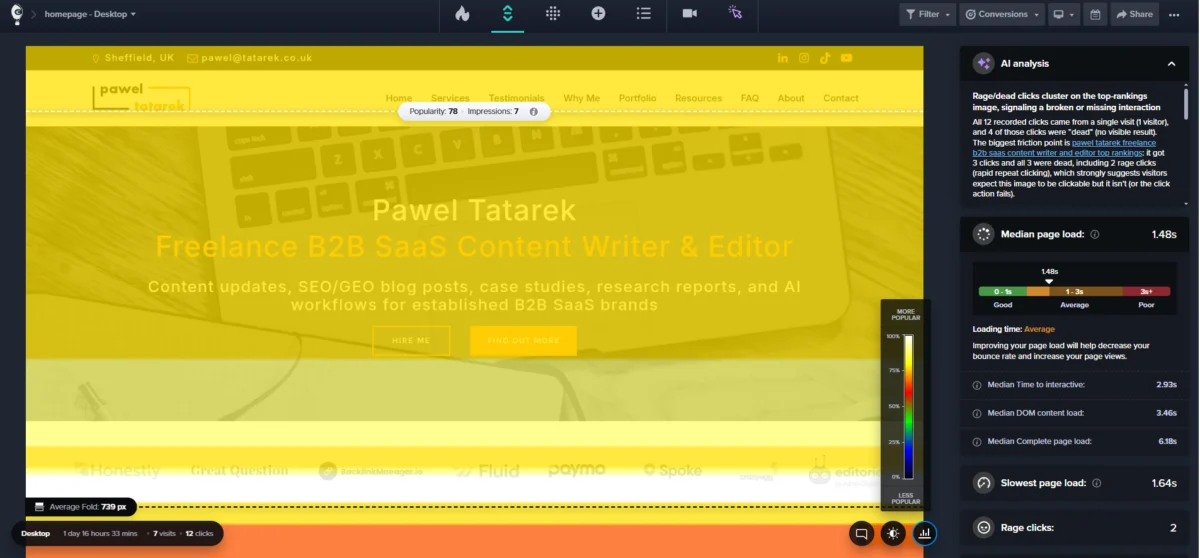
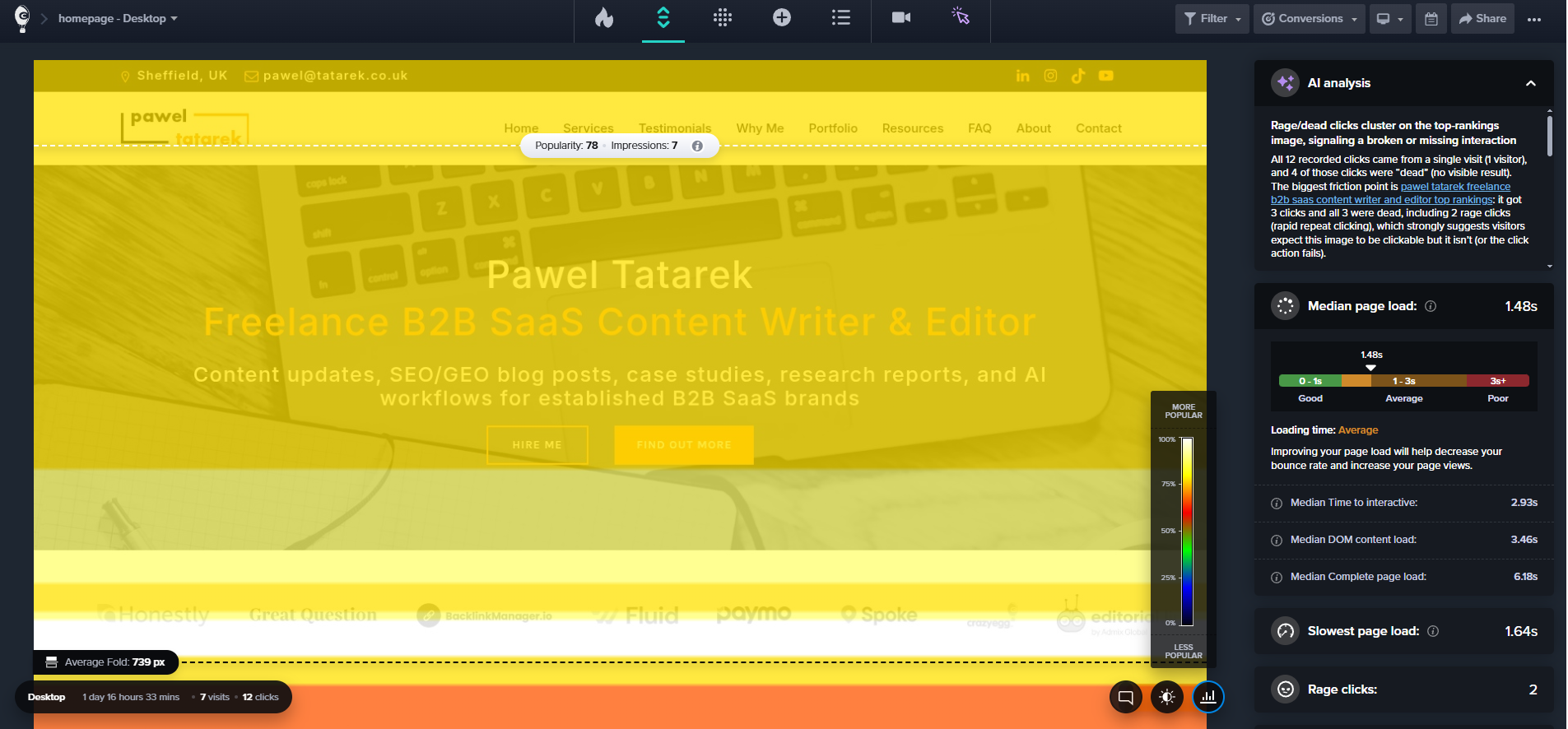
The methodology for visual data collection represents a significant point of departure between the two services. Crazy Egg provides a comprehensive suite of five reporting types: heatmaps, scrollmaps, confetti reports, overlays, and list views. A standout feature is the "Confetti" report, which plots every individual click and color-codes them based on more than 17 attributes, such as referral source or search terms. By default, Crazy Egg tracks every visitor without sampling, ensuring that the data reflects the total audience rather than a statistical subset.
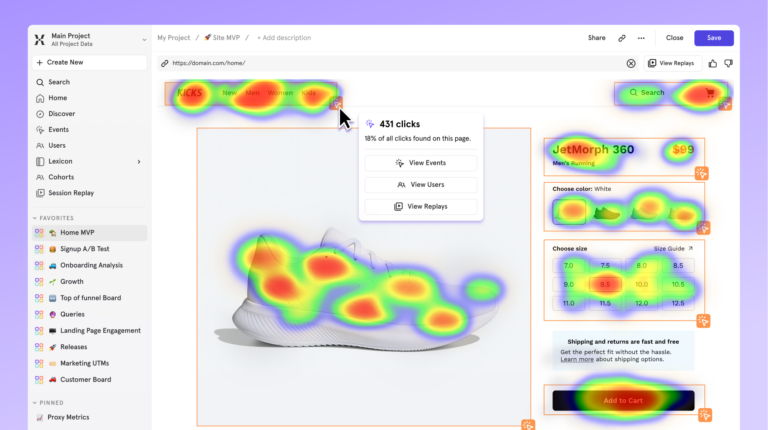
Mixpanel’s approach to heatmapping is integrated into its broader session replay functionality. It offers click maps and a unique "Goal Mode," which ranks website elements based on their contribution to conversions rather than raw click volume. This allows users to see which buttons actually drive revenue. However, Mixpanel’s heatmaps are limited to the sessions it records, meaning the data is subject to the platform’s session replay sampling rate. Furthermore, Mixpanel lacks a direct equivalent to Crazy Egg’s confetti or scrollmap reports, which are essential for identifying how far down a page a user travels before losing interest.
Session Replay and Data Retention Policies
In the realm of session recordings, both platforms offer the ability to watch real-time user interactions, including mouse movements, scrolls, and page transitions. They both utilize automated detection for "frustration signals," such as rage clicks (clicking an element repeatedly) and dead clicks (clicking an unlinked element).
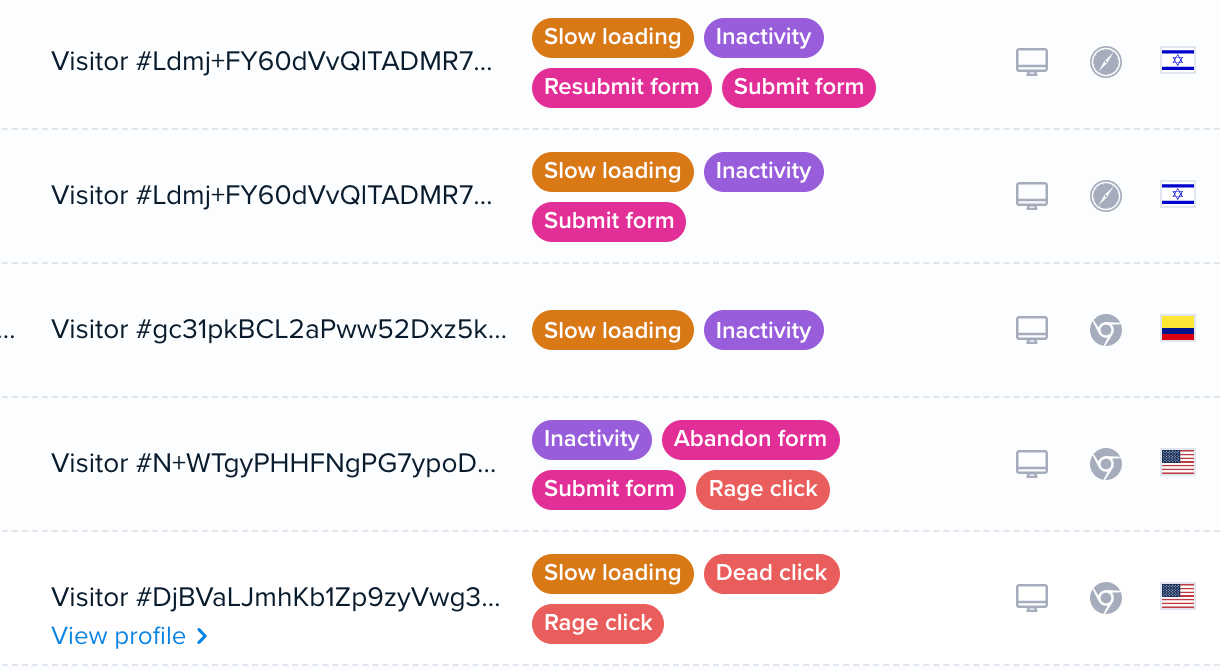
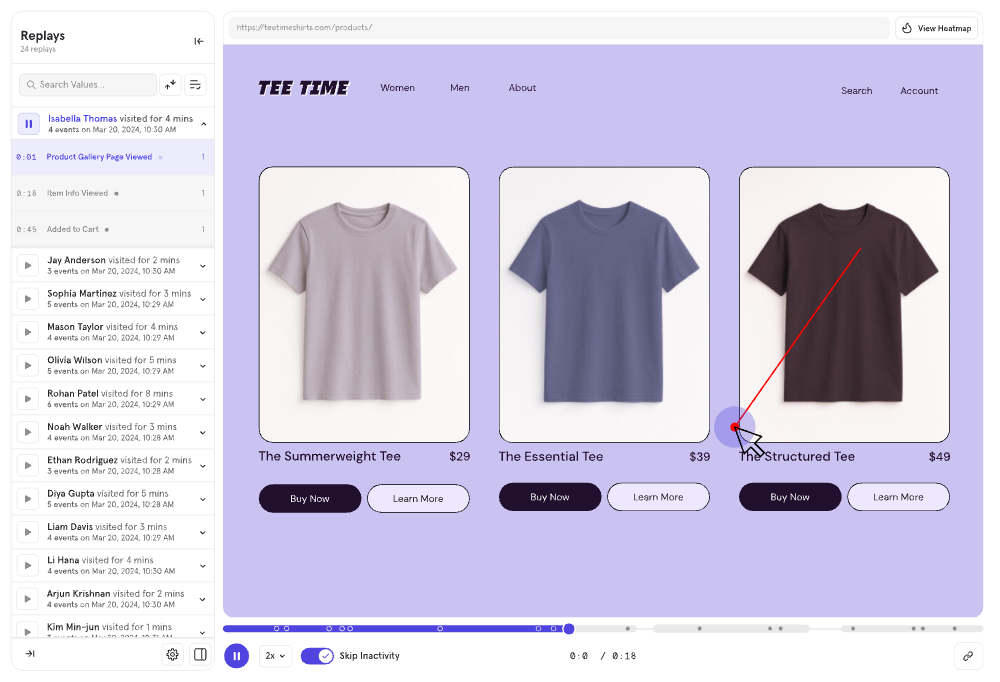
The divergence here is found in platform support and data longevity. Mixpanel offers a significant advantage for mobile-first companies by providing native session replay for iOS, Android, React Native, and Flutter. Crazy Egg currently lacks mobile app recording capabilities, focusing exclusively on web-based environments. However, Crazy Egg offers superior data retention. Its plans typically keep recordings for six months to two years, whereas Mixpanel’s default retention period is 30 days. For enterprises conducting long-term seasonal analysis or auditing historical user behavior, Crazy Egg’s extended storage provides a significant analytical buffer.
Analytical Frameworks: Event-Based vs. Path-Based
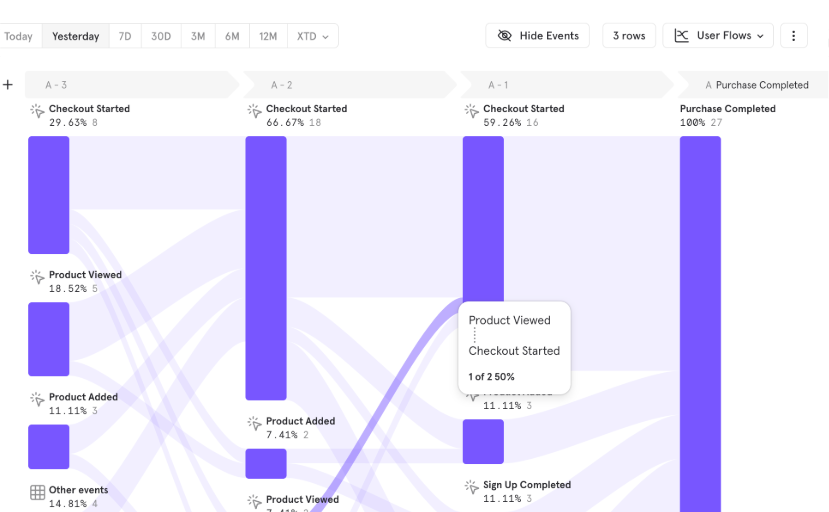
The core of Mixpanel’s power lies in its advanced analytics. It provides sophisticated reports such as "Flows," which map the various paths users take through a product, and "Retention" reports, which track cohorts over months or years. Its "Signal" correlation analysis can identify which specific actions are most likely to lead to a long-term subscription. Mixpanel also integrates deeply with modern data warehouses like Snowflake and BigQuery, allowing it to function as a hub for broader business intelligence.
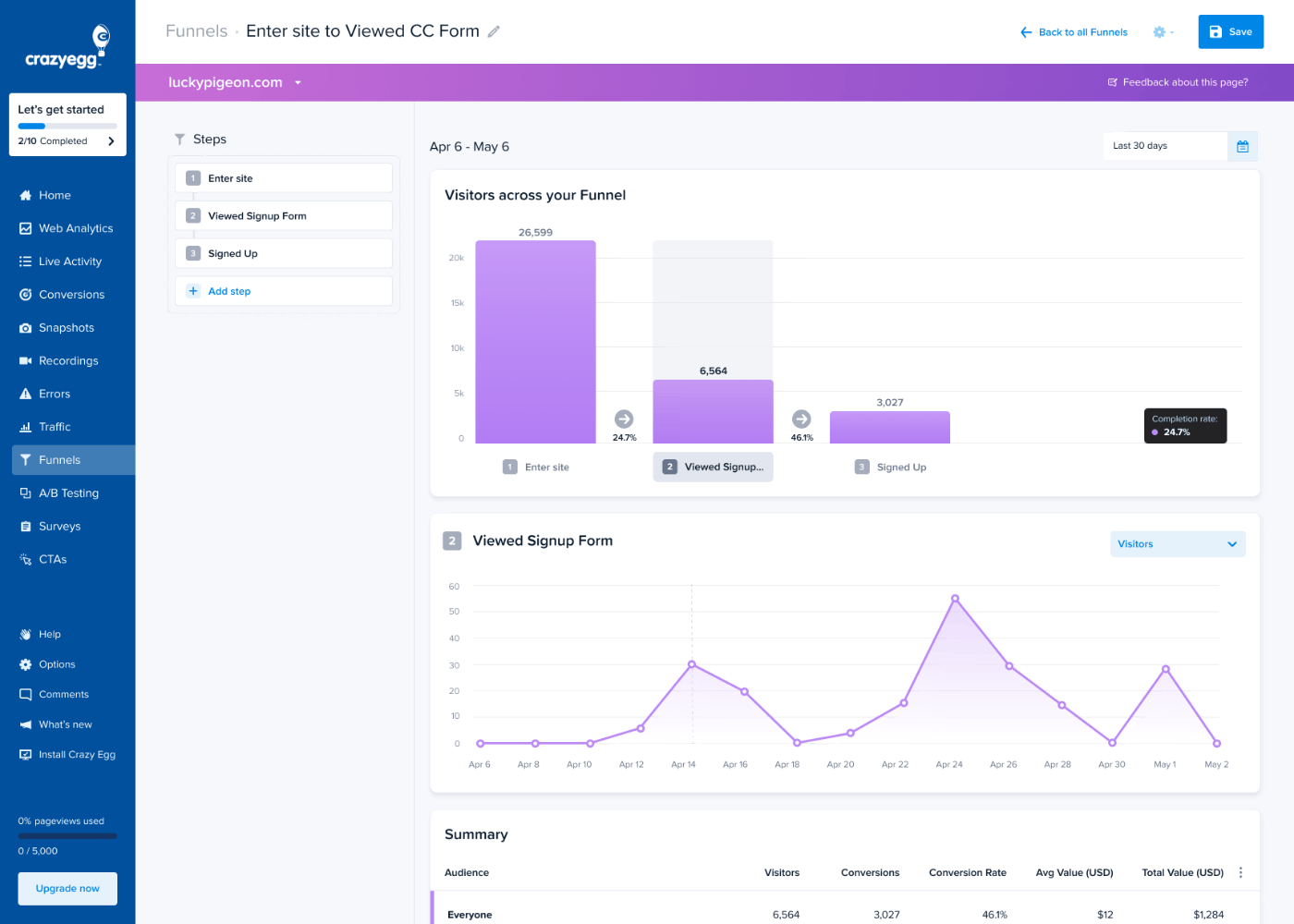
Crazy Egg’s analytics are more focused on the immediate conversion funnel. It provides web analytics that track how visitors move through a site and where they drop off. A key convenience for marketers is Crazy Egg’s Google Analytics 4 (GA4) import feature, which allows users to view historical GA4 data, custom events, and segments within the Crazy Egg dashboard. While Crazy Egg’s funnels are retroactive—meaning they can be built using data collected before the funnel was created—they are generally less complex than Mixpanel’s multi-step, exclusion-based event funnels.
Experimentation and A/B Testing Methodologies
Experimentation is a standard component of the Crazy Egg subscription. The platform includes a visual editor that allows marketers to change headlines, images, or layouts without writing code. Users can choose between a standard 50/50 traffic split or a "multi-armed bandit" approach, which automatically directs more traffic to the winning variant as the test progresses.
Mixpanel treats experimentation as a high-level enterprise add-on. While its testing engine is technically rigorous—featuring variance reduction and sample-ratio checks to prevent "broken" splits—it lacks a visual editor. Variants must be built in the product’s code and managed via feature flags. This necessitates a close relationship between marketing and engineering, whereas Crazy Egg allows marketing teams to remain autonomous.
The Rise of Artificial Intelligence in Optimization
Both companies have recently integrated Large Language Models (LLMs) to automate data interpretation. Mixpanel’s "Mixpanel Agent" performs root-cause analysis when a specific metric fluctuates, explaining the "why" behind the data. Its "Spark AI" allows users to generate reports using natural language queries, such as "Show me the retention rate of users who signed up in March."
Crazy Egg has taken a more "agentic" approach with its "Tasks" feature (currently in early access). This AI-driven tool manages the entire optimization loop: it analyzes heatmaps and recordings, identifies friction points, produces a prioritized report of recommendations, and can even draft the necessary changes to the website. Additionally, Crazy Egg provides "AI-ready" JSON exports, allowing users to feed their behavioral data into external models like ChatGPT, Claude, or Gemini for custom analysis.
Technical Error Tracking and Resolution
Error tracking is a vital bridge between user experience and technical performance. Crazy Egg’s "Errors Tracking" automatically detects JavaScript errors and links them to specific session recordings. This allows developers to see exactly what a user was doing when a bug occurred. It includes a status tracking system (resolved, ignored, or active) to help teams prioritize fixes.

Mixpanel’s error tracking is more technically granular, capturing network logs and slow API calls. This is invaluable for troubleshooting backend performance issues in complex SaaS applications. However, Mixpanel lacks a dedicated "error inbox" or workflow management system, meaning teams must manually export these findings to external project management tools like Jira.
Pricing Structures and Economic Implications
The billing models of these two platforms represent a significant factor in total cost of ownership. Crazy Egg utilizes a predictable model based on tracked pageviews. Once a user hits their monthly limit, data collection simply pauses, preventing unexpected overages. This makes it ideal for companies with strict budget controls.

Mixpanel bills based on "events." Because a single visitor can trigger dozens of events in a single session, event volume can be difficult to predict. While Mixpanel offers a generous free tier (up to 1 million events per month), high-growth companies can quickly find themselves facing significant costs as their user base becomes more active. Supporting data suggests that for organizations where users trigger more than five events per pageview, Crazy Egg’s pageview-based model often becomes the more cost-effective solution at scale.
Final Strategic Assessment
The decision between Crazy Egg and Mixpanel ultimately depends on the organizational structure and the primary KPIs of the team. For digital marketing agencies, e-commerce managers, and CRO specialists, Crazy Egg provides the most efficient path to increasing conversion rates. Its combination of heatmaps, surveys, A/B testing, and AI-driven recommendations creates a complete "feedback loop" for website optimization.

For product managers at software companies, Mixpanel is the superior tool for understanding the "nitty-gritty" of user engagement. Its ability to track cohorts over long periods and analyze the success of specific product features is essential for building a sustainable SaaS business. While more complex to implement and potentially more expensive at high volumes, the depth of its product-specific insights remains unmatched in the current market. As the industry moves toward more automated, AI-driven analysis, both platforms continue to evolve, but their core identities as "the marketer’s tool" and "the product manager’s tool" remain firmly intact.







