The landscape of customer interaction is undergoing a profound transformation, with direct message (DM) automation emerging as a pivotal technology for businesses navigating the demands of an "always-on" digital world. In 2026, automated DMs are no longer a novelty but a strategic imperative, driven by escalating message volumes across social platforms, the maturity of AI chatbots capable of sophisticated conversations, and an ingrained customer expectation for near-instantaneous responses at any hour. This evolution signifies a fundamental shift in how brands build relationships, resolve queries, and drive engagement, moving from reactive human-centric models to intelligent, scalable automated systems.

The Strategic Imperative of Automated Messaging
DM automation refers to the deployment of pre-programmed responses, rule-based systems, or advanced AI chatbots that automatically engage with users who send direct messages on social media. This technological leap addresses several critical challenges faced by businesses today. Traditionally, customer service relied heavily on human agents, a model that struggles to scale efficiently with the sheer volume of digital inquiries. The proliferation of social media platforms has fragmented customer communication, making it difficult for brands to maintain consistent, timely responses. Automated DMs provide a solution by offloading repetitive tasks, ensuring 24/7 availability, and delivering personalized interactions at scale.

The increasing sophistication of artificial intelligence has been a key enabler. Early chatbots were often clunky and limited to rigid keyword matching, leading to frustrating customer experiences. However, advancements in natural language processing (NLP) and machine learning have equipped modern AI chatbots with the ability to understand context, interpret nuanced language, and even learn from interactions, making them far more effective at handling diverse inquiries. This technological maturation coincides with a surge in social commerce, with projections indicating the US social commerce market alone could surpass $100 billion in 2026, underscoring the commercial importance of efficient social interactions.
Decoding the Mechanics: How DM Automation Works
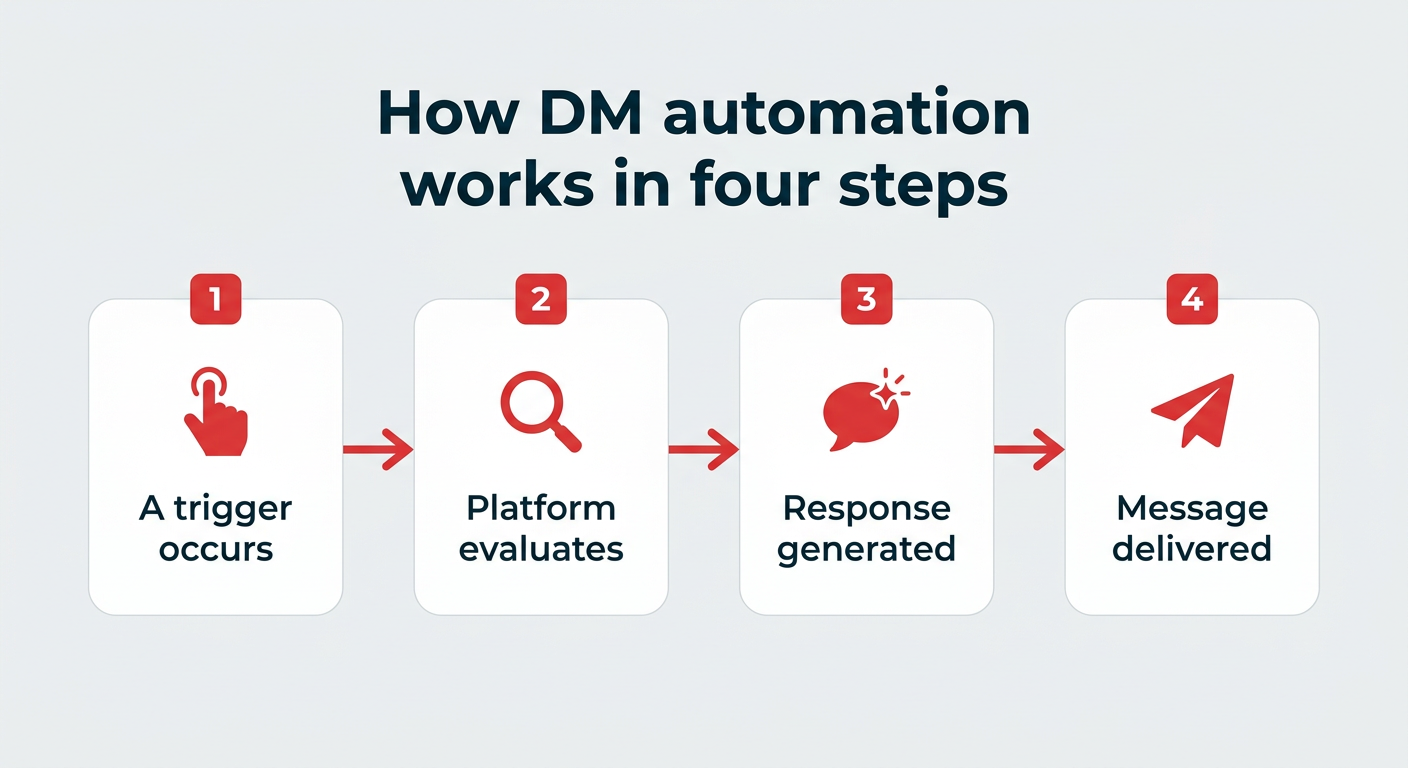
At its core, DM automation operates on a simple yet powerful trigger-action loop. A user’s action—sending a message, commenting a specific keyword, or clicking a button—serves as a trigger, initiating a pre-defined response or workflow. The system then evaluates the trigger against its established rules or leverages AI to determine the most appropriate action, generates a response, and delivers the message, all without human intervention. This seamless process ensures efficiency and consistency.
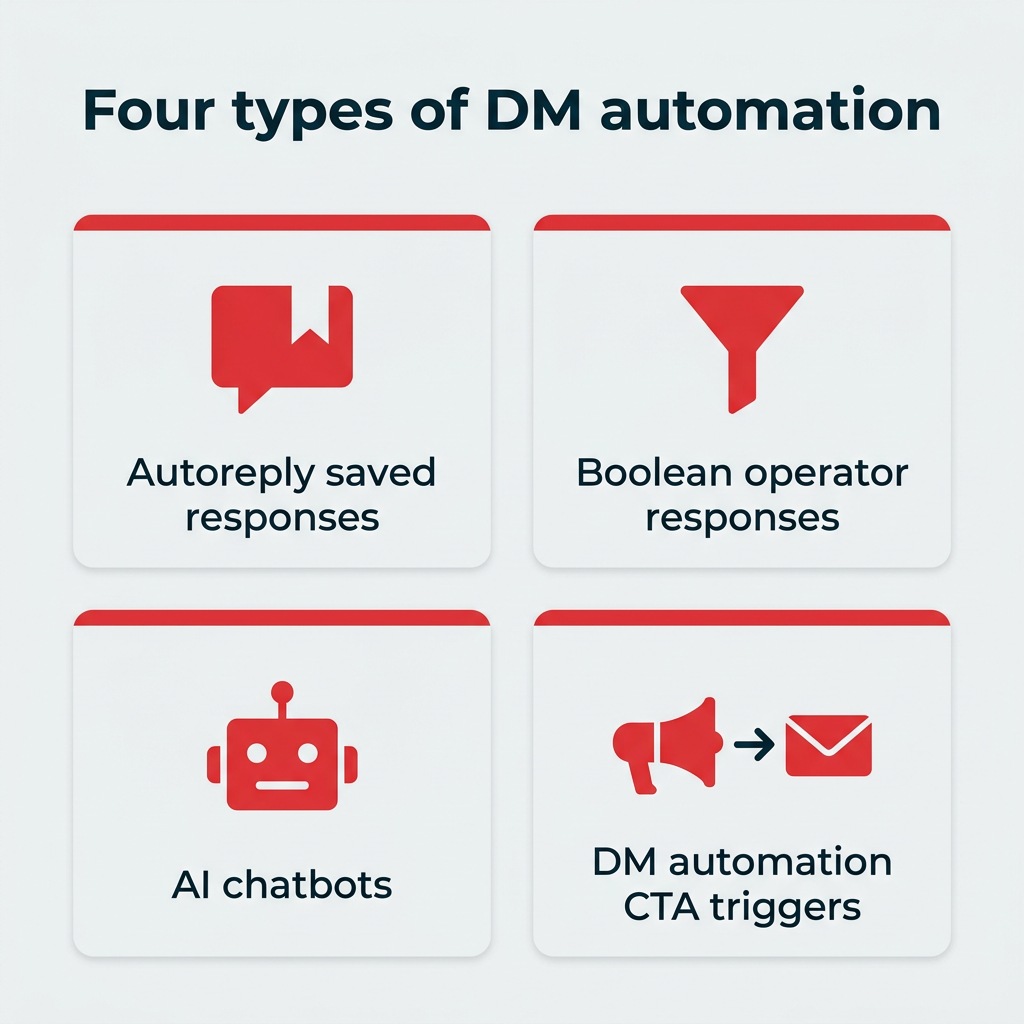
There are primarily four types of DM automation, each offering varying levels of complexity and flexibility:
- Autoreply Saved Responses: These are the most basic, pre-written messages automatically sent in response to any incoming DM, often used as initial greetings or away messages.
- Boolean Operator Responses: More advanced rule-based systems that trigger specific responses when DMs contain certain keywords or phrases (e.g., if "shipping" is present, send shipping FAQ).
- AI Chatbots: The most sophisticated, utilizing natural language processing to understand the intent behind messages, engage in multi-turn conversations, and dynamically provide relevant information.
- DM Automation CTA Triggers: These link social media posts (especially Reels) to DMs. Users comment a specific keyword on a post, which then triggers an automatic direct message, often containing a link, offer, or resource.
The crucial distinction lies in their adaptability. Rule-based systems are effective for predictable queries but require exact conditions to be met. AI chatbots, conversely, interpret natural language, offering a more fluid and human-like conversational experience, adapting to diverse phrasing and evolving contexts.
Transforming Business Operations: Key Advantages of DM Automation

DM automation is not designed to displace human teams but rather to augment them, allowing personnel to concentrate on high-value interactions that genuinely require human empathy and problem-solving skills. Integrating automation into a customer care strategy yields several profound benefits:
-
Significant Time and Resource Savings: The most immediate impact of DM automation is the substantial reduction in the workload for customer service teams. Routine inquiries—such as requests for business hours, addresses, payment options, or basic product information—can be instantly handled by bots. This frees human agents from repetitive tasks, enabling them to address complex, emotionally charged, or unique customer issues. For instance, a brand like 1-800-Flowers strategically uses automation to provide quick answers while always offering a clear path to connect with a human representative for more nuanced concerns. Industry analysts like Gartner predict that by 2029, agentic AI will autonomously resolve 80% of common customer service issues, highlighting the growing efficiency gains.

-
Personalized Customer Service at Scale: Modern AI chatbots, powered by conversational AI and natural language processing, can understand the context of DMs, providing tailored responses that mimic human interaction. This allows businesses to deliver personalized service to a vast number of customers simultaneously. For example, if a customer messages, "I haven’t received my order," an AI chatbot can follow up by requesting an order number or address, then retrieve and relay specific tracking information. This ability to maintain conversational context ensures a natural and efficient experience, enhancing customer satisfaction without requiring a live agent for every query. However, it is crucial to always provide an option for customers to escalate to a human agent for complex or sensitive situations where machine logic falls short, such as resolving loyalty-critical product quality issues.
-
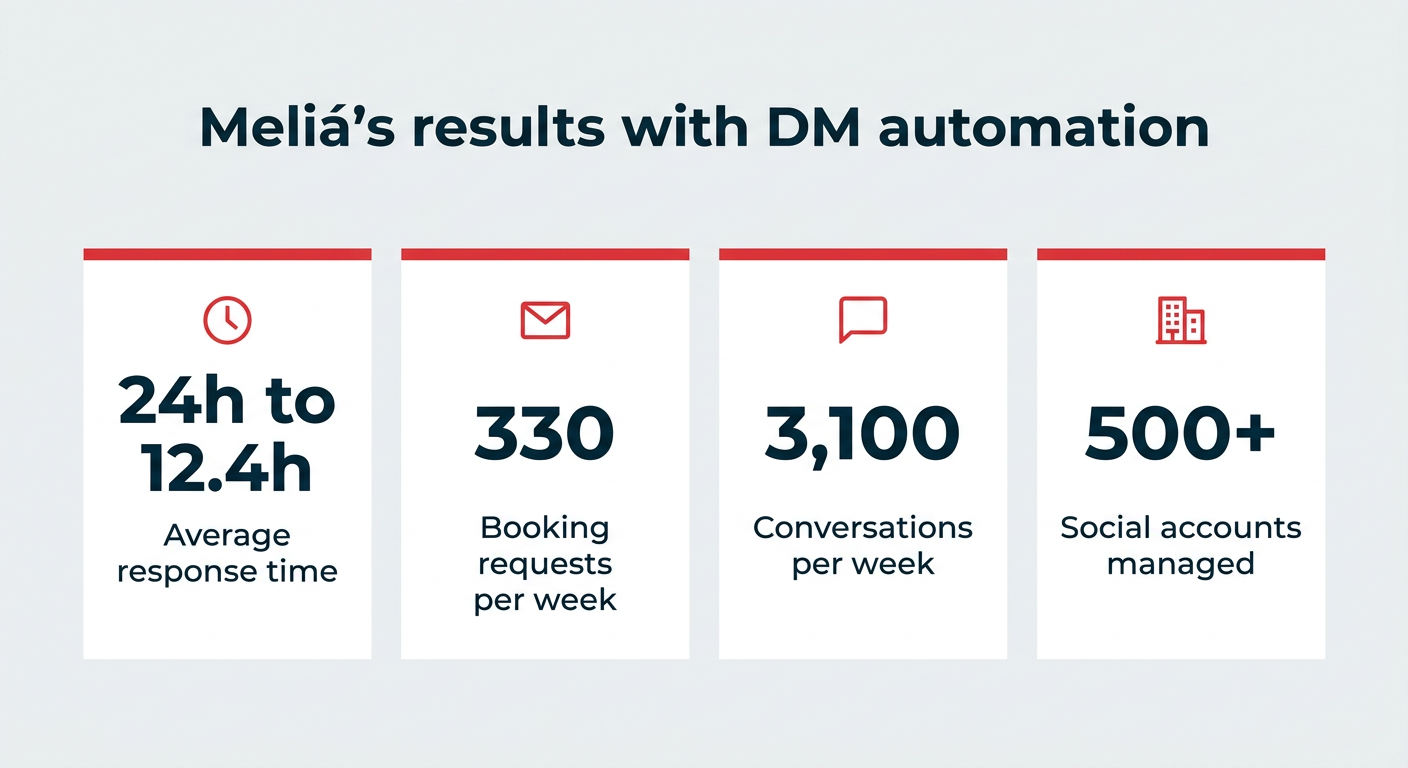
Uninterrupted 24/7 Response Coverage: The traditional limitations of business hours are increasingly irrelevant in the global, always-on digital economy. Customers expect immediate answers, regardless of time zones or public holidays. DM automation provides continuous support, ensuring that inquiries receive an instant acknowledgment or resolution, drastically reducing response times. Meliá Hotels, a major European hotel group managing over 500 social media accounts, exemplifies this. By implementing DM automation through platforms like Nest, they reduced their average human response time from 24 hours to 12.4 hours, handling 3,100 conversations weekly and generating 330 booking requests via social media. This round-the-clock availability significantly improves customer satisfaction and captures business opportunities that might otherwise be lost during off-hours.
-
Transforming FAQs into Interactive Experiences: Automating frequently asked questions is perhaps the most impactful time-saver for customer service teams. Instead of waiting in queues, customers receive immediate, accurate answers, while agents are spared the monotony of typing the same responses repeatedly. Automated FAQs typically manifest in two forms:
- Conversational Bots: Customers type their questions naturally, and the AI interprets and responds.
- "Tap-to-Answer" FAQ Chatbots: Present a list of common questions that customers can simply tap to receive an instant, pre-configured answer. This low-friction approach, seen on platforms like Instagram for Furnace Room Print Shop, is highly user-friendly and quick to set up.
DM Automation CTAs: A Powerful Lead Generation Mechanism

One of the fastest-growing and most effective DM automation tactics in 2026 is the DM automation Call-to-Action (CTA). This involves a social media post, particularly prevalent on platforms like Instagram Reels (which accounted for 46% of US time spent on Instagram in 2025), prompting users to comment a specific keyword. This comment automatically triggers a direct message containing a link, an exclusive offer, a digital resource, or a discount code. This strategy converts passive viewers into engaged leads without requiring any manual follow-up from the brand.
Common examples include:

- "Comment ‘GUIDE’ for my free social media strategy PDF."
- "Type ‘SALE’ below to get a 15% discount code delivered to your DMs."
- "DM ‘RECIPE’ for the full details on this healthy meal."
- "Comment ‘JOIN’ to get on our email list for exclusive content."
This tactic is not merely about engagement; it’s a potent list-building tool. Many advanced chatbots can capture and pass on information obtained during these conversations, such as email addresses, enabling brands to simultaneously deliver value and grow their marketing databases.
Platform-Specific Automation: Navigating the Social Media Ecosystem

The availability and sophistication of DM automation features vary significantly across social media platforms, necessitating a tailored approach or the use of unified third-party tools.
Instagram DM Automation:
Instagram offers three primary forms of DM automation:

- Saved Replies: Pre-set answers that human agents can quickly insert into manual responses, saving typing time.
- Frequently Asked Questions (FAQs): As discussed, these present a list of common questions for customers to tap, triggering instant, automated answers. This requires a Business or Creator account. Users can set up to four automated FAQs via the Professional Dashboard, enhancing initial customer interactions.
- Comment-to-DM Triggers: The powerful CTA automation, where commenting a keyword on a Reel or post automatically sends a direct message.
While native Instagram features are useful for basic automation, multi-step conversations, advanced logic, or widespread CTA automations typically require a dedicated Instagram automation tool to overcome native limitations.
Facebook DM Automation:
Facebook’s Meta Business Suite provides more robust native automation tools for both Facebook Messenger and, by extension, WhatsApp Business. These include:

- Instant Replies: An automatic first response to any incoming message.
- Away Messages: Sent when the business is offline.
- Frequently Asked Questions: Similar to Instagram, allowing for pre-configured Q&A.
- Custom Keywords: Triggering specific responses based on keywords in messages.
- Identified Messages: Automations for specific scenarios like job applications or appointment requests.
Businesses can configure these automations through Meta Business Suite’s Inbox, allowing for richer responses with images, videos, or buttons linking to external URLs. The ability to extend these automations to WhatsApp Business from the same interface streamlines customer service across Meta’s ecosystem.
X (formerly Twitter), LinkedIn, and TikTok Automation:
Beyond Instagram and Facebook, native DM automation features become sparse.

- X (formerly Twitter): Currently lacks native DM automation. Brands must rely on third-party tools, such as Hootsuite Social OS’s Nest, to implement welcome messages, keyword replies, and human handoff capabilities.
- LinkedIn: Adopts a deliberately restrictive stance on automation to preserve its professional networking integrity. Native options are limited to "Away" messages and quick replies for company pages. Aggressive third-party outreach tools often violate LinkedIn’s terms of service, leading to account restrictions. For B2B teams, any automation should focus on inbound responses and adhere strictly to platform rules.
- TikTok: DM automation is still nascent. Native features are limited, compelling most brands to use third-party tools for keyword-based replies. A practical application is within TikTok Shop, where automated messages can handle order inquiries like shipping updates. Brands heavily reliant on TikTok for customer engagement should plan to integrate a dedicated TikTok management tool.
Selecting the Optimal DM Automation Tools
When evaluating DM automation solutions, businesses must consider several factors: supported platforms, AI capabilities, pricing models, ease of setup, and enterprise-grade governance. While native platform tools offer a free entry point, their limitations in cross-platform management, advanced AI, and reporting capabilities quickly become apparent for growing businesses.

Integrated platforms like Hootsuite Social OS, featuring its customer care app Nest, provide a comprehensive solution. Nest unifies all public and private messages and comments across Instagram, Facebook, X, TikTok, and LinkedIn into a single workspace. This allows teams to assign, reply to, and automate messages efficiently. Powered by Wisdom, Hootsuite’s AI orchestration layer, messages are intelligently routed, while Vigil ensures workflows remain governed and compliant. Such unified tools offer significant time and cost savings compared to managing disparate native features across multiple platforms. Key benefits include:
- Managing DMs, comments, and mentions from one inbox.
- AI-powered routing to the right agent or automated response.
- Quickly responding with saved replies or automated chatbots.
- Assigning messages to specific team members or departments.
- Tracking response times and agent performance.
- Setting up automated satisfaction surveys post-interaction.
Best Practices for Ethical and Effective DM Automation

While DM automation offers immense advantages, its successful implementation hinges on adherence to best practices that prioritize customer trust and platform compliance:
- Prioritize Human Handoff: Always provide a clear, easy option for customers to connect with a live human agent for complex, sensitive, or unresolved issues.
- Be Transparent: Clearly communicate to customers when they are interacting with a bot. Phrases like "You’re chatting with our virtual assistant" build trust.
- Respect Platform Rules: Understand and comply with the terms of service for each social media platform to avoid account restrictions or penalties.
- Avoid Spamming: Use automation for inbound responses and value delivery, not for unsolicited mass outreach.
- Personalize Where Possible: Leverage AI to personalize interactions, addressing customers by name and referencing past interactions if feasible.
- Regularly Review and Optimize: Continuously monitor bot performance, analyze conversation flows, and update responses to improve accuracy and effectiveness.
- Test Thoroughly: Before launching, rigorously test all automation flows to catch errors, ensure smooth transitions, and verify correct responses.
- Define Clear Objectives: Understand what you want to achieve with automation—be it faster response times, lead generation, or FAQ resolution—to guide your setup.
- Train Your Bots: For AI chatbots, ongoing training with relevant data helps improve their understanding and response accuracy over time.
- Integrate with CRM: Connect your DM automation tool with your CRM system to create a unified view of customer interactions and data.
When thoughtfully implemented, DM automation not only streamlines operations but also strengthens customer relationships, fosters trust, and drives tangible business outcomes.

Broader Implications and Future Outlook
The widespread adoption of DM automation signals a permanent shift in customer service and marketing strategy. Businesses that embrace this technology effectively will gain a significant competitive edge, characterized by superior customer experiences, enhanced operational efficiency, and accelerated lead generation. As AI continues to evolve, DM automation will become even more sophisticated, capable of handling increasingly complex interactions and proactively anticipating customer needs. The integration of social commerce with automated conversational flows promises a frictionless path from engagement to purchase, further solidifying the role of DMs as a critical touchpoint in the customer journey. For brands seeking to thrive in 2026 and beyond, investing in intelligent DM automation is no longer optional but a fundamental requirement for sustained growth and customer loyalty.