The landscape of digital commerce has undergone a profound transformation, moving from the direct interactions with salespeople to the expansive reach of search engines, and now, into the complex and often opaque realm of Artificial Intelligence (AI). This evolution presents a critical challenge for businesses: how to accurately measure the impact and return on investment (ROI) of their brand’s visibility within AI-generated answers. As AI becomes an increasingly dominant conduit for information discovery and purchasing decisions, understanding and quantifying its influence is no longer optional, but an imperative for sustained competitive advantage.
For decades, the customer journey began with a question posed to a human expert, then shifted to queries typed into Google or Bing. Today, a significant portion of that journey commences with a prompt to conversational AI platforms like ChatGPT, Google Gemini, Perplexity AI, or even Google’s integrated AI Overviews. These systems synthesize information from vast datasets to provide direct answers, often citing sources, but frequently guiding users towards decisions without explicit click-throughs. This fundamental shift disrupts traditional marketing attribution models, creating a "dark funnel" where brand exposure occurs without direct, trackable referral data, making the true business impact of AI search visibility notoriously difficult to ascertain.
The Paradigm Shift in Digital Commerce and the Attribution Dilemma
The rapid adoption of generative AI has reshaped how consumers research products and services. Instead of sifting through pages of search results, users now receive concise, synthesized answers, often personalized and authoritative. This change is not merely cosmetic; it represents a fundamental re-engineering of information access. According to recent industry data, while organic search traffic saw a modest decline of 2.5% year-over-year in January 2026, AI referral traffic to retail sites surged by an astounding 693% during the same period. This stark contrast underscores a monumental shift in buyer behavior, indicating that a growing segment of the market is initiating its research within AI environments.
The core problem for marketers lies in attribution. Traditional last-click or even multi-touch attribution models, designed for a world of direct website visits and measurable conversions, often fail to capture the subtle but powerful influence of AI touchpoints. Consider a typical AI-influenced buyer journey: a prospective customer asks an AI for product recommendations; the AI mentions a specific brand. Days later, the buyer independently searches for that brand name on Google and eventually converts through a paid advertisement. In this scenario, last-click attribution would credit paid search, completely overlooking the initial, crucial AI exposure that planted the seed. The absence of robust referral data from most AI search platforms exacerbates this issue, leaving marketers blind to a significant portion of their brand’s early-stage influence.
This "blur" in attribution comes at a substantial cost. Without clear metrics, businesses risk misallocating resources, underestimating the value of their content in AI contexts, and failing to capitalize on an emerging channel that demonstrably influences purchase decisions. The challenge, therefore, is not to abandon attribution, but to evolve it by integrating a measurement layer capable of detecting and valuing AI-driven interactions.

A Three-Layered Framework for Quantifying AI Search Visibility ROI
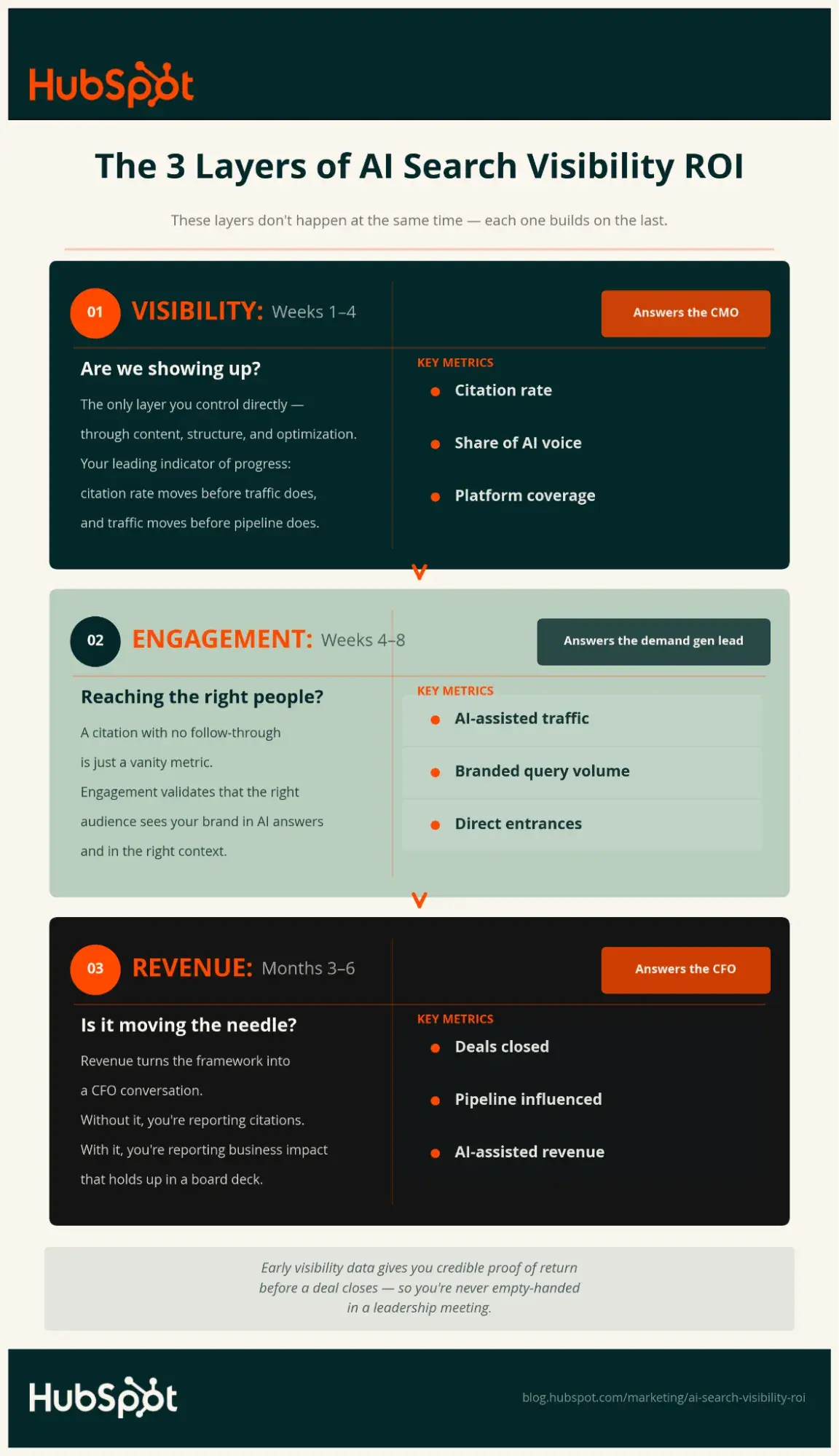
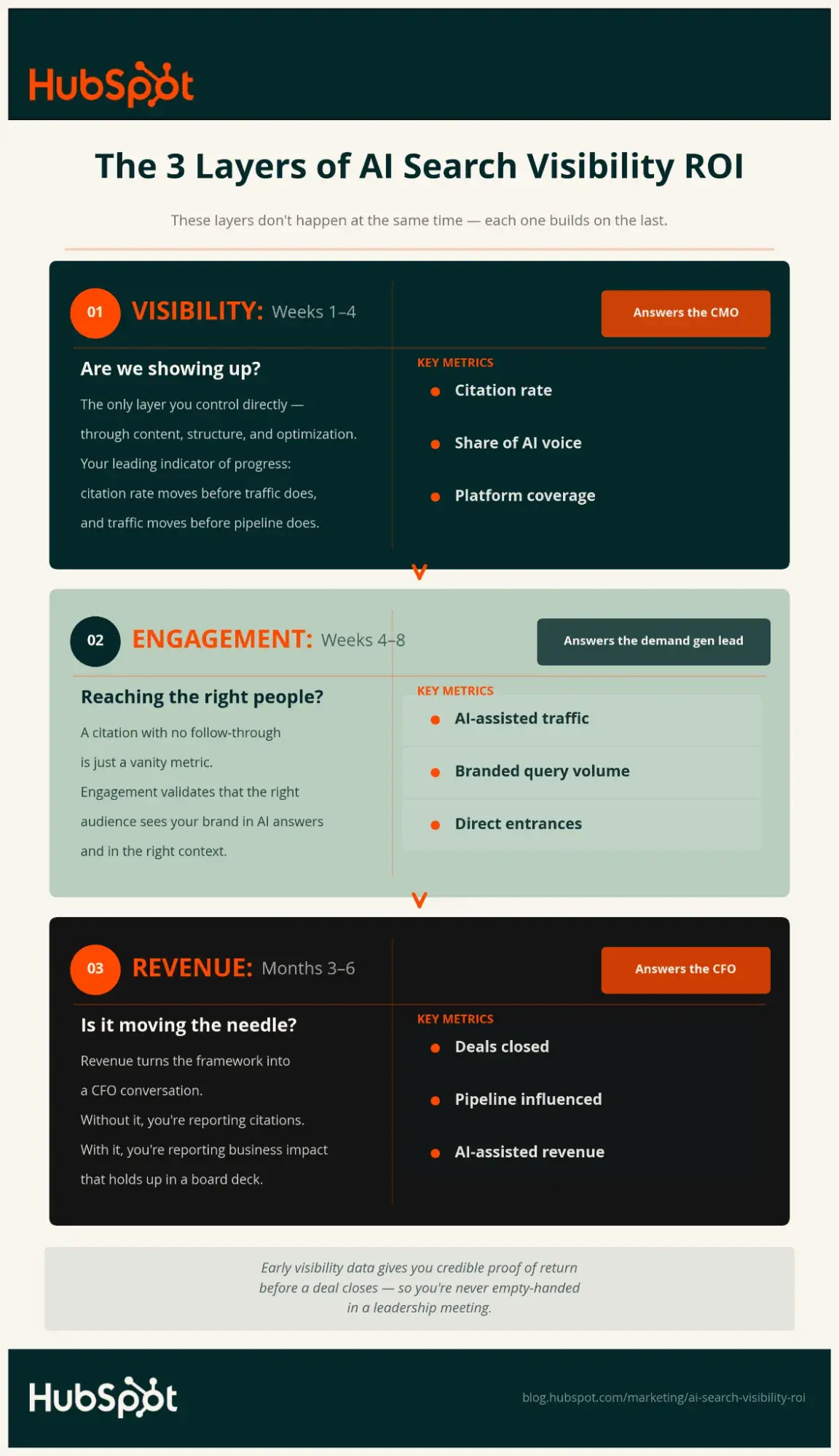
To bring clarity to this complex landscape, a structured, multi-layered measurement framework is essential. This framework moves beyond simple clicks, focusing on the progression from initial brand exposure to tangible business outcomes. It posits that AI search visibility ROI can be effectively measured by tracking three distinct yet interconnected layers: Visibility, Engagement, and Revenue. These layers form a delayed funnel, meaning their impact unfolds over time, and each plays a critical role in building a comprehensive narrative for leadership.
-
Layer 1: Visibility Metrics
This foundational layer measures the sheer presence of a brand within AI-generated answers. It addresses the fundamental question: "Is our brand being seen and cited by AI systems?"- Share of AI Voice (SAIV): SAIV quantifies the percentage of relevant AI prompts where a brand appears in the generated answer. This provides a broad understanding of brand presence across AI platforms.
- Citation Tracking: Moving beyond mere mentions, citation tracking specifically measures whether a brand’s content is linked or explicitly credited as a source by the AI. This is a powerful indicator of authority and trust in the eyes of AI algorithms.
- Calculation and Tools: To calculate SAIV and track citations, businesses define a specific "prompt set" – a collection of questions mirroring how buyers research their category. These prompts are then fed into various AI platforms (e.g., ChatGPT, Gemini, Perplexity AI, Claude), and the responses are analyzed for brand mentions and citations. Specialized tools, such as HubSpot AEO, can automate this process, tracking Brand Visibility Scores across multiple platforms and monitoring competitor mentions, flagging content gaps, and even integrating with CRM systems. The importance of multi-platform tracking cannot be overstated; recent reports indicate a significant diversification in AI referral sources, with ChatGPT’s dominance decreasing as other platforms gain traction.
-
Layer 2: Engagement Metrics
Once a brand achieves visibility, the next step is to measure how that exposure translates into user engagement, even if it’s not a direct click. This layer focuses on indirect signals of interest.- Branded Search Lift: When a brand is mentioned in an AI answer, users often conduct subsequent searches for that brand directly. A sustained increase in branded keyword searches, not attributable to paid campaigns, is a strong indicator that AI awareness is driving interest. This can be monitored through tools like Google Search Console.
- Direct Traffic Growth: Similarly, an uptick in direct traffic to a brand’s website, where users navigate directly to the site without a referral source, can signal that AI interactions are prompting users to explore the brand further. This is typically tracked using analytics platforms like Google Analytics 4 (GA4). These metrics provide credible data on return even before a deal closes, offering valuable insights to leadership while waiting for revenue data to mature.
-
Layer 3: Revenue Metrics
The ultimate measure of ROI is, of course, revenue. While perfect direct attribution from AI remains elusive, the goal here is "assisted attribution," acknowledging AI’s role in influencing the sales pipeline.- Pipeline Influence: This involves building a model within a Customer Relationship Management (CRM) system that identifies contacts who had a confirmed AI touchpoint (e.g., brand mention, citation) before converting.
- HubSpot’s Insights: Data from HubSpot’s January 2026 survey of over 3,000 CRM purchase decision-makers highlights the potency of AI search: buyers who used AI search were 36% more likely to purchase. Furthermore, AI search was the single strongest predictor of purchase intent, surpassing demos, review sites, and sales calls. This underscores the channel’s high value for driving conversions.
- Calculating Assisted Revenue: By tagging contacts who have interacted with AI-influenced content or been exposed to AI mentions of the brand, marketers can assign a percentage of credit to AI for subsequent pipeline generation and closed deals. This model requires linking AI visibility data to CRM records, often through custom fields and marketing automation platforms that enable multi-touch attribution.
Benchmarking for Competitive Advantage in the AI Era
Visibility data gains significant actionable power when benchmarked against competitors and tracked over time. Benchmarking provides both a competitive reference point and a trend line, enabling marketers to understand their performance relative to the market and gauge the effectiveness of their optimization efforts.

-
Identify Answer Competitors: Unlike traditional SEO where competitors are typically direct business rivals, AI answer competitors can be broader. AI systems prioritize authoritative, clearly structured content, which may come from industry media sites, analyst blogs, review platforms (e.g., G2, Yelp), or niche aggregators. Identifying this full citation landscape, rather than just direct product competitors, is crucial for shaping content strategy. For instance, if a media site consistently ranks for buying-stage prompts, it signals a content gap that a brand can address.
-
Build a Share of Citations Chart: Running the defined prompt set monthly and recording every cited source, aggregated by topic cluster, creates a clear picture of competitive standing. A simple table illustrating "Your Brand Citations" versus "Top Competitor Citations" for various topic clusters reveals areas of strength, weakness, and priority gaps. For example, if a brand wins 15 out of 20 prompts for "Email marketing tools" but only 6 out of 20 for "Sales pipeline management," the latter becomes a priority for content optimization.
-
Interpret Trends: A rising citation share in a topic cluster could indicate improved content, a competitor’s decline, or an AI model update. It’s crucial to establish a fresh baseline after major model releases (GPT, Gemini, Perplexity update regularly) as these can independently reshuffle citation patterns. The long-term trend line is more important than any single snapshot, providing evidence of whether a strategy is working over time. Integrating this benchmark data into a CRM or marketing hub allows it to sit alongside other channel metrics, offering a unified view of performance.
Implementing an AI Search Visibility Measurement Plan
A systematic approach is key to successfully measuring AI search visibility over time:
-
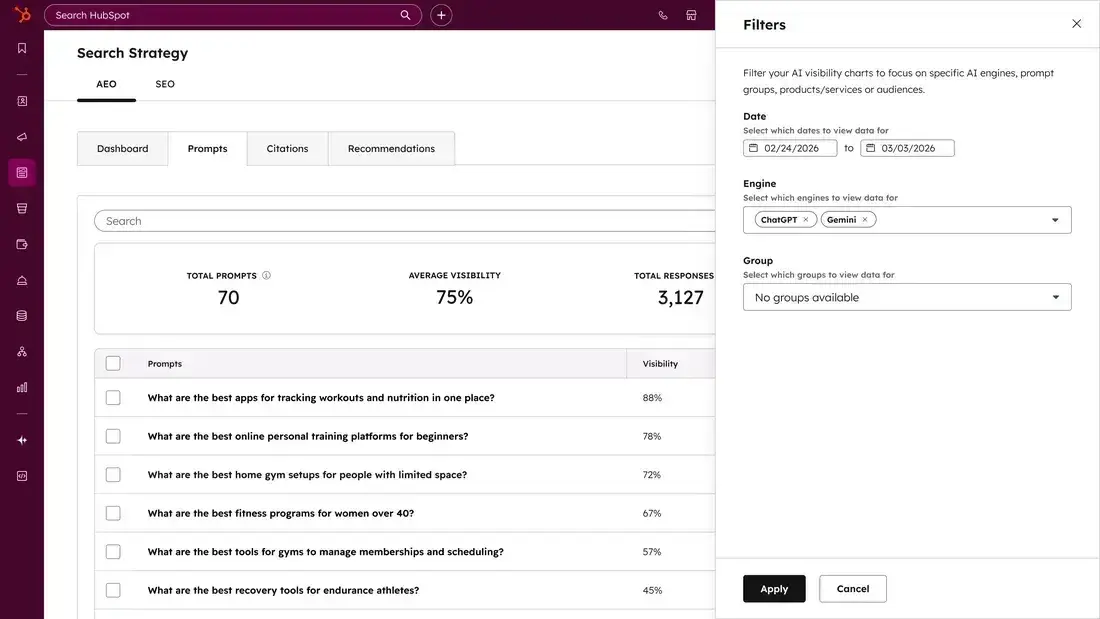
Define Your Prompt Set: Select 20-30 prompts that reflect how buyers research your category across different funnel stages (awareness, consideration, decision). Prioritize specificity over brevity to capture real buyer intent and ensure consistent, trackable answers.
-
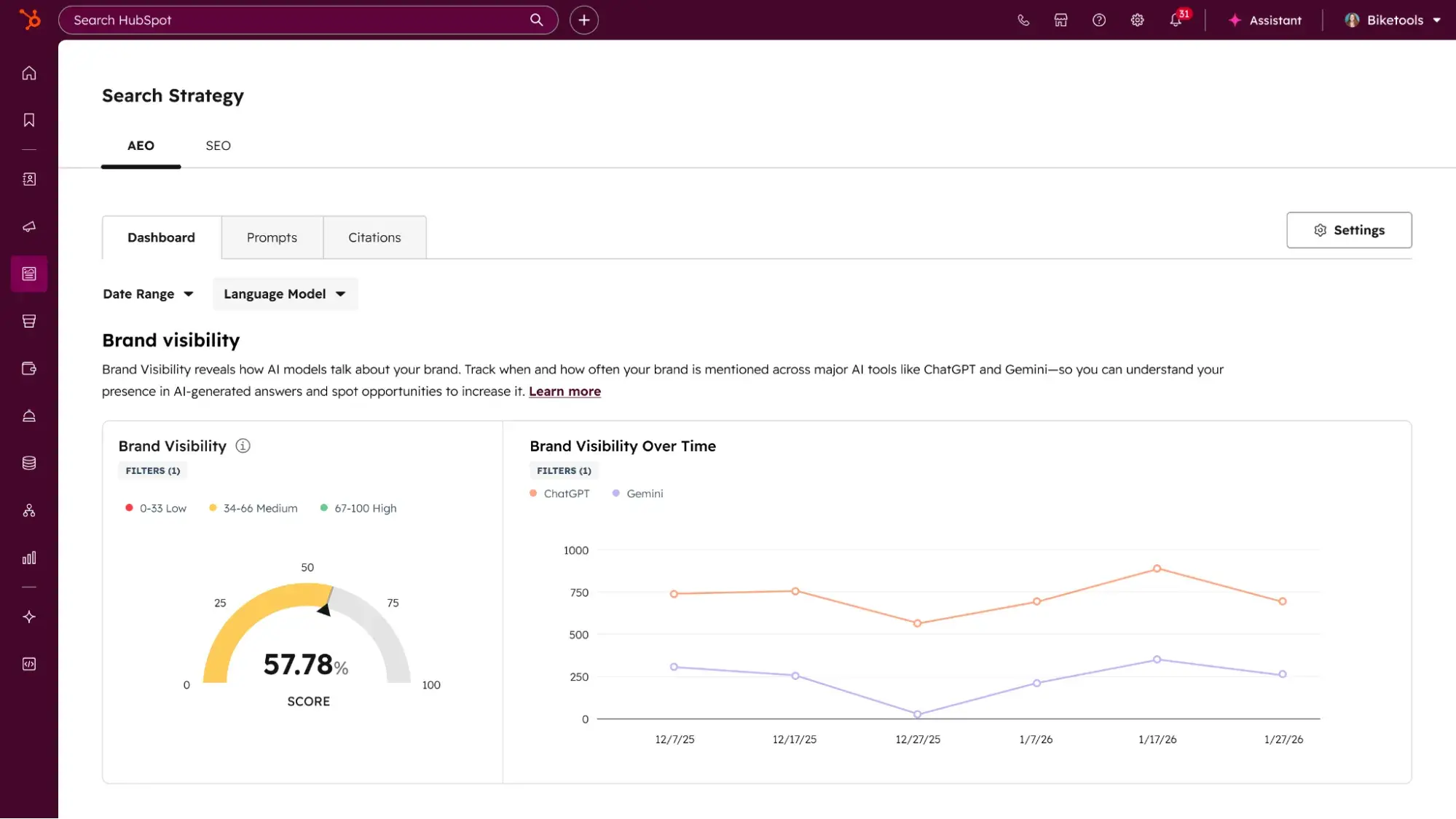
Input Prompts into Your AI Visibility Tool: Utilize tools like HubSpot AEO for automated daily tracking across ChatGPT, Perplexity, and Gemini. Manual testing on platforms like Claude can supplement this. Multi-platform tracking is vital as AI search visibility is not confined to a single ecosystem.
-
Record Your Brand Visibility Score: Score each prompt (not mentioned, mentioned, cited, or recommended) and aggregate into a Brand Visibility Score across all prompts and platforms. This establishes a baseline, which should be re-evaluated every 30 days to track movement.
-
Audit Your Existing Content: Employ tools like HubSpot’s free AI Search Grader to identify where your brand is visible and where competitors are dominating. A detailed table tracking prompt, platform, model version, brand mention/citation, competitor citation, and answer sentiment for each prompt provides granular insights.
-
Repeat and Refine: Consistent, scheduled tracking (weekly or biweekly) after implementing content changes is crucial for monitoring the impact of optimization efforts. Buyer language shifts, and the prompt set should be refreshed quarterly to remain relevant.
Calculating the Tangible Return: The ROI Formula Explained
Given the ambiguous nature of AI attribution, a pragmatic approach to calculating AI Search Visibility ROI is essential. While influenced by SEO and PR, a healthy gauge can be achieved using the three-layered framework and a modified ROI formula:
ROI (%) = (AI-Assisted Revenue – AI Costs) ÷ AI Costs × 100
- AI-assisted Revenue: This requires building an assisted revenue model within the CRM. It relies on:
- AI-influenced contacts: Identifying contacts who showed AI-influenced behavior (e.g., brand mention, citation exposure) before converting.
- Multi-touch attribution: Assigning partial credit to AI touchpoints within the broader customer journey.
- Unified visibility and pipeline: Integrating AI visibility data directly into the CRM to automate reporting.
- AI Costs: These are more straightforward and typically include monthly or annual expenditures on:
- AI visibility tools: Subscriptions to platforms like HubSpot AEO.
- Content creation and optimization: Resources allocated to developing and refining content for AI search.
- Team salaries: Labor costs for marketing professionals managing AEO efforts.
Example: If a team spends $2,000/month on AI tools and content ($6,000/quarter), and the CRM flags $30,000 in pipeline where contacts had a confirmed AI touchpoint, applying a conservative 25% assisted credit yields $7,500 in AI-assisted revenue.
Using the formula: ROI (%) = ($7,500 – $6,000) ÷ $6,000 × 100 = 25% ROI.
This provides a defensible, data-backed figure for leadership.
Making the Business Case: Presenting to Leadership
When presenting to leadership, the argument for investing in AI search should be framed around three pillars: opportunity cost, competitive risk, and a clear measurement plan, leading with the cost of inaction.
- Opportunity Cost: Highlight that AI-referred leads convert at triple the rate of traditional search leads, according to HubSpot data. Every month without AI visibility optimization means high-intent buyers are making decisions without encountering the brand, representing tangible lost revenue.
- Competitive Risk: Emphasize that companies actively optimizing for AI search are generating significantly more qualified leads (170% more MQLs) and deals (82% more) than those who are not. The gap between early adopters and those waiting is already measurable and widening rapidly.
- Measurement Plan: Present a concrete 30/60/90-day roadmap outlining a defined baseline, prompt set, clear metric framework, and a CRM attribution model. Demonstrating how the organization will measure success and when provides confidence and secures buy-in.
Managing Expectations: A Realistic Timeline for AI Search ROI
A crucial aspect of presenting to leadership is setting realistic expectations regarding the timeline for results. Unlike paid media, AI search visibility (AEO) is not an instant gratification channel. Results build in layers, with visibility appearing first, followed by engagement, and finally, revenue data.
- Days 1-30: Baseline established, prompt set running, initial visibility score and competitor benchmarks available.
- Days 30-60: First citation data emerges, branded search trends become visible, providing share of AI voice and direct traffic deltas.
- Days 60-90: AI-influenced contacts begin appearing in the CRM, allowing for initial AI-influenced MQL rates and pipeline touch data.
- Days 90-180: Pipeline influence data matures, and the revenue model becomes live, yielding AI-assisted close rates and deal velocity.
While awaiting full pipeline data, leading indicators provide credible, early signals of success. These include: rising brand mentions and citations, increased branded search volume, growth in direct traffic, and positive answer sentiment from AI systems. If two or more of these indicators show positive movement by day 60, it builds a strong, credible case for the strategy’s effectiveness, even before revenue figures fully materialize.
Optimizing for AI Visibility: Practical Strategies and Common Questions
Improving AI search visibility hinges on a multi-faceted strategy:
- Content Structure: AI systems favor content that leads with direct, clear answers. Rewriting key pages to present the main point within the first 150 words, using question-based headings, and incorporating FAQ and Article schema helps AI parse content effectively.
- Reputation and External Sources: AI answers frequently draw from third-party sources (review platforms, industry publications). Cultivating a strong brand presence and positive mentions in authoritative external sources carries as much weight as optimizing owned content.
- Multi-Engine Optimization: A strategy built around a single AI platform is insufficient. ChatGPT, Gemini, Perplexity, and Google AI Overviews all exhibit different retrieval logic, citation behaviors, and user intents. A comprehensive strategy must account for these distinctions across all major surfaces.
- Addressing Low Visibility: A low current visibility score is an opportunity. Begin by auditing topic clusters with the lowest citation rates and identifying the winning content. Focus on content clarity, direct answers, and E-E-A-T (Experience, Expertise, Authoritativeness, Trustworthiness) signals. Prioritize 2-3 topic clusters where the competitive gap is smallest and buyer intent is highest, then expand. Visibility compounds; success in one area can facilitate gains in adjacent ones.
The Imperative of Early Adoption
Buyers have always had questions, and the entities that provide the clearest, most credible, and timely answers invariably win their business. AI search has fundamentally altered where those answers come from, but the underlying truth remains constant. The good news is that initiating an AI visibility strategy doesn’t require an enormous budget or a dedicated AI team. By starting small, defining prompt sets, utilizing available tools like HubSpot AEO, and consistently tracking leading indicators, businesses can gain a crucial head start. The data collected now will form the bedrock of compelling arguments for continued investment six months down the line. The shift in information consumption is undeniable. The critical question for every brand is whether it will be present in the answer, or left behind.