

The competitive landscape of e-commerce demands sophisticated marketing automation tools to drive sales, foster customer loyalty, and streamline operations. Among the leading contenders, Klaviyo and Omnisend stand out as powerful platforms, each offering distinct advantages tailored to different business needs. While e-commerce brands might gravitate towards Klaviyo for its granular segmentation capabilities, advanced flows, and robust B2C customer relationship management (CRM), Omnisend presents a compelling alternative, excelling in multichannel automations, offering round-the-clock human support, and promising a faster setup at a potentially significant cost saving of up to 35%. This detailed analysis, based on extensive testing and user feedback, aims to guide businesses in selecting the optimal email marketing solution, considering their budget, sending volume, and appetite for advanced features.
The Evolving E-commerce Marketing Landscape
In an era where customer attention is fragmented across numerous digital channels, the ability to deliver personalized, timely, and relevant communications is paramount. E-commerce businesses are increasingly relying on marketing automation platforms to manage email campaigns, SMS marketing, web push notifications, and even social media interactions. These platforms are not merely for sending newsletters; they are comprehensive ecosystems designed to nurture leads, recover abandoned carts, upsell and cross-sell products, and ultimately maximize customer lifetime value (CLV). The choice between platforms like Klaviyo and Omnisend therefore represents a strategic decision that can significantly impact a brand’s growth trajectory and operational efficiency.
Key Differentiators at a Glance: Klaviyo vs. Omnisend
A quick comparison highlights the core strengths of each platform. Omnisend generally boasts higher ease of use and superior customer support, offering a full five stars in internal testing compared to Klaviyo’s four and three stars respectively. Both platforms offer excellent editor quality and deliverability infrastructure, scoring five stars. In terms of message types, Omnisend supports marketing emails, transactional emails, SMS, and web push notifications, whereas Klaviyo offers marketing emails, transactional emails, SMS, and mobile push notifications, with web push noted as not supported natively in the provided comparison. Both provide robust multichannel support and A/B testing capabilities. Interestingly, both platforms also offer a comprehensive suite of AI features, including email and subject line editors, form builders, segment builders, reports analysis, and RFM (Recency, Frequency, Monetary) and churn prediction tools, indicating a shared commitment to leveraging artificial intelligence for marketing optimization. However, Omnisend’s integration capabilities are rated at four stars, slightly below Klaviyo’s five stars, while Omnisend’s migration assistance scores a perfect five against Klaviyo’s two stars, pointing to a smoother transition process for businesses considering a switch.
User Sentiment and Market Perception
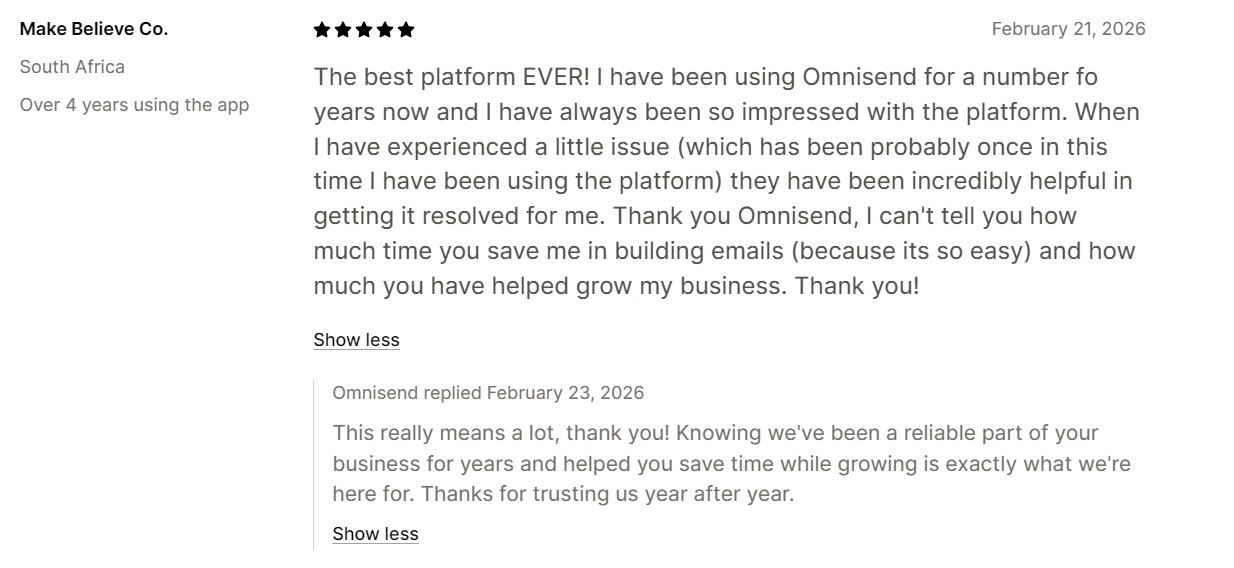
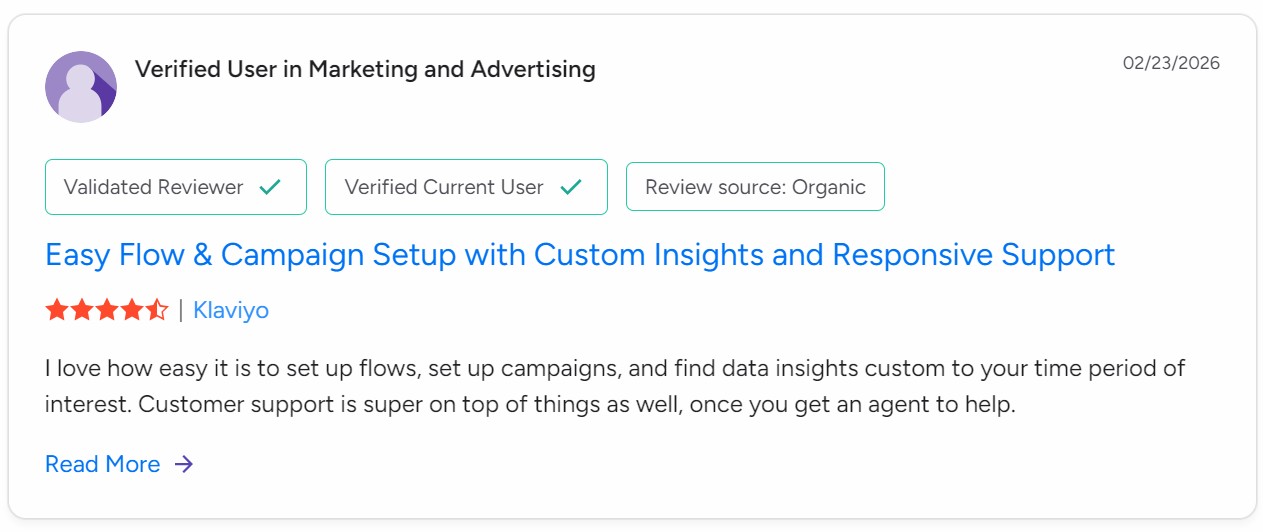
Customer reviews and ratings provide valuable insights into real-world user experiences. Across major review platforms like the Shopify App Store, WordPress, Trustpilot, G2, and Capterra, Omnisend consistently garners higher average ratings. On the Shopify App Store, a crucial battleground given both platforms’ deep native integrations, Omnisend holds a 4.8/5 rating from 2,925 reviews, slightly edging out Klaviyo’s 4.7/5 from 2,904 reviews. The difference becomes more pronounced on WordPress (Omnisend 4.9/5 from 168 reviews vs. Klaviyo 2.8/5 from 24 reviews) and Trustpilot (Omnisend 4.4/5 from 502 reviews vs. Klaviyo 1.8/5 from 362 reviews), where Omnisend demonstrates a clear lead in customer satisfaction. G2 and Capterra ratings remain competitive, with Omnisend at 4.6/5 (1,243 reviews) and 4.7/5 (836 reviews) respectively, compared to Klaviyo’s 4.5/5 (1,357 reviews) and 4.6/5 (531 reviews).
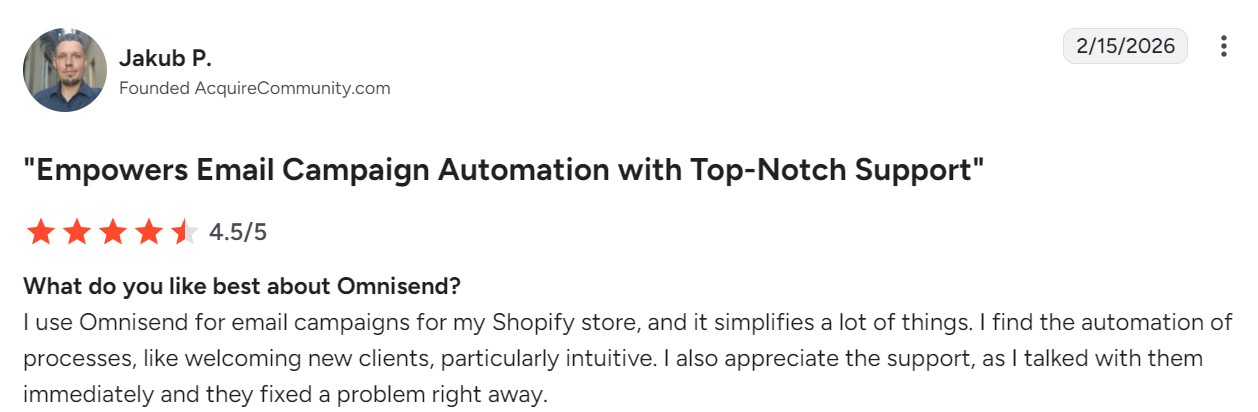
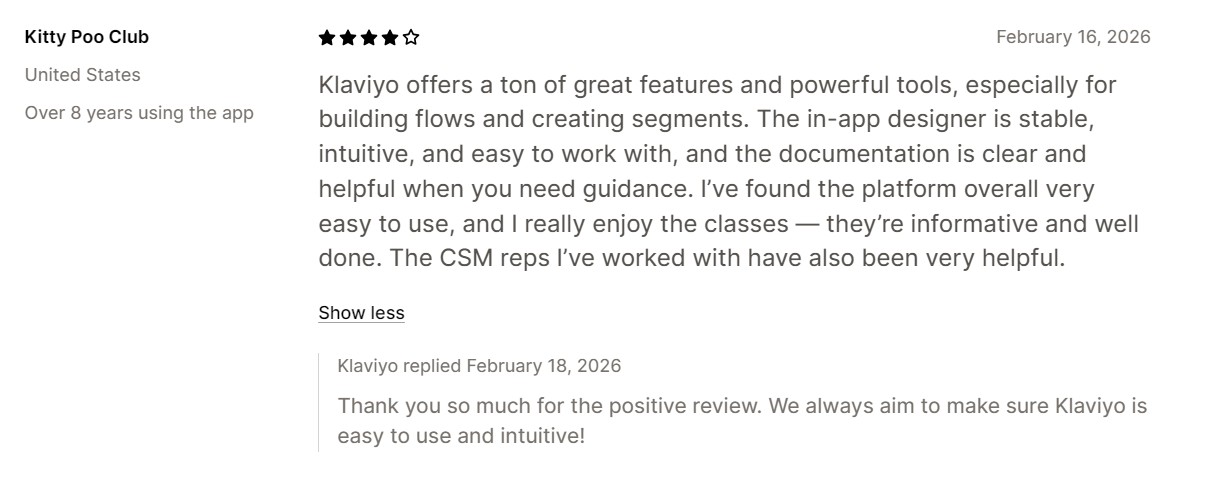
The general consensus among users on platforms like Reddit often highlights Klaviyo’s suitability for larger enterprises with extensive contact lists and substantial marketing budgets. In contrast, Omnisend is frequently praised for its ability to deliver comparable advanced features and capabilities to stores of all sizes, but at a more accessible price point. Discussions on e-commerce forums suggest a pragmatic approach, with many recommending Omnisend for businesses starting lean or those seeking to optimize costs without sacrificing functionality. Users commend Omnisend’s robust flows and targeted campaigns, noting that it rarely hits "walls" in capability, even for lists up to 15,000 contacts, often at a monthly cost significantly below $250, including SMS. Klaviyo users, conversely, often laud its intuitive design, comprehensive documentation, and responsive customer support, especially for complex email campaign and automation features.
Pricing Models and Value Proposition
The financial aspect is a critical determinant for many businesses. Omnisend positions itself as a cost-effective solution, offering savings of up to 35% compared to Klaviyo, while including built-in AI tools and web push notifications across all tiers. Klaviyo, on the other hand, bundles SMS credits into its free plan, which can be an attractive entry point for businesses prioritizing mobile messaging. Both platforms offer free plans for up to 250 contacts with identical email send limits of 500/month. However, Omnisend’s free plan includes 24/7 live chat and email support, AI capabilities (segment builder, subject line and email assistant), and web push notifications, features that are either restricted to paid plans or not offered by Klaviyo’s free tier.
For growing businesses, Omnisend’s Standard and Pro plans offer a clear cost advantage. At 2,500 contacts, Omnisend’s Pro plan, which includes unlimited email sends and SMS capabilities, costs $59, while Klaviyo’s Email tier is $60 for 25,000 sends. As contact lists grow, Klaviyo generally becomes more expensive. For example, at 10,000 contacts, Omnisend Pro is $150 for unlimited sends, matching Klaviyo’s $150 for 100,000 sends. For larger businesses exceeding 20,000 contacts, Klaviyo consistently remains the pricier option across common tiers, starting at $375 for 200,000 sends compared to Omnisend Pro’s $375 for unlimited sends. This cost structure positions Omnisend as a more budget-friendly choice, especially for businesses with high sending volumes or those seeking a comprehensive multichannel solution without a premium price tag.
Ease of Use and Onboarding
In terms of user experience, Omnisend generally offers a lower learning curve. Its dashboard features fewer menu items, streamlining navigation and allowing users to build and analyze campaigns more quickly. The setup process for Omnisend involves fewer steps, with direct sign-up options via Shopify or Google account, simplifying the initial integration. Both platforms connect to e-commerce stores like Shopify or WooCommerce in approximately five minutes.
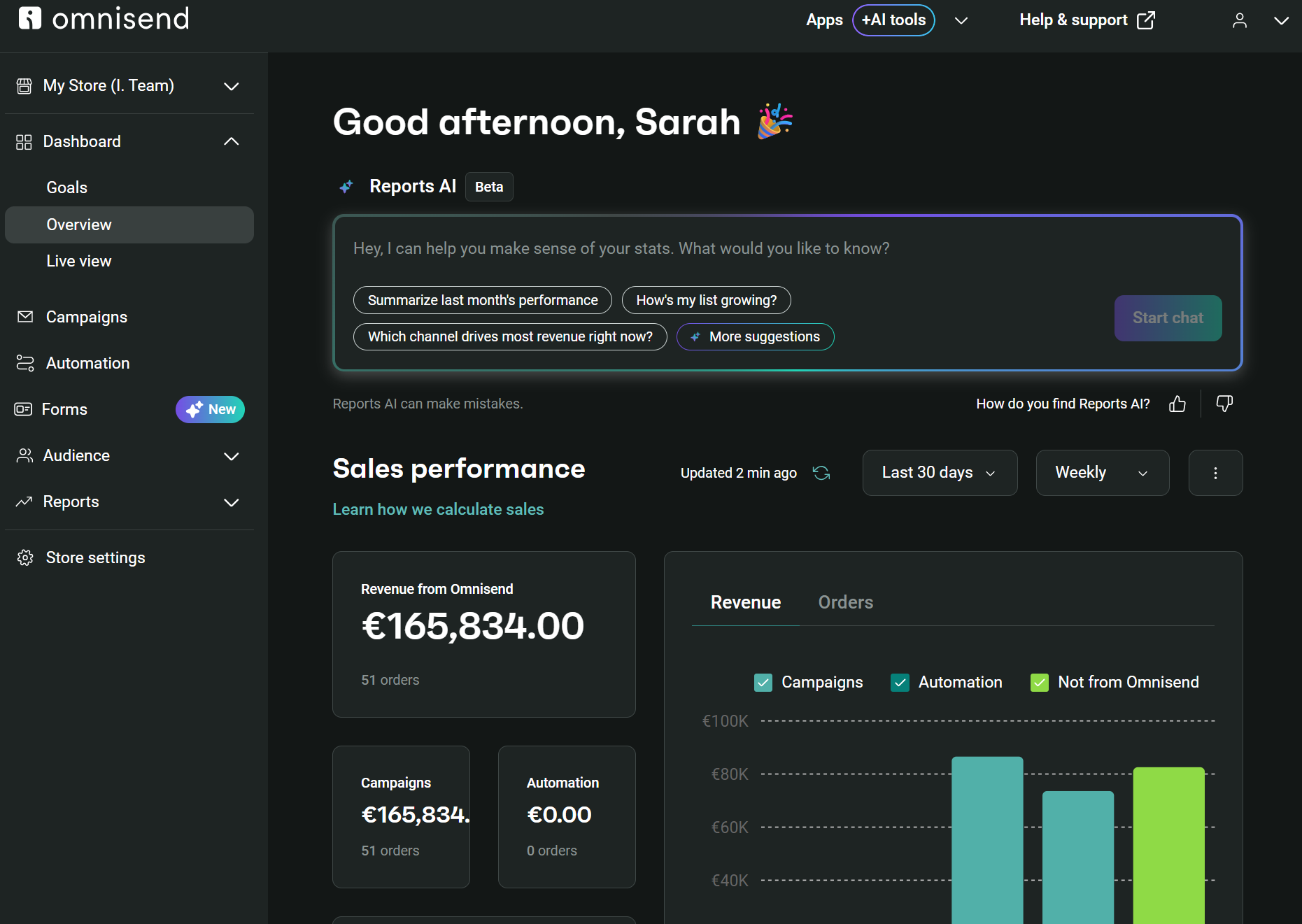
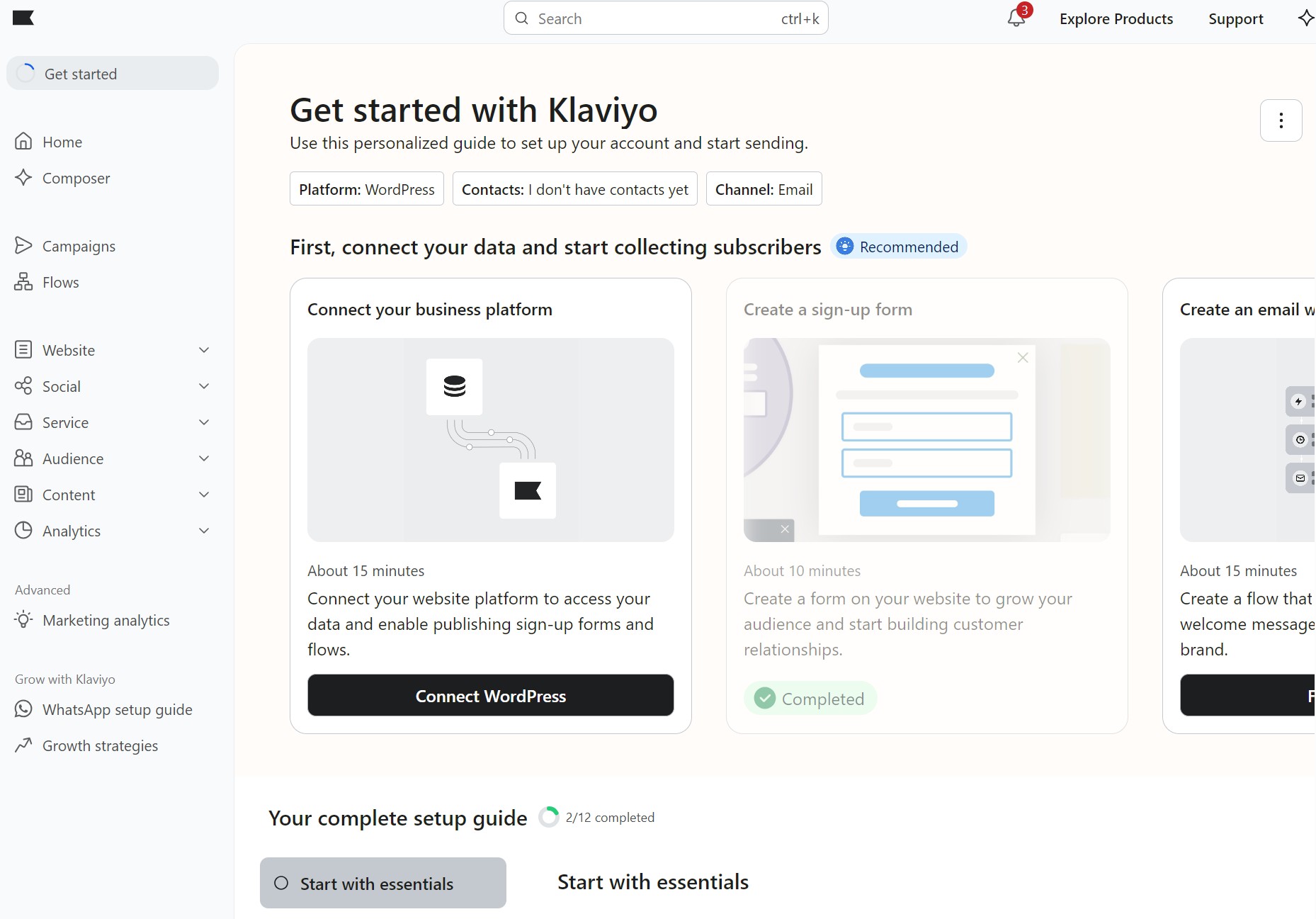
Klaviyo’s dashboard, while detailed and comprehensive, can feel more overwhelming to new users due to its 15 sidebar entries, many of which are collapsible. While this offers granular control and extensive resources for beginners, it demands more navigation. Omnisend’s more streamlined interface, with only eight main entries, focuses on getting users to key functions like Campaigns, Automation, Forms, and Store settings with fewer clicks. This design philosophy translates into a quicker mastery of the platform, supported by a step-by-step guide that tracks user progress from store connection to brand style setup.
Email Campaign Creation and A/B Testing
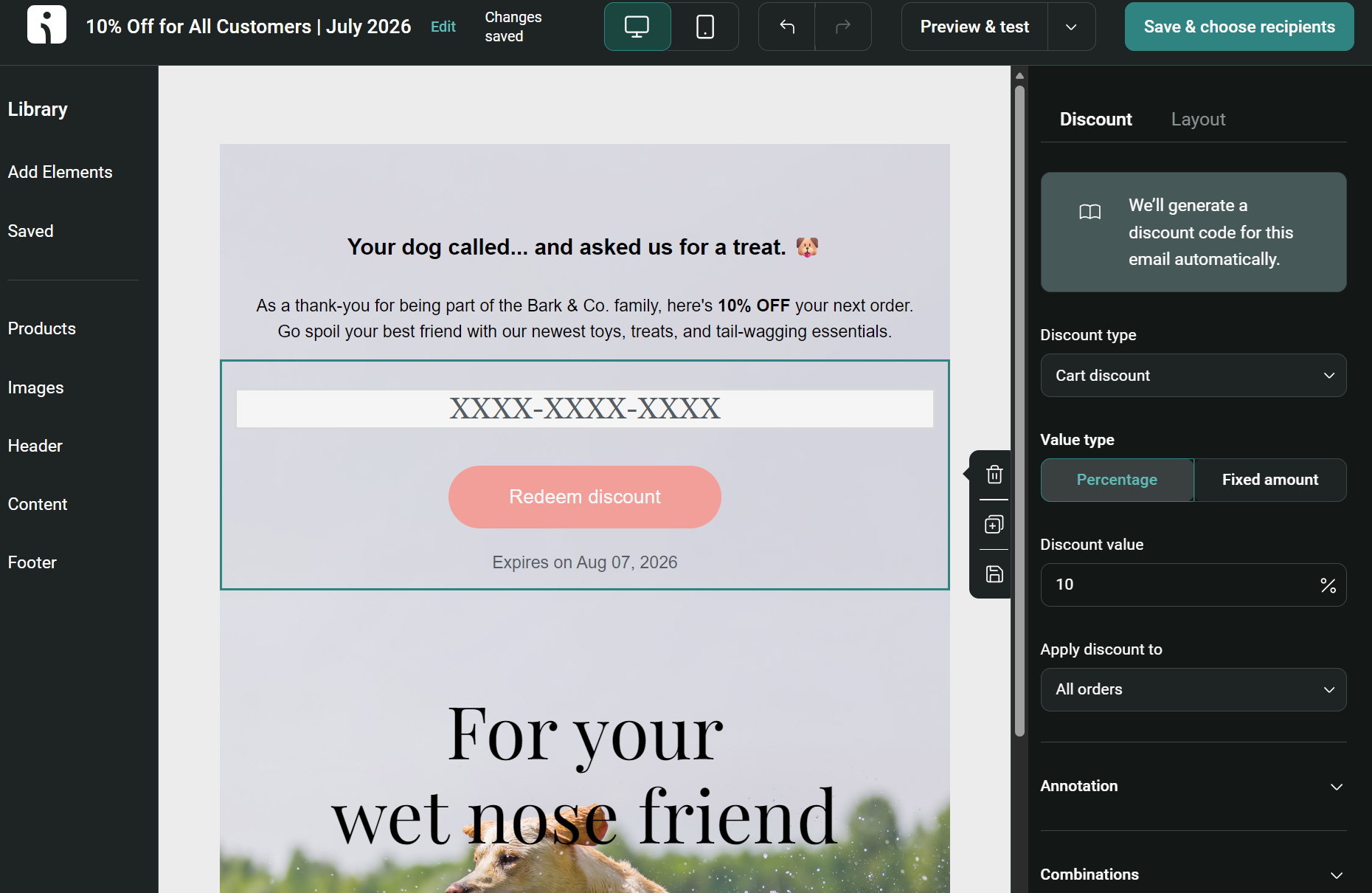
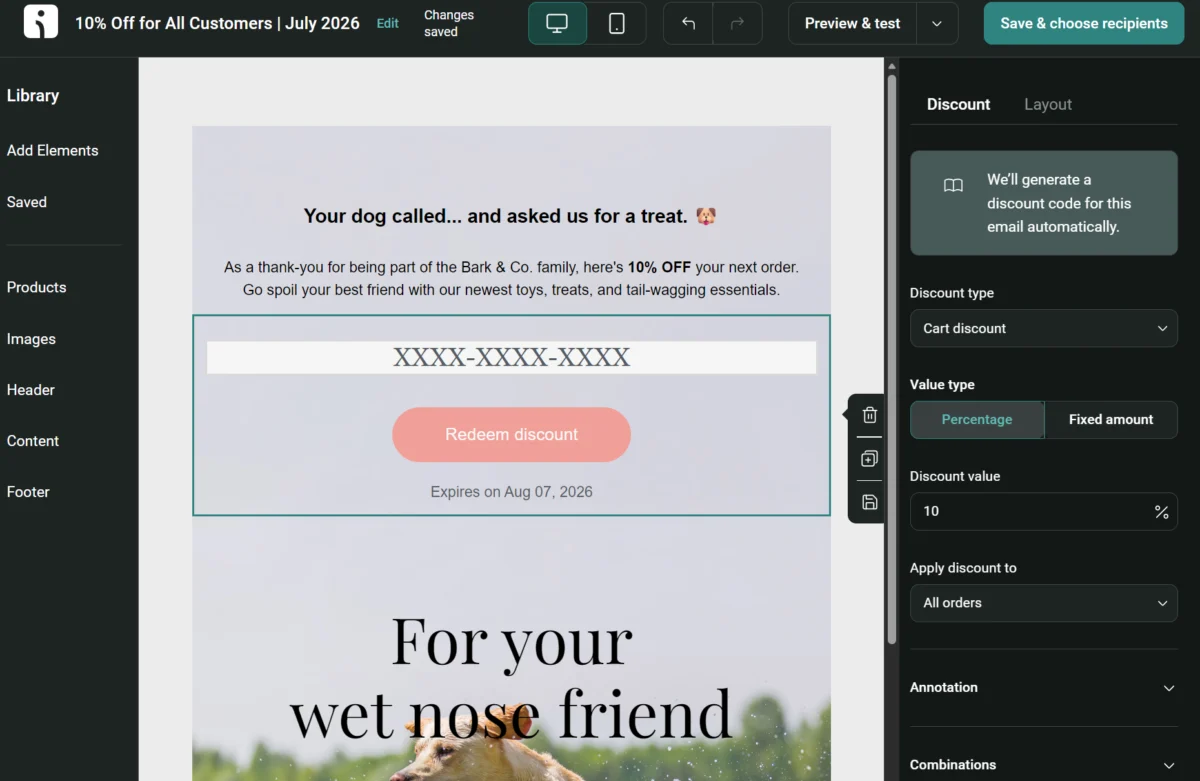
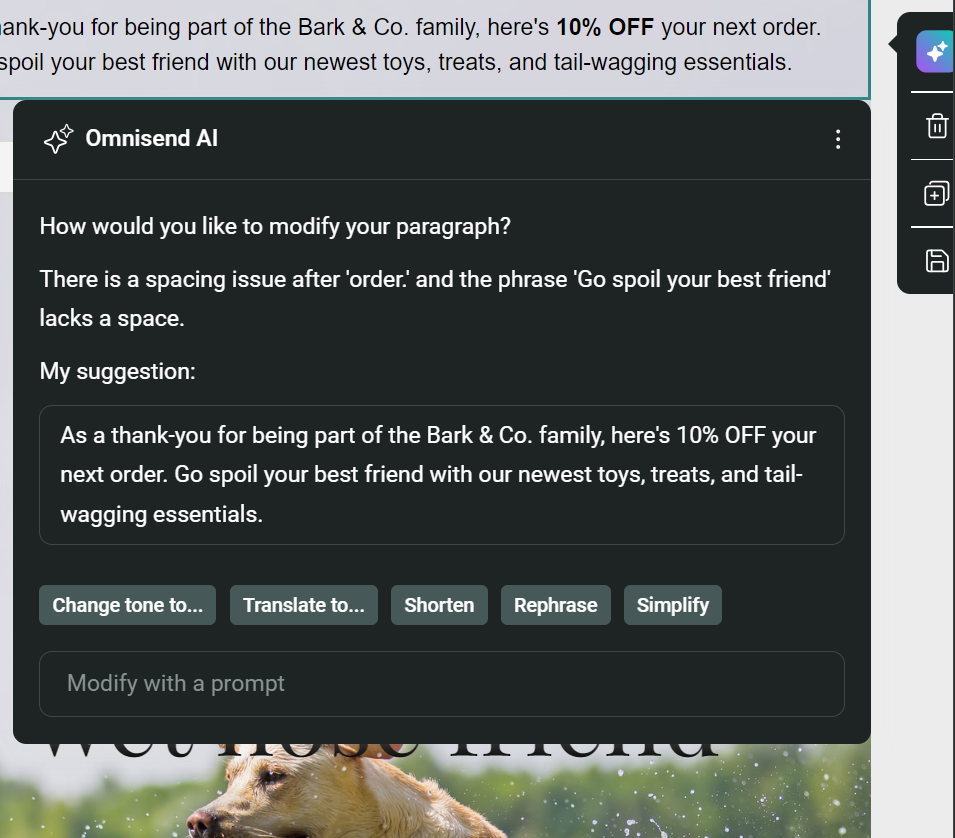
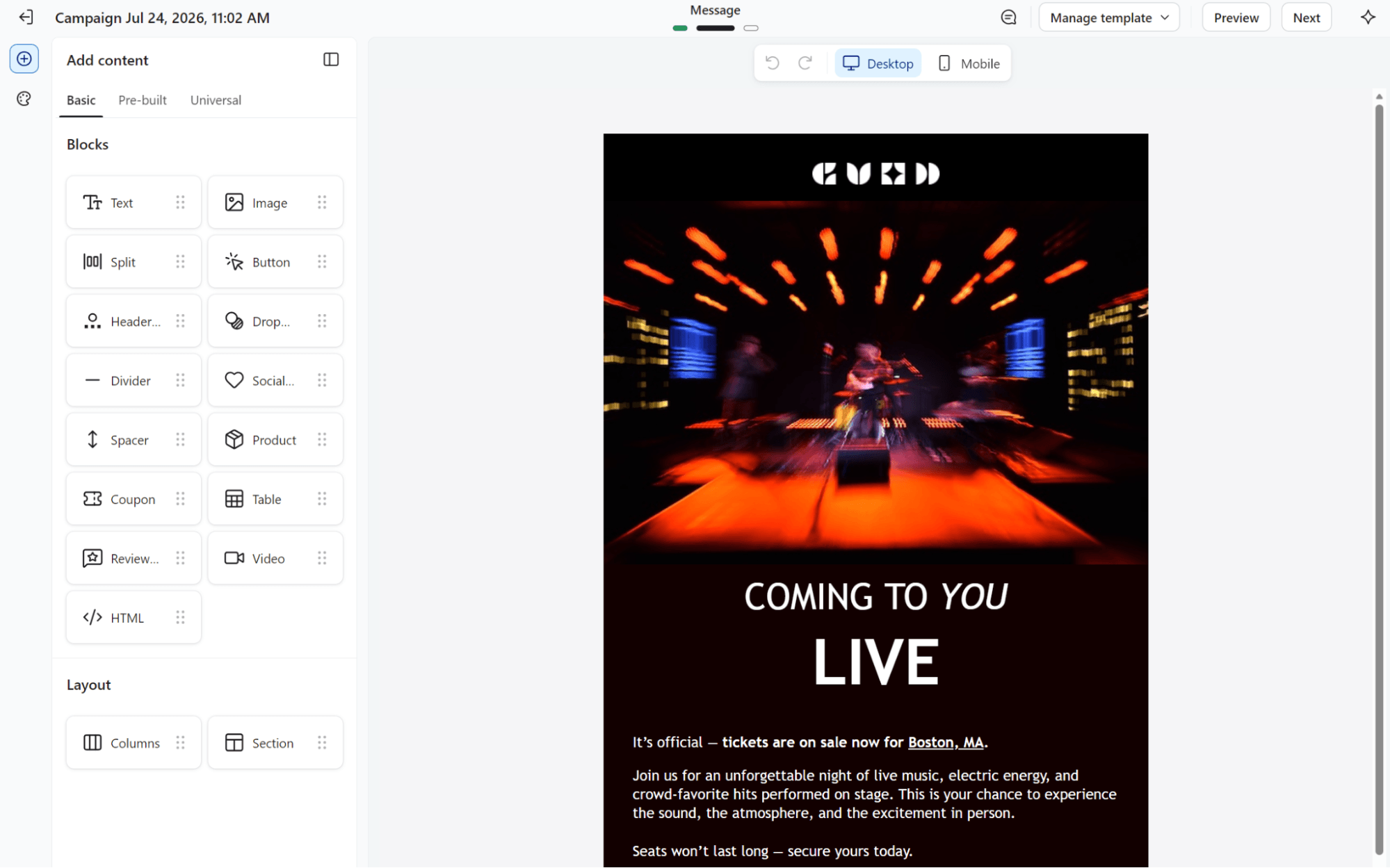
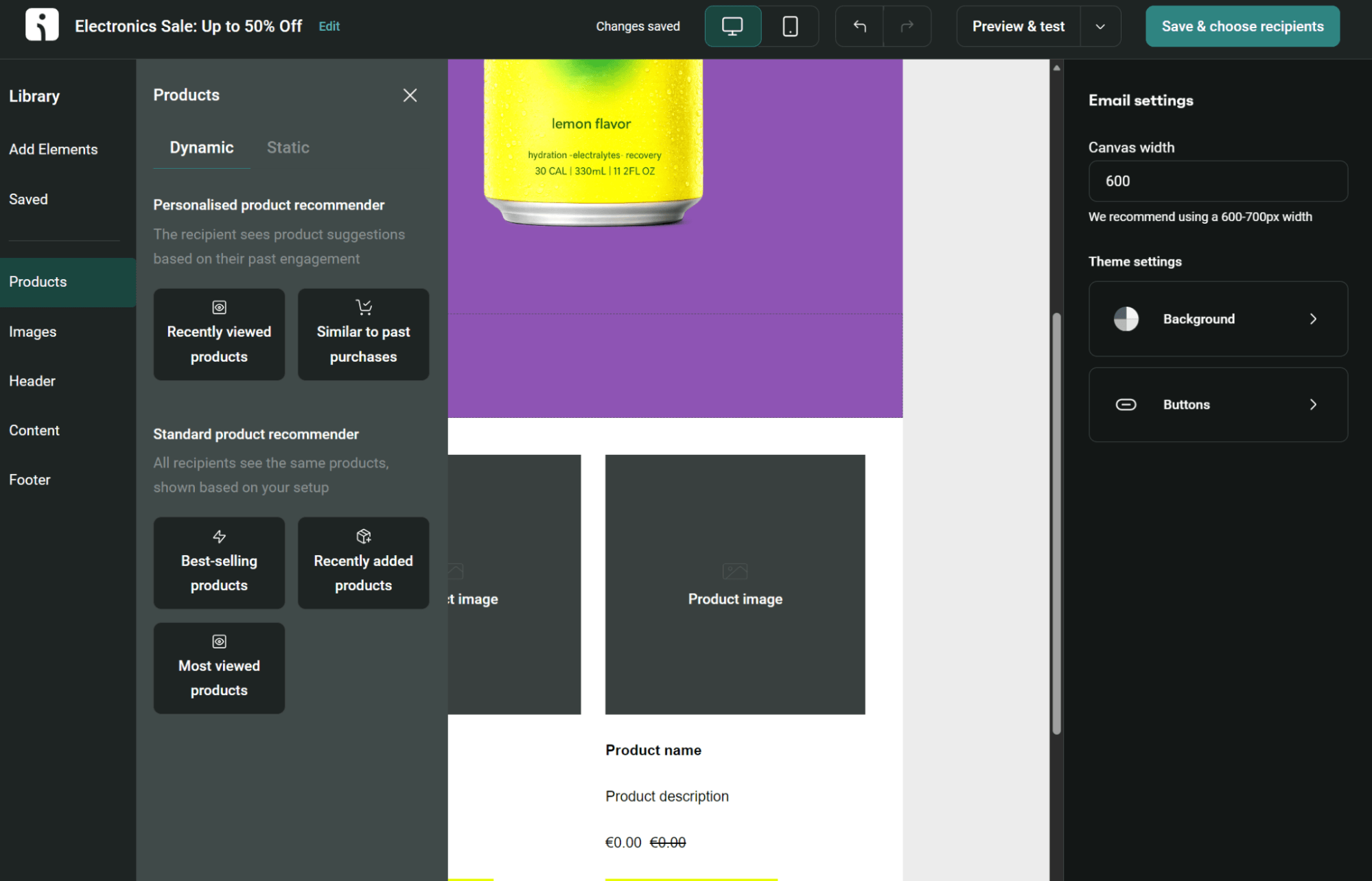
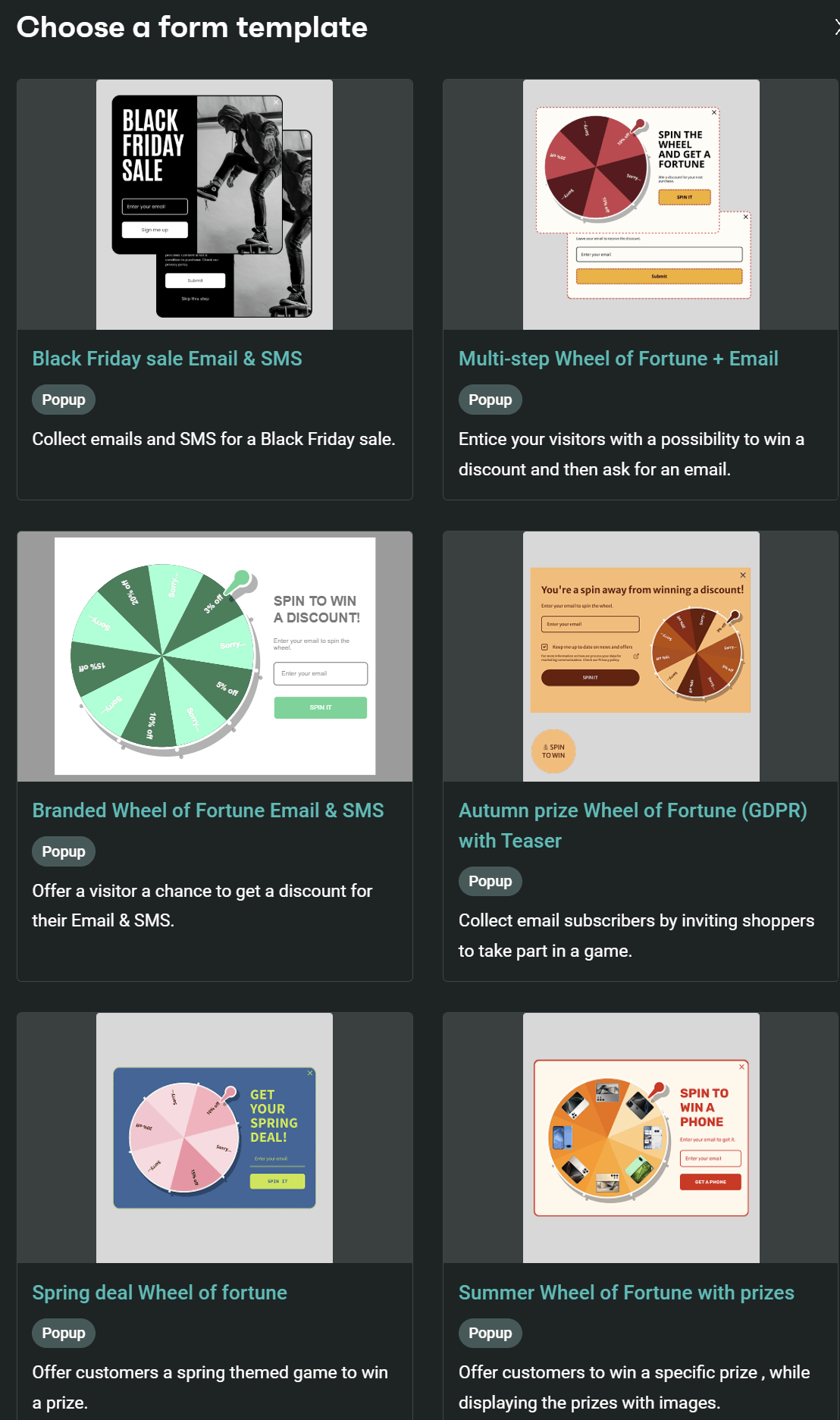
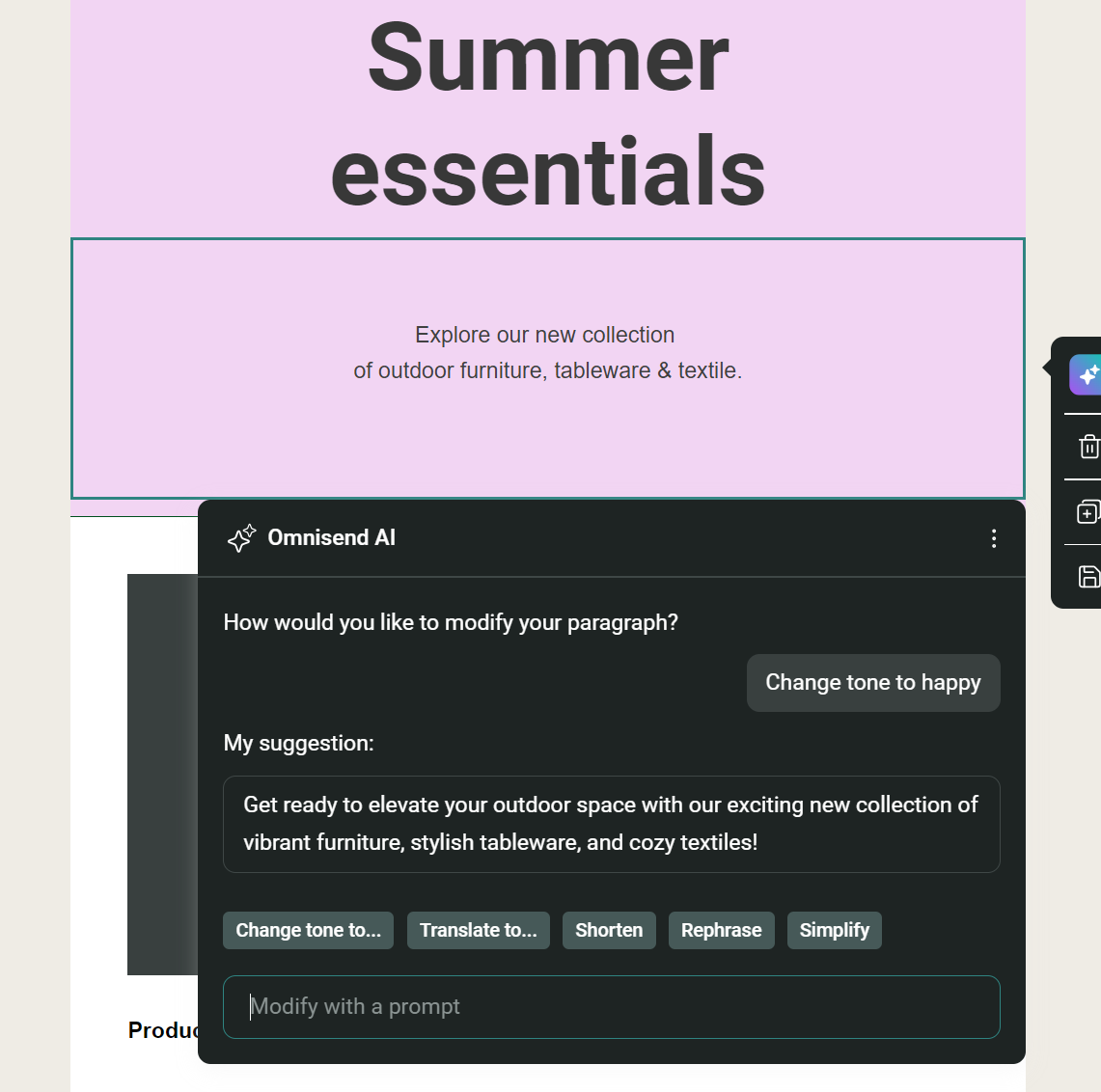
Omnisend facilitates email campaign creation with over 250 pre-built templates, significantly more than Klaviyo’s 160+. This provides users with a broader range of seasonal and themed options, accelerating campaign development. Both platforms feature intuitive drag-and-drop email builders that eliminate the need for coding. Omnisend’s editor organizes elements clearly into categories like Elements, Products, Images, Header, Content, and Footer. A notable advantage for Omnisend is the inclusion of generative AI features across all plans, including the free tier, allowing users to modify text, generate subject lines, and speed up content production.
Klaviyo’s editor, while equally pleasant to use, offers more advanced design elements such as drop shadows, tables, and split blocks, enabling more dynamic and visually complex email designs without prior design experience. However, its AI features for content generation are typically reserved for paid plans.
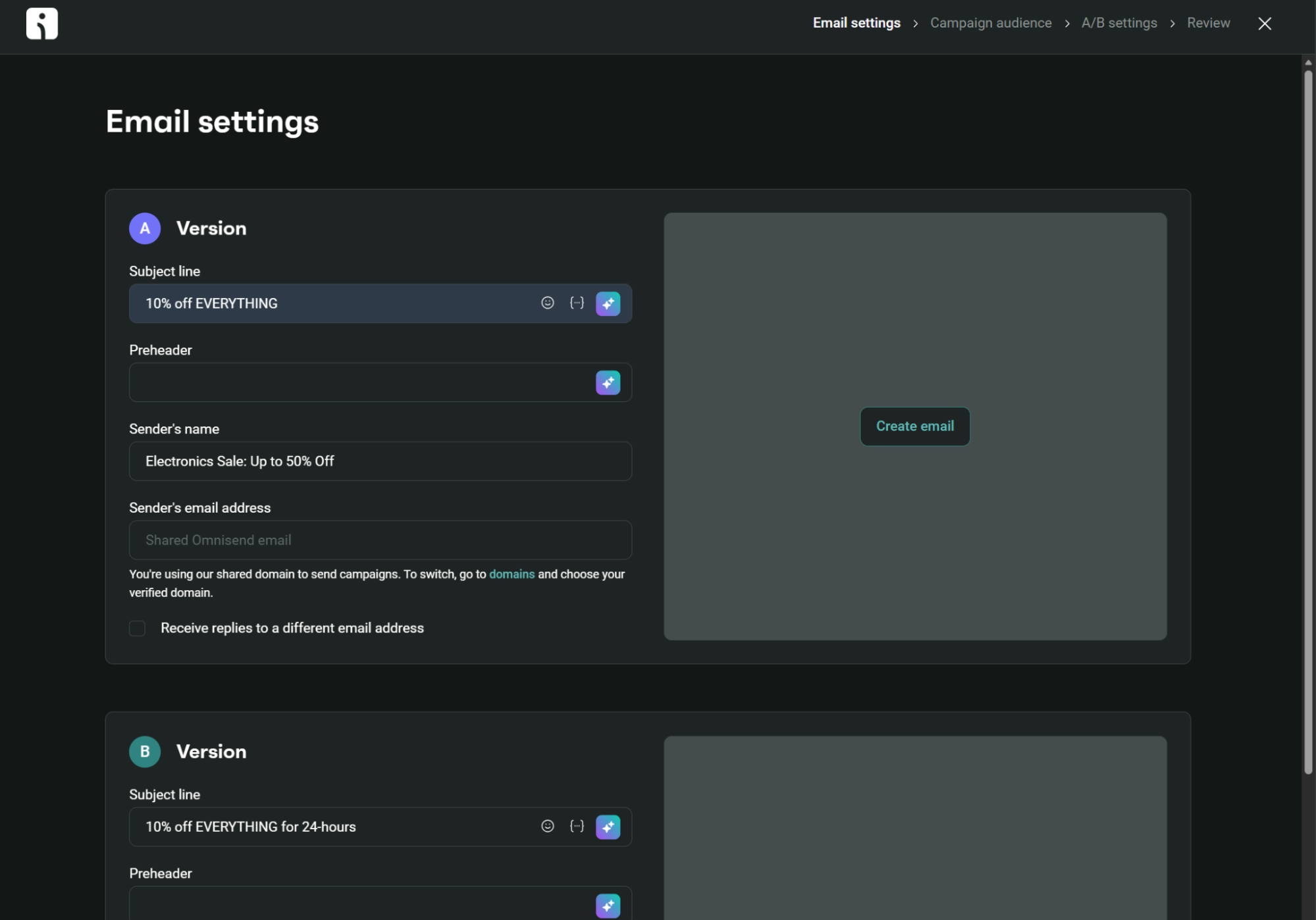
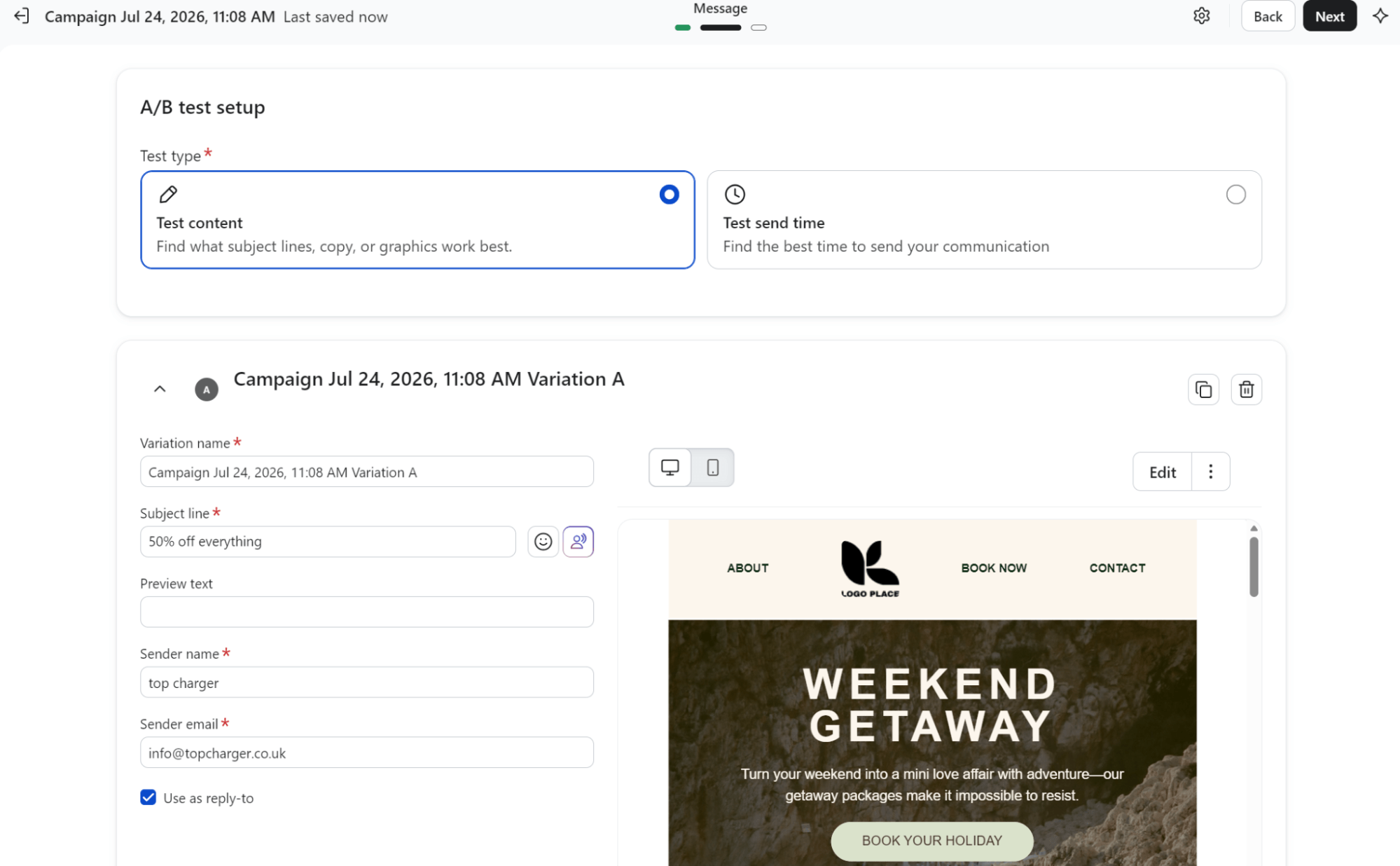
For A/B testing, both platforms offer robust capabilities. Omnisend allows testing of subject lines, sender names, email addresses, and content, with an automated winner selection and send-out based on opens or clicks within 24 hours. Klaviyo also covers content and send-time testing, with multichannel A/B testing available on paid plans. Both platforms enable users to split audiences and test different versions effectively, ensuring optimized campaign performance.
Advanced Automation and Workflows
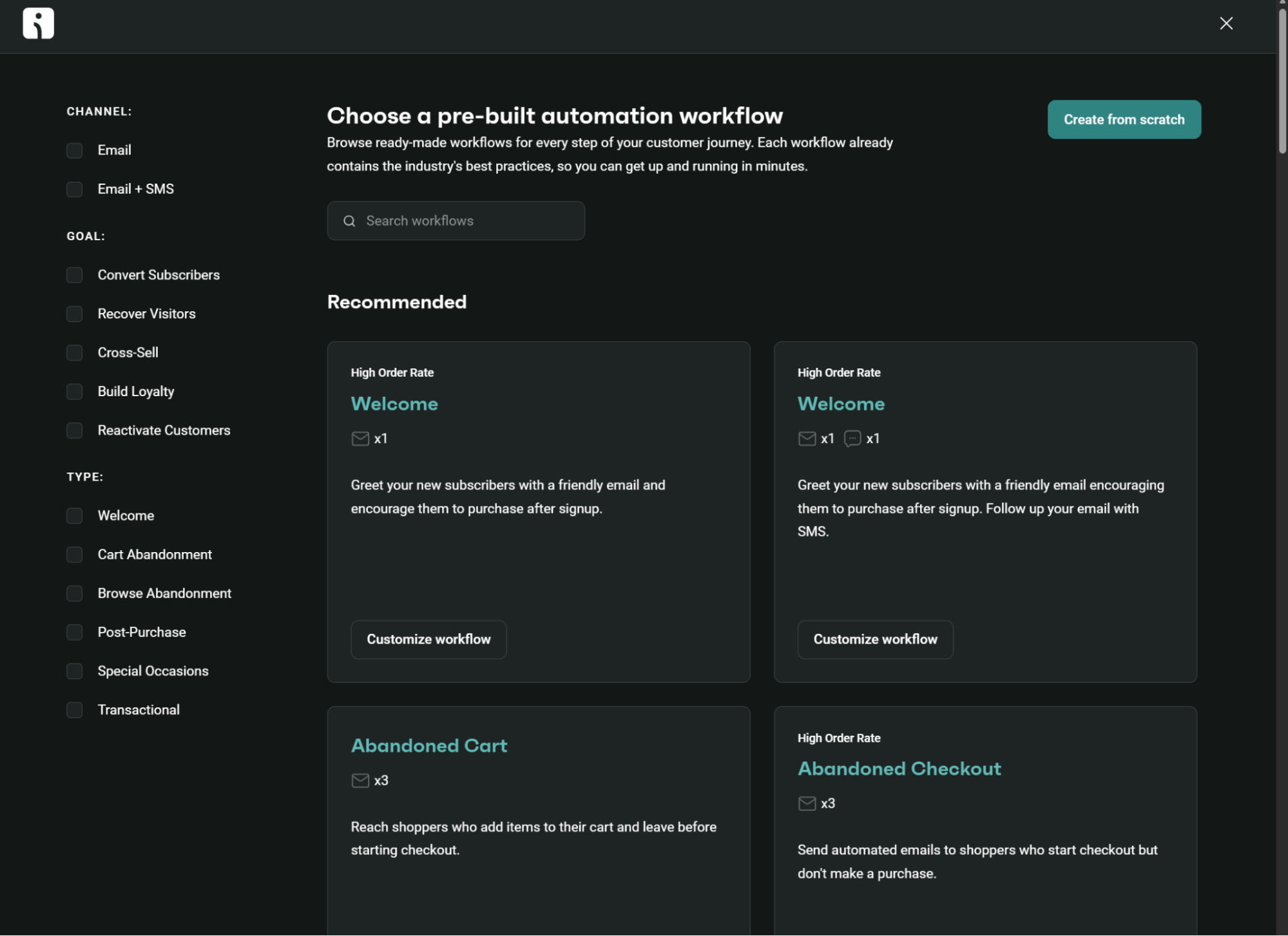
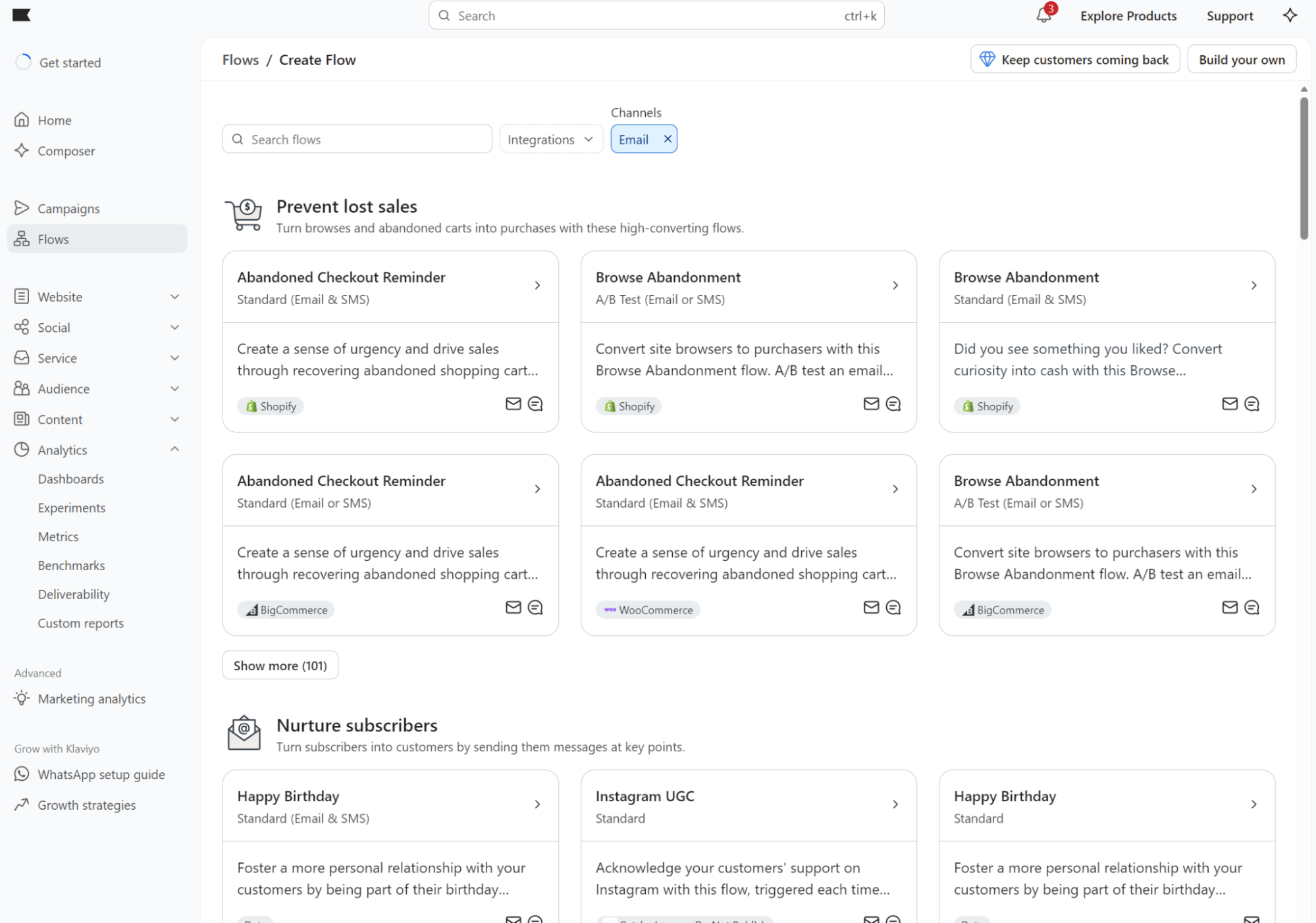
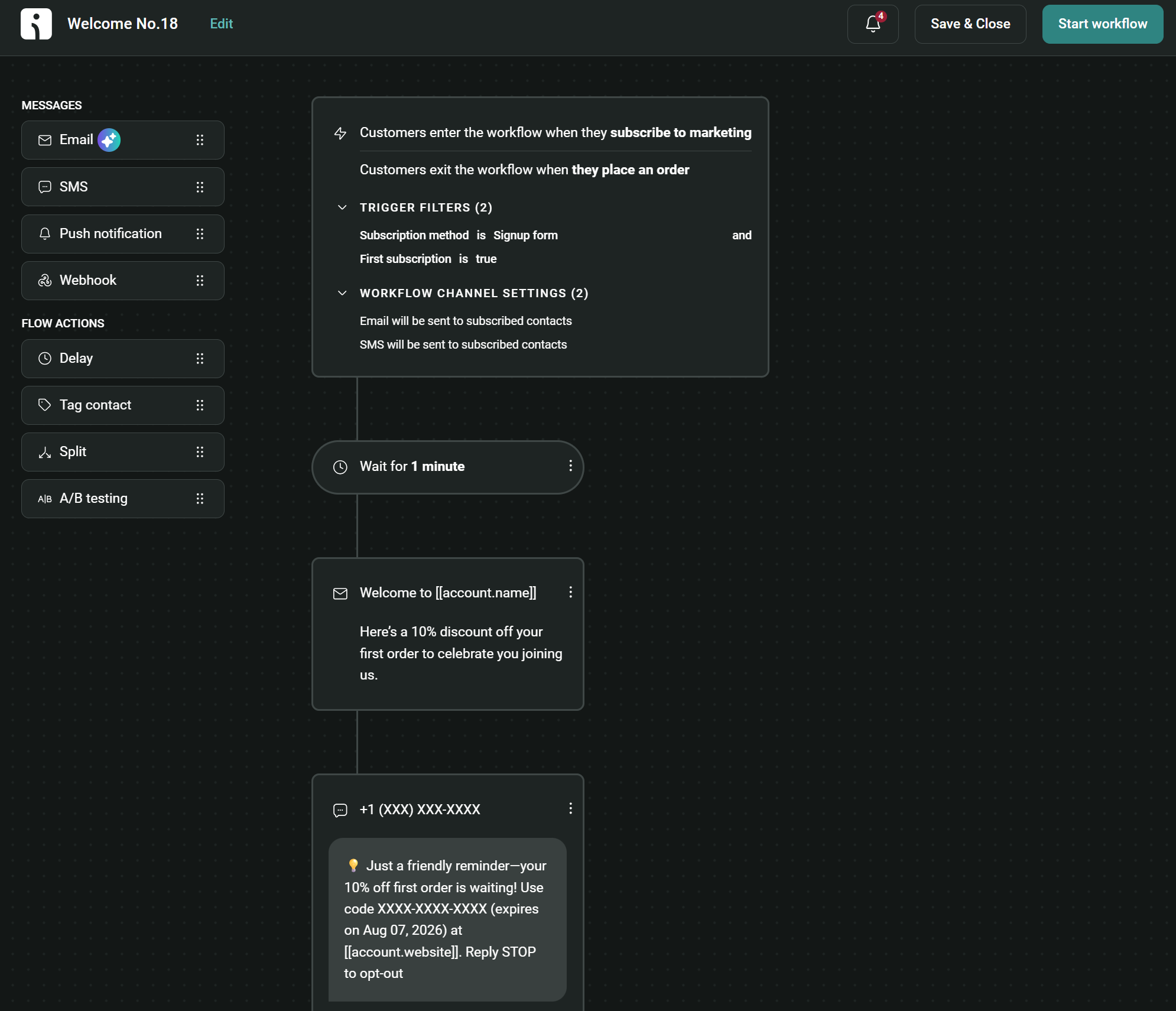
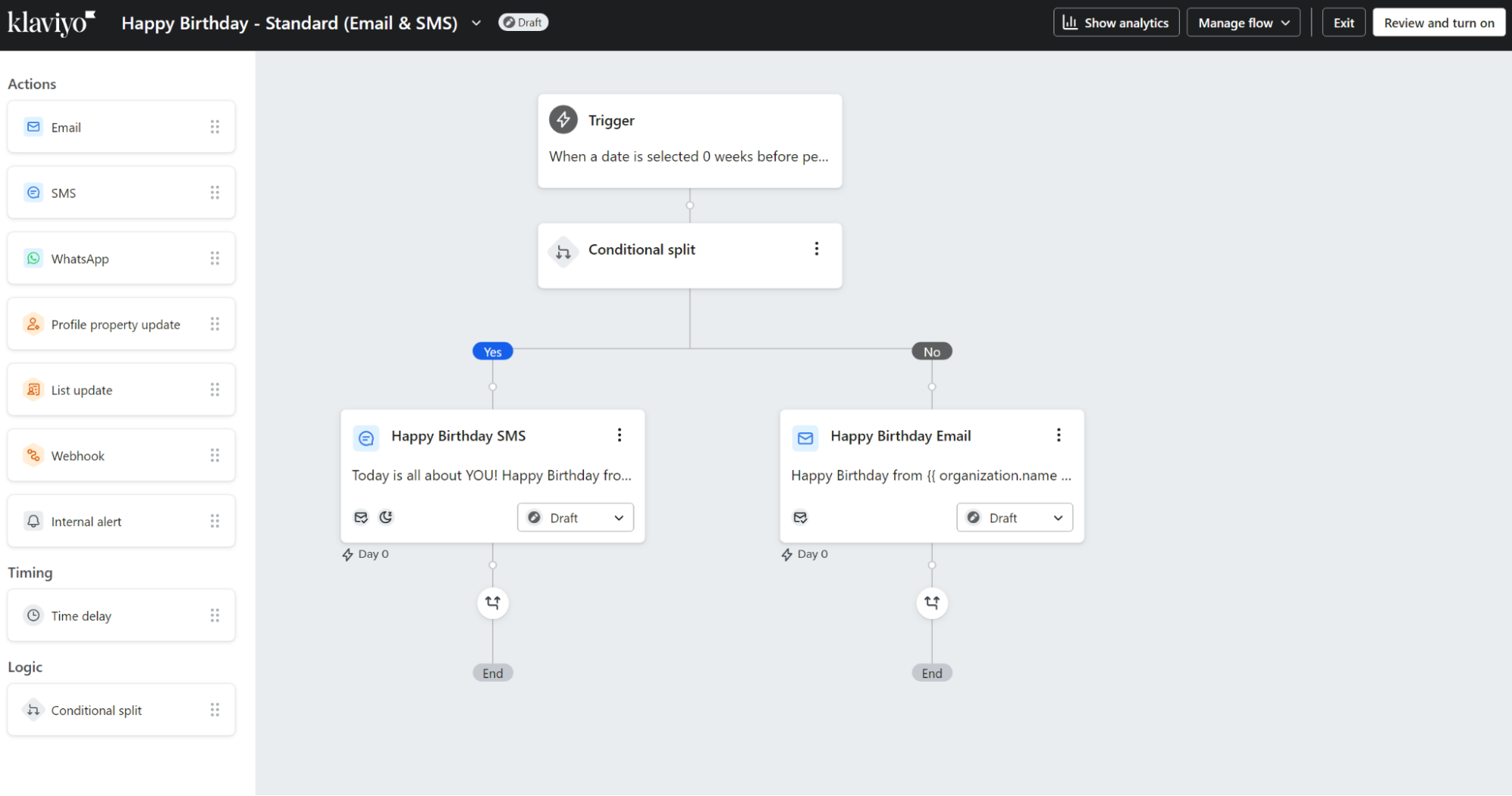
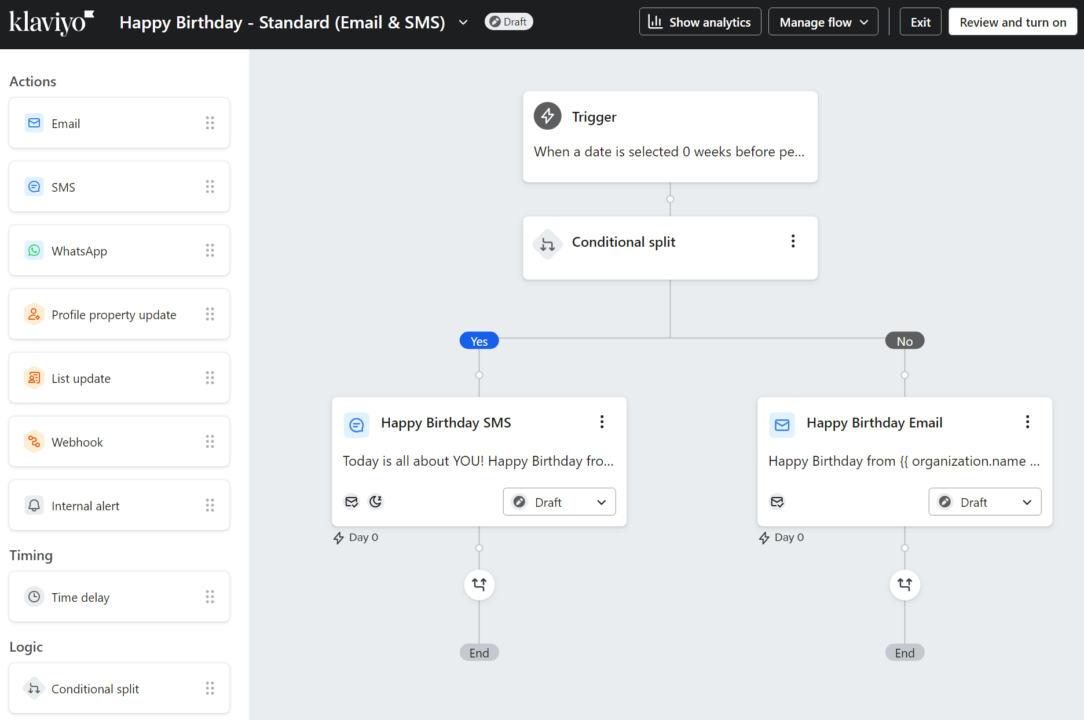
Klaviyo excels in the granularity of its automations, offering more advanced triggers for highly targeted customer groups, supported by its strong CRM capabilities. However, Omnisend’s flows are generally faster to set up and cover most common e-commerce scenarios without extensive additional editing. Omnisend provides over 30 pre-built flows for various customer journey stages, including welcome series, abandoned carts, browse abandonment, cross-sells, and birthday messages. These flows come with recommended timing, trigger filters, and message templates, categorized by goal and channel mix (email-only or email + SMS).
Klaviyo offers an even broader array of pre-built flow templates, including specialized triggers like price drop alerts and back-in-stock notifications, and predicted next order flows. Its templates automatically pull dynamic data and can be filtered by e-commerce platform and channel.
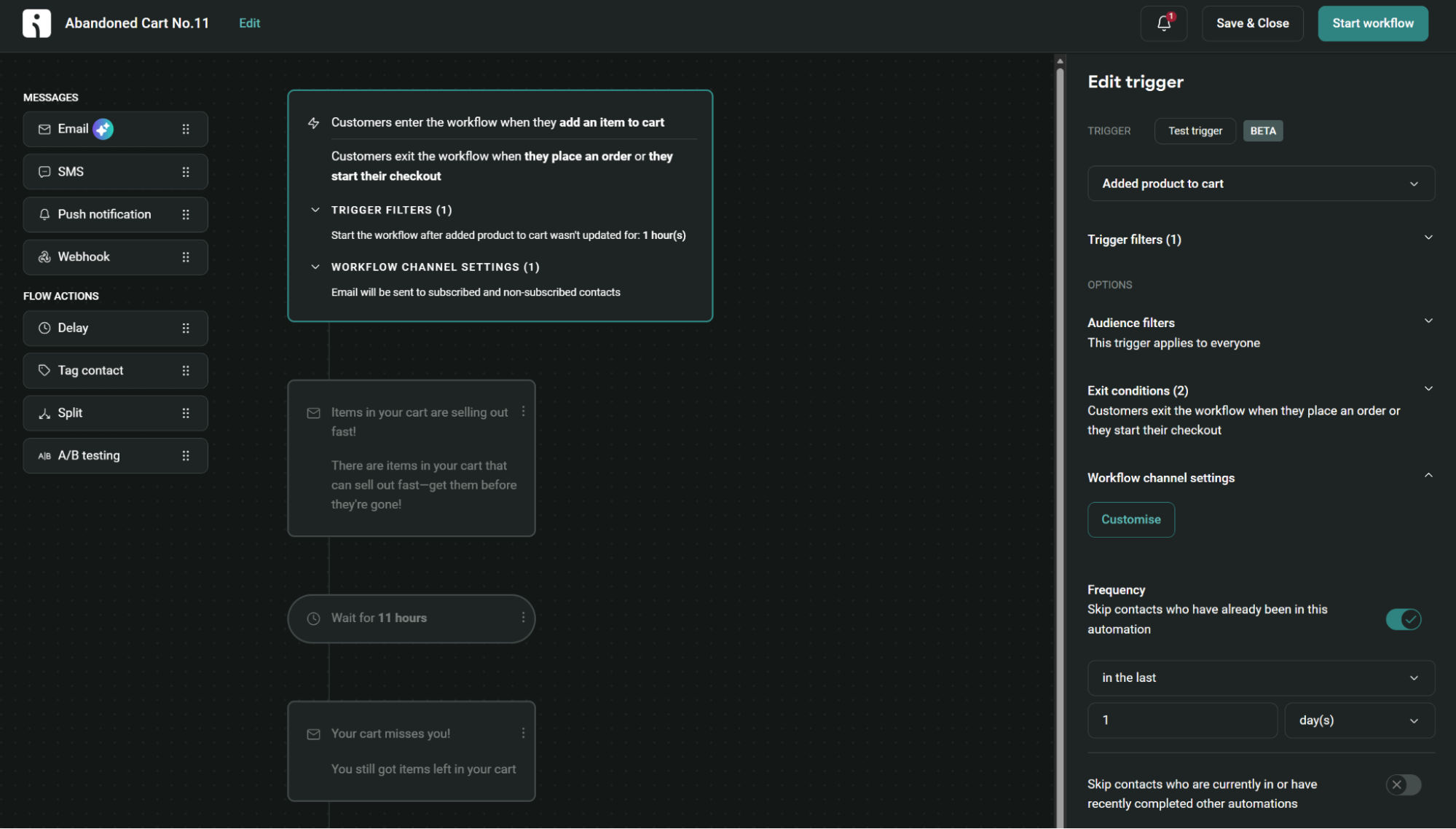
In terms of customization, Omnisend’s automation builder allows for stacking multiple conditions, triggering flows based on customer segments, custom events from third-party apps, and standard e-commerce actions. It supports up to five trigger filters and four exit conditions per workflow, with up to 10 conditional splits. A/B testing is integrated within automations, allowing for testing delays, channels, and content variations.
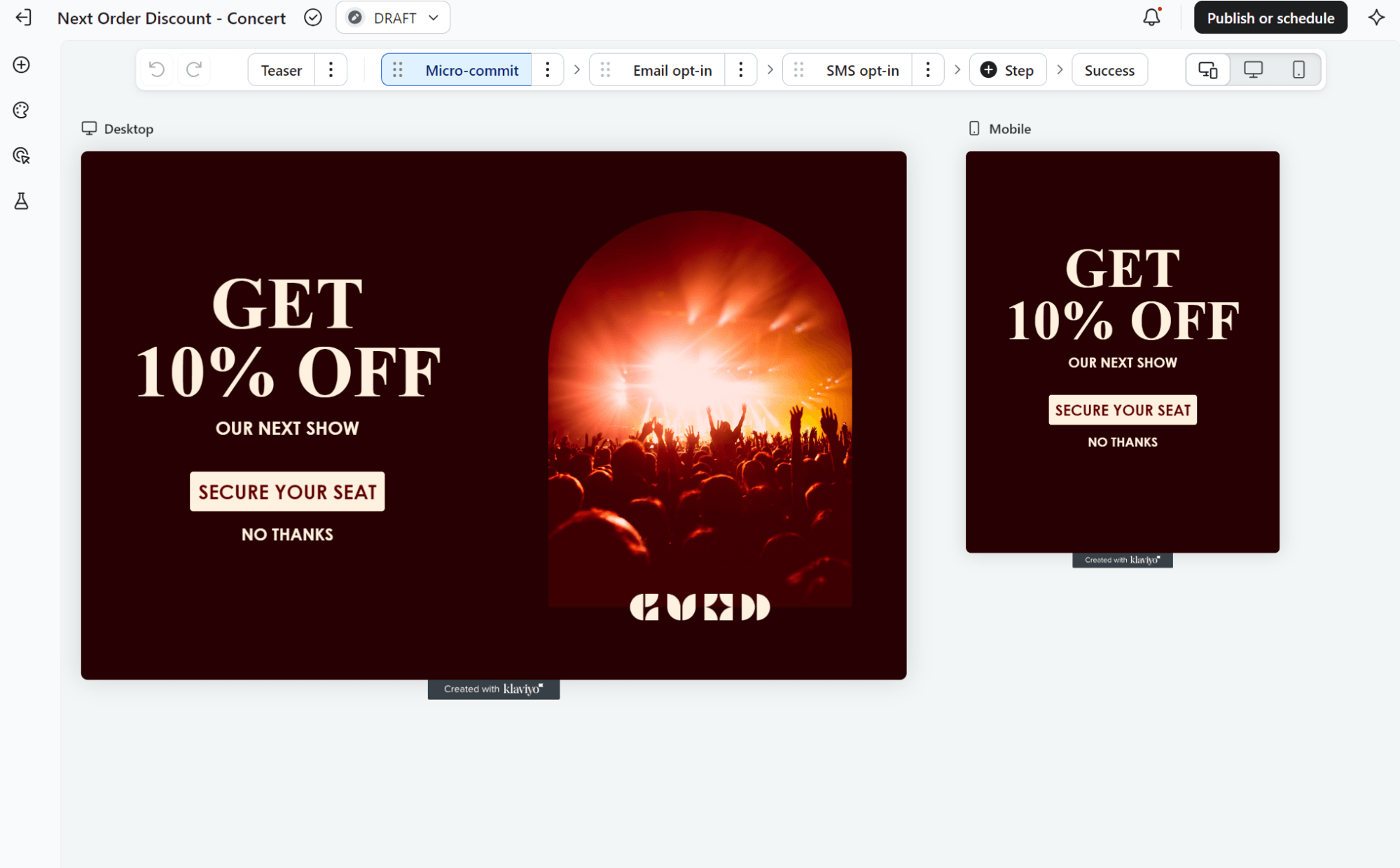
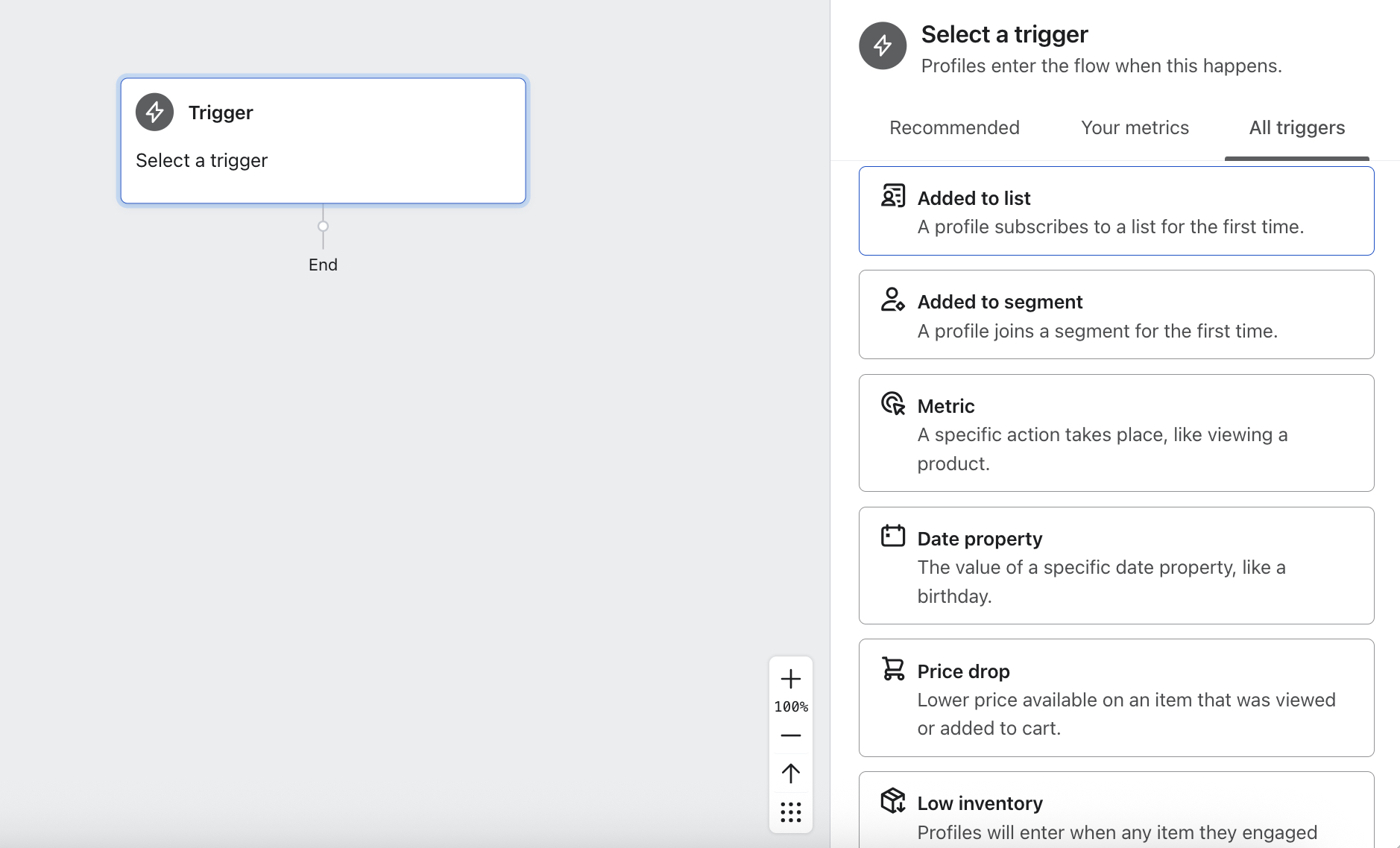
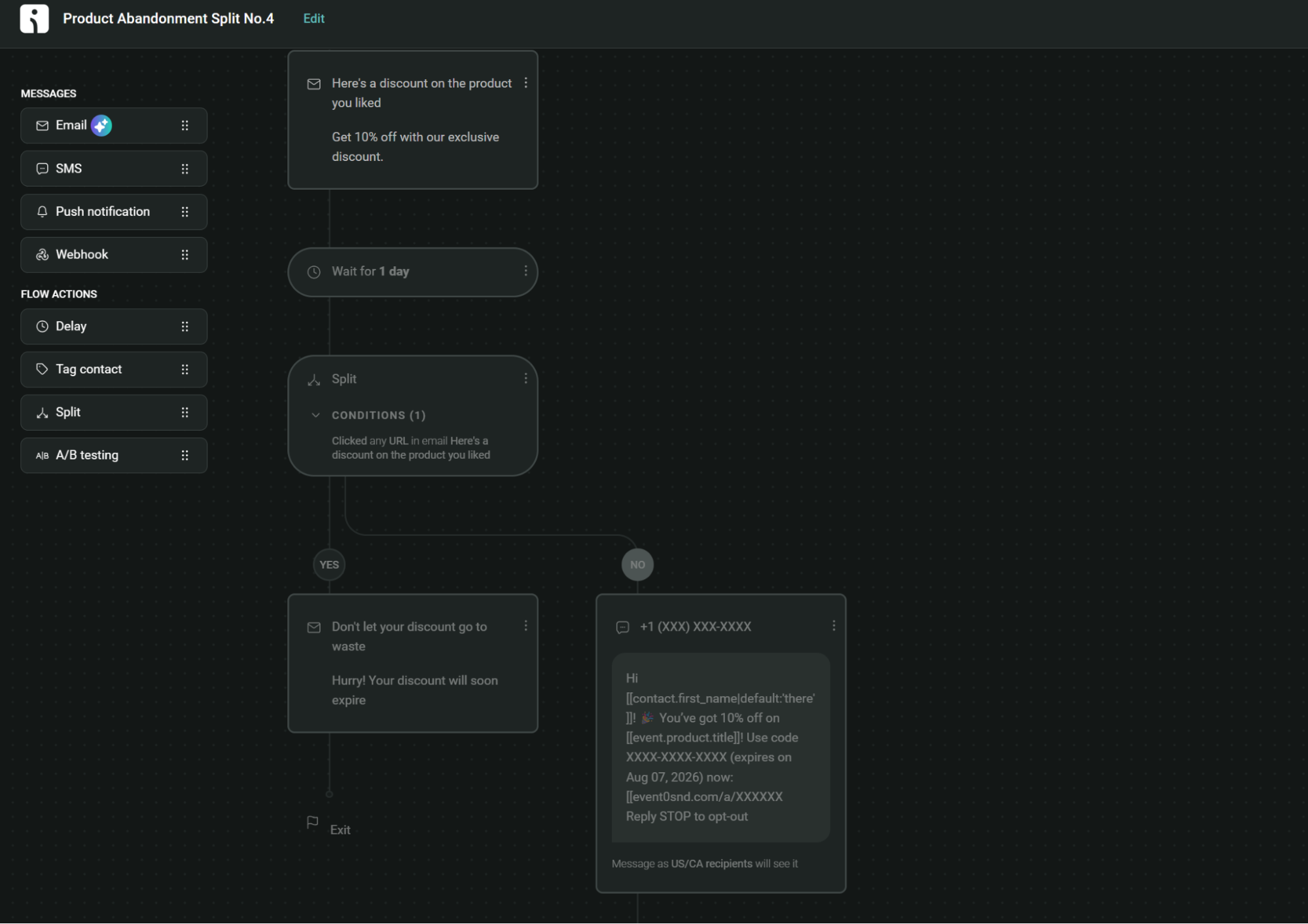
Klaviyo’s flow builder uses six trigger types (list, segment, metric, date property, price drop, low inventory) and employs sophisticated "flow filters" and "conditional splits." A key difference is how Klaviyo handles filters; it checks profile filters before sending every message, ensuring customers who, for instance, place an order mid-flow, are automatically skipped from subsequent abandoned cart messages. This level of dynamic filtering offers superior precision in customer journey management.
For multichannel automation, Klaviyo supports email, SMS, and WhatsApp in its flows. Omnisend integrates email, SMS, and web push notifications. While Omnisend lacks native WhatsApp support, its inclusion of web push offers an alternative channel for engagement that Klaviyo does not natively provide within flows. Omnisend’s approach ensures that if SMS consent is missing or credits run out, an email is sent instead, preventing automation failure. Klaviyo’s "Smart Sending" feature prevents message fatigue by limiting texts within 24 hours.
SMS Marketing Capabilities
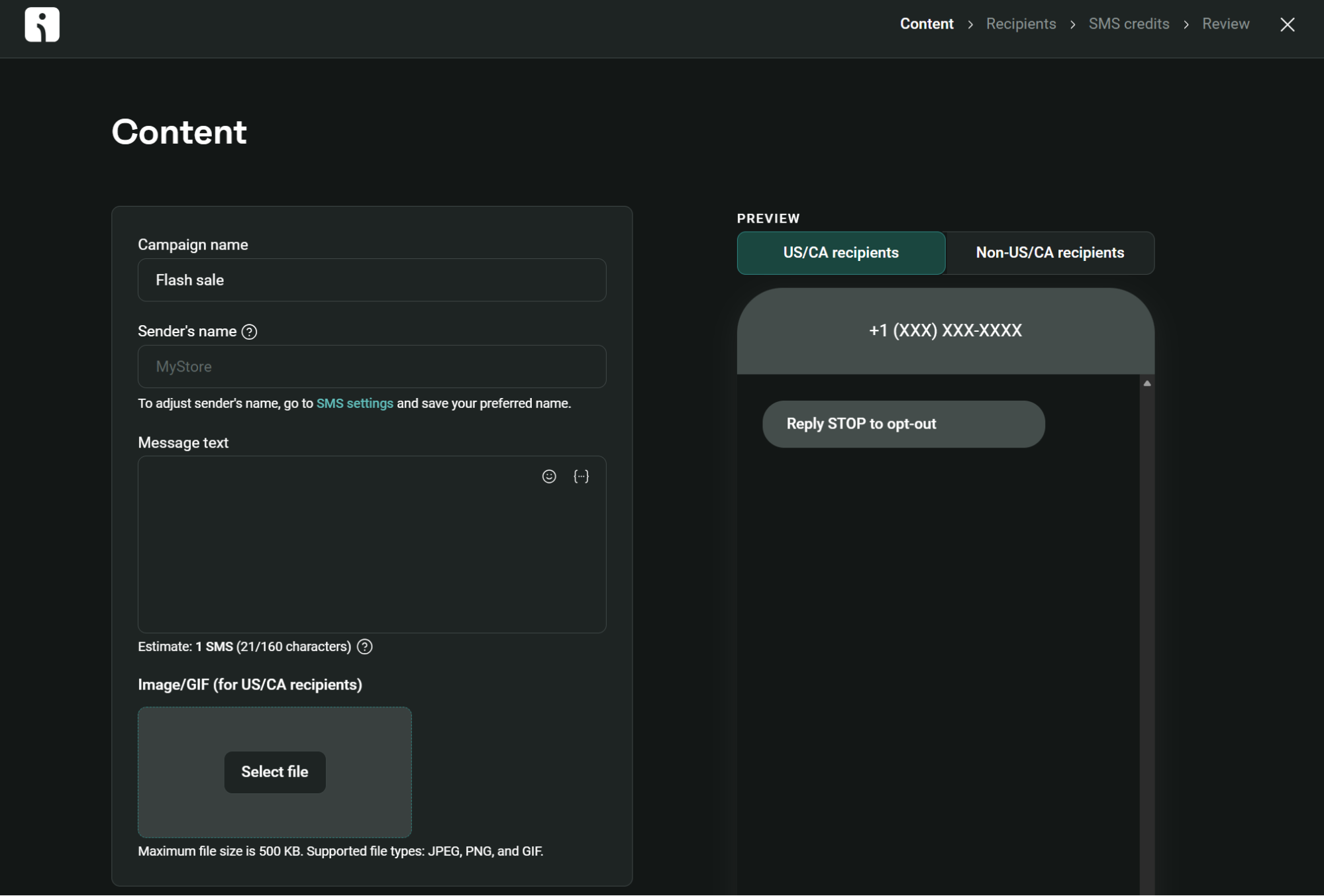
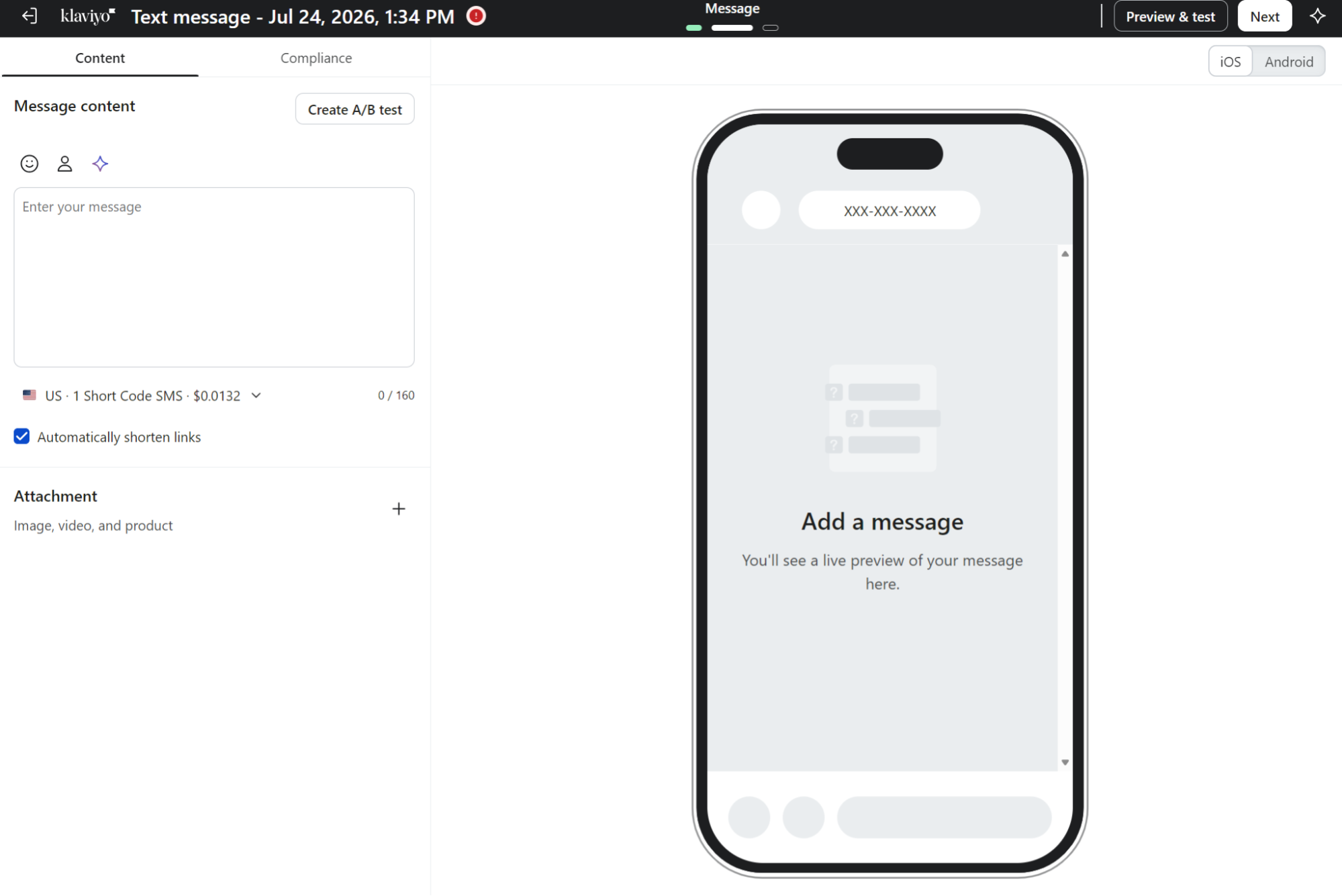
Omnisend offers broader global SMS coverage and more competitive pricing for SMS credits. Its Pro plan includes SMS for new customers, while Klaviyo supports SMS across all plans, even providing a $5 monthly bonus credit (approx. 200 U.S. sends) on its free plan. Omnisend’s SMS bundles start at $10/month, with U.S. sends costing $0.009/SMS, offering better value, especially with volume discounts. Both platforms adjust credit consumption based on recipient location.
Both offer visually similar SMS campaign builders with real-time previews. Omnisend supports toll-free numbers and branded SMS links. Klaviyo’s infrastructure varies by region, offering toll-free numbers for North America and branded sender IDs (alphanumeric names) for Europe and Australia. A significant differentiator is Klaviyo’s native two-way messaging, allowing recipients to text back, engage in conversational flows, and use opt-in/opt-out keywords. This feature is available where Klaviyo uses phone numbers (U.S., Canada, and countries with long/short codes). Omnisend does not natively support two-way messaging, though integration with Gorgias can provide limited two-way communication for U.S. customers.
In automation, Omnisend integrates SMS seamlessly as another channel, allowing SMS blocks anywhere in workflows and automatically rerouting non-opted contacts to email. Klaviyo requires more manual setup with conditional splits to add SMS to abandoned cart flows, explicitly checking for SMS consent. However, Klaviyo compensates with advanced conversational SMS automations, enabling interactive surveys, quizzes, or buying guides that recognize numbered choices and even typos.
Segmentation and Analytics: The Data Powerhouse
Klaviyo demonstrates greater depth in segmentation and reporting, offering predictive metrics like next order date, CLV, and churn risk, along with RFM scoring. These advanced insights can be used as report data and segment conditions, allowing businesses to precisely target customers most likely to repurchase or those at risk of churning.
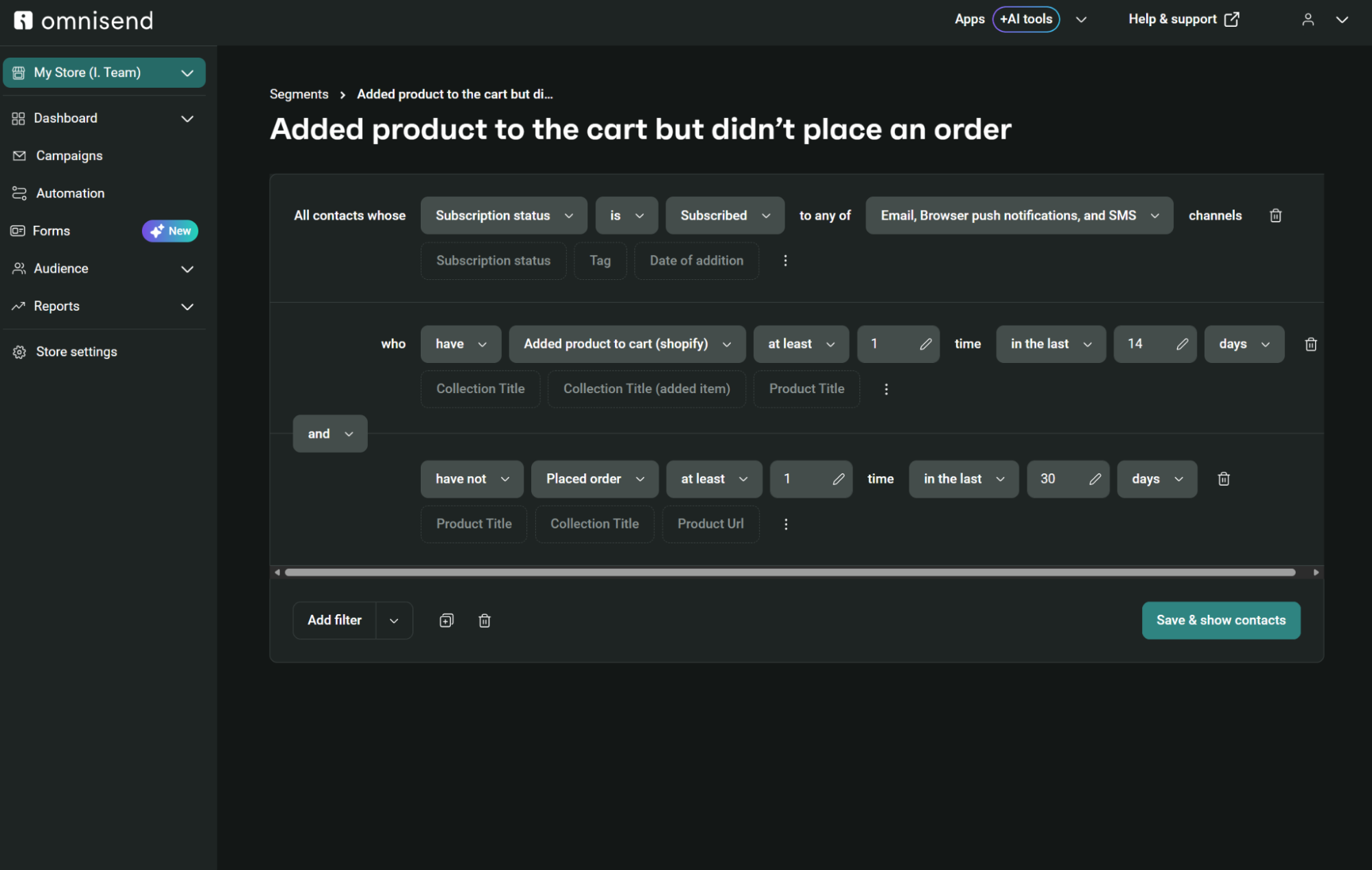
Omnisend allows segmentation based on profile data, purchase behavior, browsing activity, campaign engagement, and subscription status, with real-time updates. It provides over 30 pre-built segments (e.g., active email subscribers, deal hunters) and offers historical and predicted CLV data at the individual contact level, though direct segmentation by CLV is not currently available.
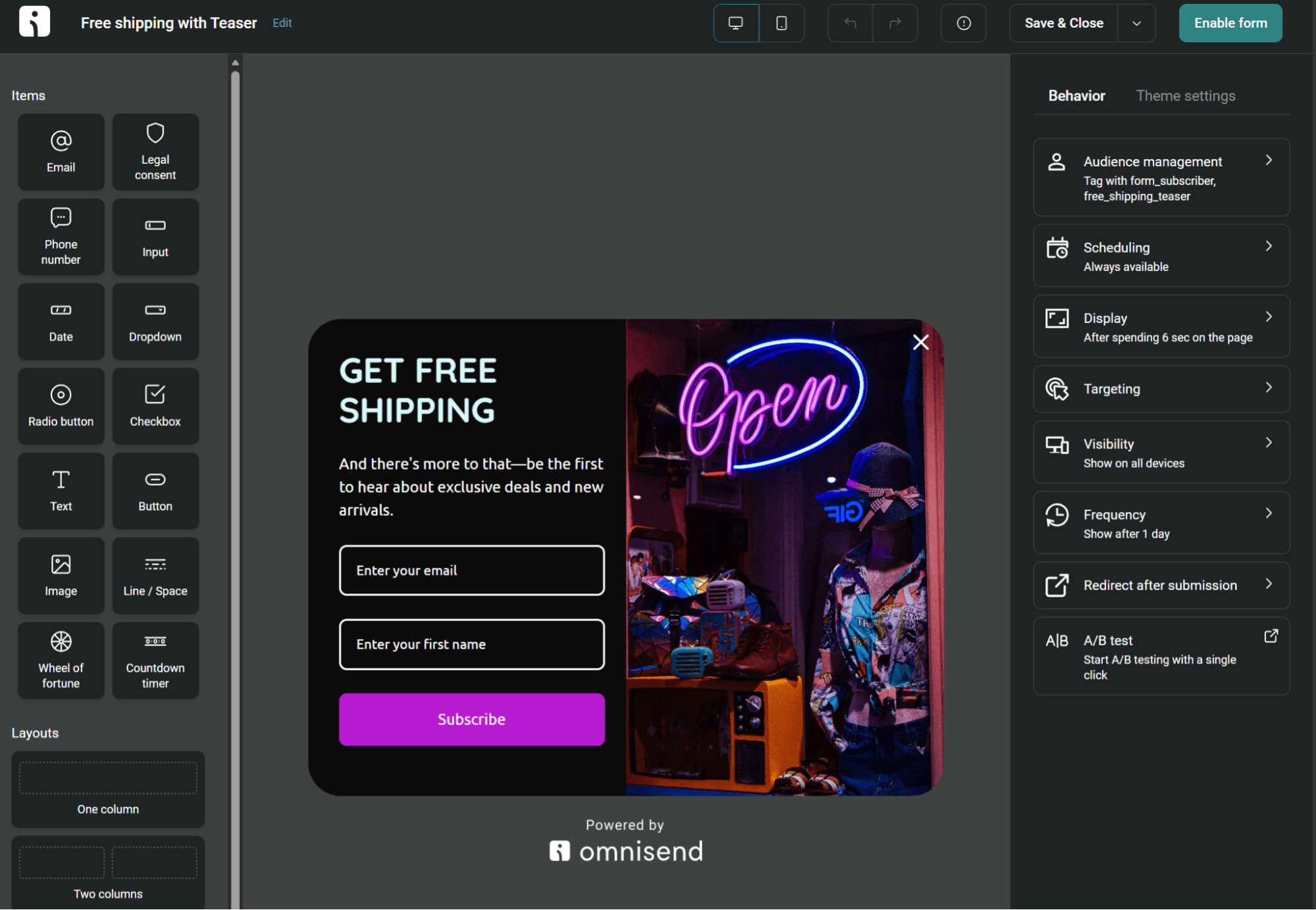
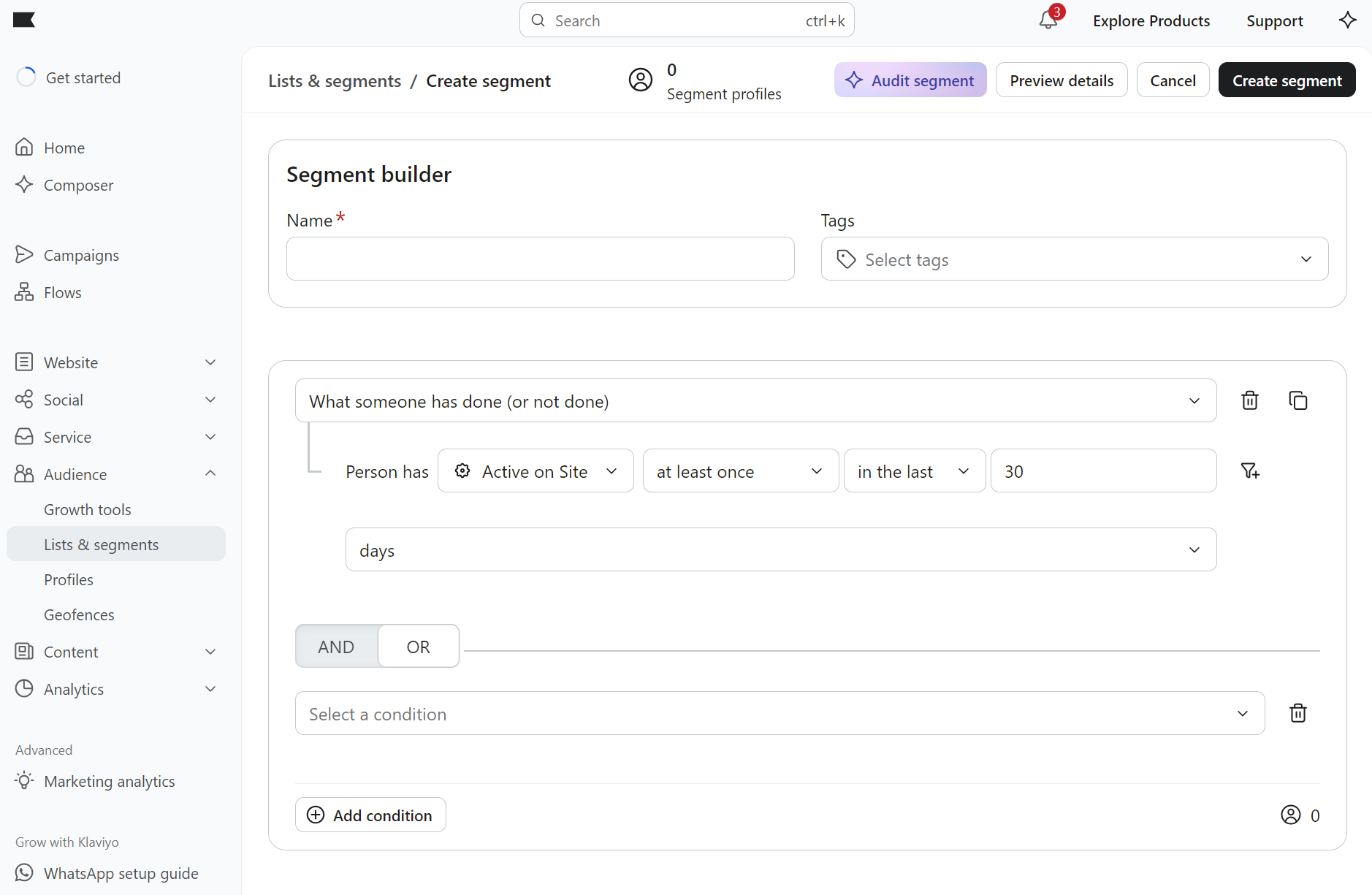
Klaviyo’s segmentation prowess includes the ability to segment by predicted CLV, export CLV data, and use it as a condition in segments, forms, and flows. It can also project revenue by summing predicted CLV across a segment. Additional features include proximity-based location filtering and segment snapshots. While Klaviyo’s segmentation is highly logical, it demands a greater familiarity with customer data to harness its full potential.
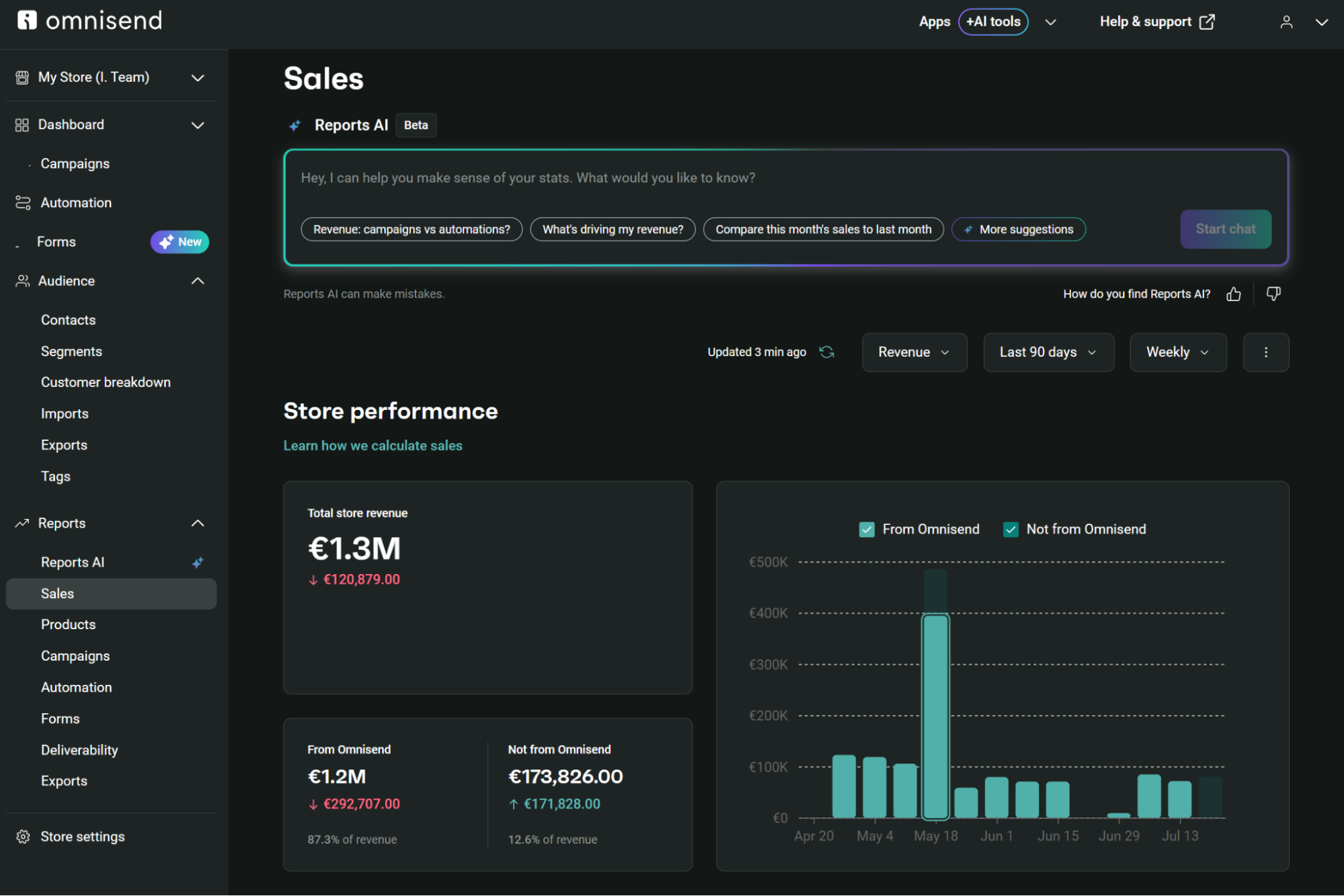
For revenue tracking, both platforms operate on a last-touch attribution model. Omnisend applies a default seven-day window for email and 24 hours for SMS/push, separating marketing-attributed revenue from total store sales. Klaviyo’s default window is five days for email and texts. Klaviyo also offers a model-comparison tool to preview how changes to attribution windows affect reporting and allows for custom report building with five configurable starting points. Omnisend provides fixed report tabs for sales, products, campaigns, automation, and customer breakdowns but lacks custom report construction.
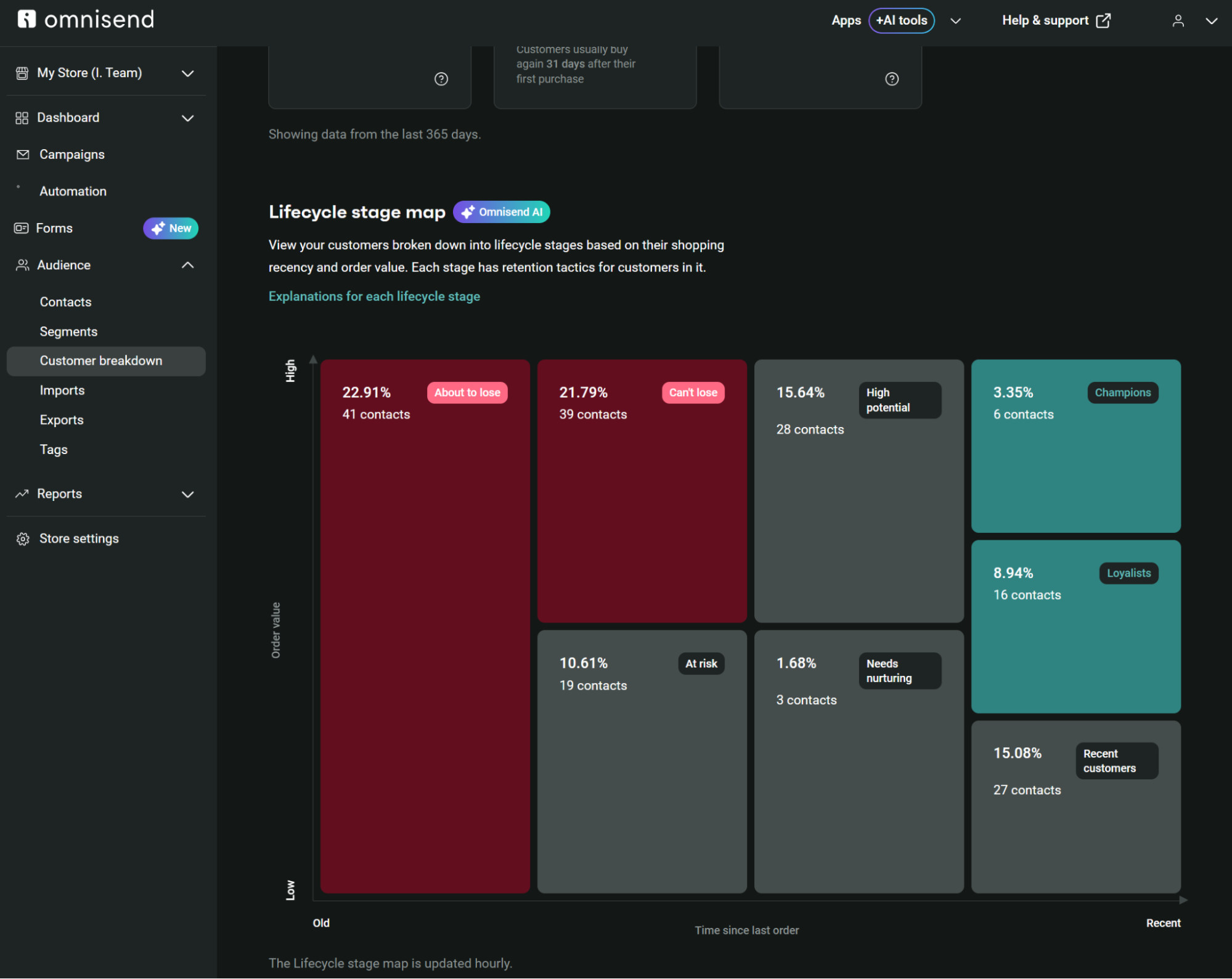
Predictive analytics is a strong suit for Klaviyo, with individual-level forecasting for CLV and churn predictions, including predicted next order dates. Omnisend’s Customer Breakdown feature uses RFM analysis to categorize customers by lifecycle stage and identifies churn risk, offering retention tactics tailored to each segment.
Deliverability and Sender Reputation
Both Omnisend and Klaviyo provide a solid foundation for strong email deliverability, emphasizing technical groundwork such as DMARC setup guidance, domain monitoring, and deliverability reports. Once properly configured, their sender infrastructures support high delivery rates.
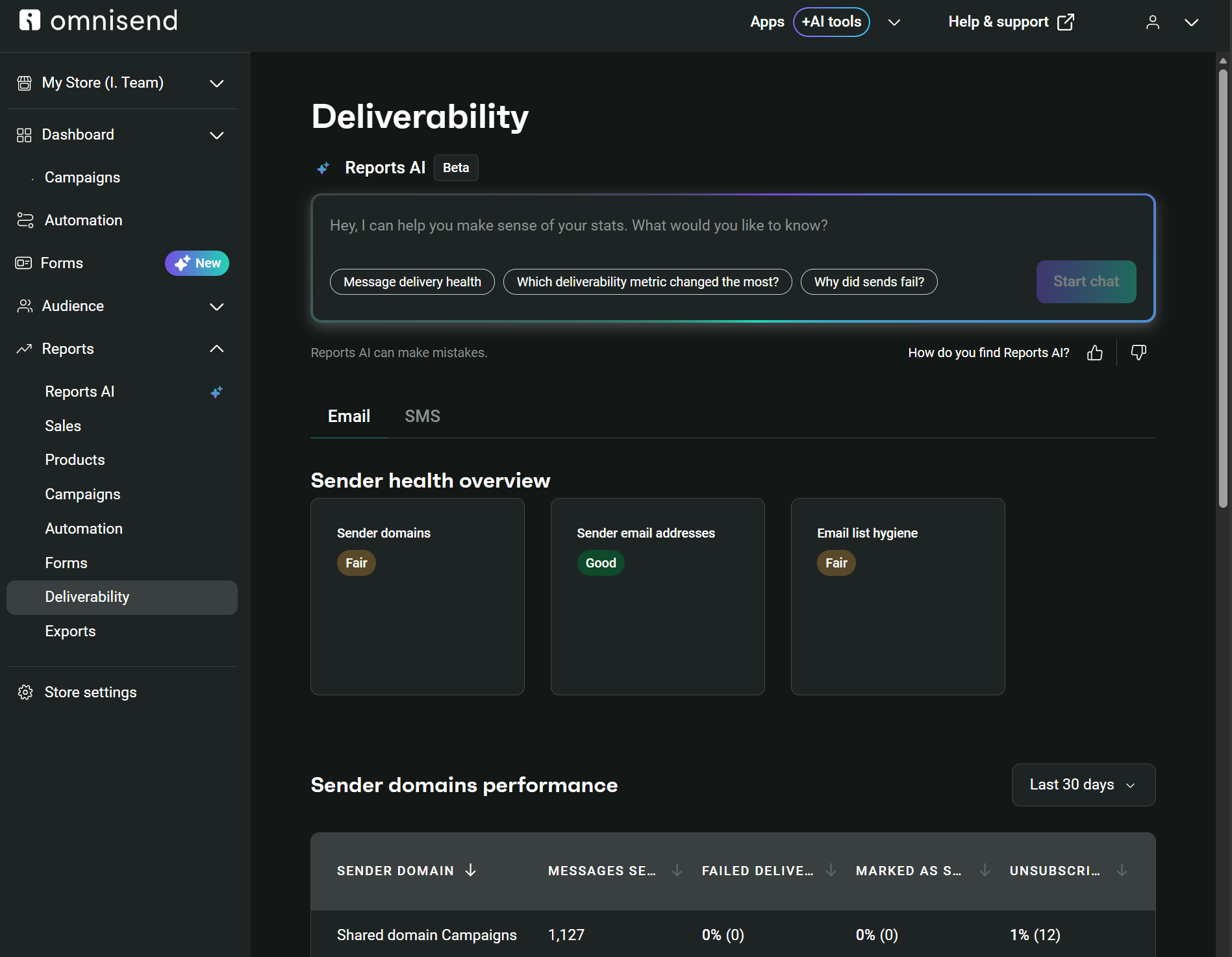
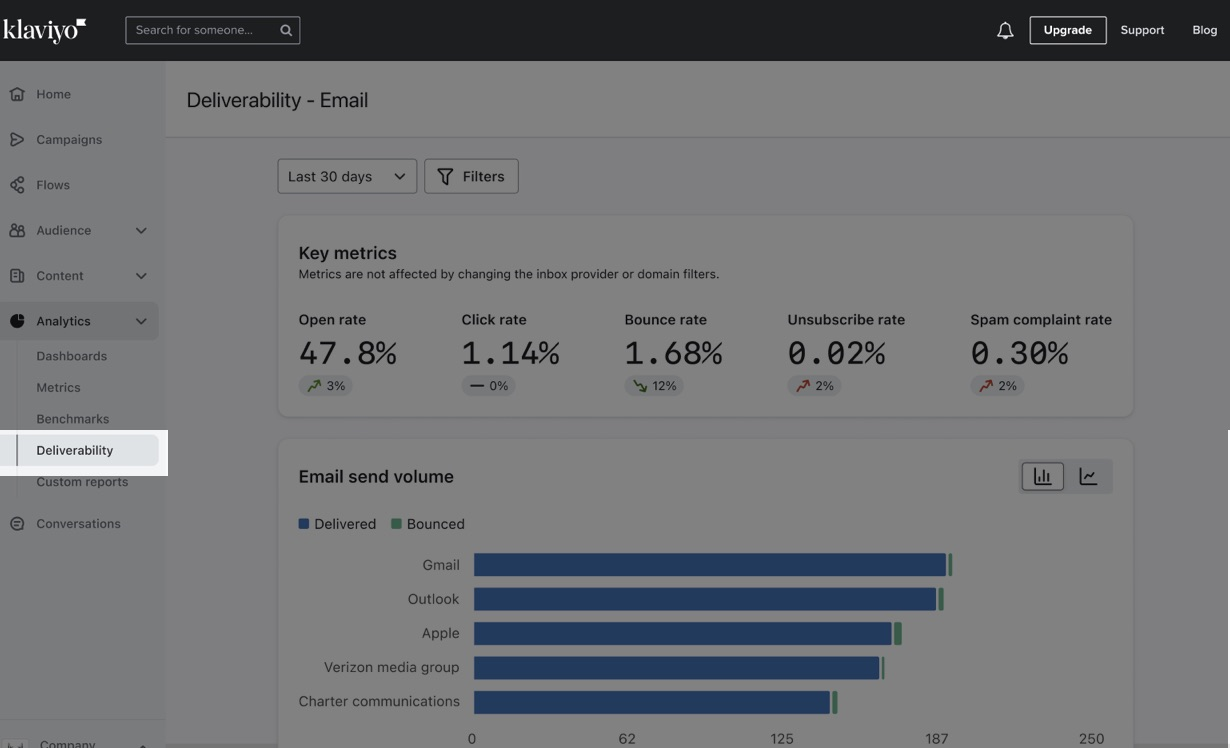
Omnisend’s deliverability reports track sender health, domain performance, and email list hygiene, identifying issues like failed deliveries, spam, and unsubscribe rates by domain. It monitors sender email addresses and flags personal email usage. Klaviyo’s Deliverability Hub offers similar centralized monitoring with an action center for recommendations, breaking down performance by inbox providers (Gmail, Yahoo, Outlook).
Both platforms recommend best practices for reputation management, such as sending to engaged segments and utilizing private sending domains for better brand recognition and deliverability. Stricter authentication requirements apply in Klaviyo, especially for high-volume senders, necessitating a branded sending domain and DMARC policy for Gmail and Yahoo compliance. Omnisend also requires a custom domain email address for campaigns.
The Role of Artificial Intelligence
While both platforms integrate AI, Klaviyo’s K:AI offers a more advanced intelligence layer with dedicated Marketing and Customer Agents for campaign planning, drafting, and 24/7 support. Its AI features include Personalized Send Time, content generation, and brand voice copywriting via Composer, metered by credits, along with predictive analytics and deliverability tools.
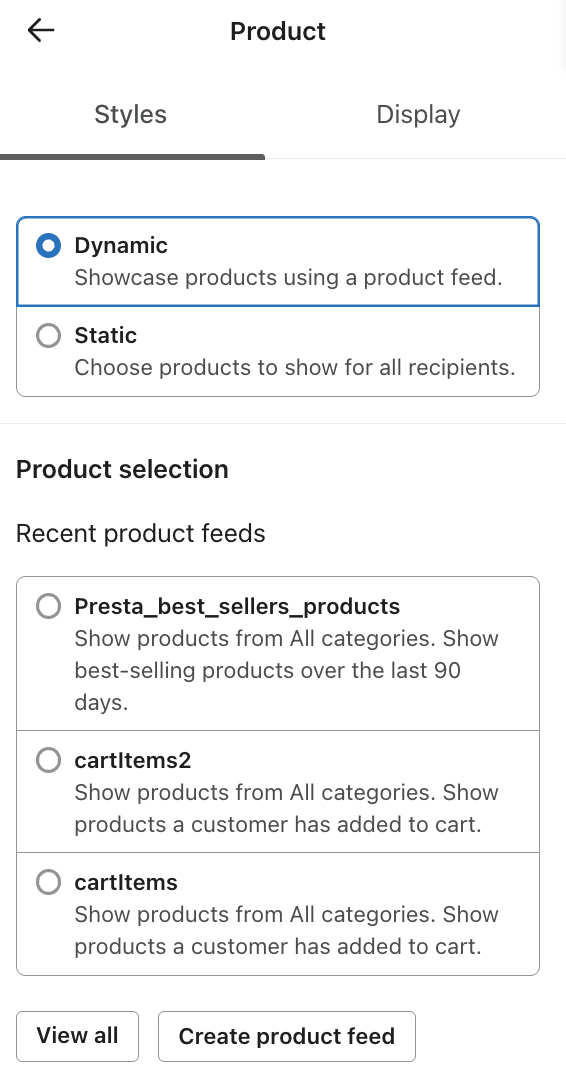
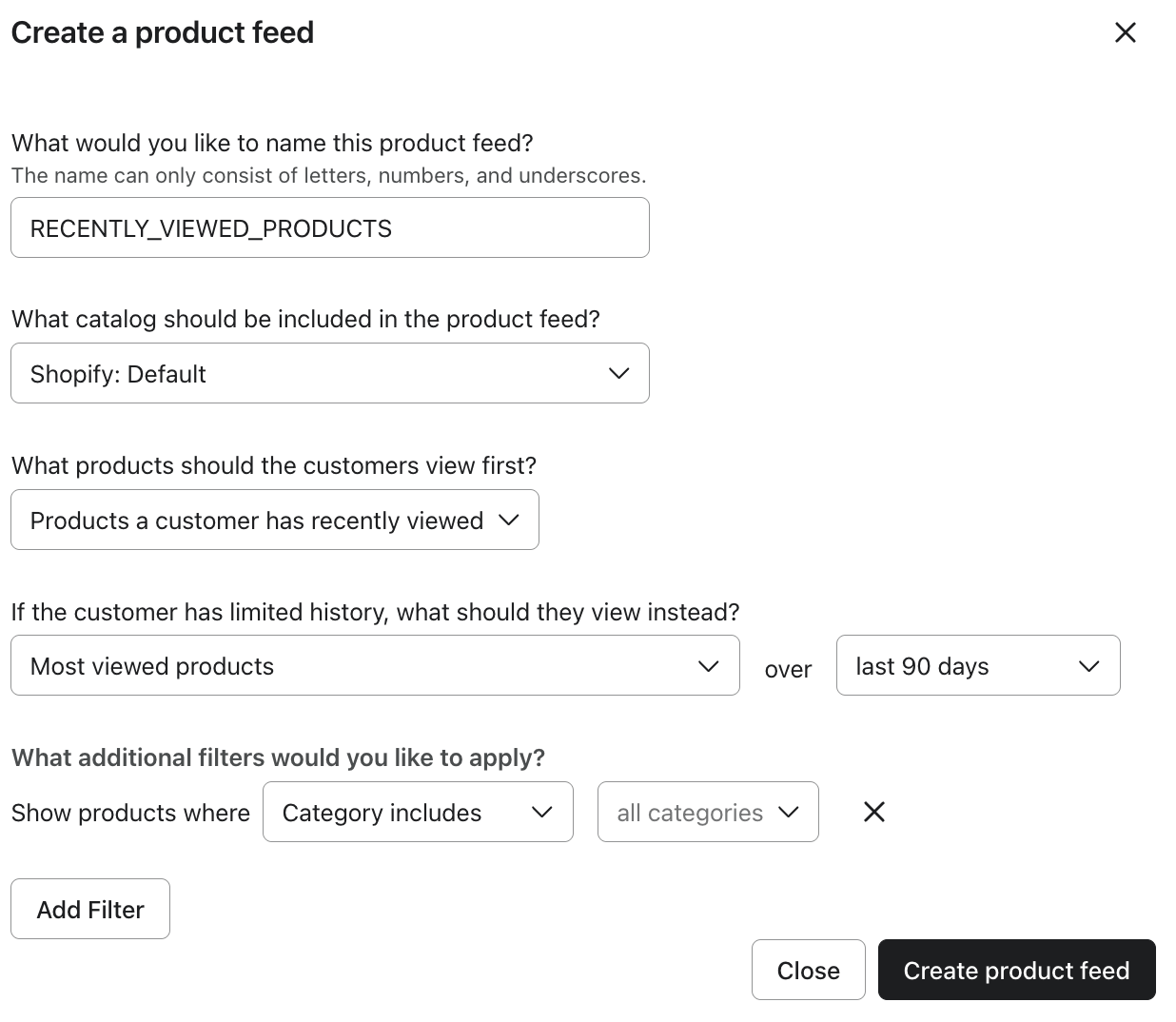
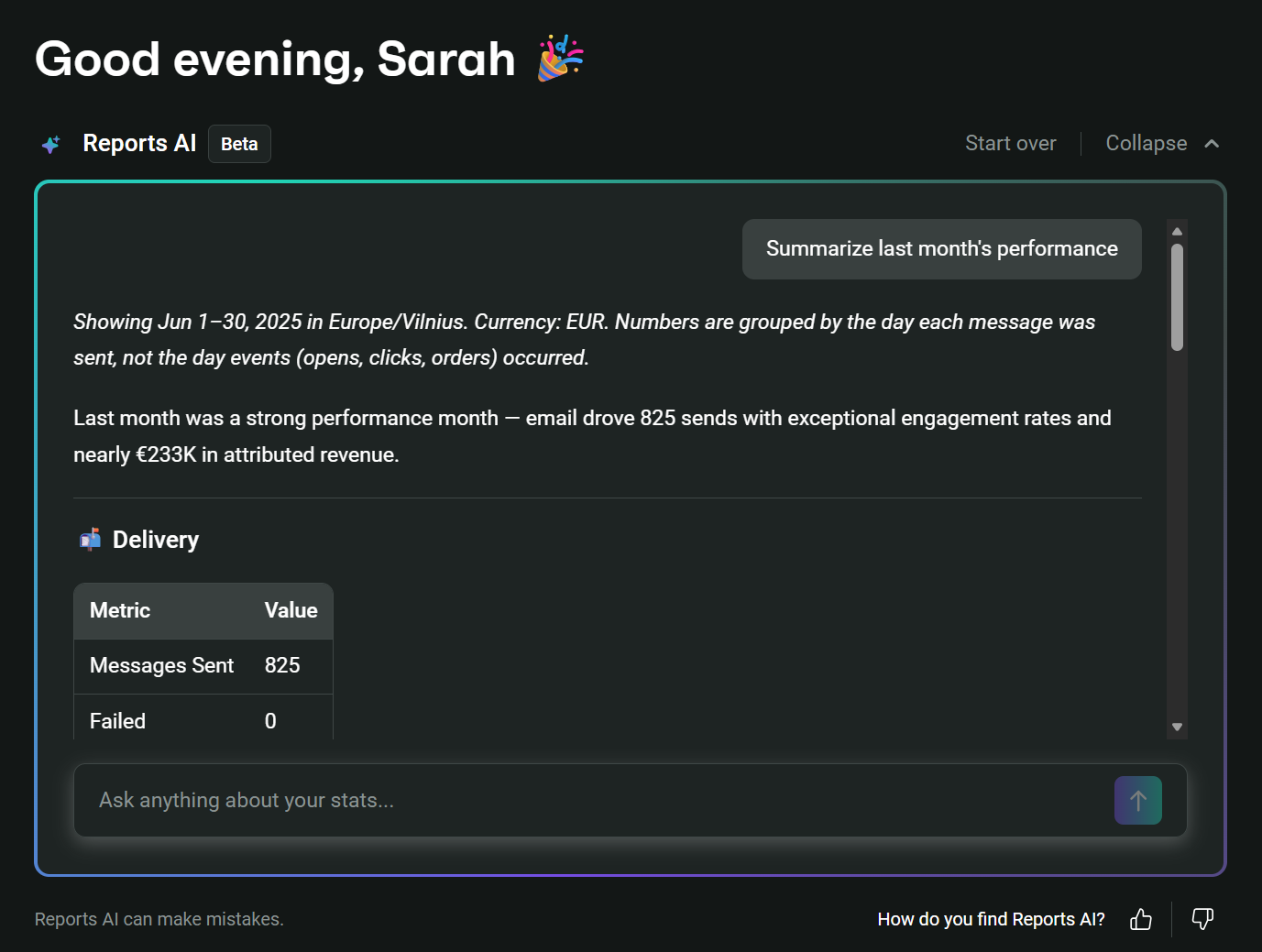
Omnisend, however, makes core AI tools accessible even on its free plan. These include an AI segment builder, subject line and preheader generators, an AI Writer for content improvement, Direct Copywriting for new email text, and Reports AI (Beta) for performance summaries (available to Pro customers). Additional AI features encompass a Dynamic Product Recommender, Campaign Booster for automatic resends to non-openers, and Brand Assets AI for consistent styling. Omnisend’s AI seamlessly integrates into the workflow, refining email content, generating subject lines, and creating audience segments from natural language prompts. While Klaviyo restricts most AI features to paid plans, the quality of generative AI outputs for content creation is comparable across both platforms.
E-commerce Ecosystem Integration
Klaviyo integrates with over 350 apps, while Omnisend connects with more than 250, both covering essential e-commerce platforms like Shopify, WooCommerce, and BigCommerce, along with popular marketing tools.
Omnisend’s primary integration depth is with Shopify, including Shopify Plus, automatically syncing customer data, products, and orders. It also boasts strong native apps for WooCommerce and BigCommerce, being an Elite Partner for the latter. Omnisend’s App Market offers hundreds of native apps spanning advertising, reviews, loyalty programs, and influencer marketing, allowing for direct syncing with Facebook Custom Audiences and affiliate tracking.
Klaviyo’s core integration with Shopify also extends to greater depth, syncing carrier-dependent shipment updates, partial fulfillments, and writing custom properties back into Shopify as customer metafields. Its App Marketplace offers more category filters and extends advertising reach to Pinterest, TikTok, and X, beyond the Google and Facebook connections shared by both platforms. Klaviyo’s CRM functionality is enhanced by Salesforce integration, syncing leads and enriching profiles with sales pipeline data. Both platforms offer REST and JavaScript APIs for custom integrations, requiring coding skills but providing high-quality documentation.
Multi-Store Management
A significant differentiator lies in multi-store management. Omnisend allows users to manage up to 500 stores within a single-owner account, offering one-click store switching, centralized billing, shared content assets, and customizable user access. This feature is invaluable for marketers or business owners overseeing multiple brands or storefronts. Klaviyo, conversely, does not natively support multiple stores within one account. While a user can have access to multiple separate Klaviyo accounts and switch between them, the platform explicitly states it is not optimized for more than one e-commerce store per account. This means businesses with multiple brands will face higher administrative overhead and potentially fragmented data analysis with Klaviyo.
Customer Support and Resources
Omnisend gains a distinct advantage in customer support by offering unrestricted 24/7 email and live chat accessibility across all its plans, including the free tier. Pro customers spending over $400/month also receive a dedicated Account Expert. Omnisend’s floating in-app chat widget provides instant answers and quick connections to human support.
Klaviyo’s free plan offers email support for only 60 days, with all paid plans including email and live chat. Email responses can take up to four hours for urgent issues and up to 48 hours for low-urgency inquiries. Klaviyo also offers custom-priced premium support tiers (Standard, Professional, Enterprise) with varying levels of dedicated support and response times. While Klaviyo also provides an in-app chat widget via Composer, its direct human support access is more restricted than Omnisend’s.
Both platforms offer comprehensive self-serve support through extensive Help Centers and academies. Omnisend’s Help Center features over 600 articles categorized for easy navigation, supplemented by free YouTube videos in its Omnisend Academy. Klaviyo’s Help Center combines articles from its Help Center and Academy, offering similar depth but with a slightly different navigation structure that might require more clicks to find specific topics. For visual learners, Omnisend’s more extensive video resources might be preferred.
Migration Considerations
Switching from Klaviyo to Omnisend is designed to be very easy, largely due to Omnisend’s dedicated migration team that handles the process manually in approximately five business days for businesses with over 250 contacts. This service includes rebuilding contacts, automations, segments, forms, and email templates.
The migration process involves connecting the store to Omnisend, setting up Omnisend’s Klaviyo Data Import Tool using an API key (transferring contact information, subscription statuses, consent records, and custom properties), manually importing key segments, rebuilding workflows using Omnisend’s templates, and warming up the sender reputation. Critically, businesses can continue sending emails from Klaviyo during the migration and are advised to run both tools simultaneously to test new workflows and warm up their list before fully transitioning. Testimonials, such as Rachel Riley’s case study, highlight significant revenue increases post-migration, with Omnisend-powered emails contributing substantially to sales.
Strategic Recommendations
The choice between Klaviyo and Omnisend ultimately hinges on a business’s specific priorities and operational scale.
Choose Omnisend if:
- You are an e-commerce store of any size seeking an intuitive, cost-effective, and comprehensive multichannel marketing strategy across email, SMS, and web push notifications.
- You prioritize ease of use, faster setup, and readily available 24/7 customer support.
- You value a broad library of pre-built flows and segments that cover most e-commerce scenarios without extensive customization.
- You manage multiple e-commerce stores or brands and require a single-owner account for centralized management and billing.
- You want access to core AI tools across all plans, including free tiers, to enhance content creation and campaign efficiency.
Choose Klaviyo if:
- You manage a large-volume e-commerce business or have highly complex customer journeys requiring granular control over segmentation and advanced reporting.
- You need robust B2C CRM functionalities, including predictive analytics for customer lifetime value (CLV) and churn risk, with the ability to segment by these metrics.
- You require deep experimentation capabilities with extensive A/B testing options.
- You prioritize native two-way SMS messaging and WhatsApp integration in your multichannel strategy.
- You have a substantial budget and are willing to invest in a platform that offers unparalleled depth in data insights and customization.
For businesses still undecided, a practical approach is to sign up for free accounts on both platforms. Connect your test store (without uploading full contact lists initially) to fully explore their dashboards, flow builders, and segmentation tools. This hands-on experience can provide invaluable insight into which platform aligns better with your team’s workflow and technical comfort level. Additionally, exploring alternatives to Klaviyo, such as ActiveCampaign for CRM focus or Brevo for broader email/SMS capabilities with less e-commerce specificity, can provide further context.
Methodology Note
This article was meticulously researched and written by industry experts following a precise review process. To ensure a balanced and factual comparison, a free Klaviyo account was created, and a test Shopify store was connected to assess ease of integration and the features available on the free tier. Subsequently, a paid email plan of $20/month was subscribed to access standard email functionalities. Hands-on testing included a comprehensive review of the dashboard, template libraries, documentation, and the functionality of the flow, email, segmentation, and form builders. The reporting dashboard was reviewed based on its interface and available metrics, acknowledging that live attribution data was not available from a test-only store. Customer support quality was evaluated based on Klaviyo’s stated response times and direct testing of its virtual assistant and email support. Beyond direct testing, over 300 Klaviyo reviews from G2, Capterra, and Trustpilot were analyzed to incorporate broader user sentiment and verified feedback.
FAQs
Is Klaviyo worth paying more for if you run a small business?
In most situations, no. Klaviyo’s advanced segmentation, flow, and reporting tools might be overkill for smaller businesses, leading to unnecessary costs for features that won’t be fully utilized. Omnisend typically offers essential e-commerce marketing tools at a lower price point.
Is Klaviyo or Omnisend easier to learn?
Omnisend is generally considered easier to learn. It trades some of Klaviyo’s granular control for a more streamlined interface, allowing users to master email, SMS, and web push marketing faster.
Will I lose data switching from Klaviyo to Omnisend?
No, you will not lose data. Omnisend’s migration team handles the transfer of contacts, automations, segments, forms, and email templates, typically within five business days. This migration service is available for accounts with more than 250 contacts.
Does one platform get better inbox placement than the other?
Neither platform inherently guarantees better inbox placement. Deliverability is primarily influenced by your sender reputation (domain health, authentication) and the quality/relevance of your email content. Both platforms provide robust tools to maintain strong deliverability.
Does Klaviyo integrate with Shopify Plus better than Omnisend?
No, both platforms integrate with Shopify Plus and pull the same core data. There is no significant difference in their connection capabilities or the information they access from your store.
Do I need coding skills to use either platform?
Generally, no, not for standard operations. Both platforms feature drag-and-drop editors and pre-built templates. However, coding skills would be necessary if you intend to build custom API connections for e-commerce platforms or apps that do not have pre-built integrations.
Is Klaviyo still relevant?
Yes, Klaviyo remains highly relevant, especially for high-volume e-commerce stores and businesses with complex customer journeys. Its advanced granularity allows it to function effectively as both a powerful CRM and an email marketing tool.
Who competes with Klaviyo?
Omnisend is a primary competitor for e-commerce marketing automation. ActiveCampaign offers a strong alternative, particularly for CRM functionalities, while platforms like Brevo (formerly Sendinblue) compete in the broader email and SMS marketing space, though with less specific e-commerce focus.
Is Omnisend any good?
Yes, Omnisend is highly regarded. Its customers reported an impressive 79:1 ROI across email, SMS, and web push in 2025. Its native Shopify app holds a strong 4.8/5 rating, reflecting high user satisfaction.
Is Klaviyo the best email marketing platform?
Klaviyo is not universally the "best." Its strengths lie in advanced segmentation and detailed reporting, which may be excessive for brands that prioritize cost-effectiveness and a simpler user experience. The "best" platform depends entirely on a business’s specific needs and scale.
Is Omnisend like Mailchimp?
No, Omnisend is distinct from Mailchimp. Omnisend is an e-commerce-first email marketing tool designed for advanced flows and comprehensive lifecycle marketing. Mailchimp, while versatile, is generally better suited for general businesses with more basic e-commerce requirements.








