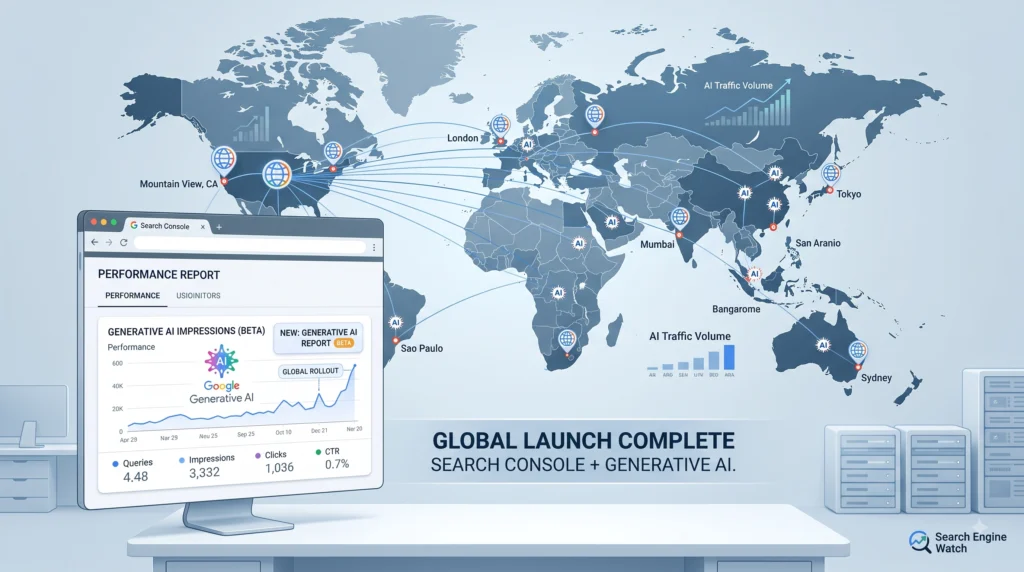
The highly anticipated Generative AI performance report, initially launched in a limited capacity in June, is now rolling out globally within Google Search Console. This significant update provides property owners with unprecedented visibility into how their content is performing specifically within Google’s burgeoning generative AI features. The widespread deployment was confirmed on August 11, 2026, as users worldwide began to encounter a prominent pop-up notification directing them to the new analytics interface upon accessing their Search Console accounts.
Understanding the Evolution of Search and Generative AI
Google Search, a foundational pillar of the internet experience for decades, has consistently evolved from its humble beginnings of simple keyword matching to a sophisticated ecosystem incorporating complex algorithms, rich snippets, knowledge panels, and semantic search capabilities. The introduction of generative artificial intelligence (AI) marks arguably the most profound shift in its history, fundamentally altering how users interact with information and how web content is consumed.
Generative AI, exemplified by large language models (LLMs), possesses the ability to understand, summarize, and create new content based on vast datasets. Google’s integration of these capabilities into its core search product, often referred to as the Search Generative Experience (SGE), aims to provide more direct, conversational, and comprehensive answers to user queries, often bypassing the traditional "ten blue links" model. This paradigm shift, while promising enhanced user satisfaction, has simultaneously raised critical questions for webmasters, content creators, and SEO professionals regarding content visibility, traffic generation, and the overall impact on their digital strategies.
The initial announcement of the Generative AI report in June 2026 was met with cautious optimism within the digital marketing community. It signaled Google’s acknowledgment of the need for transparency in this new search landscape. Webmasters have long relied on Search Console as their primary diagnostic tool, offering insights into crawlability, indexing, ranking performance, and user engagement. The absence of specific metrics for generative AI features had left a significant data gap, making it challenging for site owners to understand their presence and performance in these emerging AI-driven results.
The Global Rollout and Initial User Experience
As of Tuesday, August 11, 2026, the global rollout of the Generative AI report was unmistakably confirmed by a new, prominent pop-up message appearing for users logging into Search Console. The notification, clearly stating, "Get more detail on your site’s performance in the generative AI features on Google Search," provides a direct "Open report" button, streamlining access to the new analytics dashboard. This proactive notification strategy by Google suggests a deliberate effort to ensure maximum awareness and adoption among its vast user base.
The report’s interface, as seen in initial screenshots shared by early global adopters, is integrated seamlessly into the existing Search Console ecosystem. It presents data specifically related to "impressions" generated within Google’s generative AI features. An impression, in this context, signifies that a piece of content from a web property was utilized or referenced by Google’s AI model in generating a response that was then displayed to a user. This could range from a direct citation within an AI-generated summary to the underlying data being drawn upon to formulate an answer.
While the report currently focuses solely on impressions, its significance cannot be overstated. For the first time, webmasters can quantify their site’s exposure within the generative AI realm. This data allows them to identify which specific pages are being recognized and leveraged by Google’s AI, offering clues about the types of content, topics, and formats that resonate most effectively with these advanced models. For instance, a site owner might discover that their in-depth guides on complex topics or their meticulously structured FAQs are frequently contributing to AI-generated answers, even if those answers don’t always lead to direct website clicks in the traditional sense.

Chronology of a Pivotal Feature
- Mid-2023 – Early 2024: Google begins extensive public testing and phased rollout of the Search Generative Experience (SGE) in select regions and for specific user groups, demonstrating its capabilities and gathering feedback. Concerns from publishers regarding traffic impacts begin to mount.
- Late 2025: Speculation intensifies within the SEO community about Google’s plans to provide analytics for SGE. Industry experts highlight the critical need for new metrics to adapt to the evolving search landscape.
- June 2026: Google officially announces and begins the limited, phased rollout of the Generative AI performance report within Search Console. Initial access is granted to a select group of web properties and regions, allowing for early feedback and adjustments. The report initially focuses on impressions, signaling a new metric for visibility.
- August 11, 2026: The Generative AI report rolls out globally to all Search Console users. The prominent pop-up notification confirms this widespread availability, urging webmasters to explore their new data.
- Future (Anticipated): Strong industry expectation for Google to integrate "click data" into the Generative AI report, providing a more complete picture of user engagement and direct traffic attribution from AI-generated results. Further refinements and additional metrics are also anticipated as SGE evolves.
The Critical Absence of Click Data and Its Implications
Despite the excitement surrounding the global launch, a key limitation of the current Generative AI report is the absence of click data. While impressions indicate visibility and recognition by Google’s AI, they do not directly translate to user engagement or traffic directed back to the originating website. This distinction is crucial in a landscape where AI-generated summaries often aim to answer queries directly within the search results page, potentially reducing the necessity for users to click through to external sites.
The digital marketing industry, heavily reliant on metrics that demonstrate tangible user action, views the lack of click data as a significant hurdle. For publishers and e-commerce sites, clicks represent traffic, which in turn fuels advertising revenue, conversions, and direct engagement with their content or products. An impression within an AI summary might contribute to brand awareness or demonstrate authority, but without a corresponding click, its direct value to the business model remains difficult to quantify.
SEO professionals and webmasters have consistently voiced the need for transparent click metrics from SGE. Without this data, it’s challenging to:
- Attribute ROI: How much actual value is derived from being featured in an AI summary if users don’t visit the site?
- Refine Content Strategy: While impressions suggest content relevance, understanding which content drives user action from AI features is vital for optimization.
- Evaluate Traffic Impact: Are AI summaries genuinely diverting traffic away, or are they creating new avenues for discovery? Click data would offer definitive answers.
- Justify Investment: Demonstrating the impact of SEO efforts on generative AI performance becomes harder without direct traffic attribution.
Industry consensus suggests that Google will eventually incorporate click data into the report. This would align with Google’s broader commitment to supporting content creators and providing the tools necessary for them to thrive in the evolving digital ecosystem. However, the timeline for such an update remains unconfirmed, leaving many in the interim to interpret impression data with a degree of caution.
Broader Impact and Strategic Implications for Webmasters
The introduction of the Generative AI report, even with its current limitations, heralds a new era for search engine optimization and content strategy. Webmasters must now consider a dual optimization approach: one for traditional search results and another for generative AI features.
1. Content Quality and E-E-A-T:
The report underscores the paramount importance of high-quality, authoritative, and trustworthy content. Google’s generative AI models are designed to provide accurate and reliable information. Therefore, content that demonstrates Expertise, Experience, Authoritativeness, and Trustworthiness (E-E-A-T) is more likely to be selected and referenced by these models. Webmasters should double down on creating well-researched, fact-checked content backed by credible sources.
2. Structured Data and Clarity:
While not explicitly stated as a direct ranking factor for AI summaries, structured data (Schema markup) helps search engines and AI models understand the context and relationships within content. Similarly, clear, concise, and well-organized content, with logical headings and easily digestible paragraphs, is more readily parsed and summarized by AI. Content creators should focus on clarity, ensuring that key information is easily extractable.

3. Understanding User Intent for AI:
Generative AI excels at answering complex, multi-faceted queries and providing conversational responses. Webmasters need to analyze the types of queries their content answers and how those might be rephrased or expanded upon in a conversational AI context. This involves moving beyond simple keyword matching to understanding the underlying intent and informational needs.
4. The Role of Impressions as a Metric:
Even without clicks, impressions from generative AI are valuable. They indicate that Google’s AI recognizes your content as relevant and authoritative for certain queries. This can be a strong indicator of brand visibility and thought leadership within specific niches. It offers insights into which topics and content formats are resonating with AI systems, providing a foundation for future content development. Webmasters can use this data to identify content gaps or opportunities where their site could gain more AI visibility.
5. Adapting SEO Strategies:
SEO professionals will need to integrate this new report into their regular analysis routines. Beyond traditional keyword rankings and organic traffic, they will monitor AI impressions, correlate them with content updates, and refine strategies to enhance visibility within SGE. This might involve optimizing for questions, providing comprehensive answers within the content, and ensuring strong internal linking to guide AI models through a site’s depth of information.
6. Preparing for Future Enhancements:
The industry widely anticipates the addition of click data to the Generative AI report. Webmasters should prepare for this by ensuring their analytics are robust, their content is compelling enough to encourage click-through even from an AI summary, and they have clear calls to action where appropriate. Understanding the full journey from AI impression to website visit will be crucial for complete performance measurement.
Official Stance and Google’s Vision
While Google has not issued a specific press statement directly accompanying this global rollout, the company’s consistent messaging around SGE emphasizes its commitment to providing the most helpful and comprehensive answers to users. The provision of the Generative AI report aligns with this, offering webmasters the tools to understand their participation in this evolving search paradigm. It suggests Google aims for a symbiotic relationship where high-quality content continues to be rewarded, even as the method of content discovery shifts.
A hypothetical statement from a Google spokesperson might emphasize: "Our goal with the Generative AI report in Search Console is to empower webmasters and content creators with the insights they need to adapt and thrive in the era of AI-powered search. By providing visibility into how their content contributes to generative AI features, we aim to foster transparency and help the ecosystem evolve together. We are committed to continuously enhancing Search Console with valuable data to support the webmaster community."
Conclusion
The global rollout of Google’s Generative AI performance report marks a watershed moment in the evolution of search analytics. While the current focus on impressions leaves some questions unanswered regarding direct traffic attribution, it provides an invaluable first step towards understanding and optimizing for the rapidly changing search landscape. Webmasters and SEO professionals are now equipped with a crucial new data point, compelling them to refine their content strategies, prioritize authoritative information, and prepare for a future where AI plays an increasingly central role in how information is discovered and consumed. The digital ecosystem will undoubtedly continue to adapt and innovate as Google further refines its generative AI capabilities and enriches its reporting tools, making ongoing vigilance and strategic agility paramount for online success.