The landscape of commerce has been in constant flux, undergoing profound transformations over recent decades. From the localized brick-and-mortar establishments that defined early retail, the industry rapidly evolved into the borderless, internet-driven phenomenon of e-commerce. This digital revolution, characterized by online storefronts and global accessibility, fundamentally reshaped consumer behavior and business operations. Now, with the unprecedented rise of artificial intelligence, particularly advanced large language models and multi-agent systems, commerce is poised on the precipice of another seismic shift: agentic commerce. This emerging paradigm envisions a future where sophisticated AI agents not only assist but actively act on behalf of consumers, autonomously navigating product discovery, comparing options, negotiating terms, and even completing purchases.
Despite the palpable excitement surrounding this technological leap, a myriad of critical questions persists. Foremost among them is the fundamental issue of trust: Will consumers truly cede control of their buying decisions to AI agents, particularly when financial transactions are involved? For businesses, the calculus is equally complex: Will the substantial investments required to integrate and optimize for agentic commerce yield a sufficient return on investment? Furthermore, does autonomous shopping genuinely address a tangible consumer problem, or does it merely introduce another layer of technological complexity to an already intricate buying journey?
Regardless of these looming questions, the underlying technology is advancing at an astonishing pace. Imagine a shopping experience where the tedious routine of toggling between browser tabs, meticulously comparing dozens of products across disparate websites, or painstakingly researching every potential purchase becomes obsolete. Instead, intelligent AI agents, endowed with a deep understanding of user intent, preferences, and constraints, efficiently evaluate options, cross-reference prices, and execute decisions within predefined parameters. This vision, once confined to the realm of science fiction, is rapidly materializing into a tangible reality.
At its essence, agentic commerce defines a commerce model where AI agents assume the role of proactive decision-makers and executors on behalf of the customer. Rather than consumers manually engaging in the laborious process of searching for products, sifting through options, applying filters, and completing transactions, they can delegate these tasks to AI agents. These agents operate based on the user’s explicit intent, historical preferences, budgetary constraints, and overarching buying goals.
To illustrate this concept with a practical example, Alex Moss, during the "SEO Unplugged: Agentic Commerce with Alex Moss" podcast, described a scenario: "So everything’s connected. I could literally say into the into a phone to my agent, go and buy me some new shoes with that jacket I bought last week, and that’s it. And it would go away. It would do the research. And of course, you can have a say in an approval in terms of part of the journey." This anecdote vividly portrays the core functionality: humans articulate their intent or goal, and AI agents seamlessly execute the underlying processes. Crucially, while the AI handles the heavy lifting and intricate execution, users retain ultimate control and approval over the final decision-making process. Agentic commerce, therefore, functions as a sophisticated digital shopping proxy, blending automation with human oversight.
The Inevitable Shift: Why Agentic Commerce is the Next Major Evolution
The notion of agentic commerce might still evoke images of a distant future, yet the foundational shifts enabling its emergence are already well underway. A confluence of evolving consumer behavior, accelerating AI adoption, and robust industry forecasts unequivocally points towards a future where AI agents become an indispensable and active component of the buying journey.
Consumers Already Embrace AI in Their Buying Decisions

A significant indicator of this impending shift is the existing reliance of consumers on AI-powered tools for product discovery and purchase decisions. A comprehensive report by McKinsey & Company revealed that a striking "more than 70% of AI-powered search users ask top-of-the-funnel questions about categories, brands, products, or services." This data underscores a fundamental change in how consumers initiate their shopping journeys, moving beyond simple keyword searches to more conversational, intent-driven queries facilitated by AI.
The same report further elucidated that "nearly 50% of consumers already use AI-powered search experiences today." As AI increasingly permeates the initial stages of product discovery, traditional search-driven traffic is expected to face considerable disruption. The study cautiously projects that "businesses could see 20–50% of their traffic shift away from traditional search experiences over time." This highlights a profound transformation: consumers are no longer passively searching for information; they are actively engaging AI systems to guide and inform their purchasing decisions, indicating a readiness for more autonomous assistance.
Anticipation for Agentic Commerce Among Shoppers
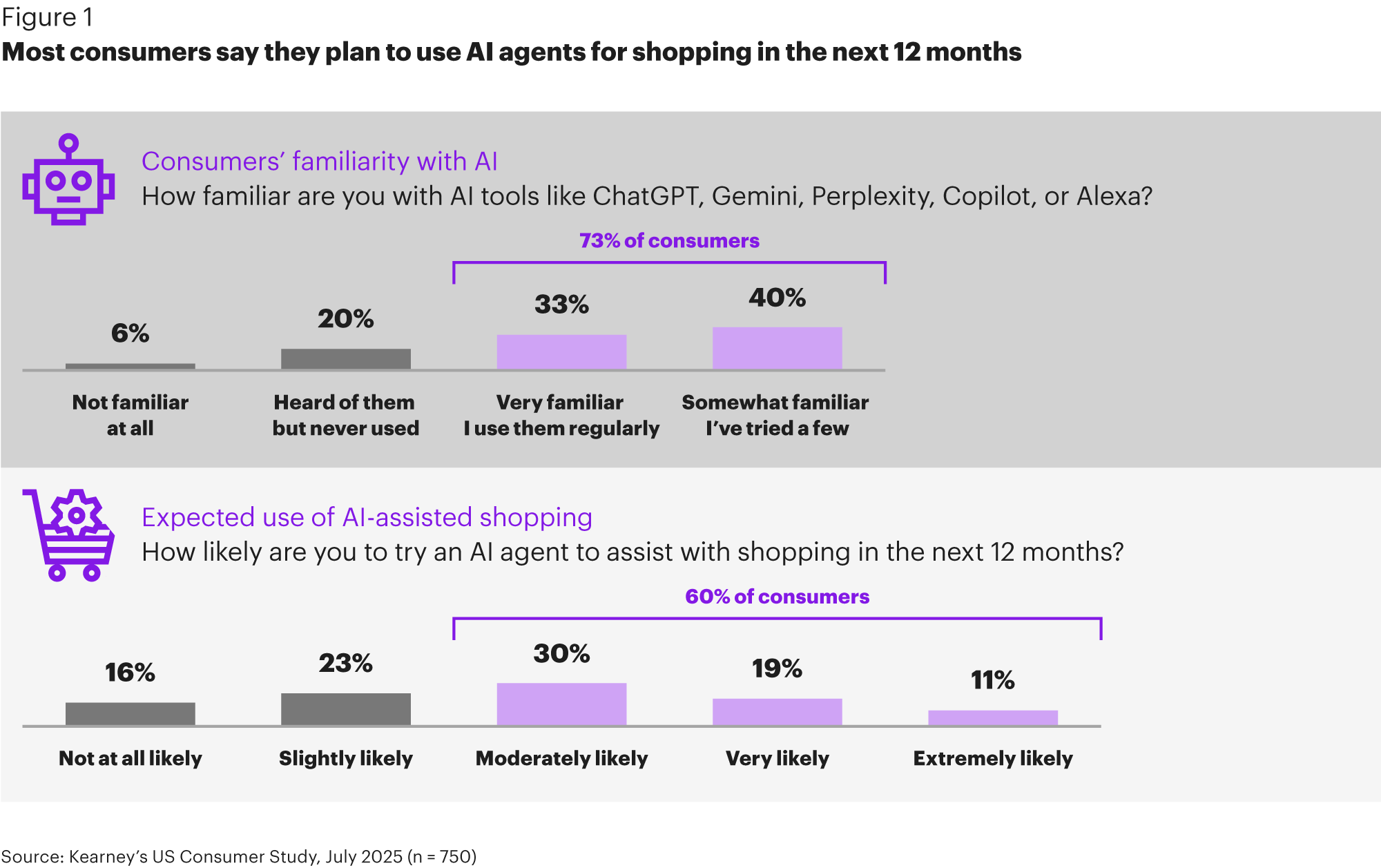
Consumer interest in AI-assisted shopping is not merely a passive trend; it is a rapidly escalating expectation. The 2025 Kearney report, "Agentic Commerce: From Brand Loyalty to Bot Logic," extensively explored consumer sentiments regarding AI agents within retail experiences. The findings were compelling: "more than 60% of shoppers expect to use agentic AI in 2026." This statistic alone signals a strong consumer appetite for such advanced capabilities.
Furthermore, the report unveiled a significant behavioral recalibration: consumers are increasingly prioritizing convenience, speed, competitive pricing, and trust over traditional platform or brand loyalty. Instead of dedicating time to browse individual retailer applications or websites, shoppers are projected to increasingly rely on AI agents capable of comparing products across a multitude of platforms, meticulously evaluating reviews, identifying optimal deals, and completing purchases with unparalleled efficiency. This paradigm shift redefines the competitive landscape, moving from a direct retailer-versus-retailer model to one dominated by AI-driven discovery ecosystems, where the most effective agent, rather than the most prominent brand, might win the transaction.
Explosive Growth Predicted by Industry Analysts
Industry analysts universally foresee agentic commerce as a monumental economic opportunity in the coming years. Another insightful report from McKinsey underscores the potential for agentic commerce to fundamentally reshape the entire shopping experience. Based on the accelerating adoption of AI-powered discovery tools and the growing readiness of merchants to adapt, the report estimates that "by 2030, the US B2C retail market alone could unlock an orchestrated revenue opportunity of $900 billion to $1 trillion. Globally, that opportunity could range from $3 trillion to $5 trillion." These staggering figures position agentic commerce not merely as an incremental improvement but as a truly disruptive force with the potential to generate trillions in new economic value.
The Mechanics of Autonomous Shopping: How Agentic Commerce Functions
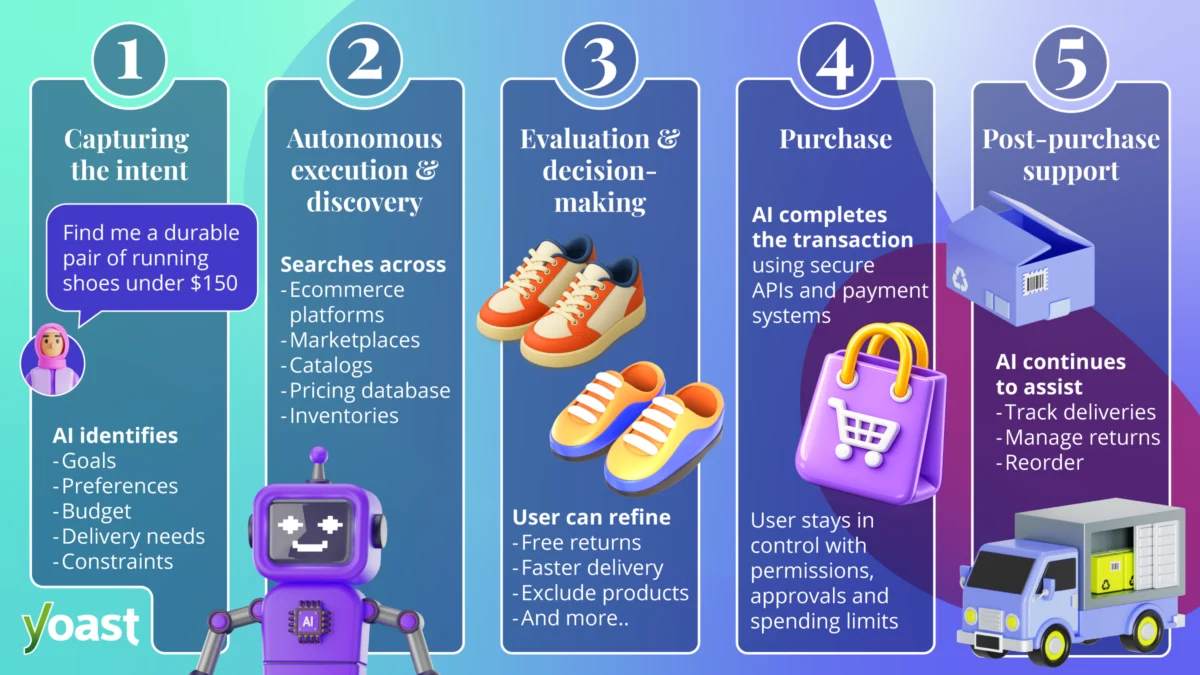
At its operational core, agentic commerce seamlessly integrates human intent with AI-driven execution. Instead of the conventional process of manually navigating websites, comparing diverse products, and completing purchases, users can delegate a significant portion of the shopping journey to sophisticated AI agents. These agents are engineered to comprehend nuanced goals, meticulously evaluate various options, make informed decisions within predefined constraints, and even execute transactions on behalf of the user.

What fundamentally distinguishes agentic commerce from traditional AI assistants is its inherent capacity for autonomous action. While assistive AI tools are primarily designed to furnish information or offer recommendations, agentic AI possesses the capability to independently execute complex tasks across the entire shopping journey, from initial inquiry to post-purchase support.
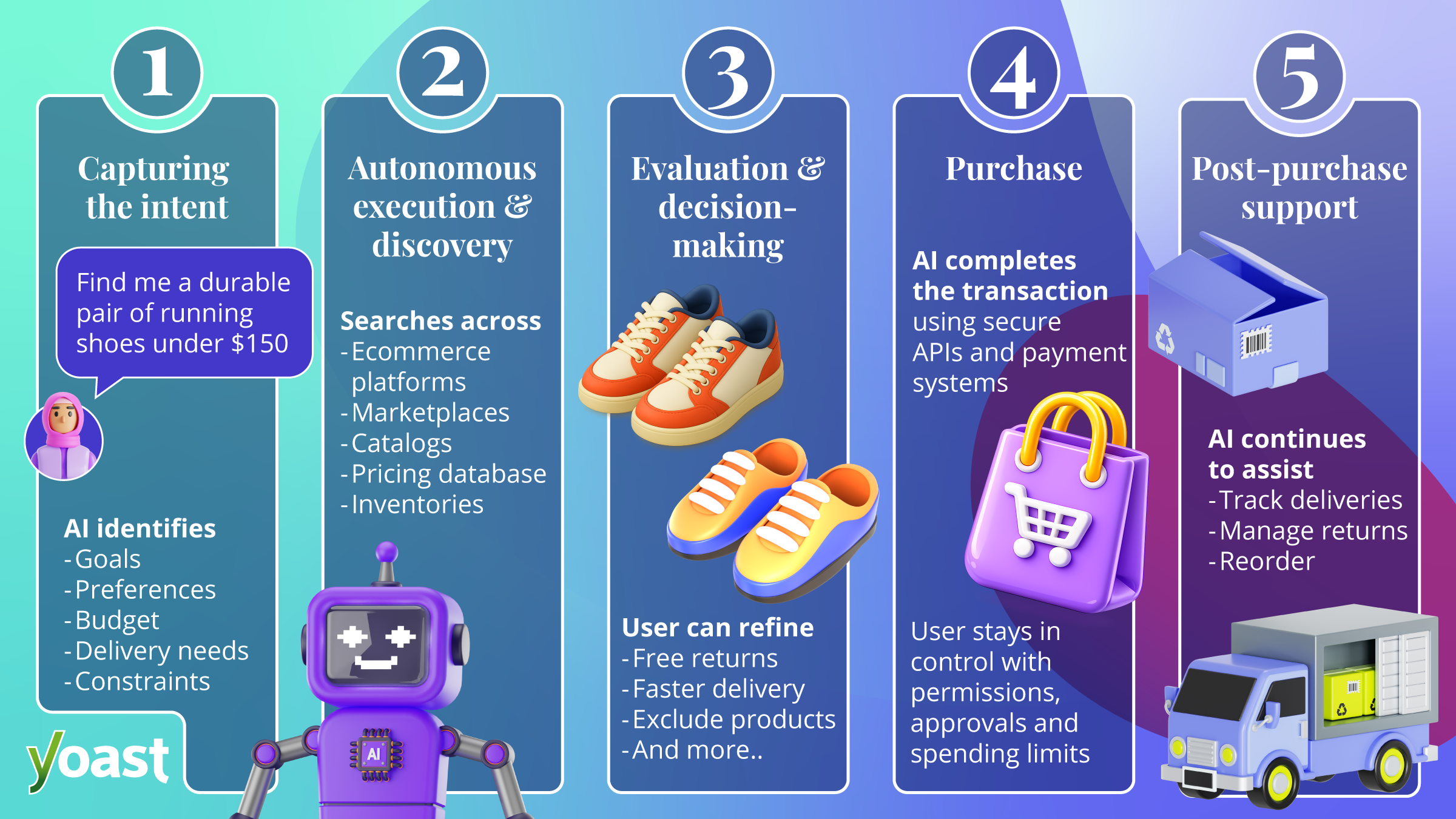
Here’s a detailed, step-by-step breakdown of how agentic commerce operates:
Step 1: Capturing the User’s Intent
Every agentic commerce interaction commences with a clear articulation of intent. Unlike the abbreviated keyword queries typical of traditional search engines, users engage with AI agents through conversational interfaces, leveraging natural language. For instance, a shopper might articulate their needs by saying:
- "Find me a durable, waterproof hiking backpack for a week-long trip, under $200."
- "I need a new coffee maker that grinds beans and has a timer, preferably a highly-rated model."
- "Order my usual groceries, but swap out the almond milk for oat milk this week."
At this initial stage, the AI agent’s primary objective is to thoroughly understand the user’s multifaceted goals, specific preferences, budgetary limitations, desired delivery timelines, and any other pertinent constraints. Should the initial request be overly broad or ambiguous, the agent is programmed to ask targeted follow-up questions to precisely refine the intent before proceeding.
Step 2: Autonomous Instruction Execution and Brand Discovery
Once the user’s intent is unequivocally clear, the AI agent autonomously commences the execution of the delegated task. Rather than confining its search to a single website, the agent simultaneously scans and analyzes a vast array of data sources. This includes multiple e-commerce platforms, diverse online marketplaces, comprehensive product catalogs, aggregated reviews, real-time pricing databases, and dynamic inventory systems.
This phase marks a significant departure from conventional product discovery. Instead of overwhelming the user with endless product pages, the agent intelligently narrows down the most relevant options based on the shopper’s precise needs and preferences. Crucially, brands that invest in better-structured product data, maintain accurate and real-time inventory information, offer transparent pricing, and present machine-readable content are significantly more likely to be effectively discovered and prioritized by these discerning AI agents.
Step 3: Evaluation and Sophisticated Decision-Making
Having gathered a comprehensive set of options, the AI agent proceeds to rigorously evaluate each product and compare their respective trade-offs. This analytical process extends beyond mere feature comparison; the agent delves into various factors, such as:
- Product Specifications: Matching features against user requirements (e.g., screen size, battery life, material).
- Pricing and Discounts: Identifying the best available deals, considering current sales, loyalty programs, and potential bundles.
- Customer Reviews and Ratings: Analyzing sentiment and consensus from a multitude of verified buyers to gauge product quality and reliability.
- Brand Reputation: Considering the overall standing and trustworthiness of the manufacturer or seller.
- Availability and Shipping: Checking real-time stock levels, estimated delivery times, and shipping costs.
- Return Policies and Warranty: Understanding the terms and conditions post-purchase for consumer protection.
Instead of merely presenting a list of products, the agent engages in a form of reasoned analysis, explaining why certain products are better suited to the shopper’s requirements than others. Users can further refine this decision-making process by introducing additional conditions, such as:
- "Show me only eco-friendly options."
- "Prioritize products with next-day delivery."
- "Exclude any brands I’ve returned before."
This iterative feedback loop allows the AI agent to continuously enhance its recommendations, progressively aligning them more closely with the user’s evolving preferences and priorities.
Step 4: Seamless Purchase Execution
Once the shopper approves a specific product or sets a predefined set of rules (e.g., "buy if price drops below $X"), the AI agent is empowered to proceed with the transaction. Leveraging robust APIs, established commerce protocols, and secure payment systems, the agent can seamlessly add items to shopping carts, apply applicable discounts, authenticate payments, and ultimately complete the purchase.
In certain scenarios, the purchase may occur instantaneously. In others, the AI agent may be programmed to wait for specific conditions, such as a targeted price drop, the replenishment of stock, or the availability of faster delivery options, before finalizing the transaction. It is paramount that even though the AI manages the execution, users maintain unequivocal control through granular permissions, explicit approval settings, and clearly defined spending limits, ensuring security and autonomy.
Step 5: Proactive Post-Purchase Support
The utility of AI agents in agentic commerce extends far beyond the point of checkout. Agentic commerce encompasses comprehensive post-purchase experiences, transforming shopping into an ongoing, intelligent, and supportive relationship. AI agents can continue to assist users by:
- Tracking Orders: Providing real-time updates on shipping status and estimated arrival.
- Managing Returns and Exchanges: Facilitating the process, from initiating returns to arranging pickups.
- Handling Customer Service Inquiries: Answering common questions, troubleshooting issues, and escalating complex problems to human support.
- Monitoring Product Performance: Gathering feedback and alerting users to potential issues or recalls.
- Suggesting Related Products or Services: Offering personalized recommendations for accessories, consumables, or complementary items.
- Reminding for Reorders: Proactively suggesting replenishment for frequently purchased items based on usage patterns.
This holistic approach transforms shopping from a series of discrete transactions into a continuous, intelligent, and highly personalized experience, fostering long-term customer satisfaction and loyalty.
Technological Pillars: The Protocols Driving Agentic Commerce
Agentic commerce is not merely a product of advanced AI models; it is underpinned by a rapidly evolving ecosystem of protocols, frameworks, APIs, and secure payment systems. These foundational technologies enable AI agents to interact securely, efficiently, and consistently with the vast digital commerce landscape.
A pivotal concept influencing agentic AI development is the Model Context Protocol (MCP). In the context of agentic AI, MCP facilitates the connection of AI models to external systems, tools, databases, and applications through a standardized communication layer. This eliminates the need for bespoke integrations for every AI model and every software platform. Instead, MCP establishes a common framework, allowing AI agents to access information and execute actions with greater consistency and interoperability. It acts as a shared operating language, enabling seamless collaboration between AI systems and diverse digital tools.
As agentic commerce emerges as a primary use case for agentic AI, specialized commerce-focused protocols are being developed specifically for shopping ecosystems. These protocols are designed to help AI agents interpret complex product information, communicate effectively with merchants, compare inventory across various providers, and securely complete transactions on behalf of users.
The Agentic Commerce Protocol (ACP): Enabling Direct Transactions
One of the most significant advancements in this domain is the Agentic Commerce Protocol (ACP), an open standard spearheaded by Stripe in collaboration with OpenAI. ACP is meticulously designed to foster more natural and direct interactions between AI agents and e-commerce systems. It provides a standardized framework for product discovery, checkout processes, and payment execution. In essence, ACP furnishes the critical infrastructure that empowers AI agents to transcend mere product recommendations and actively complete purchases securely on behalf of users.
While still in its nascent stages, ACP’s first real-world implementations are already signaling its transformative potential. For example, ChatGPT users in the United States can now directly purchase products from Etsy merchants within the conversational interface, facilitated by Stripe-powered checkout. Integrations with other major platforms like Shopify are anticipated to follow suit. This development is crucial as it signifies a shift from AI-assisted discovery to genuine AI-enabled transactions occurring natively within conversational AI environments. By streamlining the entire shopping journey and minimizing redirection across multiple websites and checkout flows, ACP aims to create a more seamless and agent-friendly purchasing experience.
A core tenet of ACP is its open-standard philosophy. Rather than establishing a closed ecosystem tied to a single platform, Stripe and OpenAI envision ACP as a broadly adoptable framework for developers, merchants, and e-commerce platforms as agentic commerce continues to mature. Looking ahead, protocols like ACP are poised to become indispensable infrastructure for AI-driven shopping experiences, particularly as businesses increasingly optimize their product catalogs, payment systems, and checkout flows for autonomous AI agents, not just human consumers.
The Universal Commerce Protocol (UCP): The Common Language for Retail

As the proliferation of AI agents in the shopping journey becomes inevitable, a new and complex challenge arises: how can these diverse agents communicate effectively and efficiently with thousands of retailers, marketplaces, payment providers, and service platforms without requiring a custom integration for each interaction? This formidable challenge is precisely what the Universal Commerce Protocol (UCP), introduced by Google, aims to resolve.
UCP is an open standard designed to establish a common language for agentic commerce. Instead of necessitating bespoke connections between every AI agent and every individual commerce platform, UCP provides a shared, standardized framework that enables seamless communication throughout the entire shopping journey. Consider the scale: if agentic commerce becomes mainstream, millions of AI agents could simultaneously research products, verify inventory, compare prices, place orders, and manage returns on a daily basis. Without a standardized framework, retailers and AI platforms would face the unsustainable task of creating and maintaining an astronomical number of one-to-one integrations. UCP is engineered to dismantle this complexity by providing a unified set of rules for all participants to exchange commercial information.
UCP’s broad scope makes it particularly compelling. Unlike protocols primarily focused on the purchase phase, UCP is designed to support the entire commerce lifecycle, encompassing:
- Product Discovery and Information Exchange: Standardizing how product data, specifications, and availability are shared.
- Pricing and Promotions: Enabling agents to understand and apply discounts and special offers.
- Inventory Management: Providing real-time stock levels and order fulfillment capabilities.
- Order Placement and Tracking: Facilitating the submission and monitoring of orders.
- Returns and Refunds: Standardizing processes for post-purchase service.
- Customer Support Interactions: Enabling agents to handle routine inquiries and provide assistance.
Google has also strategically designed UCP to be interoperable with other emerging AI standards, including Agent2Agent (A2A), Agent Payments Protocol (AP2), and the Model Context Protocol (MCP). This forward-thinking approach allows businesses to adopt agentic commerce capabilities without necessitating a complete overhaul of their existing systems.
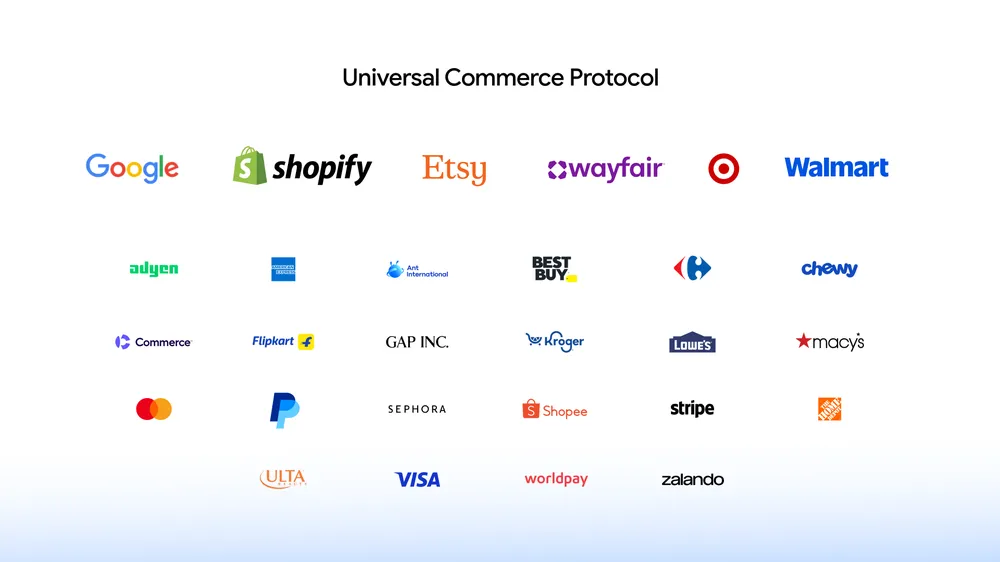
The initiative boasts substantial industry backing, with Google co-developing UCP alongside major commerce powerhouses such as Shopify, Etsy, Wayfair, Target, and Walmart. It has also garnered significant support from leading financial institutions, including Mastercard, Visa, Stripe, and American Express. This broad coalition underscores the industry-wide recognition of the need for a unified approach to agentic commerce infrastructure. While agentic commerce is still in its nascent stages, UCP represents a critical step towards a future where AI agents, merchants, and payment providers can operate within a truly integrated ecosystem, rather than through fragmented, isolated platforms. It provides the essential foundational infrastructure necessary to scale agentic commerce across the broader digital economy.
Mastercard Agent Pay: Securing Autonomous Transactions
While protocols like ACP and UCP focus on communication and interoperability, Mastercard Agent Pay addresses one of the most critical and sensitive challenges in agentic commerce: ensuring trust and secure payment execution. As AI agents gain the formidable ability to discover products, compare options, and make purchasing decisions, they concurrently require an unimpeachable method to complete financial transactions on behalf of users. Mastercard Agent Pay was introduced precisely to provide this secure and reliable payment infrastructure.
The platform is meticulously designed to empower AI agents to execute payments while rigorously adhering to user-defined permissions, stringent authentication requirements, and granular spending controls. Instead of granting AI systems unfettered access to sensitive payment credentials, Agent Pay prioritizes the creation of verified, traceable, and fully authorized payment flows for agent-driven commerce.
A significant stride in its development has been its collaboration with PayPal, where Mastercard Agent Pay is being integrated into PayPal’s extensive wallet infrastructure. This integration enables AI agents to securely complete transactions on behalf of PayPal users, all while upholding the robust security and trust mechanisms that consumers have come to expect from established digital payment systems. This partnership is particularly impactful as it propels agentic commerce closer to widespread, real-world adoption. Agent-driven payments can now potentially operate across a significantly larger ecosystem of merchants, consumers, and payment networks, moving beyond experimental AI environments.
Collectively, ACP, UCP, and Agent Pay are meticulously laying the bedrock for the future of agentic commerce. ACP focuses on empowering AI agents to interact with merchants and finalize purchases, while UCP establishes a universal language for seamless, large-scale collaboration among agents, retailers, and platforms. Agent Pay, in turn, introduces the indispensable layer of trust by enabling secure, authorized payments, thereby bringing the vision of AI-driven shopping ever closer to a ubiquitous reality.
Addressing the Critical Questions: Challenges and Future Outlook
Despite the rapid technological advancements powering agentic commerce, its widespread adoption is far from a foregone conclusion. Numerous challenges must be addressed to unlock its full potential. A primary hurdle is consumer comfort and trust: many individuals may understandably hesitate to grant AI agents the authority to make purchasing decisions or access their payment methods autonomously. Concerns about privacy, data security, and the potential for algorithmic bias are also significant. Furthermore, some critics ponder whether autonomous shopping genuinely solves a pressing consumer problem or merely facilitates increased consumption, making it easier to buy more, more frequently.
Businesses, too, face substantial uncertainties. Supporting agentic commerce necessitates considerable investments in developing new protocols, structuring vast quantities of data for machine readability, implementing complex integrations, and redesigning e-commerce experiences to be AI-ready. The measurable return on these significant investments remains unclear, especially given that consumer adoption is still in its nascent stages.
Broader societal and ethical challenges also loom large. These include robust security measures to prevent fraud, mitigating AI bias in product recommendations, navigating potential platform dependencies that could stifle competition, and addressing the possible erosion of direct relationships between brands and their customers. The regulatory landscape for AI-driven commerce is also largely uncharted, requiring careful consideration of consumer protection, data governance, and liability.
Agentic commerce undeniably represents an exciting and potentially transformative new direction for digital shopping. However, its long-term success will ultimately hinge on its ability to create undeniable, tangible value for all stakeholders: consumers, merchants, and the broader e-commerce ecosystem, not solely the AI platforms that power it. The journey ahead will require continuous innovation, transparent ethical frameworks, and a collaborative effort to build a truly intelligent, secure, and beneficial autonomous retail future.