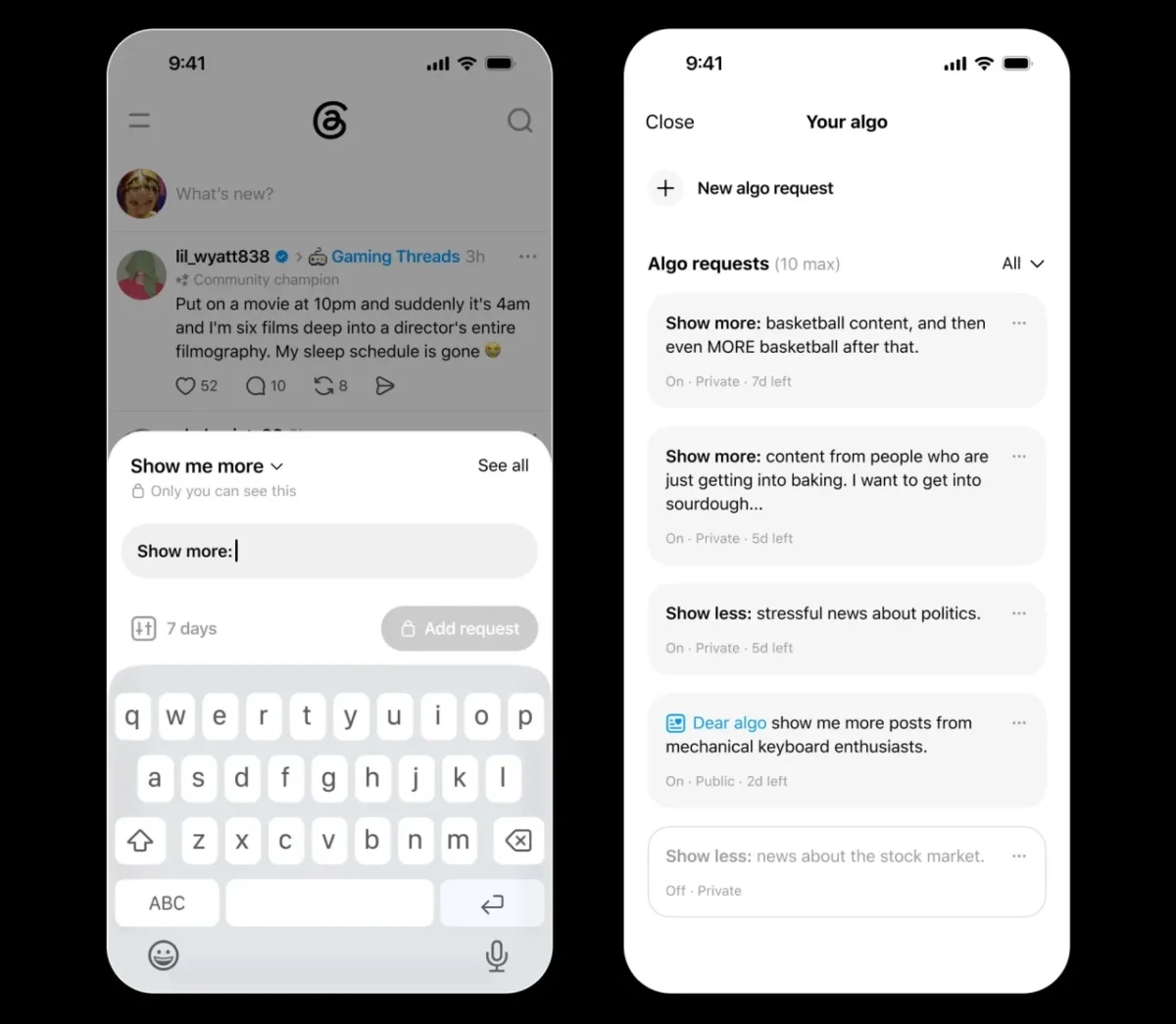
In a significant shift in how users interact with their digital content streams, major social media platforms like Threads, Instagram, and TikTok are rolling out increasingly sophisticated tools designed to give users explicit control over the algorithms that curate their feeds. These new features, ranging from "topic sliders" and "interest toggles" to detailed "content preference menus," are being marketed with the compelling narrative that users are finally taking the reins of their online experiences. However, a closer examination reveals that this framing, while politically expedient, may overstate the actual impact of these new controls, as the underlying mechanics of algorithmic personalization have always been driven by a far more nuanced and continuous form of user engagement: behavior.
The core of the argument presented by industry observers is that users have, in essence, always been in control of what they see. This control, however, has not historically been exercised through direct menu selections. Instead, it has been a constant, implicit dialogue with the algorithm. Every completed video watch, every replayed clip, and every moment a user lingers on a particular post provides the algorithm with a granular, real-time signal about their true interests. For instance, an algorithm can accurately infer a user’s enduring fascination with a niche topic, such as "Avatar: The Last Airbender," not because the user has explicitly declared "interest in animation" via a toggle, but because the platform has observed them watching fan edits late into the night on multiple occasions. This distinction between explicit, often broad declarations and implicit, deeply ingrained behavioral patterns is crucial for understanding the true drivers of content delivery.
The Evolution of Algorithmic Personalization
The journey towards algorithmic personalization began subtly in the early days of social media. Platforms initially relied on basic metrics like likes and shares to understand user preferences. As these platforms matured and the volume of content exploded, the need for more sophisticated recommendation engines became apparent. This led to the development of complex algorithms that analyze a vast array of user actions, including viewing duration, scroll speed, interaction frequency, and even the time of day a user is active.
The introduction of features like TikTok’s "For You" page, which rapidly rose to prominence in the late 2010s, showcased the power of behavior-driven personalization. TikTok’s algorithm proved exceptionally adept at identifying and serving content that users would engage with, leading to unprecedented levels of user retention and addiction. This success spurred competitors to refine their own algorithms, seeking to replicate TikTok’s uncanny ability to predict what users wanted to see.
Instagram’s exploration into algorithmic feeds began in earnest around 2016, moving away from a purely chronological display to one prioritized by relevance. Similarly, Meta’s broader portfolio, including Facebook, has continuously evolved its content ranking systems to maximize user engagement. Threads, Meta’s text-based conversation app launched in 2023, inherited this legacy, with its algorithm designed to foster engaging discussions and connect users with relevant content and communities.
The Strategic Rationale Behind Explicit Controls
The recent push towards explicit preference tools, while seemingly a user-centric innovation, is widely understood to be a strategic response to increasing public and regulatory scrutiny. In an era marked by heightened concerns over data privacy, the opaque nature of algorithmic decision-making, and the challenges of content moderation, providing users with visible controls serves a dual purpose.
Firstly, it acts as a public relations move, projecting an image of transparency and accountability. By offering users a tangible dial to "turn," platforms can ostensibly demonstrate their commitment to user empowerment and address growing anxieties about how their data is being used to shape their online realities. This can be particularly effective in appeasing regulators who are increasingly looking for concrete actions that signal a willingness to address these complex issues.
Secondly, these explicit controls serve a genuine functional purpose for a specific segment of users: those who are new to a platform. For individuals joining a service without any pre-existing behavioral data, these preference menus provide a crucial "cold start" mechanism. Declaring an interest in, for example, "cooking" and an aversion to "football" allows the algorithm to establish an initial baseline, thereby delivering more relevant content from the outset than it could by simply waiting for behavioral patterns to emerge. This can significantly shorten the learning curve for new users and improve their initial experience.
However, for the vast majority of long-term users, whose digital footprints are already extensive and deeply analyzed, the impact of these new dials is likely to be marginal. Their feeds have, for years, been meticulously sculpted by thousands of micro-interactions that the platforms have been diligently recording since their inception. The subtle nuances of their viewing habits—what they watch to completion, what they skip, what they rewatch—paint a far more accurate and detailed portrait of their preferences than any manually selected category could hope to achieve.
The Granularity of Behavior vs. The Coarseness of Declarations
The fundamental difference lies in the precision of the data. Explicit preferences, such as ticking a box for "interest in musicals," are inherently broad. They categorize users into large, general groups. While this can be a useful starting point, it fails to capture the idiosyncratic and often surprising nature of individual taste.
Behavioral signals, on the other hand, are extraordinarily granular. The act of watching a fan-made mashup of characters from "Avatar: The Last Airbender" singing songs from "Hamilton" to the very end, for instance, communicates a much more specific and potent interest than a general declaration of liking "animation" or "musicals." This micro-level engagement reveals a deep appreciation for a particular fusion of genres, characters, and creative expression that a simple toggle cannot possibly articulate.
Platforms like YouTube have long leveraged this behavioral granularity. Their recommendation engine is a masterclass in understanding implicit user preferences, often surfacing videos on topics or in styles that users might not have even realized they enjoyed. This is because the algorithm is not just processing broad categories; it’s analyzing sequences of actions, the emotional responses inferred from watch time and engagement, and the patterns that emerge over time.
Implications for Advertisers: The Enduring Power of Creative Engagement
The distinction between behavioral signals and explicit declarations has profound implications for advertisers operating within these ecosystems. If the primary determinant of content delivery and visibility is user behavior, then the most effective advertising strategies must focus on eliciting that desired behavior. This means moving beyond simply aligning creative with declared interest categories and instead prioritizing the creation of content that genuinely captures and holds user attention.
The announcement of these new preference tools, therefore, does not fundamentally alter the core task for social media advertisers. The objective remains the same: to produce a diverse range of creative assets across various formats and messages, allowing the platform’s algorithm to discern which versions resonate most effectively with specific audience segments.
A user who watches a product demonstration video multiple times sends a significantly different and more valuable signal to the algorithm than a user who skips the same video after two seconds. Both of these behavioral signals are far more instructive for targeting and optimization than knowing that the user has simply indicated an "interest in fashion." This data allows advertisers to understand not just what users say they like, but what they actively engage with, indicating a higher level of interest and potential for conversion.
Strategic Media Planning in the Age of Behavioral Data
For media planners, this underscores the importance of a diversified creative approach. Instead of relying on a single, upfront creative concept, advertisers are encouraged to:
- Diversify Creative: Develop multiple ad variations, exploring different messaging, visuals, and calls to action. This provides the algorithm with a richer dataset to analyze.
- Test Formats: Experiment with various ad formats available on each platform (e.g., short-form video, carousels, static images, stories) to understand which best capture user attention and drive engagement.
- Prioritize Behavioral Data: Let the actual delivery and engagement data from the platform guide optimization decisions. The "best" version of an ad is not necessarily the one that an advertiser initially believes will perform well, but rather the one that user behavior consistently selects for over time.
This approach allows for a dynamic and iterative optimization process. By observing which creative elements lead to longer watch times, higher click-through rates, and more completions, advertisers can refine their campaigns in real-time. This data-driven feedback loop is far more powerful than relying on static user preferences.
The Bottom Line for Platforms and Advertisers
Ultimately, the introduction of user-controlled algorithms, while a noteworthy development, represents a more significant political and strategic maneuver for social media platforms than a radical overhaul of their core operational logic. For platforms navigating a complex regulatory landscape and seeking to project an image of user empowerment, these features are a sensible and timely innovation. They also provide a valuable tool for onboarding new users.
However, for the vast majority of established users and for advertisers, the fundamental dynamics of content consumption and promotional strategy remain largely unchanged. The behavioral signals that have always driven content delivery and determined advertising performance are still the critical factors. The challenge for advertisers, therefore, continues to be the creation of compelling content that users actively choose to engage with, and the implementation of media plans that allow for the continuous learning and optimization derived from that engagement. The playbook remains consistent: build content that is worth lingering on, run sufficient variations to allow the algorithm to learn, and trust the nuanced insights gleaned from viewing data over the more generalized declarations of preference. This enduring reliance on behavioral data ensures that while the interfaces may evolve, the underlying principles of effective digital engagement persist.