


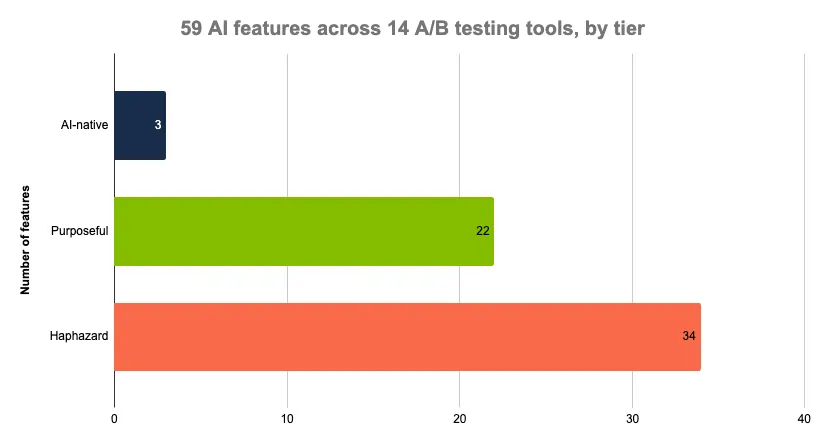
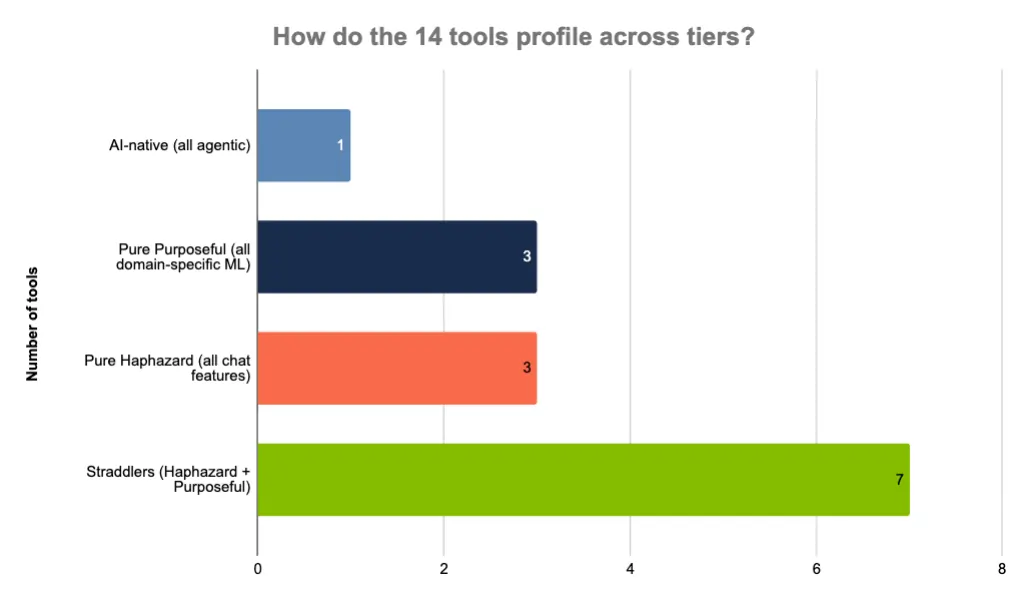
A comprehensive audit of the A/B testing software industry conducted in June 2026 has revealed a significant disparity between the marketing of "AI-powered" capabilities and the actual functional utility of these features. The study, which analyzed 14 leading experimentation platforms and 59 specific AI-driven features, found that while 71% of vendors prominently feature AI on their homepages, the majority of these implementations remain superficial. Specifically, 58% of the identified features are classified as "chat wrappers"—interfaces that translate natural language into existing software commands—while only 5% represent a fully autonomous, or "agentic," approach to digital optimization.

The research highlights a pivotal moment in the evolution of conversion rate optimization (CRO) and product experimentation. Much like the "Smart TV" labels of 2014, which could denote anything from a rudimentary internet connection to a sophisticated integrated operating system, the "AI-powered" label in 2026 has become a broad marketing umbrella that often obscures the underlying technical reality. As enterprises increasingly rely on these tools to drive revenue and user engagement, the audit serves as a critical benchmark for distinguishing between incremental efficiency gains and transformative technological shifts.
The Landscape of Artificial Intelligence in Experimentation
The audit utilized a rigorous methodology, retrieving data from official vendor sites and technical documentation. Of the 14 tools reviewed, 10 featured AI as a primary selling point in their headlines or dedicated product pages. However, the depth of integration varied significantly. Only 43% of these tools placed AI at the center of their homepage messaging, while others relegated the technology to sub-pages or feature descriptions.
One notable outlier in the study avoids the term "AI" entirely, opting for descriptions such as "smart" or "hybrid statistics" to describe its adaptive traffic allocation models. Conversely, another tool, recently acquired, maintains "AI-native" claims only within its acquisition announcement banners, failing to integrate that narrative into its core product copy. This suggests a market in flux, where some legacy players are struggling to redefine their identity in an era dominated by large language models (LLMs).
The 59 features identified by the audit were categorized into four broad functional patterns: Chat-Based Experiment Creation, Model Context Protocol (MCP) Servers, Predictive Scoring and Visitor Intelligence, and Autonomous Optimization.
Tier 1: The Rise of the Chat-Based Interface
The most prevalent pattern, accounting for 58% of all features, is the "Haphazard" tier. These are chat-based interfaces layered over existing product architectures. In this model, an LLM acts as a translator, converting a user’s plain-language prompt into a sequence of actions the platform was already capable of performing manually.
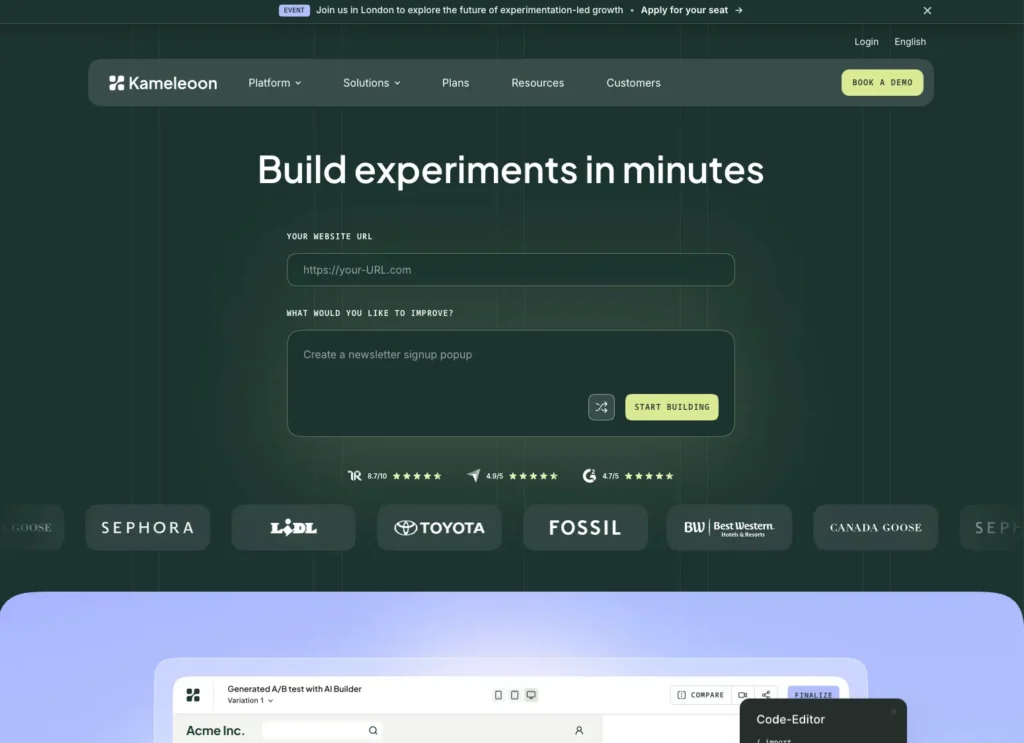
Prominent examples include VWO Copilot and Kameleoon’s Prompt-Based Experimentation (PBX). These tools allow users to describe a desired experiment—such as changing a call-to-action or adjusting an audience segment—and the AI generates the variant, sets up the metric tracking, and summarizes results. While these features significantly reduce the "time to click" for experienced users and lower the barrier to entry for novices, they do not introduce fundamentally new capabilities to the platform.

Optimizely’s "Opal" represents perhaps the most ambitious version of this tier. Opal utilizes specialized agents to review experiment configurations for statistical viability and summarize program-level metrics. According to Optimizely’s 2025 AI Benchmark Report, which analyzed 47,000 interactions across 900 companies, Opal users ran 78.7% more experiments than non-users. This data suggests that while "Haphazard" AI may not be revolutionary in its logic, its impact on the velocity of experimentation is measurable and significant.
The Developer Shift: MCP Servers and Integration
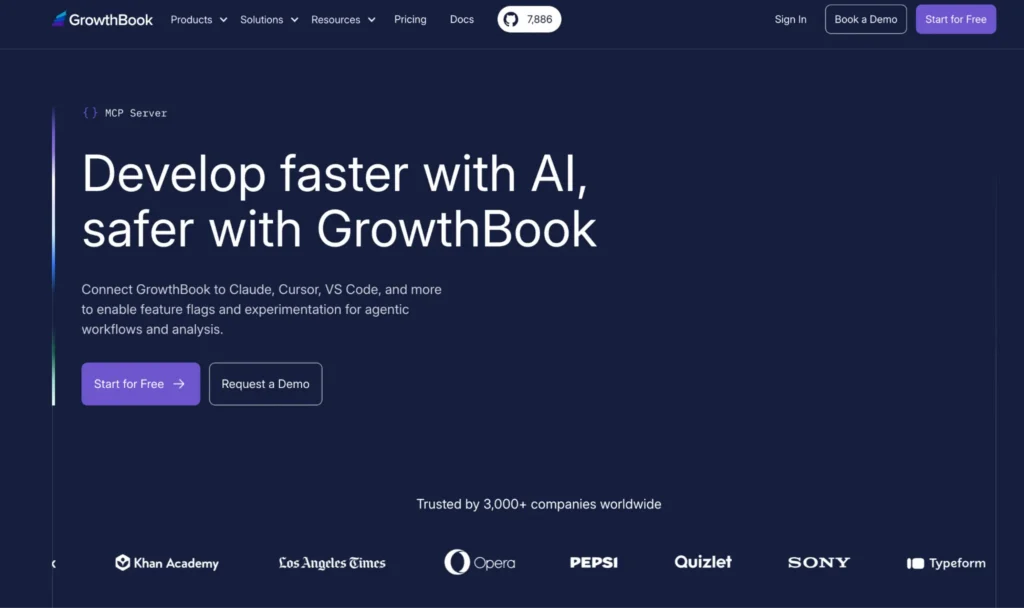
A secondary but growing pattern involves the use of Model Context Protocol (MCP) servers. This technology allows experimentation platforms to bypass their own proprietary chat boxes and meet developers within their preferred environments, such as Claude Code, Cursor, or ChatGPT.
GrowthBook and Statsig have emerged as leaders in this space. GrowthBook, which shipped its first production MCP server in early 2025, has since expanded its capabilities to 14 different tools. However, the road to seamless integration has not been without challenges. GrowthBook’s engineering team has publicly documented the difficulties of using conversational AI for complex experiment setups, noting that the AI occasionally skips critical steps when the required input sequences become too granular.
LaunchDarkly has taken a different approach by treating AI configurations as the subjects of the tests themselves. Their "AI Configs" surface allows teams to A/B test different prompt templates and model settings as if they were standard feature flags, ensuring that the AI being deployed is actually delivering the intended business value.

Tier 2: Purposeful AI and Proprietary Data Moats
The "Purposeful" tier, representing 37% of the audited features, describes AI that performs tasks previously impossible for the platform. These features are built on domain-specific models trained on the vendor’s proprietary datasets rather than generic LLMs.
AB Tasty’s "EmotionsAI" is a flagship example of this category. It segments anonymous visitors into ten emotional-needs cohorts within 30 seconds of their arrival on a site, using behavioral signals to trigger specific personalization. Similarly, the Kameleoon Conversion Score (KCS) uses an in-house machine learning model to assign every visitor a 0-100 score based on their likelihood to convert.
Legacy players like Adobe Target and Dynamic Yield continue to leverage classical machine learning through systems like Adobe Sensei and AdaptML. These models handle model-based scoring and multi-channel recommendations, tasks that are deeply integrated into the platform’s data architecture.
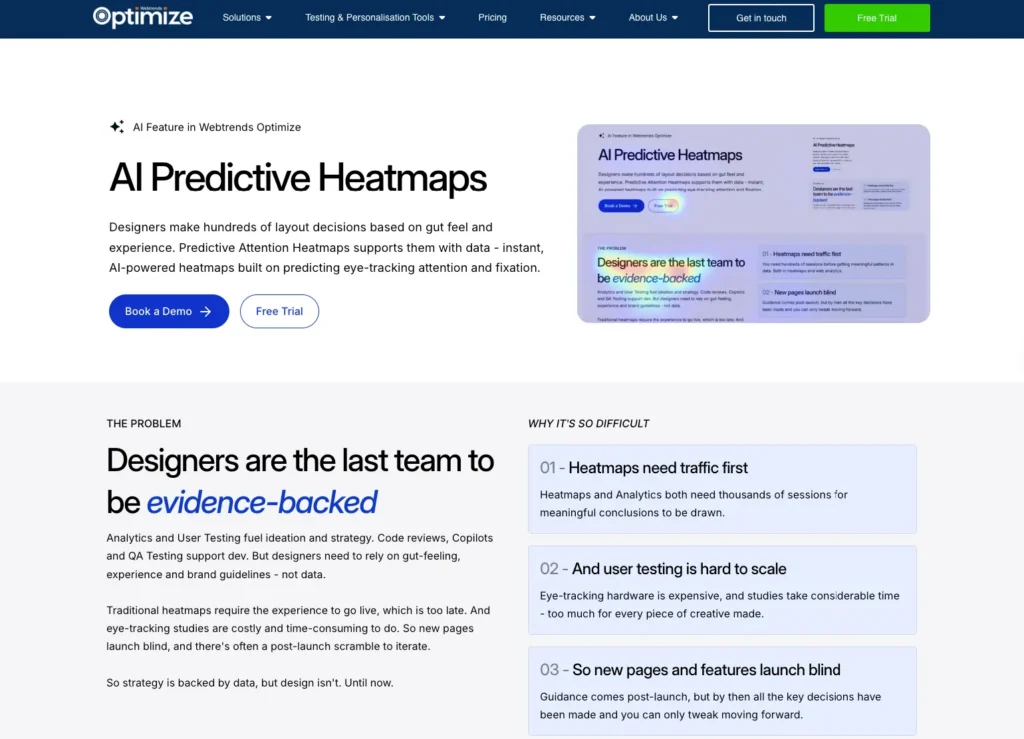
A unique perspective is offered by Webtrends Optimize, which markets "Sovereign AI." This involves running local models on proprietary hardware rather than making third-party API calls to OpenAI or Gemini. This approach addresses growing concerns regarding data sovereignty and the risks of sending sensitive customer experiment data to external LLMs—a risk that Webtrends argues many vendors are currently failing to disclose.
Tier 3: The Frontier of AI-Native Autonomous Optimization
The most advanced tier, "AI-native," currently represents only 5% of the market. This category is defined by the "autonomous optimization" loop, where the AI operates without human triggers.
Runner AI, launched in January 2026 by former Google DeepMind engineers, is the primary example of this shift. Unlike traditional tools that require a human to hypothesize and initiate a test, Runner AI’s engine monitors behavior, identifies friction points, and runs continuous multivariate tests on layout and copy automatically. In this model, the storefront effectively becomes an autonomous agent. The audit suggests that while this is currently a niche category, it represents the most likely direction for the next generation of experimentation platforms.

Market Consolidation and the Future of the Industry
The audit arrives amidst a period of intense consolidation within the experimentation sector. Four of the 14 tools analyzed have recently changed hands:
- VWO and AB Tasty have merged under Wingify, backed by Everstone Capital.
- Eppo was acquired by Datadog to form "Datadog Experiments."
- SiteSpect was rebranded as "Monetate Maestro" following its acquisition by Monetate.
- Convertize was absorbed by the experience analytics platform Glassbox.
This consolidation suggests that AI roadmaps are increasingly being folded into larger "experience platforms." For organizations choosing a tool, the primary concern is no longer just the feature set, but whether those features will remain as distinct capabilities or be absorbed into a broader, potentially more restrictive, suite of tools.

Analysis of Implications: The Commoditization of the Interface
The findings of the June 2026 audit suggest a rapid stratification of the market. The "Haphazard" layer—the chat-based interface—is commoditizing quickly. As MCP servers become standard, the competitive advantage of having a "better" proprietary chat box is evaporating. Any developer with a $20-a-month AI seat and an MCP connection can replicate much of the value provided by these wrappers.
Consequently, the "moat" for experimentation vendors has shifted to the "Purposeful" tier. The value now lies in the proprietary datasets and the domain-specific models trained on years of accumulated visitor behavior. Tools that can offer unique insights—such as emotional segmentation or predictive heatmaps—are better positioned to defend their market share than those relying solely on LLM integrations.

Furthermore, the audit highlights the importance of infrastructure. Convert Experiences, for instance, has focused on building "solid foundations" before launching AI features. This includes version control for visual editors, approval workflows, and audit trails. As founder Dennis van der Heijden noted, these "unglamorous" features are what make AI trustworthy in a production environment. Without rigorous version control and approval gates, autonomous agents risk making changes that cannot be easily tracked or reversed, creating significant operational risk for enterprise users.
Conclusion
As the A/B testing industry moves toward 2027, the distinction between marketing hype and technical capability will become even more critical. The audit concludes that while the "AI-native" tier is currently small, it represents the future of the category. For the modern experimentation team, the goal is no longer just to run more tests, but to leverage the "Purposeful" and "AI-native" tiers to create self-optimizing digital experiences that can adapt to user behavior in real-time. In this new landscape, the most valuable tools will be those that prioritize data integrity and robust infrastructure over superficial chat interfaces.







