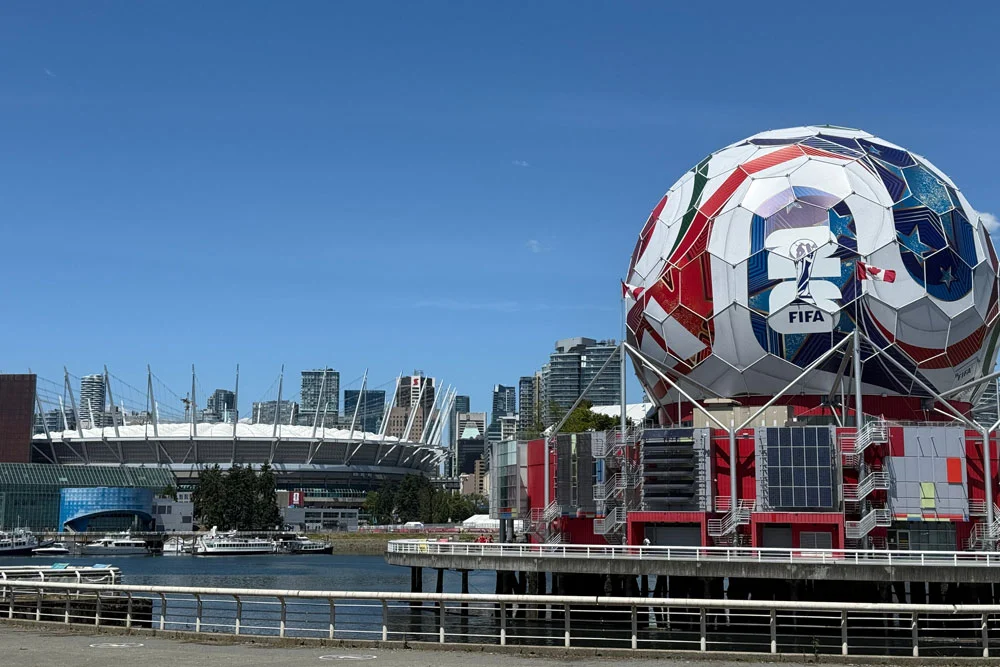
The FIFA World Cup 2026, a sprawling tournament hosted across 16 cities in Canada, Mexico, and the United States, has provided more than just a display of elite athleticism; it has served as a masterclass in strategic management, resilience, and the necessity of structural evolution. As the tournament progressed from the initial group stages to the high-stakes knockout rounds, the dramatic shifts on the pitch mirrored the volatile yet rewarding landscape of affiliate marketing. For industry professionals, the tournament’s progression offers a unique analytical framework for understanding how teamwork, market disruption, and continuous adaptation dictate success in a globalized digital economy.
The Macroeconomic Context of the FIFA World Cup 2026
The 2026 iteration of the World Cup marked a historic shift in the tournament’s format, expanding to 48 teams and significantly increasing the number of matches to 104. This expansion mirrored the explosive growth seen in the global affiliate marketing industry, which is currently valued at over $17 billion. Just as FIFA expanded its reach to capture broader North American and international audiences, affiliate programs have seen a similar expansion in marketing channels, moving beyond traditional blogs to encompass social commerce, influencer networks, and AI-driven content platforms.
The presence of diverse fanbases, such as the Scotland national team’s "Tartan Army," highlights the logistical and emotional scale of the event. When thousands of supporters traveled from hubs like London to Boston, they represented a massive influx of consumer activity—a phenomenon well-understood by performance marketers who capitalize on seasonal surges and major cultural milestones to drive conversion.
The Necessity of Collaborative Structures over Individual Talent
In both professional soccer and high-stakes affiliate management, the reliance on a single "star performer" is a precarious strategy. The 2026 World Cup underscored this reality through the performances of legendary figures and their respective squads. Despite the presence of Luka Modrić, a midfielder widely regarded as one of the greatest of his generation, the Croatian national team struggled to maintain momentum against a highly disciplined Portuguese side. Similarly, the exit of Cristiano Ronaldo’s Portugal at the hands of Spain in the Round of 16 served as a stark reminder that individual brilliance cannot compensate for a lack of collective tactical cohesion.
In the realm of affiliate marketing, this principle manifests in the structure of an agency or an in-house program. An affiliate program’s success is rarely the result of a single high-performing "super affiliate." Instead, sustainable revenue growth is built upon a diversified "team" of partners.
Diversification as a Risk Mitigation Strategy
To protect quality referrals and revenue integrity, modern affiliate managers must move away from over-reliance on a single channel. Data suggests that programs relying on a single affiliate type—such as coupon-only or loyalty-only partners—are significantly more vulnerable to algorithm changes and regulatory shifts. A robust program requires a balanced mix of:
- Content Creators: Providing top-of-funnel awareness and educational value.
- Influencers: Leveraging social proof and niche audience trust.
- Technological Partners: Utilizing retargeting and cart-abandonment solutions.
- Review Sites: Offering middle-of-the-funnel comparisons that drive final decision-making.
By diversifying the affiliate base across multiple marketing channels, brands insulate themselves against the "injury" or decline of any single partner, much like a soccer coach builds a deep bench to ensure the team’s longevity throughout a grueling tournament.
The Rise of the Underdog and Market Disruption
The 2026 World Cup will be remembered for the narrowing gap between traditional powerhouses and emerging "underdog" nations. The Group Stage provided a significant upset when Curaçao, making a historic appearance, secured a 0-0 draw against an established Ecuador team. Even more striking was the Round of 16 encounter where Egypt led the defending champions, Argentina, 2-0 for the majority of the match. These instances reflect a core truth in competitive environments: historical dominance does not guarantee future security.
This "underdog" phenomenon is frequently observed in the affiliate marketing sector, where agile startups often disrupt established industries. A notable case study is that of Nectar Sleep. Entering the "mattress-in-a-box" market in early 2017, Nectar faced formidable competition from entrenched brands like Casper, Saatva, and Purple. These competitors held significant market share and established affiliate footprints.
Case Study: The Nectar Sleep Ascent
Through a strategic and aggressive affiliate management approach spearheaded by AM Navigator, Nectar Sleep demonstrated that a newcomer could outmaneuver industry giants. Within exactly one year and five days of its launch, Nectar’s affiliate program ascended to the top position on its affiliate network, surpassing over 5,000 other brands, including household names like Wayfair, Reebok, and the NFL.
This success was not accidental but was driven by a commitment to high-quality creative assets, competitive commission structures, and a relentless focus on relationship-building with key affiliates. The lesson for the industry is clear: being an underdog is not a permanent state of mediocrity. With the right tactical execution, a newcomer can leverage the same tools as a giant to achieve market leadership.
The Perils of Stagnation and the Requirement for Agility
The failure of traditional giants to maintain their status was perhaps the most jarring aspect of the 2026 World Cup. Italy, a four-time champion, failed to qualify for the tournament entirely, marking a period of profound institutional reflection for the nation. During the tournament itself, the Netherlands was eliminated by Morocco in the Round of 32, and Brazil—the most successful team in World Cup history—was knocked out by Norway in the Round of 16.
Norway’s performance is particularly instructive. Having not qualified for a World Cup in nearly three decades, the Norwegian squad utilized a long-term developmental strategy to return to the global stage, eventually reaching the Quarterfinals. This trajectory mirrors the "dynamic" nature of digital marketing.
Adapting to a Shifting Digital Landscape
Affiliate marketing is in a constant state of flux, influenced by technological advancements and shifting consumer privacy standards. Strategies that were highly profitable five years ago—such as certain types of cookie-stuffing or low-value search arbitrage—are now either obsolete or strictly prohibited.
The industry is currently navigating several major shifts:
- The Deprecation of Third-Party Cookies: Forcing a move toward first-party data and server-to-server tracking.
- Regulatory Oversight: Increased scrutiny from the FTC and international bodies regarding disclosure and consumer data protection.
- AI Integration: The rise of generative AI in content creation, requiring affiliate managers to vet the quality and authenticity of partner-generated material.
To remain competitive, professionals must treat education as a continuous journey rather than a destination. Industry conferences, such as the Affiliate Summit in New York, serve as critical hubs for the exchange of tactical knowledge, much like the coaching seminars and scouting networks that underpin international soccer.
Broader Impact and Industry Implications
The parallels between the 2026 World Cup and affiliate marketing extend into the broader economic impact of these events. Major sporting tournaments act as catalysts for consumer spending, driving massive traffic through affiliate links for travel, apparel, electronics, and food delivery services.
For brands, the "World Cup effect" represents a period of peak demand where operational efficiency is tested. The ability of an affiliate program to scale during these periods—ensuring that tracking links are functional, creative assets are updated, and affiliate inquiries are handled promptly—is the difference between a "championship" quarter and a missed opportunity.
Furthermore, the 2026 tournament’s focus on the North American market highlights the importance of localization. Just as soccer teams must adapt to different climates and altitudes across host cities, affiliate marketers must tailor their messaging to specific regional demographics, languages, and purchasing habits.
Conclusion: Lessons for the Future
The FIFA World Cup 2026 has demonstrated that success is a product of systemic strength, the courage to disrupt established hierarchies, and the agility to evolve before obsolescence sets in. For those in the affiliate marketing industry, the tournament serves as a reminder that the landscape is perpetually shifting.
Whether it is a national team seeking to reclaim its former glory or a brand aiming to launch a top-tier affiliate program, the fundamental requirements remain the same: a commitment to teamwork over individual ego, a healthy respect for the disruptive power of the underdog, and a refusal to rest on past laurels. In the high-velocity world of performance marketing, the final whistle never truly blows; there is always another season, another challenge, and another opportunity to innovate.