

The Evolution of eCommerce Search Why Semantic Intent is Replacing Keyword Matching in the Digital Marketplace represents a fundamental shift in how digital retailers interact with their customers, moving away from rigid character-matching algorithms toward sophisticated systems capable of interpreting human nuance. For over a decade, the standard for online shopping has been the keyword-based search engine, a tool designed to match the specific characters typed by a user into a search bar against the metadata of a product catalog. While efficient for finding a specific model number or a clearly defined item like "blue cotton shirt," these systems are increasingly proving inadequate in an era defined by mobile-first browsing, voice-activated assistants, and the rise of natural language processing.
The gap between what a user types and what a search engine understands has become the defining challenge for modern eCommerce. When a shopper enters a query like "something to wear to a beach wedding," a traditional keyword-first engine often fails because no single product in the catalog is likely titled with that exact phrase. The failure of these legacy systems is not merely a technical glitch; it is a significant contributor to "search abandonment," a phenomenon that costs retailers billions of dollars in lost revenue annually. As consumer behavior evolves toward more conversational and problem-oriented queries, the industry is undergoing a structural transition toward semantic-first search architectures.
The Historical Context and the Limits of Lexical Matching
To understand the current shift, it is necessary to examine the chronology of search technology within the retail sector. In the early 2000s, eCommerce search was rudimentary, relying on basic SQL queries that looked for exact matches within product titles. By the 2010s, the industry adopted more sophisticated "lexical" search engines, such as those powered by Apache Solr or Elasticsearch. These systems introduced features like stemming (recognizing that "run" and "running" are related) and basic synonym lists.
However, these improvements were largely incremental. To keep these systems functional, merchandising teams were forced to engage in a never-ending cycle of manual tuning. If customers searched for "kicks" and found no results, a merchandiser had to manually add "kicks" as a synonym for "sneakers." If a search for "summer dress" returned winter coats because they happened to have the word "summer" in a hidden description field, the team had to write a manual ranking rule to demote those items.
This "patchwork" approach functioned adequately when product catalogs were small and search queries were predictable. However, as global marketplaces grew to include millions of SKUs and language evolved through social media influence, the manual labor required to maintain relevance became unsustainable. The rise of mobile shopping further complicated the landscape; users on mobile devices are more likely to use shorthand or, conversely, utilize voice-to-text features that result in long, conversational sentences that traditional keyword engines cannot parse.
The Semantic Revolution: Understanding Intent Over Syntax
The transition to semantic-first search represents a move from "matching strings" to "matching things." At the core of this technology is a concept known as vector embeddings. In a semantic system, every product in a catalog and every query entered by a user is converted into a high-dimensional mathematical vector. These vectors represent the meaning and context of the words rather than the letters themselves.
In this multidimensional space, the vector for "beach wedding" would be mathematically close to products like "linen suits," "floral maxi dresses," and "sandals," even if those products do not explicitly contain the words "beach" or "wedding" in their titles. This allows the search engine to act more like a knowledgeable human sales associate than a rigid database.
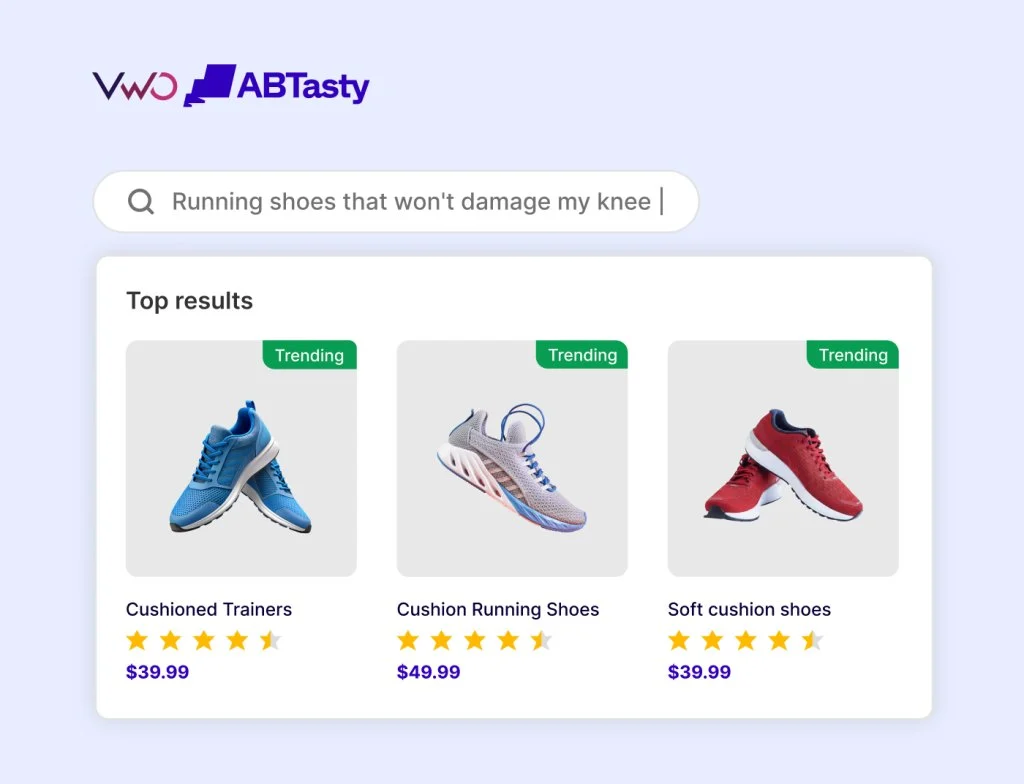
A semantic-first engine asks a foundational question: "What is this shopper actually trying to achieve?" By prioritizing intent, the system can handle vague, descriptive, or evolving language. For example, a query like "running shoes that won’t damage my knee" requires the engine to understand the relationship between "knee protection," "cushioning," "stability," and "impact absorption." A keyword engine would likely fail this query, perhaps returning any shoe with the word "knee" in the text—which might include knee-high boots—whereas a semantic engine identifies the underlying need for high-cushion athletic footwear.

Comparative Analysis: Keyword-First vs. Semantic-First Models
The operational differences between these two approaches have profound implications for both the customer experience and the retailer’s bottom line.
| Feature | Keyword-First Approach | Semantic-First Approach |
|---|---|---|
| Primary Mechanism | Exact term matching and boolean logic | Natural Language Processing (NLP) and intent mapping |
| Best Use Case | Technical catalogs, SKU-specific searches | Discovery-driven, lifestyle, or conversational queries |
| Maintenance | High: Requires constant manual synonym and rule updates | Low: Intent is inferred through machine learning models |
| Relevance Logic | Based on frequency and placement of specific words | Based on conceptual relationships and context |
| Handling of Long Queries | Poor: Often returns zero results for complex sentences | Strong: Can parse intent from long-tail descriptions |
While keyword matching remains a necessary tool for "known-item" searches—such as a mechanic searching for a specific "ISO 9001 spark plug"—it is no longer sufficient as the foundation for a general consumer search strategy. The industry is moving toward a hybrid model where semantic understanding handles the "heavy lifting" of discovery, while keyword rules are used as a precision layer for specific technical requirements.
Supporting Data: The Economic Cost of Poor Search
The urgency of this transition is underscored by recent market data. According to research conducted by the Baymard Institute, approximately 70% of eCommerce search engines fail to return relevant results for "thematic" queries (like "living room furniture") and 34% fail to handle even basic synonym variations.
Furthermore, a study commissioned by Google Cloud found that "search abandonment"—when a consumer searches for a product on a retailer’s website but doesn’t find what they are looking for—costs retailers more than $2 trillion globally each year. In the United States alone, this figure is estimated at $333 billion. The data suggests that 76% of consumers say a poor search experience leads them to abandon their cart and shop elsewhere, and 48% go directly to a competitor’s site or a large marketplace like Amazon after a failed search.
The implementation of semantic search has shown immediate dividends for early adopters. Retailers moving to intent-based models report significant increases in conversion rates, often ranging from 15% to 30%. This is attributed to a reduction in "zero-result pages" and a higher degree of relevance in the first three items displayed on a search results page, where the vast majority of clicks occur.
Broader Implications for the eCommerce Ecosystem
The shift to semantic search does not happen in a vacuum; it transforms the entire digital storefront. Because the search engine now understands the "meaning" of the products, this intelligence flows downstream into other features:
- Dynamic Filtering: Traditional filters are static (e.g., Size, Color, Price). Semantic systems can generate "smart filters" based on the intent of the query. If a user searches for "winter hiking," the system can automatically prioritize filters for "waterproofing" and "insulation."
- Personalized Recommendations: When a system understands that a user is looking for "eco-friendly kitchenware," it can provide recommendations across different categories (utensils, storage, cleaning supplies) that align with that specific value proposition, rather than just suggesting more of the exact same item the user just viewed.
- Merchandising Efficiency: By reducing the need for manual rule-writing, merchandising teams are freed to focus on high-level strategy, such as seasonal campaigns and brand storytelling, rather than spending hours managing synonym spreadsheets.
Industry Response and Future Outlook
Industry leaders and technology providers are rapidly pivoting to meet this demand. Platforms like VWO AB Tasty Commerce are leading the charge by integrating semantic-first search as a core component of their "Experience Optimization" suites. These platforms are designed to bridge the gap between technical search functionality and the human-centric art of merchandising. By providing tools that understand intent while still allowing for human "boost" rules, they offer a middle ground for retailers with complex, diverse catalogs.
Looking ahead, the next frontier of eCommerce search will likely involve the integration of Multimodal Search and Generative AI. Multimodal search allows users to combine text and images—for example, uploading a photo of a chair and typing "but in velvet"—while Generative AI will enable even more fluid, chat-based shopping assistants that can act as personal stylists or consultants.
The conclusion for retailers is clear: the search bar is no longer just a navigation tool; it is a critical piece of data infrastructure. In a marketplace where consumer patience is at an all-time low and competition is a click away, the ability to understand a shopper’s intent is the difference between a completed sale and a lost customer. As the digital landscape continues to evolve, the transition from keyword matching to semantic understanding will be remembered as the moment eCommerce finally learned to speak the human language.







