The modern business landscape for small and medium-sized businesses (SMBs) is currently defined by a profound paradox: while nearly nine out of ten organizations recognize that synchronizing their sales and marketing efforts is critical for growth, less than half of the workforce believes that synchronization actually exists. According to a comprehensive 2026 study conducted by Unbounce, which surveyed over 500 go-to-market (GTM) professionals, the friction between these two fundamental departments is no longer just a communication hurdle but a structural crisis impacting revenue, employee retention, and customer trust.
The report, titled "The 2026 Anatomy of Aligned Go-To-Market Teams," highlights a staggering disconnect at the leadership level. While 87% of GTM professionals expect better alignment to significantly lift performance, only 56% describe their current state as "highly aligned." This gap suggests that despite years of investment in "RevOps" and collaborative software, the fundamental operating models of SMBs remain fragmented.
The Executive Perception Gap: A View from the C-Suite vs. the Trenches
One of the most striking revelations of the 2026 data is the "perception gap" existing between various levels of the corporate hierarchy. The study found that 69% of executives report strong alignment between their sales and marketing departments. However, when the same question was posed to non-executive staff—those responsible for the day-to-day execution of campaigns and sales calls—the figure plummeted to 47%.
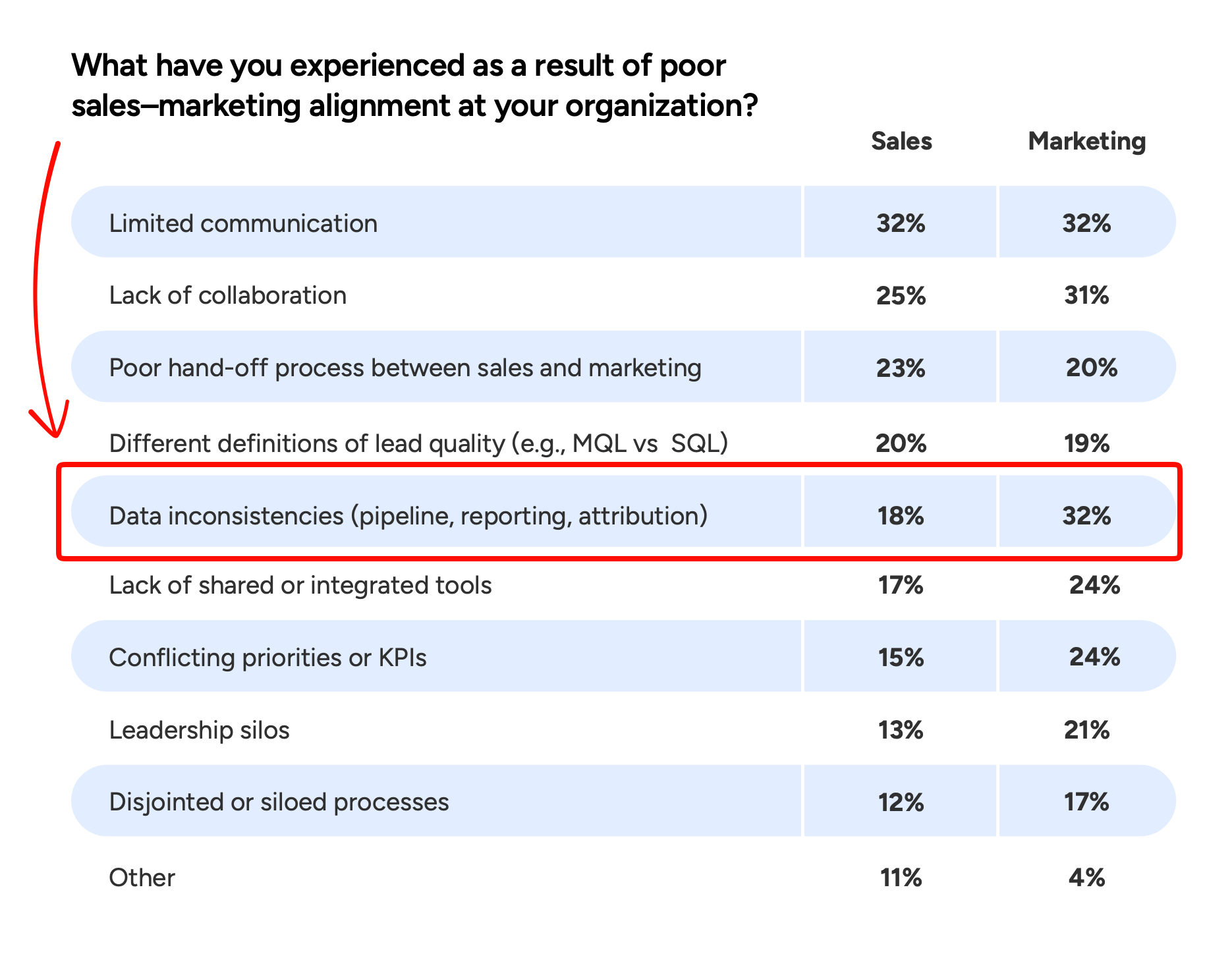
This 22-point discrepancy indicates a structural information lag. Executives often view alignment through the lens of high-level strategy decks, quarterly board meetings, and the mere existence of shared digital workspaces. In contrast, front-line employees experience misalignment through practical barriers that leadership frequently underestimates. These include data inconsistencies (cited as a barrier by 28% of staff), limited peer-to-peer communication (33%), and leadership silos (19%) that prevent agile decision-making.
The disconnect is further stratified by department. The report indicates that 62% of sales professionals feel highly aligned, compared to only 53% of marketing professionals. This suggests that marketing teams often feel their contributions—specifically lead generation—are undervalued or misunderstood by their sales counterparts, leading to a sense of isolation even when the company appears to be hitting its surface-level targets.

The Economic and Operational Costs of Friction
Misalignment is frequently dismissed as a "culture problem" or a matter of clashing personalities. However, the 2026 data quantifies this friction as a direct operational cost. When sales and marketing teams operate in silos, the first casualty is often employee morale, with 29% of respondents citing frustration as the primary consequence of poor alignment.
Beyond the human cost, the financial implications are immediate and compounding:
- Delayed Lead Follow-up: Approximately 28% of teams report that leads generated by marketing sit idle because the sales team is either unaware of them or does not trust their quality.
- Stalled Deal Cycles: 20% of respondents noted that deals frequently stall because the messaging used in marketing campaigns does not match the reality of the sales discovery call, leading to prospect confusion and a loss of trust.
- Duplicated Efforts: 19% of organizations admit to wasting budget and manpower on redundant tasks because the two departments are not sharing resources or insights.
For marketers, the frustration often stems from a lack of clarity regarding the target audience. The report found that 29% of marketers flag "unclear target customers" as a major hurdle, whereas only 16% of sales reps feel the same. This implies that sales teams often pivot their targeting on the fly based on individual conversations, while marketing continues to spend budget on a persona that sales has already deemed non-viable.
The Lead Quality Paradox: MQL vs. SQL
The tension between "Marketing Qualified Leads" (MQLs) and "Sales Qualified Leads" (SQLs) remains the primary flashpoint for GTM teams. According to the study, 20% of sales professionals and 19% of marketing professionals identify the lack of a shared definition of lead quality as their biggest blocker.
In many SMBs, the definition of a "good lead" is a symptom of a deeper procedural failure rather than the cause. The report suggests that even when teams agree on a definition in a meeting, the lack of a formal Service Level Agreement (SLA) means that leads continue to slip through the cracks. Only 29% of GTM teams currently rate their lead quality as "excellent."
The data reveals a "lose-lose" cycle: marketing celebrates high lead volumes to meet their KPIs, while sales ignores those leads due to perceived low quality, leading to a pipeline that looks healthy on paper but fails to convert into closed-won revenue. Marketers feel this sharply, with 32% reporting inconsistent follow-up from sales, suggesting that the "top of the funnel" efforts are being discarded at the "bottom of the funnel" stage.

Tool Bloat and the Myth of Technological Solutions
For the past decade, the standard response to misalignment has been the purchase of more software. The 2026 report suggests that this "buy-your-way-out" strategy has reached a breaking point. Tool bloat is now cited as a significant issue by 56% of GTM professionals.
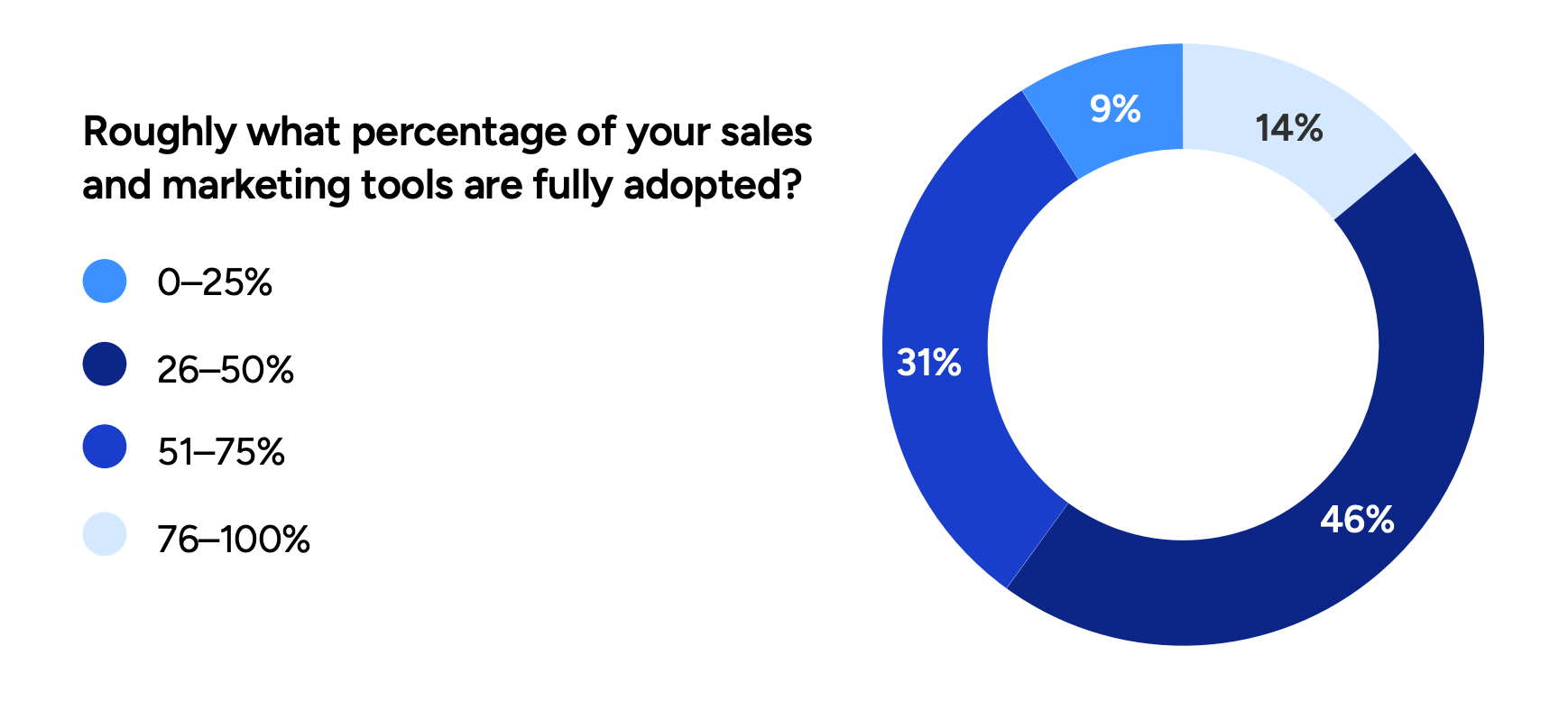
The statistics regarding software adoption are particularly damning:
- 60% of teams use less than half of the tools available in their tech stack.
- 14% of teams utilize only 0% to 25% of their purchased software.
- 46% of teams utilize between 26% and 50% of their stack.
This "SaaS sprawl" creates additional data silos rather than breaking them down. When marketing automation platforms are not fully integrated with the CRM, or when sales reps prefer to work out of private spreadsheets rather than the official system of record, data becomes fragmented.
The report found that 68% of GTM professionals encounter regular data inconsistencies. Marketing teams are particularly affected, with 32% citing data gaps as a barrier compared to 18% of sales. This is because marketing requires clean, closed-loop data to prove attribution and ROI, while sales often relies on immediate, rep-owned pipeline signals.
Characteristics of High-Performing, Aligned Teams
The 56% of organizations that describe themselves as "highly aligned" do not necessarily have more meetings; rather, they have different operating models. The report identifies several key behaviors that separate top performers from the rest of the market.
1. Unified Data Ownership
Aligned teams are 3.5 times more likely to have strong cross-functional data sharing (59% vs. 16%). In these organizations, data is not "owned" by marketing or sales but is treated as a shared corporate asset. This allows both teams to look at the same dashboard and agree on the "source of truth" for conversion rates and customer acquisition costs.
2. Leaner, More Integrated Tech Stacks
Counterintuitively, the most successful teams use fewer tools. 30% of aligned teams describe their tech stacks as "lean and focused," compared to only 15% of misaligned teams. Crucially, teams that consolidated their tech stacks were twice as likely to rate their lead quality as "excellent" (55% vs. 20%). By reducing the number of platforms, these teams ensure higher adoption rates and cleaner data flows.
3. Messaging Consistency
In aligned organizations, the customer journey is seamless. Only 17% of highly aligned teams report messaging inconsistencies, whereas 28% of misaligned teams struggle with "message drift." Aligned teams achieve this by involving sales in the creation of marketing personas and ensuring that marketing has access to sales call recordings to understand the actual language and objections of the customer.
Strategic Recommendations for 2026 and Beyond
As SMBs look to the future, the Unbounce report suggests that the path to alignment requires a shift from "communication" to "operationalization." While 54% of teams currently prioritize increasing the frequency of meetings, the data suggests this is the wrong lever.
Instead, industry experts and the report’s findings point to three critical actions:
Establishing Formal Service Level Agreements (SLAs)
A functional handoff requires more than a shared folder. It requires a documented agreement that specifies what information marketing must provide with every lead, the timeframe in which sales must contact that lead, and the feedback loop required if a lead is rejected. This moves the relationship from anecdotal complaints to data-driven process improvement.
Unifying the KPI Architecture
As long as marketing is incentivized by lead volume and sales by revenue, friction is inevitable. High-performing teams are moving toward shared KPIs, such as "Marketing-Sourced Pipeline Value" or "Customer Acquisition Cost (CAC) by Channel." When both teams are rewarded for the same outcome, the incentive to collaborate overrides the incentive to protect departmental silos.
Prioritizing Data Integration over New Features
The report indicates that 44% of GTM teams are prioritizing data integration and AI-driven insights for the next twelve months. The focus is shifting away from adding new "bells and whistles" to the tech stack and toward ensuring that existing tools actually talk to one another.
Conclusion: The Path to Scalable Growth
The 2026 study serves as a wake-up call for SMB leadership. Sales and marketing alignment is no longer a "nice-to-have" cultural aspiration; it is a fundamental requirement for survival in an increasingly competitive and data-driven market.
The organizations that will thrive are those that recognize alignment as an engineering problem rather than a social one. By focusing on lean tech stacks, shared data integrity, and unified incentive structures, businesses can bridge the gap between executive perception and operational reality. As the report concludes, the goal is not just to get sales and marketing to talk more—it is to get them to work as a single, cohesive engine for revenue growth.


 Asro
Asro
 Dwi Wanna