The relentless demand for fresh, engaging content in the digital landscape often leaves content creators grappling with a familiar adversary: writer’s block and the elusive search for novel blog post ideas. In an era where online visibility is paramount, maintaining a consistent publishing schedule with high-quality, relevant articles is crucial for audience retention and growth. While the challenge is universal among writers, from seasoned journalists to nascent bloggers, the solutions have evolved significantly, blending time-honored strategies with cutting-edge technological advancements. This article explores a comprehensive array of methods to spark inspiration, ranging from deep dives into audience feedback and search engine data to leveraging artificial intelligence and fostering personal creativity.
The Persistent Challenge of Content Ideation in the Digital Age
The proliferation of digital platforms has transformed content creation from a niche activity into a central pillar of marketing, education, and personal branding. Websites, blogs, and social media channels collectively publish an astronomical volume of content daily, creating an intensely competitive environment. For content creators, this translates into immense pressure to not only produce regularly but also to ensure each piece stands out, resonates with its target audience, and drives measurable engagement. A 2023 survey by HubSpot indicated that 69% of marketers consider content marketing an essential part of their strategy, yet a significant portion reported challenges in consistently generating new, high-performing content ideas. This consistent pressure often leads to what is colloquially known as "writer’s block," a mental state where creativity falters, and ideas seem to vanish, leaving content creators staring at a blank screen with a looming deadline. The economic implications are tangible; stalled content pipelines can lead to missed SEO opportunities, stagnant audience growth, and ultimately, a decline in brand visibility and revenue.
Leveraging On-Site Resources for Invaluable Inspiration
One of the most direct and effective avenues for content ideation lies within a blog’s existing ecosystem—its audience and its performance data. These internal resources provide unfiltered insights into what readers genuinely seek and what topics offer untapped potential.
Audience Engagement: The Voice of Your Readers
Your blog’s comment section and contact forms are not merely channels for feedback; they are rich repositories of potential content ideas. While many interactions might be expressions of praise or criticism, specific questions posed by readers are golden opportunities. These questions often reveal gaps in your existing content or highlight areas where your audience requires deeper clarification or elaboration. For instance, a simple query about a particular aspect of a complex topic could be the genesis of an entire blog post dedicated to demystifying that subject. Proactive engagement, such as sending out questionnaires or polls to your subscriber list, can further systematize this process, yielding a structured collection of queries and topics directly from your readership. Maintaining a running list of these questions ensures that when inspiration wanes, a trove of audience-driven ideas is readily available. This approach not only guarantees relevance but also fosters a stronger sense of community, as readers feel heard and valued.
Google Search Console: Unlocking Search Intent
Google Search Console (GSC) remains an indispensable, free tool for any content creator focused on organic search performance. It provides direct, authoritative data on how users find your site through Google Search, offering granular insights into the exact search terms (queries) that drive impressions and clicks. The Performance Report within GSC is particularly vital, listing queries, clicks, impressions, and average ranking positions. By meticulously analyzing these metrics, content creators can identify topics where their existing content ranks but may not fully address the user’s intent. For example, if your blog post about "healthy toddler snacks" receives traffic for the query "how to keep toddlers busy without screens," it signals a clear demand for dedicated content on screen-free activities.
GSC’s value lies in its direct feed from Google’s search algorithms, making it a real-time indicator of audience interest. The integration of GSC data with platforms like WordPress, particularly through plugins like Yoast SEO with Google Site Kit, streamlines this analysis, allowing creators to access performance metrics directly within their dashboard. While premium SEO tools like Ahrefs and Semrush offer advanced competitive analysis and broader keyword research capabilities, GSC’s focus on your site’s performance data makes it uniquely powerful for identifying immediate content gaps and opportunities based on actual user behavior related to your existing online presence.
Advanced Keyword Research: Beyond the Surface
Effective content creation extends beyond merely identifying popular keywords; it involves a deep understanding of the search intent behind those keywords. Your existing keyword research documents, often compiled using tools like Semrush or Ahrefs, are foundational. However, true ideation requires asking probing questions: What problem is the user trying to solve? What information are they truly seeking? Are they looking for a "how-to" guide, a comparative analysis, or an opinion piece?
For instance, if the target keyword is "best running shoes for flat feet," a superficial approach might just list shoe recommendations. A deeper dive, however, reveals several distinct angles, each capable of supporting its own comprehensive article:
- "What are the common challenges for runners with flat feet?"
- "How do different shoe features support arch types?"
- "Are there specific exercises to strengthen feet for runners with flat feet?"
- "What’s the difference between stability shoes and motion control shoes for flat feet?"
Each of these questions can evolve into a dedicated blog post, such as "Choosing the Right Running Shoes for Flat Feet: A Comprehensive Guide," "Top 5 Exercises to Support Flat Feet for Runners," or "Understanding Arch Support: A Runner’s Guide to Stability vs. Motion Control Shoes." Tools like Google’s autocomplete suggestions, "People Also Ask" sections, and Google’s AI Overviews (or AI Mode answers) provide invaluable clues to uncover these underlying questions and expand on topics. Furthermore, integrating rank tracking tools like Wincher with Yoast SEO allows creators to monitor the performance of these targeted articles, providing continuous feedback on content effectiveness.

The Transformative Role of Artificial Intelligence in Content Generation
The advent of sophisticated AI tools and large language models (LLMs) has marked a significant shift in the content creation paradigm, offering unprecedented capabilities for idea generation, drafting, and optimization.
Yoast AI Content Planner: A Tailored Approach
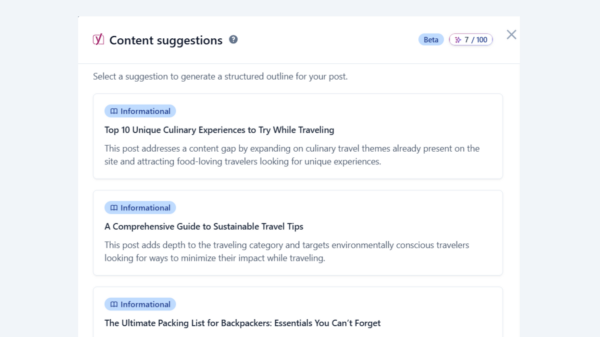
Recognizing the persistent challenge of content ideation, leading SEO solution providers like Yoast have integrated AI capabilities directly into their platforms. The Yoast AI Content Planner, for example, is designed to be more than a generic idea generator. It functions by analyzing a user’s existing website content, identifying thematic gaps, and then suggesting five highly relevant blog post ideas tailored to the site’s niche and audience. This contextual analysis is crucial; instead of broad, often unhelpful suggestions, it pinpoints topics that genuinely complement existing content and address unmet audience needs. For a food blog, if existing content covers "meal prep," but lacks comprehensive articles on "quick vegetarian lunches," the AI might suggest the latter, providing a clear, actionable content direction.
Upon selection of an idea, the Yoast AI Content Planner goes a step further by generating a structured draft, complete with a suggested title, relevant headings, and even a meta description. This semi-automated outline provides a robust starting point, significantly reducing the initial friction of content creation. This feature, included in Yoast SEO Premium products, exemplifies how AI can augment human creativity, allowing content creators to maintain publishing consistency without sacrificing relevance or quality.
General AI and Chatbots: Strategic Prompting for Ideas
Beyond specialized tools, general-purpose AI chatbots such as ChatGPT, Claude, and Gemini have become powerful resources for brainstorming and ideation. However, their effectiveness hinges on the quality and specificity of the prompts provided. Generic requests like "Give me blog ideas about parenting" often yield equally generic results. To maximize their utility, creators must provide context about their blog, target audience, and specific goals.
Effective prompting involves:
- Asking for specific angles: Instead of a broad topic, specify the desired perspective (e.g., "Give me blog ideas about parenting for first-time parents living in urban areas, focusing on budget-friendly activities").
- Refining vague ideas: If an initial idea is too broad, instruct the AI to narrow it down (e.g., "I have the idea of ‘sustainable living.’ Can you break this down into five niche blog post topics for a millennial audience interested in minimalist lifestyles?").
- Reverse-engineering competitors: Providing a competitor’s blog URL and asking the AI to "analyze this blog’s content strategy and suggest five topics they might have overlooked that would appeal to my audience."
While AI offers unparalleled efficiency, a critical challenge lies in avoiding "commodity content"—ideas that are generic, overdone, or lack a unique perspective. The role of the human creator becomes paramount in infusing AI-generated ideas with personal experience, original data, expert insights, or a distinctive voice. For instance, an AI suggestion like "10 tips for better sleep" can be transformed into "My 30-Day Sleep Experiment: What I Learned from Tracking My Circadian Rhythm" or "Neuroscience of Sleep: How Understanding Brain Waves Can Improve Your Rest," adding unique value and making the content stand out. The ethical implication of AI in content creation also warrants consideration, emphasizing that AI should serve as an assistant to creativity, not a replacement for original thought and authentic storytelling.
External Sources and Creative Techniques for Fresh Perspectives
Beyond internal data and AI, a wealth of external resources and creative practices can consistently fuel content ideation.
Visual Discovery with Pinterest
Pinterest, often perceived as a purely visual platform, is a potent tool for trend spotting and content ideation, especially for visually-driven niches like food, DIY, fashion, travel, and home decor. By searching for broad terms like "[blog post ideas]," "[blog ideas]," or "what to blog about," and then refining with niche-specific keywords (e.g., "[blog post ideas for parents]"), creators can uncover popular topics and identify content gaps. Analyzing top-pinned posts and trending boards can reveal what resonates visually and conceptually with a broad audience. However, creators must exercise caution, as Pinterest can be prone to "clickbait" trends. The goal is to extract genuine interest points and convert them into valuable, high-quality content, rather than chasing fleeting viral fads.
Content Idea Generators: Sparking Unconventional Thoughts
Tools like Portent’s Content Idea Generator, while not providing ready-to-publish articles, excel at breaking mental blocks by offering humorous or unexpected title suggestions. For example, entering "house plant" might yield "The 15 Biggest House Plant Blunders," or "wine" could become "17 Unexpected Uses for Wine." While often whimsical, these suggestions can trigger lateral thinking, leading to genuinely innovative content angles. "20 Ideas You Can Steal From Babies" might evolve into "Life Lessons from Toddlers: Simplicity, Curiosity, and Unfiltered Joy," transforming an amusing title into a thoughtful piece. The primary benefit of such generators is their ability to dislodge conventional thought patterns, encouraging creators to explore unconventional perspectives.
"Days Of The Year" and Niche Calendars
Websites like "Days Of The Year" catalog thousands of fun, bizarre, and unique holidays, offering a perpetual source of timely content ideas across virtually any niche. From "Unicorn Day" (April 9th) to "Towel Day" (May 25th), these observances can be linked to a blog’s theme. A travel blogger might leverage "Towel Day" for a post titled "The Ultimate Travel Towel Guide: What to Pack for Every Adventure," or a lifestyle blogger could write "How to Keep Your Towels Soft and Sustainable: A Home Care Guide." This strategy facilitates seasonal content planning, ensuring a steady stream of relevant and engaging articles that can tap into trending conversations or celebratory moods.
Learning from Peers: Other Blogs and Communities
The internet’s interconnectedness means inspiration is often just a click away. Following influential bloggers, subscribing to industry newsletters, and actively participating in niche-specific Facebook groups or online forums can provide a continuous flow of ideas. Observing successful content strategies, identifying popular topics, and engaging in discussions with fellow bloggers can stimulate creative thought. It is imperative, however, to differentiate between inspiration and imitation. The goal is to draw upon diverse perspectives to develop unique content, always giving credit where due and avoiding direct replication of others’ work. Networking within these communities can also lead to collaborative opportunities and a broader understanding of industry trends.
Drawing Inspiration from Real-World Experiences and Personal Practices
Some of the most compelling content originates from personal experiences, daily observations, and a commitment to mental well-being.
Current Events: Timely and Relevant Connections
Connecting current events to your blog’s niche can generate highly relevant and timely content. The art lies in translating broad news into specific, actionable insights for your audience. For a parenting blog, a new study on screen time could inspire "Beyond the Headlines: What the Latest Screen Time Research Means for Your Family." A personal finance blog could analyze a tax law change in "Navigating New Tax Rules: Three Strategies to Protect Your Savings." Setting up Google Alerts for keywords relevant to your niche ensures you stay informed of breaking news and emerging trends. The key is to add value by explaining the implications for your readers, offering solutions, or providing unique commentary, rather than merely reporting the news. Creators should approach sensitive topics with thoughtfulness and empathy, focusing on audience benefit rather than simply capitalizing on a trend.
Daily Life and Professional Insights
Your own daily life, professional experiences, and interactions offer an inexhaustible wellspring of content. Challenges faced by clients, common problems encountered in your work, or personal lessons learned can be transformed into relatable and informative blog posts. A therapist with a mental health blog might share anonymized case studies (with client permission and altered details) to illustrate coping mechanisms, or a tech consultant could write about a recurring client issue and its resolution. The authenticity derived from real-life examples often resonates deeply with readers, fostering trust and demonstrating practical expertise. When drawing from personal or professional experiences, respecting privacy and obtaining explicit permission (while anonymizing details) is an ethical imperative.
Mindfulness and Mental Breaks: Clearing the Creative Block
Prolonged periods of focused work, especially when facing a creative block, can be counterproductive. Stepping away from the desk and engaging in activities that shift focus—a walk, meditation, or even mundane chores—can help reset the mind. This "incubation period" allows the subconscious to process information and make new connections, often leading to unexpected breakthroughs. Structured breaks, such as a "ten-minute brainstorming sprint," can also be highly effective. Setting a timer and challenging oneself to generate, for example, "twenty blog ideas about [your topic]—five weird, five practical, and ten in between"—encourages divergent thinking without the pressure of perfection. This exercise, followed by a short free-writing session on the most interesting idea, can significantly enhance focus and inspire novel angles.
The Indispensable Idea List
Perhaps the simplest yet most effective strategy is to maintain an ongoing list of blog post ideas. Inspiration often strikes at unpredictable moments—during a commute, while reading, or in conversation. Capturing these fleeting thoughts immediately, whether in a digital note-taking app or a physical notebook, ensures they are not lost. This proactive approach transforms moments of inspiration into a strategic reserve, ready to be deployed during periods of creative drought. A well-maintained idea list acts as a buffer against publishing delays, ensuring a consistent content flow even when spontaneous creativity is low.
The Evolving Landscape of Content Creation: Synthesis and Strategy
The modern content creator navigates a complex ecosystem where traditional journalistic principles intersect with technological innovation. Overcoming content ideation challenges in this environment requires a multi-faceted approach that synthesizes diverse strategies. It’s about leveraging the analytical power of tools like Google Search Console and Yoast AI Content Planner to identify data-driven opportunities, while simultaneously embracing the creative spark ignited by external inspiration sources like Pinterest or "Days Of The Year."
Ultimately, while AI and data analytics streamline the ideation process and improve efficiency, the human element remains irreplaceable. The unique voice, personal experience, critical analysis, and ethical considerations provided by human creators are what differentiate compelling content from generic output. As the digital landscape continues to evolve, content creators must remain adaptable, continuously learning new tools and refining their creative processes. The future of content creation will undoubtedly see a greater symbiosis between human ingenuity and artificial intelligence, demanding that creators master both the art of storytelling and the science of digital strategy.
The journey to consistent, high-quality content is ongoing, but by strategically employing these diverse methods, content creators can effectively mitigate writer’s block, foster a continuous flow of fresh ideas, and maintain a robust publishing schedule that consistently engages and expands their audience.