

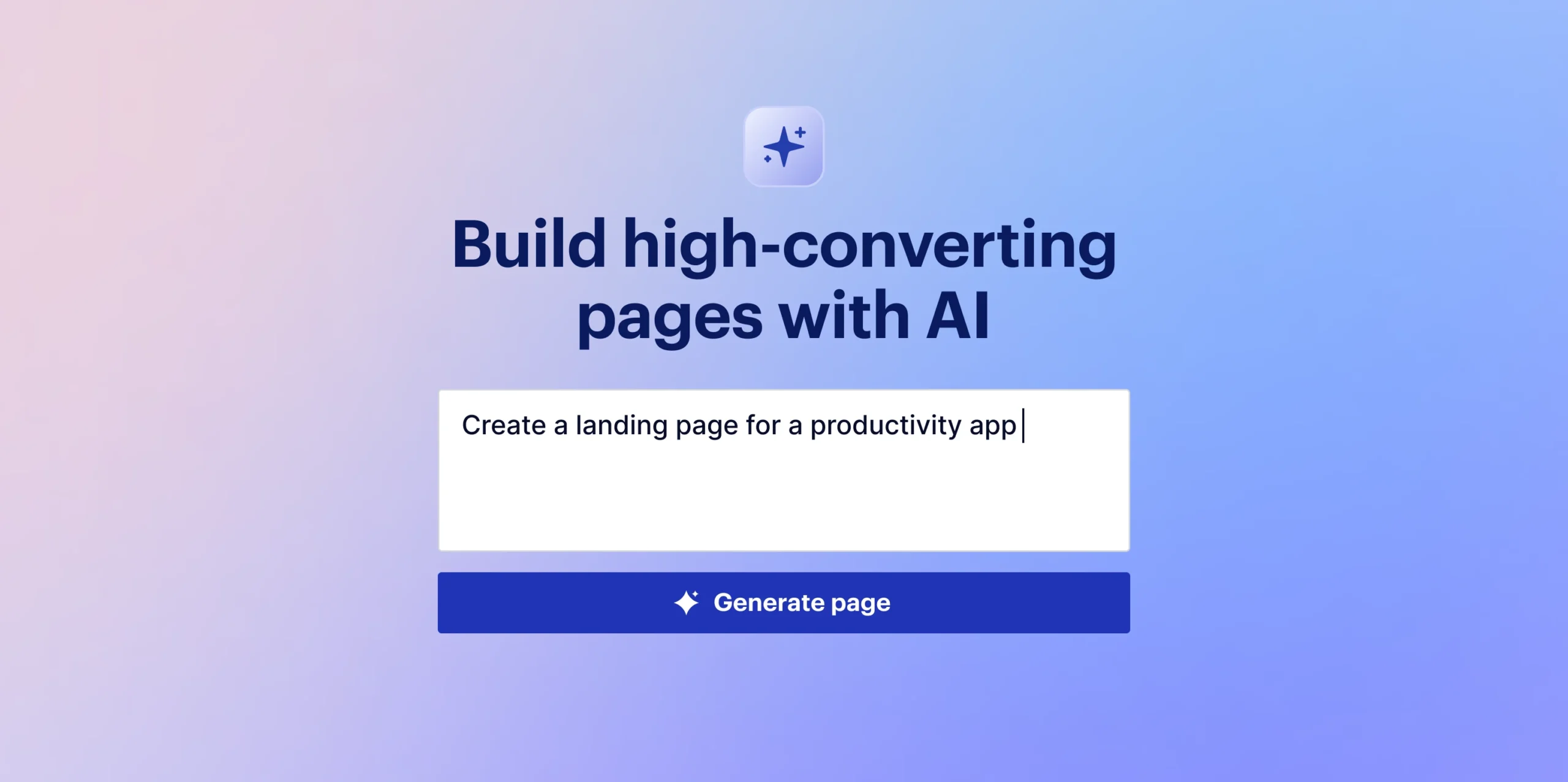
The marketing technology sector has witnessed a significant transformation as Instapage, a pioneer in landing page innovation since 2012, announced the comprehensive integration of generative artificial intelligence across its entire suite of tools. This evolution marks the transition of Instapage from a specialized landing page builder into a holistic, AI-driven marketing ecosystem designed to address the complexities of modern digital growth. By embedding AI into every stage of the marketing funnel—from initial page design to automated lead follow-up—the company aims to eliminate the friction inherent in "stitching together" disparate tools, a common pain point for lean marketing teams.
The latest release includes a series of high-impact features, most notably AI-powered page generation, AI email generation, and AI Collections. These tools are engineered to allow businesses to scale their digital presence without the traditional requirement of increasing headcount or technical overhead. According to company statements, the initiative is a response to a shifting economic landscape where marketing budgets are tightening while performance expectations continue to climb. By automating the more labor-intensive aspects of creative production and optimization, Instapage seeks to democratize high-level conversion rate optimization (CRO) for businesses of all sizes.
A Decade of Evolution: From Builder to Ecosystem
To understand the significance of this AI pivot, it is essential to examine the historical trajectory of Instapage within the MarTech industry. Founded in 2012, the company initially gained prominence by offering a user-friendly interface that allowed marketers to create high-converting landing pages without the need for extensive coding knowledge. Over the subsequent decade, the platform expanded its capabilities to include advanced CRO features, such as heatmaps, A/B testing, and dynamic text replacement for personalization.
The timeline of Instapage’s development reflects the broader trends in digital marketing. In the mid-2010s, the focus was on visual flexibility and the "no-code" movement. By 2018, the emphasis shifted toward personalization and experimentation, as marketers realized that a "one-size-fits-all" approach was no longer sufficient for competitive lead generation. The integration of analytics and email marketing followed, creating a more cohesive workflow. The current phase, characterized by the 2026 wave of AI releases, represents the culmination of this journey, moving from manual optimization to automated, intelligence-led execution.
The Mechanics of AI-Driven Page Generation
One of the most significant hurdles in digital marketing remains the "blank page syndrome"—the creative and technical paralysis that occurs when starting a new campaign. Instapage’s new AI page generation tool addresses this by allowing users to describe their campaign goals and target audience in natural language. The AI then produces a complete, conversion-ready landing page in seconds, featuring tailored messaging and an optimized layout.
Unlike many standalone AI generators that produce static or difficult-to-edit templates, Instapage’s solution maintains a "pixel-perfect" drag-and-drop environment. This distinction is critical for professional marketers who require granular control. In many current AI tools, making a structural change to a generated page requires "re-prompting" or regenerating the entire layout, which can be both time-consuming and costly in terms of AI processing tokens. The Instapage model allows the AI to handle the initial heavy lifting of layout and copywriting, while giving the human user total creative control to refine details through a visual interface. This hybrid approach minimizes the "inefficient back-and-forth" often associated with early-stage generative AI tools.
Integrated Lead Management via AI-Powered Email
The secondary pillar of the new release focuses on the "post-click" experience. Capturing a lead is only the first step in the conversion journey; the speed and relevance of the follow-up often determine the ultimate success of a campaign. Traditionally, marketing teams have had to export lead data from their landing page tool into a separate email service provider (ESP), often using third-party connectors like Zapier to bridge the gap.
Instapage’s new AI email generator seeks to eliminate this fragmentation. By housing pages, leads, and emails in a single environment, the platform can use AI to write tailored follow-up messages based on the specific interaction a lead had with a landing page. Users can select their objective, target audience, tone, and desired length, and the AI generates a professional email sequence designed to move the lead further down the sales funnel. This level of integration ensures that no leads "fall through the cracks" and that the messaging remains consistent from the first click to the final sale.

Supporting Data and Market Analysis
The move toward AI-integrated platforms is supported by significant industry data. A 2025 report on marketing automation indicated that companies utilizing integrated AI tools saw a 30% reduction in campaign deployment time and a 15% increase in overall conversion rates. Furthermore, the "token economy" of AI has become a point of concern for many enterprises; by reducing the need for repetitive prompt cycles through visual editing, platforms like Instapage are positioning themselves as more cost-effective solutions for high-volume marketing departments.
Market analysts suggest that the "tool fatigue" experienced by many small-to-medium enterprises (SMEs) is a driving factor in this consolidation. The average marketing team uses between 12 and 20 different tools to manage their digital presence. The overhead cost of maintaining these subscriptions, coupled with the time lost in manual data handoffs, creates a significant "efficiency tax." By providing an end-to-end solution, Instapage is targeting a market segment that values speed-to-market and operational simplicity.
Official Perspectives and Economic Context
Leadership at Instapage has framed these updates as a necessity for the modern economic climate. In internal communications and public announcements, the company noted that in 2026, marketing teams are operating with leaner structures and tighter budgets. "Expectations are higher than ever, and without AI, most teams would be underwater," a company spokesperson noted. The goal of the AI suite is to empower these leaner teams to execute at a scale that was previously only possible for large enterprises with massive creative departments and technical teams.
Industry experts have reacted positively to the rollout, noting that the "bolt-on" AI approach used by many competitors—where an AI tool is simply added as an afterthought—is often less effective than the "built-in" approach demonstrated by Instapage. By weaving AI through the entire workflow, from the initial prompt to the final email automation, the platform creates a "closed-loop" system that learns and scales more effectively.
Broader Implications for the Marketing Workforce
The introduction of such robust AI tools inevitably raises questions about the future of the marketing workforce. However, the prevailing sentiment among MarTech analysts is that these tools act as "force multipliers" rather than replacements for human talent. By automating the repetitive tasks of layout creation and initial drafting, human marketers can focus on higher-level strategy, brand positioning, and data-driven decision-making.
The "AI Collections" feature, for instance, allows teams to categorize and scale successful elements across multiple campaigns. This suggests a future where the role of the marketer shifts from "builder" to "curator" and "strategist." The ability to find and scale what works across a vast portfolio of pages in seconds is a capability that simply did not exist a few years ago.
Implementation and Availability
Instapage has announced that these AI features are currently being rolled out, with several components in beta testing. The company is offering a 14-day free trial to allow businesses to experience the end-to-end workflow firsthand. For existing customers, the rollout is being handled gradually to ensure platform stability and to gather user feedback for further refinement.
As the digital landscape continues to evolve, the demand for integrated, intelligent platforms is expected to grow. Instapage’s shift toward an AI-first architecture reflects a broader industry movement toward "autonomous marketing," where the gap between an idea and a live, optimized campaign is measured in minutes rather than weeks. For businesses looking to maintain a competitive edge in a high-speed digital economy, these advancements offer a glimpse into the future of scalable growth.
In conclusion, the launch of the AI-powered marketing platform by Instapage represents a significant milestone in the MarTech industry. By solving the dual challenges of creative friction and tool fragmentation, the platform provides a blueprint for how AI can be practically applied to drive revenue and operational efficiency. As the rollout continues throughout 2026, the industry will be watching closely to see how these tools redefine the standards for conversion rate optimization and lead management on a global scale.







