In an increasingly dynamic and unpredictable marketplace, marketing teams are facing unprecedented pressure to deliver tangible, repeatable growth with shrinking budgets and heightened scrutiny. This environment has propelled growth experimentation from a niche tactic to a foundational strategy for businesses seeking to understand and capitalize on the complex customer journey. Far beyond isolated A/B tests or conversion rate optimization (CRO) efforts, growth experimentation offers a structured, holistic approach to testing ideas across every touchpoint, from initial awareness to post-purchase retention, to identify what truly drives measurable business expansion.
The Evolving Landscape: Why Experimentation is Now Critical
The digital age has profoundly reshaped how consumers discover, engage with, and purchase products and services. Buyers no longer follow linear paths; instead, their journeys are fragmented, influenced by a multitude of channels ranging from traditional search engines and social media platforms like TikTok and Reddit to emerging technologies such as AI-powered answer engines and interactive content modes. This paradigm shift demands that marketers move beyond fixed channel playbooks and embrace an adaptive, data-driven mindset.
Recent industry reports underscore this urgency. HubSpot’s "2026 State of Marketing" report reveals that a striking 73% of marketers are experiencing increased scrutiny on their budgets and return on investment (ROI), while an overwhelming 83% are expected by leadership to produce even more content. This dual pressure—do more with less, and prove its effectiveness—naturally leads to a greater reliance on testing. As customer acquisition costs (CAC) continue to rise across many industries, and customer lifetime value (CLTV) becomes a key metric for sustainable growth, the ability to quickly discern which strategies yield significant returns and which signals are worth scaling is paramount.
This context highlights a broader trend: the evolution of marketing itself. From mass advertising in the mid-20th century to segmented campaigns in the late 20th century, and the rise of digital marketing with its focus on analytics in the early 2000s, the field has consistently adapted. A/B testing and CRO gained prominence in the 2010s, allowing for tactical optimization of specific assets. However, growth experimentation represents the next evolutionary leap, demanding a full-funnel, cross-functional, and hypothesis-driven approach to unlock sustainable, compounding growth. It’s about validated learning that informs overarching marketing strategy, rather than merely improving isolated performance metrics.
Defining Growth Experimentation: Beyond CRO and A/B Testing

At its core, growth experimentation is a systematic methodology for testing hypotheses about customer behavior and market response across the entire customer lifecycle. Its primary objective is to uncover repeatable growth levers. Unlike a singular A/B test, which compares two variations of a specific element (e.g., button color, headline) to optimize a conversion point, or even broader CRO, which aims to improve the conversion rate of a particular funnel stage, growth experimentation encompasses a much wider scope.
A growth manager, for instance, might simultaneously test a new audience segment, adjust the core value proposition, launch a dedicated landing page tailored to that proposition, and modify subsequent email sequences. The goal is not just to improve a single metric on one asset, but to validate a comprehensive strategy that can be applied across multiple channels and stages of the customer journey. Each experiment begins with a clear hypothesis, defines specific metrics for success, and targets a defined audience. The resulting data then informs strategic decisions and refines future tests, fostering a continuous loop of learning and optimization.
Strategic Implementation: Building an Experimentation Framework
Successful growth experimentation is not haphazard; it adheres to a structured, disciplined framework. Marketers must define the scope, ownership, and success criteria for each experiment before delving into execution.
-
Start with a Growth Question: Many teams mistakenly begin with tactical ideas ("test a new headline"). A growth-oriented approach, however, starts with a fundamental business question tied to a bottleneck or significant pain point. For example, instead of "try LinkedIn ads," a growth marketer might ask: "Which audience converts to pipeline fastest?" or "What value proposition drives the highest retention among new users?" These questions anchor experimentation to tangible business outcomes, ensuring efforts contribute to strategic refinement rather than mere asset optimization. A clear business question might lead to experiments like:
- Testing different messaging and creative on paid ad platforms for various ICPs.
- Analyzing conversion rates from different lead sources.
- Segmenting existing customers to identify common characteristics of high-value segments.
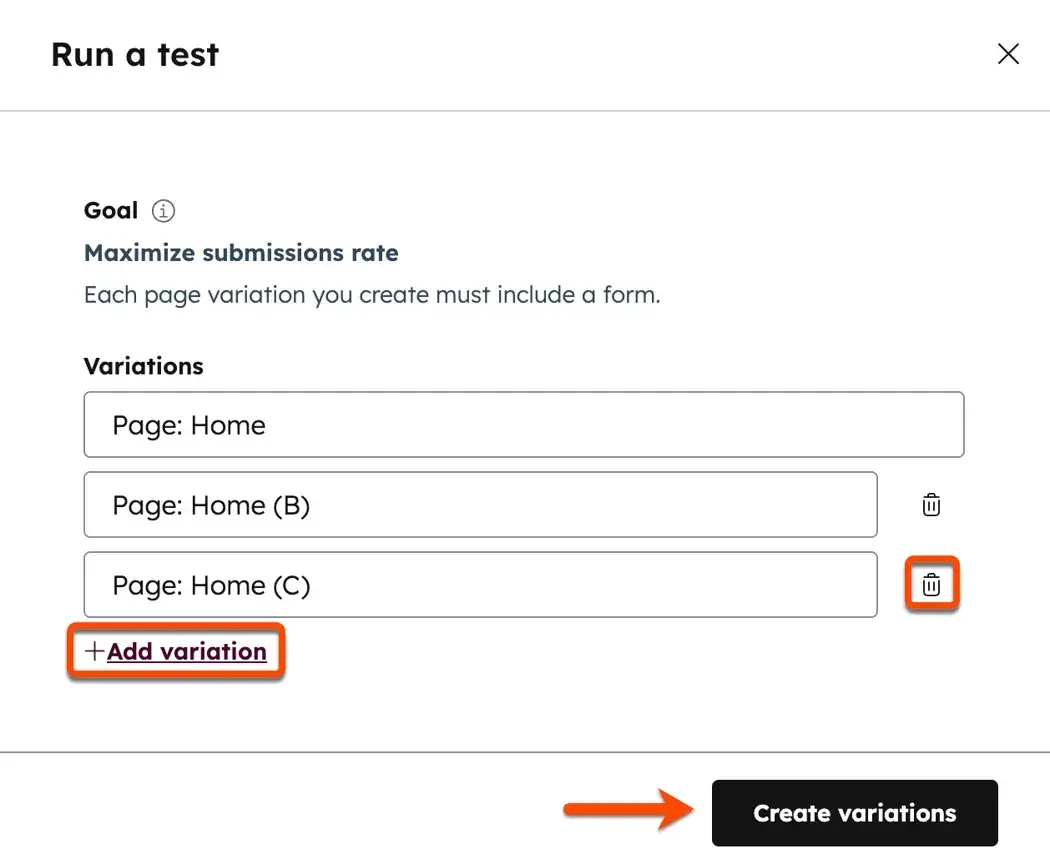
Tools like HubSpot Marketing Hub are instrumental here, allowing marketers to segment campaigns by audience and run adaptive testing across landing pages, directly supporting the exploration of such growth questions.
-
Align Experiments Across Teams: Growth experimentation falters when conducted in siloes. Effective implementation necessitates cross-functional collaboration, involving growth marketing, lifecycle marketing, product marketing, and demand generation teams. Each team influences distinct parts of the customer journey—demand generation drives initial traffic, product marketing shapes messaging, and lifecycle marketing focuses on activation and retention. If these teams operate independently, their experiments can conflict, leading to inconclusive or even contradictory results. For example, demand generation might increase traffic, but if lifecycle marketing fails to activate those users, the overall growth objective isn’t met.

Teams should either run experiments collaboratively or in tandem, unified by shared growth objectives, often targeting stages of the customer journey with the highest drop-off rates or lowest engagement. Operationalizing this often involves leveraging a CRM like HubSpot CRM to track behavioral events, segment users based on lifecycle milestones, and provide a centralized view of customer interactions.
-
Prioritize Experiments by Impact and Learning Value: Not all experiments are created equal. Growth teams must prioritize tests based on their potential impact and the value of the insights they are likely to yield.
- High-learning experiments address foundational questions, such as "Which Ideal Customer Profile (ICP) converts fastest?" or "Which onboarding step significantly boosts retention?" These generate reusable insights that can inform broad strategic shifts.
- High-impact tests influence multiple channels simultaneously, offering a broader reach for their findings.
- Low-learning experiments, conversely, focus on superficial optimizations like button colors or minor copy tweaks. While they might offer localized conversion improvements, they rarely produce insights that can be scaled across the organization or fundamentally alter growth trajectories.
To prioritize effectively, teams evaluate experiments based on: clarity of the hypothesis, potential business impact, required resources, probability of success, and expected learning value. For instance, testing a new ICP has high learning value because its results can influence paid media, outbound sales, product positioning, and lifecycle campaigns. In contrast, a CTA color test has low learning value, applying only to a single page and falling more under tactical CRO.
-
Design Multi-Touchpoint Experiments: True growth experimentation extends beyond single assets, testing the full customer experience. When multiple elements change concurrently, the results provide more conclusive evidence of whether the hypothesis genuinely impacts growth and generates reusable insights. For example, if a team wants to test a "CFO persona," isolated ad tests won’t suffice. The experiment should encompass the entire experience:
- Tailored ad creative and targeting.
- Specialized landing page content addressing CFO pain points.
- Nurture email sequences with relevant financial content.
- Sales enablement materials designed for CFO conversations.
HubSpot Marketing Hub facilitates this consolidated approach by integrating segmentation, AI-powered A/B testing, and personalization capabilities, enabling teams to orchestrate and measure complex, multi-touchpoint experiments from a single platform.
-
Define Success Metrics Tied to Business Outcomes: While click-through rates and page views offer useful engagement signals, they don’t always correlate with business growth. Growth experimentation demands metrics directly linked to core business outcomes, such as:
- Customer Acquisition Cost (CAC) reduction.
- Customer Lifetime Value (CLTV) increase.
- Pipeline generated or conversion rates to sales-qualified leads (SQLs).
- User activation rates.
- Retention and churn rates.
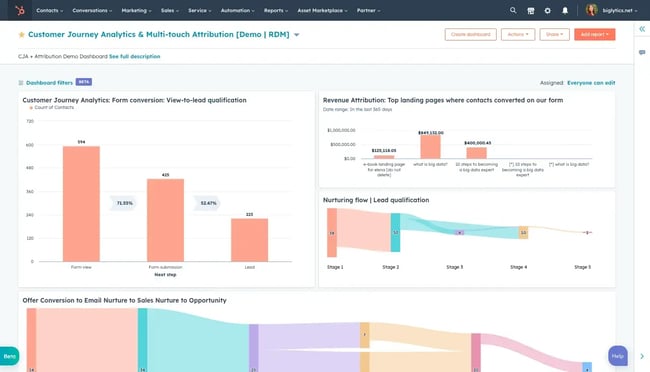
It’s also crucial to track downstream impact—if activation improves, does retention subsequently increase? If sign-ups grow, does pipeline quality remain consistent or even improve? This ensures experiments drive genuine, holistic growth rather than merely optimizing isolated metrics. HubSpot Marketing Hub’s advanced reporting capabilities allow teams to track experiment performance across the entire lifecycle, connecting campaign efforts directly to pipeline and revenue outcomes.
-
Turn Experiment Results into Repeatable Growth Plays: The value of growth experimentation lies in its scalability. A validated learning that remains confined to a single campaign or channel has limited impact. Once an insight proves consistent across a statistically significant sample size or segment, it must be transformed into a repeatable growth play. This involves applying the winning variable—be it an audience, message, offer, or activation trigger—across the entire marketing and sales funnel. For instance, if a specific value proposition significantly improves user activation, this insight should prompt updates to website language, paid campaign messaging, lifecycle emails, and onboarding prompts, turning a successful test into a powerful, reusable growth lever for the entire organization.
Cultivating an Experimental Culture Across Teams
Beyond processes and tools, a thriving culture of experimentation is paramount. Growth leaders emphasize that this requires shared business goals, lightweight processes, and tight feedback loops that embed experimentation into daily operations.
-
Structured Workshops for Shared Practice: To move beyond mere encouragement, teams need structured methods for generating hypotheses, assigning ownership, and pressure-testing concepts cross-functionally. Olga Andrienko, CMO at Foxtery, highlights the success of idea workshops where teams brainstorm, present ideas, and volunteer for ownership. This collaborative format ensures buy-in and keeps ideas progressing, as demonstrated by Foxtery implementing two out of seven ideas generated in such a session.
-
Protect Experimentation from Heavy Project Management: Overly bureaucratic processes—extensive documentation, multiple review cycles, and layers of approval—can stifle the agility essential for experimentation. Ryan Carruthers, a growth marketer at Supademo, experienced this firsthand. His initial instinct to create detailed planning documents led to slower experiments. He found that a lightweight system, such as a simple database tracking the test idea, success metrics, necessary resources, and assessment timeline, with quick stakeholder approval, drastically increased testing velocity and momentum. The mantra: "Projects don’t generate the fast feedback loops that make experimentation valuable."
-
Connect Experiments to Concrete Business Problems: As Anna Dolynska, Head of Growth at Lemon.io, points out, "Abstract ‘Let’s test more’ mandates don’t move cross-functional teams. Concrete problems that can’t be ignored do." When experiments directly address a company-wide concern, like improving conversions for a high-intent audience segment, teams are more likely to align and adopt an experimental mindset. Lemon.io’s success in building over 600 tailored landing pages for specific developer roles, technologies, and regions stemmed from a clear understanding of a critical customer pain point and a shared goal across engineering, sales, product, and marketing.
-
Build Faster Feedback Loops: Integrating experimentation into the operating model means shifting from linear campaigns to more agile, iterative approaches. Kaitlin Milliken, Senior Program Manager at HubSpot, explains how HubSpot’s "Loop Marketing" model bakes experimentation into its core. Instead of waiting for a campaign’s full run to assess results, teams iterate based on early user feedback and signals. This continuous adaptation fosters a culture where innovation and rapid learning are inherent to how teams work, allowing them to keep pace with a rapidly changing marketing landscape, especially with the advent of AI.
Growth Experimentation Pitfalls and Fixes
While the benefits are clear, growth experimentation is not without its challenges. Experienced growth marketers have identified common pitfalls and learned crucial lessons.
-
Don’t Scale Insights – Scale Artifacts: A common failure is validating a hypothesis without translating the insights into scalable artifacts or actionable strategies. Anna Dolynska emphasizes that "successful experiments don’t actually scale" if the work stops at validation. Her experience with Lemon.io’s 600-page strategy showed that sustaining and scaling the initial 20% visitor-to-SQL conversion rate was harder than achieving it. Teams must proactively plan for how to scale findings and assign clear ownership for the ensuing work.
-
Log Experiments to Prevent Redundancy: In an experimental culture where multiple teams are testing simultaneously, comprehensive documentation is vital. Without a centralized log, teams risk re-testing the same hypotheses months or years later, wasting resources and re-learning old lessons. Dolynska’s team addresses this by writing concise post-mortems for every experiment—successful or failed—detailing the hypothesis, methodology, results, and a clear rationale for success or failure. This ensures institutional knowledge is captured and shared.
-
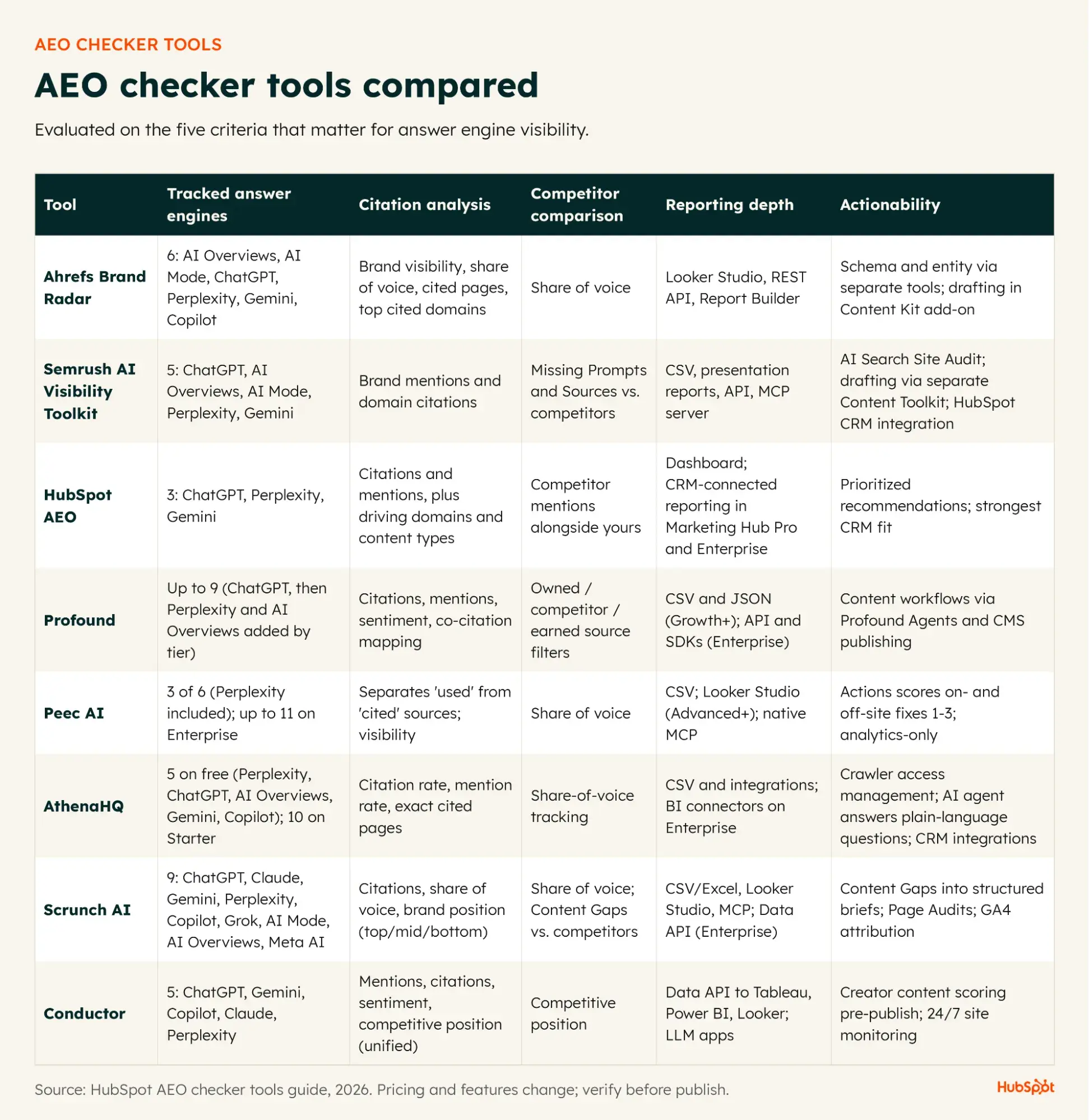
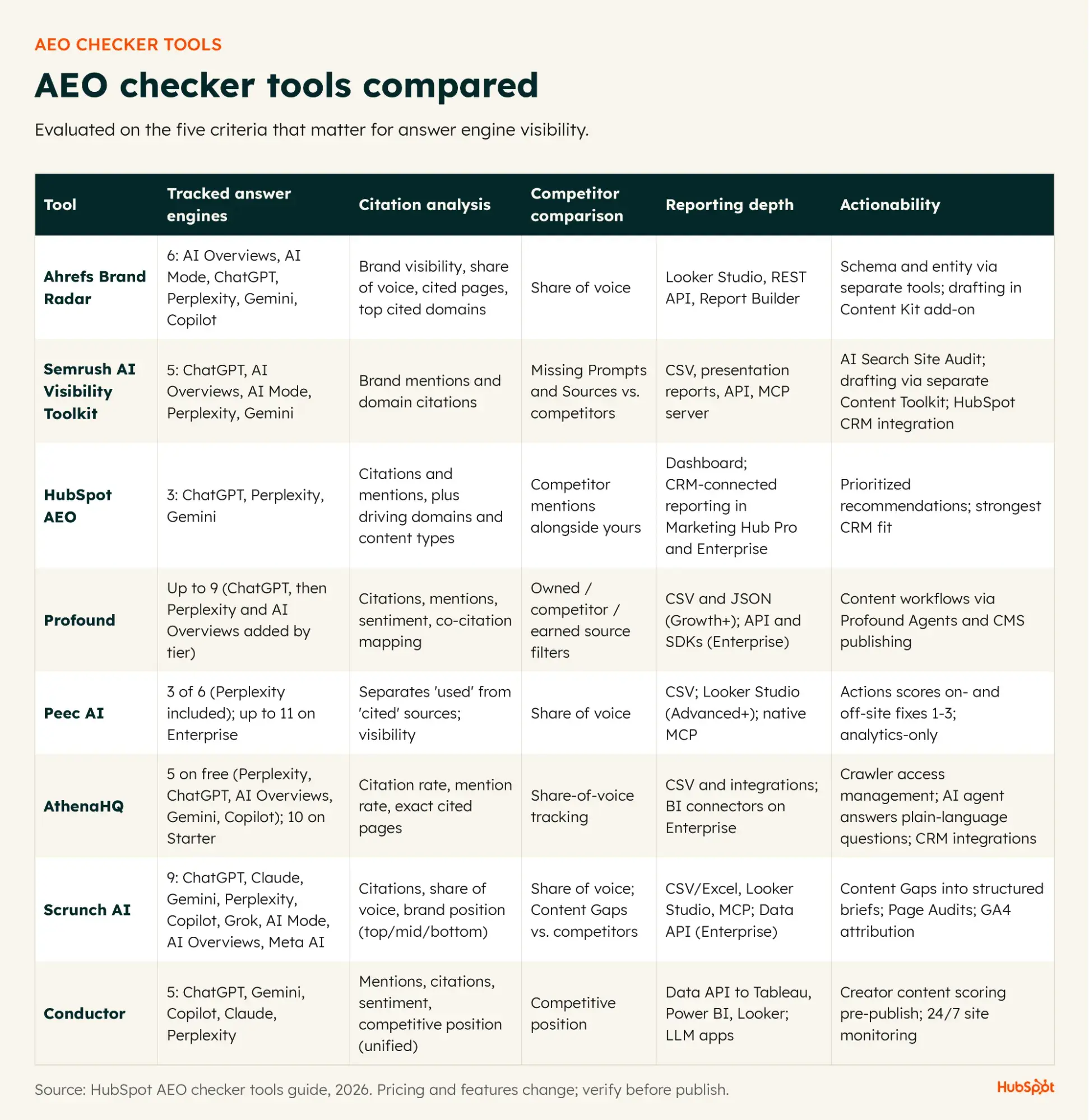
Fix Measurement Gaps Before Starting: A well-designed experiment is useless if the necessary metrics cannot be accurately collected. Before initiating any test, teams must identify what to measure and ensure they have the tools and processes to collect that data. Kaitlin Milliken recounts HubSpot’s early pivot to AI Experimentation and Optimization (AEO), where initial experiments on product mentions and keyword saturation lacked clear measurement tools. Only after developing specific AEO measurement tools—tracking brand visibility in Large Language Models (LLMs), sentiment, prompt performance, and content citations—did experiments become actionable, leading to a reported 1,850% increase in qualified leads from AI. HubSpot AEO now offers comprehensive tracking and recommendations to improve AI share of voice.
-
Start with the Smallest Viable Experiment: Experiments often stall when teams attempt to design them at full scale from the outset, rather than testing the smallest viable version. What begins as a quick validation can morph into a complex, cross-functional initiative that becomes too unwieldy to ship. Ryan Carruthers illustrates this with an example of an ungated product experience: a "simple idea" that quickly expanded to touch user onboarding, require homepage changes, and necessitate CEO sign-off, transforming a potential two-week test into a multi-quarter project. The key question should always be: "What’s the smallest version we could actually deploy to validate this hypothesis?"
The Role of Technology in Growth Experimentation

While the mindset and process are critical, the right technological infrastructure is the backbone of effective growth experimentation. A complex, disparate stack of tools can hinder speed and visibility. Instead, integrated platforms that consolidate essential capabilities are highly beneficial.
HubSpot Marketing Hub provides an all-in-one solution, connecting segmentation, A/B testing, personalization, and advanced, custom reporting within a single system. This integration prevents data silos, streamlines workflows, and ensures that insights gained from one experiment can be easily applied across various parts of the customer journey. Features like Pathfinder and Audience Segments turn individual tests into a repeatable experimentation process, while advanced marketing reporting links campaign performance directly to pipeline and revenue outcomes. For emerging areas like AEO, HubSpot AEO offers specialized tools to track brand visibility, sentiment, and content citations in AI models, providing concrete recommendations for improving AI share of voice.
Outlook and Future Implications
Growth experimentation is no longer an optional add-on but a fundamental capability for modern marketing teams. In an era where buyer journeys are increasingly fragmented, budgets are scrutinized, and the pace of technological change (especially with AI) is accelerating, the ability to quickly validate hypotheses, connect insights across the customer journey, and scale what works is paramount for sustained business growth.
By embracing a structured, hypothesis-driven approach, fostering a collaborative and agile culture, and leveraging integrated technology, organizations can transform their marketing efforts from reactive campaigns to proactive, data-informed growth engines. This strategic shift not only optimizes marketing spend but also cultivates a continuous learning environment, driving innovation and securing a competitive advantage in the ever-evolving digital landscape. The future of marketing is experimental, and those who master this discipline will be best positioned to thrive.