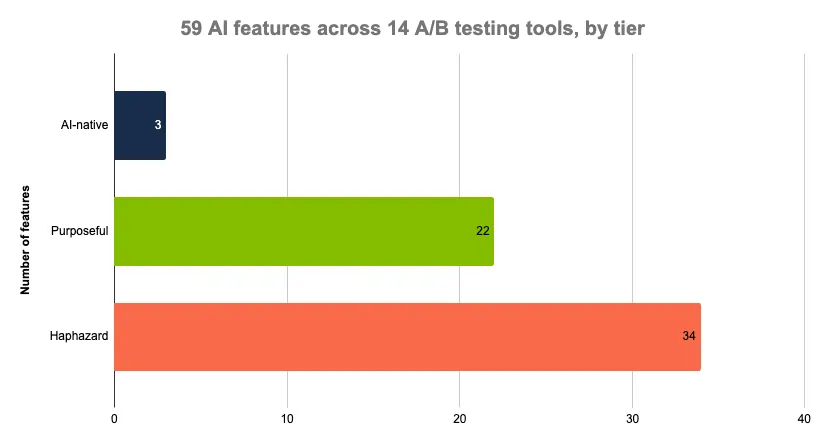
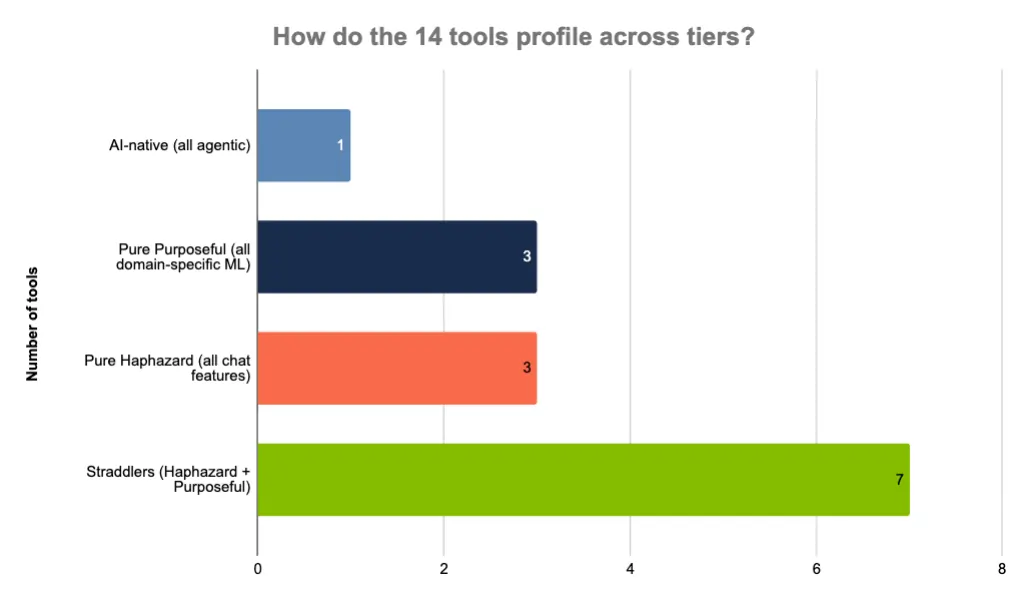
The landscape of conversion rate optimization (CRO) has undergone a radical transformation over the past three years, driven by the rapid integration of generative and predictive artificial intelligence. A comprehensive industry audit conducted in June 2026 has revealed a significant disparity between the marketing of these tools and their actual technical capabilities. After examining 14 leading A/B testing platforms and tagging 59 specific AI-driven features, researchers found that while 71% of vendors prominently feature "AI" as a core component of their value proposition, only a small fraction—approximately 5%—have reached a state of "AI-native" or fully agentic operation.
This audit, which utilized official vendor documentation and live site assessments, indicates that the industry is currently in a state of "AI inflation." Similar to the "Smart TV" era of 2014, where the label could represent anything from a robust operating system to a single internet-enabled port, the term "AI-powered" in the experimentation space now covers a broad spectrum of utility. The findings categorize these features into three distinct tiers: Haphazard (58%), Purposeful (37%), and AI-native (5%). As the market continues to consolidate through high-profile mergers and acquisitions, the distinction between these tiers is becoming the primary factor in long-term platform viability.
The Three-Tier Framework of AI Integration
To understand the current market, it is necessary to look beyond the "AI" headlines on vendor homepages. The 2026 audit utilized a "mechanism test" to classify features based on their underlying architecture and the unique value they provide to the end-user.
Tier 1: Haphazard Integration and Chat-Based Experimentation
Representing 58% of all tagged features, Tier 1—or "Haphazard" AI—consists primarily of chat interfaces layered over existing software capabilities. These features function as Large Language Model (LLM) "wrappers," where the AI translates natural language instructions into commands the platform was already capable of executing.
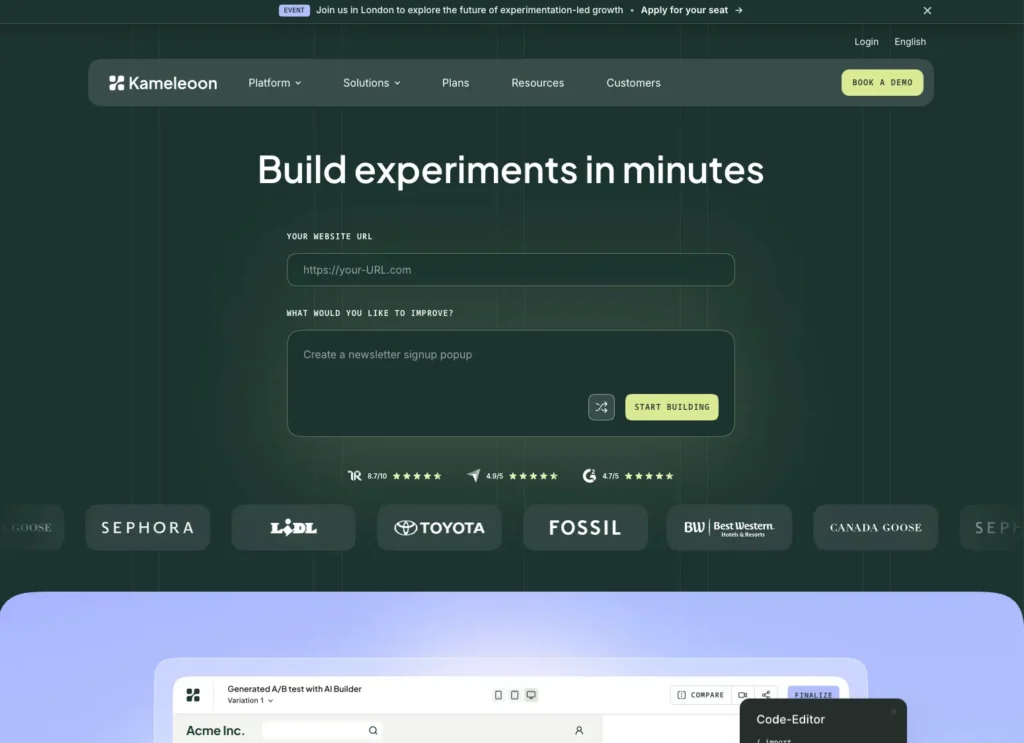
Prominent examples include VWO Copilot and Kameleoon’s Prompt-Based Experimentation (PBX). These tools allow users to describe a desired experiment in plain English, after which the AI generates variants, suggests metric tracking, and defines audience segments. While these features significantly reduce the number of manual clicks required to launch a test, they do not offer new experimental capabilities. The audit noted that if the chat interface were removed, the core product would remain unchanged. Most of these tools rely on enterprise-grade APIs from providers like OpenAI or Google Gemini, meaning the "intelligence" is outsourced rather than proprietary.
Tier 2: Purposeful AI and Domain-Specific Models
"Purposeful" AI features account for 37% of the market. Unlike Tier 1, these capabilities cannot be replicated by a generic LLM because they are built on domain-specific models trained on proprietary behavioral data. These tools do things the platform could not do previously, such as predictive scoring or real-time emotional segmentation.
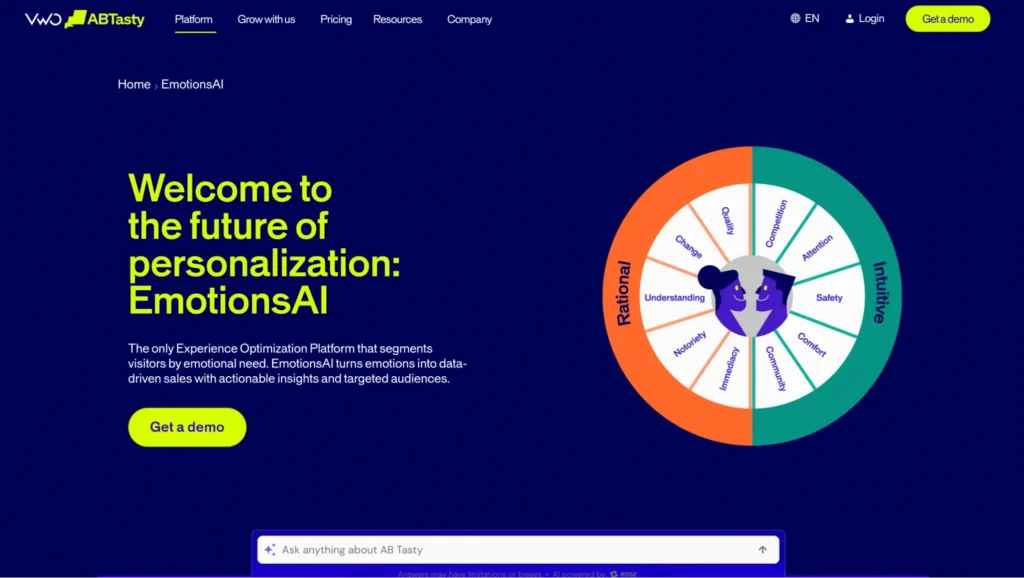
AB Tasty’s EmotionsAI is a hallmark of this tier, using behavioral signals to segment anonymous visitors into "emotional-needs" cohorts within seconds of their arrival on a site. Similarly, Kameleoon’s Conversion Score (KCS) employs an in-house machine learning model that predicts a visitor’s likelihood to convert based on seven days of training data. In these instances, the AI is the feature itself; removing the model would render the capability non-existent.
Tier 3: AI-Native and Agentic Optimization
At the top of the pyramid sits "AI-native" or fully agentic optimization, which currently represents only 5% of the features audited. In this tier, the AI does not wait for human instructions to create a test. Instead, it operates as a continuous loop: monitoring traffic, identifying friction points, proposing variations, deploying tests, and rolling out winners autonomously.
The primary example identified in the 2026 audit is Runner AI, a platform launched in early 2026 by former engineers from Google DeepMind. Runner AI treats the digital storefront itself as an agent, running continuous multivariate tests on layouts and promotions without manual intervention. For these products, the AI is not a feature—it is the foundation of the architecture.
Industry Chronology and the Wave of Consolidation
The rapid evolution of AI features has been accompanied by a massive consolidation of the A/B testing market. In the 12 months leading up to June 2026, several major shifts occurred that have redefined the competitive landscape.
- VWO and AB Tasty Merger: Under the umbrella of Wingify and backed by Everstone Capital, two of the industry’s largest players merged to pool their data resources, specifically to strengthen their Tier 2 "Purposeful" AI models.
- Datadog’s Acquisition of Eppo: The observability giant Datadog acquired Eppo, rebranding it as "Datadog Experiments." This move signaled the shift of experimentation from a marketing-only tool to a core component of the software development lifecycle.
- Monetate and SiteSpect: Monetate acquired SiteSpect, integrating its server-side testing capabilities into the rebranded "Monetate Maestro" platform.
- Glassbox Acquisition of Convertize: The digital experience intelligence platform Glassbox absorbed Convertize’s A/B testing suite to provide a more holistic view of the user journey.
This consolidation suggests that independent A/B testing tools are increasingly being absorbed into broader "experience platforms." For organizations choosing a tool in 2026, the primary concern is whether a vendor’s AI roadmap will remain distinct or be diluted within a larger enterprise suite.

The Developer Shift: MCP Servers and Protocol-Level AI
A significant technical trend identified in the audit is the rise of the Model Context Protocol (MCP). Rather than forcing developers to use a vendor-specific chat box, platforms like Statsig and GrowthBook are meeting developers where they already work—in environments like Cursor, Claude Code, and GitHub.
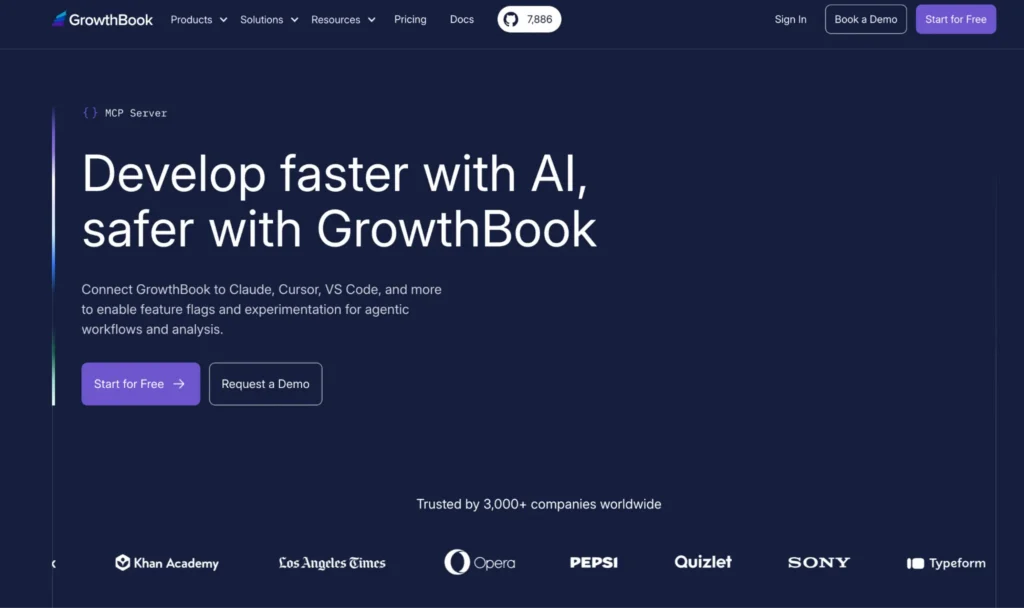
GrowthBook, which shipped the first production MCP server for experimentation in early 2025, now supports 14 different tools through this protocol. This allows AI assistants to communicate directly with the experimentation platform’s API to manage gates, experiments, and targeting rules. However, the audit highlighted the limitations of this approach; GrowthBook’s engineering team noted that fully autonomous experiment setup via MCP remains difficult, as conversational AI occasionally skips critical sequence steps required for statistical validity.
This shift toward protocol-level AI is rapidly commoditizing the "Haphazard" chat layer. If a developer can use a $20-a-month AI seat to control their testing platform via MCP, the value of a vendor-specific "Copilot" or "Assistant" diminishes significantly.
Supporting Data: The Efficiency Gap
The audit referenced internal benchmarks from major vendors to quantify the impact of AI on experimentation volume. Optimizely’s 2025 "Opal AI Benchmark Report," which analyzed 47,000 interactions across 900 companies, found a stark difference in productivity:
- Usage Concentration: 58.7% of all interactions with Optimizely’s AI (Opal) were focused specifically on experimentation tasks.
- Output Increase: Users utilizing AI agents to draft hypotheses and configurations ran 78.7% more experiments than those who did not use AI features.
While volume does not always equate to quality, the data suggests that AI is successfully removing the "blank page" problem that often stalls experimentation programs. Furthermore, AB Tasty has reported a 5-10% revenue lift specifically attributed to its EmotionsAI-driven personalization, though researchers caution that vendor-attributed lift should be viewed through a critical lens.
Data Sovereignty and the Rise of Local Models
As AI becomes more integrated, data privacy has emerged as a major point of contention. The 2026 audit highlighted a growing divide between "API-dependent" vendors and those utilizing "Sovereign AI."

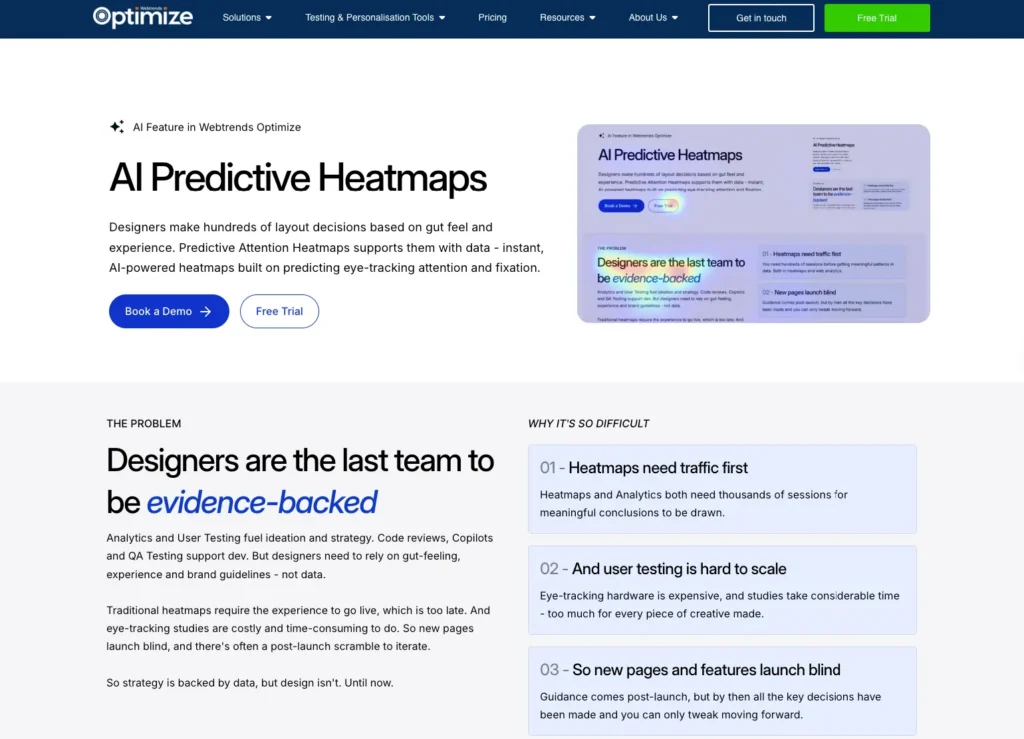
Webtrends Optimize has taken a firm stance against sending customer experiment data to third-party LLMs like OpenAI or Gemini, citing significant data-sovereignty risks. Instead, they utilize "Sovereign AI"—local models running on their own hardware. Their flagship AI feature, Predictive Heatmaps, uses a deep-learning model trained on 5 million eye-tracking studies to predict visitor attention before a page even goes live. This approach appeals to enterprise clients in highly regulated industries who are wary of their proprietary experiment data being used to train global models.
Implications for the Future of Experimentation
The findings of the June 2026 audit suggest that the "Haphazard" layer of AI will soon become a baseline expectation rather than a competitive advantage. As chat interfaces become commoditized through MCP servers and open-source LLM integrations, the true "moat" for A/B testing vendors will be their proprietary datasets and the "Purposeful" models built upon them.

Convert Experiences, another key player in the space, has adopted a "foundations-first" strategy. Its roadmap focuses on version control, approval workflows, and audit trails—the infrastructure necessary to make AI agents trustworthy. As founder Dennis van der Heijden noted, the goal is to move away from "vibe coding" toward lasting, agentic experiences where every change made by an AI is tracked and reversible.
For the modern growth team, the takeaway is clear: the value of an A/B testing tool in 2026 is no longer defined by whether it has "AI" on the homepage, but by where that AI sits in the three-tier hierarchy. Tools that rely on chat wrappers provide speed, but tools that leverage proprietary models and agentic loops provide the structural intelligence required for the next generation of digital optimization. As the industry moves toward a future where "the storefront is an agent," the ability to supervise and govern these autonomous systems will become as important as the experiments themselves.