

The Crisis of the B2B Demo and the Friction Paradox
For many SaaS organizations in 2026, a familiar pattern has emerged: demo requests are declining, prompting marketing departments to increase ad spend on demo-centric campaigns, which in turn leads to lower-quality leads and increased friction with sales teams. This "friction paradox" stems from a fundamental misunderstanding of the buyer’s psychological state. While marketers often treat a demo request as a low-stakes interaction—similar to a newsletter signup or a whitepaper download—buyers view it as a significant investment of time and a surrender of privacy.
Industry data from the Dreamdata 2025 LinkedIn Ads Benchmark Report highlights the complexity of this journey. The average B2B customer journey now spans 211 days and involves approximately 88 distinct "touches" or interactions across various platforms. When a marketing team attempts to force a demo request early in this cycle, they are essentially asking a buyer to commit to a sales conversation before the buyer has established trust or verified that the solution meets their specific needs. This misalignment is the primary driver behind the stagnant conversion rates currently seen across the industry.
The "Core Four" Framework: Contextualizing the Demo Page
To address these challenges, B2B landing page experts, including Tas Bober, have advocated for a "Core Four" framework. This strategy posits that a demo landing page should never be the first point of contact for a prospective buyer. Instead, it serves as the final destination in a structured ecosystem of high-intent pages.
- The Educational/TOFU Page: Focused on problem awareness and initial solution categories.
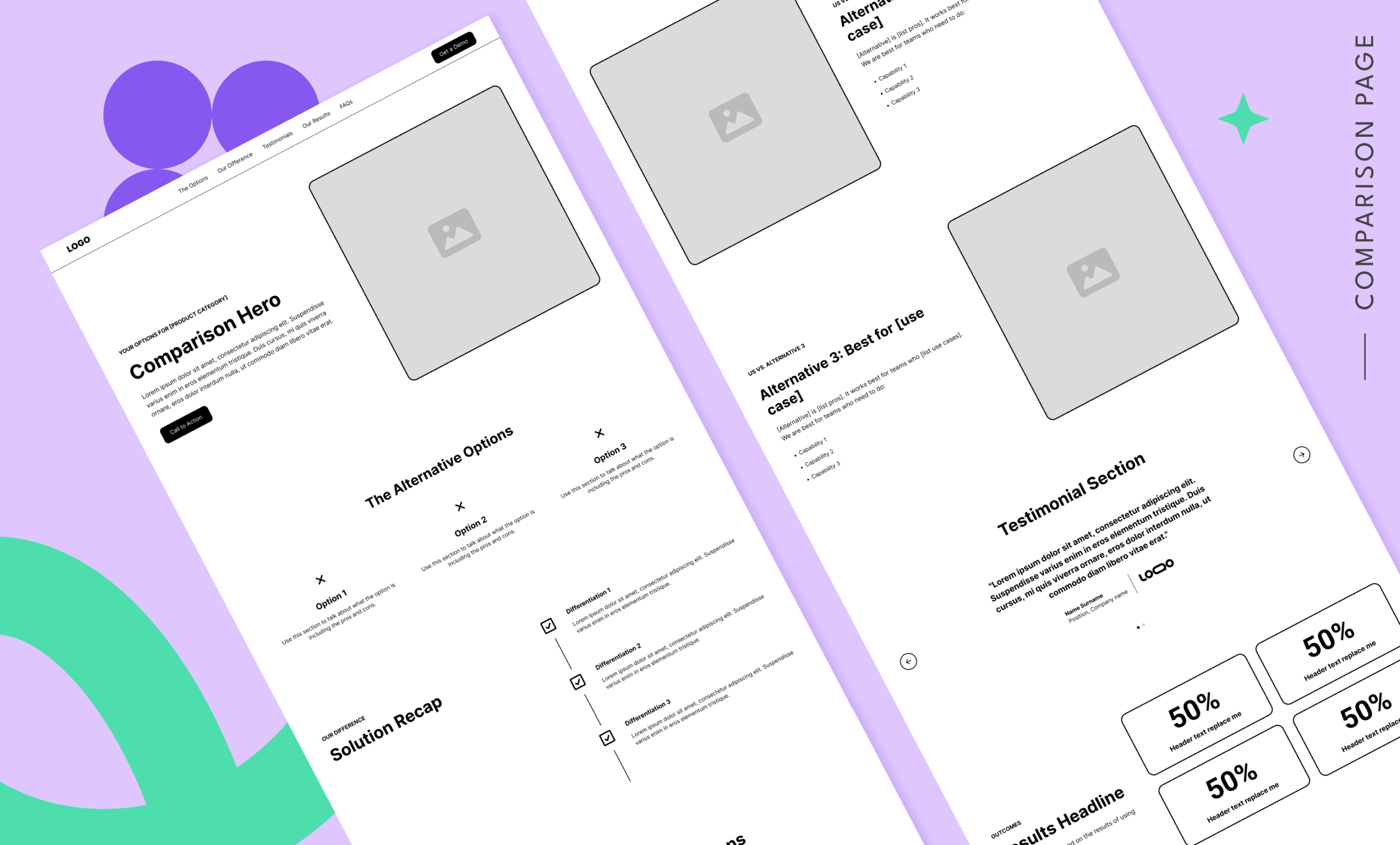
- The Solution/Comparison Page: Helping buyers understand how a specific product differs from competitors.
- The Proof/Social Evidence Page: Utilizing case studies and quantifiable results to build credibility.
- The Demo/Decision Page: The final step where a warm, well-researched buyer finally "raises their hand."
By the time a visitor reaches the demo page, the goal is no longer to introduce the product but to remove the final barriers to a conversation. In this context, the success of the page is determined by its ability to answer remaining questions regarding implementation, pricing, and the specific logistics of the sales process.
Data-Driven Performance Benchmarks for 2026
Recent performance metrics provide a sobering look at the reality of SaaS conversions. According to the Unbounce 2024 Conversion Benchmark Report, the median conversion rate for SaaS landing pages sits at roughly 3.8%. However, more specialized research focusing on optimized B2B demo pages suggests that 3.1% to 3.4% is a more realistic benchmark for high-intent traffic.
The impact of form length on these conversion rates remains a critical factor. Data from 2026 indicates a sharp drop-off in conversion as form fields increase:
- 5 Fields: 17% average conversion rate.
- 7 Fields: 11% average conversion rate.
- 10+ Fields: Less than 7% average conversion rate.
These figures illustrate the delicate balance between lead volume and lead qualification. While sales teams often demand more data points—such as company size, budget, and urgency—each additional field serves as a deterrent for the buyer. The most successful teams in 2026 are those utilizing "positive friction," such as a single, highly relevant qualifying question (e.g., "What is your primary use case?") rather than an exhaustive interrogation.
The Pricing Transparency Mandate
One of the most contentious debates in SaaS marketing involves the inclusion of pricing on demo landing pages. Historically, sales-led organizations hidden their pricing to maintain leverage during negotiations. However, the 2026 market has shifted toward a transparency-first model.
Including pricing, even as a "starting at" range or a condensed grid for common plans, serves several strategic purposes. First, it allows buyers to self-qualify, ensuring that the sales team’s time is not wasted on prospects who cannot afford the solution. Second, it builds immediate trust; in an era of information parity, hiding pricing is often interpreted by buyers as a sign of hidden fees or a lack of confidence in the product’s value proposition.

Case studies from companies like Calendly have shown that providing a condensed pricing grid near the demo request form can actually increase the quality of the demo, as the buyer enters the conversation with a clear understanding of the financial commitment involved.
Structural Anatomy of a High-Converting Demo Page
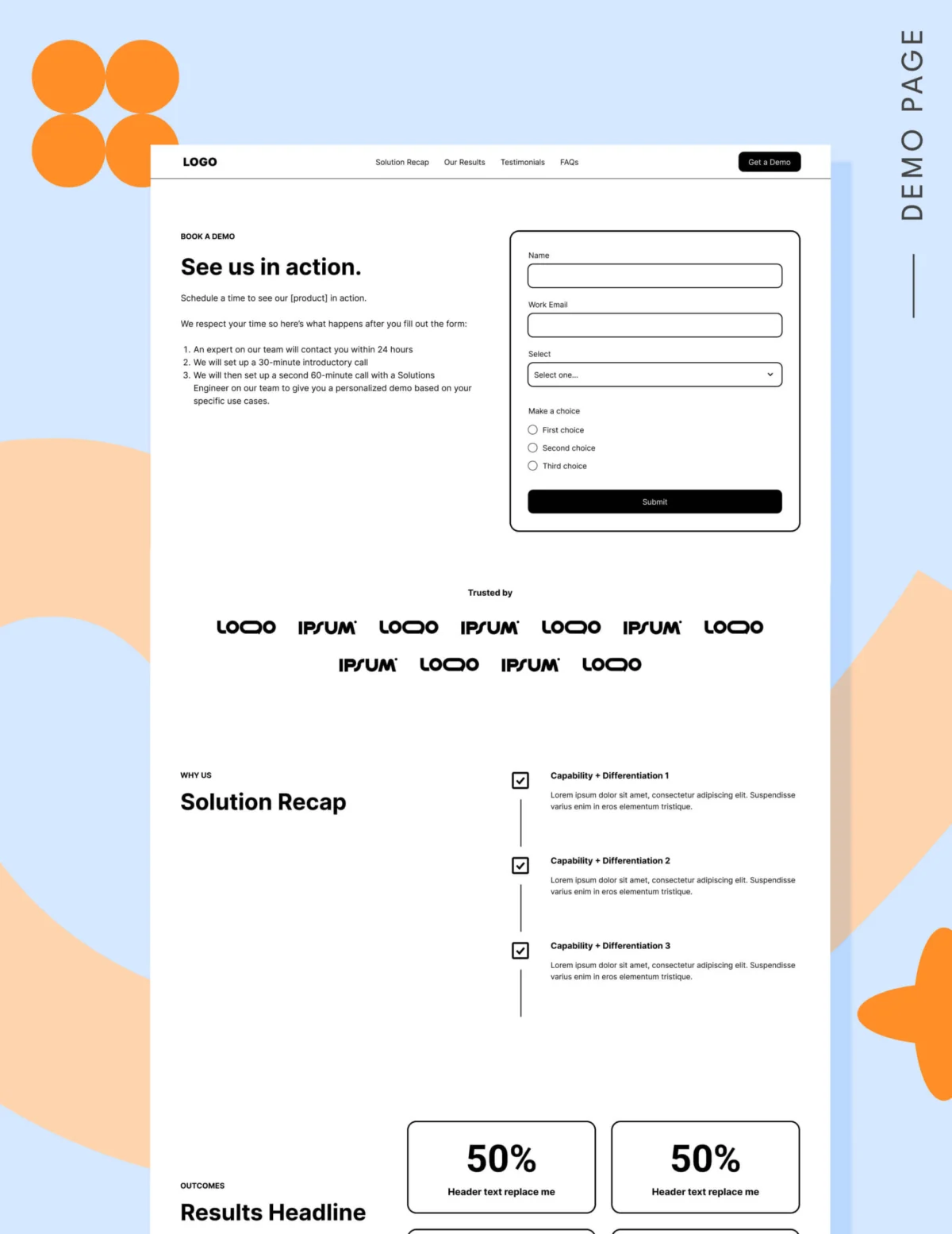
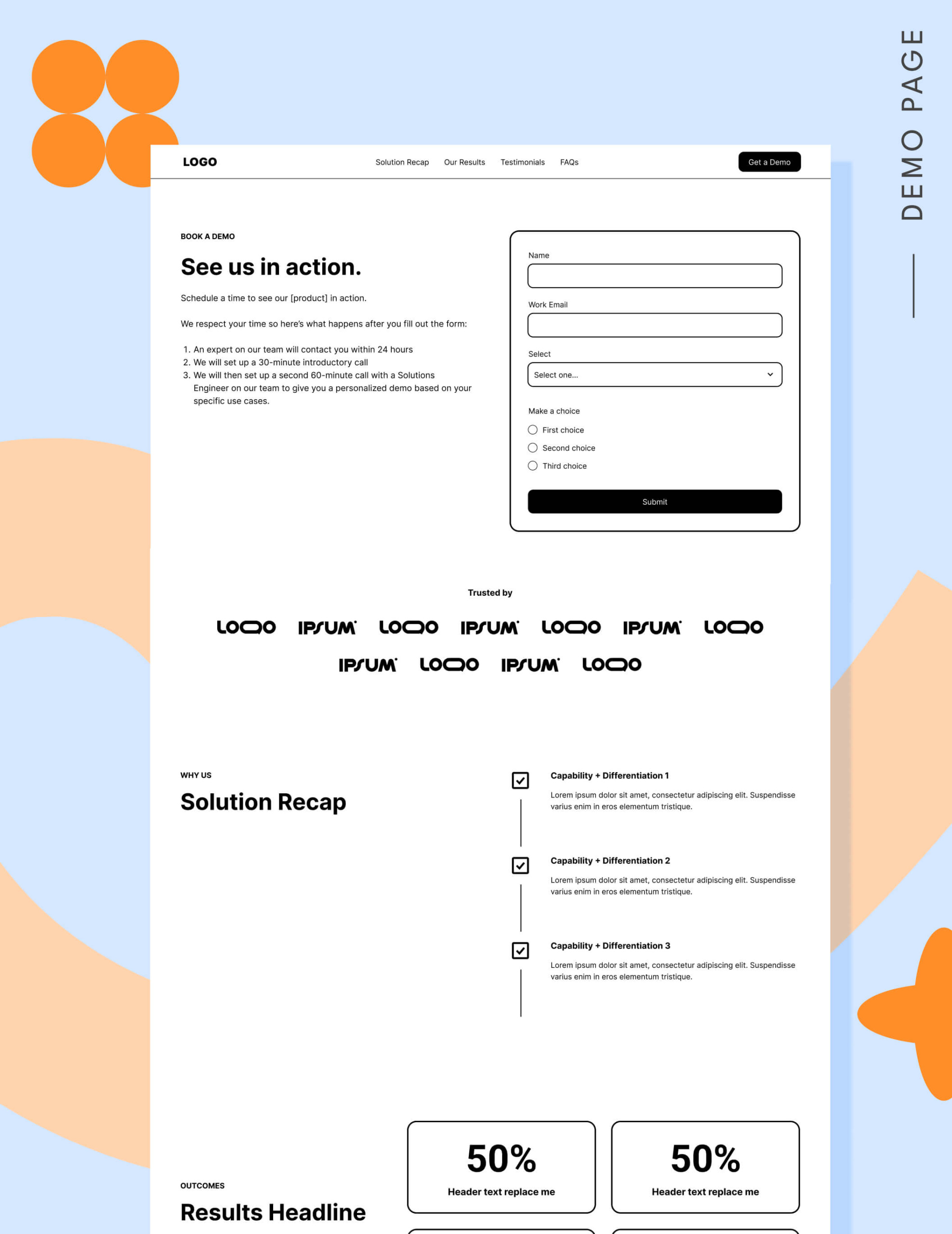
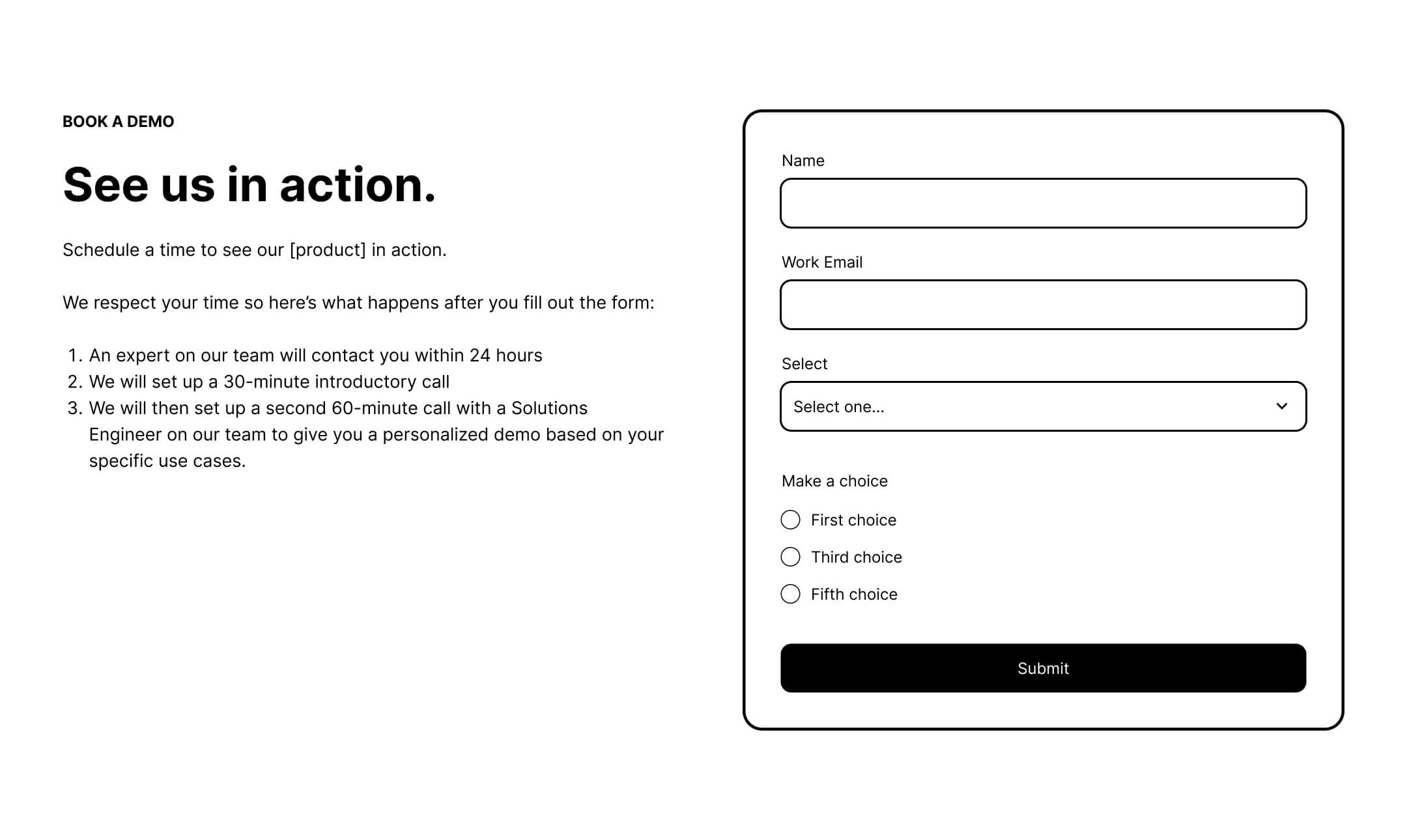
A successful demo landing page must be structured to address the buyer’s internal monologue: What happens after I click this button? Professional newsroom analysis of top-performing pages suggests the following essential blocks:
Navigational Freedom and Search Intent
In a departure from older "no-exit" landing page philosophies, 2025 updates to Google’s ad quality prediction models now reward pages that provide relevant navigation. For a demo page, this means using anchor links to help buyers jump to sections like "Results" or "FAQ," and providing a minimal footer that allows them to return to comparison or pricing pages if they aren’t quite ready to book.
The Hero Section: Clarity Over Cleverness
The hero section should house the form, making it immediately accessible. However, the copy must focus on the "post-conversion" experience. Instead of a generic "Request a Demo," successful pages use CTAs like "See the Platform in Action" or "Book Your 20-Minute Consult." It is crucial to answer four questions in the hero:
- How long will the demo take?
- Is it a 1:1 call or a recorded tour?
- Will I see the product or talk to a rep first?
- How soon can I get started?
The Proof Stack: Logos, Results, and Testimonials
Social proof must be more than just a "logo garden." While recognizable brand logos provide baseline credibility, they must be supported by quantifiable results (e.g., "Increased ROI by 40% in 6 months") and high-volume testimonials. In 2026, the quantity of reviews is often as important as the quality, as it signals market maturity and reduces the perceived risk for the buyer.
The FAQ: Pre-empting Sales Objections
The FAQ section on a demo page should not be generic. It should specifically address the top three to four objections the sales team hears on daily calls. By addressing concerns about integration, data security, or implementation timelines directly on the page, the marketing team "warms" the lead and prepares them for a more productive conversation.
Strategic Implications: Sales and Marketing Alignment
The evolution of the demo landing page has broader implications for organizational structure. The friction between sales and marketing often arises from a lack of clarity regarding the "hand-off." When a marketing team promises a "demo" but the sales team delivers a "discovery call," the buyer feels misled.
In 2026, the most successful SaaS companies are those that align their landing page copy with the actual sales process. If a company requires a 15-minute qualification call before a full technical demo, the landing page must state this explicitly. This transparency may slightly lower the total number of requests, but it significantly increases the conversion rate from "demo booked" to "opportunity created."
Furthermore, the rise of interactive demo tools (such as Navattic or Walnut) has introduced a new "middle ground." Some companies are finding success by replacing the static demo request with an interactive tour. Data shows that changing a CTA from "Request a Demo" to "Take a Tour" can increase PPC conversions by over 30%, as it offers immediate value without the perceived threat of a sales pitch.
Conclusion: Targeting as the Ultimate Optimization
The final analysis of the 2026 SaaS landscape suggests that the most effective way to "fix" a demo landing page is often to fix the traffic being sent to it. High-performing pages are those that cater to a "warm" audience—those coming from branded search, retargeting campaigns, or specific high-intent comparison keywords.
By treating the demo request as a significant milestone in a 211-day journey rather than a quick win, SaaS organizations can build more sustainable pipelines. The move toward transparency, shorter forms, and clear post-submission expectations reflects a broader shift in B2B commerce: the buyer is in control, and the role of the landing page is no longer to "trap" a lead, but to facilitate a professional, informed decision. Organizations that embrace this reality—focusing on trust over tactics—will continue to lead the market in conversion efficiency and long-term customer loyalty.







