The digital marketing landscape in 2025 has reached a critical inflection point where the traditional methods of tracking user behavior are being systematically dismantled by privacy regulations and technical shifts. As third-party cookies become relics of the past and browser-level privacy protections like Apple’s App Tracking Transparency (ATT) become the global standard, businesses are facing a "data blackout." In this environment, the humble website poll has been reimagined not as a disruptive pop-up, but as a sophisticated instrument for gathering zero-party data—information that users intentionally and proactively share with a brand. While the majority of website polls still suffer from poor timing and vague phrasing, leading to high abandonment rates and user irritation, a strategic shift toward data-driven, contextually aware polling is proving to be a primary driver of conversion rate optimization (CRO).
The Paradigm Shift: From Tracking to Transparency
For years, digital marketers relied on "passive data collection," observing user movements through cookies and scripts without direct engagement. However, the move toward a privacy-first internet has forced a return to "active data collection." Industry analysts note that zero-party data is now the most valuable asset in a marketer’s toolkit because it is accurate, permission-based, and comes directly from the source. Website polls, when executed with precision, provide a bridge between quantitative analytics (the "what") and qualitative insights (the "why").
At conversion optimization firms like Invesp, the consensus is that a single, well-timed poll can uncover the specific psychological or technical friction points that prevent a visitor from completing a transaction. The power of these tools lies in their ability to provide a few high-value data points from a large volume of people, effectively sharpening the focus of deeper qualitative research methods like user interviews or longitudinal studies.
Pre-Poll Methodology: The Research Foundation
The failure of most website polls can be traced back to a lack of preparation. Journalistic investigations into high-performing e-commerce sites reveal that the most effective poll questions are never the result of a sudden brainstorm or a gut feeling. Instead, they are the final step in a rigorous research sequence.
To craft a poll that yields actionable feedback, practitioners must first engage in a comprehensive suite of CRO activities. This includes heuristic evaluations—a professional audit of the site’s usability—alongside an assessment of Google Analytics metrics. By layering heatmaps and session replay video analysis over these findings, researchers can identify "anomalous behaviors." For example, if session recordings show a significant number of users lingering on a shipping information page but failing to proceed to payment, a hypothesis regarding shipping costs or delivery times is formed. The poll is then deployed specifically to validate that hypothesis.
This chronological approach ensures that by the time a user sees a poll, the question being asked is highly relevant to their current experience on the page. In one documented case, a service provider used customer interviews to discover that many subscribers had recently undergone a career change. To validate if this was a broader trend, they launched a targeted poll asking about recent professional shifts, which subsequently allowed them to tailor their marketing copy to people in career transitions, significantly increasing their conversion rate.
Segmentation and the Buyer’s Journey
A fundamental tenet of modern digital strategy is that a website’s audience is never a monolith. Casting a wide net with a generic poll often results in "noise" rather than "insight." Professional marketers in 2025 are increasingly segmenting their polling strategy based on the five stages of the buyer’s journey: Awareness, Interest, Desire, Action, and Post-purchase.
Understanding where a visitor stands in this sequence is vital. A visitor on a blog post is likely in the "Awareness" stage and should be asked questions about content relevance. Conversely, a visitor on a checkout page is in the "Action" stage, where questions should focus exclusively on barriers to completion. Hubspot and other CRM leaders suggest using funnel-type dashboards to segment traffic in real-time. Without this segmentation, businesses risk the "wrong question, wrong user" trap—asking a first-time visitor for product feedback before they have even seen the catalog, or asking a loyal customer if they found the site easy to navigate.
A Taxonomy of Data-Driven Poll Questions
To maximize the utility of user feedback, polls are generally categorized into several functional types, each serving a distinct strategic purpose:
1. Motivator Questions
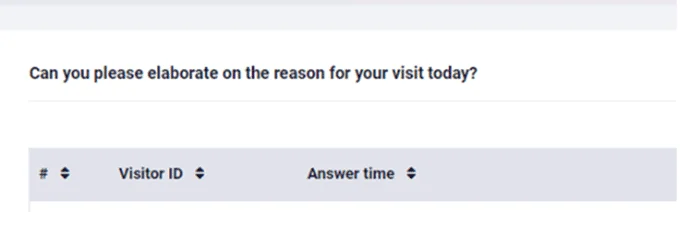
These seek to understand the underlying intent of the visit. By asking "What brought you to our site today?" brands can uncover their true value proposition. Data from session replays often shows users "wandering" or scrolling aimlessly. In such instances, a motivator poll can reveal whether the user is looking for a specific solution or just browsing, allowing the brand to adjust its navigation or CTA placement accordingly.
2. Barrier Questions
Friction is the enemy of conversion. Barrier questions target "Fears, Uncertainties, and Doubts" (FUDs). If Google Analytics indicates a high exit rate on a specific funnel page, a barrier poll can ask, "Is there anything preventing you from completing your purchase today?" The responses often highlight technical bugs, hidden costs, or a lack of trust signals that the brand’s internal team may have overlooked.
3. Hook Questions
While barrier questions look at the negative, hook questions focus on the positive. They ask successful customers, "What was the main reason you chose us over a competitor?" This identifies the "hooks" that actually drive revenue, which can then be amplified in future advertising campaigns.
4. Missing Content Polls
One of the most common mistakes in digital design is assuming that the provided information is sufficient. Usability tests often show participants struggling to find specific details like warranty info or technical specs. A poll asking, "Were you able to find the information you were looking for?" serves as a safety net, identifying content gaps that are costing the business sales.
5. Satisfaction and Validation
Satisfaction polls, including Net Promoter Scores (NPS), measure the health of the brand relationship. However, in a professional CRO context, these are also used to validate data findings. If a small sample of interviewed customers suggests a new feature is confusing, a broader validation poll can confirm if that sentiment is shared by the majority of the user base before expensive design changes are implemented.
Technical Implementation and User Experience
The technical execution of a poll is as important as the question itself. Leading UX designers emphasize that the goal is to "mirror" the user’s needs rather than interrupt them. In 2025, smart polling software uses "trigger logic" to ensure the poll appears at the least intrusive moment—such as "exit-intent" (when the cursor moves toward the close button) or after a certain percentage of the page has been scrolled.
The wording of these questions must be objective and free from "leading" language. Single Grain, a digital marketing agency, emphasizes a data-driven approach where every claim is backed by scientific findings. This same rigor must be applied to poll phrasing; instead of asking "How much do you love our new interface?", a more factual approach would be "How does the new interface affect your ability to find products?"
Analysis of Implications for the Digital Economy
The strategic use of polls represents a broader shift toward "Conversational Commerce." As AI-driven tools become more prevalent, the ability to engage in a two-way dialogue with customers is becoming a competitive advantage. Companies that master the art of the "non-annoying poll" are seeing measurable improvements in their Customer Acquisition Cost (CAC) and Lifetime Value (LTV).
Furthermore, the data collected through these polls is increasingly being used to train machine learning models. By feeding zero-party data into personalization engines, brands can create hyper-relevant experiences that feel intuitive rather than intrusive. For example, if a user indicates in a poll that they are shopping for a gift, the website can dynamically update its recommendations to reflect gift sets rather than individual items.
Conclusion
Website polls have evolved from primitive pop-ups into essential strategic assets. By grounding poll creation in rigorous data analysis and respecting the nuances of the buyer’s journey, digital marketers can transform these tools from sources of irritation into powerful engines for growth. In the privacy-conscious era of 2025, the brands that succeed will be those that stop guessing what their customers want and start asking them—strategically, thoughtfully, and with the intent to act on the answers provided. The mirror of data, reflected through the lens of a well-crafted poll, remains one of the most effective ways to uncover the truth behind digital behavior.