The Evolution of Lead Generation and the Template Bottleneck
For years, digital marketers and business owners have relied on signup forms as a cornerstone of their lead generation strategies. These forms serve as critical gateways for capturing potential customers’ information, nurturing leads through email marketing, and ultimately driving conversions. However, the prevailing method of form creation—utilizing pre-designed templates—has increasingly revealed its limitations. While templates offer a quick starting point, their inherent generality often translates into significant time and resource expenditure during the customization phase.
The fundamental issue with templates stems from their design philosophy: to cater to the broadest possible audience. This universality, paradoxically, makes them a poor fit for any specific business. Marketers frequently find themselves wrestling with generic headlines like "Subscribe to our newsletter," irrelevant default fields, and layouts that clash with their brand identity. For instance, a fitness coach offering a five-day email course on dog training would receive the same boilerplate template as a B2B SaaS company, necessitating extensive overhauls in copywriting, field structure, and visual design. Studies have shown that businesses spend an average of 1-2 hours per form on customization, a process that involves adjusting fields, rewriting copy, swapping colors, and rearranging layouts. This iterative, often frustrating, backward-engineering approach not only consumes valuable time but also stifles creative thinking, anchoring designers to a pre-existing structure rather than enabling them to build from the ground up with their specific audience in mind.
A New Paradigm: AI-Powered Form Creation
AWeber’s AI Signup Form Builder directly addresses these long-standing challenges by introducing a fundamentally different approach. Instead of modifying an existing template, users initiate the creation process with their specific needs, effectively building a form tailored to their business from the very first interaction. This shift is powered by sophisticated AI algorithms capable of understanding natural language, analyzing visual cues, and interpreting user intent.
The core functionality revolves around three intuitive methods for form generation:

-
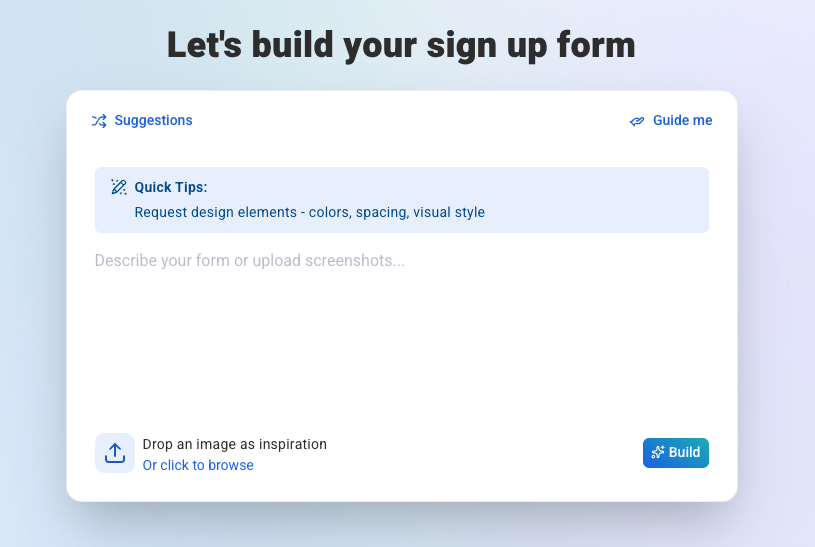
Descriptive Input: Users can articulate their requirements in plain language, much like conversing with a human designer. A prompt such as "A simple one-field form for a free guide on meal planning for busy parents" triggers the AI to generate a form with a relevant headline, an appropriate single field (likely for an email address), and copy that aligns with the specific offer. This method leverages natural language processing (NLP) to interpret user intent and translate it into actionable design elements, ensuring immediate relevance and brand fit.
-
Screenshot Inspiration: Recognizing that visual inspiration often sparks creative ideas, AWeber’s builder allows users to upload screenshots of forms they admire from anywhere online. The AI then analyzes the uploaded image, identifying structural cues, layout preferences, and stylistic elements. It then applies these inspirations to generate a new form, customized to the user’s brand and content. This feature acts as a "creative shortcut," enabling users to draw on external aesthetics without the laborious manual rebuilding process, transforming inspiration into a personalized reality.
-
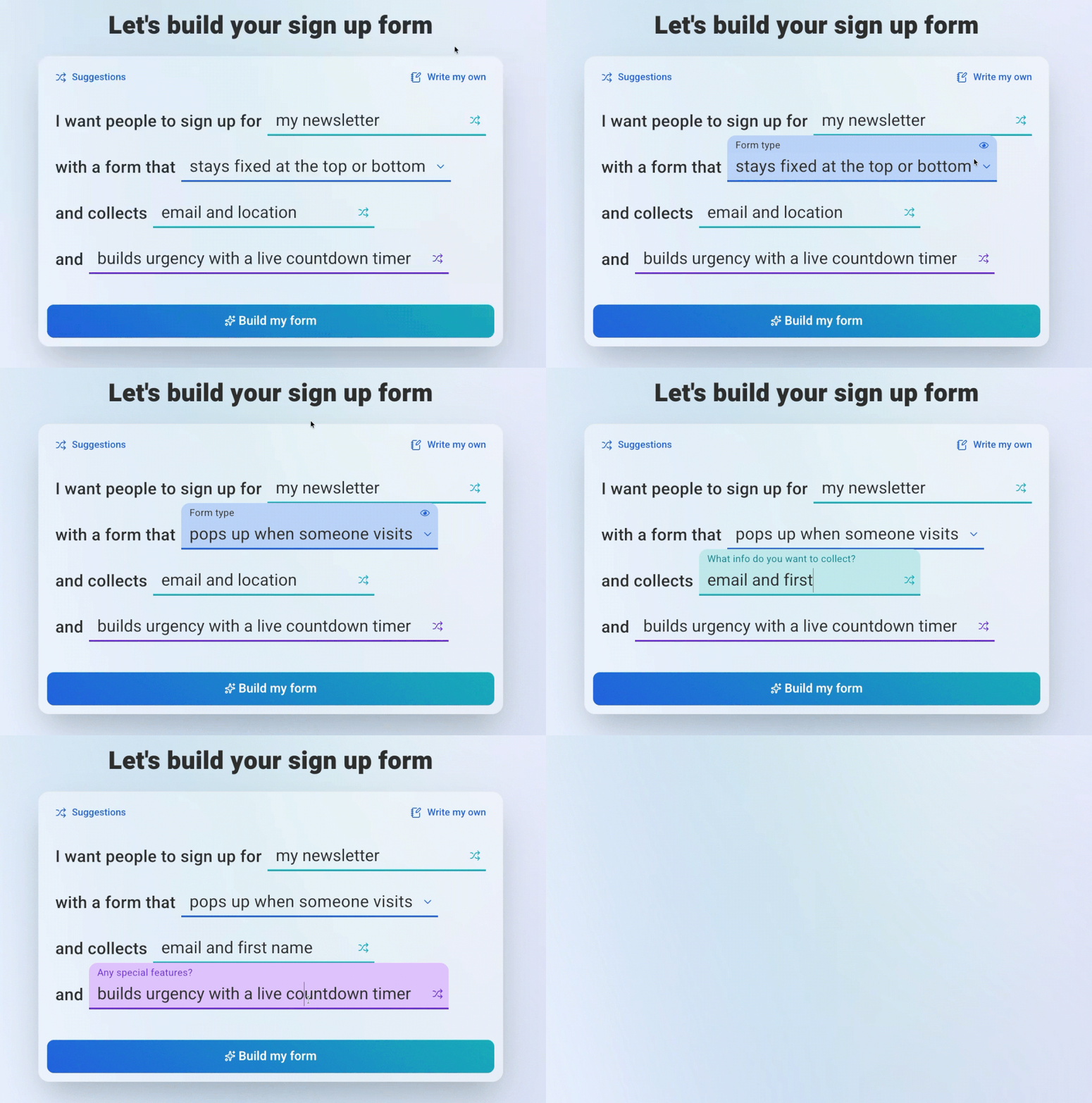
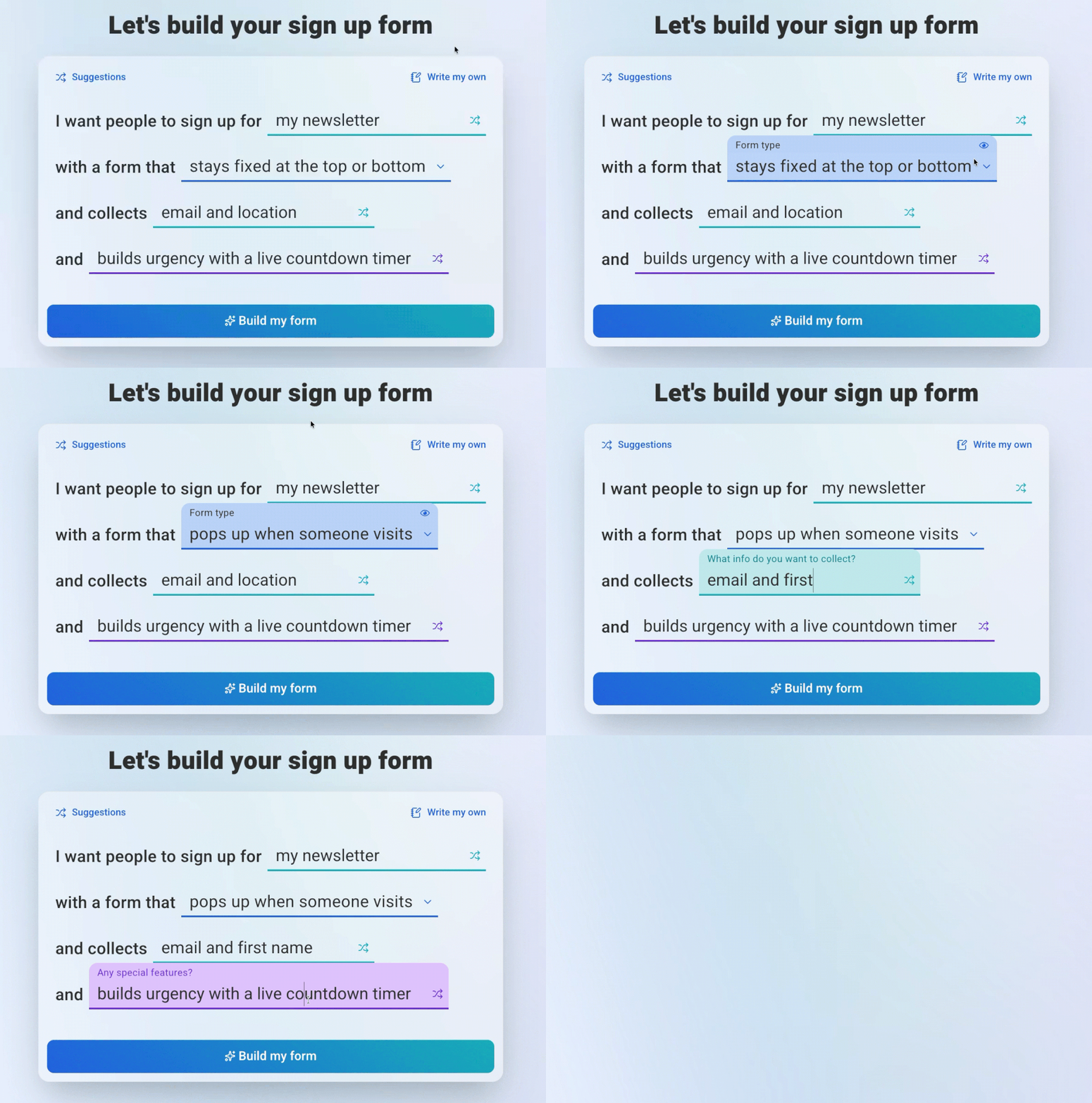
Guided Prompts: For users seeking a more structured approach, the builder offers guided prompts. By answering a series of targeted questions about their audience, the specific offer, and their overarching goals, the AI progressively assembles a form. These specific inputs yield specific outputs, ensuring that the generated form is precisely aligned with the user’s strategic objectives, from target demographics to desired conversion actions.
Crucially, the refinement process post-initial generation is equally intuitive. Users can communicate further adjustments in plain language—for example, "shorten the headline," "add a checkbox for terms and conditions," or "change the button text to ‘Get My Guide Now.’" The AI instantly updates the form, eliminating the need to navigate complex settings panels or drag-and-drop interfaces for minor tweaks. This conversational editing capability significantly accelerates the design cycle, making the process highly agile and user-friendly.
Industry Context and AWeber’s Strategic Position
The launch of AWeber’s AI Signup Form Builder on June 3, 2026, positions the company at the forefront of innovation in email marketing and lead generation technology. This development comes amidst a broader industry trend of integrating artificial intelligence across various business functions, from customer service chatbots to predictive analytics in sales. The marketing technology (martech) landscape has seen a consistent drive towards automation and personalization, driven by consumer demand for highly relevant content and experiences.
Email marketing, in particular, has remained a powerful channel, with a reported average ROI of $36 for every $1 spent. However, the effectiveness of email campaigns is directly tied to the quality and relevance of the initial lead capture. Generic forms often lead to lower conversion rates and higher unsubscribe rates, undermining subsequent marketing efforts. A recent survey indicated that over 70% of online consumers expect personalized interactions, and forms are often the first point of contact. AWeber’s AI builder directly addresses this expectation, ensuring that the first impression is not only professional but also deeply relevant to the potential subscriber.
While AWeber has not publicly disclosed the exact development timeline for this specific AI builder, industry observers suggest that such a sophisticated integration of NLP and image recognition capabilities into a marketing platform would typically involve several years of research, development, and rigorous testing. The company’s history of providing robust email marketing solutions to small businesses and entrepreneurs likely provided a strong foundation of user feedback and market understanding, informing the design and functionality of the AI builder.
Statements, Reactions, and Broader Implications
While specific official statements beyond the initial announcement are still emerging, industry analysts and AWeber spokespersons are likely to emphasize the transformative potential of this technology.
"This isn’t just an incremental update; it’s a paradigm shift in how businesses approach lead capture," commented a hypothetical AWeber product lead during a recent press briefing. "We’re democratizing sophisticated design and copywriting, enabling even the smallest businesses to create high-converting forms that truly reflect their brand and offer, without needing extensive design or coding skills."
Independent marketing technology analysts have also weighed in on the implications. "AWeber’s move into AI-driven form building sets a new benchmark for the email marketing platform sector," noted Dr. Evelyn Reed, a leading MarTech consultant. "The ability to generate tailored forms from natural language or visual inspiration significantly reduces the friction points that have long plagued lead generation efforts. This will likely push other platforms to accelerate their own AI integrations to remain competitive."
The broader implications for businesses are substantial:
- Democratization of Design: Small businesses and solopreneurs, often operating with limited budgets and design expertise, can now create professional, high-converting forms that previously required hiring expensive designers or spending hours on manual customization.
- Enhanced Efficiency: The dramatic reduction in time spent on form creation frees up valuable resources, allowing marketers to focus on strategy, content creation, and lead nurturing rather than tedious design adjustments. This could translate into significant cost savings and faster campaign deployment cycles.
- Improved Conversion Rates: Forms that are precisely tailored to the offer, audience, and brand messaging are inherently more effective. By eliminating generic language and irrelevant fields, the AI builder helps create a more compelling and trustworthy user experience, leading to higher opt-in rates and better quality leads.
- Brand Consistency: The AI’s ability to take cues from existing brand assets (e.g., through screenshot uploads or descriptive prompts) ensures that signup forms seamlessly integrate with a company’s overall aesthetic and messaging, reinforcing brand identity at every touchpoint.
- Accelerated Innovation: AWeber’s AI builder is expected to spur further innovation within the marketing technology sector, prompting competitors to explore more advanced AI applications for various marketing functions, from email content generation to automated campaign optimization.
When Templates Still Hold Value: Inspiration, Not Imitation
Despite the revolutionary capabilities of AI-driven form builders, the original article acknowledges that traditional templates are not entirely obsolete. Their primary utility now shifts from being a starting point for direct modification to serving as a source of inspiration. If a marketer encounters a form online that captivates their attention—be it for its unique layout, compelling call-to-action, or efficient field structure—this visual cue holds significant value.
This is precisely where AWeber’s screenshot upload feature becomes invaluable. Instead of attempting to manually replicate the inspiring form, which often results in an imperfect imitation and a brand mismatch, users can simply capture a screenshot and upload it to the AI builder. The AI extracts the structural and aesthetic elements that caught the user’s eye, then applies these insights to generate a form that is unique to their business, complete with their specific offer and brand voice. This approach allows businesses to harness creative ideas from external sources without compromising their brand identity, offering a "creative shortcut without the brand mismatch."
Building the Future of Lead Capture
The launch of AWeber’s AI Signup Form Builder represents a pivotal moment in the evolution of digital marketing tools. By leveraging artificial intelligence, AWeber has effectively moved beyond the limitations of generic templates, offering a solution that prioritizes personalization, efficiency, and seamless brand integration. This innovation not only streamlines the lead generation process but also empowers businesses of all sizes to create highly effective, professional-grade signup forms with unprecedented ease and speed.
The immediate call to action for businesses is clear: explore the capabilities of this new technology. With AWeber offering a 14-day free trial, the opportunity to experience the transformative power of AI-generated forms is readily available. By simply opening AWeber, selecting the AI Signup Form Builder, and providing a single sentence describing their offer, businesses can generate their first custom form in minutes, ready to collect subscribers who will immediately receive their tailored welcome emails. This marks not just an advancement in technology, but a significant leap forward in making sophisticated marketing tools accessible and highly effective for everyone.