The divide between the theoretical benefits of sales and marketing alignment and the operational reality of small and medium-sized businesses (SMBs) has reached a critical inflection point. According to a comprehensive study conducted by Unbounce, which surveyed over 500 go-to-market (GTM) professionals, a staggering 87% of teams believe that better alignment is the primary lever for lifting organizational performance. However, the report reveals a stark implementation gap: only 56% of these organizations currently describe themselves as "highly aligned."
This discrepancy suggests that while the industry has reached a consensus on the importance of a unified GTM strategy, the execution remains fraught with structural, cultural, and technological hurdles. The 2026 report, titled "The Anatomy of Aligned Go-to-Market Teams," highlights that misalignment is rarely a single, catastrophic event. Instead, it manifests as a series of "micro-failures"—qualified leads that sales reps do not trust, marketing campaigns that lack sales-level insights, and a revenue pipeline that appears robust until the final stages of the closing process.
The Executive Perception Gap and Structural Information Lag
One of the most significant findings in the report is the "perception gap" that exists between leadership and the frontline staff. The data shows that 69% of executives believe their sales and marketing teams are strongly aligned. In contrast, only 47% of non-executive professionals agree with this assessment.
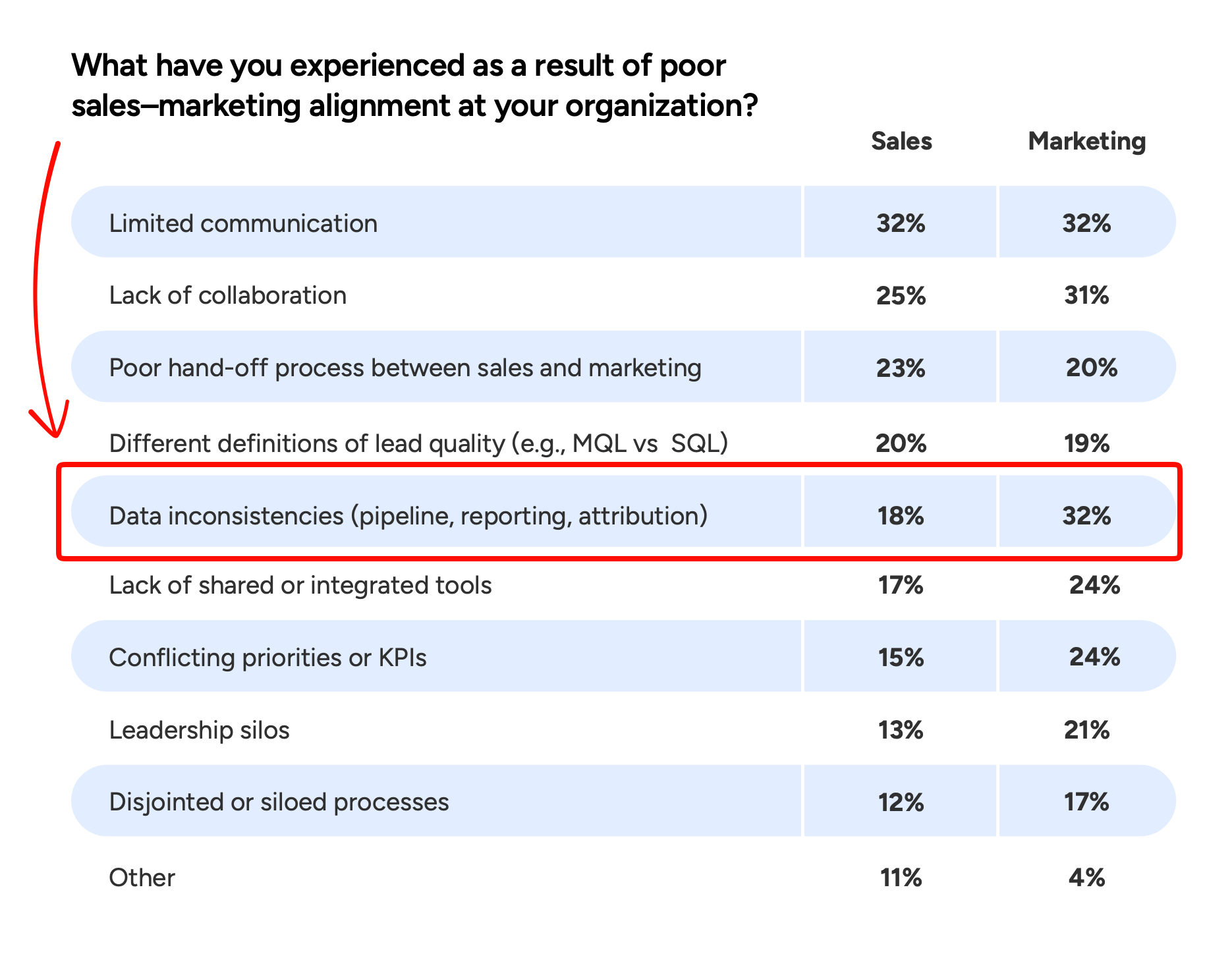
This 22-point delta suggests a structural information lag within the modern SMB. Executives often view alignment through the lens of high-level strategy decks and the existence of recurring cross-departmental meetings. However, the professionals tasked with daily execution experience the friction points that leadership may overlook. These include data inconsistencies (cited by 28% of non-executives), limited communication channels (33%), and the persistence of leadership silos (19%).

The functional split also reveals a difference in perspective between the two departments. Approximately 62% of sales professionals feel highly aligned, compared to only 53% of marketing professionals. This indicates that marketing teams often feel the burden of misalignment more acutely, particularly when their efforts in lead generation do not translate into recognized revenue or when their data is viewed with skepticism by the sales organization.
The Hidden Costs of GTM Misalignment
Misalignment is frequently dismissed as a "culture problem," but the 2026 data quantifies it as a significant operational and financial burden. When GTM teams fail to synchronize, the consequences manifest in three primary areas:
1. Human Capital and Employee Frustration
At the top of the list of consequences is employee frustration, cited by 29% of respondents. In a competitive labor market, the friction caused by unclear goals and "broken" handoff processes leads to burnout and turnover. When marketers feel their leads are being ignored and sales reps feel they are being fed low-quality data, morale collapses.
2. Operational Inefficiency and Budget Waste
The report identifies delayed follow-ups and duplicated work as primary drains on SMB resources. Approximately 32% of marketers flag delayed follow-up as a critical issue, whereas only 22% of sales reps acknowledge it. This delay directly impacts conversion rates; a lead that is not contacted within the first hour of inquiry sees a precipitous drop in qualified potential. Furthermore, duplicated work—where both teams create separate, uncoordinated versions of the same collateral—drains budgets that could otherwise be used for market expansion or customer retention.
3. Pipeline Decay and Conversion Gaps
The most damaging cost is the "healthy surface" pipeline. Marketing teams may hit their targets for Marketing Qualified Leads (MQLs), but if those leads do not meet the Sales Qualified Lead (SQL) criteria, the pipeline is effectively hollow. The report notes that 20% of sales and 19% of marketing professionals cite differing definitions of "lead quality" as a primary blocker to growth.

The Root Causes: Operational, Cultural, and Technological
The Unbounce report categorizes the root causes of misalignment into four distinct pillars: operational (53%), goal and incentive-based (43%), cultural (40%), and structural (34%).
The Data Paradox
A recurring theme in the 2026 findings is the "Data Paradox." While 40% of GTM teams report "excellent" cross-functional data sharing, a massive 68% admit to encountering regular data inconsistencies. This suggests that teams may be sharing data, but they are not sharing a "single source of truth." Marketing teams often rely on attribution models and campaign-level data, while sales teams prioritize CRM signals and rep-owned pipeline spreadsheets. When these two systems do not talk to each other, the resulting friction undermines every campaign.
The Tool Bloat Crisis
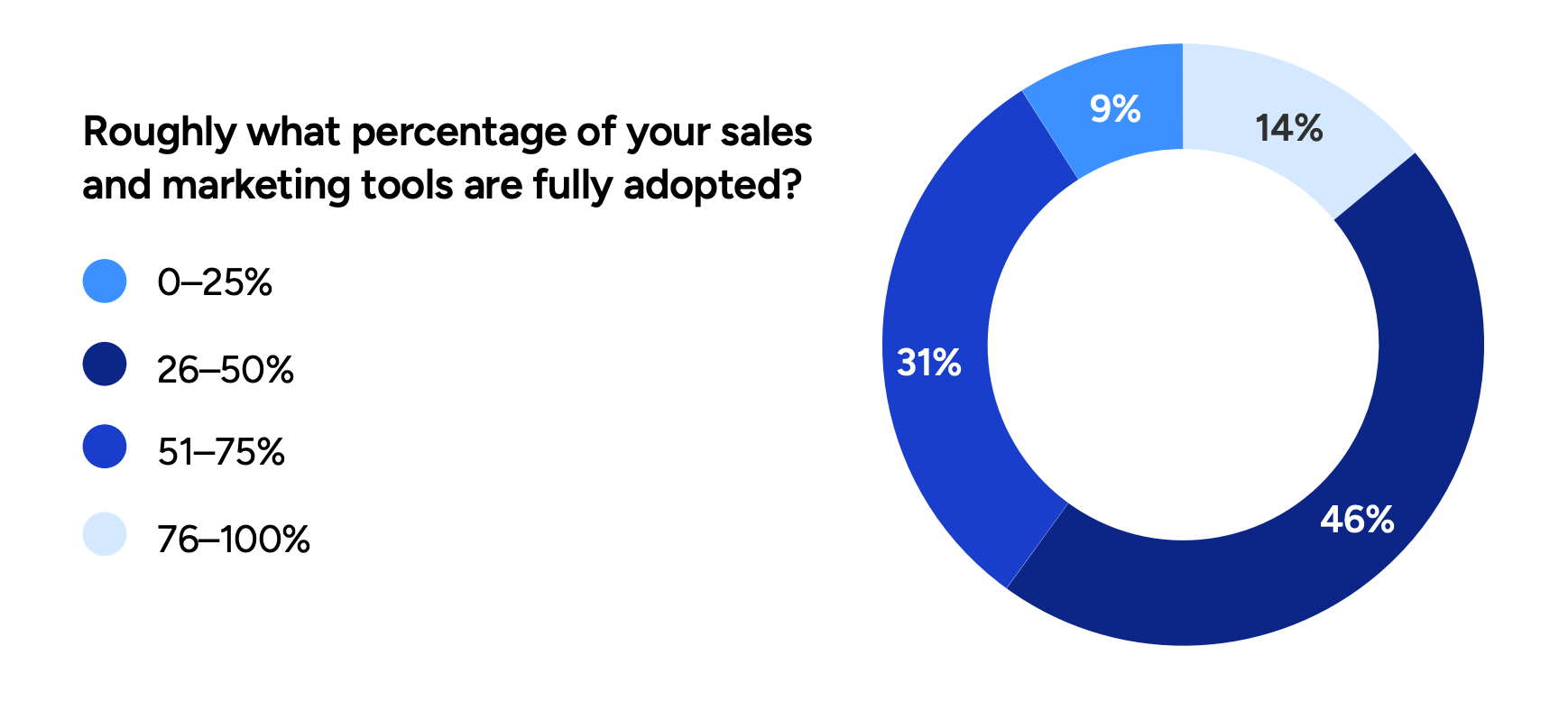
For years, the solution to misalignment was to "buy more software." However, 56% of GTM professionals now state that tool bloat is a major issue. Perhaps most damningly, 60% of organizations use less than half of the tools available in their tech stack.
The report found that 14% of teams utilize only 0% to 25% of their software investments. This "SaaS sprawl" creates additional data silos and maintenance overhead. The data suggests that leaner stacks with higher adoption rates consistently outperform bloated collections of "best-in-class" tools that no one knows how to use effectively.
Profiles in Success: What Highly Aligned Teams Do Differently
The 56% of organizations that successfully achieved high alignment provide a roadmap for others. Their success is built on three specific operational shifts:
Integrated Data Systems
Aligned teams are 3.5 times more likely to have strong cross-functional data sharing (59% versus 16% for misaligned teams). These organizations do not just "talk" about data; they use unified platforms where marketing data and sales signals exist in the same environment. This eliminates the "my numbers versus your numbers" debate that plagues most weekly syncs.
Messaging Consistency Across the Buyer’s Journey
A common point of failure for SMBs is the "message drift" that occurs when a lead moves from a marketing ad to a sales discovery call. Aligned teams report significantly fewer messaging inconsistencies (17% vs 28%). They achieve this by involving sales in the creation of buyer personas and ensuring marketers have access to call recordings (such as Gong or Chorus) to hear the actual language and objections of the customers.
The Consolidation Advantage
In a counter-intuitive finding, teams that significantly consolidated their tech stacks were twice as likely to rate their lead quality as "excellent" (55% versus 20%). By focusing on a few deeply integrated tools—such as a unified CRM and landing page platform—these teams reduced friction and improved the speed of the lead handoff.
Actionable Strategies for 2026 and Beyond
To bridge the alignment gap, the report suggests three high-impact actions that move the needle beyond simple "communication frequency."
1. Establish a Formal Service Level Agreement (SLA)
Alignment requires a contract between departments. This SLA must define exactly what constitutes a "qualified lead," what information marketing must provide (e.g., firmographics, intent signals), and the timeframe in which sales must follow up. Only 36% of teams currently have a robust handoff process, making this the single largest opportunity for improvement.
2. Unified Incentive Structures
As long as marketing is incentivized by lead volume and sales by closed revenue, friction is inevitable. High-performing organizations are moving toward "Revenue Operations" (RevOps) models where both teams share KPIs such as Customer Acquisition Cost (CAC) and Pipeline Velocity. As the report notes, quoting Charlie Munger: "Show me the incentive and I’ll show you the outcome."
3. Investment in Landing Page and Data Integration Tools
Looking toward the next 12 months, 24% of GTM teams are prioritizing landing page optimization and data integration tools. These technologies serve as the "bridge" between the first click and the final close. By ensuring that the data captured on a landing page flows seamlessly into the CRM with high fidelity, teams can eliminate the manual data entry that often leads to lead decay.
Broader Implications for the SMB Landscape
The findings from Unbounce’s 2026 report suggest a shift in the maturity of SMB go-to-market strategies. The "growth at all costs" era has been replaced by an era of "efficient growth," where the internal plumbing of an organization is just as important as the external marketing message.
Organizations that fail to address these alignment gaps face more than just internal bickering; they face a tangible loss in market share. In a world where buyer journeys are increasingly self-directed and digital-first, any friction in the handoff from marketing to sales is an opportunity for a competitor to step in.
The path to alignment is not found in more meetings or more software. It is found in the rigorous standardization of data, the unification of goals, and the shared understanding of the customer. As the report concludes, alignment is not a destination but a continuous operating model. For the 44% of teams still struggling to align, the cost of inaction is no longer just an HR issue—it is a threat to the bottom line.