The persistent divide between sales and marketing departments has long been characterized as a cultural friction point, yet new data suggests it has evolved into a structural crisis costing global businesses an estimated $1 trillion in lost productivity and wasted resources annually. According to a comprehensive 2026 study conducted by Unbounce, which surveyed over 500 small-to-midsized business (SMB) go-to-market (GTM) professionals, the disparity between the perceived importance of alignment and its actual implementation remains stark. While 87% of GTM teams acknowledge that tighter sales and marketing integration is the primary driver of performance lift, only 56% of organizations describe themselves as "highly aligned." This 31-point gap represents a significant operational failure that manifests not as a single strategy error, but as a series of compounding inefficiencies in lead qualification, messaging consistency, and data integrity.
The Perception Gap: A View from the Executive Suite vs. the Front Lines
One of the most revealing findings of the 2026 report is the "perception gap" regarding organizational health. The data indicates that executives often operate under a more optimistic view of departmental synergy than the staff responsible for daily execution. Approximately 69% of executives report strong sales and marketing alignment, whereas only 47% of non-executive professionals agree with that assessment.
This discrepancy suggests a structural information lag within the corporate hierarchy. Executives typically view alignment through the lens of high-level strategy decks and recurring leadership syncs. However, for the individual contributor, misalignment is experienced as tangible barriers: inconsistent data (cited by 28% of staff), limited communication (33%), and leadership silos (19%). Furthermore, the report highlights a functional divide; 62% of sales professionals feel highly aligned, compared to just 53% of their marketing counterparts. This suggests that marketing teams often feel the burden of misalignment more acutely, particularly when leads they qualify are ignored or dismissed by the sales force.

The Economic and Human Cost of Operational Friction
Misalignment is frequently dismissed as a "soft" problem, but the 2026 data quantifies the hard costs. When GTM teams fail to synchronize, the first symptom is often employee frustration, reported by 29% of respondents. However, the financial consequences follow immediately. The report identifies three primary drivers of revenue leakage:
- Delayed Lead Follow-Up (28%): Marketing spend is effectively neutralized when sales teams do not act on leads within the critical window of interest.
- Duplicated Work (24%): Siloed teams often create redundant collateral or research, draining budgets that could otherwise be allocated to high-conversion activities.
- Stalled Deal Cycles (20%): Inconsistent messaging and poor handoff processes create friction for the buyer, leading to "no-decision" outcomes or increased churn during the sales process.
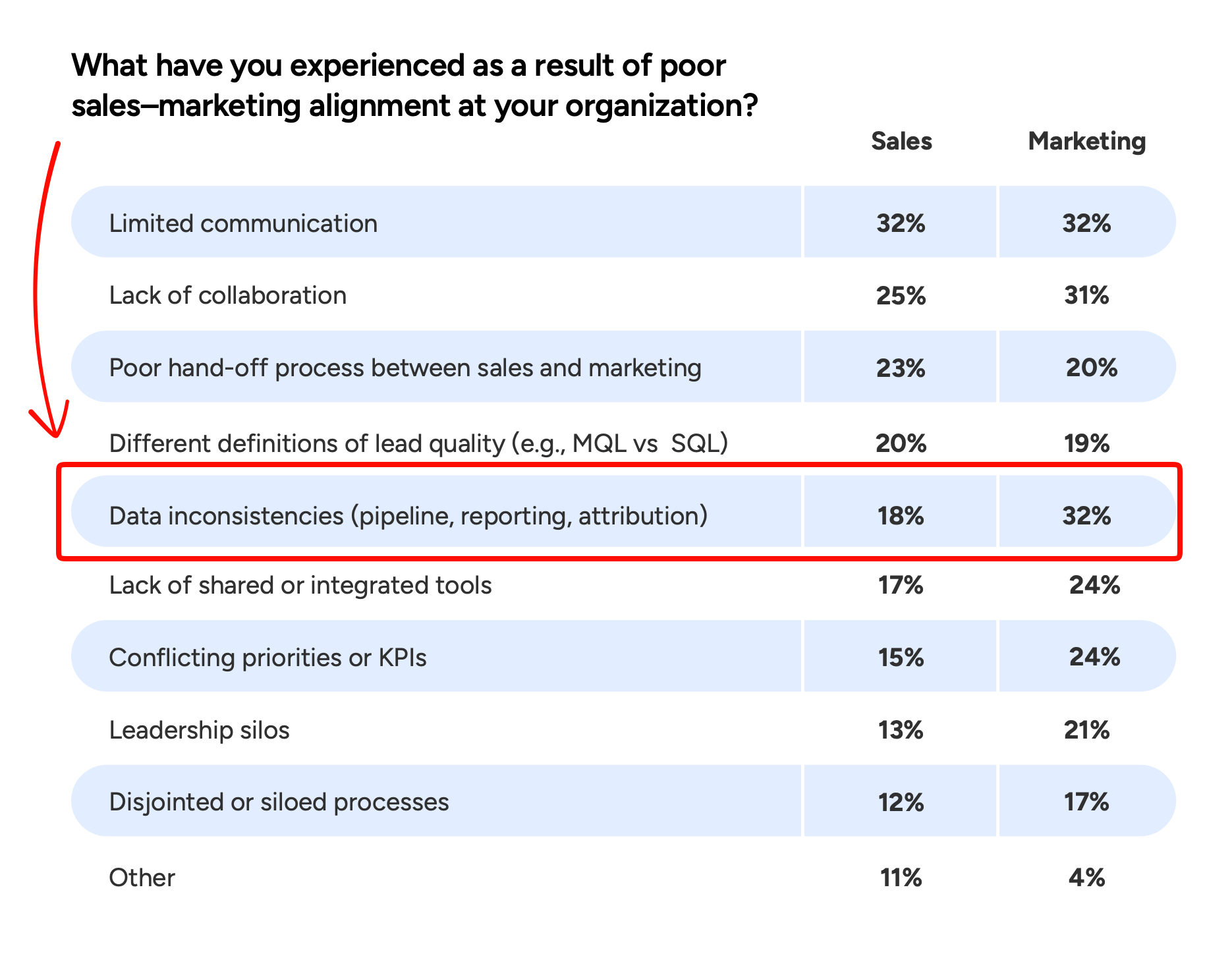
For marketing teams, the frustration is specific: 32% flag delayed follow-up as a primary barrier, while 29% cite a lack of clarity regarding target customers. Conversely, 23% of sales professionals identify poor handoff processes as the main obstacle. These metrics suggest that without a unified operating model, companies are essentially paying twice for the same customer—once to acquire the lead and again to overcome the internal friction required to close it.
The Chronology of Disconnect: From Siloed Funnels to Modern RevOps
To understand the current state of 2026 GTM alignment, one must look at the evolution of the sales funnel. Traditionally, marketing and sales operated in a linear fashion: marketing "owned" the top of the funnel, and sales "owned" the bottom. This handoff was historically clean when buyer journeys were simple.
However, the proliferation of digital touchpoints over the last decade has transformed the linear funnel into a complex, non-linear web. Today’s buyer might engage with a marketing whitepaper, attend a sales-led webinar, return to marketing-driven social proof, and only then engage with a representative. This shift necessitated the rise of Revenue Operations (RevOps)—a function designed to unify the data and processes of sales, marketing, and customer success.

Despite the rise of RevOps, the 2026 report shows that many SMBs are still struggling with the transition. The root causes of misalignment are now categorized as operational (53%), goal-based (43%), cultural (40%), and structural (34%). The data indicates that simply increasing "communication frequency" is a failing strategy; 54% of teams prioritize more meetings, yet high performers are moving toward integrated workflows and shared KPIs rather than just more talking points.
The Technology Paradox: Why More Tools Lead to Less Alignment
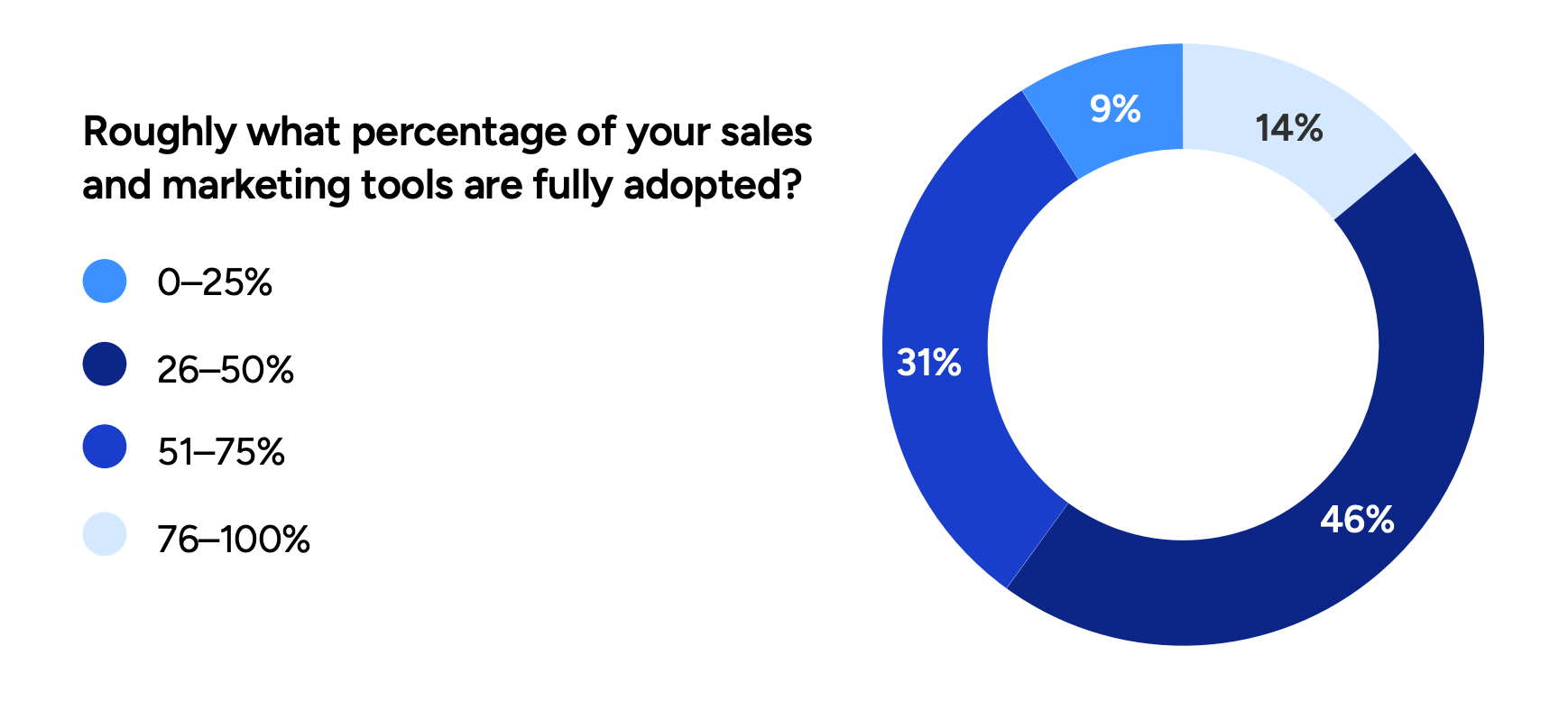
A significant portion of the alignment crisis stems from "tool bloat." In the rush to digitize, many organizations have inadvertently created a fragmented tech stack that reinforces silos rather than breaking them down. The report finds that 56% of GTM professionals consider tool bloat a major issue, with a staggering 60% of teams admitting they use less than half of the software tools available to them.
The impact of this bloat on data integrity is profound. While 40% of teams claim to have "excellent" data sharing, 68% report encountering regular data inconsistencies. This paradox suggests that while the capability to share data exists, the accuracy of that data is compromised by disparate systems. Marketing teams are particularly sensitive to this, with 32% citing data inconsistency as a barrier, compared to 18% of sales reps.
The solution, according to the data, is consolidation. Organizations that significantly consolidated their tech stacks were twice as likely to rate their lead quality as "excellent" (55% vs. 20%). By focusing on a "lean" stack—centered around a unified CRM, marketing automation, and shared analytics—teams can ensure they are working from a single source of truth.
Strategies of High-Performing Aligned Teams
The 56% of organizations that successfully achieved high alignment in 2026 share several common operational traits. These "top performers" have moved beyond the meeting-cadence layer and embedded alignment into their core operating models.
1. Shared Buyer Personas and Quality Definitions
Alignment begins at the top of the funnel. High-performing teams treat buyer personas as joint artifacts rather than marketing deliverables. When sales provides direct input into the audience definition, the subsequent leads are inherently more qualified. The report shows that 36% of GTM professionals believe that aligning lead qualification and handoff processes is the single most impactful action a company can take.
2. Unified Data and Reporting Systems
Aligned teams are 3.5 times more likely to have strong cross-functional data sharing (59% vs. 16%). This is achieved through the integration of three key technologies:
- CRM Systems: Serving as the central repository for all customer interactions.
- Marketing Automation Platforms (MAP): Synchronized with the CRM to provide sales with real-time intent data.
- Shared Analytics Dashboards: Ensuring that both teams are measured against the same KPIs, such as Customer Acquisition Cost (CAC) and Pipeline Velocity.
3. Messaging Consistency Across the Buyer’s Journey
A major point of friction occurs when a marketing campaign promises one outcome and the sales discovery call focuses on another. Aligned teams report significantly lower rates of messaging inconsistency (17% vs. 28%). These teams often implement shared customer interview notes and provide marketing teams with access to sales call recordings, ensuring that campaign language reflects the actual objections and desires heard on the front lines.
Broader Impact and Future Implications for 2027 and Beyond
As businesses look toward the end of the decade, the integration of Artificial Intelligence (AI) is expected to be the next frontier of GTM alignment. According to the report, 44% of GTM teams are prioritizing data integration and AI-driven insights for the next 12 months. AI has the potential to automate the lead qualification process, using predictive modeling to identify which marketing-qualified leads (MQLs) are most likely to become sales-qualified leads (SQLs), thereby removing the subjective "opinion" that often causes departmental friction.
However, technology alone will not solve the $1 trillion misalignment problem. The 2026 data reinforces a fundamental truth: alignment is an incentive problem. As long as marketing is incentivized solely on lead volume and sales on closed revenue, their goals will remain at odds. True alignment requires a shift in compensation structures to reflect shared outcomes.
In conclusion, the Unbounce 2026 report serves as a roadmap for SMBs seeking to optimize their go-to-market strategies. The transition from a "meeting-based" alignment model to an "operating-model" alignment is no longer optional. Organizations that fail to unify their data, consolidate their tech stacks, and agree on shared buyer definitions will find themselves increasingly vulnerable to more agile, aligned competitors. The path to growth in 2026 and beyond is not found in more leads, but in the seamless, efficient conversion of those leads through a unified sales and marketing engine.