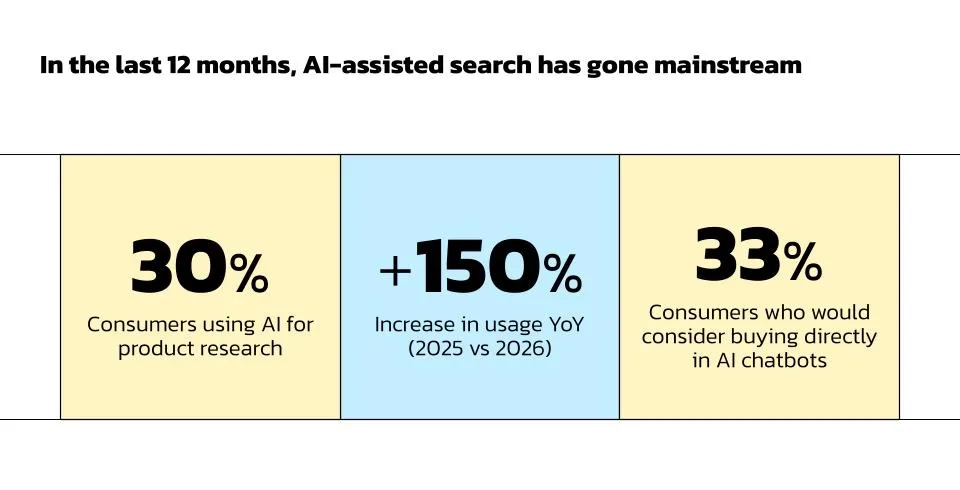
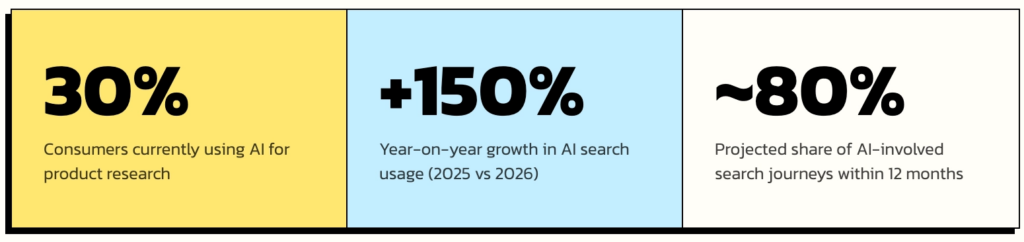
The landscape of online search is undergoing a seismic shift, with artificial intelligence no longer a speculative future but a present reality rapidly reshaping how consumers discover products and information. New data indicates a dramatic surge in AI-powered search usage, compelling businesses and marketers to move beyond observation and embrace proactive adaptation. A recent analysis reveals that 30% of consumers now utilize AI for product research, a stark increase from just 12% a year ago. Compounding this trend, approximately 40% of Google search results now feature an "AI Overview," meaning users are increasingly encountering and engaging with AI-generated answers without explicitly seeking them.
This confluence of direct AI search utilization and the integration of AI into traditional search engines suggests that a significant portion of search journeys are already influenced by artificial intelligence. When combining these figures, it’s estimated that closer to 60% of search journeys now involve AI in some capacity. Projections from industry analysts at Brainlabs suggest this figure could climb to an astonishing 80% within the next twelve months, assuming current growth rates persist. Such a rapid evolution fundamentally alters the strategic considerations for nearly every aspect of organic search.
Consumer adoption patterns reveal a nuanced picture of this transition. Brainlabs’ survey data categorizes consumers into three distinct groups: "Traditionalists," who constitute roughly 69% of users and exclusively rely on established search engines; "Augmenters," representing approximately 30%, who fluidly integrate both Google and AI platforms within a single research journey; and "Dissenters," a negligible group comprising less than 1%, who exclusively utilize AI platforms. The "Augmenters" are identified as the primary engine of growth in this evolving ecosystem. These users are not abandoning traditional search engines but are actively incorporating AI as an additional research layer, particularly for navigating complex queries and gathering comprehensive information.
The Evolving Nature of AI Search Optimization
The notion that AI-powered search is merely a rebranding of traditional Search Engine Optimization (SEO) is an increasingly inaccurate simplification. While current AI search strategies share some foundational similarities with traditional SEO, the divergence is accelerating at a pace that many organizations have yet to fully comprehend. The complexity arises from the fact that there isn’t a singular "AI search"; rather, the landscape is populated by at least four major platforms, each employing distinct AI models, adhering to different content guidelines, and maintaining varying relationships with established search indexes like Google’s.
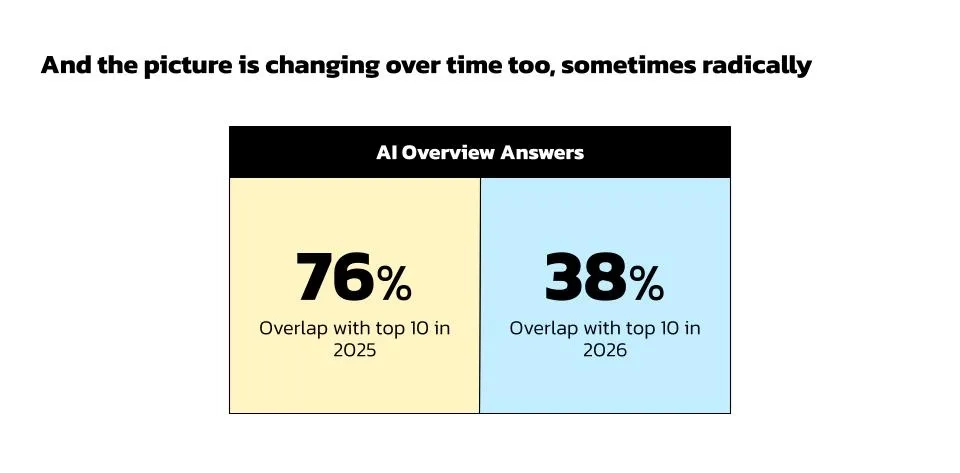
A particularly revealing statistic highlights this divergence: Gemini, a prominent Google product, cites pages from Google’s top 10 search results only 15% of the time. This data point is critical for any SEO strategy that has historically been built around achieving top-10 rankings. Such a strategy offers limited efficacy for platforms like Gemini or ChatGPT, whose content selection mechanisms operate on fundamentally different principles. Furthermore, the overlap between AI Overviews and Google’s top 10 results has significantly diminished, falling from a high of 76% to approximately half that figure in 2026, underscoring the widening gap.
Decoding Large Language Model (LLM) Citation Practices
To effectively navigate the AI search landscape, a deep understanding of how Large Language Models (LLMs) generate responses and select citations is paramount. This process differs significantly from the ranking algorithms employed by traditional search engines.
The core mechanism begins with "Grounding," where an LLM assesses whether external data is required to answer a user’s prompt or if its existing training data is sufficient. For most product research queries, external data is essential. Following this, the LLM initiates "Query Fan-out," breaking down the original prompt into dozens of related micro-questions. For intricate prompts, this process can involve tens of these micro-queries running concurrently.
The LLM then conducts a "Deep Index Search," scrutinizing Google’s index for each micro-query across the top 100 results and beyond. This expansive search scope, extending beyond the traditional top 10, represents a significant departure from conventional SEO practices. The subsequent "Content Selection" phase involves the LLM identifying sources that feature direct answer blocks, headings that precisely match the micro-question, hard statistical data, and freshness signals such as recent "last updated" dates.
Finally, the LLM engages in "Comparison and Validation." Sources that exhibit low consensus compared to higher-authority references are filtered out. Crucially, a page that directly and concisely answers a specific micro-question can outcompete higher-authority pages that bury their answers within more extensive editorial prose.
To optimize content for LLM citation, three approaches have demonstrated consistent success:
- Query Fan-out Analysis: Understanding the micro-questions that LLMs generate from user prompts is knowable. Building FAQ sections that directly address these micro-questions has been shown to drive measurable increases in AI citations.
- Embedding Similarity Analysis: Measuring how closely a piece of content resembles information that is currently being cited by LLMs has yielded significant results. Across client tests at Brainlabs, this approach has led to an average 140% increase in AI citations.
- Content Freshness as a Technical Requirement: For time-sensitive topics, treating content freshness as a non-negotiable technical requirement is crucial. Monthly refreshes of high-demand pages are considered a minimum standard.
The Measurement Challenge in AI Search
Accurately measuring performance in the AI search domain presents a formidable challenge, primarily due to the scarcity of first-party data from major AI platforms. While limited data on AI performance is beginning to emerge from Google and Bing, it remains insufficient for comprehensive optimization decisions. For instance, Google’s Search Console Generative AI report provides impression data but lacks critical insights into specific queries and clicks – the very information needed for strategic adjustments. Impression data and page performance metrics are valuable for establishing baselines and tracking directional progress, but they leave significant questions unanswered regarding customer search intent, follow-up queries, and search behavior within standalone AI applications like Gemini. Consequently, reliance on third-party measurement solutions remains essential.
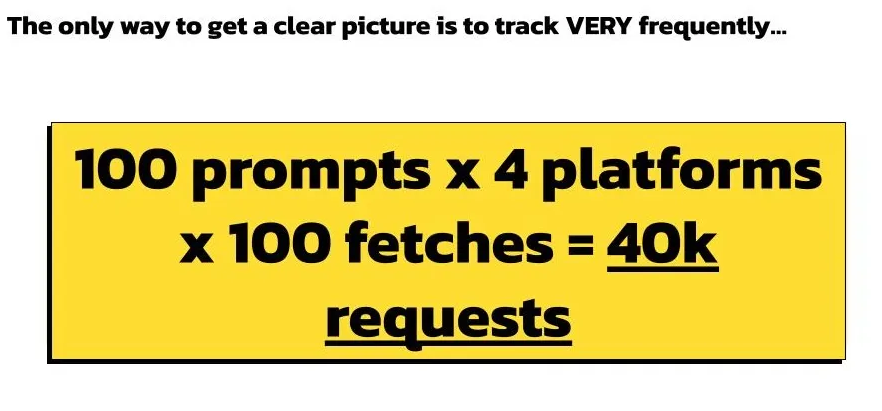
The prevailing approach involves converting keyword data into probable prompts, tracking these prompts using one of the more than 30 third-party AI tracking tools, and monitoring brand visibility over time as a proxy for real-world performance. However, this data is inherently noisy. Across different AI models, only 23% of citations remain active after 14 days. There is a mere 45% agreement between platforms regarding which brand to recommend first, and fewer than 5% of query sets exhibit perfect consensus across all major platforms.
Despite these challenges, several practical measurement approaches are proving effective:
- AI Referral Tracking in GA4: Implementing AI referral tracking within Google Analytics 4 (GA4) provides a foundational layer of insight.
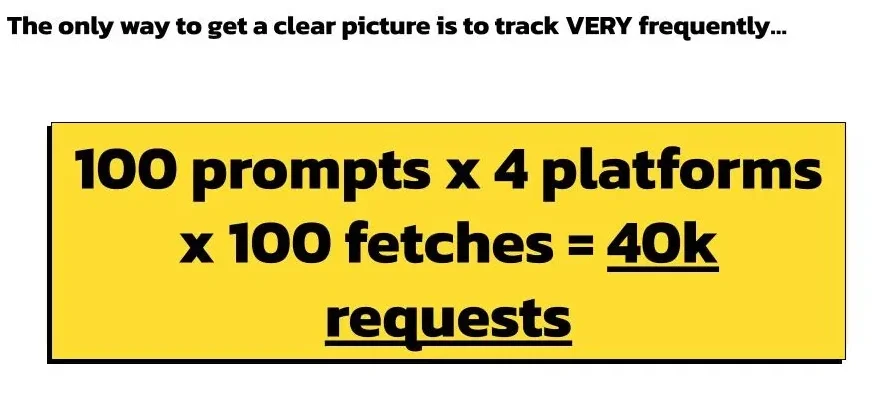
- Prompt Tracking and Visibility Measurement: Selecting a focused set of priority categories and tracking 50 to 100 related prompts at a low frequency can yield directional data, even if it’s not perfectly precise.
- Third-Party AI Tracking Tools: Utilizing specialized third-party tools allows for the monitoring of brand visibility and citation rates across various AI platforms.
- Manual Audits and Qualitative Analysis: Conducting manual audits of AI-generated results for specific queries can offer valuable qualitative insights into how LLMs are interpreting and responding to content.
The Looming Shift: Agentic Search
The current paradigm, where AI acts as an enhancement to existing search functionalities, is poised for a significant transformation with the advent of "agentic search." Sundar Pichai, CEO of Google, has articulated this vision, suggesting that search will evolve into an "agent manager" where AI agents autonomously conduct research, make decisions, and facilitate transactions on behalf of consumers. This emerging model anticipates AI agents performing research in mere seconds, filtering information to provide recommendations, and seamlessly guiding users through purchase processes, all without the consumer needing to leave the AI platform. Platforms like ChatGPT have already introduced features such as "Instant Checkout," and Google is developing its "Universal Commerce Protocol" to support such functionalities.
Even in this advanced agentic model, the need for reliable information sources will persist. The critical question becomes: which content and data sources will these AI agents trust enough to cite and act upon?

To prepare for this future, businesses can take three proactive steps:
- Focus on Foundational Content Quality: Ensure content is not only informative but also structured and presented in a manner that facilitates direct answers and easy extraction of key data points.
- Develop Expertise in Niche Areas: As AI agents become more sophisticated, they will likely seek out highly specialized and authoritative content. Deep expertise in specific domains will become increasingly valuable.
- Prioritize Transparency and Trustworthiness: Content that is transparent about its sources, clearly attributes information, and demonstrates a commitment to accuracy will be more likely to be trusted by AI agents.
Where to Begin the AI Search Adaptation
The journey to effectively navigate the AI search revolution begins with measurement. Establishing AI referral tracking in GA4 is a crucial first step. By selecting two to three priority categories and initiating tracking for 50 to 100 related prompts at a low frequency, organizations can begin to gather directional data, even if it’s not perfectly precise.
The next phase involves auditing priority content against the signals that LLMs prioritize. This includes examining freshness dates, direct-answer formatting, structured data implementation, and the relevance of heading-level content to potential micro-questions. A targeted refresh of high-demand pages, incorporating these principles, can provide tangible evidence of their impact on citation rates before scaling these efforts.
Finally, building a roadmap for divergence is essential. The overlap between traditional SEO and AI SEO is diminishing. The organizations that will be best positioned in the coming years are those that proactively invest in building the capabilities required for this new era of search. The window of opportunity to get ahead of this transformative trend, rather than simply reacting to it, is closing rapidly. The data is clear: AI search is not a trend to watch; it is a fundamental shift that demands immediate and strategic action.