rifanmuazin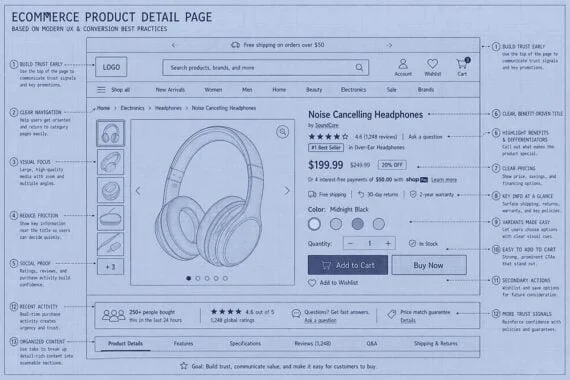
The fundamental purpose of an ecommerce product page has long been to facilitate conversion – to guide a visitor towards a purchase. For years, this primary objective was closely followed by the need to rank well in traditional search engine results. However, in 2026, this established hierarchy is undergoing a significant transformation. The burgeoning landscape of generative artificial intelligence, encompassing AI Overviews, AI Mode, sophisticated answer solutions, and emerging AI-powered shopping agents, is fundamentally reshaping how consumers discover and engage with products, from high-value luxury goods to everyday necessities. This paradigm shift necessitates a re-evaluation of product page strategies, demanding a more nuanced approach that balances conversion with visibility across new AI-driven discovery channels.
The digital commerce environment of 2026 is characterized by a dynamic interplay between established search engine optimization (SEO) practices and the rapidly advancing capabilities of artificial intelligence in product discovery and information retrieval. Consumers are increasingly turning to AI-powered tools to sift through vast amounts of information, seeking direct answers and personalized recommendations rather than solely relying on keyword-based searches that lead to a list of links. This evolution places new demands on product detail pages, requiring them to be not only conversion-optimized but also "AI consumable." This means presenting product information in a structured, easily digestible format that AI systems can readily understand, extract, and utilize to provide answers and model products as distinct entities with specific attributes.
The Three Pillars of Modern Product Page Performance
In this new era of digital commerce, product detail pages must effectively address three critical pillars of performance:
- Rankable: The ability to be discovered and displayed in traditional search engine results pages (SERPs). This aligns with familiar SEO practices focused on keyword relevance, content quality, and technical optimization.
- Extractable: The capacity for AI systems to readily pull specific pieces of information from the page to answer user queries directly. This requires clear, concise, and well-organized content that explicitly addresses product attributes, features, and benefits. This is often referred to as Answer Engine Optimization (AEO).
- Understandable as an Entity: The capability for AI to comprehend the product as a distinct object with a defined set of attributes, such as brand, category, price, specifications, and relationships to other products. This enables AI to integrate product information into more complex queries, comparisons, and personalized recommendations, often referred to as Generative Engine Optimization (GEO).
Ultimately, a single product page must be meticulously crafted to excel across all three of these dimensions to remain competitive and effective in 2026 and beyond.
An AI-Driven Analysis of Ecommerce Product Page Content
To gauge the current state of product page optimization across these new pillars, an extensive review was conducted, leveraging AI to analyze the content of product detail pages from a diverse range of online retailers. This analysis focused on how the content itself, independent of structured data markup, addressed the requirements for ranking, extraction, and understanding. The evaluation encompassed major marketplaces like Amazon, large national retailers such as Walmart and Target, specialty retailers like L.L.Bean, a selection of direct-to-consumer (D2C) brands categorized by their content strategy (structured, hybrid, and aesthetic-driven), and a sample of smaller ecommerce merchants utilizing platforms like Shopify.
The AI assessment assigned a subjective score to each segment of retailers across the three key areas: Rankable, Extractable, and Understandable as an Entity. The findings reveal significant disparities in how effectively different types of online businesses are adapting to the AI-driven discovery landscape.
| Segment | Example Sources | Rankable | Extractable | Understandable as Entity |
|---|---|---|---|---|
| Marketplaces | Amazon | Very High | Medium | Very High |
| Large Retailers | Walmart, Target | High | Medium–High | High |
| Specialty Retail | L.L.Bean | Medium | High | Medium–High |
| D2C (Structured) | AG1, Beekman 1802 | Low–Medium | High | Medium |
| D2C (Hybrid) | Casper, Allbirds | Medium | Medium | Medium |
| D2C (Aesthetic) | Vuori, Glossier | Low | Low | Low–Medium |
| Small Merchants | Mixed Shopify stores | Low | Low–Medium | Low–Medium |
Decoding the "Rankable" Pillar: The Enduring Power of SEO
Traditional search engine optimization remains a vital component of online visibility. The analysis indicated that, almost universally, product detail pages passed a basic SEO content audit. However, larger retailers and marketplaces demonstrated a clear advantage in this area. This is largely attributed to their strategic use of expansive product titles, comprehensive attribute lists, and robust internal linking structures. These pages are designed to capture a wide array of search queries, rather than being narrowly optimized for a single keyword.
Amazon, for instance, excels in creating "rankable" content. Its product pages typically feature:
- Extensive Titles: Often incorporating brand, model, key features, and common use cases.
- Detailed Bullet Points: Highlighting primary benefits and specifications.
- Rich Product Descriptions: Elaborating on features, usage, and brand story.
- Specifications Sections: Providing technical details in a structured format.
- Customer Reviews: Generating significant amounts of user-generated content that often includes relevant keywords and long-tail search phrases.
- Q&A Sections: Addressing common customer inquiries.
In some instances, the sheer volume of composite product information on a single Amazon page can approach 10,000 words, primarily driven by customer reviews, though the average hovers around 2,000 words. This depth of content provides numerous opportunities for search engines to index and rank the page for various queries.
Conversely, many D2C brands tend to favor concise product names and brand-consistent, often minimalist, language. While this approach enhances readability and strengthens brand identity, it can inadvertently limit organic search reach by not providing sufficient keyword density or breadth to compete with the comprehensive content strategies of larger players. Smaller merchants, whose product pages often resemble those of D2C brands, could significantly improve their organic visibility by adopting more expansive content practices, mirroring the successful strategies of marketplaces like Amazon.

The "Extractable" Pillar: Clarity and Conciseness for AI Answers
The ability for product pages to be "extractable" is becoming increasingly crucial as AI systems prioritize delivering direct answers to user queries. To be extractable, a product page must clearly and concisely explain what the product is, what it does, and who it is intended for. These answers need to be easily isolated and identifiable by AI. This is best achieved through discreetly labeled sections, distinct feature lists, and well-structured question-and-answer formats.
The AI review revealed that many product pages underperform in this critical area. The content is often embedded within broader descriptions or lacks clear demarcation, making it difficult for AI to pinpoint specific answers. The exception, once again, were the large retail marketplaces and some specialty retailers. These entities frequently provide extensive, well-organized information that readily supports AI extraction. For example, L.L.Bean’s product pages, while perhaps not as densely keyword-rich as Amazon’s for ranking, often excel in presenting clear, actionable information about product features and benefits, making them highly extractable.
Even small retailers can significantly improve their extractability by incorporating dedicated FAQ sections and clearly labeling key product features. This structured approach not only aids AI but also enhances the user experience by providing quick access to essential information.
The "Understandable as an Entity" Pillar: Data for AI Comprehension
Data dictates visibility in the evolving AI landscape. Search engines and AI systems are increasingly treating products not just as keywords or descriptions, but as distinct entities or objects possessing a defined set of attributes. These attributes include brand, category, price, technical specifications, materials, dimensions, and crucially, relationships to other products (e.g., complementary items, accessories, or alternative options).
While structured data markup (like Schema.org) plays a vital role in defining these product entities for AI, the content of the product page itself also contributes significantly. For a product to be "understandable as an entity," its content must consistently and clearly define these attributes. This involves using normalized naming conventions for variants (e.g., "Red, Large" rather than "Red L" or "Large Red"), providing precise specifications, and maintaining a coherent product identity across the page.
Product pages from large retailers, particularly marketplaces, consistently demonstrate strength in this area. They meticulously describe products with clear attributes, employ standardized naming conventions, and handle product variants in a consistent manner. This consistency allows their products to be seamlessly integrated into AI-driven shopping results, comparison tools, and structured data listings, facilitating a more sophisticated level of product interaction. For example, when an AI agent is asked to find "a blue, waterproof running jacket under $150 from a sustainable brand," a product page that clearly defines these attributes in its content is far more likely to be identified and recommended.
Integrating the Three Pillars for Comprehensive Success
The ultimate goal of optimizing for these three distinct yet interconnected pillars is to drive traffic and engagement from both traditional search engines and the rapidly expanding realm of generative AI. The AI-driven site review highlighted a significant gap: while many businesses focus on one or two of these areas, few are effectively integrating all three into a cohesive strategy.
Marketplaces, due to their scale and data-centric approach, generally lead in providing comprehensive product information that serves all three pillars. This dominance should serve as a compelling case study for all merchants, regardless of size.
The implications for ecommerce businesses in 2026 are profound. The traditional product page, once solely a vehicle for conversion and basic search ranking, must now evolve into an intelligent, AI-consumable hub of information. This requires a strategic approach to content creation that anticipates how AI systems will interpret, extract, and utilize product data.
Key Strategies for an Evolving Product Page:
- Content Granularity: Break down product information into distinct, clearly labeled sections. Use bullet points and concise sentences to highlight features and benefits.
- Attribute Clarity: Explicitly define and consistently use product attributes (color, size, material, dimensions, technical specs) throughout the page.
- Variant Standardization: Implement a consistent naming convention for all product variants to aid AI in understanding product options.
- FAQ Integration: Develop comprehensive FAQ sections that directly address common customer questions, providing readily extractable answers.
- Long-Tail Keyword Optimization: While focusing on AI, do not abandon traditional SEO. Incorporate relevant long-tail keywords naturally within descriptions and feature lists.
- Structured Data Augmentation: While content is key, complement it with robust structured data markup (Schema.org) to further enhance AI’s understanding of product entities.
- Customer-Generated Content Leverage: Encourage and strategically utilize customer reviews and Q&As, as they provide valuable, keyword-rich content that aids both ranking and extractability.
- AI Content Auditing: Periodically use AI tools to audit product pages, identifying areas where content might be ambiguous or difficult for AI to process.
The digital commerce landscape is in constant flux, and the year 2026 marks a pivotal moment where the confluence of search and AI is redefining consumer behavior. Businesses that embrace this evolution by transforming their product pages into AI-consumable, multi-pillar powerhouses will be best positioned to capture attention, drive conversions, and thrive in the increasingly intelligent world of online shopping. In 2026, success is not merely about ranking; it is about being ranked, extracted, and understood.