The landscape of adult education and professional development is undergoing a fundamental transformation as traditional long-form training modules are replaced by "microlearning"—a pedagogical approach centered on short, highly focused bursts of content. Industry data and recent shifts in corporate training methodologies indicate that adult learners, increasingly constrained by "always-on" digital environments, now prefer instructional content delivered in 90-second to three-minute increments rather than the traditional 40-minute modules that dominated the previous decade. This shift represents more than a change in consumer preference; it marks a critical adaptation to the psychological realities of the modern workforce and the technological infrastructure of the 21st century.
The Paradigm Shift in Educational Consumption
For decades, the standard for academic and professional excellence was rooted in depth and duration. In the mid-to-late 20th century, the Encyclopedia Britannica served as the primary repository of accessible knowledge, requiring hours of manual research. This era was characterized by "seat time"—a metric where the value of a course was often equated with the number of hours spent in a classroom or library.
However, the advent of the internet and the subsequent explosion of mobile technology have decentralized information. The "I don’t know" era has effectively ended, replaced by a "just-in-time" learning model where answers are expected within seconds via AI agents or search engines. Educational experts note that this has fundamentally altered the brain’s approach to information retention. While the traditional model relied on rote memorization and long-form reading, the modern learner utilizes "visibility engineering"—a process of seeing, engaging, responding to, and sharing content in a rapid loop.
Chronology of the Learning Evolution
The transition from traditional pedagogy to microlearning can be traced through several distinct phases of information delivery:
- The Encyclopedic Era (Pre-1990s): Knowledge was static and physical. Learning required significant time investments in libraries and the use of physical tools like index cards and paper flashcards.
- The Abridgment Era (1990s – Early 2000s): The rise of "Cliff Notes" and similar summaries represented the first widespread acknowledgment that learners needed more efficient ways to digest complex information.
- The Digital Module Era (2000s – 2015): Corporate training moved online, but retained the long-form structure of the classroom, with modules typically lasting 20 to 60 minutes.
- The Micro-Content Era (2016 – Present): Driven by platforms like TikTok, YouTube Shorts, and Slack, learning is now delivered in "snackable" formats. The "ceiling" for engagement has dropped from 20 minutes to approximately three minutes, with 45 to 150 seconds being the optimal range for retention.
Psychological and Practical Drivers of Microlearning
Research into cognitive load theory suggests that the human brain is better equipped to process and retain small, isolated concepts than sprawling, multi-faceted lectures. Microlearning aligns with the "spacing effect," a psychological phenomenon where information is more easily recalled if learning sessions are spaced out over time rather than "crammed" into a single session.
Furthermore, the modern professional environment—characterized by Slack pings, back-to-back virtual meetings, and the blurring of home and work life—makes traditional "block-off-a-weekend" learning nearly impossible. For the modern adult learner, microlearning is not merely a preference but a survival skill. It allows for "interstitial learning"—the ability to gain a new skill or insight during small gaps in a schedule, such as between meetings or during a commute.
Industry analysts have observed that when procedures are moved from 20-page, text-heavy documents to two-page visual guides paired with short video demonstrations, error rates in manufacturing and corporate environments drop significantly. This was notably demonstrated in global manufacturing projects where Human Error Prevention (HEP) strategies shifted focus from exhaustive manuals to visual, icon-rich "recall guides."
Case Study: Rebuilding the PESO Model Certification®
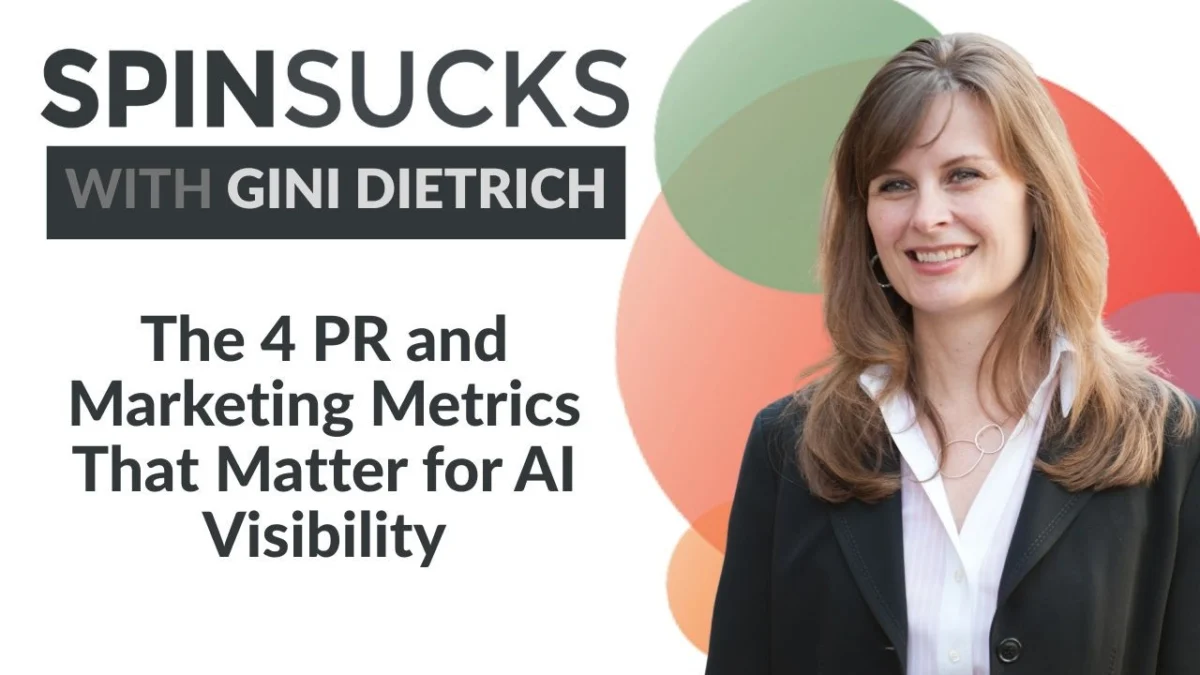
The shift toward microlearning is being actively implemented by leading communications firms. Spin Sucks, a prominent professional development provider for the public relations and marketing sectors, recently announced a complete overhaul of its PESO Model Certification®. The redesign serves as a benchmark for how professional organizations are adapting to new learning behaviors.
The updated certification moves away from long-form lectures in favor of shorter lessons that include:
- Practical Workbook Activities: Immediate application of the concept just learned.
- AI Integration: Providing learners with AI prompts to assist when they encounter obstacles, reflecting the real-world use of technology.
- Documented Worksheets: Creating a tangible paper trail of the learning process.
By restructuring the curriculum into "bites," the program acknowledges that adult learners often despise traditional classroom tropes, such as forced role-play, which can spike anxiety and impede the psychological safety necessary for effective learning. Instead, the focus has shifted to private, self-paced practice that allows learners to demonstrate competency when they feel prepared.
Internal Microlearning and the "Poppyseed" Method
Corporate internal training is also evolving. Rather than quarterly seminars, companies are utilizing internal communication tools to deliver "drip" education. One innovative method involves the use of virtual trainers—such as "Poppy" at Spin Sucks—who deliver "seeds" of knowledge twice a week via Slack. These are quick questions or scenarios that prompt team discussion and are capped with a summary from leadership.
This method transforms learning from a scheduled event into a habitual, searchable, and social experience. Similarly, the use of Quick Reference Guides (QRGs) on internal sites replaces 80-page binders, ensuring that step-based work, such as website updates or LMS management, is supported by just-in-time visual instructions.
Broader Impact on Communications and Marketing
The principles of microlearning are increasingly being applied to external communications and brand strategy. In a "feed-driven" economy, the same rules that apply to training apply to audience engagement. Long, dense content that requires multiple clicks to access often fails to move through the "see, engage, respond, share" loop.
Strategic communications are now being built as "operating systems" rather than isolated tactics. A single LinkedIn post or a 45-second Instagram story is no longer viewed as a standalone piece of content but as a "micro-lesson" or "seed" that contributes to a larger authority-building ecosystem.
Experts in "visibility engineering" argue that bite-sized, visual content is now the "price of admission" for brand relevance. This does not imply a watering down of the message; rather, it represents the "discoverable version" of expertise. Whether it is a TikTok delivering a usable insight or a "Snack Pack" newsletter providing a three-minute activity, the goal is to build habits within the audience.
Statistical Support for Micro-Content
Recent industry data underscores the efficacy of this transition:
- Retention Rates: Studies indicate that microlearning can improve knowledge retention by up to 20% compared to traditional long-form methods.
- Engagement: Short-form video content (under 3 minutes) has been shown to have a 50% higher completion rate in corporate training environments than videos exceeding 10 minutes.
- Development Speed: Microlearning modules can be developed 300% faster and at a fraction of the cost of traditional e-learning courses, allowing organizations to pivot their training as quickly as market conditions change.
Conclusion and Future Implications
As we move toward 2026 and beyond, the integration of AI and microlearning will likely deepen. The use of AI agents to provide real-time, personalized feedback during short learning bursts will become the standard. The evolution from the Encyclopedia Britannica to the 90-second TikTok lesson is not merely a sign of shortening attention spans, but an optimization of how human beings interact with an overwhelming volume of information.
For organizations and individual professionals, the challenge lies in deconstructing complex expertise into digestible, actionable components. The era of "block off a whole weekend and pray" is being replaced by "open the next lesson and go." In the modern professional landscape, the ability to learn in "snack packs" is what will ultimately separate the experts from the obsolete. As the world continues to move faster, the smallest pieces of information may ultimately carry the most significant weight.