The perennial questions surrounding Search Engine Optimization (SEO) are more pertinent than ever, as the digital marketing landscape undergoes a profound transformation driven by the rapid integration of Artificial Intelligence. Senior leaders across industries are consistently seeking clarity on the contemporary role and purpose of SEO, and the justification for continued investment in agency partnerships. These are not frivolous inquiries, but rather critical assessments that demand data-driven, transparent answers. The challenge lies in moving beyond vague assurances and providing actionable insights that acknowledge the complexities of modern search, particularly in light of generative AI’s growing influence. This analysis delves into the most pressing questions, drawing on recent data and expert perspectives to illuminate the path forward for SEO professionals and the businesses they serve.
The Enduring Relevance of SEO in a Shifting Digital Ecosystem
A recurring and perhaps most fundamental question is whether SEO, as a discipline, is still relevant. The nuanced answer is that while the foundational principles of SEO remain, the specific tactics and strategies that were effective even five years ago are no longer sufficient. The digital ecosystem is not static; it is a dynamic environment constantly reshaped by technological advancements and evolving user behaviors.
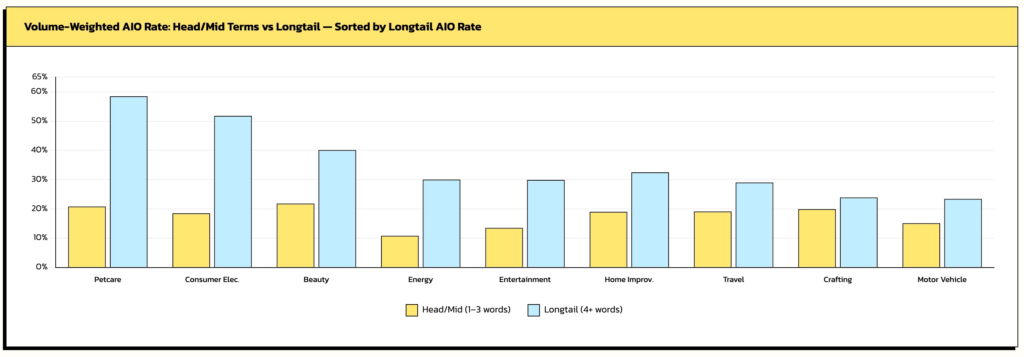
Recent data indicates a modest overall decline in organic search traffic from Google for the top 40,000 websites in the US, approximately 2.5% in 2025 compared to the previous year. However, this figure masks significant variations across sectors. Publishers, for instance, have reported more substantial drops, largely attributed to their heavy reliance on informational queries that are now directly addressed by AI Overviews. Conversely, the total volume of Google searches continues to rise, with a notable increase in longer-tail, conversational queries. This trend is a direct consequence of users becoming accustomed to more natural language interactions, influenced by both the proliferation of AI search tools and Google’s own promotion of AI-powered search functionalities.
This shift exacerbates the "zero-click" challenge, where an increasing number of detailed queries are answered directly within search engine results pages (SERPs) by AI, thereby reducing the need for users to click through to websites. A graphical analysis of this phenomenon reveals a clear correlation between the rise of AI-generated answers and a potential decrease in direct website traffic from organic search.
Despite these shifts, the business of SEO is far from diminished; it is arguably more vital than ever. The more pertinent question for businesses is not "Is SEO dead?" but rather, "Is our current SEO strategy effective for our specific business goals?" Organic search continues to be a primary driver of website traffic across most industries, often outperforming paid search. When executed effectively, SEO can deliver superior long-term return on investment (ROI) compared to paid media, or serve as a cost-efficient component of a holistic search strategy. The channel itself is not broken; rather, certain outdated approaches are.
The nature of digital visibility has fundamentally changed. While ranking in the top organic position for a query now answered by an AI Overview may hold less direct value, the opportunity to be cited within that AI Overview can be significantly more impactful. Data from SEER Interactive indicates that brands cited in AI-generated answers experience a 35% increase in organic clicks and a staggering 91% surge in paid clicks compared to those not mentioned. This presents a new battleground for visibility, rewarding proactive adaptation and strategic foresight.
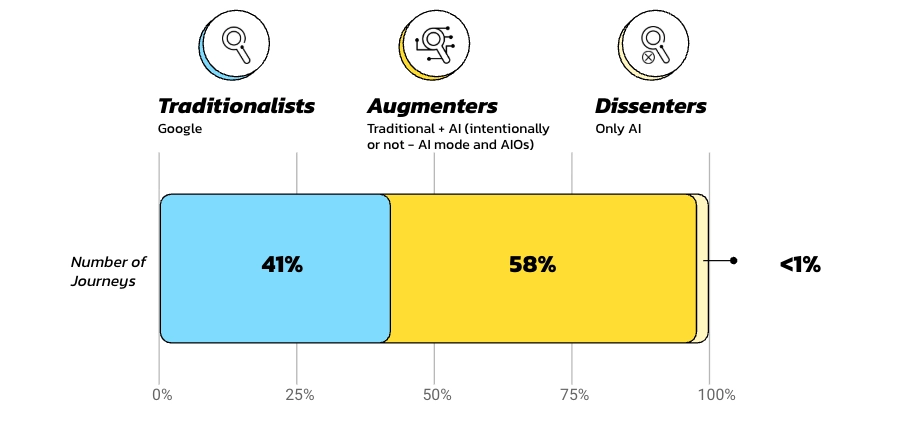
The truly compelling inquiry for businesses is to understand the extent to which their target audience is migrating to AI search platforms and how this trend might offset declining organic traffic from traditional search engines. Predictive analysis for the next 12-24 months is crucial. Preliminary research suggests that approximately 30% of UK consumers already utilize AI for product research. While a significant portion of remaining searchers still rely on platforms like Google and Amazon, with only a minority exclusively using AI, the prevalence of AI Overviews on Google SERPs (estimated at 40% of all results) means a substantial segment of searchers are exposed to AI-driven content. This exposure is projected to increase, with estimates suggesting 80% of searchers could be interacting with AI results within a year. This growing AI integration underscores the critical need for businesses to adapt their SEO strategies.

Embracing Answer Engine Optimization (AEO) and Generative Engine Optimization (GEO)
In parallel with the evolution of traditional SEO, new terminology has emerged to address the optimization of content for AI-driven search experiences. Terms like AEO (Answer Engine Optimization) and GEO (Generative Engine Optimization) are gaining traction, referring to the practice of ensuring content appears within AI-generated answers. While these concepts are relatively new, they are rapidly becoming central to SEO strategies.
A review of new business briefs over the past three years, coinciding with the advent of AI search following the launch of ChatGPT, reveals a dramatic shift. Twelve months ago, fewer than 50% of requests explicitly mentioned AI search as a required service. Today, virtually every SEO RFP includes these as core requirements, or inquiries focus solely on AI SEO, GEO, and AEO retainers. Existing clients are also actively engaged in developing and testing AI search strategies.
Conductor’s survey of over 250 enterprise CMOs and digital leaders at the beginning of 2026 revealed that 94% of enterprises planned to increase their AEO/GEO investment that year. Crucially, those who had already invested reported measurable business impact, including a finding that visitors arriving from LLM-generated responses convert at approximately twice the rate of standard organic visitors, albeit in a third of the sessions, suggesting a smaller but disproportionately high-quality audience.
While GEO and SEO share similarities, they are diverging at an accelerating pace. The good news for traditional SEO practitioners is that much of current SEO work still benefits AI visibility. Achieving top 10-20 rankings on Google remains important, as AI Overviews often draw heavily from these positions. Furthermore, traditional Google SERPs continue to be a primary research hub for consumers. Content that is authoritative, well-structured, and in-depth serves both traditional SEO and emerging AI search needs. The pitfall for many teams is treating SEO and GEO as entirely separate workstreams with distinct budgets and strategies, rather than recognizing their intertwined yet diverging nature.
The divergence is becoming more pronounced. Data from Ahrefs indicates that the overlap between AI Overviews and Google’s top 10 results has halved in a single year, dropping from 76% in 2025 to 38% currently. Google’s own Gemini product shows only a 15% overlap with Google’s top 10 rankings, and Perplexity’s overlap with Google’s top 20 is a mere 10%. These platforms are not simply mirroring Google’s ranking signals; they are developing their own models for evaluating and presenting answers, leading to distinct optimization requirements.
The practical implication is that strategies effective for Google rankings may not be equally effective for LLM citations, and vice-versa. While the two are not entirely separate yet, the trend is clear. Businesses positioned for success in the coming years will be those that develop the capability to understand and test both traditional ranking factors and AI-specific optimization strategies, rather than assuming a single approach will suffice indefinitely. The current transition phase, where these elements are beginning to diverge significantly, makes it imperative to address these questions with strategic foresight.
The Role of AI in Content Creation: Value Beyond Automation
The rapid advancements in generative AI have fueled a growing inquiry into whether businesses can simply leverage AI to generate all their content. This question is particularly pertinent for companies seeking to scale their content production to dominate search engine results pages (SERPs) globally. While it is technically feasible to use AI to generate vast quantities of content, the critical question is whether this approach is strategically sound and effective.
Google’s official stance is that AI-generated content is not penalized solely based on its origin. Instead, penalties are applied to content that is shallow, generic, mass-produced, and lacks value. The inherent challenge with much AI-generated content, when used without significant human oversight, is that it often falls into these categories. The problem is not the AI itself, but the absence of substance and original insight.

Research by Rankability in 2025 found that while 17% of top 20 search results were AI-generated, these were outliers that utilized AI to produce genuinely useful content, not to churn out low-value articles at scale. Beyond search engine penalties, the audience’s perception is equally critical. Readers can discern generic AI content not through detection tools, but through its inherent lack of distinctiveness. It may be technically correct and well-structured, but it is often forgettable, lacking proprietary information, a unique point of view, or insights not readily available through a simple search.
Companies like Brainlabs have conducted internal experiments to understand the efficacy of AI-driven content. Their Global CMO, Liz Yoselowitz, spearheaded an AI visibility content program utilizing AirOps, with a single Content Engineer managing the entire function. Over three months, this initiative resulted in a 35% increase in AI Share of Voice and a 42% rise in Mention Rate. The success was attributed not to volume, but to a process where every piece of content originated from real client conversations and pain points identified in pitches and discovery calls, with channel experts reviewing and shaping the material before publication. AI handled the production, while humans provided the substance. This symbiotic relationship is the key to effective AI content integration.
This aligns with arguments made by Will Akhurst, Brainlabs’ Chief Data Strategy Officer, regarding generative AI and ad creative performance. Generative AI has largely solved the production bottleneck for ad creative, enabling the creation of endless variations at minimal cost. However, this shifts the core challenge to selection: discerning which creative to test and why. The same principle applies to content. AI removes the production barrier but does not dictate what is worth saying.
The optimal use of AI in content production involves treating it as an exceptionally fast first drafter that requires substantial human expertise. This includes layering in real data, genuine insights, informed opinions, and tangible examples from the business. This combination yields high-quality content efficiently. Conversely, using AI to replace these elements simply results in a proliferation of words without commensurate value. While experimentation is encouraged, and even testing AI-generated copy without human input is a valid, albeit risky, approach, it is essential to understand the severe risks associated with a lack of substance.
Navigating the ROI Conundrum and the Time Factor in SEO
A persistent challenge for many organizations is the perceived difficulty in attributing a clear return on investment (ROI) from SEO efforts. This often stems from a fundamental misunderstanding of how SEO operates and how its value should be measured. Unlike paid search, where a direct line can be drawn from a click to a conversion and its associated cost, SEO exhibits longer lag times, involves multi-touch customer journeys, and generates value that manifests in indirect ways, such as increased brand search volume, reduced cost-per-click (CPC) on branded terms, and assisted conversions. Standard attribution models frequently fail to capture this comprehensive impact.
In an environment where CMOs frequently report insufficient budgets, as indicated by Gartner’s 2025 CMO Spend Survey, there is intense pressure to demonstrate immediate and tangible returns, often leading to attempts to frame SEO as analogous to paid search. However, SEO is fundamentally different. It is an investment in building a sustainable asset, not a temporary rental. While paid search traffic ceases the moment spending stops, SEO investment continues to yield returns from an asset that slowly depreciates.
This reporting challenge can be rectified by shifting the focus from vanity metrics like rankings and traffic to business outcomes. Reporting that links organic performance to revenue, pipeline contribution, and cost per acquisition compared to paid channels provides a more accurate and compelling narrative of SEO’s value.
The rise of AI search further complicates measurement and attribution. The potential for discovery, consideration, and conversion to occur instantaneously within a single AI platform (like Gemini or ChatGPT) raises profound questions about attribution models in a "collapsed" funnel. Furthermore, data access to these micro-interactions within AI conversations is limited, creating what is being termed an "AI dark funnel."
While this presents new challenges, it echoes familiar territory for SEO professionals. Historically, complete keyword-level conversion data from Google has never been fully accessible, necessitating reliance on correlation analysis, incrementality testing, and other methods to prove impact. The new AI-driven environment demands an evolution of these approaches. The variability in AI responses requires more granular tracking of prompts, and the prevalence of zero-click searches necessitates innovative methods to connect impressions with on-site actions, potentially through new experimental methodologies like holdout tests with AI crawlers.
The question of "Why does SEO take so long?" is often framed by a misunderstanding of SEO as a short-term tactic rather than a long-term asset-building strategy. For a site with limited authority, significant improvements in competitive categories typically require six to twelve months to translate into revenue. This lag is frustrating, especially when compared to the rapid deployment of paid campaigns. However, the longevity of a well-crafted piece of content that earns links and ranks highly can drive traffic for years, a stark contrast to paid traffic, which requires continuous expenditure. The time investment in SEO is directly proportional to its potential for enduring value and superior long-term ROI.
It’s important to note that not all SEO activities are slow-moving. Technical fixes can yield near-immediate results, and "quick wins" on existing content – pages that already rank but could perform better – can deliver returns within weeks. A well-prioritized SEO program balances these rapid gains with longer-term strategic investments, using the former to build credibility and support for the latter. The perception of SEO being "slow" often arises from a lack of early adoption or an inadequately prioritized roadmap. The solution is not to abandon SEO, but to initiate and manage expectations regarding the timeline for seeing its full impact.
Diagnosing Declining Organic Traffic: Beyond SEO Blame
When organic traffic declines, the immediate impulse is often to attribute fault to the SEO team or strategy. However, as highlighted previously, the most common culprit in the current landscape is not necessarily an SEO failure, but the pervasive influence of AI Overviews. These AI-generated summaries at the top of Google SERPs, appearing on approximately 30% of queries in 2025, have significantly reduced click-through rates (CTRs). Some studies indicate CTR reductions around 35%, while others report drops as high as 61%. If rankings remain stable but traffic decreases, AI Overviews are the likely cause, particularly when combined with an increase in longer-tail searches that tend to trigger these AI summaries.
Understanding this distinction is crucial because the response differs significantly. A traffic drop due to a technical issue, penalty, or competitor action requires traditional SEO remediation. Conversely, a decline driven by Google’s direct answering of queries necessitates a strategic repositioning – shifting focus from content optimized solely for click-throughs to content designed to earn citations within AI answers.
Before concluding that SEO is broken, it is prudent to examine conversion tracking. If revenue from organic search has not declined proportionally to traffic, it suggests that the traffic lost was often lower-intent informational traffic. In such scenarios, the channel may be delivering less volume but maintaining its value. Furthermore, by integrating AI search traffic and conversions, the overall picture may prove less alarming than initially perceived.
The Synergistic Role of SEO and Paid Search
The question of why investment is allocated to SEO when paid search offers instant results is becoming less common as the strategic value of organic search becomes more widely understood at the executive level. However, the fundamental principle remains: paid search and SEO are not substitutes; they serve distinct but complementary roles.
Paid search provides visibility only for as long as budget is allocated. The moment spending ceases or costs escalate, that visibility disappears. SEO, on the other hand, aims to build a lasting asset – content that ranks, attracts links, and earns trust over time. The investment horizons and the permanence of the resulting visibility differ significantly.
Gartner’s 2025 CMO Spend Survey indicates that paid search typically receives about 14% of digital marketing budgets, while SEO garners approximately 8%. Sophisticated marketing organizations leverage both channels because they address different stages of the customer journey. Paid search excels at capturing high-intent demand quickly and with precise targeting. Organic search is more effective for building brand authority, engaging potential customers earlier in their decision-making process, and creating a sustainable return on investment that does not require continuous spend.
The inclination to cut SEO investment during budget tightening is understandable but often counterproductive. Reducing SEO investment not only halts progress but also begins to erode existing assets. Content rankings can decay, competitors can gain ground, and technical debt can accumulate. Restarting SEO efforts after a period of reduced investment does not mean picking up where one left off; it often necessitates starting from a weaker baseline. The compounding effect applies to both growth and decline.
The rationale for maintaining both SEO and paid search investment is rooted in long-term strategic advantage. In three years, businesses will likely be grateful for having invested in building owned assets rather than solely relying on rented visibility from platforms whose pricing structures are subject to constant change.
The Pillars of Modern SEO Success
The enduring questions surrounding SEO underscore its complexity, further amplified by the advent of AI search. It is easy to miscalibrate, either treating SEO as a short-term tactic with unrealistic expectations for immediate returns or relegating it to a background function that requires minimal active attention. Neither approach is effective.
Organizations currently achieving the greatest success with SEO share several common characteristics:
- Business Outcome Alignment: They have successfully linked SEO performance to tangible business outcomes, moving beyond mere traffic metrics.
- Quality Over Quantity: Their content investment prioritizes genuine quality and depth over sheer volume.
- AI Visibility Integration: They are actively building for AI visibility alongside traditional ranking strategies, rather than viewing them as competing priorities.
- Consistent Investment: They maintain consistent investment, understanding that SEO builds a durable asset, even when short-term results are difficult to interpret.
These principles are not proprietary secrets but require diligent execution, particularly within large organizations where SEO responsibilities often span content, development, and marketing teams, with no single entity holding complete ownership.
The fact that these questions are being asked signifies a commitment to taking SEO seriously. The critical next step is to ensure that the answers received are honest, specific, and strategically actionable, moving beyond superficial dashboard updates to genuine strategic guidance. The future of SEO is intrinsically linked to the evolving capabilities of AI, and proactive adaptation will be the hallmark of success in this dynamic digital era.