

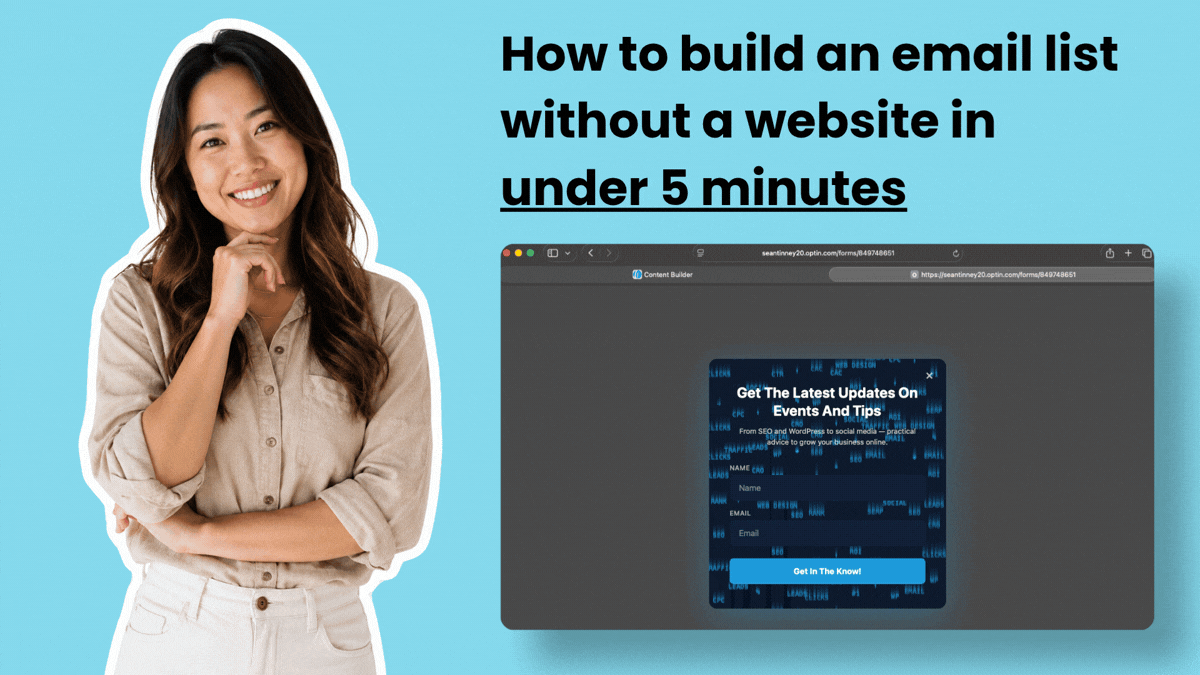
In an increasingly digitized world, the ability to cultivate and directly engage with an audience remains paramount for businesses of all sizes, from nascent startups to established enterprises. At the core of this engagement strategy lies the email list, a powerful asset often likened to a meticulously curated room filled with individuals eager to hear your message. These subscribers, once gathered, represent a highly engaged segment of your potential customer base—many will seek further information, a significant portion will convert into paying customers for products or services, and a dedicated few will evolve into enthusiastic advocates, actively expanding your reach by bringing new individuals into this valuable "room." While the conventional approach to building such a list often involves embedding a signup form directly onto a business’s website, a significant and growing segment of entrepreneurs and content creators operates effectively without a traditional online hub. The pivotal question then arises: how can one effectively gather subscribers and nurture this vital audience without the foundational presence of a website? The answer, increasingly, lies in the strategic deployment of hosted signup forms, a standalone solution that democratizes audience building.
The Evolving Landscape of Digital Presence: Why Websites Aren’t Always the First Step
The digital economy has witnessed an explosion of independent creators, solopreneurs, and micro-businesses. According to recent economic indicators, the number of self-employed individuals and small businesses continues its upward trajectory, with many operating on lean budgets and with limited technical resources. For these entities, the traditional pathway of establishing a comprehensive website—involving domain registration, hosting, design, and ongoing maintenance—can present substantial barriers. The initial investment in time, capital, and technical expertise can be daunting, often delaying or entirely preventing the establishment of a formal online presence.
Historically, a website was the indispensable cornerstone of any serious digital endeavor. It served as the central repository for information, a storefront for e-commerce, and the primary mechanism for lead generation. However, the proliferation of social media platforms, direct messaging applications, and specialized online tools has fragmented the digital landscape, offering alternative avenues for interaction and commerce. While a website still holds immense value for branding and comprehensive content delivery, its absolute necessity as a first step has diminished, particularly for those focused intensely on direct communication and audience building. This shift underscores the need for agile, cost-effective solutions that enable businesses to connect with their audience without the prerequisite of a full-fledged website.
The Enduring Power of the Email List
Despite the ebb and flow of social media trends and the constant evolution of digital communication channels, the email list has consistently proven its unparalleled value. Unlike followers on social media platforms, whose access is governed by ever-changing algorithms and platform policies, email subscribers represent a direct, owned channel of communication. Businesses retain complete control over their list and the messages they send, fostering a more reliable and intimate connection with their audience.
Data consistently supports the superior efficacy of email marketing. Reports from industry leaders often cite email marketing as delivering an average return on investment (ROI) significantly higher than other digital marketing channels, sometimes exceeding 4,200%. This translates to an average of $42 generated for every $1 spent. Furthermore, email boasts higher conversion rates for purchases compared to social media, and its reach is nearly universal, with billions of active email users worldwide. The ability to segment audiences, personalize messages, and automate workflows further enhances email’s strategic importance. It’s not merely a contact list; it’s a direct pipeline to engaged individuals, capable of driving sales, fostering loyalty, and amplifying brand messages through word-of-mouth advocacy.
Defining the Hosted Signup Form: A Standalone Solution
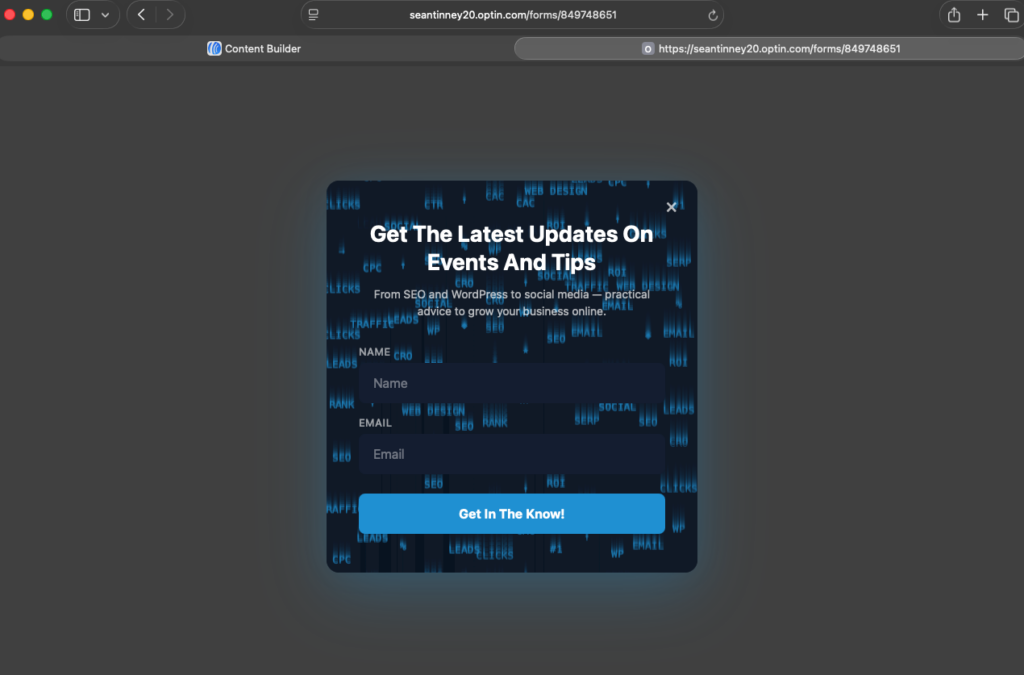
In response to the evolving needs of digital entrepreneurs, the hosted signup form has emerged as a crucial tool. Fundamentally, a hosted signup form is a standalone web page designed with a singular purpose: to collect email addresses and add subscribers to a designated list. Crucially, it "lives on its own," meaning it does not require integration into an existing website. Instead, it is assigned a unique, shareable URL, much like any other web page, but without the surrounding infrastructure of a full site.
This unique URL is the key to its versatility. It can be disseminated across virtually any digital or even physical touchpoint where a link can be shared. Imagine pasting it directly into a Facebook post, including it in an Instagram bio, embedding it within a text message, sharing it on professional networking sites like LinkedIn, or even incorporating it into a QR code printed on a business card or event flyer. Its independence means that the absence of a traditional website is no longer an impediment to building a robust email list. Moreover, even for businesses that do possess a website, a hosted signup form offers distinct advantages. It serves as a vital backup in the event of website downtime, ensuring continuous list growth. Additionally, when the objective is to share a direct, distraction-free link specifically for subscription—devoid of navigation menus, banners, or other site elements—the hosted form is the optimal choice, streamlining the user experience and maximizing conversion potential.
Technological Advancement: The Role of AI in Form Creation
The journey of digital form creation has evolved significantly over the past two decades. Early iterations often required manual coding, demanding a level of technical proficiency beyond the average user. This was followed by the advent of drag-and-drop builders, which simplified the process considerably, allowing users to visually construct forms with pre-designed elements. However, even these tools often required design acumen and decision-making from scratch, potentially slowing down the creation process.
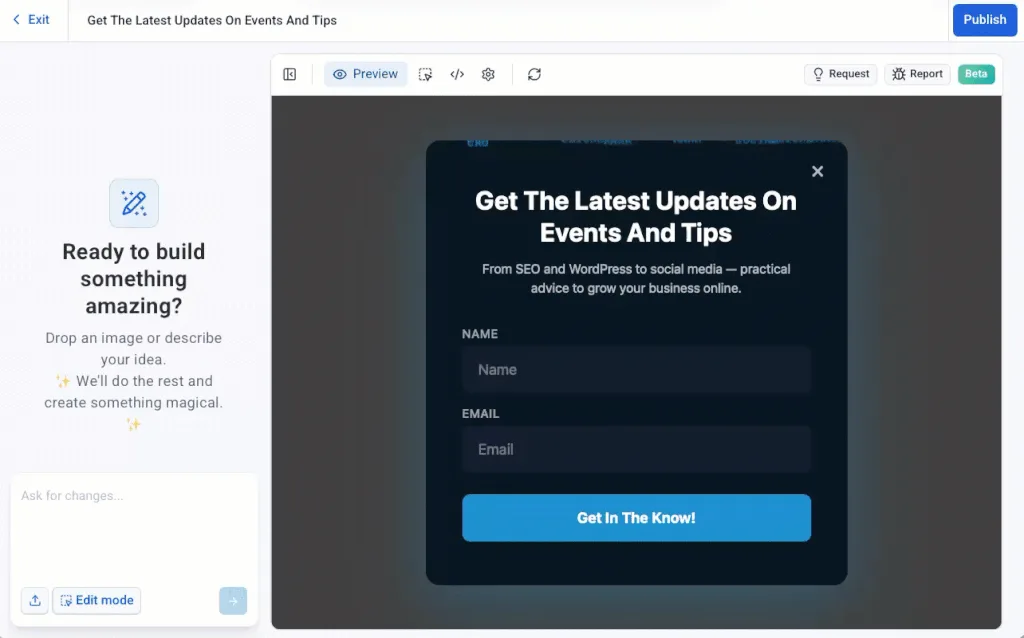
The latest leap in this evolution is the integration of Artificial Intelligence (AI) into form builders. Tools like the AI Signup Form Builder offered by AWeber represent a paradigm shift, significantly accelerating and simplifying the creation process. Launched to address the growing demand for intuitive and efficient digital marketing tools, these AI-powered builders leverage sophisticated algorithms to generate comprehensive, branded signup forms from minimal input. Instead of meticulously selecting fonts, colors, and layouts, users can now describe their business or the purpose of their list through a simple text prompt. The AI then takes this input and, within moments, crafts a complete hosted signup form, including a compelling headline, a clear description, and a design aesthetic that aligns with the described brand identity. This advancement dramatically lowers the technical and creative barriers to entry, empowering even the most non-technical user to quickly establish a professional-looking and highly functional lead-capture mechanism.
A Step-by-Step Guide to Deploying a Hosted Form with AWeber’s AI
Creating a hosted signup form using AI-driven platforms like AWeber’s is designed to be remarkably straightforward, often taking less than five minutes from concept to deployment. This efficiency is critical for entrepreneurs who need to prioritize audience engagement without getting bogged down in technical complexities. The process typically involves four key steps:
-
Step 1: Open the AI Signup Form Builder: Users begin by navigating to the "Pages & Forms" section within their AWeber account and selecting the "AI Signup Forms" option. This initiates the AI-guided creation process, distinguishing it from traditional manual form builders.
-
Step 2: Describe Your Business: This is the core input stage. Users are prompted to provide a concise description of their business, brand, or the specific content they intend to offer their subscribers. For instance, a user might type, "I sell handmade artisanal soaps and candles, focusing on natural ingredients and unique scents. My subscribers will receive updates on new products, special discounts, and DIY home decor tips." The more descriptive and clear the prompt, the more accurately the AI can tailor the form’s content and design.
-
Step 3: Review and Customize: Once the description is provided, the AI rapidly generates a draft of the hosted signup form. This draft typically includes a suggested headline, a descriptive paragraph outlining the benefits of subscribing, and a design template complete with appropriate color schemes and layouts. Users then have the opportunity to review this AI-generated content. While the AI aims for accuracy and brand alignment, human oversight is crucial. Users can easily adjust the headline for greater impact, refine the description for clarity, modify colors to perfectly match their brand guidelines, or tweak the layout to optimize for mobile responsiveness. Alternatively, if the AI’s output is satisfactory, the form can be published as-is, highlighting the speed of the process.
-
Step 4: Grab Your Hosted URL: Upon publishing the form, AWeber automatically generates a unique, dedicated URL for the hosted signup page. This URL is the gateway to your new email list. It is instantly ready to be copied and shared across any digital channel or integrated into offline marketing materials. This instant access to a shareable link empowers businesses to immediately begin collecting subscribers without any further technical setup. The entire workflow, from initial prompt to live, shareable form, is designed for maximum efficiency and accessibility.
Strategic Distribution: Maximizing Reach Without a Website
Possessing a hosted signup form is merely the first step; its true potential is unlocked through strategic distribution. Without a website to naturally house the form, businesses must actively place their unique URL where their target audience already congregates. Effective distribution strategies leverage existing digital and physical touchpoints to attract subscribers.
-
Social Media Integration: Platforms like Facebook, Instagram, X (formerly Twitter), LinkedIn, and TikTok are prime environments for sharing hosted signup forms. Instead of merely dropping a link, businesses should accompany it with a compelling value proposition. For example, a chef might post, "I send one exclusive email every Tuesday featuring a new recipe, a curated grocery list, and behind-the-scenes cooking tips. No spam, just delicious content directly to your inbox. Sign up here: [Your Hosted Form URL]." The link can be placed prominently in a social media bio, pinned as a top post, shared in stories, or included in direct messages. When sharing an AWeber hosted form link, the form’s chosen name often becomes the preview text, making it critical to select a name that is descriptive and enticing, encouraging clicks and subscriptions.
-
Guest Posts and Collaborations: Leveraging the audience of other creators or businesses is an incredibly effective growth strategy. When contributing guest articles to another blog, participating in a joint webinar, or appearing on a podcast, including a link to the hosted signup form is essential. This can be placed within the author’s bio, as a call to action within the content (if appropriate and agreed upon), or verbally shared during an interview. By offering valuable content on another platform and then directing interested individuals to a personal subscription link, businesses can effectively convert new admirers into dedicated subscribers.
-
In-Person Engagement and Offline Channels: The digital world often intersects with the physical, and hosted signup forms are perfectly suited for bridging this gap. QR codes have become an indispensable tool for this purpose. By generating a QR code linked to the hosted signup form’s URL, businesses can integrate their digital subscription mechanism into a wide array of physical materials:
- Business Cards: A quick scan instantly directs potential clients to sign up.
- Flyers and Brochures: Distribute at events, local businesses, or community boards.
- Product Packaging: Ideal for e-commerce or retail products, encouraging repeat engagement.
- Event Signage: At farmer’s markets, trade shows, workshops, or pop-up shops, attendees can subscribe on the spot using their smartphones.
- Physical Storefronts: Even brick-and-mortar stores can use QR codes at the checkout counter or on display stands to capture customer emails for newsletters or promotions.
This seamless integration ensures that every interaction, whether online or offline, becomes an opportunity to expand the email list, all without the necessity of a complex website.
Expert Perspectives and Industry Insights
Digital marketing strategists consistently emphasize the foundational importance of audience ownership. "Relying solely on social media platforms is akin to building your house on rented land," states Dr. Evelyn Reed, a prominent digital marketing consultant. "Algorithms change, platforms can disappear, and your access to your audience is always at the whim of a third party. An email list, powered by a tool like a hosted signup form, gives you direct, unfiltered access to your most valuable asset: your engaged community."
Small business owners echo this sentiment. Maria Sanchez, who runs an online artisan jewelry business entirely through social media and a hosted signup form, shares, "When I started, a website felt too expensive and complicated. The hosted form was a game-changer. I could immediately start building a list, sharing exclusive previews and discounts. My email list is now my most reliable sales channel, far more consistent than any social media post." AWeber, as a leading provider of email marketing solutions, has consistently focused on empowering entrepreneurs. A spokesperson for AWeber notes, "Our mission is to simplify digital marketing, making it accessible to everyone. The AI Signup Form Builder is a direct response to the growing need for rapid, effective audience building, especially for those who are just starting out or prefer a lean digital footprint."
Implications for Business Growth and Digital Accessibility
The widespread availability and ease of use of hosted signup forms, particularly those enhanced by AI, have profound implications for business growth and digital accessibility. Firstly, they democratize digital marketing. Individuals and small businesses who previously lacked the technical skills, financial resources, or time to build and maintain a website can now immediately engage in professional-grade lead generation. This opens doors for a broader spectrum of entrepreneurs to participate effectively in the digital economy.
Secondly, for solopreneurs, artists, consultants, and niche content creators, these forms serve as a perfect minimal viable product (MVP) for audience interaction. They allow for rapid validation of ideas and direct feedback from an interested community without the overhead of a full site. This agility fosters innovation and allows for quicker pivots based on audience engagement. Finally, by providing a robust yet simple tool for audience building, hosted signup forms contribute to bridging the digital divide. They empower individuals in underserved communities or those with limited tech literacy to establish a powerful online presence and foster direct customer relationships, accelerating their journey toward digital self-sufficiency and economic empowerment.
When to Transition: Recognizing the Need for a Full Website
While a hosted signup form and complementary landing pages can provide a strong foundation for audience building and initial sales, there comes a point in many businesses’ trajectories where a full-fledged website becomes a strategic necessity. Recognizing this inflection point is crucial for sustained growth.
The primary indicators for upgrading to a website include:
- Long-Form Content: When a business is ready to publish extensive blog posts, in-depth guides, case studies, or educational resources, a website provides the structured environment for content management and search engine optimization (SEO).
- Direct E-commerce Operations: For businesses looking to sell multiple products or services directly online with complex inventory management, secure payment gateways, and a seamless shopping cart experience, a dedicated e-commerce website is indispensable.
- Multi-Page Information: As a business expands, it typically requires multiple distinct pages for "About Us," "Services," "Testimonials," "Portfolio," and "Contact Us." A website offers the navigational structure and professional presentation for this comprehensive information.
- Brand Authority and Discoverability: While social media and hosted forms offer visibility, a branded website significantly enhances a business’s credibility and authority. It serves as a permanent digital anchor that customers can reliably search for by name, expecting to find a comprehensive and professional online presence.
Until these advanced requirements materialize, hosted signup forms and their associated landing pages function as highly effective digital "home bases." They efficiently collect emails, deliver lead magnets (such as free e-books or exclusive content), and trigger automated email workflows, providing everything necessary to cultivate and engage a genuine audience.
In conclusion, the ability to build and nurture an email list is a cornerstone of digital success, irrespective of whether a business possesses a traditional website. Hosted signup forms, particularly those powered by intelligent AI tools, offer an accessible, efficient, and powerful solution for audience building. They empower entrepreneurs to connect directly with their audience, foster engagement, and drive growth, democratizing digital marketing and ensuring that every message reaches its intended recipient. For those ready to harness this power, the first step is clear: embrace the simplicity and efficacy of a hosted signup form.








