The landscape of artificial intelligence is currently witnessing a pivotal shift from monolithic, general-purpose models toward specialized, modular agents capable of executing complex sub-tasks with higher precision and lower computational overhead. Researchers from the University of Illinois Urbana-Champaign (UIUC), UC Berkeley, and the AI infrastructure firm Chroma have introduced Harness-1, a 20-billion parameter retrieval agent that fundamentally redefines how autonomous systems search for and curate information. By decoupling the cognitive task of generating search queries from the administrative task of managing search state, Harness-1 has demonstrated the ability to outperform frontier models five times its size, including GPT-5.4 and Claude Opus-4.6, in specialized retrieval benchmarks.
The development of Harness-1 addresses a persistent bottleneck in the evolution of Retrieval-Augmented Generation (RAG) and autonomous research agents. Traditional search agents typically operate on an “end-to-end” training philosophy, where a single model is responsible for every facet of the search process. These models must simultaneously generate new queries, track explored paths, deduplicate incoming data, and determine when enough evidence has been gathered to stop. This approach often leads to a phenomenon researchers describe as “semantic entanglement,” where the high-level strategy of searching (e.g., “What terms should I use?”) becomes confused with low-level bookkeeping (e.g., “Have I already read this document?”). As search trajectories expand, the model’s context window becomes cluttered with noise, leading to a plateau in performance and an exponential increase in operational costs.
The Core Innovation: State Management via the Harness
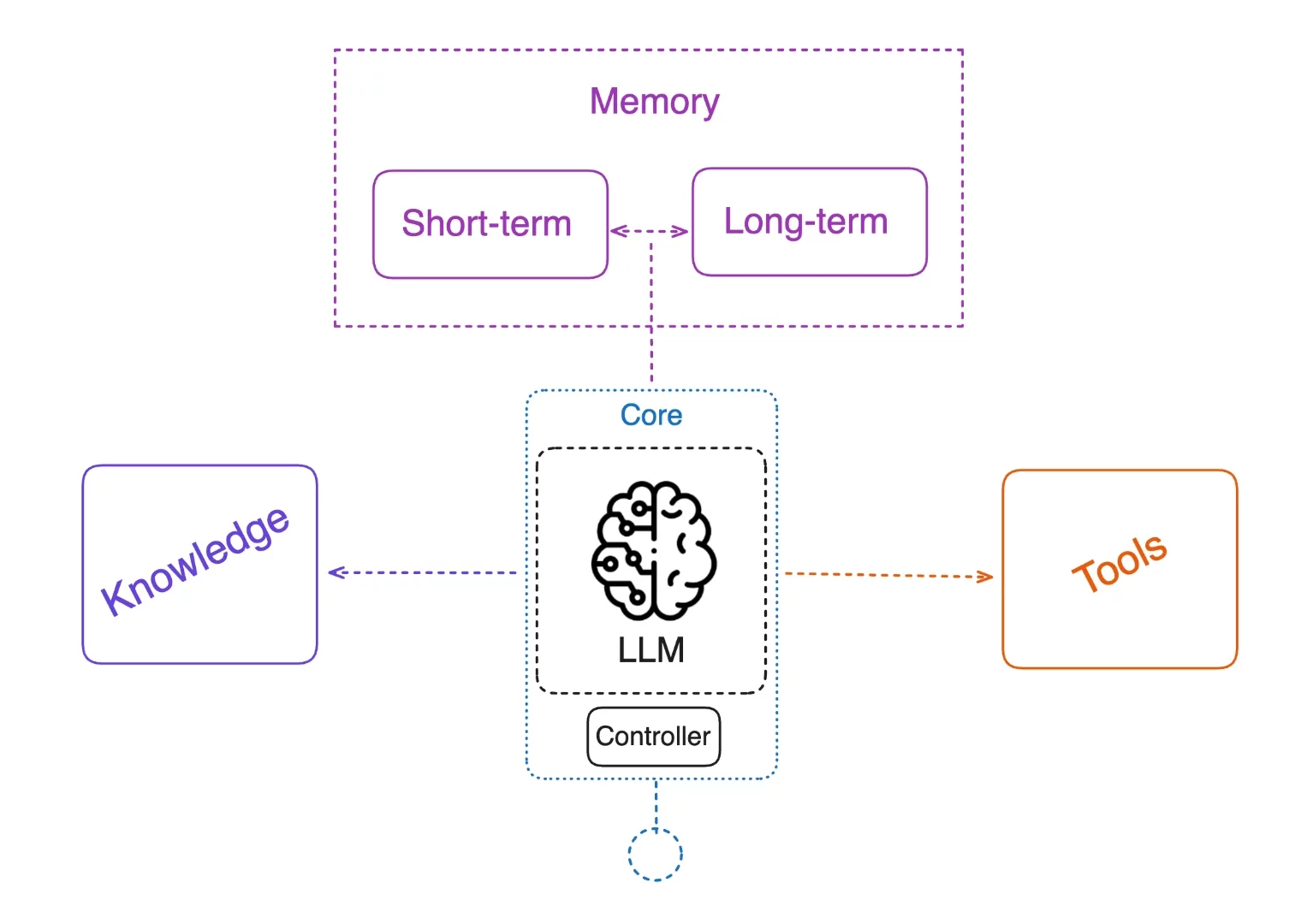
The primary architectural breakthrough of Harness-1 is the introduction of a stateful “harness” that externalizes the model’s memory and administrative functions. Rather than forcing the 20B model to remember every interaction within its own neural weights or a growing text transcript, the harness operates as a state machine. It maintains four persistent structures throughout a search episode: a refined context, a curated dataset of relevant documents, a search progress tracker, and a sophisticated evidence graph.
The evidence graph serves as the system’s “memory bank.” It utilizes a regex-based extractor to scan retrieved data for entities such as proper nouns, dates, and specific years. When the system identifies “bridge documents”—files that contain two or more entities frequently found together—it automatically flags them as high-priority targets. Conversely, “singletons” or isolated entities are marked as potential leads for follow-up searches. By offloading this organizational labor to the harness, the 20B model can focus entirely on “signal processing,” ensuring that every token it processes contributes directly to the search strategy rather than mere maintenance.
To further ensure efficiency, the system employs a two-phase compression pipeline. When raw data is retrieved, it first undergoes ranking via Sentence-BM25, which selects the top four sentences from each document chunk. Subsequently, a two-level deduplication process removes redundant information based on chunk IDs and content fingerprints. The retrieval agent never interacts with raw, unrefined data; it only sees high-density, pre-processed signals, which significantly preserves its context window for long-duration research tasks.
Overcoming the “Cold Start” Training Barrier
One of the most significant hurdles in training retrieval agents is the “Cold Start” problem. In the early stages of Reinforcement Learning (RL), a policy often lacks a baseline for what constitutes a “good” curated dataset. This leads to erratic behavior where the agent either includes every document it finds or rejects everything, resulting in stagnant learning cycles.
The Harness-1 team resolved this through a technique called “warm-start seeding.” During the initial phase of a search, the harness automatically populates the curated dataset with the top eight reranked results based on a preliminary fairness rating. This shifts the model’s primary objective from “creation from scratch” to “refinement.” By tasking the model with improving an existing set—elevating high-quality documents and discarding weaker ones—the researchers observed a marked increase in training stability. This suggests that for autonomous agents, learning to edit is a more efficient path to mastery than learning to build in a vacuum.
The Training Pipeline: From Supervision to Reinforcement
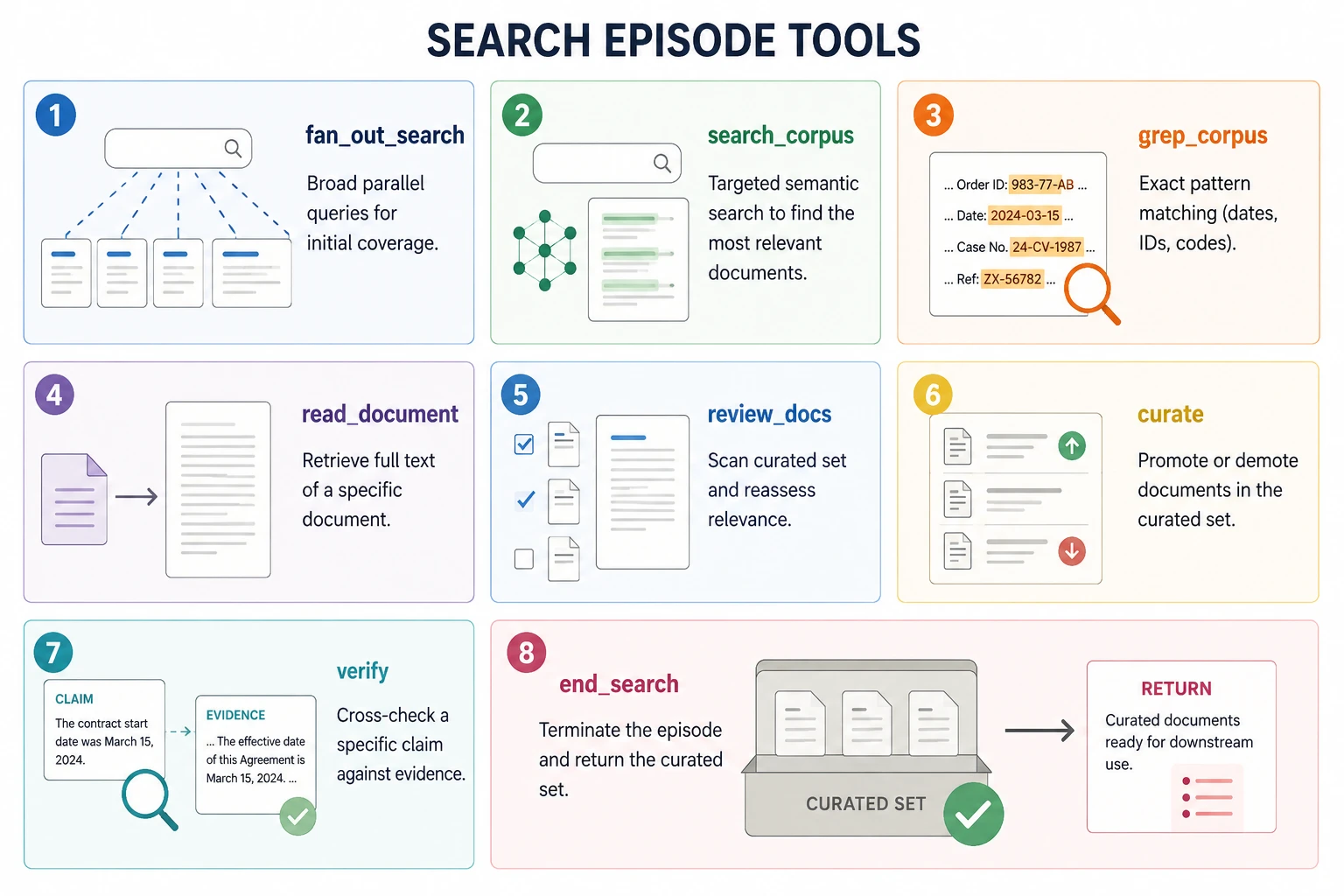
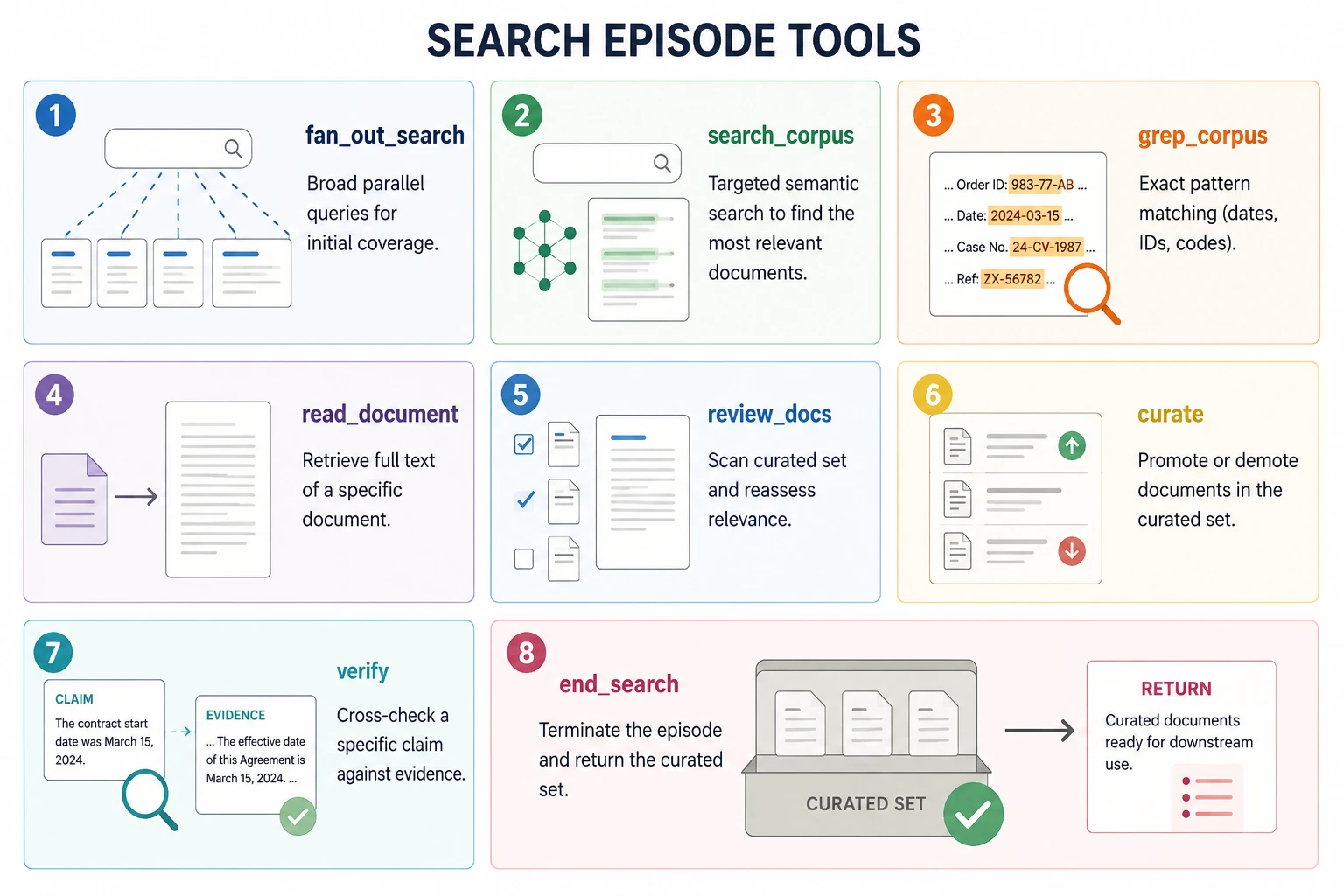
The production of Harness-1 followed a rigorous two-stage training regimen. The first stage, Supervised Fine-Tuning (SFT), utilized a “teacher” model—GPT-5.4—running within the harness environment. The teacher model processed a diverse array of queries, generating thousands of search trajectories. After filtering for quality, 899 high-performance episodes were selected to train the 20B base model (gpt-oss-20b) via Low-Rank Adaptation (LoRA). This stage was critical for teaching the model how to interface with the harness’s eight-tool set, which includes functions like search_corpus, grep_corpus, and verify.
The second stage involved Reinforcement Learning using an on-policy CISPO (Constrained Iterative Soft Policy Optimization) framework. The reward function was designed to be “terminal-only,” meaning the model was rewarded based on the final quality of its curated dataset rather than intermediate steps. To prevent the agent from falling into repetitive loops—a common failure mode where agents search for the same terms in slightly different ways—the researchers implemented a “diversity bonus.”
This bonus incentivized the agent to utilize a variety of tools and explore distinct semantic paths. Data indicated that without the diversity bonus, the agent achieved a curated recall score of 0.53. With the bonus, the agent learned to cross-reference documents using read_document and verify, pushing the recall score to 0.60 during the RL phase and eventually higher in final testing.
Benchmark Analysis: Outperforming the Giants
The efficacy of the Harness-1 approach was validated across eight distinct benchmarks, ranging from SEC financial filings and patent law to multi-hop question-answering on Wikipedia. The core metric, “Curated Recall,” measures the percentage of truly relevant documents that make it into the agent’s final 30-document output set.
| Model | Size | Curated Recall | Trajectory Recall |
|---|---|---|---|
| Harness-1 | 20B (Open) | 0.730 | 0.807 |
| GPT-5.4 | Frontier (Closed) | 0.709 | 0.752 |
| Claude Opus-4.6 | Frontier (Closed) | 0.764 | 0.794 |
| Tongyi DeepResearch | 30B (Open) | 0.616 | 0.673 |
| Context-1 | 20B (Open) | 0.603 | 0.756 |
| Search-R1 | 32B (Open) | 0.289 | 0.289 |
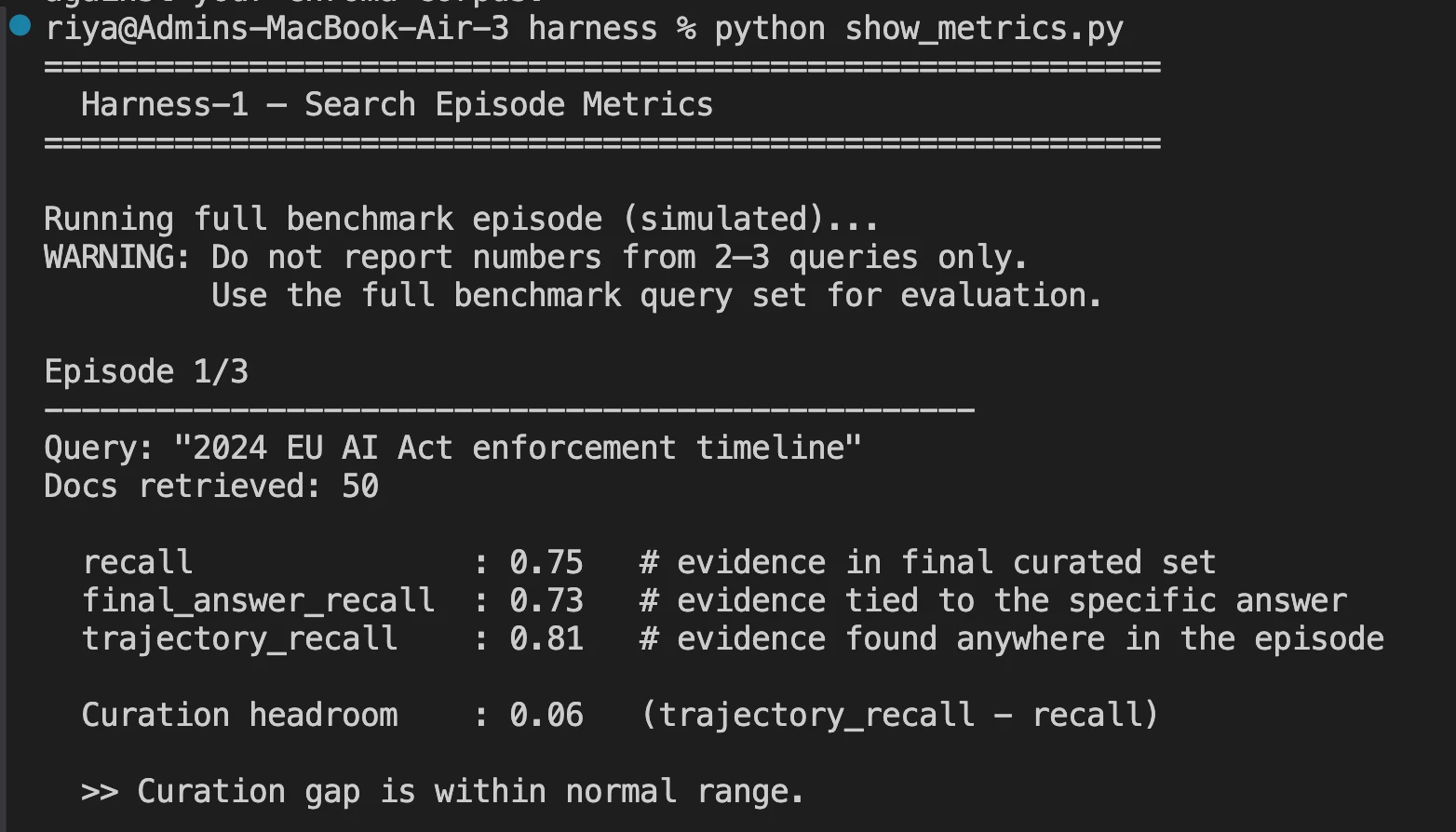
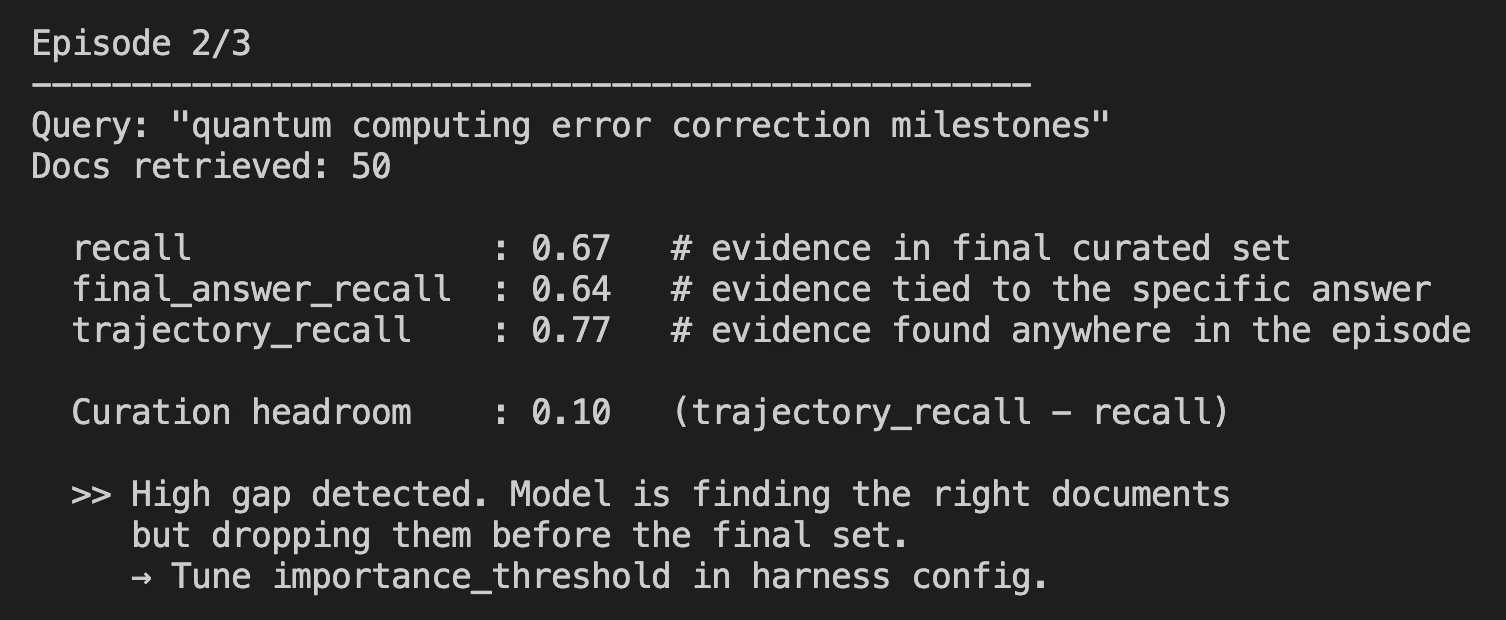
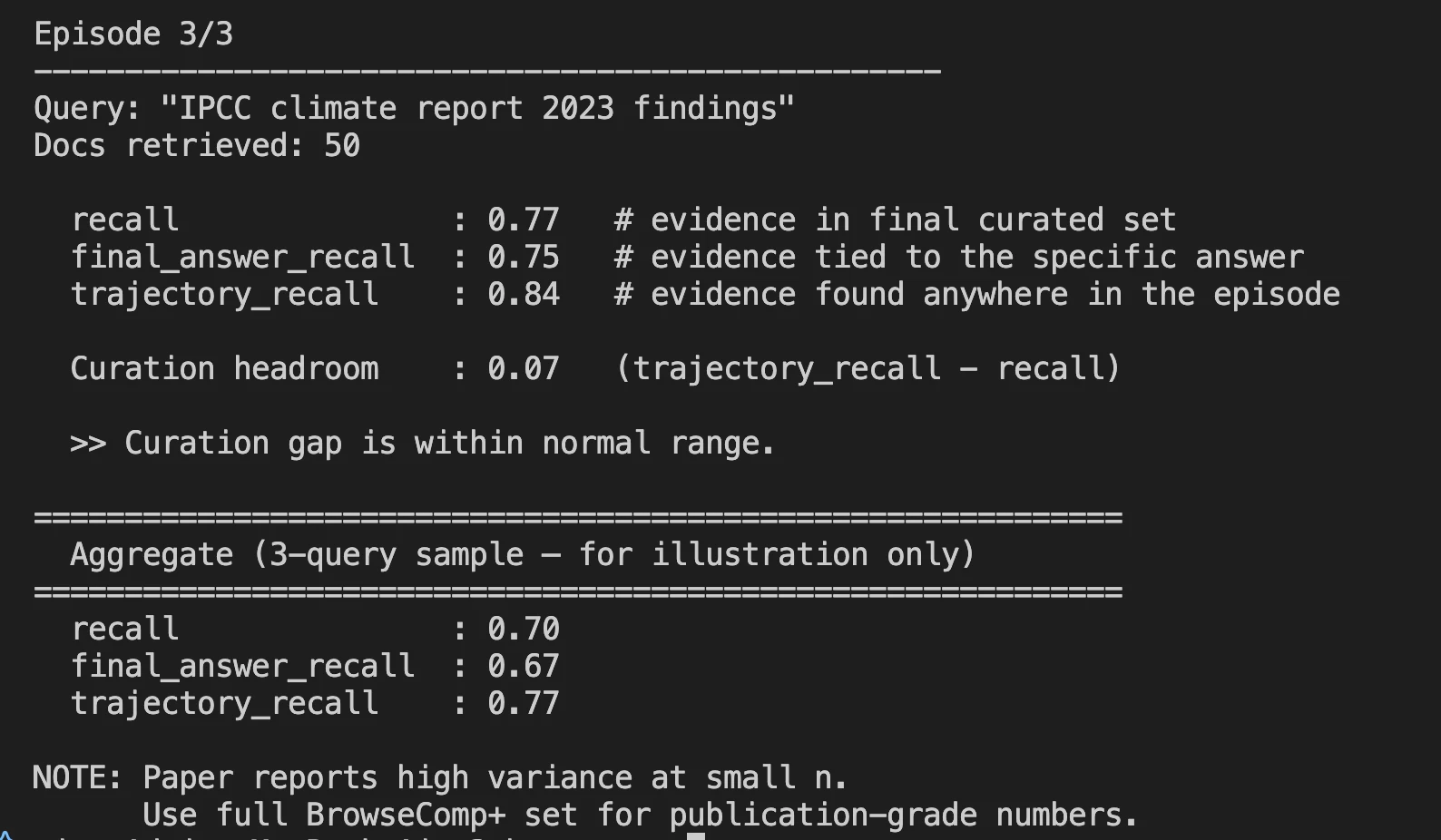
The results were striking. Harness-1, a 20B parameter model, achieved a Curated Recall of 0.730, surpassing the frontier GPT-5.4 model (0.709). While Claude Opus-4.6 maintained a slight lead at 0.764, the performance-to-size ratio of Harness-1 suggests that modular architecture can compensate for the raw “intelligence” provided by massive parameter counts. Furthermore, Harness-1 significantly outperformed other open-weights models like Tongyi DeepResearch and Search-R1, the latter of which struggled with state management, trailing at 0.289.
Industry Implications and the Future of Modular AI
The success of Harness-1 provides a compelling counter-argument to the prevailing industry belief that “bigger is always better.” By specializing a smaller model and providing it with a robust external “nervous system” (the harness), developers can achieve frontier-level performance at a fraction of the inference cost. This has immediate implications for enterprise RAG pipelines, where cost-efficiency and data privacy are paramount.
However, the researchers noted certain limitations. Harness-1 is strictly a retrieval sub-agent; it does not synthesize answers or write summaries. In a production environment, its output would need to be fed into a secondary reasoning model to generate a final response. Additionally, while the model showed impressive generalization across domains, the bulk of its RL training was conducted on financial documents. The challenge of scaling trajectory collection—currently dependent on expensive teacher models like GPT-5.4—remains an open question for the community.
Despite these challenges, the release of the Harness-1 weights and its accompanying harness code marks a significant milestone for open-source AI. It demonstrates that the path to more capable autonomous agents may not lie in increasing the size of the “brain,” but in improving the tools and structures that the brain uses to interact with the world. As AI development continues to move toward agentic workflows, the “harness” model provides a blueprint for building systems that are not only more powerful but also easier to reason about, debug, and deploy at scale.