The landscape of social media is in perpetual motion, with platform algorithms and design aesthetics undergoing frequent revisions. Among the most critical, yet often overlooked, elements of a successful digital strategy is the correct sizing of visual content. Using suboptimal image dimensions can severely hinder reach, diminish engagement, and undermine brand consistency across various networks. This guide provides an in-depth, up-to-date overview of the essential image size requirements for all major social platforms in 2026, offering clarity amidst constant change.
The Dynamic Nature of Social Media Visuals: A Background
![Social media image sizes for all networks [July 2026]](https://blog.hootsuite.com/wp-content/uploads/2023/01/Social-Media-Image-Sizes-2023.png)
Social media platforms are constantly evolving to enhance user experience, adapt to technological advancements, and respond to competitive pressures. This dynamic environment means that optimal image sizes are not static. Factors such as the proliferation of mobile browsing (estimated to account for over 90% of social media access), the increasing emphasis on video content, and algorithmic shifts that favor high-quality, natively optimized visuals all contribute to the fluid nature of these specifications. For brands and content creators, keeping pace is not merely a matter of aesthetics; it directly impacts visibility and performance. Images that are incorrectly sized can appear pixelated, stretched, or awkwardly cropped, leading to a diminished professional appearance and a less engaging user experience. Such content is often penalized by platform algorithms, resulting in lower organic reach and reduced interaction rates. The regular updates, such as those observed in December 2025 and January 2026, underscore the continuous need for vigilance and adaptation in digital marketing strategies.
General Principles for Visual Optimization in 2026
While each platform has its unique requirements, several overarching principles apply across the board. High-resolution images are always preferred, even if they are scaled down by the platform, as they offer better clarity and prevent pixelation. Common aspect ratios such as 1:1 (square), 4:5 (vertical), and 9:16 (full-screen vertical) dominate the visual content landscape, especially for mobile-first platforms. File formats like JPEG and PNG remain standard, with WebP gaining traction for its efficiency. The key is to design with flexibility in mind, often creating core assets that can be easily adapted to various aspect ratios without losing critical visual information.
![Social media image sizes for all networks [July 2026]](https://blog.hootsuite.com/wp-content/uploads/2025/12/Social-media-image-sizes-for-all-networks-December-2025-556x556.png)
Platform-Specific Image Size Guidelines for 2026
Understanding the nuances of each platform is crucial for maximizing visual impact. Below are the specific recommendations for leading social media networks.
Instagram Image Sizes
![Social media image sizes for all networks [July 2026]](https://blog.hootsuite.com/wp-content/uploads/2025/12/Social-media-image-sizes-for-all-networks-January-2026-1-620x465.png)
Instagram, a highly visual platform, supports a variety of orientations but often displays them with a vertical crop on the user’s grid. This necessitates careful planning to ensure both feed visibility and profile grid aesthetics.
- Instagram Profile Picture Size: 320 x 320 pixels (minimum). While displayed at 110 x 110 pixels, uploading at 320 x 320 ensures sharpness. Profile photos are circular, so centralize key elements.
- Instagram Post Sizes:
- Square Post: 1080 x 1080 pixels (1:1 aspect ratio). Ideal for universal compatibility.
- Landscape Post: 1080 x 566 pixels (1.91:1 aspect ratio).
- Vertical Post: 1080 x 1350 pixels (4:5 aspect ratio). This is highly recommended for feed posts as it occupies more screen real estate on mobile devices, potentially increasing engagement.
- Carousel Posts: Use consistent dimensions for all images within a carousel (e.g., all square or all vertical).
- Instagram Stories Image Size: 1080 x 1920 pixels (9:16 aspect ratio). This full-screen vertical format is optimal, ensuring content fills the screen without unsightly borders.
- Instagram Reels Sizes:
- Reel Cover Image: 1080 x 1920 pixels (9:16 aspect ratio).
- In-Feed Reel Display: While the full video is 9:16, it may be cropped to 4:5 in the main feed.
- Instagram Ads Image Sizes:
- Feed Ads (Square): 1080 x 1080 pixels (1:1).
- Feed Ads (Landscape): 1080 x 566 pixels (1.91:1).
- Feed Ads (Vertical): 1080 x 1350 pixels (4:5).
- Instagram Stories Ads: 1440 x 2560 pixels (9:16 aspect ratio).
- Instagram Reels Ads: 1440 x 2560 pixels (9:16 aspect ratio). Instagram recommends leaving 14% of the top, 35% of the bottom, and 6% on each side clear of critical elements to prevent cropping or obstruction.
X (formerly Twitter) Image Sizes
X continues to evolve its multimedia experience, making visual content increasingly important for standing out in the fast-paced feed.
![Social media image sizes for all networks [July 2026]](https://blog.hootsuite.com/wp-content/uploads/2025/04/Social-media-image-sizes-Instagram-620x558.jpg)
- X Profile Photo Size: 400 x 400 pixels (recommended). Displays as a circle.
- X Header Photo Size: 1500 x 500 pixels (recommended). This wide banner is crucial for branding.
- X Images Sizes for In-Stream Photos:
- Single Image Post: 1200 x 675 pixels (16:9 aspect ratio) or 1200 x 1200 pixels (1:1 aspect ratio). Landscape images tend to perform well.
- Multiple Image Post: Up to four images can be shared, often displayed in a collage format. 1200 x 675 pixels or 1200 x 1200 pixels are safe bets.
- X Image Sizes for Ads:
- Single Image Ad: 1200 x 675 pixels (16:9) or 800 x 800 pixels (1:1).
- Website Card Image: 800 x 418 pixels (1.91:1) or 800 x 800 pixels (1:1).
Facebook Image Sizes
Facebook presents a unique challenge due to varying display behaviors across desktop and mobile. Optimizing for both is key.
- Facebook Profile Picture Size: 320 x 320 pixels (recommended). Displays as 170 x 170 on desktop and 128 x 128 on smartphones, circular.
- Image Sizes for Facebook Cover Photo: 851 x 315 pixels (recommended). Displays at 820 x 312 on desktop and 640 x 360 on mobile. Design for a “safe zone” to ensure crucial elements are visible on all devices.
- Facebook Timeline Photo and Post Sizes:
- Square Photo: 1080 x 1080 pixels (1:1 aspect ratio).
- Landscape Photo: 1200 x 630 pixels (1.91:1 aspect ratio).
- Vertical Photo: 1080 x 1350 pixels (4:5 aspect ratio).
- Link Preview Image: 1200 x 628 pixels (1.91:1 aspect ratio).
- Facebook Stories Image Size: 1080 x 1920 pixels (9:16 aspect ratio).
- Image Sizes for Facebook Ads:
- Feed Ads (Square): 1080 x 1080 pixels (1:1).
- Feed Ads (Landscape): 1200 x 628 pixels (1.91:1).
- Feed Ads (Vertical): 1080 x 1350 pixels (4:5).
- Facebook Stories Ads: 1440 x 2560 pixels (9:16 aspect ratio).
- Facebook Reels Ads: 1440 x 2560 pixels (9:16 aspect ratio).
LinkedIn Image Sizes
![Social media image sizes for all networks [July 2026]](https://blog.hootsuite.com/wp-content/uploads/2025/12/Social-media-image-sizes-for-all-networks-January-2026-1-1-620x629.png)
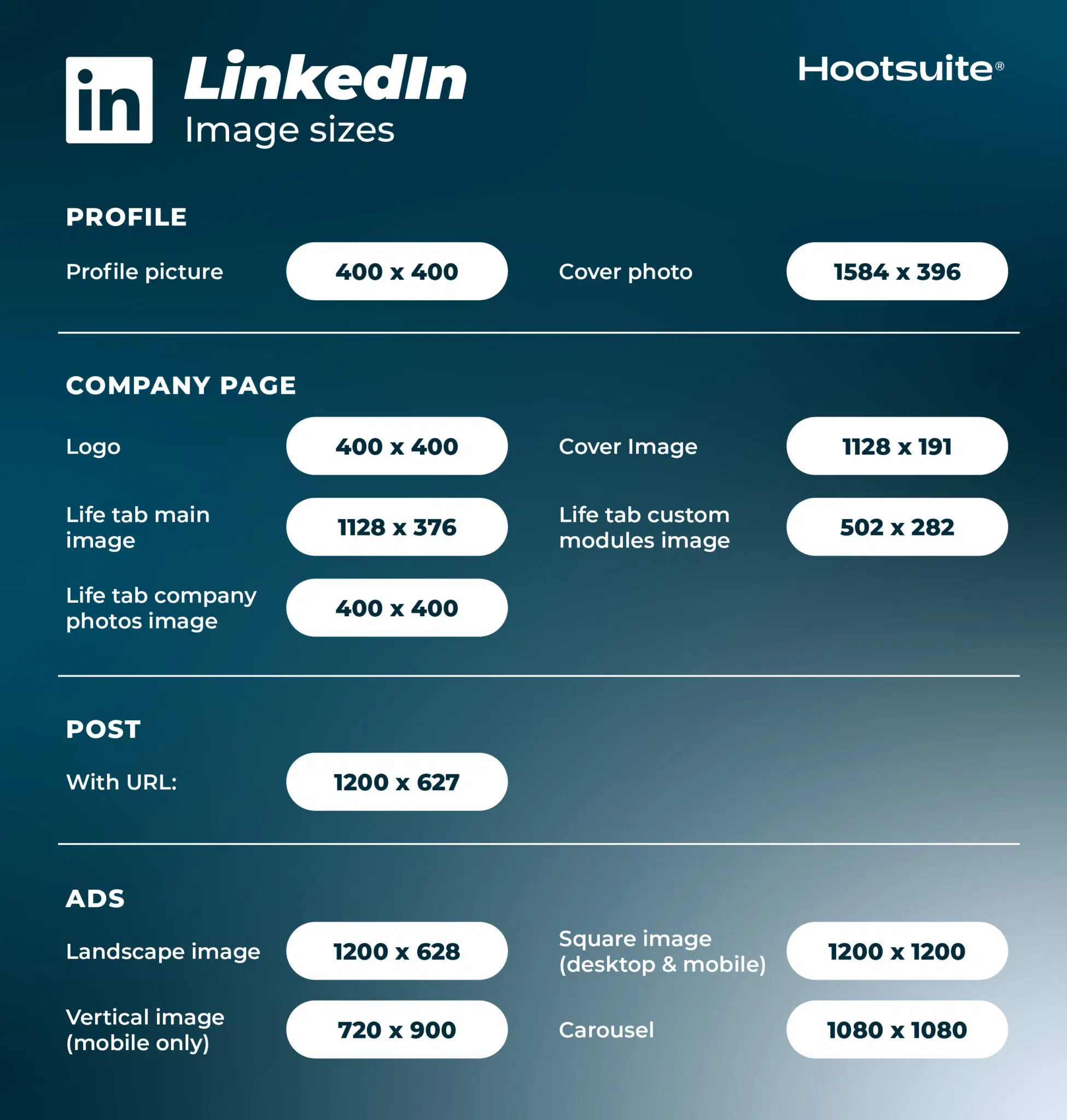
LinkedIn, the professional networking platform, distinguishes between personal profiles and company pages, each with specific visual requirements to maintain a polished, professional brand image.
- LinkedIn Image Sizes for Personal Profiles:
- Profile Picture: 400 x 400 pixels (recommended). Displays as a circle.
- Background Cover Photo: 1584 x 396 pixels (recommended).
- LinkedIn Image Sizes for Company Pages:
- Company Logo: 300 x 300 pixels (recommended).
- Square Logo: 60 x 60 pixels (minimum).
- Company Cover Image: 1128 x 191 pixels (recommended).
- Image Size for LinkedIn Post with URL: 1200 x 627 pixels (1.91:1 aspect ratio). This is optimal for link previews.
- LinkedIn Image Sizes for Ads:
- Sponsored Content Image: 1200 x 627 pixels (1.91:1).
- Carousel Ad Image: 1080 x 1080 pixels (1:1).
Pinterest Image Sizes
Pinterest thrives on visually compelling content, with a strong emphasis on vertical images that are easily discoverable and saveable.
![Social media image sizes for all networks [July 2026]](https://blog.hootsuite.com/wp-content/uploads/2025/12/Social-media-image-sizes-for-all-networks-January-2026-3-620x753.png)
- Pinterest Profile Image Size: 280 x 280 pixels (recommended). Displays as a circle.
- Pinterest Image Size for Profile Cover Photo: 800 x 450 pixels (minimum).
- Pinterest Image Sizes for Pins:
- Standard Pin: 1000 x 1500 pixels (2:3 aspect ratio). This is the ideal and most common size.
- Square Pin: 1000 x 1000 pixels (1:1 aspect ratio).
- Long Pin: 1000 x 2100 pixels (or longer, up to 1:2.1 aspect ratio), but be aware of potential truncation in feeds.
- Pinterest Image Sizes for Collections Pins:
- Main Image: 1000 x 1000 pixels.
- Secondary Images: 1000 x 1000 pixels.
- Pinterest Image Sizes for Ads:
- Standard Ad Pin: 1000 x 1500 pixels (2:3).
- Shopping Ad: 1000 x 1500 pixels (2:3).
- Carousel Ad: 1000 x 1500 pixels (2:3) for each card, or 1000 x 1000 pixels (1:1).
Snapchat Image Sizes
Snapchat, known for its ephemeral content and full-screen vertical experience, demands specific dimensions for maximum impact.
- Snapchat Profile Picture Size: 320 x 320 pixels (recommended + minimum).
- Snapchat Banner Image Size: 375 x 278 pixels (recommended).
- Snapchat Ads Image Size: 1080 x 1920 pixels (9:16 aspect ratio). This ensures the ad fills the screen completely, providing an immersive experience.
YouTube Image Sizes
![Social media image sizes for all networks [July 2026]](https://blog.hootsuite.com/wp-content/uploads/2025/04/Social-media-image-sizes-LinkedIn-620x651.jpg)
As the dominant video platform, YouTube’s image requirements are primarily for branding elements and video thumbnails, which are critical for attracting views.
- YouTube Profile Photo Size: 800 x 800 pixels (recommended). Displays as a circle, so centralize branding.
- YouTube Banner Image Size: 2560 x 1440 pixels (recommended). This large size ensures high quality across various devices (TVs, desktops, mobile). A “safe area” of 1546 x 423 pixels in the center is crucial for text and logos to be visible on all devices.
- YouTube Video Thumbnail Size: 1280 x 720 pixels (recommended). A 16:9 aspect ratio is standard, and thumbnails are vital for click-through rates.
- YouTube Podcast Playlist Thumbnail Size: 1280 x 1280 pixels (recommended).
TikTok Image Sizes
TikTok’s meteoric rise has cemented the 9:16 vertical video format as a standard. Image content, though less common than video, also adheres to these mobile-first principles.
![Social media image sizes for all networks [July 2026]](https://blog.hootsuite.com/wp-content/uploads/2025/04/Social-media-image-sizes-Pinterest-620x517.jpg)
- TikTok Profile Photo Size: 200 x 200 pixels (recommended). Displays as a circle.
- TikTok Video Size: 1080 x 1920 pixels (9:16 aspect ratio). While primarily for video, images used in photo carousels or as video overlays should follow this.
- TikTok Carousel Size: 1080 x 1920 pixels (9:16 aspect ratio) for each image within the carousel.
- TikTok Ads Image Sizes:
- In-Feed Ads: 1080 x 1920 pixels (9:16 aspect ratio).
- Image Ads (Carousel): 1080 x 1920 pixels (9:16 aspect ratio) for each image.
Bluesky Image Sizes
As a newer, decentralized social media platform gaining traction, Bluesky’s image specifications are crucial for early adopters and brands establishing a presence.
- Bluesky Profile Picture Size: 1000 x 1000 pixels (recommended).
- Bluesky Banner Image Size: 3000 x 1000 pixels (recommended).
- Bluesky Image Post Size: Minimum 1000 pixels in height or width, with common aspect ratios like 1:1 or 16:9 being ideal.
Threads Image Sizes
![Social media image sizes for all networks [July 2026]](https://blog.hootsuite.com/wp-content/uploads/2025/04/Social-media-image-sizes-Snapchat-620x325.jpg)
Threads, closely integrated with Instagram, shares many of its visual philosophies, focusing on mobile-optimized content.
- Threads Profile Image Size: 640 x 640 pixels (recommended).
- Threads Post Image Size: 1440 x 1920 pixels (4:5 aspect ratio) is recommended for vertical posts, similar to Instagram. Square images (1440 x 1440) also perform well.
The Critical Importance of Correct Social Media Image Sizing
The diligent application of correct image sizes is paramount for social media marketers. In a competitive digital ecosystem where user attention is fleeting, visual content must be immediately engaging and flawlessly presented.
![Social media image sizes for all networks [July 2026]](https://blog.hootsuite.com/wp-content/uploads/2025/04/Social-media-image-sizes-YouTube-620x321.jpg)
- Enhanced User Experience: Properly sized images load faster and display correctly, preventing frustrating cropping or distortion that deters engagement.
- Optimized Reach and Engagement: Algorithms across platforms increasingly favor high-quality, natively optimized content. Correctly sized visuals are more likely to be prioritized, leading to higher visibility and interaction rates. Industry data suggests that posts with optimized images can see a 30-50% increase in engagement compared to unoptimized content.
- Consistent Brand Representation: Maintaining consistent visual branding across all platforms reinforces brand identity and professionalism. Incorrect sizes can lead to logos being cut off or inconsistent aesthetics, diluting brand recognition.
- Professionalism and Credibility: High-quality, well-formatted visuals convey professionalism and attention to detail, bolstering a brand’s credibility in the eyes of its audience.
- Cost-Efficiency: While seemingly a minor detail, repeated adjustments, re-uploads, or the need to re-engage designers due to incorrect sizing can incur significant time and resource costs over time.
Strategies for Enterprises: Standardizing Visuals Across Diverse Platforms
For large organizations managing a presence across numerous social media channels, standardizing image sizes presents a significant challenge. Effective strategies include:
- Developing Comprehensive Brand Guidelines: Establishing clear guidelines for image aspect ratios, safe zones, and minimum resolutions ensures consistency.
- Creating Adaptable Templates: Designing master templates in graphic design tools that can be easily resized or adjusted for different platforms.
- Leveraging Social Media Management Tools: Employing advanced social media management platforms that offer integrated image editing and optimization features. These tools often feature up-to-date dimensions for each network, streamlining the content creation workflow.
For instance, platforms like Perch by Hootsuite exemplify this solution. When building posts within Perch, users can upload and refine images using integrated editing tools, such as Canva. Crucially, the platform offers network-optimized size templates directly within the post creation workflow. This process typically involves:
![Social media image sizes for all networks [July 2026]](https://blog.hootsuite.com/wp-content/uploads/2025/12/Social-media-image-sizes-for-all-networks-January-2026-5-1-620x507.png)
- Selecting the desired social network for the post.
- Choosing an image and clicking the “Edit image” option.
- Selecting a network-optimized size from a drop-down menu (e.g., “Instagram feed post,” “Facebook Story,” “X in-stream image”).
- Editing the image within the integrated tool, knowing it’s already set to the correct dimensions.
- Clicking “Add to post” to automatically upload the perfectly sized image to the draft.
This functionality dramatically reduces the manual effort and potential for error, ensuring brand assets are always presented optimally.
The Path Forward
In the fast-paced world of social media, image size guidelines are not static. Small but significant updates occur annually as platforms refine their interfaces and algorithms. Teams must remain agile, continuously monitoring platform announcements and leveraging advanced tools to stay current. By proactively addressing image optimization, brands can ensure their visual content consistently resonates with audiences, drives engagement, and strengthens their digital presence in 2026 and beyond.