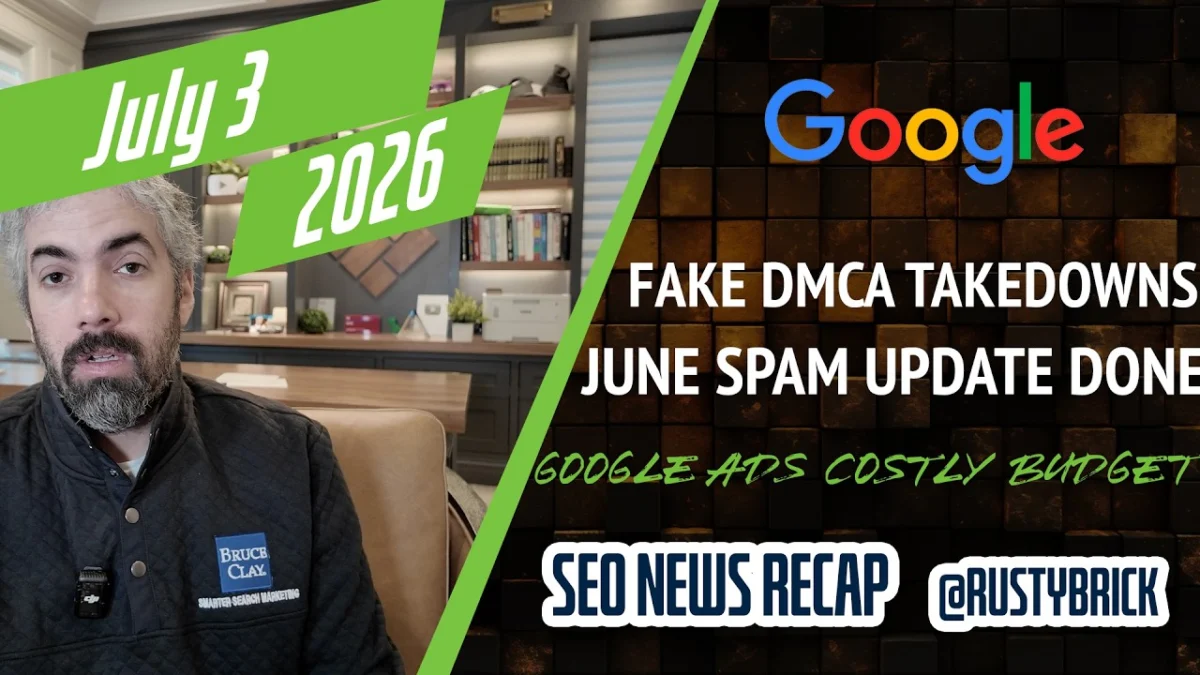
The digital search landscape experienced a tumultuous week, marked by the culmination of Google’s June 2026 spam update, escalating concerns over fraudulent DMCA takedown requests disrupting Google Search results, and significant, potentially costly, adjustments to Google Ads bidding strategies. These developments, alongside a flurry of updates across Google’s AI Overviews, Search Console, AdSense, and Microsoft Advertising, underscored a period of intense evolution and inherent challenges within the search engine optimization (SEO) and online advertising sectors. The industry also paused to mourn the passing of Bruce Clay, widely recognized as the “Father of SEO,” marking a profound loss for the community he helped build.
Google Concludes June 2026 Spam Update: A Continuous Battle Against Low-Quality Content
Google’s June 2026 spam update officially concluded last Friday afternoon, drawing to a close a period of heightened volatility for many website owners and SEO professionals. These updates are a cornerstone of Google’s ongoing commitment to improving search quality by aggressively targeting and demoting content deemed manipulative, low-value, or outright spammy. The objective is always to ensure that users are presented with the most relevant, helpful, and authoritative information available, free from deceptive tactics designed to game search rankings.
Historically, Google implements several core updates and numerous smaller updates throughout the year, with spam updates specifically focusing on violations of its spam policies. These policies cover a wide array of problematic practices, including cloaking, doorway pages, scraped content, auto-generated content designed purely for search engines, and various forms of link spam. The completion of an update typically signals that the algorithmic changes have fully propagated across Google’s data centers, and the dust begins to settle on ranking fluctuations. For webmasters, this period is critical for analyzing the impact on their sites, identifying potential areas of non-compliance, and adjusting their content and SEO strategies to align with Google’s evolving guidelines for quality and helpfulness. The constant iteration of these updates highlights the perpetual cat-and-mouse game between search engine algorithms and those attempting to exploit them, reinforcing the imperative for a genuine focus on user value and ethical SEO practices. While Google rarely provides explicit details on the specific targets of a spam update, the consistent message from the search giant remains: prioritize creating high-quality, original, and helpful content that truly serves user intent.
The Alarming Rise of Fraudulent DMCA Takedowns Impairing Google Search
A more troubling development this week centered on the increasing prevalence of fraudulent Digital Millennium Copyright Act (DMCA) takedown requests, which are reportedly “breaking Google Search” and causing significant disruption. The DMCA, a 1998 United States copyright law, was enacted to protect copyrighted material in the digital age, providing a mechanism for copyright holders to request the removal of infringing content from online platforms like Google. However, the system’s reliance on good-faith reporting has made it vulnerable to abuse.
In recent times, nefarious actors have weaponized DMCA requests, submitting false claims to remove legitimate competitors’ content, suppress critical reviews, or even censor information. These fraudulent requests can lead to the removal of perfectly valid, non-infringing pages from Google’s index, effectively de-listing them from search results. The phrase “breaking Google Search” suggests that the scale and sophistication of these attacks are overwhelming Google’s ability to accurately differentiate between legitimate and fraudulent claims, leading to a significant degradation of search quality and trustworthiness. For users, this means potentially missing out on authoritative sources and being exposed to a manipulated information landscape. For affected website owners, the process of counter-notifying and reinstating their content can be lengthy, resource-intensive, and damaging to their online visibility and revenue. The SEO community has expressed widespread frustration, noting that despite the clear evidence of abuse, a comprehensive and effective solution from Google has yet to materialize. The challenge for Google lies in balancing the swift enforcement of copyright law with the need to protect legitimate publishers from malicious actors, requiring a robust verification system that currently appears insufficient against sophisticated fraud campaigns. The broader implication is a threat to the open internet, where content can be removed not due to genuine infringement but through competitive malice or censorship attempts.
Google Ads Budget Changes: A Potentially Costly Shift for Advertisers
Advertisers using Google Ads are facing significant changes to bidding strategies, particularly for campaigns “limited by budget,” which are projected to incur substantial additional costs. Google Ads campaigns are often constrained by a daily budget, meaning that once the allocated spend is reached, ads stop running for the remainder of the day. Traditionally, when a campaign hit its budget limit, Google’s algorithms would optimize spend to deliver the best possible results within that constraint, sometimes slowing down delivery or prioritizing clicks early in the day.
The announced changes suggest a more aggressive approach to budget management, where Google’s system might push to spend the entire budget more rapidly or reallocate spend in ways that could lead to higher average Cost Per Click (CPC) or Cost Per Acquisition (CPA) for campaigns operating under budget limitations. This shift places increased pressure on advertisers, particularly small and medium-sized businesses, to either significantly increase their daily budgets to avoid being perpetually “limited” or to meticulously re-evaluate their bidding strategies. The implication is a potential increase in advertising expenditure for the same or even reduced performance, necessitating a thorough re-assessment of campaign settings and ROI targets. Google’s motivation, while not explicitly stated in this context, can be inferred as a push to maximize ad spend and revenue, potentially by encouraging advertisers to remove budget constraints or invest more heavily to maintain competitive visibility. Advertisers will need to monitor their campaign performance closely and adapt quickly to these changes to mitigate adverse financial impacts.
Advancements in Google AI Overviews and Search Console Enhancements
Google’s evolving integration of Artificial Intelligence (AI) continued to be a focal point, with several updates reported for AI Overviews (AIOs) and associated tools. Notably, Google AI Mode has once again improved how it handles links for recipes, likely enhancing the user experience by making it easier for users to navigate from AI-generated summaries to the original source content on publisher websites. This refinement suggests an ongoing effort by Google to integrate AI summaries while still valuing and driving traffic to content creators, especially in structured data-rich categories like recipes.
Furthermore, Google has begun incorporating “Top Stories” carousels directly into AI Overviews. This integration signifies Google’s strategy to blend real-time, breaking news content from authoritative sources with AI-generated summaries, providing users with a comprehensive and timely overview of current events within the AIO interface. This move also offers a renewed opportunity for news publishers to gain visibility within the prominently displayed AI Overviews.
A more technical detail emerged regarding Google AI Overviews’ ability to show markdown files in snippets. While perhaps not a game-changer for most content creators, this indicates Google’s increasing sophistication in parsing and understanding diverse content formats. The note that it “doesn’t mean anything” in a broader strategic sense suggests it’s a technical capability rather than a signal for webmasters to start publishing content in markdown for SEO purposes.
On the data front, Google Search Console experienced its first reported data logging issue specifically affecting the AI performance report, particularly concerning Discover traffic. For webmasters, Search Console is an indispensable tool for monitoring site performance, identifying indexing issues, and understanding how users interact with their content. Any data logging issues can impede accurate analysis and optimization efforts, causing frustration within the SEO community that relies heavily on this data for strategic decision-making.
In a broader context, Liz Reid, Head of Google Search, was interviewed this week, reaffirming Google’s long-standing commitment to ensuring “great content” shines in Google Search. This statement serves as a reiteration of Google’s core philosophy, especially pertinent in an era where AI-generated content and issues like fraudulent DMCA requests challenge the integrity of search results. Her emphasis underscores the importance of creating original, high-quality, and helpful content as the most robust long-term SEO strategy.
Shifting Landscape for AMP and New Features in Google Trends and Business Profiles
The Accelerated Mobile Pages (AMP) project, initially championed by Google to deliver fast mobile experiences, saw another evolution. Google is now directing searchers to publisher-hosted AMP pages rather than its own cached versions. This change represents a significant shift, granting publishers more direct control over their AMP content and potentially reducing Google’s role as an intermediary host. For publishers, this means more direct analytics and a clearer branding experience, aligning with broader industry trends towards greater publisher autonomy.
Google also rolled out new features to its popular data analysis tool, Google Trends, which now includes trending data with a previous period comparison. This enhancement provides users with more robust analytical capabilities, allowing for easier identification of growth patterns, seasonality, and comparative performance of search queries over time. This is invaluable for marketers, content strategists, and researchers looking to understand public interest and tailor their strategies accordingly.
However, a concerning issue for local businesses arose with reports of Google reviews disappearing from Google Business Profiles (GBPs). Reviews are a critical component of local SEO, influencing both ranking factors and consumer trust. The inexplicable disappearance of legitimate reviews can severely impact a business’s online reputation and local visibility, prompting calls for Google to address these technical glitches or policy enforcement issues promptly.
Google Ads and AdSense: AI Integration and Campaign Management Enhancements
The integration of AI continued its aggressive expansion into Google’s advertising platforms. Google Ads is reportedly testing AI-generated summaries under ad descriptions, a feature that could automate and personalize ad copy further, potentially improving relevance and click-through rates. For advertisers, this could mean reduced manual effort in crafting ad copy, though it also raises questions about maintaining brand voice and ensuring accuracy.
Similarly, Google AdSense, the platform for publishers to monetize their content with ads, is enhancing its “ad intents” feature with AI-generated content powered by Gemini. This advancement aims to create more contextually relevant and engaging ads based on the content of the publisher’s page, potentially leading to higher revenue for publishers and better user experience.
For advertisers managing complex campaigns, Google Ads introduced channel diagnostics for Performance Max (PMax) campaigns. PMax, Google’s automated campaign type, optimizes across all Google advertising channels. The new diagnostics will offer greater transparency into where budget is being spent and how different channels are performing, providing advertisers with much-needed insights to optimize these automated campaigns more effectively.
Further minor but impactful updates included Google Ads testing “open in a new window” icons, a small user interface change that can improve clarity for users. Importantly, Google has also addressed a common pain point by allowing users to unsubscribe from “pesky and annoying” Google Ad Expert consult booking emails, a welcome improvement for advertiser experience.
Microsoft’s Search and Advertising Developments and Industry Farewells
Microsoft Advertising, a key competitor in the online advertising space, announced new beta experiment types for its equivalent of Performance Max campaigns. This signals Microsoft’s continued investment in its ad platform, offering advertisers more tools for testing and optimizing automated campaigns and fostering competition in the digital advertising market.
The search industry also marked two significant departures and losses this week. Fabrice Canel, a long-standing and influential figure at Microsoft, announced his retirement after nearly 30 years with the company. Canel was known for his contributions to Bing Webmaster Tools and his deep insights into search technology, making his departure a notable moment for Microsoft’s search division.
Most profoundly, the industry deeply mourned the passing of Bruce Clay, widely celebrated as the “Father of SEO.” Bruce Clay’s pioneering work in search engine optimization dates back to 1996, establishing foundational principles and practices that continue to influence the field. His company, Bruce Clay Inc., has been a stalwart in SEO consulting and training, and his educational initiatives, particularly through seotraining.com, have nurtured generations of SEO professionals. Clay’s legacy extends to innovative tools like Prewriter.ai, designed to empower writers with better and more efficient content creation. His contributions to the methodology, ethics, and education of SEO have left an indelible mark, and his loss is keenly felt across the global search marketing community.
In summary, the past week underscored the dynamic and often challenging nature of the digital ecosystem, with critical updates from Google impacting search quality and advertising costs, alongside ongoing innovations and significant industry transitions. The focus on content quality, ethical practices, and adaptive strategies remains paramount for all participants in this rapidly evolving digital landscape.