The landscape of online search and brand discovery is undergoing a seismic transformation, driven by the rapid proliferation and integration of artificial intelligence. Brands that fail to adapt their visibility strategies to this new AI-centric paradigm face a critical risk of obsolescence, extending far beyond mere traffic loss to encompass diminished trust, eroded credibility, and a disconnect from a growing customer base that increasingly relies on AI for recommendations. Traditional Search Engine Optimization (SEO), while still foundational, is proving insufficient in this evolving environment, as even a top ranking on Google may not guarantee presence in the AI-generated responses that users now frequently consult.
This profound shift necessitates a new approach to brand visibility, one that Yoast, a long-standing leader in SEO, aims to address with its innovative tool, Yoast AI Brand Insights. This platform offers a comprehensive view of how a brand is perceived and presented within leading AI models such as Claude, ChatGPT, Perplexity, and Google Gemini. It tracks crucial metrics like sentiment, benchmarks performance against competitors, and provides actionable insights not only to enhance AI visibility but also to meticulously control a brand’s narrative in the age of conversational AI.
The Paradigm Shift in Search: From Links to Curated Answers
For decades, search engines primarily functioned as sophisticated indexing systems, presenting users with a list of links ranked by relevance and authority. Users would then navigate these links to find their answers. However, the advent of Large Language Models (LLMs) has fundamentally altered this interaction. Tools like ChatGPT, Gemini, Claude, and Perplexity don’t just list sources; they synthesize information from vast datasets, including web content, to generate coherent, context-aware, and often personalized answers. This evolution means that users are no longer just searching for information; they are conversing with an AI to receive direct advice, recommendations, and curated summaries.
Reports from Statista indicate that the global AI market is projected to reach over $1.8 trillion by 2030, with a significant portion dedicated to marketing and customer experience. This surge is reflected in consumer behavior, with a recent survey by HubSpot revealing that over 60% of users now trust AI-generated product recommendations as much as, if not more than, traditional search results for specific queries. The blurring lines between traditional search and AI-generated answers signify a new era where a brand’s presence in an LLM’s response is paramount for establishing authority and driving consumer action.
A Brief Chronology of AI in Search
The integration of AI into search began subtly years ago with semantic search capabilities, personalized results, and the rise of featured snippets. However, the public launch of ChatGPT in late 2022 marked a distinct and rapid acceleration. This event, followed swiftly by Google’s Bard (now Gemini) and Microsoft’s Copilot, introduced conversational AI interfaces directly to the masses. These tools moved beyond merely indexing pages to actively synthesizing information and generating direct answers, fundamentally altering the user’s interaction with online information. Google’s ongoing development of its Search Generative Experience (SGE) further solidifies this trend, indicating that AI-powered summaries and recommendations will become an integral part of mainstream search. This rapid evolution has compressed years of traditional SEO development into a matter of months for AI-driven visibility.
The New Imperative: AI Visibility as a Brand Cornerstone
The shift towards AI-driven answers creates a significant “blind spot” for many brands. Traditional SEO tools, while excellent at tracking keyword rankings and organic traffic, are not designed to monitor how a brand appears within an LLM’s response. This oversight can lead to competitors dominating AI recommendations without a brand’s awareness, or worse, negative sentiment about a brand being amplified by AI systems without immediate detection.
Dr. Anya Sharma, a leading AI ethics researcher at the University of Oxford, stated, “The shift towards AI-curated answers presents both immense opportunities and significant challenges for brand integrity. Companies must proactively manage their digital footprint across all data sources AI might leverage, not just their owned properties. Trust, in the AI era, is built on consistent, positive, and authoritative representation wherever the AI draws its information.”
Controlling the narrative of a brand in this environment is more complex than ever. LLMs piece together a brand’s story from a multitude of scattered sources—reviews, news articles, social media, forums, and a brand’s own content. Inconsistent messaging across these platforms can lead to mixed signals, resulting in an AI presenting a confused or even contradictory brand image. The imperative, therefore, is to cultivate a unified, consistent message, reinforced across every digital touchpoint. This includes repeating core brand messages, such as “affordable luxury” or “sustainable innovation,” across all content, from website copy to press releases and social media posts. Promptly addressing misinformation and inaccurate reviews online is also crucial, preventing AI from amplifying outdated or incorrect details. Furthermore, supporting a brand’s most important attributes with structured data, such as awards or unique selling points, provides LLMs with a clear, authoritative framework to reference.
Introducing Yoast AI Brand Insights: Illuminating the AI Black Box
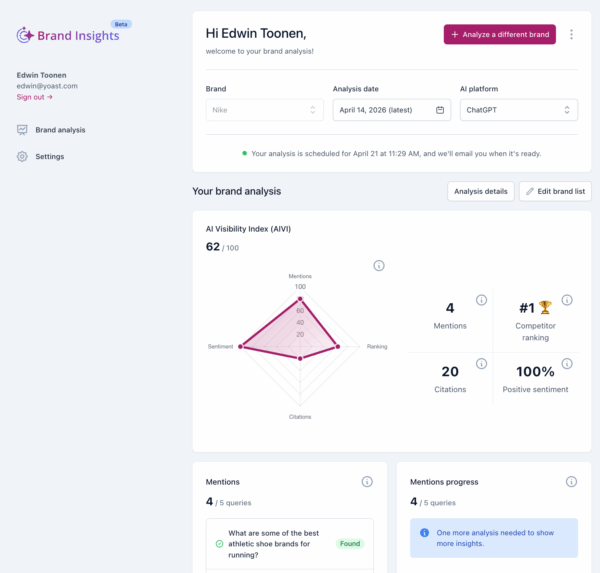
Recognizing this urgent need, Yoast developed AI Brand Insights to provide clarity and actionable intelligence in the opaque world of AI-generated recommendations. This tool offers a clear, actionable view of a brand’s visibility, sentiment, and credibility across major AI platforms, transforming the “AI black box” into measurable data.
Yoast AI Brand Insights is designed to help businesses:
- Understand how their brand appears in AI-generated answers.
- Track sentiment and benchmark against competitors.
- Identify opportunities to improve brand presence and narrative control.
- Gain insights into the specific queries for which their brand is mentioned.
The core of its functionality lies in a suite of specialized metrics tailored for the AI era:
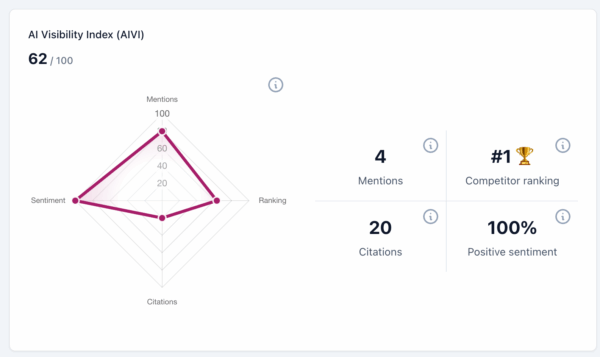
1. AI Visibility Index (AIVI): This proprietary score, ranging from 0 to 100, quantifies a brand’s overall visibility across AI platforms like ChatGPT, Perplexity, Gemini, and Claude for tracked terms. A higher AIVI indicates greater prominence. A low score signals a need to focus on increasing mentions, citations, and cultivating positive sentiment around the brand. Building relevance through authoritative content and securing features on relevant sites are critical strategies for AIVI improvement.
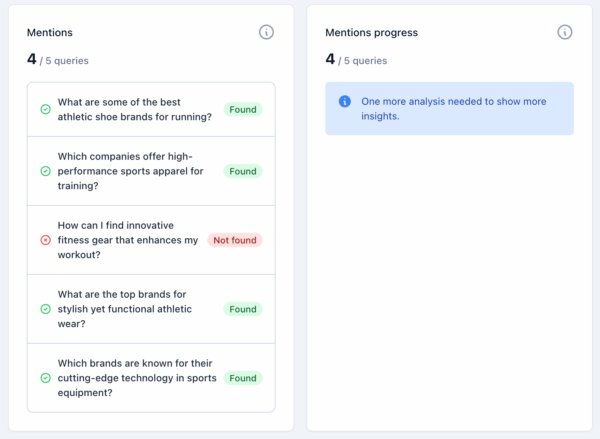
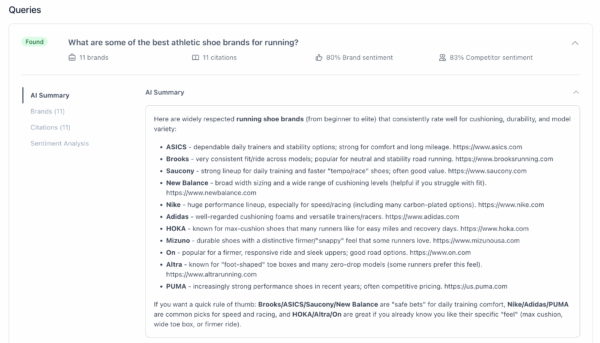
2. Mentions: This metric tracks the specific queries for which a brand appears in AI responses. For instance, if a user asks, “What is the best low-cost CRM system for small businesses?” and a brand is included in the AI’s answer, that constitutes a mention. More mentions directly correlate with greater visibility. The tool helps identify high-intent, AI-generated brand queries, prompting content creation that thoroughly answers these questions, including blog posts, FAQ pages, and content optimized for conversational queries like “Is brand X good for startups?”
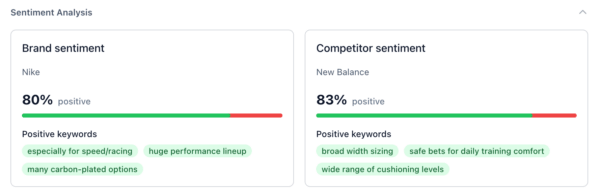
3. Sentiment: Sentiment analysis measures the percentage of positive versus negative language associated with a brand in AI responses. Positive descriptors like “innovative” or “reliable” contribute to positive sentiment, while terms such as “overpriced” or “unreliable” indicate negative sentiment. Positive sentiment is vital for building trust, while negative sentiment can deter potential customers. Active management of online reputation, including responding to reviews, publishing testimonials, and incorporating positive brand messaging into marketing, is essential. The weekly scans provided by Yoast AI Brand Insights help monitor sentiment shifts, enabling early detection and resolution of issues stemming from PR crises or product recalls.
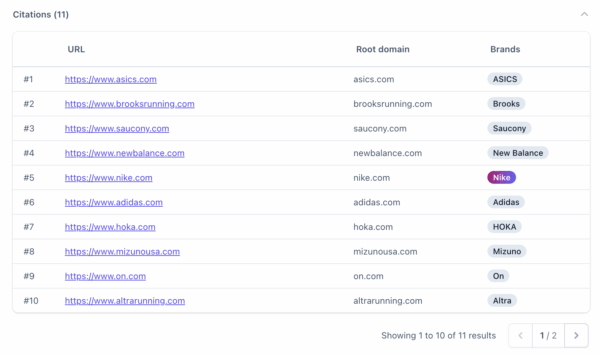
4. Citations: Citations refer to the explicit sources that AI platforms reference when generating an answer. While a brand might not receive a direct citation (e.g., Gemini citing a New York Times article about credit cards, not American Express directly), appearing within these cited, high-authority sources significantly increases the likelihood of the brand being surfaced in AI responses over time. Citations from reputable sources like industry publications and news sites enhance credibility, making it crucial for brands to strategically seek inclusion in such content. This involves identifying publications whose audience aligns with the brand’s target market and producing content that these publications would naturally want to link to or feature.
Actionable Strategies for Enhancing AI Brand Visibility
Leveraging the insights provided by Yoast AI Brand Insights, brands can implement several key strategies to improve their standing in the AI-driven search ecosystem:
-
Optimize for AI Citations: AI platforms prioritize validated responses. To increase the likelihood of your brand being included and trusted, aim for features on relevant, authoritative sites. This includes guest posting on industry blogs, securing mentions in “Top 10 tools” roundup articles, and encouraging customer reviews on platforms like Capterra, G2, and Trustpilot. These tactics build a strong network of trusted proof points for AI. Furthermore, structure your content with clear, hierarchical headings, bullet points, FAQs, and schema markup (e.g., FAQ schema, how-to schema) to make it easily digestible and understandable for AI crawlers. Regularly updating old content ensures that AI platforms retrieve fresh, current information.
-
Monitor and Improve Brand Sentiment: AI mentions not only convey information but also shape perception. Negative sentiment can severely damage trustworthiness and reduce conversions. When AI associates a brand with negative terms (e.g., “slow customer service”), immediate and public responses are necessary. This might involve resolving complaints on review sites or publishing case studies and testimonials to highlight positive experiences. Conversely, identified positive terms (e.g., “trusted,” “innovative”) should be amplified in marketing, website content, and social media. Consistent monitoring of weekly sentiment shifts allows for proactive issue resolution.
-
Benchmark Against Competitors: AI visibility is a competitive arena. Understanding how a brand stacks up against rivals is crucial. Yoast’s Competitor ranking tab reveals which brands dominate AI answers. Analyzing their content strategies—whether they produce more case studies, actively engage on review sites, or target specific conversational queries—provides invaluable competitive intelligence. This allows brands to refine their messaging to highlight unique selling propositions and stand out. Regular weekly competitor analyses, viewed through the tool’s historical data, enable tracking of AI visibility improvements and refinement of strategies.
-
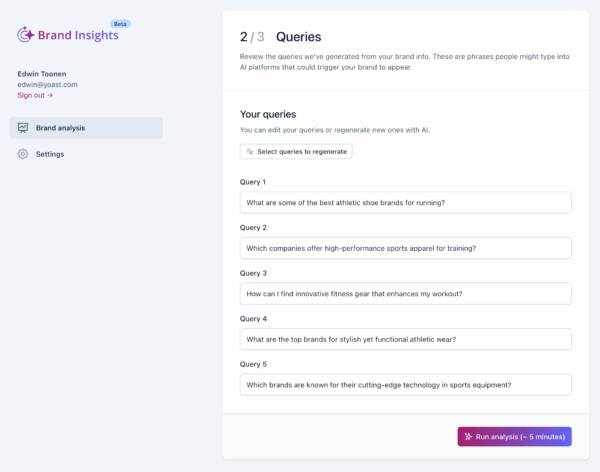
Answer Brand-Specific Questions: AI excels at answering precise questions like “Is brand X reliable?” or “What’s the best tool to do Y?” Brands missing from these answers are losing potential customers. Yoast AI Brand Insights suggests relevant queries, such as “Is [Your Brand] good for small businesses?” Deep research into industry-specific questions using tools like AnswerThePublic, AlsoAsked, or Google’s “People Also Ask” section can inform content creation. Publishing blog posts, FAQs, or landing pages that directly address these brand-related queries, supported by appropriate structured data, helps AI platforms understand and surface the brand’s expertise.
-
Track Progress with the AI Visibility Index: Improving AI visibility is an ongoing process. The AIVI provides a straightforward metric for tracking progress. After an initial scan establishes a baseline, weekly scans allow for continuous monitoring of improvements in areas like citations and sentiment. If the score plateaus or declines, a reassessment of strategies, including experimenting with original research and earned media, becomes necessary.
Influencing LLMs: The Deep Dive
For brands to be mentioned by LLMs, they must become part of the data patterns these models rely on. This requires a multi-faceted approach:
-
Publish Authoritative Content: LLMs prioritize well-structured, factually accurate content that offers unique insights or expert opinions. Brands should invest in original research, publishing surveys, case studies, or industry reports with proprietary data. Using an inverted pyramid structure—most important information first, followed by supporting details—makes content easily digestible for AI. Optimizing for facts, including statistics, expert quotes, and actionable insights, further strengthens authority. HubSpot’s success with “Ultimate Guides” exemplifies this, positioning them as an authority frequently cited by AI.
-
Get Mentioned on Relevant, High-Authority Sites: LLMs trust reputable sources. Consistent mentions on industry publications, news sites, and respected review platforms are crucial. The key here is relevance; a mention in a niche industry journal is often more valuable than one in a general-interest magazine. Strategies include pitching stories to journalists, getting featured in “Top X Tools” lists, encouraging customer reviews on platforms like G2 and Trustpilot, and contributing guest posts to authoritative blogs.
-
Optimize for Conversational Queries: LLMs are designed for natural language. Content should be optimized for conversational queries, moving beyond short keywords to address longer, more specific questions like “best project management tool for remote teams in 2026.” Using question-focused headings and directly answering questions in introductory paragraphs improves AI comprehension. Creating comprehensive FAQ pages with schema markup is also highly effective.
-
Build Citations: A strong network of high-quality, relevant citations reinforces a brand’s authority. This involves creating linkable assets like ultimate guides or industry templates that others will reference. Proactive outreach to bloggers, journalists, and influencers to reference your content, as well as securing features in press releases, podcasts, and webinars, all contribute to this network.
-
Ensure AI Crawlers Can Reach Your Site: Fundamental technical SEO remains critical. A fast, mobile-friendly site with clean URLs, optimized meta tags, descriptions, and alt text for images ensures discoverability. Schema markup helps AI crawlers understand content context. Yoast SEO offers an
llms.txtfile feature, a proposed standard to guide AI crawlers to important content, while ensuringrobots.txtfiles aren’t inadvertently blocking them. -
Be Active in Online Communities: LLMs are trained on and retrieve information from forums, social media, and community platforms like Reddit, Quora, and LinkedIn. Active and valuable participation in these communities—providing non-promotional answers, sharing insights, and linking to relevant content—can significantly enhance a brand’s visibility within AI responses.
The Future of Brand Visibility is AI-Driven

The shift towards AI-driven search is not a fleeting trend but a fundamental evolution in how consumers discover and engage with brands. Brands that recognize and adapt to this early will secure a significant competitive advantage. The era where a strong Google ranking alone guaranteed visibility is fading; the new battleground is within the AI-generated answer.
Yoast AI Brand Insights equips businesses with the necessary tools to navigate this new landscape, transforming complex AI interactions into actionable data. By understanding how AI perceives a brand, tracking its sentiment, benchmarking against competitors, and implementing targeted strategies for content optimization and narrative control, businesses can ensure their brand remains prominent, trusted, and recommended in the AI-powered future of search.
The time to act is now. Identifying weak spots, implementing these AI-centric strategies, and continuously monitoring progress are no longer optional but essential for any brand aiming to thrive in the AI-driven economy.