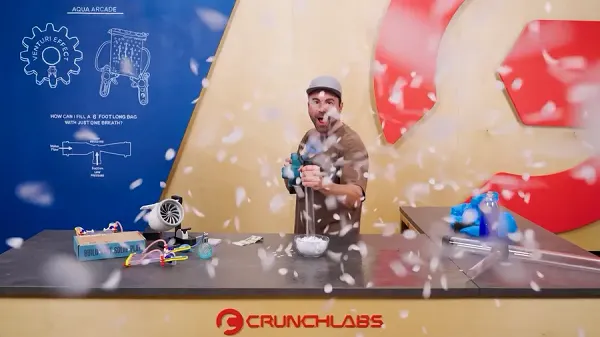
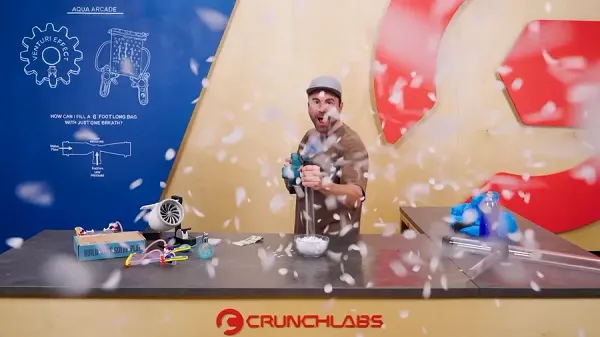
YouTube has officially announced a significant new partnership with former NASA engineer and celebrated science content creator Mark Rober, launching the “Class CrunchLabs” program. This ambitious initiative is designed to deliver a comprehensive suite of educational videos centered around Rober’s signature hands-on experiments, aiming to power more engaging and accessible science content for students in U.S. classrooms. Targeting grades three through eight, the program is a collaborative effort with Rober’s CrunchLabs and the National Science Teaching Association (NSTA), promising a robust curriculum that blends entertainment with foundational scientific principles. The educational content, featuring hundreds of practical challenges and over a thousand high-quality, engaging videos, will be made available in 34 languages on a dedicated Class CrunchLabs YouTube channel, with a planned rollout for the back-to-school season of 2026. This strategic move underscores YouTube’s ongoing commitment to establishing itself as a premier destination for high-quality academic resources, leveraging its vast global reach and dynamic creator ecosystem to foster a new generation of STEM enthusiasts.
The Genesis of Class CrunchLabs: A Confluence of STEM Advocacy and Digital Reach
The partnership between YouTube and Mark Rober’s CrunchLabs represents a natural evolution in digital education, bringing together a platform with unparalleled global reach and a creator renowned for making complex scientific concepts accessible and exciting. Mark Rober, a mechanical engineer by training, began his career at NASA’s Jet Propulsion Laboratory (JPL), where he contributed to the development of hardware for the Mars Curiosity rover. His transition to YouTube marked a paradigm shift in science communication, as he quickly garnered millions of subscribers through elaborate, often large-scale experiments that explain engineering principles, physics, and problem-solving in an entertaining and visually compelling manner. Rober’s content is characterized by its high production value, meticulous scientific rigor, and an infectious enthusiasm for discovery, making phenomena like fluid dynamics, projectile motion, and basic electronics understandable to a broad audience. His existing venture, CrunchLabs, offers subscription boxes that provide hands-on STEM projects, directly aligning with the pedagogical philosophy of experiential learning.
This new collaboration, Class CrunchLabs, is specifically tailored for the classroom environment, ensuring that Rober’s engaging approach can be systematically integrated into formal education. YouTube’s explicit goal is to transform its platform into a “go-to resource” for academic content, and partnering with a figure like Rober, whose educational impact is already well-established, significantly bolsters this ambition. The initiative is not merely a collection of videos but a structured curriculum developed in conjunction with the NSTA, the largest organization in the world committed to promoting excellence and innovation in science teaching and learning. This collaboration ensures that the content is not only engaging but also pedagogically sound, aligning with established educational standards and best practices for science instruction. The inclusion of the NSTA lends significant credibility and academic weight to the Class CrunchLabs program, reassuring educators that the resources are designed to support and enhance their teaching objectives.
Curriculum Details and Pedagogical Approach
The Class CrunchLabs curriculum is meticulously crafted to engage students in grades three through eight, a critical period for developing foundational scientific literacy and fostering an interest in STEM fields. At its core, the program emphasizes hands-on experimentation, mirroring Rober’s own approach to science communication. The curriculum will feature “hundreds of hands-on challenges,” providing students with opportunities to apply scientific principles directly and observe outcomes firsthand. This inquiry-based learning model encourages critical thinking, problem-solving, and collaboration, essential skills for future innovators.
Accompanying these challenges will be “more than 1,000 banger videos.” While the term “banger” might seem informal for an educational context, it reflects the program’s commitment to leveraging the highly engaging, viral-ready format that has made Rober’s YouTube channel so successful. These videos are expected to be high-quality, visually dynamic productions that explain the scientific concepts behind the experiments, guide students through the challenges, and showcase real-world applications of scientific principles. The combination of practical experimentation and compelling video content is designed to cater to diverse learning styles, making science more accessible and enjoyable for a broader spectrum of students.
A significant aspect of the program’s design is its commitment to accessibility. YouTube has confirmed that all video content will be available in 34 languages. This multilingual support is crucial for reaching diverse student populations across the United States, including those for whom English is not their primary language, thereby promoting educational equity. The dedicated Class CrunchLabs YouTube channel will serve as the central hub for all these resources, making it easy for teachers to navigate, select, and integrate content into their lesson plans. The planned launch for the back-to-school season of 2026 suggests a thorough development and testing phase, ensuring that the curriculum is robust, well-integrated, and ready for widespread adoption by educators.
YouTube’s Broader Educational Initiatives and Data-Driven Strategy
The Class CrunchLabs partnership is not an isolated effort but a key component of YouTube’s expansive and evolving educational strategy. The platform has long recognized its potential as a global learning resource, with millions of users turning to YouTube daily for instructional content on a vast array of subjects, from academic lessons to practical skills. This recognition has led to a series of strategic investments and program developments aimed at formalizing and enhancing its educational offerings.
One notable initiative is the “Player for Education” program, announced in June 2025 (as per the original source, indicating a future rollout). This program is designed to provide creators with new monetization opportunities for educational content and to offer an ad-free viewing experience for educational videos within an institutional context. This separation of educational content from general entertainment, potentially within controlled learning environments, addresses common concerns about distractions and inappropriate content, making YouTube a more palatable resource for schools and parents.
Further underscoring its commitment, YouTube published a comprehensive report in October of the previous year that highlighted the platform’s significant role in learning. The data revealed compelling statistics: 74% of students actively use YouTube videos to learn new things, while an impressive 84% of teachers incorporate YouTube content into their lessons. These figures demonstrate YouTube’s undeniable penetration into both formal and informal learning environments, validating its strategic pivot towards more structured educational programming. The report also likely detailed how YouTube’s visual and auditory medium, combined with its vast library of user-generated and professionally produced content, caters to diverse learning styles and makes complex subjects more digestible.
Beyond these specific programs, YouTube has continually worked to inspire and support educational creators through various grants, workshops, and feature developments. This includes optimizing search functions for educational content, curating learning playlists, and even experimenting with “Courses” features that allow creators to structure content into sequential learning modules. The platform’s sheer scale—billions of users and millions of creators—positions it uniquely to democratize access to education on a global level, offering resources that might otherwise be unavailable in under-resourced schools or regions.
Reactions and Potential Implications
The announcement of Class CrunchLabs is likely to elicit a range of reactions from various stakeholders, reflecting both the immense potential and inherent challenges of integrating digital platforms into traditional education.
From YouTube’s Perspective: A spokesperson for YouTube would likely emphasize the company’s long-term vision to make high-quality education accessible to everyone, everywhere. They would highlight how Class CrunchLabs exemplifies their commitment to leveraging technology to bridge educational gaps and inspire the next generation in STEM. The partnership with Mark Rober and NSTA would be framed as a testament to YouTube’s dedication to partnering with trusted voices and academic institutions to ensure pedagogical excellence. This initiative also serves to enhance YouTube’s corporate social responsibility profile, demonstrating its commitment beyond entertainment.
From Mark Rober and CrunchLabs: Rober himself, or a representative from CrunchLabs, would undoubtedly express profound excitement about the opportunity to scale his mission of making science fun and engaging to a broader, more structured audience. They would likely articulate how Class CrunchLabs allows them to reach millions of students who might not otherwise have access to hands-on science experiments or exposure to STEM role models. This collaboration would be seen as a significant step towards inspiring future scientists, engineers, and critical thinkers, fulfilling a core part of Rober’s public persona and brand mission.
From the National Science Teaching Association (NSTA): The NSTA’s involvement signals a strong endorsement of the curriculum’s quality and alignment with educational standards. An NSTA representative would likely underscore the importance of inquiry-based learning and hands-on experiences in science education, praising the program for its potential to invigorate classrooms and foster genuine scientific curiosity. They would likely emphasize how the partnership provides valuable, standards-aligned resources for teachers, helping them to deliver effective and engaging science instruction, particularly in a landscape where many schools face resource constraints for science equipment and experiments.
From Educators and Parents: Teachers are likely to welcome Class CrunchLabs as a valuable supplementary resource. Many educators constantly seek innovative ways to make lessons more interactive and relevant, and Rober’s engaging style combined with structured experiments could be a significant asset. It could provide resources for teachers in districts with limited budgets for science equipment, offering free, high-quality content. However, some educators might also express concerns regarding integration into existing curricula, the need for adequate teacher training to utilize the resources effectively, and managing screen time in the classroom. Parents, while generally appreciative of free and educational content, will also continue to emphasize the importance of online safety and content moderation. The challenge of YouTube leading young users “down problematic rabbit holes” is a recognized concern, and while Class CrunchLabs is designed to be a curated educational environment, the broader platform still presents these issues. YouTube’s ongoing efforts to enhance supervisory tools and content filters will remain crucial for building parental trust.

Broader Impact on STEM Education and Digital Learning
The launch of Class CrunchLabs carries significant implications for the landscape of STEM education and the evolving role of digital platforms in learning.
Boosting STEM Engagement: By presenting science through captivating experiments and a relatable figure like Mark Rober, the program has the potential to dramatically increase student interest in science, technology, engineering, and mathematics. Early exposure to engaging STEM content is crucial for fostering long-term interest and potentially guiding students towards STEM careers, which are vital for national innovation and economic competitiveness. The hands-on nature of the challenges can demystify complex concepts, making them less intimidating and more approachable.
Democratizing Access to Quality Resources: Class CrunchLabs offers a free, high-quality, and multilingual science curriculum that can be accessed by any school or student with an internet connection. This democratizes access to educational resources that might otherwise be limited to well-funded schools or those with specialized STEM programs. It can significantly reduce disparities in educational opportunities, particularly in underserved communities where resources for elaborate science experiments are often scarce.
Elevating YouTube’s Educational Credibility: For YouTube, this partnership is a strategic move to solidify its reputation as a serious educational platform. By actively collaborating with respected figures and institutions like Mark Rober and the NSTA, YouTube is proactively addressing criticisms about its content quality and safety. This initiative could attract more educators, institutions, and learners to the platform, further diversifying its user base and strengthening its brand as a learning hub. It also allows YouTube to showcase its commitment to contributing positively to societal development, moving beyond its image primarily as an entertainment platform.
Challenges and Future Considerations: Despite its promising potential, the program will face challenges. Ensuring equitable access remains paramount, as the “digital divide” still affects many communities where reliable internet access or necessary devices are not universally available. Effective integration into diverse state and national curricula will require flexibility and robust support materials for teachers. Furthermore, YouTube will need to continue its stringent content moderation efforts, particularly as the platform aims to be a safe space for young learners. The long-term efficacy of the program will also need to be rigorously measured through student engagement, learning outcomes, and teacher feedback to ensure continuous improvement and adaptation.
In conclusion, YouTube’s partnership with Mark Rober and the NSTA for Class CrunchLabs marks a pivotal moment in the integration of digital media into formal science education. By combining a beloved science communicator’s engaging experiments with a structured, standards-aligned curriculum and YouTube’s vast reach, the initiative holds immense promise for inspiring millions of students and reshaping how science is taught and learned in the 21st century. The success of this program could pave the way for similar collaborations, further cementing YouTube’s role as a transformative force in global education.