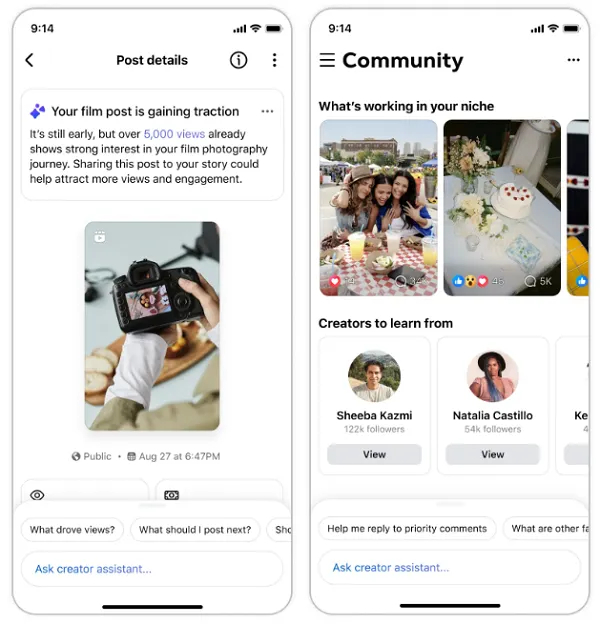
Meta has announced the reintroduction of Facebook Creator Studio, reimagined as an artificial intelligence-powered companion designed to bolster its appeal to the burgeoning global creative talent pool. This strategic reversal comes after the company’s decision in January 2023 to sunset the original Creator Studio, advising users to migrate to its broader Business Suite. The move signals a renewed focus on creator-centric tools and underscores Meta’s intensified efforts to retain and attract content creators amidst a fiercely competitive digital landscape. The new iteration of Creator Studio is engineered to drive efficiency, illuminate growth opportunities, and provide tailored guidance, ultimately aiming to streamline the content creation and management process on Facebook.
The Genesis and Evolution of Creator Studio
To fully appreciate the significance of this reintroduction, it is crucial to understand the historical context of Meta’s engagement with creators. Facebook’s initial Creator Studio, launched in 2017, was conceived as a centralized hub for creators to manage their content, track performance, monetize their presence, and interact with their audience across Facebook and Instagram. It offered a suite of tools including content scheduling, analytics, inbox management, and monetization dashboards, becoming an indispensable resource for many digital content producers. However, in January 2023, Meta announced the deprecation of Creator Studio, directing users towards Meta Business Suite, a more comprehensive platform intended for businesses to manage their presence across Facebook, Instagram, and Messenger. The rationale at the time was to consolidate management functions into a single, unified platform, simplifying the user experience for businesses and creators alike. This decision, however, was met with mixed reactions from the creator community, with many expressing a preference for a dedicated, streamlined environment focused purely on content creation and audience engagement, rather than the broader, often more complex functionalities of Business Suite. The current reintroduction implicitly acknowledges this feedback, signifying Meta’s responsiveness to the specific needs and preferences of its creator ecosystem.
The AI-Powered Reimagination: Core Features and Functionality
The resurrected Facebook Creator Studio is fundamentally different from its predecessor, primarily due to its deep integration of artificial intelligence. Meta explicitly states that the platform is now an “AI-powered app that shows you exactly what to do next to succeed on Facebook, allowing you to meet your goals faster and with less effort.” This vision is manifested through several key features:
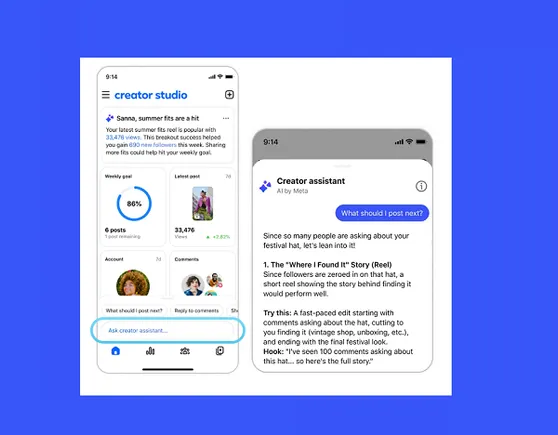
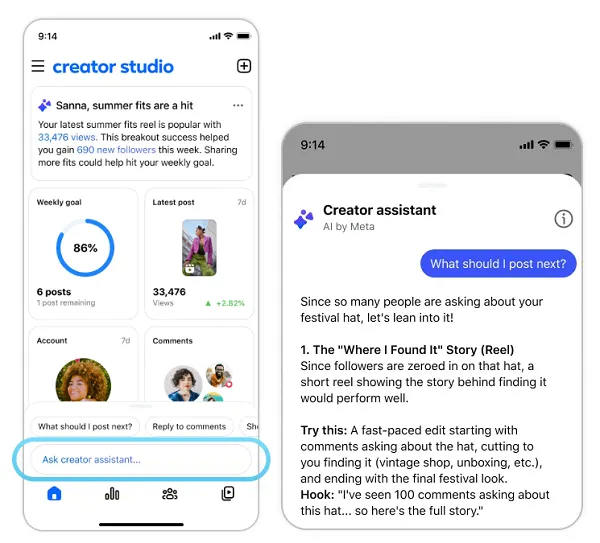
At the heart of the updated Creator Studio lies the recently launched AI Creator Assistant. This always-on chatbot serves as a personalized consultant, allowing creators to pose specific questions related to their content strategy, audience engagement, or platform best practices. The assistant is designed to provide actionable advice, drawing upon Meta’s vast repository of data and algorithmic insights. For instance, a creator might ask for optimal posting times for their specific niche, suggestions for trending topics, or guidance on improving video watch time. The AI Creator Assistant aims to democratize access to advanced analytical insights, traditionally reserved for larger media companies or those with dedicated social media strategists, making it available to individual creators.
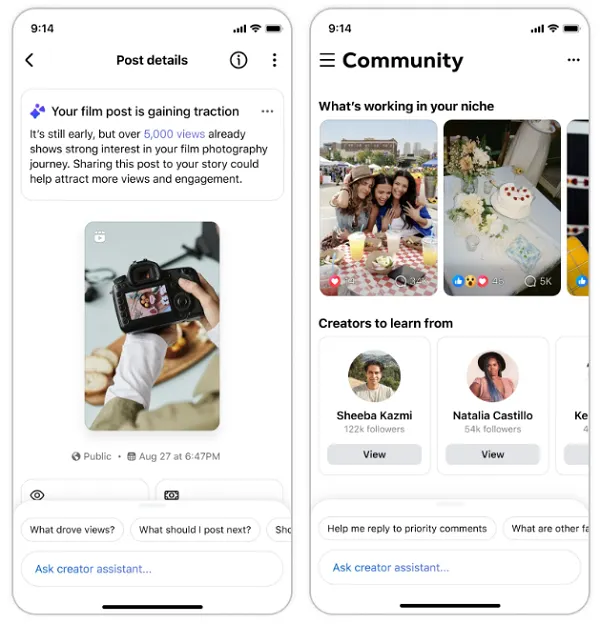
Beyond the chatbot, the system is engineered to provide personalized performance notes, tracking progress towards defined goals, and offering inspiration derived from successful content trends across Meta’s applications. This goes beyond raw data presentation, offering interpretative analysis. For example, instead of merely showing a drop in reach, the system might suggest specific content adjustments or highlight particular posts that performed well and explain why, thereby offering concrete, data-backed recommendations for improvement. This proactive guidance aims to reduce the guesswork often involved in content optimization, allowing creators to make more informed decisions.
Personalized notes on performance, for instance, could highlight specific content pieces that resonated exceptionally well or identify areas where engagement lagged. This granular feedback, tailored to each creator’s unique performance data, holds significant potential for guiding strategic adjustments. Furthermore, the ability to track progress against user-defined goals—whether it’s increasing follower count, improving video views, or boosting engagement rates—provides a clear roadmap for growth and allows creators to measure the efficacy of their efforts over time. The “inspiration” feature, drawing from successful content trends across Facebook and Instagram, could be particularly valuable for creators struggling with content ideas or seeking to diversify their output. By identifying what’s currently working well within specific niches or broader categories, the AI aims to spark creativity and guide creators towards content formats and themes with higher potential for engagement.
The Advent of AI-Generated Comment Replies: A Double-Edged Sword
One of the more innovative, yet potentially contentious, features introduced in the new Creator Studio is the AI-powered comment reply recommendations. Creators can now tap “draft replies,” prompting the system to instantly generate responses in their perceived “voice.” Meta touts this feature as a time-saver, promising to maintain authenticity, deepen connections, and facilitate growth and monetization. The premise is that by automating responses to a high volume of comments, creators can efficiently engage with their audience without the significant time investment traditionally required.
However, the authenticity of AI-generated replies remains a subject of considerable debate. While the technology can mimic a creator’s style and tone, the nuanced human element of genuine interaction—spontaneity, empathy, and personalized recognition—is inherently challenging for an algorithm to replicate perfectly. Outsourcing community engagement, a cornerstone of building a loyal audience, to AI bots raises legitimate concerns about the potential erosion of genuine fan connection. While practical for creators inundated with comments, particularly those with very large followings, a widespread adoption of AI-generated replies could inadvertently distance creators from their audience, transforming what should be authentic dialogue into automated transactions. The perceived lack of genuine interaction could, paradoxically, undermine the very connections Meta aims to deepen. Striking the right balance between efficiency and authenticity will be a critical challenge for creators utilizing this feature.
Meta’s Broader Creator Strategy and Market Context
The reintroduction of Creator Studio is not an isolated event but rather a pivotal component of Meta’s broader, aggressive strategy to solidify its position as a preferred platform for creators. The company is locked in an intense battle for creative talent and user attention, particularly with rivals like TikTok and YouTube. These platforms have invested heavily in creator tools, monetization programs, and direct support, compelling Meta to significantly enhance its own offerings.
In December, just prior to this announcement, Meta unveiled an update to its Partnership Ads Hub, explicitly designed to facilitate more affiliate marketing opportunities. This initiative aimed to connect creators more effectively with brands for sponsored content and commission-based sales, providing new avenues for income generation. Concurrently, Meta also launched other creator-specific AI tools, demonstrating a consistent commitment to leveraging artificial intelligence to empower creators. These tools range from AI-assisted content generation (e.g., generating video scripts or post captions) to advanced audience targeting insights.
The global creator economy, estimated to be worth over $250 billion and projected to grow significantly, is a critical battleground for social media platforms. Creators are the lifeblood of these platforms, driving engagement, attracting new users, and generating vast amounts of content that keeps audiences returning. Platforms that successfully cultivate and retain top creative talent stand to gain substantial competitive advantages, including increased ad revenue, stronger network effects, and a more vibrant ecosystem. Meta’s consistent investment in monetization tools, brand partnership facilitation, and now, advanced AI-powered management platforms, reflects this understanding. The goal is clear: make Meta’s platforms the most attractive and lucrative environment for creators to build their careers, thereby maximizing user engagement and market share.
Timeline of Key Events:
- 2017: Original Facebook Creator Studio launched, providing a centralized hub for content management and analytics.
- January 2023: Meta announces the shutdown of the original Creator Studio, directing users to Meta Business Suite for consolidated management.
- December 2023: Meta expands its Partnership Ads Hub to facilitate more affiliate marketing opportunities and introduces other creator-specific AI tools.
- Early 2024 (Exact date not specified but implied by announcement): Meta reintroduces Facebook Creator Studio, reimagined as an AI-powered companion.
Implications and Future Outlook
The return of Facebook Creator Studio, armed with AI capabilities, carries significant implications for creators, Meta, and the broader digital content industry.
For Creators: The immediate benefit is enhanced efficiency and access to more sophisticated analytical insights. For smaller and mid-tier creators, the AI Creator Assistant could act as a virtual strategist, guiding them through the complexities of algorithm optimization and audience engagement. The personalized performance notes and goal tracking offer a structured approach to growth. However, the AI-generated comment replies present a dilemma. While offering a solution to managing high comment volumes, creators will need to carefully consider the potential trade-off between efficiency and authentic audience connection. Over-reliance on automation could dilute the personal brand and community feel that many creators strive to cultivate. The onus will be on creators to strategically integrate these tools, leveraging AI for optimization and efficiency while preserving genuine human interaction.
For Meta: This move represents a strong statement of intent in the creator economy. By addressing creator feedback and re-establishing a dedicated, powerful platform, Meta aims to strengthen loyalty among its existing creator base and attract new talent. The deep integration of AI allows Meta to leverage its massive data infrastructure to provide unparalleled insights, potentially creating a significant competitive advantage. Furthermore, a thriving creator ecosystem directly translates to increased user engagement and, consequently, greater advertising revenue, which remains Meta’s primary business model. The strategic focus on monetization tools and brand partnerships within Creator Studio underscores Meta’s commitment to making its platforms economically viable for creators, thereby ensuring their long-term presence.
For the Industry: The reintroduction of an AI-powered Creator Studio signals a broader trend towards the integration of artificial intelligence across all facets of content creation and platform management. As AI technologies become more sophisticated, we can anticipate other platforms following suit, embedding similar intelligent assistants and automation features into their creator tools. This will likely accelerate the pace of content creation, potentially leading to an even more saturated digital landscape. The ethical considerations surrounding AI-generated content and interactions, particularly concerning authenticity and potential misinformation, will also become increasingly prominent. The balance between leveraging AI for efficiency and preserving genuine human connection will be a defining challenge for the digital content industry in the coming years.
In conclusion, Meta’s decision to bring back Facebook Creator Studio, now supercharged with artificial intelligence, is a calculated and significant strategic maneuver. It reflects a deep understanding of the evolving needs of content creators and an aggressive response to the intense competition for digital talent. While the new platform promises unprecedented efficiency and insights, the judicious use of features like AI-generated replies will be paramount for creators seeking to balance automation with the irreplaceable value of authentic human connection. This reintroduction is poised to reshape how creators interact with Facebook, potentially setting new benchmarks for platform-creator relationships in the AI era.