The landscape of brand communication and consumer insight has undergone a profound transformation, with Artificial Intelligence (AI) social listening tools emerging as indispensable assets for businesses aiming to understand what people are truly saying – and feeling – about their brands in 2026. This technological leap empowers organizations to transcend traditional data analysis, offering unparalleled speed, accuracy, and depth in decoding the vast and intricate world of online conversations. The shift from manual monitoring to AI-driven intelligence marks a pivotal moment, enabling companies to proactively shape their narratives, mitigate risks, and seize emergent opportunities in real-time.
The Evolution of Social Intelligence: From Manual Scrutiny to AI-Driven Insight

The journey of social listening mirrors the rapid evolution of the internet itself. Initially, brand monitoring was a painstaking manual process, involving teams sifting through forums, blogs, and early social media platforms for mentions. This reactive approach was slow, prone to human error, and inherently limited in scale. The advent of keyword-based monitoring tools offered a significant improvement, allowing brands to track specific terms, but still struggled with context, nuance, and the sheer volume of data.
The explosion of social media platforms and user-generated content in the 2010s created an unprecedented data deluge. Brands found themselves awash in conversations, unable to effectively process the information required to make informed decisions. This challenge paved the way for AI. By 2026, AI has become the backbone of advanced social listening, capable of processing millions of data points, understanding complex human language, and delivering actionable insights at speeds previously unimaginable. This evolution reflects a broader trend of AI integration across business functions, driven by the need for efficiency and predictive capabilities in an increasingly data-rich environment.
Defining AI Social Listening: Beyond Exact Keyword Matches

At its core, AI social listening is the application of artificial intelligence to systematically monitor and analyze online social media channels for mentions of specific entities, such as a brand, its products, competitors, or broader industry trends. Unlike its predecessors, AI tools do not merely rely on exact keyword matches. Instead, they leverage sophisticated algorithms to:
- Detect indirect mentions: Identifying instances where a brand is discussed without a direct name-check, often through context or associated imagery.
- Understand semantic context: Interpreting the true meaning behind words, even when slang, colloquialisms, or misspellings are present.
- Interpret emotional tone: Moving beyond simple positive/negative sentiment to discern specific emotions like joy, anger, frustration, or excitement.
- Recognize sarcasm and irony: A critical capability given the prevalence of nuanced communication on social platforms.
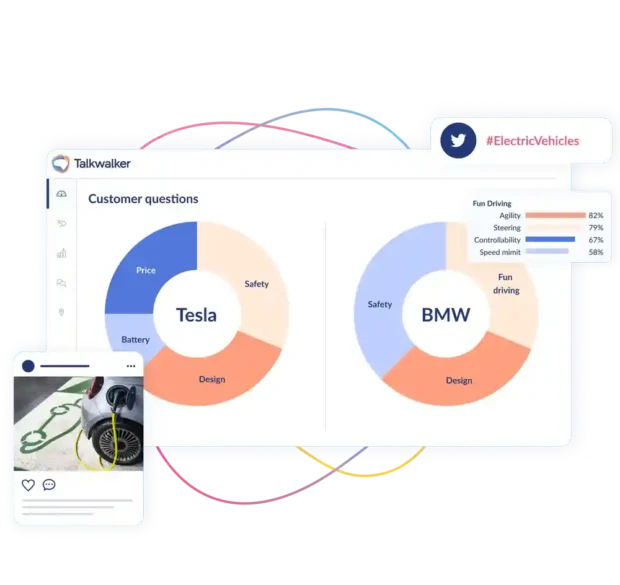
- Analyze multimedia content: Extracting insights from images, videos, and audio where brand mentions might be visual (logos, products) or auditory (spoken mentions).
In essence, AI sifts through massive datasets, identifies intricate patterns, and transforms these patterns into coherent, actionable intelligence. This capability allows brands to not only know what is being said but also how people genuinely feel, offering a more holistic and accurate understanding of public perception.
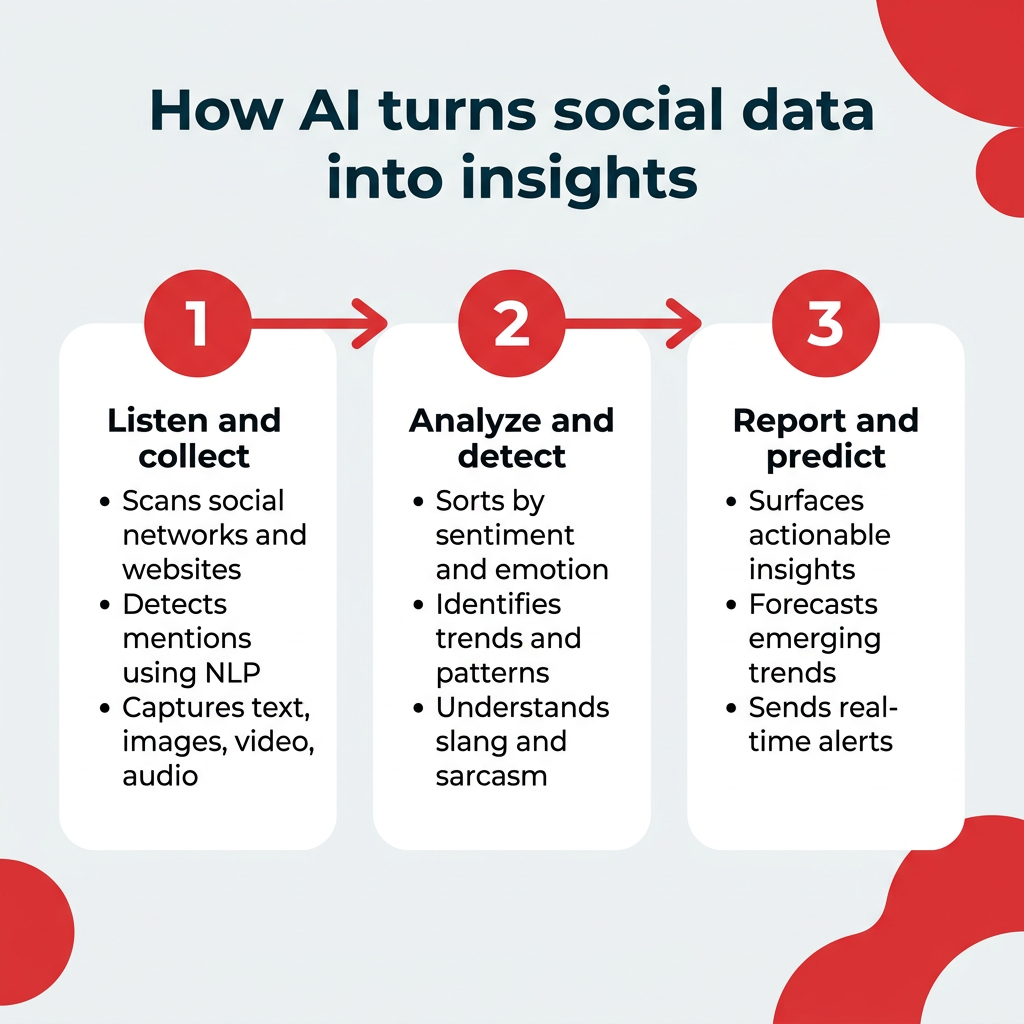
The Mechanics of AI-Powered Insight: A Three-Stage Process
The power of AI social listening is realized through a streamlined, multi-stage process:
-
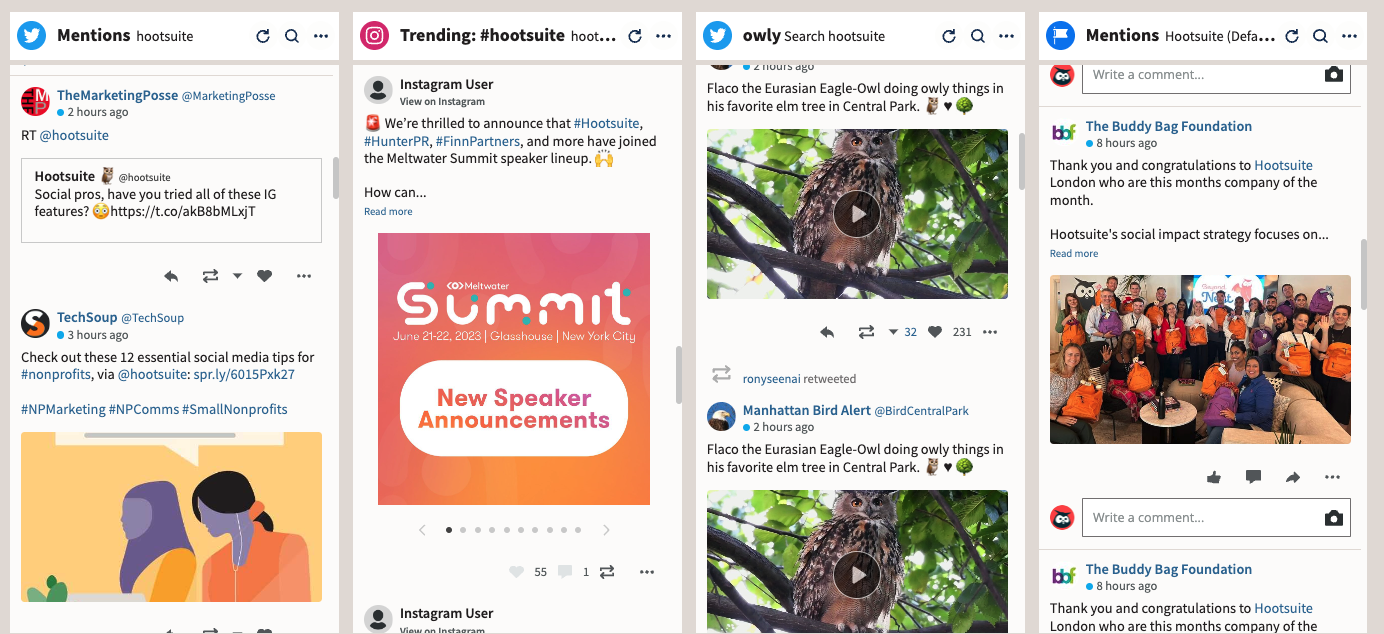
AI Listening and Data Collection: This initial phase involves AI tools scanning a vast array of online sources, including major social networks (Facebook, X, Instagram, TikTok, Reddit, YouTube, etc.), blogs, forums, news sites, review platforms, and even emerging networks. Natural Language Processing (NLP) is crucial here, enabling the AI to comprehend how humans use language, including its subtleties and variations. Tools often feature AI Query Builders that simplify the creation of complex Boolean searches, allowing marketers to precisely target relevant conversations without requiring advanced technical skills. The most advanced systems also incorporate visual and audio listening, recognizing logos, objects, and even spoken brand mentions within images, videos, and podcasts.
-
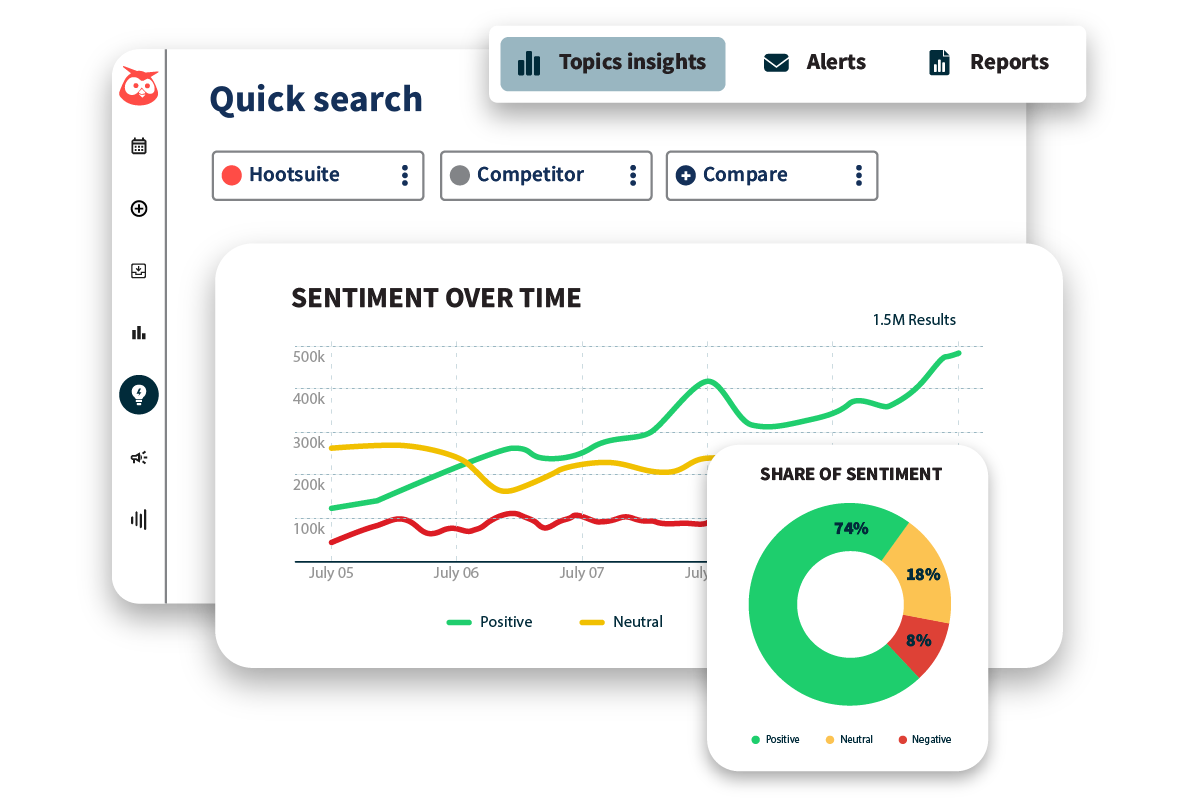
AI Analysis and Sentiment Detection: Once data is collected, AI algorithms meticulously analyze these large datasets to identify emerging patterns and trends. Sentiment analysis, powered by NLP, classifies mentions as positive, negative, or neutral. Crucially, sophisticated AI can detect shifts in tone and interpret nuanced emotional states, including sarcasm and slang, which are often lost on traditional analysis methods. Beyond text, visual listening technologies scan images, videos, and audio for brand presence, ensuring a comprehensive understanding of brand visibility across all media types. This multi-modal analysis provides a richer, more accurate picture of public sentiment.
-
AI Reporting and Predictive Insights: The final stage translates complex data and analysis into clear, digestible insights and actionable reports. AI tools don’t just present data; they explain the why behind spikes in mentions or shifts in sentiment. A key differentiator for leading platforms is predictive analytics, which forecasts future trends, potential topic volumes, and even anticipates risks to a brand. This proactive intelligence allows teams to intervene before issues escalate or capitalize on opportunities before they peak, moving from a reactive stance to a strategic, forward-looking one.
Quantifying the Impact: Case Studies and Market Trends
The real-world benefits of AI social listening are evident in numerous success stories. A notable example is a prominent NBA team that leveraged Talkwalker by Hootsuite to revolutionize its fan engagement strategy. Faced with the challenge of deepening fan connections and demonstrating business impact, their social media team used the platform to consolidate social data. The analysis revealed a strong fan preference for polls, Q&As, and authentic, original content over repurposed game clips.

Acting on these insights, the team dramatically shifted its content strategy, increasing original posts to 50-80% of their output, featuring behind-the-scenes footage and direct fan interaction. This strategic pivot resulted in a staggering 352% average increase in video views season-over-season and boosted overall impressions by 46%. Furthermore, sentiment analysis identified nine key emotional drivers that resonated most deeply with their fanbase, informing a more collaborative and emotionally intelligent content approach that kept audiences invested year-round. Competitor analysis, another feature of AI listening, allowed the team to benchmark its performance, providing the data needed to secure funding for a new hire and achieve a 27% increase in engagement with fewer, more impactful posts. This case vividly illustrates how AI reporting translates directly into informed decision-making and tangible results.
The broader market also underscores the importance of AI in marketing. A 2025 CMO Spend Survey by Gartner revealed that 49% of CMOs identify improved time efficiency as the top ROI driver for Generative AI. Moreover, Forrester’s research indicates that 83% of B2C marketing executives are actively pursuing the consolidation of AI-powered listening, analysis, and reporting into unified social media management platforms, highlighting the industry-wide recognition of AI’s strategic value.
Strategic Advantages for Modern Marketers
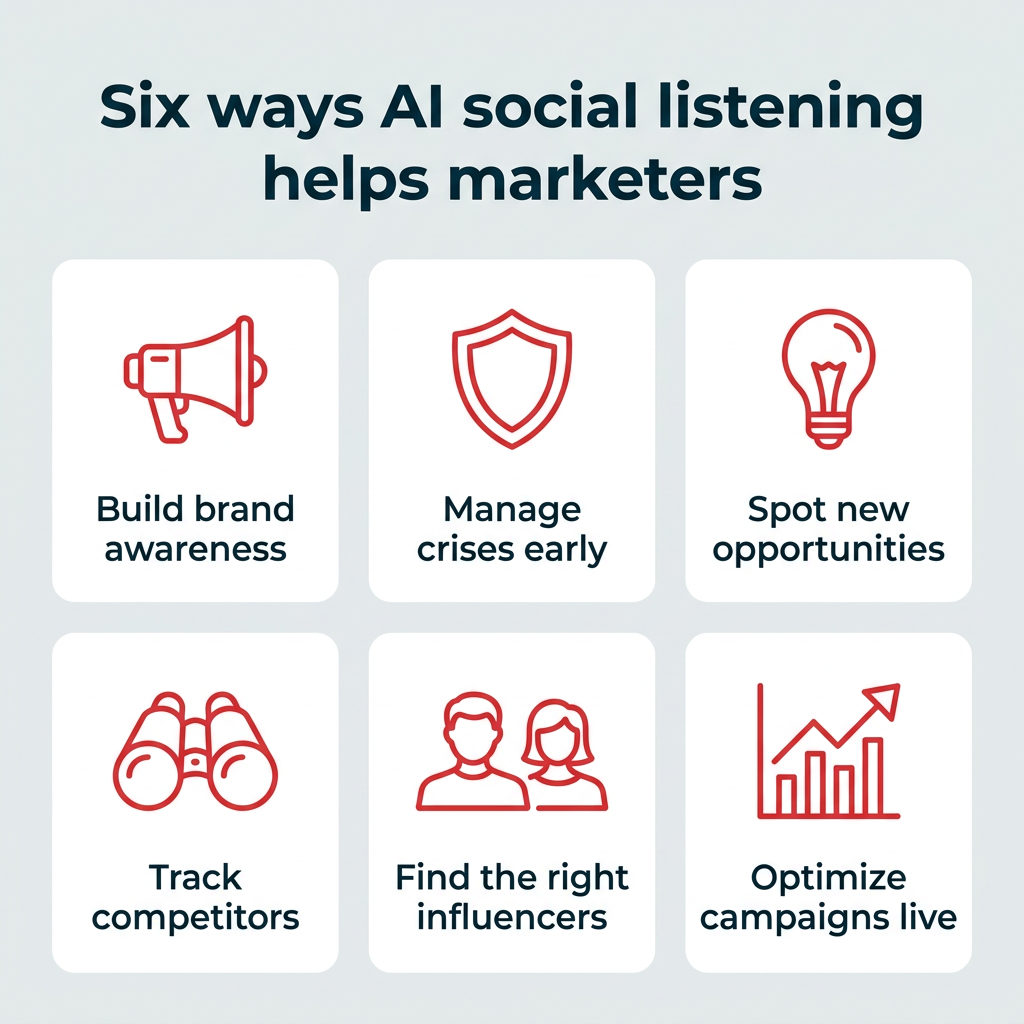
AI social listening offers marketers a distinct competitive edge, enabling them to track more conversations with greater clarity and efficiency. The benefits span various critical marketing functions:
-
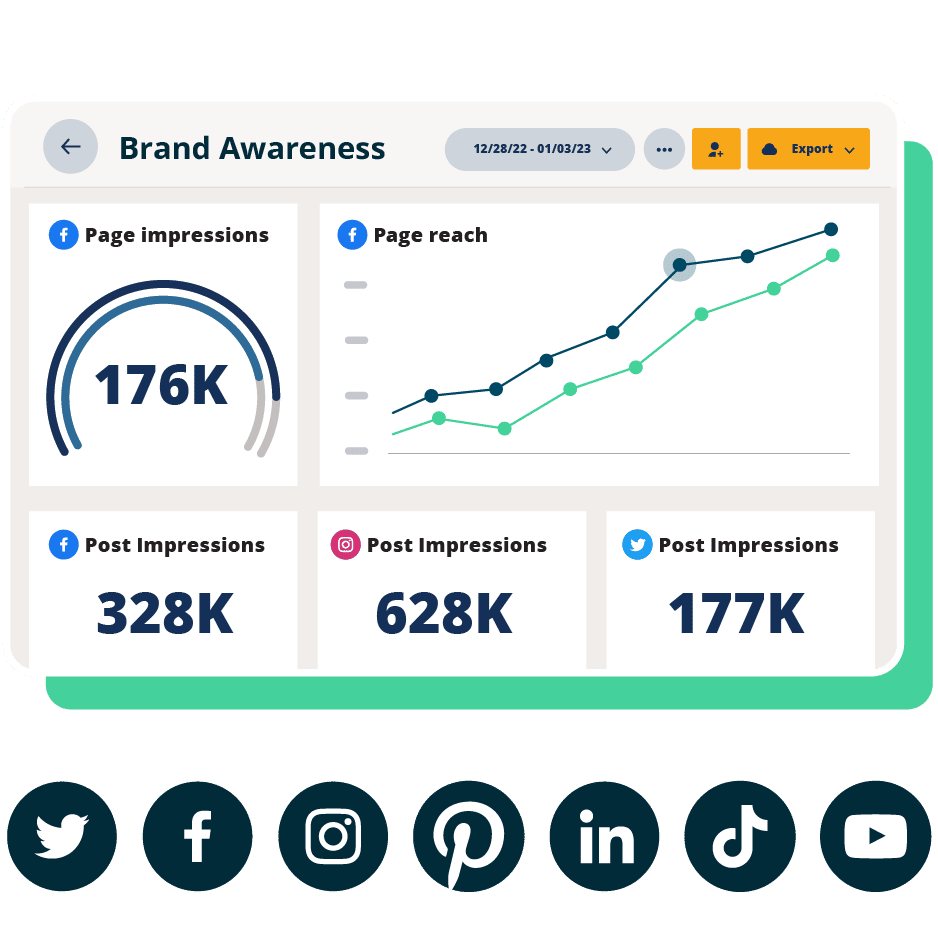
Building Brand Awareness: AI tools excel at identifying both direct and indirect brand mentions across diverse media. Whether a product appears in a video, a brand is discussed in a podcast, or a logo features in a meme, AI ensures these valuable engagement opportunities are captured. This comprehensive tracking expands brand reach beyond traditional keyword-based monitoring.
-
Managing Crises Proactively: Real-time monitoring by AI helps marketers maintain robust brand health and detect potential issues before they escalate. AI can learn to identify anomalous spikes in mentions or sudden shifts in sentiment, sending immediate alerts that allow teams to respond swiftly and mitigate crises effectively. This capability transforms crisis management from a reactive scramble into a proactive defense strategy.

-
Spotting New Opportunities: By analyzing vast volumes of conversations across various platforms, AI can uncover nascent product ideas, identify potential collaborators, or pinpoint underserved market gaps. It acts as a radar for emerging topics, such as a growing interest in sustainable packaging across niche communities, enabling brands to act on opportunities that might otherwise remain unnoticed.
-
Tracking Competitors with Precision: AI social listening platforms continuously monitor competitor activities—new campaigns, product launches, messaging shifts—across multiple channels. They provide competitive benchmarking, illustrating a brand’s share of voice against rivals and revealing emerging competitive strategies before they gain significant traction, allowing for proactive counter-strategies.
-
Finding Influencers with Impact: Beyond simply tracking mentions, AI identifies the key voices driving conversations. By analyzing engagement, reach, and relevance, AI tools pinpoint influencers who genuinely align with a brand’s audience, ensuring that influencer marketing efforts are data-backed and impactful, maximizing brand amplification through strategic partnerships.
-
Optimizing Campaigns in Real-Time: AI provides continuous feedback on campaign performance. If a hashtag campaign, for example, generates confusion, AI can detect this immediately, allowing marketers to adjust messaging, clarify intent, or pivot strategies in real-time. This agility ensures marketing efforts remain relevant, effective, and responsive to audience reactions.
Navigating the Landscape: Top AI Social Listening Tools in 2026
The market for AI social listening tools is robust, with several platforms offering distinct capabilities. Choosing the right tool depends on an organization’s specific needs, scale, and budget. Here’s a detailed look at some of the leading options in 2026:
-
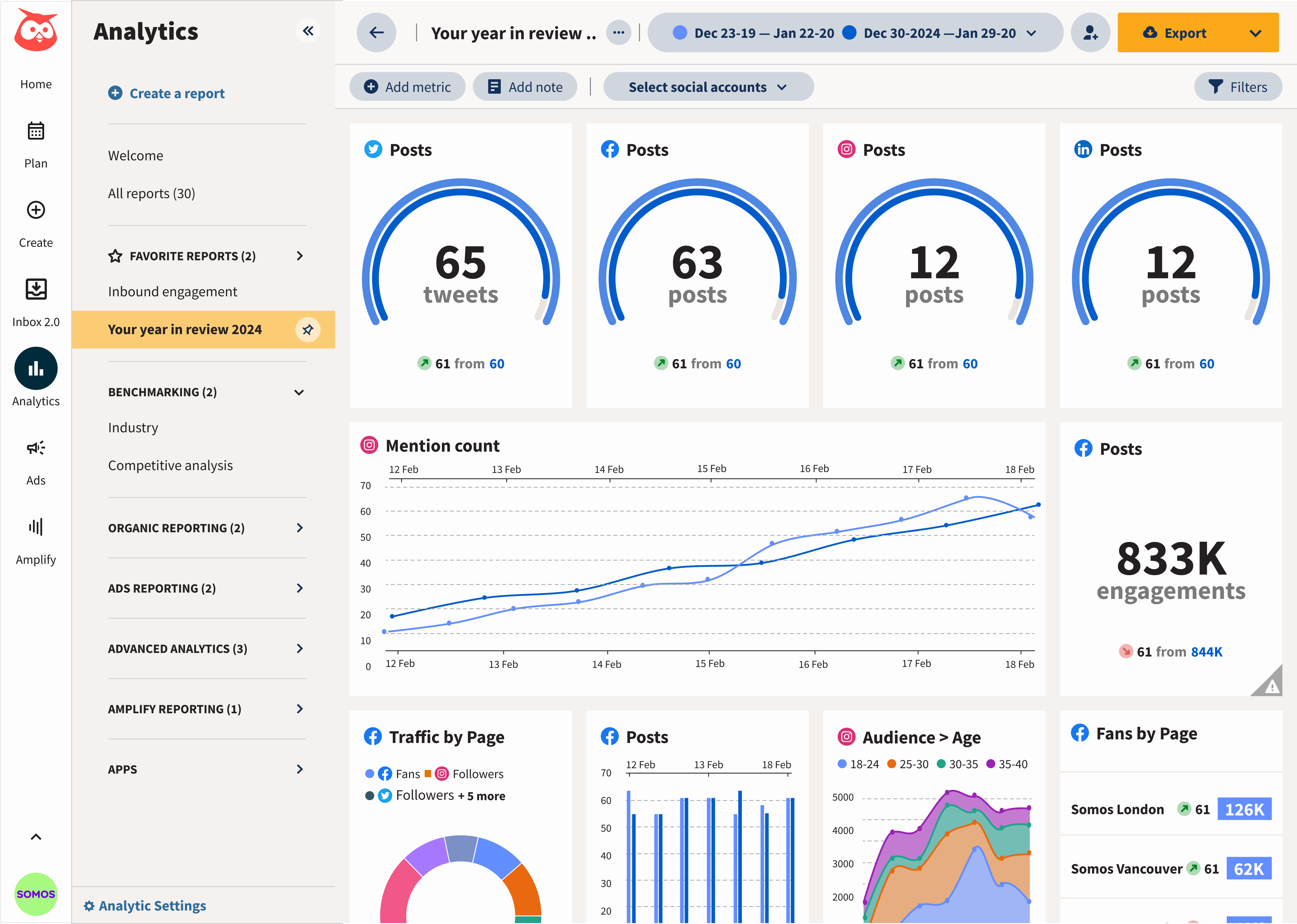
Hootsuite Listening: Integrated directly into the Hootsuite social media management dashboard, this solution offers AI-powered sentiment analysis, an AI Query Builder for optimized searches, and trend detection across major social networks. It’s ideal for teams seeking to unify their social listening with their broader social media management activities, making insights readily accessible for content creation and engagement.
-
Talkwalker by Hootsuite: Designed for enterprise-level needs, Talkwalker boasts advanced AI capabilities through its proprietary BlueSilk AI engine, trained on over 3 trillion data points. It monitors over 30 social networks (including emerging platforms like Bluesky) and 150 million websites, offering deep historical data access. Its standout features include visual and audio listening (recognizing logos, products, and spoken mentions), sophisticated sentiment analysis that interprets irony and sarcasm, predictive crisis detection, and an API for custom integrations and AI model training.
-
Brandwatch: A powerhouse for large-scale consumer research, Brandwatch leverages OpenAI-powered analysis to scan over 100 million sites and billions of sources daily. It excels in identifying visual mentions (objects, words, logos in images) and provides comprehensive consumer intelligence, making it suitable for extensive market analysis.

-
Sprinklr: This platform integrates AI-powered social listening within a broader Customer Experience (CX) management suite, making it ideal for brands seeking unified solutions for social media, customer service, and other customer touchpoints. Sprinklr monitors over 30 social and digital channels, including niche platforms, and features AI for logo and text detection in various media formats.
-
Brand24: Offering broad coverage across more than 25 million online sources, Brand24 provides AI-powered monitoring of major social media platforms, blogs, news, and review sites. Its advanced emotion detection goes beyond basic sentiment to identify specific feelings like sadness or anger. Anomaly alerts and customizable notifications ensure teams are promptly informed of significant shifts in conversation.
-
YouScan: Distinguished by its robust visual AI capabilities, YouScan is perfect for brands focused on how their products and logos appear in images. It can detect logos, objects, scenes, and even product usage within photos, monitoring over 500,000 online sources to provide deep visual intelligence alongside traditional text-based insights.

-
Meltwater: Combining media monitoring with AI social listening, Meltwater offers a holistic view of a brand’s presence across social media, news, print, and broadcast. Its AI analyzes sentiment, tracks share of voice, and generates enterprise-grade reports, making it a comprehensive solution for organizations managing both PR and social media intelligence.
-
Sprout Social: A user-friendly option often favored by small teams and beginners, Sprout Social monitors major social networks and the broader web for keywords, hashtags, and brand mentions, including in multimedia. Its AI capabilities include audience segmentation into distinct personas, competitive benchmarking (including share of voice), and predictive analytics to anticipate potential issues.
Addressing the Hurdles: Challenges and Solutions in AI Social Listening
While transformative, AI social listening is not without its challenges. Modern solutions, however, are specifically designed to address these complexities:
-
Filtering Out Irrelevant Data: The sheer volume of online content can lead to a deluge of irrelevant information, obscuring critical insights. Advanced AI tools combat this with sophisticated machine learning algorithms that refine searches, prioritize genuinely relevant mentions, and filter out noise, ensuring marketers focus on actionable data.
-
Understanding Context and Sentiment: Human language is inherently ambiguous, filled with sarcasm, slang, and cultural nuances that can mislead AI. A phrase like “This is sick!” could signify praise or displeasure depending on context. Modern AI platforms employ advanced Natural Language Processing (NLP) models, trained on diverse linguistic datasets, to accurately interpret tone, meaning, and even specific emotions, providing a more reliable sentiment analysis.

-
Managing High Volumes of Unstructured Data: Pulling data from dozens of disparate platforms results in massive, unstructured datasets that can overwhelm systems. Without robust integration and data normalization, insights remain superficial. The best AI solutions aggregate data from all sources, deduplicate, and normalize results, transforming chaotic information into clear, actionable trends.
By continuously refining these capabilities, AI social listening becomes an increasingly powerful tool, providing marketers with a clear lens through which to understand and engage with their audiences.
Selecting the Right Platform: An Enterprise Guide

Choosing an AI social listening platform requires careful consideration of an organization’s specific goals, scale, and existing tech infrastructure. Enterprise buyers should evaluate platforms based on several key criteria:
- Data Coverage: The breadth of social networks, forums, blogs, news sites, and other online sources monitored.
- AI Capabilities: The sophistication of NLP, sentiment analysis, visual/audio listening, and predictive analytics.
- Scalability: The ability to handle increasing data volumes, additional topics, and multiple languages.
- Integration: Compatibility with existing CRM, marketing automation, and other business intelligence tools.
- Customization: Options for tailoring queries, dashboards, reports, and even training custom AI models.
- Reporting and Analytics: Clarity and depth of insights, visualization options, and ease of report generation.
- Real-time Alerts: The ability to receive immediate notifications for critical events or sentiment shifts.
- Pricing Structure: A clear understanding of costs based on data volume, features, and user licenses.
- Vendor Support: Quality of customer service, training, and ongoing technical support.
The ideal platform seamlessly integrates into current workflows while offering the flexibility to scale with future needs. Platforms like Hootsuite, which combine listening with publishing, engagement, and analytics in a single dashboard, often provide the most cohesive experience.
Implementing AI Social Listening: A Five-Step Framework

Getting started with AI social listening can be a structured process, moving from raw data collection to actionable insights:
- Define Your Objectives: Clearly articulate what you want to achieve. Are you monitoring brand reputation, tracking campaigns, researching competitors, or identifying market trends? Specific goals will guide your tool selection and query setup.
- Select Your Keywords and Topics: Identify all relevant terms, including brand names, product names, campaign hashtags, competitor names, industry buzzwords, and common misspellings. Leverage AI Query Builders to refine these into precise search queries.
- Configure Your Monitoring Tool: Set up your chosen AI social listening platform according to your objectives. Define data sources, configure sentiment analysis preferences, and establish real-time alerts for critical events.
- Analyze and Interpret Data: Regularly review the insights generated by the AI. Look for patterns, trends, sentiment shifts, and key influencers. Don’t just observe; seek to understand the underlying causes and implications.
- Act on Insights and Refine Strategy: Translate insights into concrete actions. Adjust marketing campaigns, inform product development, respond to customer feedback, or modify communication strategies. Continuously refine your monitoring parameters based on new learnings to improve accuracy over time.
This iterative process ensures that AI social listening remains a dynamic and effective component of a brand’s overall strategic intelligence.
The Future of Brand Understanding

AI social listening is no longer a luxury but a necessity for any brand seeking to thrive in the digital age. By providing unprecedented visibility into public sentiment and market dynamics, these tools empower organizations to build stronger brands, forge deeper customer connections, and navigate the complexities of the online world with confidence. As AI technologies continue to advance, their capabilities in understanding human language, emotion, and visual cues will only grow, further cementing their role as the cornerstone of intelligent brand management and strategic foresight in 2026 and beyond.