The annual observance of Mother’s Day presents a significant opportunity for marketers, yet its varied timing across the globe offers a unique strategic advantage for those celebrating later in the year. While the United Kingdom typically marks Mother’s Day in mid-March, a significant portion of the Western world, including the United States and much of Europe, celebrates in May. This two-month differential provides a crucial window for email marketers: a live preview of what resonated, what fell flat, and how UK teams navigated the evolving complexities of inbox dynamics, the rise of artificial intelligence, and prevailing economic pressures. For “Mother’s Day in May” senders, this early insight is invaluable, offering a chance to fine-tune campaigns for optimal engagement and conversion.
The contemporary email marketing landscape is more intricate than ever. Shifting consumer behaviors, increasingly sophisticated inbox algorithms, and the integration of AI in email clients mean that generic, one-size-fits-all campaigns are becoming less effective. Economic uncertainties further compel brands to maximize the return on every marketing dollar. Against this backdrop, data-driven strategies and a keen understanding of subscriber preferences are paramount. This article delves into ten critical tactics, informed by recent trends and the UK’s early Mother’s Day campaigns, that every marketer should consider to elevate their May Mother’s Day initiatives.

Navigating Subscriber Sensitivity: The Evolution of Opt-Outs
A notable shift in email marketing, particularly around sensitive holidays like Mother’s Day or Valentine’s Day, originated during the COVID-19 pandemic. Brands, recognizing the potential for these celebratory messages to cause distress for individuals who have lost mothers or are struggling with fertility, introduced explicit opt-out options. Initially a commendable gesture of empathy, this practice has evolved. While the sentiment remains valid, sending a dedicated email asking subscribers if they wish to opt out can inadvertently highlight the very pain points some wish to avoid.
Industry analysis suggests that while these opt-out emails aim for sensitivity, they can sometimes have the opposite effect by forcing a confrontation with potentially difficult emotions. Instead of a separate campaign, the more sophisticated approach, exemplified by brands like Hotel Chocolat, integrates these choices directly into a comprehensive preference center. This allows subscribers to proactively manage their communication preferences at any time, making a one-time selection to filter out specific event-based messages without a potentially jarring, direct prompt. This method not only empowers the subscriber but also subtly refines audience segmentation, ensuring that subsequent campaigns are delivered only to those who genuinely wish to receive them, thereby reducing negative sentiment and improving overall list health. The implication here is a move from reactive, event-specific opt-outs to a proactive, always-on subscriber control system, fostering a more respectful and personalized brand-customer relationship.

Empowering Choice: Beyond Event-Specific Opt-Outs
The principle of giving subscribers greater control extends far beyond sensitive holiday opt-outs. A perennial challenge for email marketers is the omnipresent complaint of “too many emails,” which consistently ranks as a leading cause for unsubscribes and, in severe cases, spam complaints. Data from various marketing reports frequently highlights email frequency and irrelevant content as primary drivers of subscriber churn, often accounting for over 50% of all unsubscribes.
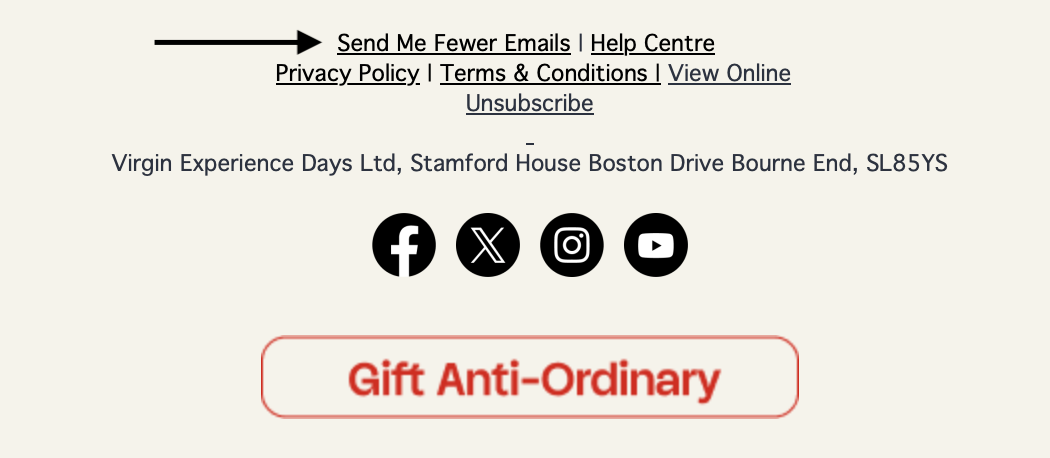
Forward-thinking brands are addressing this head-on by offering granular control over email frequency and content categories. Virgin Experience Days, for instance, provides a clear “send me fewer emails” option, allowing subscribers to reduce the volume of communications with a single click. This simple yet effective measure demonstrates responsiveness to subscriber feedback and helps prevent complete disengagement. Furthermore, there’s a growing trend in 2024-2025 of brands dedicating standalone email campaigns to promote their preference centers. These campaigns educate subscribers about the various controls available to them—from selecting specific product categories they’re interested in, to choosing daily, weekly, or monthly updates. Studies indicate that brands actively promoting their preference centers see a measurable boost in engagement rates and a reduction in spam complaints. By offering more choices, marketers not only reduce the likelihood of unsubscribes but also enhance the relevance of every email sent, leading to higher open rates, click-through rates, and ultimately, conversions. This strategy aligns with a broader shift towards customer-centric marketing, where personalization and perceived value are key to sustained success.
The Enduring Power of Striking Imagery in an AI-Driven Inbox
Despite the advent of AI-generated email summaries and the increasing reliance on algorithms to prioritize content, the visual appeal of an email remains a paramount factor in engagement. While AI might extract key information, it cannot replicate the emotional connection or brand reinforcement delivered by compelling imagery. Many subscribers still utilize preview panes to quickly scan an email’s content, and services like Gmail’s Annotations now directly display selected email images within recipients’ Promotions tabs, making visual impact more critical than ever before.
High-quality, eye-catching visuals serve multiple functions: they capture attention in a crowded inbox, convey brand identity, and evoke emotion. In a landscape where email open rates can hover around 20-30% for many industries, striking imagery can significantly differentiate a message. Examples like Belvedere’s elegant gift bag with roses and vodka, or Cartier’s clever recreation of their butterfly logo using their jewelry, demonstrate how visuals can stop a scroll, communicate luxury, and inspire desire without a single word. Pizza Express’s use of GIFs further illustrates how dynamic visuals can convey brand personality and offer a more engaging experience. Marketing analytics consistently show that emails incorporating strong visuals tend to have higher engagement metrics—from initial opens to click-through rates. Investing in professional photography, creative graphic design, or even micro-animations is no longer a luxury but a necessity for brands looking to stand out and maintain a strong visual identity in a rapidly evolving digital environment.

Encouraging Deeper Engagement: The Art of the Scroll
A persistent challenge in email design is ensuring that valuable content below the initial viewport, or “the fold,” is actually seen. Research by usability experts, such as the Nielsen Norman Group, has consistently shown that fewer than half of consumers typically scroll beyond the initial visible area of an email. This means that carefully crafted messages, product showcases, and calls to action can go unnoticed, significantly impacting campaign effectiveness. In an age of inbox overload, where attention spans are fleeting, marketers must actively encourage subscribers to explore the full breadth of their communications.
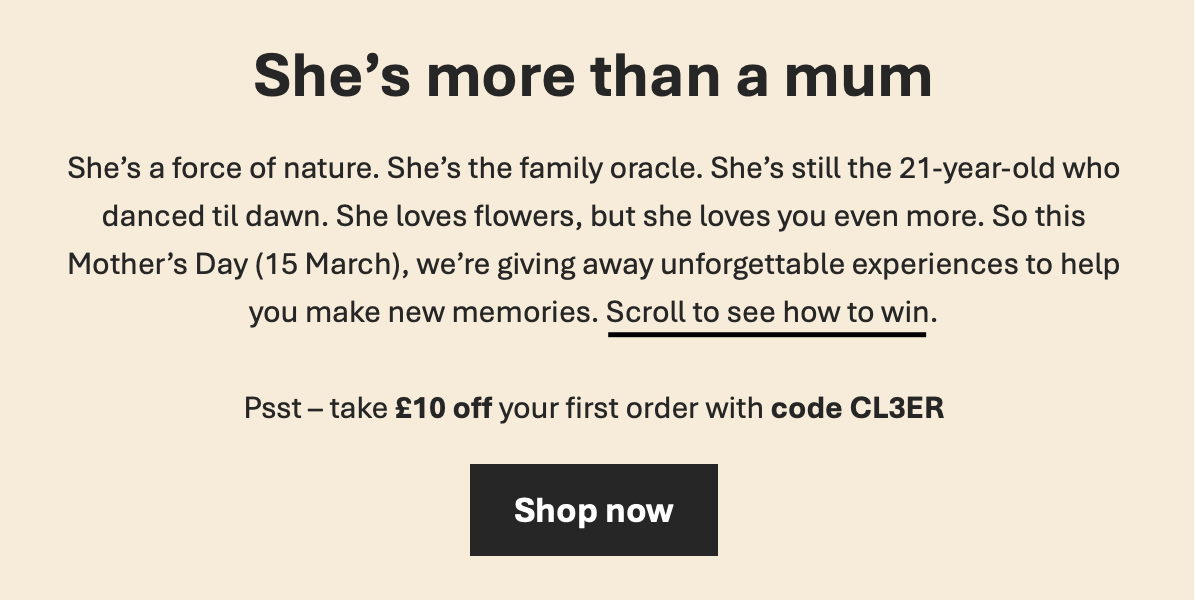
Savvy senders are employing a variety of techniques to combat the “no-scroll” phenomenon. Simple text-based prompts like “Scroll down for more!” or subtle arrow graphics can serve as gentle nudges. More engaging methods include micro-animations that hint at content below, or even incentivizing the behavior, as seen with Bloom & Wild’s “scroll to see how to win” call to action. By making the act of scrolling rewarding or intriguing, brands can significantly increase content consumption. The implication is a richer engagement experience, where subscribers spend more time interacting with the brand’s message, leading to a greater likelihood of conversion. This strategy requires a conscious design effort to break up content, create visual curiosity, and provide clear directional cues, ensuring that every piece of valuable information has the opportunity to be seen and acted upon.

Sparking Inspiration: Guiding the Gift-Giving Journey
For many, purchasing the perfect gift for Mother’s Day can be a source of genuine stress. The pressure to choose something meaningful and appropriate often leads to indecision, abandoned carts, or last-minute panic buys. Recognizing this, astute marketers are shifting from purely promotional emails to those that inspire and guide. By acting as a helpful advisor rather than just a salesperson, brands can build trust and facilitate the purchasing process.
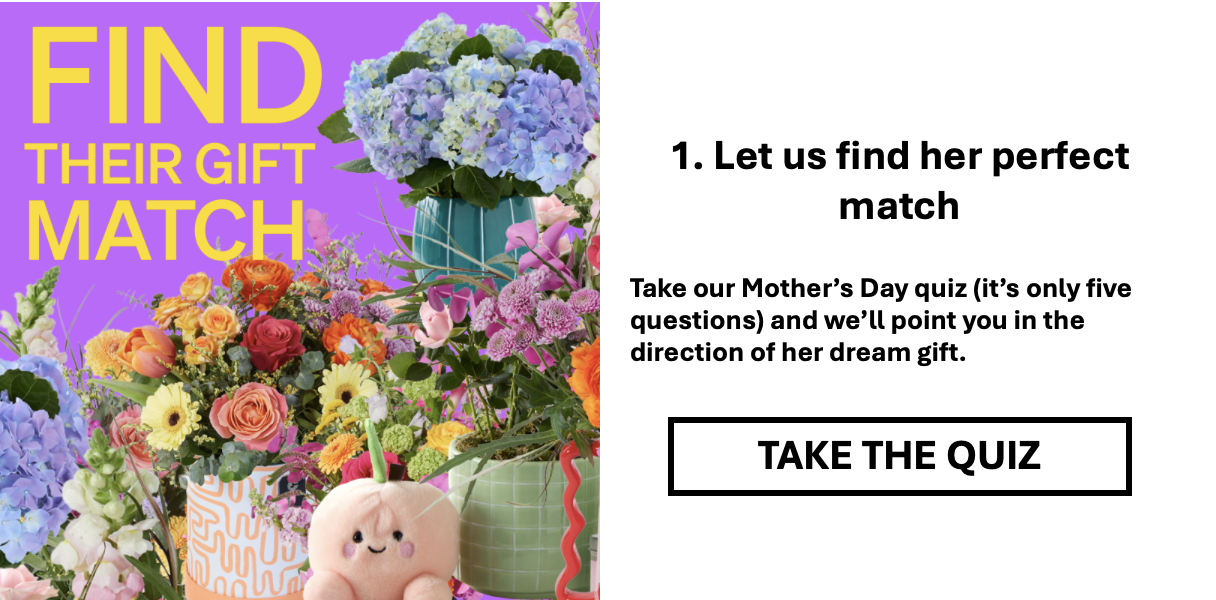
“Inspiration emails” shine in this context. Interflora, for example, excels at this with campaigns explicitly stating, “Don’t worry, we’re here to help.” Their comprehensive emails often include a short gift-finder quiz, suggestions for heartfelt card messages, reminders about international delivery options, and even a thoughtful nudge to celebrate not just one’s own mother but also the “mom of your little ones.” These elements address common pain points and offer practical solutions. Similarly, Charlotte Tilbury encourages subscribers to “Shop Trending Now,” showcasing popular products from the past week to alleviate decision fatigue. By providing curated suggestions, breaking down choices by recipient type or budget, or highlighting best-sellers, brands can transform the stressful gift-selection process into an enjoyable discovery. The implication is not just increased sales but also enhanced customer satisfaction and loyalty, as the brand is perceived as understanding and supportive of the customer’s needs.

Multi-Channel Synergy: Leveraging SMS for Inbox Visibility
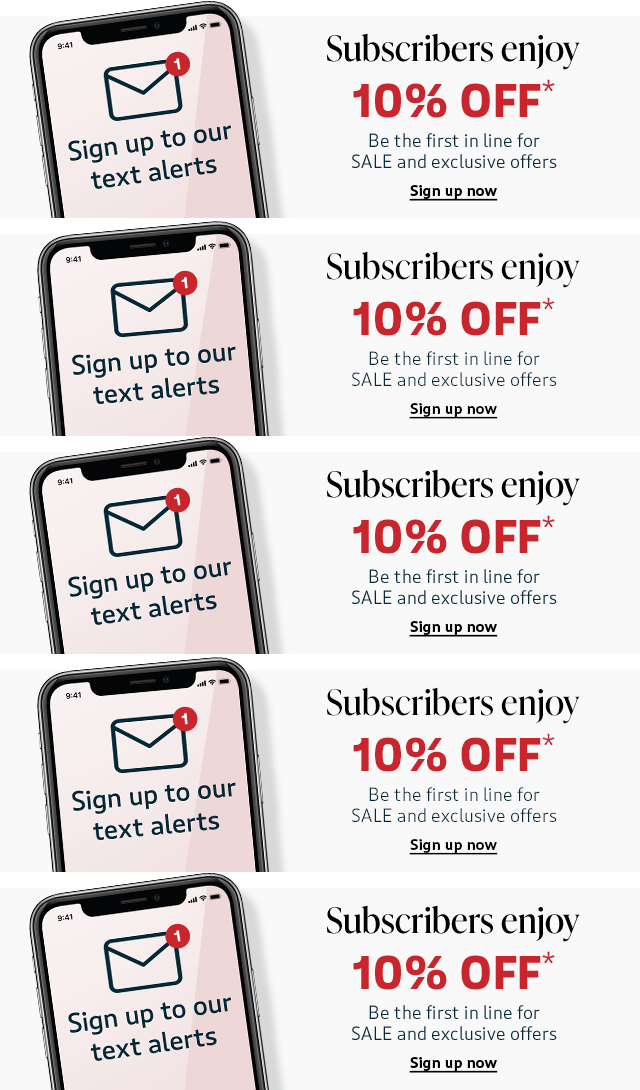
In an increasingly fragmented digital landscape, successful marketing programs are inherently multi-channel, with email serving as the core but supported by mobile, social, and in-app communications. While email remains indispensable for detailed content and broader campaigns, mobile (particularly SMS) has emerged as a powerful complement, especially for time-sensitive or urgent communications. Consumers often prefer SMS for immediate post-purchase messages like receipts, shipping updates, and delivery notifications, as demonstrated by Cotton Traders’ clear ask for SMS opt-in for order updates.
Beyond transactional messages, SMS now plays a strategic role in overcoming the challenges of inbox de-prioritization. With email clients like Gmail employing relevance-sorted Promotions tabs, time-sensitive promotional emails can sometimes get buried beneath messages deemed more critical by algorithms. A well-timed SMS, such as “Don’t miss our Mother’s Day promotion—check your inbox today!” can act as a direct conduit, guiding subscribers to their email and ensuring visibility for critical campaigns. This multi-channel nudge effectively bypasses potential algorithmic filtering, driving immediate attention to the email.
Furthermore, marketers should integrate Gmail Annotations into their relevance toolkit. By specifying discounts, expiration dates, and product previews, emails can earn a “Featured Deal” card at the top of the Promotions tab, significantly boosting visibility. The strategic use of SMS in conjunction with email annotations creates a robust, multi-layered approach to ensure that Mother’s Day campaigns cut through the noise, driving higher engagement and conversion rates by meeting subscribers where they are most receptive.
Incentivizing Early Purchases: A Win-Win for All
For event-driven holidays like Mother’s Day, encouraging customers to complete their purchases well in advance offers substantial benefits to both consumers and businesses. From an operational standpoint, early orders alleviate pressure on website infrastructure, customer service teams, and fulfillment logistics, preventing bottlenecks during peak periods. For the customer, it translates into reduced stress, a wider selection of products, and the peace of mind that their gift will arrive on time.
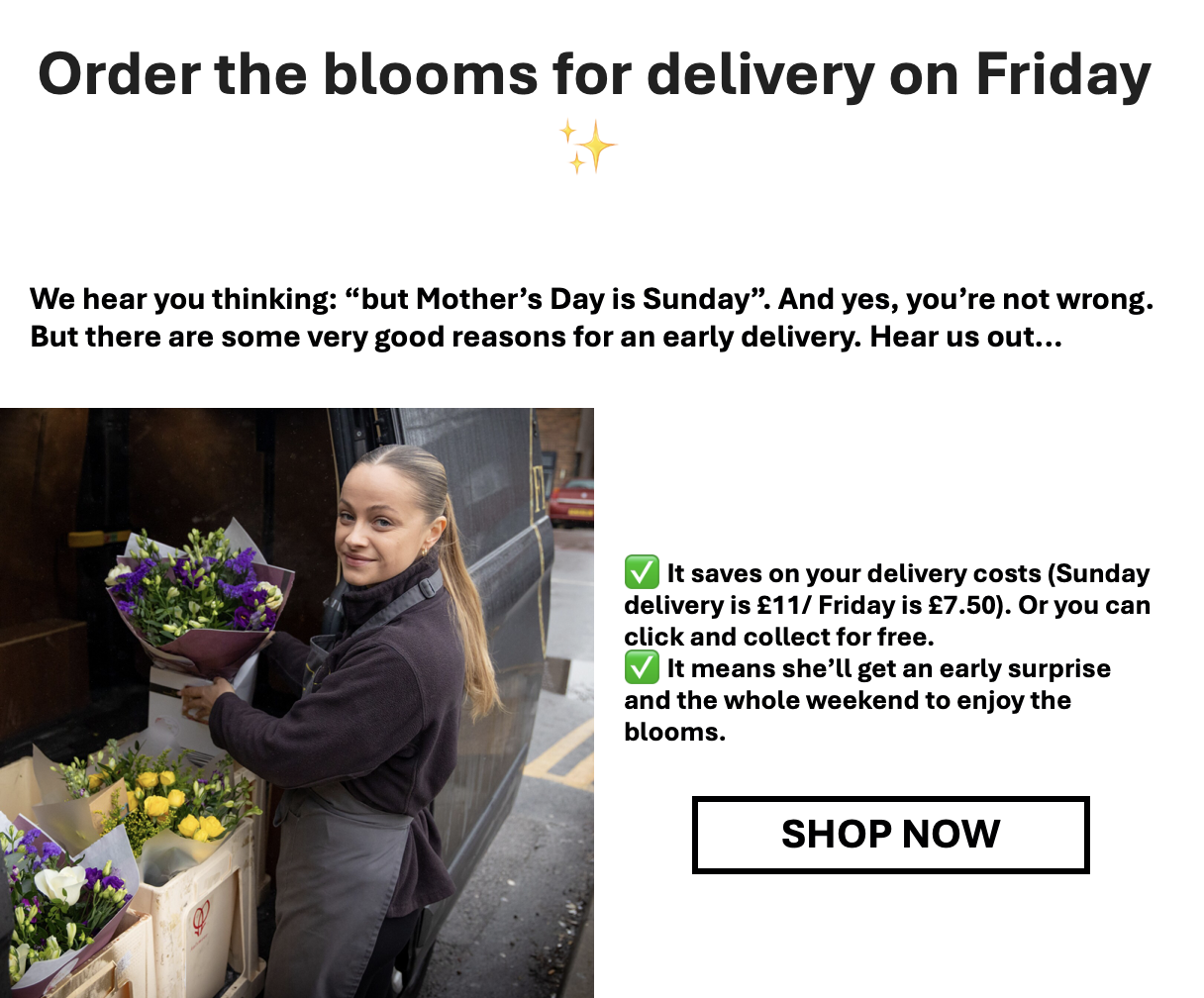
Interflora masterfully illustrates this strategy by offering incentives for early birds. Their campaigns often highlight benefits such as “order early for cheaper delivery” and the thoughtful promise that “mom gets to enjoy her flowers for the full weekend.” This framing transforms an operational request into a genuine customer benefit, creating a compelling reason to act sooner rather than later. Early bird discounts, guaranteed delivery windows, or even exclusive access to certain products for a limited period can serve as powerful motivators. Beyond logistical advantages, encouraging early purchases can also lead to higher average order values as customers have more time to browse and consider additional items. This proactive approach fosters a smoother, more positive purchasing experience, contributing to overall customer satisfaction and loyalty.
Proactive Reminders: Eliminating the “Oops, I Forgot!” Moment
While some consumers are meticulously organized, a significant portion inevitably forgets important dates until the last minute, leading to frantic, rushed purchases or, worse, missed opportunities. Brands that anticipate and address this common oversight can build immense goodwill and secure repeat business.

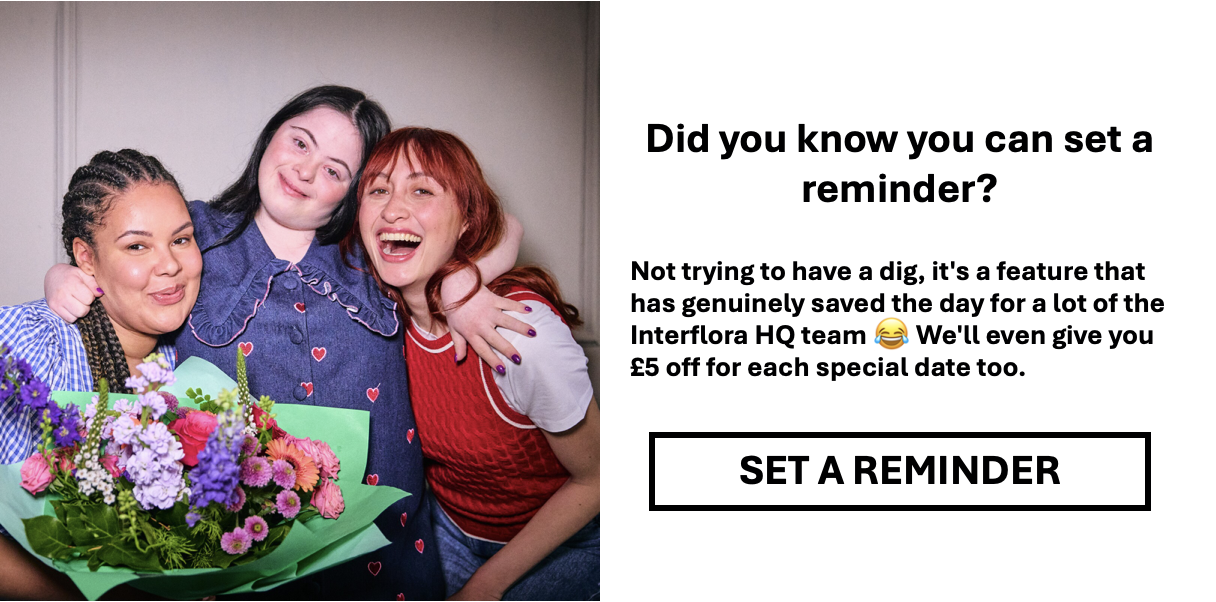
Interflora, once again, provides an exemplary solution with its reminder service. Forgetful individuals can proactively set up advance notifications within their account for various special events, including Mother’s Day. These reminders can be customized with parameters for how far in advance they wish to be nudged, often coupled with a discount or special offer for each order placed through the service. This “set it and forget it” functionality transforms a potential source of customer frustration into a seamless, value-added service. By providing a personalized reminder system, brands not only ensure that customers never miss an important occasion but also establish themselves as a helpful, indispensable partner in their customers’ lives. This strategy fosters deep customer loyalty and provides a consistent revenue stream for future holidays, demonstrating a profound understanding of consumer behavior and a commitment to convenience.
Maintaining Relevance: Replacing Expired Offers Promptly
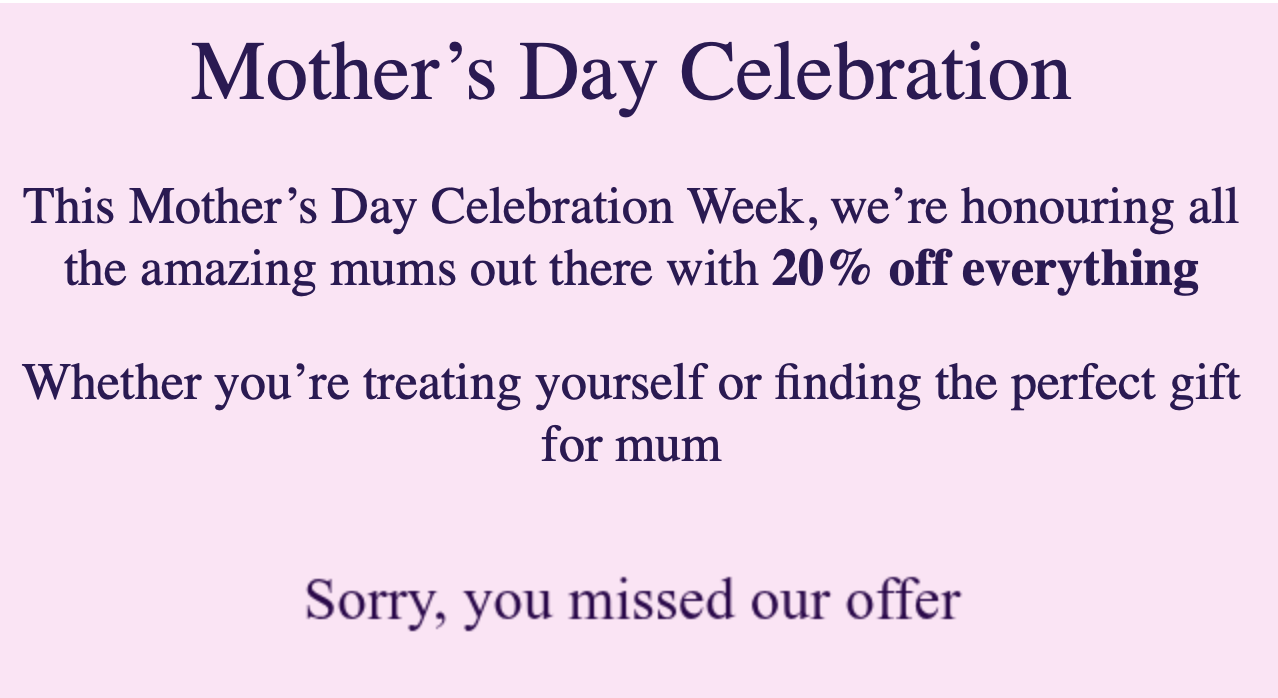
The lifecycle of promotional emails tied to specific events like Mother’s Day is inherently limited. Once the holiday has passed, emails promoting “Mother’s Day gifts” or “Last Chance for Mother’s Day Delivery” quickly become irrelevant. Sending or allowing such expired content to linger in inboxes can have detrimental effects, leading to higher deletion rates, increased spam complaints, and a gradual erosion of sender reputation. Subscribers perceive irrelevant messages as clutter, which can negatively impact future engagement.
Smart marketers utilize dynamic content capabilities to swiftly swap out expired offers with fresh, relevant promotions. While the original article points out an example where Look Fabulous Forever aimed for this, the ideal implementation involves a seamless transition. For instance, immediately after Mother’s Day, the promotional banner could dynamically switch to an upcoming holiday (like Easter, as suggested in the original text) or an evergreen “new arrivals” or “seasonal sale” campaign. The instinct to replace outdated content is crucial. By ensuring that every email delivered remains timely and valuable, brands prevent subscriber fatigue, maintain a positive sender reputation, and keep engagement levels high. This dynamic approach not only optimizes the utility of each email but also signals to subscribers (and email clients) that the brand is committed to delivering relevant and current content, thereby sustaining long-term interest and reducing the risk of being marked as spam.
Adherence to Best Practices: The Perils of Gaming the System
A common misconception among some email marketers is the notion that landing in a subscriber’s “Primary” inbox tab (in Gmail, for instance) inherently guarantees greater visibility and engagement compared to the “Promotions” tab. This belief often leads brands, like The White Company in the example provided, to actively encourage customers to manually recategorize their emails as “Primary.” However, industry experts and major email service providers strongly caution against such tactics.
During recent industry conferences, representatives from Gmail, Microsoft, and Yahoo have explicitly stated that attempts to “game the system” by manipulating inbox placement will be penalized. These providers have sophisticated algorithms designed to categorize emails based on content, sender behavior, and subscriber interaction. They assert that subscribers expect to find marketing emails in their Promotions tab and often engage with them there as part of a curated shopping or browsing experience. Forcing a marketing email into the Primary tab, where transactional or personal communications reside, can be perceived as intrusive by the recipient and lead to higher spam complaints, which in turn severely damages sender reputation and deliverability. The correct strategy is not to circumvent the system but to optimize for the Promotions tab using tools like Gmail Annotations, compelling visuals, and clear calls to action. By respecting the intended categorization and focusing on delivering high-quality, relevant content, brands can foster a more positive and sustainable relationship with both their subscribers and the mailbox providers.
The Cruciality of Geographical Segmentation: A Bonus for US Senders
Revisiting the article’s foundational premise—the divergent Mother’s Day dates—underscores a critical, yet often overlooked, aspect of global email marketing: geographical sensitivity. While the UK celebrates Mother’s Day in March, the US and many other nations do so in May. For non-UK senders with a global customer base, or even UK senders with international subscribers, failing to segment campaigns by geography is a reliable recipe for disaster.
Sending Mother’s Day promotions in May to UK-based customers, who celebrated the event two months prior, is not merely a minor oversight; it’s a significant misstep that can lead to high complaint rates and severe damage to sender reputation. This irrelevance can frustrate subscribers who have already either celebrated or moved past the occasion, prompting them to unsubscribe or mark the email as spam. Conversely, failing to send any Mother’s Day communications to UK customers in March due to adherence to a May schedule alienates a significant audience segment. The solution lies in robust geo-segmentation capabilities within email marketing platforms, allowing brands to tailor campaigns to specific regional calendars and cultural nuances. This ensures that the right message reaches the right audience at the right time, maximizing relevance, engagement, and ultimately, sales, while protecting the brand’s invaluable sender reputation.
Learning from History: The Path to Enhanced Email Programs
The staggered timing of Mother’s Day across different regions offers a rare and valuable opportunity for continuous improvement in email marketing. As the adage often attributed to Winston Churchill suggests, “Those who fail to learn from history are condemned to repeat it.” For “Mother’s Day in May” senders, the UK’s earlier observance serves as a practical, real-world laboratory. By analyzing the performance of UK campaigns—what subject lines garnered opens, what visuals converted, which offers resonated, and what triggered negative feedback—marketers can gain actionable insights to refine their strategies.
This proactive analysis, combined with an understanding of evolving inbox dynamics, AI’s impact, and economic pressures, empowers marketers to fine-tune their messaging, optimize visuals, enhance personalization, and perfect their multi-channel approach. The goal is not merely to send emails, but to deliver highly relevant, engaging, and valuable content that fosters customer loyalty and drives tangible results. By embracing these lessons and continuously adapting their programs, marketers can transform annual events into opportunities for strategic growth and sustained success. For further insights into elevating email performance, resources like the Litmus State of Email 2026 report offer comprehensive data and best practices to bring any email program to the next level, ensuring that every campaign, especially for cherished occasions like Mother’s Day, makes a meaningful impact.

 Asro
Asro
 Nana
Nana